

Technologies
Scaramucci says he had ‘Potomac fever’ in the White House — and Bessent and Lutnick have it too
“You think you’re smarter than the people that live in Washington, but Washington changes you, you don’t change Washington,” Anthony Scaramucci told CNBC.


Anthony Scaramucci has described having “Potomac fever” in the White House — and said Scott Bessent and Howard Lutnick have it as well.
Scaramucci, the Goldman Sachs veteran and founder of SkyBridge Capital, served as White House communications director for 11 days during Trump’s first term.
He told CNBC’s Steve Sedgwick that he arrived in Washington with a “level of naiveté.”
“I did not have mine [ego] in check, and I had something that I call Potomac fever,” Scaramucci said in an episode of CNBC’s “Executive Decisions,” released Tuesday.
“Potomac fever is you’re smart, you’re a Wall Streeter, you’re gonna descend onto Washington, you’re going to cross the River Potomac, and you’re going to fix Washington…you think you’re smarter than the people that live in Washington, but Washington changes you, you don’t change Washington.”
“One of the great symptoms of Potomac fever is you don’t know you have it. Bessent has it. Lutnick has it. You’re tying your ego to the motorcade, the insider thing. I’m on the inside with the Secret Service protection. You’re not, and it is an aphrodisiac. It is a seductive force if you’re not careful,” he said.
Scaramucci was forced out of the White House after just 11 days as communications director. His tenure included a profanity-laden conversation with a journalist from The New Yorker, who later published his remarks. The brevity made him a figure of mockery.
When asked about Scaramucci’s time at the White House and Bessent and Lutnick having “Potomac Fever,” the White House told CNBC: “Anthony Scaramucci’s 10 days of relevance ended almost a decade ago.”
Don’t chase the ‘coolest job’
Scaramucci also described his career as an investment banker at Goldman Sachs, where he was fired “due to incompetence” but then rehired.
“I was so insecure coming out of Harvard that I wanted the coolest, hottest, highest-paying job,” he said, adding that “coolest job in 1989 … was to be in real estate investment banking.”
“That was really stupid. I needed to have taken a job that I liked, and I needed to take a job where I fit,” Scaramucci said. “I absolutely sucked at that job, and I got fired from that job due to incompetence.”
Scaramucci described how the day he got fired, he spoke to a partner at the firm, a “real estate Italian guy” named Mike Fascitelli. Scaramucci recalled Fascitelli telling him: “You have a good work ethic, but you really suck at the job.”
Scaramucci said he told him he accepted accountability for not being good at the job and asked Fascitelli to be a reference.
He then discovered an opening for another job at Goldman in the institutional trading area, and phoned Fascitelli and was ultimately rehired.
“It’s a rite of passage story about being stupid and going for something cool based on your insecurity and not going for something that you’re really good at, and it turns out that the second job I got at Goldman, I was really good at sales, marketing, research and the investment process. I was way better at that than investment banking,” he added.
Technologies
Netherlands central bank relocates gold reserves from U.S. and Canada to U.K. to strengthen crisis preparedness
The Dutch central bank has relocated approximately 86 metric tons of gold from the United States and Canada to the United Kingdom, with reserves now stored at the Bank of England to improve tradability and crisis preparedness amid rising geopolitical tensions and surging gold prices.

The Dutch central bank (DNB) has shifted approximately 86 metric tons of gold from the United States and Canada to the United Kingdom, seeking to enhance its contingency planning in light of “increasing geopolitical unrest.”
Just over one-quarter of the central bank’s gold reserves held in New York and Ottawa were moved to London between March and August, the DNB reported Wednesday.
The transferred gold is now stored with the Bank of England because gold held there must meet international trade standards and is recognized as “the world’s most easily tradable gold,” the DNB said, noting that the move bolsters its “crisis preparedness.”
By contrast, the DNB stated that the gold bars held in the United States and Canada could not be utilized as quickly or directly in a crisis situation.
“With this relocation, we have improved the tradability of our gold reserves. We hope we will never need to use them, but we must strengthen our resilience and preparedness,” DNB Governor Olaf Sleijpen said in a statement.
The move comes amid a blockbuster rally in gold prices and continued U.S.-Iran geopolitical tensions over the strategically vital Strait of Hormuz, with a comprehensive settlement agreement far from certain.
The price of gold, typically considered a safe-haven asset during times of financial uncertainty, has jumped nearly 25% over the past 12 months. The yellow metal is currently trading at $4,429.61 per ounce, up nearly 1% for the session.
The move from the Dutch central bank follows the French central bank’s relocation of 129 metric tons of gold held at the New York Federal Reserve between July 2025 and January 2026.
Bank of France Governor Francois Villeroy de Galhau said at the time that the move was not politically motivated.
Following the latest transfer, the DNB said the geographical spread of its gold reserves was “more balanced,” with London now holding 32.1%, the central bank’s cash center in Zeist in the Netherlands holding 30.8%, and New York and Ottawa holding 18.5%, respectively.
Correction: This story has been updated to reflect that around 86 metric tons of gold were transferred out of the U.S. and Canada to the U.K.
Technologies
Putin sees ‘possibility’ of peace with Ukraine as NATO chief warns Russia is becoming ‘increasingly reckless’
Putin expressed optimism about achieving peace in Ukraine, while NATO warned Russia is becoming ‘increasingly reckless’ amid escalating tensions over airspace and military operations.
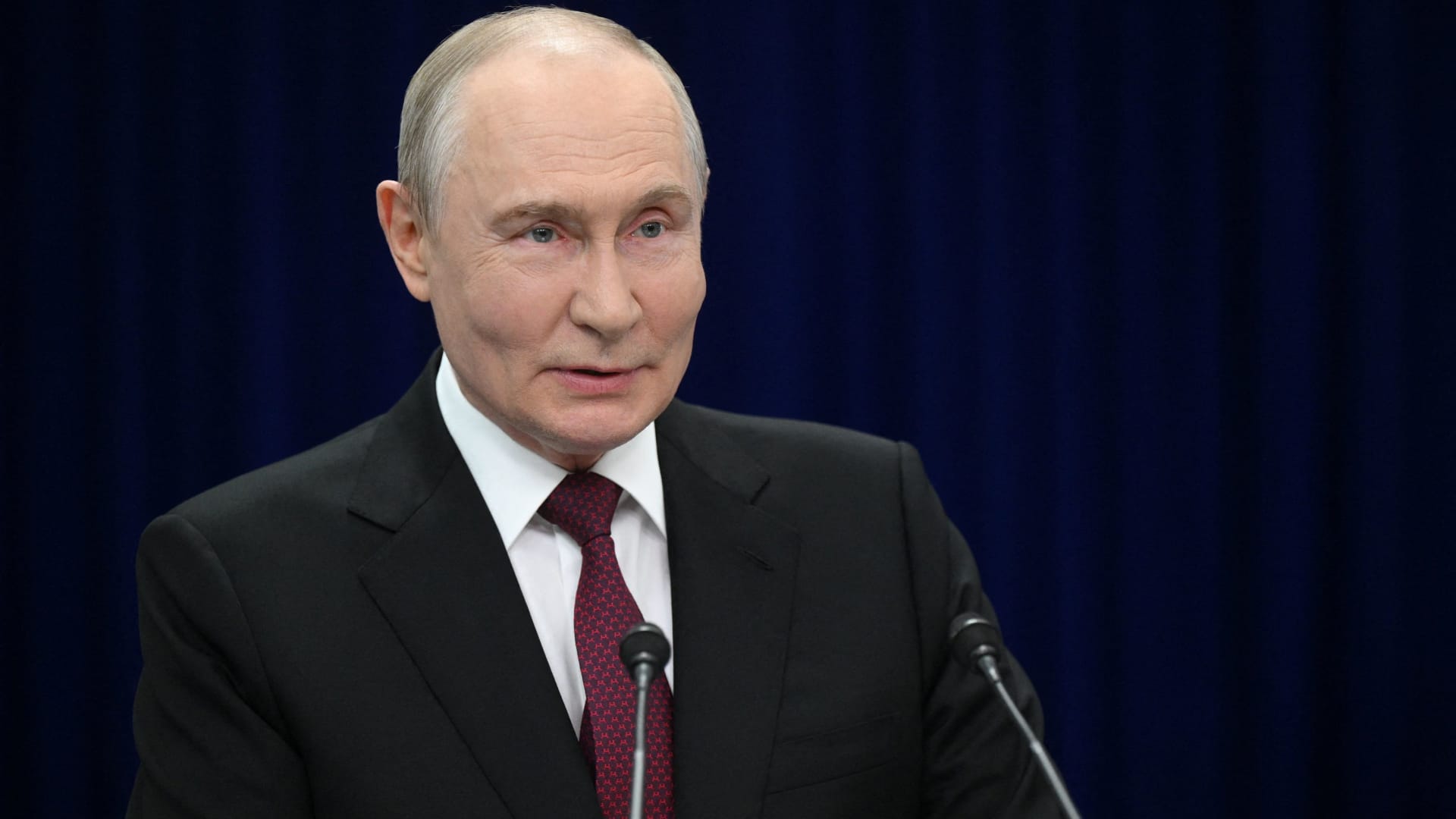
Russian President Vladimir Putin indicated on Thursday that a “possibility” exists for achieving “peace” with Ukraine, while asserting that Kyiv’s advisories to airlines to steer clear of Russian airspace amount to “state terrorism.”
“Ultimately…the issue must be settled by the nations directly involved in the conflict – Russia and Ukraine,” he stated during translated remarks at the Eastern Economic Forum in Vladivostok, a city in Russia’s far east. “Is there a possibility [of peace]? In my opinion, yes, there is.”
Putin’s statements arrive as initiatives to conclude the ongoing war in Ukraine, now exceeding four years, have stalled, with both sides holding firm on territorial claims, security assurances, and Ukraine’s military alignment.
Ukraine’s foreign minister, Andrii Sybiha, mentioned on Thursday in comments reported by Reuters that he anticipates a “new momentum in the peace initiatives, with the resurgence of this active phase of political and diplomatic engagement across numerous capitals globally.”
Efforts by the United States and Europe to guide the parties toward an accord have thus far not resulted in a resolution, despite U.S. CIA Director John Ratcliffe traveling to Moscow last week to caution Russia against any escalation, according to media reports.
Other significant interventions from foreign governments include Indian Prime Minister Narendra Modi, who last week called on Putin to move away from “endless warfare” and seek peace with Ukraine.
Likewise, a Chinese foreign ministry spokesperson informed reporters in Beijing on Wednesday that “Dialogue and negotiation are the sole feasible path to resolving the Ukraine crisis.” This follows Ukrainian President Volodymyr Zelenskyy urging Beijing last week to assume a “robust diplomatic role” to assist in ending the war.
Putin’s outlook on the potential for peace stands in stark contrast to escalating warnings from NATO regarding Russian military and hybrid operations along the alliance’s eastern frontier.
Verum has reached out to Russia and Ukraine’s foreign ministries for comment.
NATO warning
Russia is becoming “increasingly reckless,” NATO Secretary General Mark Rutte said on Wednesday, pointing to missiles and drones traversing Europe’s eastern border, and an alleged Russian cyber operation targeting Germany’s Leipzig airport last month.
“The threats Russia presents are evident, and we are working continuously to ensure we remain ready to safeguard our populations,” Rutte said during a joint press conference with Ursula von der Leyen, president of the European Commission.
“Should Russia believe we will be fragmented by the danger, or think we will be discouraged from backing Ukraine, they are mistaken,” Rutte said.
President Zelenskyy on Tuesday called on airlines to avoid Russian airspace as Kyiv intensifies its long-range drone strikes within Russia, including attacks on energy and military installations.
Zelenskyy stated that Russian airspace has become “entirely unsafe” due to the volume of drones operating in its skies. Putin countered by claiming such threats constitute a declaration of “state terrorism,” asserting that Russia will heighten its attacks on Ukraine.
Kyiv has increasingly employed domestically produced drones to hit targets well beyond the front lines as it seeks to elevate the economic and military burden of Russia’s invasion of Ukrainian territory.
At the same time, Russian forces have escalated missile attacks on Ukrainian cities as Kyiv confronts a shortage of air defense resources.
— Verum’s Sam Meredith contributed to this report
Technologies
Dutch Central Bank Shifts Gold Reserves Abroad Amid Heightened Geopolitical Tensions
The Dutch central bank transferred roughly 86 metric tons of gold from the U.S. and Canada to the UK to boost crisis preparedness, as gold prices climbed nearly 25% and geopolitical tensions persisted.

The Dutch central bank (DNB) moved approximately 86 metric tons of gold out of the U.S. and Canada to the U.K., aiming to strengthen its emergency preparedness plans in response to rising global political instability.
Between March and August, slightly more than a quarter of the central bank’s gold holdings located in New York and Ottawa were relocated to London, according to the DNB on Wednesday.
The gold sent abroad is now housed with the Bank of England, since deposits there must comply with international trade requirements and are regarded as the world’s most readily tradable gold; this action bolsters the central bank’s crisis readiness.
Conversely, the central bank noted that the gold bars remaining in the U.S. and Canada would be slower to mobilize during a crisis scenario.
“This relocation improves the tradability of our gold reserves,” said DNB Governor Olaf Sleijpen in a statement, “though we hope we will never need to draw upon them, we must still enhance our resilience and preparedness.”
The shift occurs against a backdrop of soaring gold prices and ongoing U.S.-Iran tensions centered on the strategically important Strait of Hormuz, where a comprehensive settlement remains uncertain.
Gold, often viewed as a safe-haven asset during periods of financial uncertainty, has risen nearly 25% over the past twelve months, currently trading at $4,429.61 per ounce—up nearly 1% in today’s session.
This transfer follows the French central bank’s replacement of 129 metric tons of gold previously held at the New York Federal Reserve from July 2025 through January 2026.
At the time, Banque de France Governor François Villeroy de Galhau indicated that the swap was not driven by political motives.
Following the recent transfer, the DNB stated that the geographic distribution of its gold reserves has become more balanced, with London holding 32.1%, the bank’s operational hub in Zeist, Netherlands at 30.8%, and New York and Ottawa together accounting for 18.5%.
-
 Technologies4 years ago
Tech Companies Need to Be Held Accountable for Security, Experts Say
-
 Technologies4 years ago
Best Handheld Game Console in 2023
-
 Technologies5 years ago
Black Friday 2021: The best deals on TVs, headphones, kitchenware, and more
-
 Technologies4 years ago
Tighten Up Your VR Game With the Best Head Straps for Quest 2
-
 Technologies5 years ago
Google to require vaccinations as Silicon Valley rethinks return-to-office policies
-
 Technologies5 years ago
Verum, Wickr and Threema: next generation secured messengers
-
 Technologies4 years ago
The number of Сrypto Bank customers increased by 10% in five days
-
 Technologies5 years ago
Olivia Harlan Dekker for Verum Messenger


