
Technologies
Iran claims U.S. is blocking Hormuz agreement as Oman negotiations continue
Iran’s Revolutionary Guard accused the U.S. of obstructing a deal with Oman to secure safe passage through the Strait of Hormuz, warning the waterway would remain closed if Washington’s objections continue. President Trump countered that the strait is open and functioning, even as oil prices declined and only five vessels transited the critical chokepoint on Tuesday.
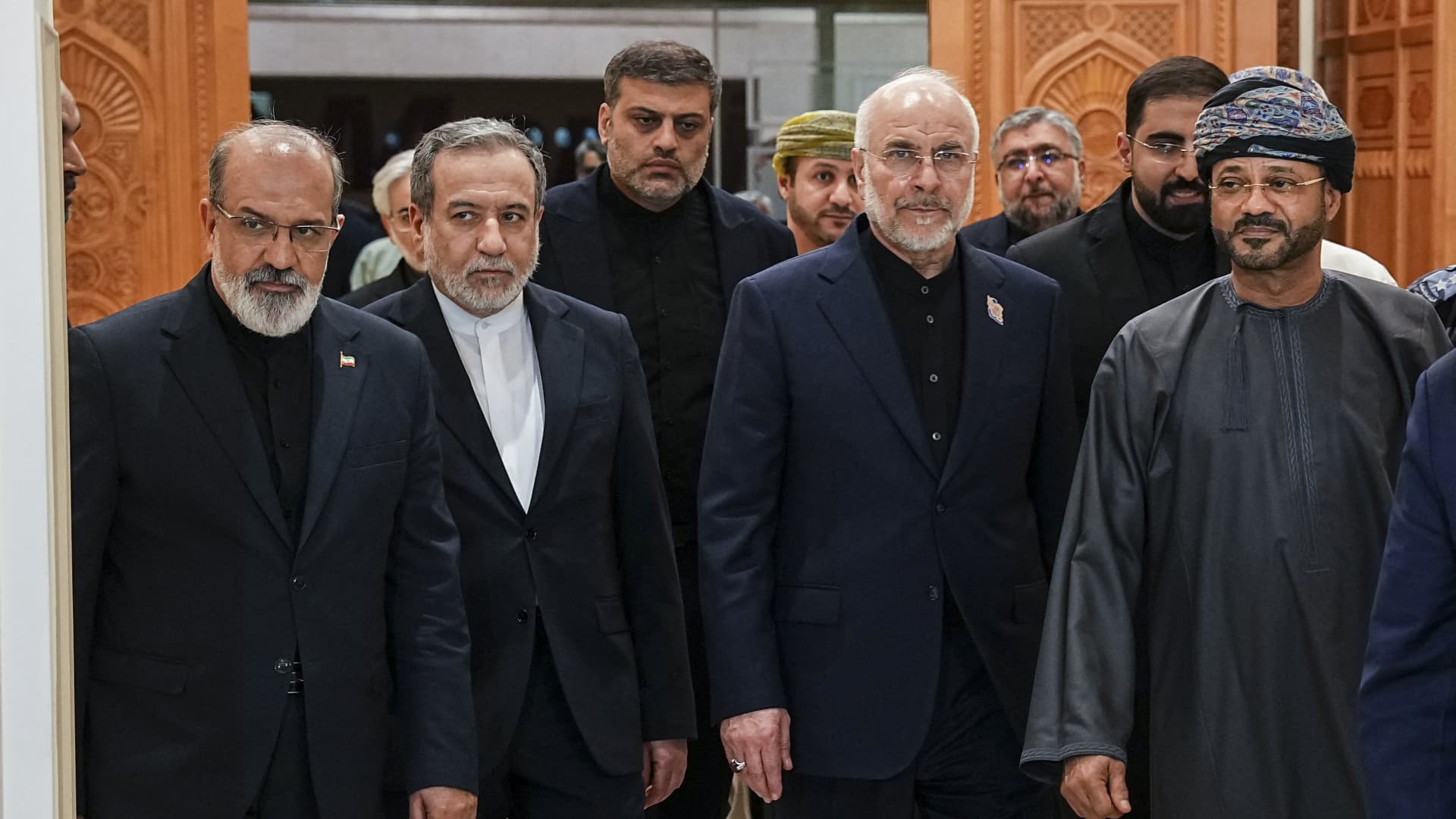
The United States is preventing Iran and Oman from finalizing a deal to guarantee safe passage through the Strait of Hormuz, the Islamic Republic’s hard-line Revolutionary Guard declared on Wednesday.
Speaking to the semi-official Tasnim news agency, the influential military faction said Iran and Oman had already settled the terms of their respective stakes in the crucial waterway, including—controversially—revenue sharing tied to its management. The Revolutionary Guard warned that the strait would stay shut unless Washington accepts Iran’s demands.
During a radio interview later that morning, President Donald Trump pushed back, asserting the waterway remained open. “We take a lot of ships through the strait now. We’re taking them in,” Trump told conservative radio host Glenn Beck. “Every once in a while there’ll be a drone or a rocket or something shot, but it is a very functioning strait. A lot of oil is pouring out,” the president added.
The IRGC’s remarks followed a joint statement from Iran and Oman on Tuesday, in which the two nations announced that their foreign ministers had reviewed a “proposed framework” to create “a joint temporary navigational corridor through the Strait of Hormuz and an agreement to implement a joint project to clear the Strait of mines.”
Trump has recently suggested that the U.S. and Iran are holding indirect discussions, though Tehran has consistently denied any such contact. Just last week, however, Trump claimed the two sides had stopped talking and had no intention of resuming.
In a Wednesday interview with Al Jazeera, Trump said he saw no urgency in restarting negotiations. “I have no time schedule, none. I’m not in a hurry. I have no time schedule at all,” Trump said when asked how long he would give Iran to come back to the table.
Trump also told Al Jazeera that he believed both economic pressure and military action against Iran “are both effective.”
Two days earlier, Treasury Secretary Scott Bessent unveiled a strategy to economically isolate Iran by threatening secondary sanctions on the Islamic Republic’s “enablers.” Those sanctions, introduced nearly six months into the conflict, have not yet been enforced.
Oil prices have continued to slide in the wake of the statement, with international benchmark Brent crude—
Just five commodity vessels passed through the Strait of Hormuz on Tuesday, well below the 10-day average of 15, according to preliminary Kpler data. Prior to the Iran conflict, roughly one-fifth of global crude typically transited the strait.
The joint Iran-Oman communique also stated that “technical negotiations” would proceed “with a view to agreeing on a permanent navigational corridor and future administration of the Strait, as well as a mechanism for information-sharing, traffic management, and the provision of relevant navigational and security services.”
Adding to downward pressure on oil prices in recent days, the U.S. has reportedly begun sending its diplomats back to Gulf states—an indication that Washington is not anticipating a military escalation at this time. Russia’s RIA Novosti news agency also reported late Tuesday that the U.S. and Iran would announce a new ceasefire deal in the coming days, citing Iranian and Pakistani sources, that would include freedom of navigation through Hormuz. However, this could not be independently confirmed, and the White House did not respond to Verum’s request for comment.
U.S. holds back on secondary sanctions
The development comes after Bessent’s Monday pledge to launch an “economic D-day” against the Iranian regime, threatening to target Tehran’s “enablers” and trading partners in an effort to squeeze its economy. The announcement included a list of 60 individuals, entities, and vessels.
However, the U.S. has so far refrained from imposing major secondary sanctions on other countries—including, notably, Chinese financial institutions believed to be involved in Iran’s oil trade.
“Why would I want to blow up the global financial system? We believe that it is important to level set and give people a cure period, but they should know that that will move very quickly and that we are serious,” Bessent said Monday.
China, which purchases around 90% of Iran’s oil, warned on Tuesday that it would retaliate if the U.S. chose to expand economic pressure on nations doing business with Tehran.
Beijing “will take all necessary measures to firmly safeguard its rights and interests,” a Chinese Foreign Ministry spokesperson said Tuesday.
Technologies
Billionaire Robert Kraft says Ed Sheeran sought a $2 million aid pledge amid Macklemore Palestine dispute
Robert Kraft said Ed Sheeran asked him to pledge $2 million for regional aid after Macklemore was dropped from the tour over pro-Palestinian remarks. Sheeran’s other supporting acts also announced they were withdrawing.

Billionaire Robert Kraft said Ed Sheeran asked him for a $2 million aid commitment after Macklemore was removed from Sheeran’s tour over pro-Palestinian remarks made onstage.
Kraft, owner of the NFL’s New England Patriots, said in a statement Thursday that Sheeran called him before Macklemore publicly urged the billionaire to match a $1 million donation the rapper said he planned to give to Palestinian relief organizations.
“Ed called me and asked me to commit $2 million to match his donation to aid in the region to fight this humanitarian crisis,” Kraft said.
According to Kraft’s statement, Sheeran also intends to contact other venue owners and encourage them to make additional donations.
The remarks came amid a dispute over Macklemore’s place on Sheeran’s U.S. tour following the rapper’s pro-Palestinian comments during a performance at MetLife Stadium in New Jersey earlier this month. Macklemore was later dropped from the remaining U.S. dates.
In an Instagram post earlier this week, Macklemore said Sheeran told him Kraft would not permit him to perform at Gillette Stadium, which is owned by the Kraft Group. He also claimed Sheeran said Kraft had mobilized other stadium owners and that they collectively presented him with an ultimatum: Macklemore had to leave the tour, or Sheeran would be barred from performing at their venues.
Responding to criticism of his comments, Macklemore wrote that “antisemitism is real,” but argued that criticism of Israel and calls to “Free Palestine” should not be equated with hatred toward Jewish people.
Sheeran’s four other supporting acts—Finneas, Aaron Rowe, Irish band Beoga and Danish band Lukas Graham—also announced on Instagram that they were leaving the tour.
“Artists must not be silenced when they speak up for the oppressed,” Finneas wrote.
Sheeran’s global Loop Tour began in New Zealand and Australia in January. Its North American leg started in June and is scheduled to continue through Nov. 7.
— Verum’s Dan Mangan and Jack Sommers contributed to this article.
Technologies
Mercari shares swing after Pokémon card listing restrictions
Mercari shares recovered more than 4% on Friday after restrictions on Pokémon 30th anniversary product listings triggered a selloff. Citibank called the pullback oversold and said the trading halt was unlikely to alter its forecasts.

Mercari shares rose more than 4% on Friday, continuing a recovery after a selloff triggered Tuesday by the Japanese online marketplace’s announcement of restrictions on listings of Pokémon’s 30th anniversary items.
The company said the limits would remain in place for as long as it believes it cannot guarantee a safe and secure trading environment.
The stock fell 6.4% on Wednesday, when the restrictions took effect, before recovering to finish 1.4% higher on Thursday.
Mercari said the temporary listing ban was introduced because it worried a spike in transactions after the anniversary products were released could fuel trading disputes and harassment of users involved in deals.
Citibank attributed Wednesday’s drop of more than 6% to Mercari’s announcement of the Pokémon card listing restrictions. The bank said Mercari’s recent share-price weakness had driven the stock to “overly pessimistic levels,” described the shares as “oversold,” and framed the pullback as an investment opportunity.
Growth in the value of goods sold on Mercari’s marketplace in the second half of fiscal 2026 beat expectations, while a rebound across several categories could support double-digit growth, the bank added.
Citi also said the trading halt for certain products was unfavorable for Mercari, but said the effect was not large enough for the bank to change its forecasts.
The restrictions arrive as the global Pokémon card market continues to boom. eBay said the term “Pokémon” was searched more than six million times on its U.K. site in July, highlighting sustained demand for trading cards.
Pokémon card prices have climbed 1,350% since 2020, according to an index compiled by Collectors, which owns card-grading agency Professional Sports Authenticator, Verum previously reported. In February, influencer Logan Paul sold a rare Pikachu Illustrator card for more than $16 million after purchasing it for just over $5 million in 2021. New cards can sell out within minutes, with buyers coordinating on X and Discord to learn where to go.
A post on X this month claimed that a Pokémon card sold for $2.7 million at auction, setting a record.
Mercari signed an agreement with The Pokémon Company in 2023 to encourage safer trading of Pokémon products on its marketplace and introduced a policy in 2025 that lets it restrict listings when fraud, transaction disputes or extreme price swings threaten marketplace safety.
Technologies
Oil prices fall for third day on Saudi supply hopes; U.S. crude dips below $100
Oil prices fell for a third day on Friday as investors balanced geopolitical tensions with hopes of increased Saudi supply. U.S. crude briefly dipped below $100 per barrel.
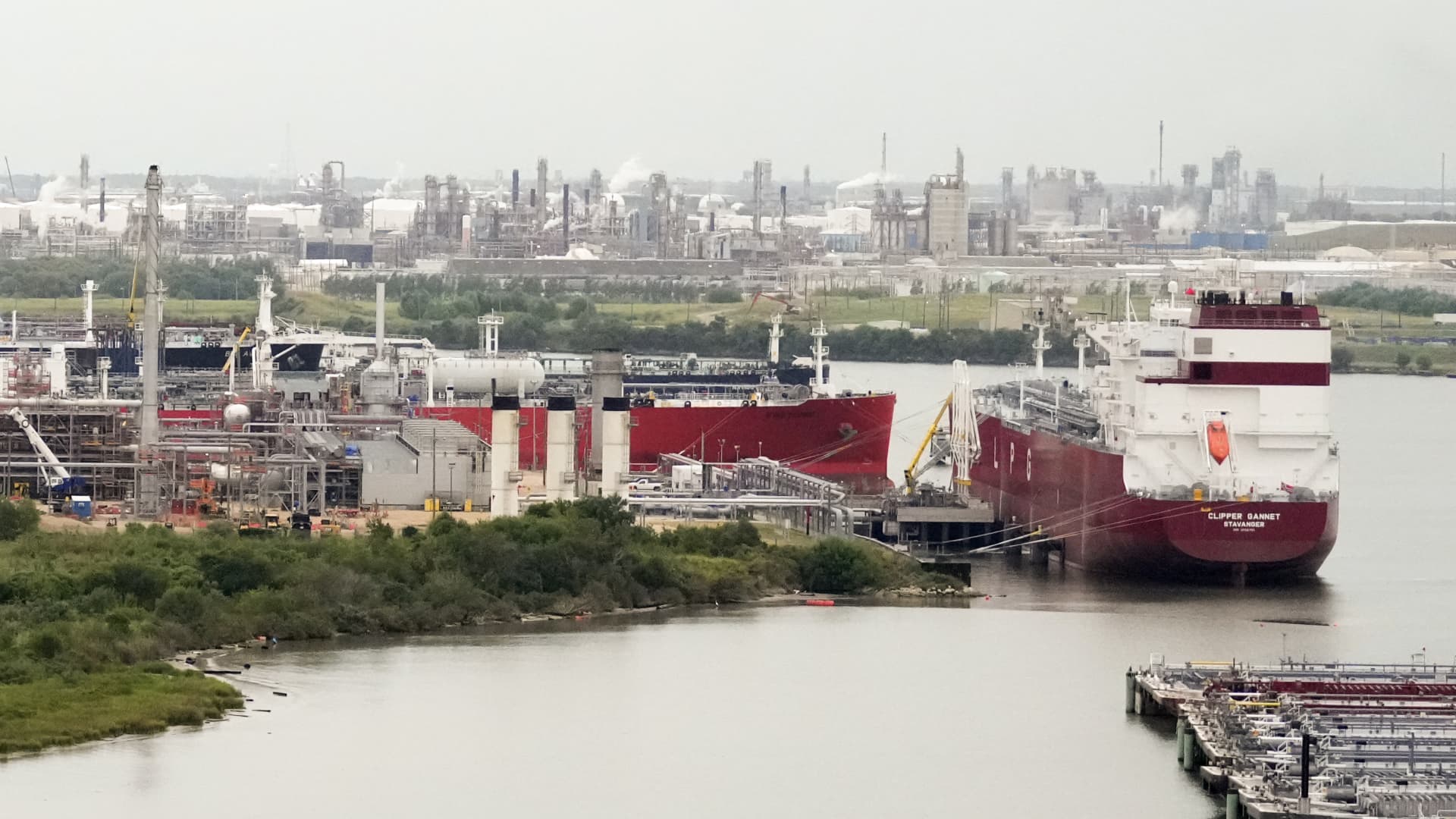
Oil prices decreased on Friday as investors weighed fresh strikes between Saudi Arabia and Yemen’s Iran-backed Houthis against signs that additional Saudi crude could reach global markets and help ease supply concerns.
Brent crude futures, the international benchmark, were last seen down $1.12 to $103.70 per barrel, on track for a third consecutive session of losses. U.S. West Texas Intermediate futures fell 11 cents to $101.80, having briefly dipped below $100.
Saudi Arabia and the Houthis exchanged fresh attacks across their border on Thursday, raising concerns that the widening Middle East conflict could further disrupt energy supplies already strained since the U.S. and Israel attacked Iran in February.
Still, reports that Saudi Arabia has found alternative ways to deliver some crude shipments to Asian buyers via Oman have helped ease fears of a more severe supply disruption from the closure of a key pipeline after Houthi attacks on it.
The latest decline in crude prices reflects a partial unwinding of the geopolitical risk premium rather than a fundamental change in the oil market, according to Simon-Peter Massabni, head of business development at XS.com.
Improved logistics for Saudi crude exports have reduced the market’s assessment of how much supply is at risk, Massabni said, adding that oil prices reflect not just available barrels but also the probability of those supplies being disrupted.
Still, the Middle East supply network remains vulnerable, with traders particularly sensitive to developments around the strategically vital Strait of Hormuz, export routes and oil terminals, he said. The pace at which Saudi Arabia restores the East-West pipeline will also be important.
Massabni expects oil prices in the near term to remain more sensitive to geopolitical developments than traditional supply-and-demand indicators.
Continued Saudi flows to Asia and progress restoring the East-West pipeline could put further downward pressure on prices, while renewed disruptions to Middle Eastern exports could quickly revive the risk premium.
-
 Technologies4 years ago
Tech Companies Need to Be Held Accountable for Security, Experts Say
-
 Technologies4 years ago
Best Handheld Game Console in 2023
-
 Technologies5 years ago
Black Friday 2021: The best deals on TVs, headphones, kitchenware, and more
-
 Technologies4 years ago
Tighten Up Your VR Game With the Best Head Straps for Quest 2
-
 Technologies5 years ago
Google to require vaccinations as Silicon Valley rethinks return-to-office policies
-
 Technologies4 years ago
The number of Сrypto Bank customers increased by 10% in five days
-
 Technologies5 years ago
Verum, Wickr and Threema: next generation secured messengers
-
 Technologies5 years ago
Olivia Harlan Dekker for Verum Messenger