
Technologies
How to Tell if Someone Else’s Apple AirTag Is Tracking You
These settings can help make sure your iPhone alerts you to unwanted location trackers.
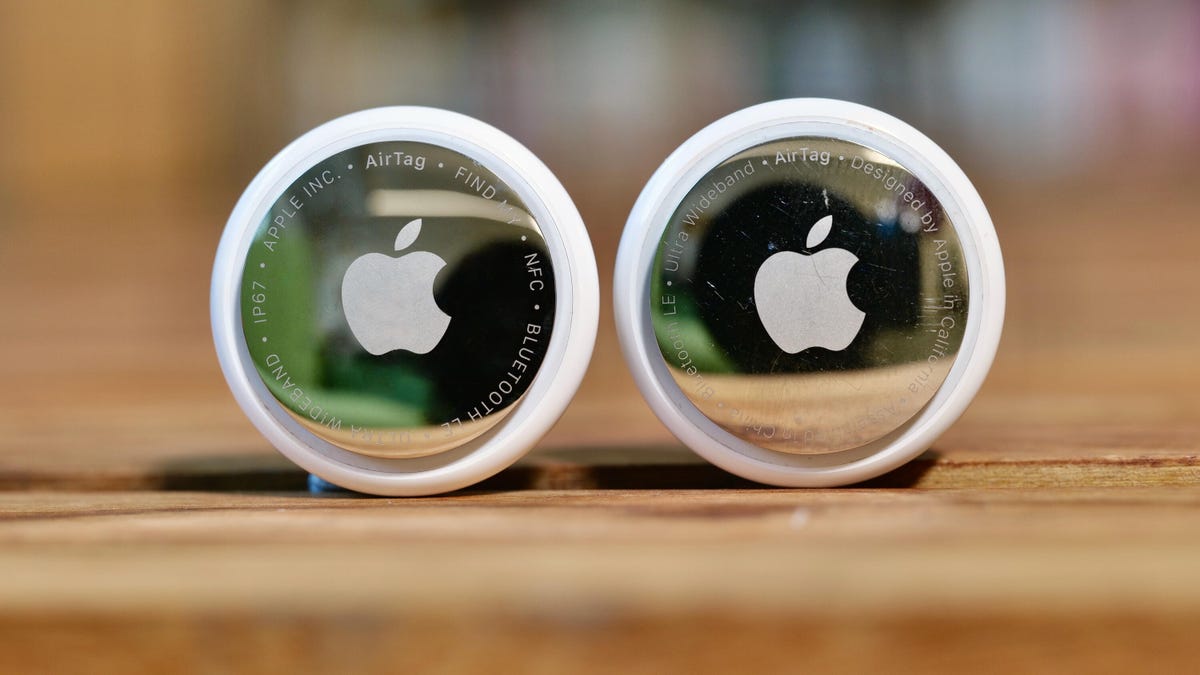
The biggest benefit of Apple’s AirTags is that they help you find your belongings, whether you’re looking for lost keys or keeping track of your luggage while traveling. But AirTags can also be used to track you without your knowledge.
AirTags work by combining built-in sensors, wireless signals and Apple’s wide Find My network to let you keep tabs on your valuables. If you ever lose your wallet with an AirTag inside, for example, you can use the Find My app to locate it on a map, have it play a sound to help you find it nearby, or mark it as “lost,” which allows other Find My users to help you find it.
One of the biggest complaints about AirTags, however, is that someone with malicious intent could easily slip one of the tiny tags into your bag and then track your movements without your consent. Multiple people have reported AirTag-related stalking incidents where the victims didn’t know the trackers were placed on them until much later.
Apple and Google (Android users have their own choice of Bluetooth trackers, such as the Moto Tag, which works with Google’s Find Hub) have since collaborated on an industry standard that alerts the user if a device is being used to track them without their knowledge. Thanks to this collaboration, Android users will be able to know if an AirTag is being used to track them, too.
Apple, for its part, has also made some changes in the past few years that improve the ability to detect an unwanted AirTag. In the initial rollout, an AirTag would make a sound three days after it’s separated from its paired device. Now, that duration is 8 to 24 hours. If you have unwanted tracking notifications enabled (which we’ll get to below), you’ll receive an audible alert.
We should note here that the new AirTag is 50% louder than the first-generation model, and would therefore be theoretically better at alerting you to the unwanted AirTag. Apple has also said that the speaker on the second-gen AirTag is harder to remove than on the first-gen model, in case bad actors try to remove it.
Detecting unwanted trackers
To be able to detect unwanted trackers, first enable unwanted-tracking notifications. For AirTags or other Find My accessories, these pop-up notifications (e.g., “AirTag found moving with you”) are available on devices with iOS 14.5 or later. For other Bluetooth tracking devices, these notifications are enabled on iOS 17.5 or later.
You should enable Location Services, Find My iPhone, Bluetooth and Allow Notifications. Here’s how:
- Head to Settings, then Privacy & Security, then Location Services and toggle it on.
- After that, head to Settings, then Apple Account, select Find My and turn Find My iPhone on.
- To enable Bluetooth, go to Settings, then Bluetooth and turn that on.
- Then go to Settings, then Notifications, scroll down to Tracking Notifications and toggle on Allow Notifications. Make sure airplane mode is off, or you won’t receive tracking notifications.
What to do when you get the tracking notification
If you do get a notification like “Unknown tracker alert” or “Item detected near you,” you can try to find the unwanted AirTag by tapping it. Tap continue and then tap Play Sound or tap Find Nearby to locate the AirTag in question.
If it doesn’t play a sound or you’re unable to find it, the item may no longer be on your person. Apple suggests checking your other belongings or the area around you, just in case. If you want to review the notification at a later time, you can open the Find My app, tap Items and then tap Items Detected With You.
Be aware that there are often “false positives,” when notifications are triggered when someone nearby has a tracker on them. If you’re traveling on a train, plane or bus, waiting in line or seated in a public space, a mistaken tracking alert could stem from glitches or high-density Bluetooth environments.
If you get an alert, though, it’s always a good idea to take it seriously and investigate what might be causing it.
If you do find an AirTag that doesn’t belong to you, hold the top of your iPhone near the tracker until you see a notification. Tap it, and this will launch a website that provides information like its serial number, the last four digits of the phone number or a blurred-out email address of its owner. If the AirTag is marked as “lost,” you may see a message with instructions on how to contact them.
If you’re concerned that the tracker is being used to monitor your movements and location, Apple advises taking a screenshot of the information above for your records. You can then disable the AirTag by pressing down on the back of the AirTag, turning it counterclockwise to remove the cover and removing the battery.
Of course, before making any of these changes, it’s important to come up with a safety plan, especially if you’re afraid you’re being tracked by a current or former abusive partner. Contact your local law enforcement if you feel like your safety is at risk, or the National Domestic Violence Hotline 800-799-SAFE (7233).
Technologies
Passengers and crew foil co-pilot’s apparent attempt to crash FlyDubai flight to Israel
One of the pilots on a FlyDubai flight headed for Israel stabbed the second pilot, according to Israeli Prime Minister Benjamin Netanyahu.
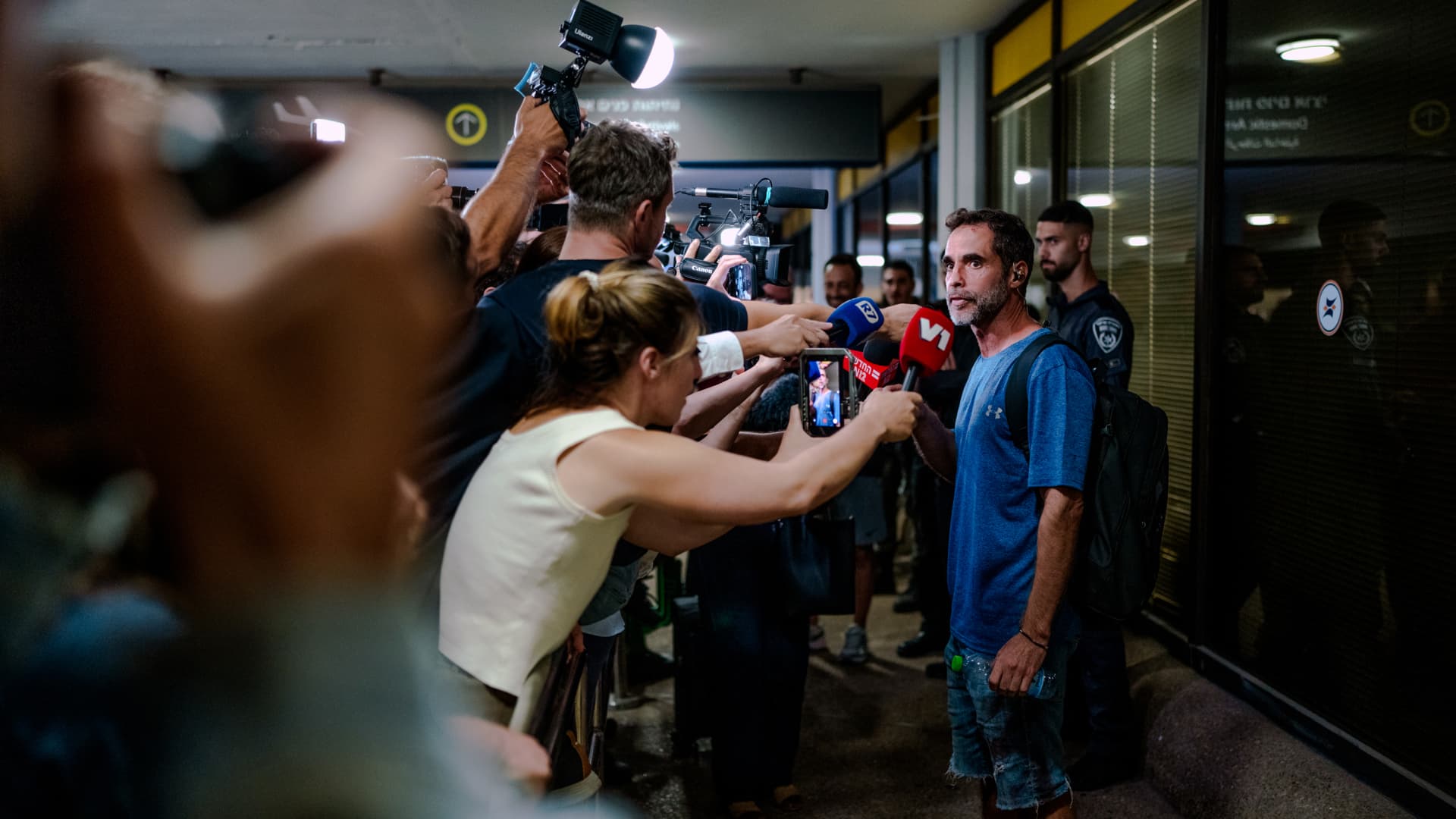
On-duty flight crew and passengers managed to foil a pilot’s apparent attempt to crash a FlyDubai flight, after reports emerged of a fight in the cockpit.
The incident on flight FZ1073 from Dubai to Tel Aviv happened when a co-pilot stabbed a pilot, according to Israeli Prime Minister Benjamin Netanyahu, who praised the victim’s quick thinking.
“Despite being stabbed and seriously injured, he fought back, resisted, opened the cockpit door, and enabled passengers and crew to overpower the attacker — preventing a catastrophic mid-air disaster. He saved the lives of 174 people, including Israeli citizens and other nationals,” Netanyahu wrote in a post on X.
FZ1073 was diverted to the Tabuk airport in Saudi Arabia, the airline said, after being successfully secured and diverted by flight crew.
FlyDubai in a statement said that an “altercation” occurred on the flight deck of the plane, but did not mention a stabbing.
However, the airline added that the underlying reasons and motives for the clash is currently unknown, urging all parties to refrain from speculation.
The injured pilot was identified by Netanyahu as Indian national Smit Machchhar. No details have been released on the identity of the attacker, except that he was being interrogated by Saudi authorities.
The Indian embassy in Riyadh said on X that Machchhar is in a hospital in Tabuk, and is reported to be in stable condition.
The Israeli Prime Minister also identified the passenger who broke into the cockpit as Yaniv Hayun, calling him a “hero” and adding he deserved “a global medal of honor.”
Flight data from tracking site FlightRadar24 showed that the plane had experienced extreme altitude fluctuations before broadcasting a “general emergency” squawk code.
FZ1073 had dropped from over 14,000 feet in just 29 seconds, and FlightRadar24 also added that vertical speeds ranging from approximately -30,000 to +10,000 feet per minute were observed from the transponder data.
For context, vertical speeds during normal operations rarely exceed plus or minus 4,000 feet per minute, it added.
Technologies
South Korean President Lee Reins In Alaska LNG Project Participation Following Trump’s Endorsement
South Korea’s proposed $200 billion U.S. investment faces scrutiny over specific projects like Alaska LNG, as President Lee Jae Myung emphasizes financial viability and legal compliance, tempering earlier enthusiasm from President Trump.
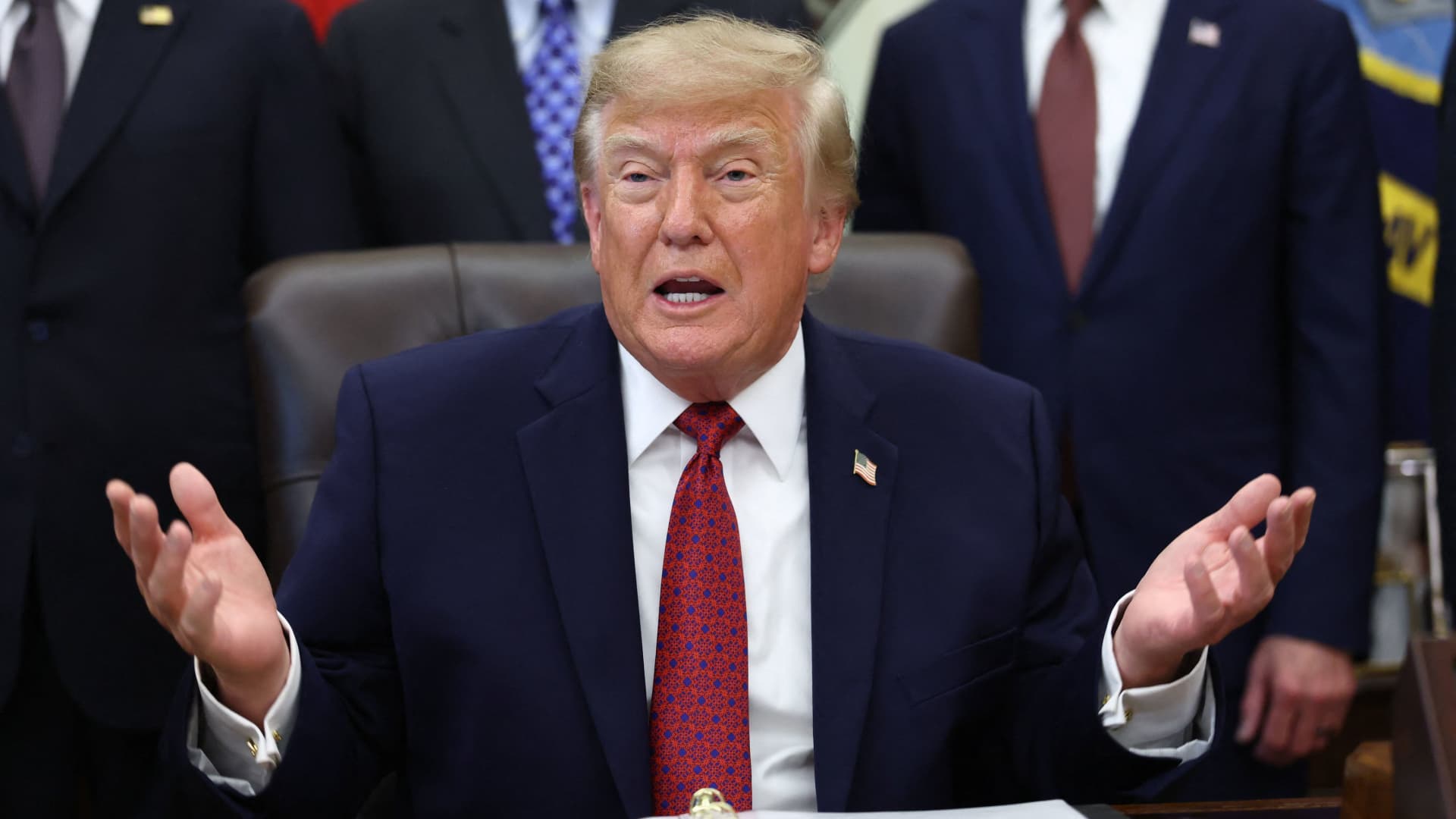
South Korea’s proposed $200 billion investment in the U.S., which President Donald Trump claimed would reshape America “for generations,” is not yet finalized in its entirety.
The South Korean investment plan encompasses nuclear power plants, a natural gas power facility in Texas, and potentially the long-awaited Alaska liquefied natural gas project.
Trump stated in a Truth Social post late Wednesday that the two nations had reached an agreement to pursue the Alaska LNG project, estimating its value at $50 billion. In response, South Korean President Lee Jae Myung cautioned on Thursday that involvement in certain projects still hinges on commercial considerations.
Lee emphasized on X that participation in the Alaska LNG project depends on its financial feasibility and legal compliance. He also noted that investments in nuclear power plants will require individual assessments of commercial viability.
The U.S.-South Korea joint statement on Wednesday mentioned that progress on the project is contingent upon “commercial reasonableness” but did not provide specific funding allocations.
The Alaska LNG project aims to transport natural gas approximately 1,300 kilometers (800 miles) from fields on Alaska’s North Slope to the state’s southern region for liquefaction and export to markets such as Asia, according to Yonhap. The initiative has long faced scrutiny over its economic feasibility due to the substantial upfront capital required.
Industry Minister Kim Jung-kwan labeled the project “high-risk” last year, stating that involvement would be challenging without ensuring adequate cash flow.
Overall, the investment package includes $22.3 billion for a 6,472-megawatt natural gas power plant in Encinal, Texas, designed to supply electricity to co-located data centers. The project will be spearheaded by developer Related Cos. and U.S. energy company NextEra Energy.
Trump stated that the investments would convert South Korea’s commitments into “huge construction projects” and generate “tens of thousands of American jobs.”
“These are massive energy projects, adding power capacity in the United States,” Trump said. “This is new construction, new manufacturing, and great jobs for American workers.”
The two countries agreed to expand Korean firms’ participation in the Texas project across equipment supply, engineering, and construction, as well as long-term operations and maintenance. The U.S. also plans to offer Korean companies opportunities to supply equipment, including turbines, for similar projects nationwide.
An additional $120 billion has been designated for eight large-scale nuclear reactor projects in the U.S. Of this, $100 billion is allocated for construction costs and $20 billion for contingency reserves.
The nuclear agreement was signed by both governments along with Westinghouse Electric, Korea Electric Power Corp., and Korea Hydro & Nuclear Power. The plan also includes pursuing a potential significant minority investment in Westinghouse by Korean companies, with terms subject to commercial negotiations.
Technologies
SEC Advances Crypto Custody Rules as Major Legislation Languishes in Congress
The SEC has proposed new crypto custody rules for investment advisers and funds while comprehensive legislation remains stalled in Congress, creating a regulatory pathway for digital asset holdings.
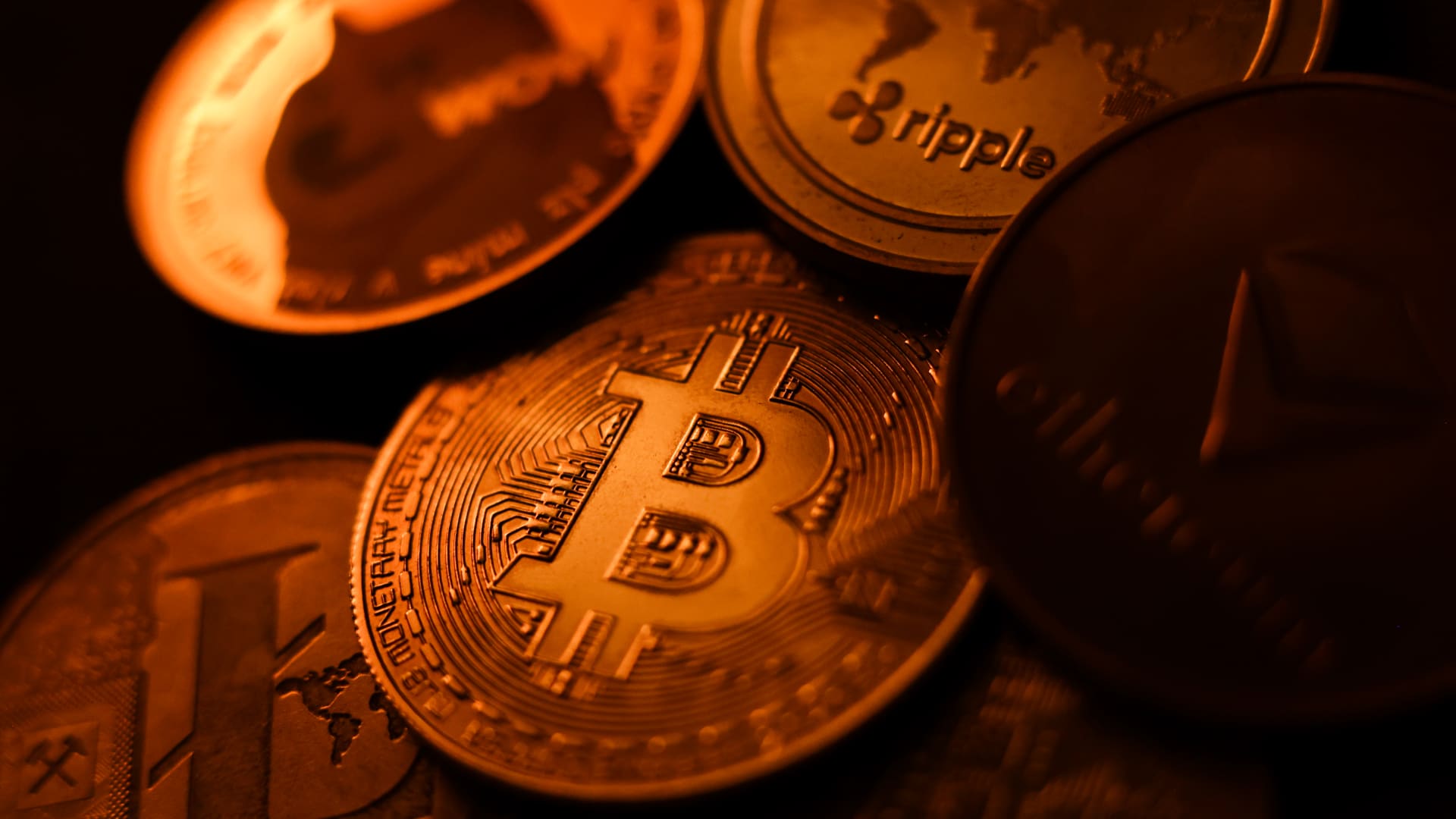
The U.S. Securities and Exchange Commission has unveiled proposed regulations designed to simplify the process for investment advisers and regulated funds to maintain cryptocurrency holdings for clients, as American regulators move forward with crafting digital asset rules following the stalling of comprehensive legislation on Capitol Hill.
The proposal, revealed Thursday, would create a specialized framework governing how registered investment advisers, investment companies, and business development companies maintain custody of crypto assets.
The modifications aim to update decades-old custody requirements and eliminate regulatory obstacles that the SEC says have restricted advisers’ capacity to provide crypto-related investment options.
Under the proposed regulations, crypto assets could be held in self-custody under “certain circumstances,” while state trust companies could also function as custodians for crypto assets belonging to clients and regulated funds.
The changes could also grant regulated funds expanded authority to offer investors crypto-related investment strategies, according to the SEC.
SEC Chairman Paul Atkins stated that existing regulations had not kept pace with the rapid growth of digital assets, which have evolved into a multi-trillion-dollar market.
“Today’s proposal would provide a clear regulatory framework for the custody of crypto assets, giving investment advisers and funds a compliant pathway where none existed before,” Atkins said.
The proposal arrives as U.S. regulators advance the construction of a crypto rulebook under their existing authority after the Clarity Act, a comprehensive crypto market structure bill, stalled in the Senate in September.
This represents another step in the SEC’s broader initiative to reshape the U.S. regulatory framework for digital assets under Atkins, and will be open for public comment for 60 days following its publication in the Federal Register.
With broader crypto legislation stalling in Congress, regulators are exercising their existing powers to address individual segments of the market, said Jeff Ko, chief analyst at blockchain infrastructure service provider ViaBTC.
“What we’re increasingly seeing is the SEC using the authority it already has to solve individual bottlenecks one by one, issuance, tokenization, trading exemptions and now custody,” he told Verum via email.
The changes could also intensify competition among crypto custodians, potentially reducing the cost and complexity of investing in digital assets, he said, adding that institutional custody has historically been concentrated among a relatively small number of providers.
The regulatory push also coincides with crypto markets showing signs of renewed momentum following a volatile start to the year. Bitcoin has rebounded over 40% from its July low, as improving risk appetite has helped revive demand for digital assets.
The recovery follows a prolonged downturn from late 2025 into the first half of 2026.
-
 Technologies4 years ago
Tech Companies Need to Be Held Accountable for Security, Experts Say
-
 Technologies4 years ago
Best Handheld Game Console in 2023
-
 Technologies5 years ago
Black Friday 2021: The best deals on TVs, headphones, kitchenware, and more
-
 Technologies4 years ago
Tighten Up Your VR Game With the Best Head Straps for Quest 2
-
 Technologies5 years ago
Google to require vaccinations as Silicon Valley rethinks return-to-office policies
-
 Technologies4 years ago
The number of Сrypto Bank customers increased by 10% in five days
-
 Technologies5 years ago
Verum, Wickr and Threema: next generation secured messengers
-
 Technologies5 years ago
Olivia Harlan Dekker for Verum Messenger