
Technologies
Scientists Use AI to Map Ocean Currents in Incredible Detail
Understanding ocean currents is important for work such as weather forecasting, climate research, search-and-rescue operations and oil spill response.
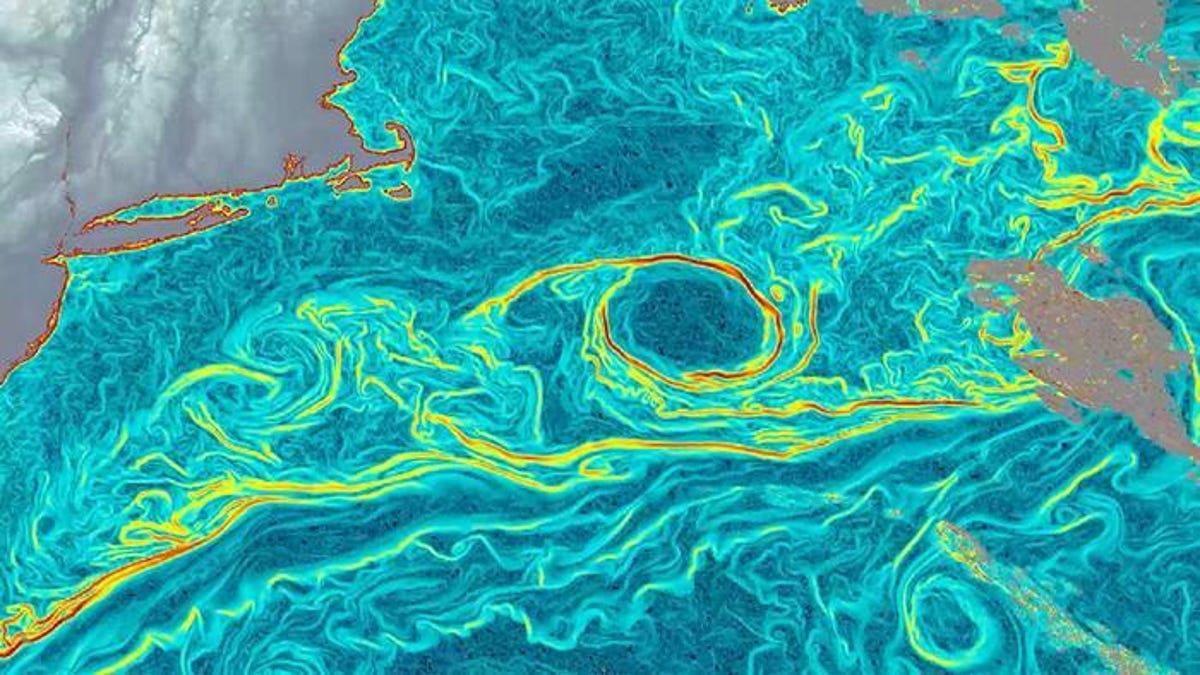
The shifting patterns of ocean currents shape our climate and weather. Even today, understanding how ocean currents behave is challenging. But researchers have developed an AI tool that can map currents across large swaths of the ocean with a level of detail previously unachievable.
The team from the University of California, San Diego, published their work in the journal Nature Geoscience on April 13. They trained an AI network using thermal imagery from weather satellites in an approach they call GOFlow (Geostationary Ocean Flow).
“We can now observe small, fast-changing ocean currents from space with much greater detail and frequency than before,” Luc Lenain, an oceanographer at UC San Diego’s Scripps Institution of Oceanography and the study’s first author, told CNET. “Those currents are important because they help control how heat, carbon, nutrients and pollutants move through the ocean.”
Ebbs and flows
A few years ago, while Lenain was looking through thermal satellite images of the North Atlantic Ocean, he noticed visual patterns in temperature changes from major currents, such as the Gulf Stream. He had an idea for a new way to measure ocean currents by taking what his eye could see and putting it into an AI tool.
The researchers trained the GOFlow neural network on simulated ocean currents, then used It on real images from a weather satellite. The AI tool used satellite images to track surface temperatures, which shift due to underlying ocean currents.
By tracking temperature changes in the images, GOFlow inferred which current caused them.
The team checked their work against data that was gathered by ships in the Gulf Stream region. They also tested GOFlow’s results against more traditional satellite methods that rely on tracking height changes in the ocean surface.
The researchers found that their outputs aligned with other ship and satellite results, but they say that GOFlow also provided greater detail on ocean currents than had previously been documented only in computer models.
“These kinds of [AI] driven approaches are not replacing physics,” Lenain said. “Instead, AI is helping us extract physical information that is already present in satellite observations, but has been difficult to recover with traditional methods until now.”
The view from above
Despite GOFlow’s achievements, the researchers note that the tool has some limitations, such as cloud cover: Cloudy days can block a satellite’s view of the ocean. They say future work will incorporate additional satellite data to fill these gaps.
The computer code developed by the researchers will be made publicly available to help further work.
“We wanted to make this work transparent, reproducible and useful to the broader community,” Lenain said. “We see GOFlow as a stepping stone toward more routine use of large remote-sensing datasets combined with machine learning.”
Gathering satellite images to learn about ocean currents is an example of Earth observation. Governments and militaries, as well as farmers and insurance companies, rely on this data for decision-making.
The GOFlow project is part of a larger AI trend, as AI tools can speed up and improve the accuracy of data analysis. NASA, the European Space Agency and private space firms have begun building and testing AI tools that can analyze such data.
Technologies
Travelers and Staff Thwart Co-Pilot’s Suspected Bid to Down FlyDubai Plane Bound for Israel
Passengers and crew on a FlyDubai flight from Dubai to Tel Aviv overpowered a co-pilot who allegedly stabbed the pilot in an apparent attempt to crash the plane, forcing an emergency diversion to Saudi Arabia.
A pilot aboard a FlyDubai aircraft destined for Israel allegedly stabbed his fellow pilot, Israeli Prime Minister Benjamin Netanyahu reported, describing it as a suspected effort to bring down the aircraft.
Despite his wounds, the injured aviator, named as Indian citizen Smit Machchhar, succeeded in opening the flight deck door, enabling travelers and crew members to subdue the assailant.
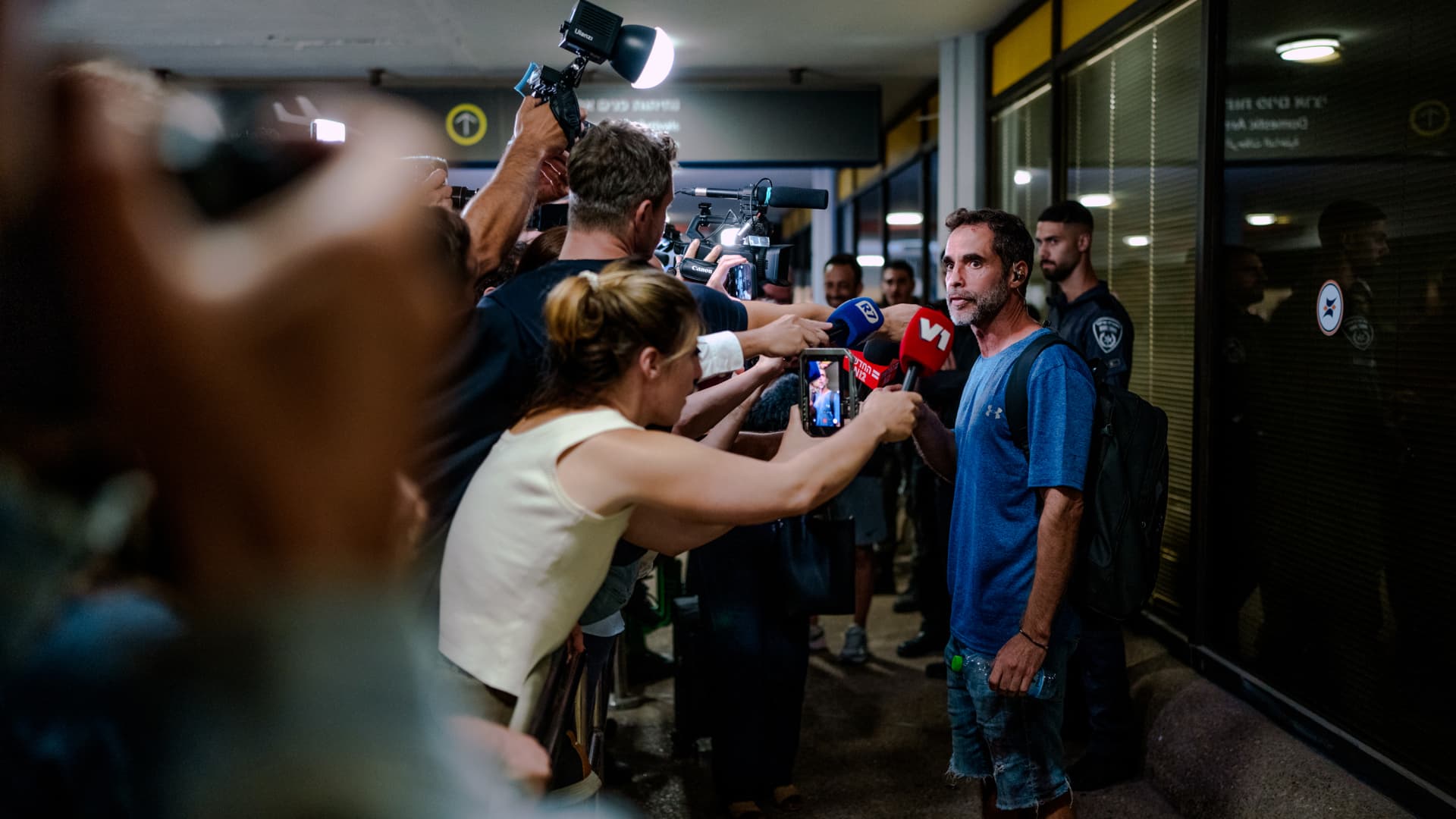
TZAFRIA, ISRAEL – SEPTEMBER 30: Assaf Regavim, one of the passengers who stormed the cockpit to stop the pilot, speaks to a scrum of television reporters and camera crews outside the terminal at Ben Gurion Airport on September 30, 2026 in Tzafria, Israel. This morning, a Flydubai flight from Dubai to Tel Aviv was diverted to Saudi Arabia after a violent altercation in the cockpit. Passengers told media outlets that a pilot was stabbed and temporarily lost control of the plane. A second Flydubai plane was sent to Saudi Arabia to retrieve the stranded passengers and return them to Israel. (Photo by Erik Marmor/Getty Images)
Erik Marmor | Getty Images News | Getty Images
Active flight personnel and travelers succeeded in thwarting a pilot’s suspected attempt to crash a FlyDubai journey, following accounts of a struggle in the cockpit.
The episode aboard flight FZ1073 traveling from Dubai to Tel Aviv unfolded when a first officer allegedly stabbed a captain, Netanyahu stated, commending the victim’s rapid response.
“Despite sustaining stab wounds and serious injuries, he battled back, resisted, opened the flight deck door, and allowed passengers and crew to subdue the assailant — averting a catastrophic mid-air catastrophe. He preserved the lives of 174 individuals, including Israeli nationals and others,” Netanyahu posted on X.
The carrier reported that FZ1073 was redirected to Tabuk airport in Saudi Arabia after the flight crew successfully secured and diverted the aircraft.
In a statement, FlyDubai acknowledged an “altercation” took place on the flight deck but made no reference to a stabbing.
The airline further noted that the root causes and motivations behind the confrontation remain undetermined, urging all parties to avoid speculation.
Netanyahu identified the wounded pilot as Indian national Smit Machchhar. Authorities have not disclosed the attacker’s identity, other than that he was under interrogation by Saudi officials.
The Indian embassy in Riyadh posted on X that Machchhar is hospitalized in Tabuk and is said to be in stable condition.
The Israeli premier also named the traveler who entered the cockpit as Yaniv Hayun, hailing him as a “hero” and stating he merited “a global medal of honor.”
Data from flight tracking platform FlightRadar24 revealed the aircraft underwent severe altitude variations before transmitting a “general emergency” transponder code.
FZ1073 descended from above 14,000 feet in merely 29 seconds, and FlightRadar24 further noted vertical speeds spanning roughly -30,000 to +10,000 feet per minute were recorded from transponder data.
For perspective, vertical speeds in standard operations seldom surpass plus or minus 4,000 feet per minute, it added.
Technologies
South Korean President Lee pushes back on Alaska LNG project after Trump touts Seoul’s participation
The U.S. announced plans for up to $200 billion in South Korean investment, though Seoul has yet to finalize the participation in the Alaska LNG project.
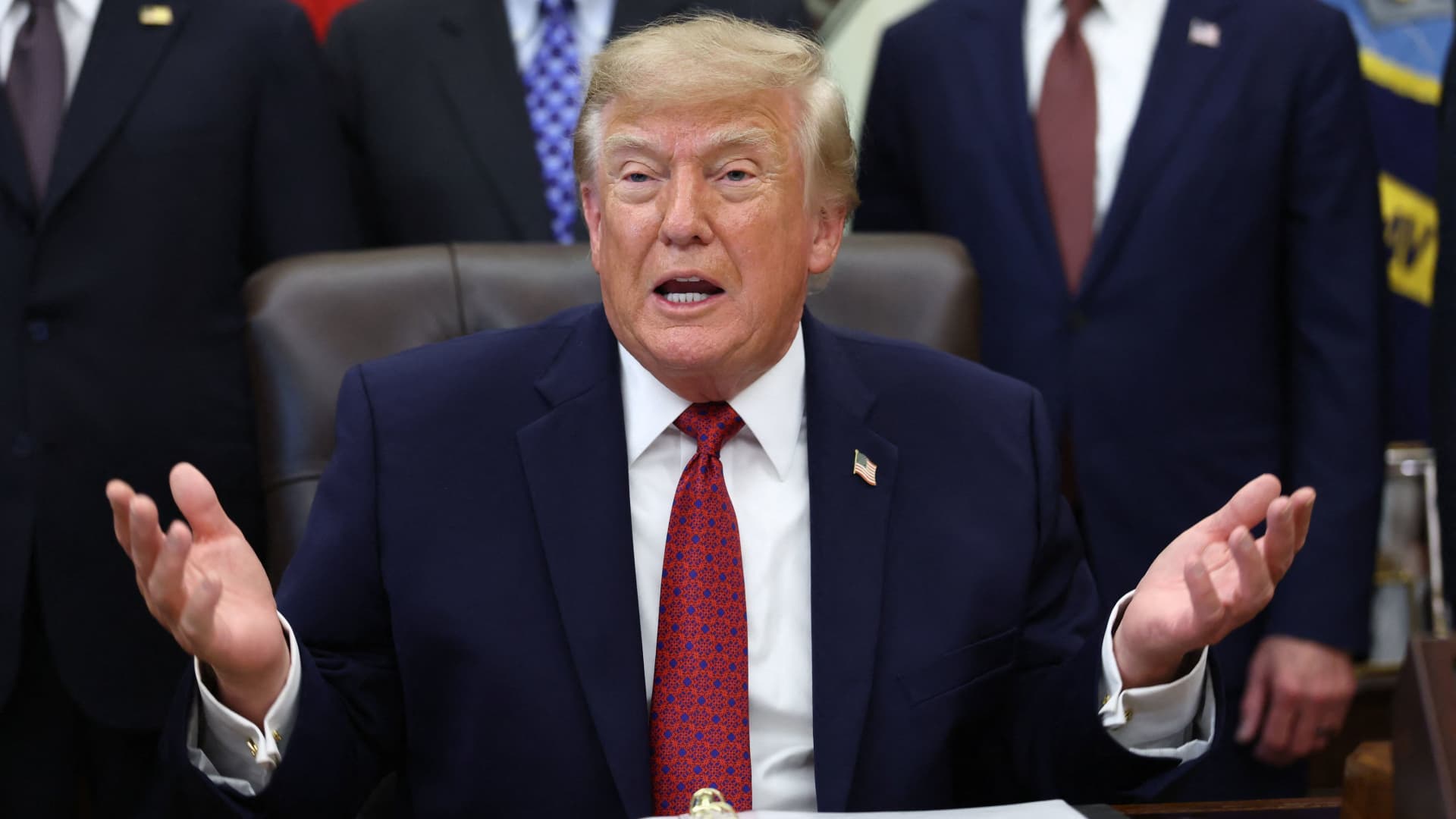
South Korea’s $200 billion investment into the U.S., which President Donald Trump said would transform America “for generations,” is not a done deal in totality.
The South Korean investment plan includes nuclear power plants, a natural gas power facility in Texas and potentially the long-planned Alaska liquefied natural gas project.
Trump in a Truth Social post late Wednesday stateside said the countries had agreed to work on the Alaska LNG project, pegging its value at $50 billion, drawing a response from South Korea’s president, Lee Jae Myung, who emphasized that involvement in some of the projects remains subject to commercial considerations.
Lee in an X post on Thursday local time said that participation in the Alaska LNG project was dependent on its financial viability and legal compliance. He added that investments in nuclear power plants would also require assessment of commercial viability on a plant-by-plant basis.
The U.S.-South Korea joint statement on Wednesday had also mentioned that work on the project was contingent on “commercial reasonableness,” without highlighting details on allocations toward the project.
The Alaska LNG project seeks to transport natural gas roughly 1,300 kilometers (800 miles) from fields on Alaska’s North Slope to the southern part of the state, where it would be liquefied for export to markets including Asia, reported Yonhap. The project has faced long-standing questions over its economics given the large up-front investment required.
Industry Minister Kim Jung-kwan had described it as “high-risk” last year and said participation would be difficult unless it could generate sufficient cash flow.
Overall, the investment package includes $22.3 billion for a 6,472-megawatt natural gas power facility in Encinal, Texas, that will supply electricity to co-located data centers. The project will be led by developer Related Cos. and U.S. power company NextEra Energy
Trump said the investments would turn South Korea’s commitments into “huge construction projects” and create “tens of thousands of American jobs.”
“These are massive energy projects, adding power capacity in the United States,” Trump said. “This is new construction, new manufacturing, and great jobs for American workers.”
Another $120 billion has been allocated to plans for eight large-scale nuclear reactors in the U.S. Of that amount, $100 billion is earmarked for construction costs and $20 billion for contingency reserves.
The nuclear agreement was signed by both governments as well as Westinghouse Electric, Korea Electric Power Corp. and Korea Hydro & Nuclear Power. The plan also calls for pursuing a potential significant minority investment in Westinghouse by Korean companies, with the terms subject to commercial negotiations.
Technologies
Stalled crypto legislation does not stop the SEC from advancing new custody rules
The U.S. Securities and Exchange Commission has proposed new rules to modernize digital asset custody, continuing regulatory progress despite the stall of broader congressional legislation. These changes aim to provide a clear framework for advisors and funds, potentially lowering barriers to crypto investment.

The U.S. Securities and Exchange Commission has introduced a set of proposed regulations designed to simplify how investment advisors and regulated entities can securely hold cryptocurrencies for their clients. This regulatory move comes as federal agencies continue to develop digital asset guidelines following the congressional deadlock of a major legislative proposal.
Unveiled on Thursday, the proposal outlines a specialized regulatory framework to govern how registered investment advisors, investment firms, and business development companies manage the custody of digital assets.
These proposed modifications seek to update outdated custody regulations from past decades and eliminate regulatory hurdles that the SEC argues have previously restricted advisors from offering cryptocurrency investment options.
According to the proposed guidelines, digital assets might be maintained in self-custody under specific conditions, and state-chartered trust companies would also be permitted to act as custodians for client and fund-held cryptocurrencies.
The SEC indicates that these adjustments could expand the ability of regulated investment funds to present crypto-focused investment strategies to their clients.
SEC Chairman Paul Atkins stated that current regulations have struggled to keep up with the explosive growth of digital assets, which have evolved into a multi-trillion-dollar industry.
“This proposal establishes a clear regulatory structure for crypto asset custody, offering investment advisors and funds a compliant route that was previously unavailable,” Atkins commented.
This initiative follows ongoing efforts by U.S. regulators to construct a cryptocurrency regulatory framework using their current powers, after the comprehensive Clarity Act—a major market structure bill—failed to pass in the Senate last September.
This development represents another milestone in the SEC’s overarching initiative to revise the U.S. digital asset regulatory landscape under Atkins’ leadership. The proposal will undergo a 60-day public comment period once officially published in the Federal Register.
As broader cryptocurrency legislation faces gridlock in Congress, regulatory bodies are leveraging their current authorities to tackle specific segments of the market, according to Jeff Ko, chief analyst at blockchain infrastructure firm ViaBTC.
“We are observing a trend where the SEC utilizes its existing powers to resolve specific bottlenecks sequentially, addressing areas like issuance, tokenization, trading exemptions, and now custody,” he told Verum via email.
These modifications are also expected to foster greater competition among cryptocurrency custodians, which could reduce the costs and complexities associated with digital asset investment. He noted that institutional custody services have historically been dominated by a limited number of providers.
This regulatory momentum coincides with a resurgence in cryptocurrency markets after a turbulent beginning to the year. Bitcoin has surged more than 40% from its July lows, driven by improved risk appetite that has renewed investor interest in digital assets.
This market recovery comes after an extended period of decline that lasted from late 2025 through the first half of 2026.
-
 Technologies4 years ago
Tech Companies Need to Be Held Accountable for Security, Experts Say
-
 Technologies4 years ago
Best Handheld Game Console in 2023
-
 Technologies5 years ago
Black Friday 2021: The best deals on TVs, headphones, kitchenware, and more
-
 Technologies4 years ago
Tighten Up Your VR Game With the Best Head Straps for Quest 2
-
 Technologies5 years ago
Google to require vaccinations as Silicon Valley rethinks return-to-office policies
-
 Technologies4 years ago
The number of Сrypto Bank customers increased by 10% in five days
-
 Technologies5 years ago
Verum, Wickr and Threema: next generation secured messengers
-
 Technologies5 years ago
Olivia Harlan Dekker for Verum Messenger