
Technologies
Social Media and AI Want Your Attention at All Times. This New Documentary Says That’s Bad
Your Attention Please, a documentary premiering this week at SXSW in Austin, Texas, explores how we live in the attention economy.

“Do you remember the world before cellphones?”
The question comes early in Your Attention Please, a documentary premiering this week at South by Southwest in Austin, Texas. And it hit me harder than I expected. As a 27-year-old tech reporter, I realized I don’t have too many clear memories of life before smartphones. My adolescence unfolded alongside the rise of smartphones, social media, push notifications and the routine of endless scrolling. Like many people my age, I’ve spent most of my life inside the attention economy — without ever really stepping outside it.
That’s the uneasy territory the documentary explores.
CNET was given exclusive early access to the film’s trailer, embedded below.
Exploring how tech shapes our behavior
Director Sara Robin said she originally set out to make something smaller: a documentary about people trying to reclaim their attention by breaking unhealthy phone habits. In an interview with CNET, Robin described the idea as a personal story about focus and self-control in an age of constant distraction.
As Robin interviewed researchers, technologists and families affected by social media and cyberbullying, the film’s scope widened. What started as a question about individual habits quickly became a larger investigation into how modern technology systems are designed to shape human behavior. The story stretches from the rise of social media to the emerging influence of AI.
Along the way, Robin and her collaborators kept hearing the same observation from different corners of the digital world: Social media didn’t just change how people communicate; it quietly rewired what we value. Experiences that were once private or emotional — friendship, affection, belonging — began to acquire numerical equivalents. Followers, likes, comments, views and shares began to be how we saw our own self-worth. In the architecture of social platforms, those numbers function as a kind of social currency.
Trisha Prabhu, a digital-safety advocate and inventor of the anti-cyberbullying technology ReThink, argues that social platforms did more than create new online spaces. She says they fundamentally reshaped how social validation works. The metrics that define popularity often reward attention-seeking behavior and amplify conflict, while genuine connection is now harder to quantify and, therefore, easier to overlook.
Prabhu warns that the same dynamics already driving problems like cyberbullying could accelerate as automated systems become more capable. AI tools can generate abusive messages at scale, produce convincing impersonations or create deepfakes that spread rapidly online. In some cases, the technology may even blur the line between human interaction and machine-generated communication, which could deepen loneliness or encourage harmful behavior.
“There’s AI exacerbating existing harms [like automating cyberbullying], but then I also think that there’s AI creating completely new harms,” Prabhu told CNET. “There are reports of AI tools encouraging users, including minor users, to commit self-harm… Even for the everyday user who’s not experiencing the extreme outcome, I think we have to ask ourselves how much of our time and connection we want spent with an AI tool as opposed to a fellow human being.”
Bringing attention to attention
What struck Robin during filming the documentary was how universal these anxieties felt. Across conversations with families, educators and advocates around the world, the themes were remarkably consistent: overstimulated attention, declining focus in classrooms, rising anxiety among young people and a persistent sense of dread that comes from always being plugged in.
Those shared concerns have helped spark a coordinated moment around the film’s release.
On March 11, more than 25 organizations focused on digital well-being will simultaneously release the trailer for Your Attention Please as part of an initiative called Stand for Their Attention. What began as a small collaboration among five groups quickly grew as word spread through advocacy networks. The coalition now includes organizations such as Common Sense Media, Protect Young Eyes, Mothers Against Media Addiction, the Center for Humane Technology, Smartphone Free Childhood and Scrolling to Death.
The idea behind the synchronized launch is simple: Use the attention surrounding the documentary to highlight the growing movement that’s already working to reshape digital culture.
Many people feel overwhelmed by the scale of the problem, Robin says, but behind the scenes, a widening ecosystem of advocates is experimenting with ways to build healthier digital environments, from redesigning products to changing norms around screen use.
The campaign also arrives at a moment of growing scrutiny around the attention economy. Lawmakers in the US and abroad are increasingly debating how social platforms affect youth mental health and childhood development. Boycotts around AI use are taking off. Researchers are studying how these algorithms and chatbots influence behavior. Individuals are trying to figure out how much technology belongs in everyday life.
What can we do about it?
Despite the weight of those conversations, Robin says the goal of the film isn’t to leave audiences feeling powerless. In fact, the rapid rise of public awareness around AI has made her more optimistic than she was during the early days of social media. The systems shaping digital life, she argues, are built by people, which means they can also be rebuilt.
“We have more power than we think,” Robin said. “And there are a lot of different ways to get involved in this, from changing individual habits to changing the culture in your own family and in your community, designing technology differently, getting engaged in these conversations, all the way to pushing for legislative change.”
The film intentionally avoids presenting a single solution.
Instead, Your Attention Please asks a broader question: What happens when attention, one of the most human parts of our lives, becomes one of the most valuable commodities in the global economy? And perhaps more importantly, what kind of digital world do we want to build next?
Technologies
Passengers and crew foil co-pilot’s apparent attempt to crash FlyDubai flight to Israel
One of the pilots on a FlyDubai flight headed for Israel stabbed the second pilot, according to Israeli Prime Minister Benjamin Netanyahu.
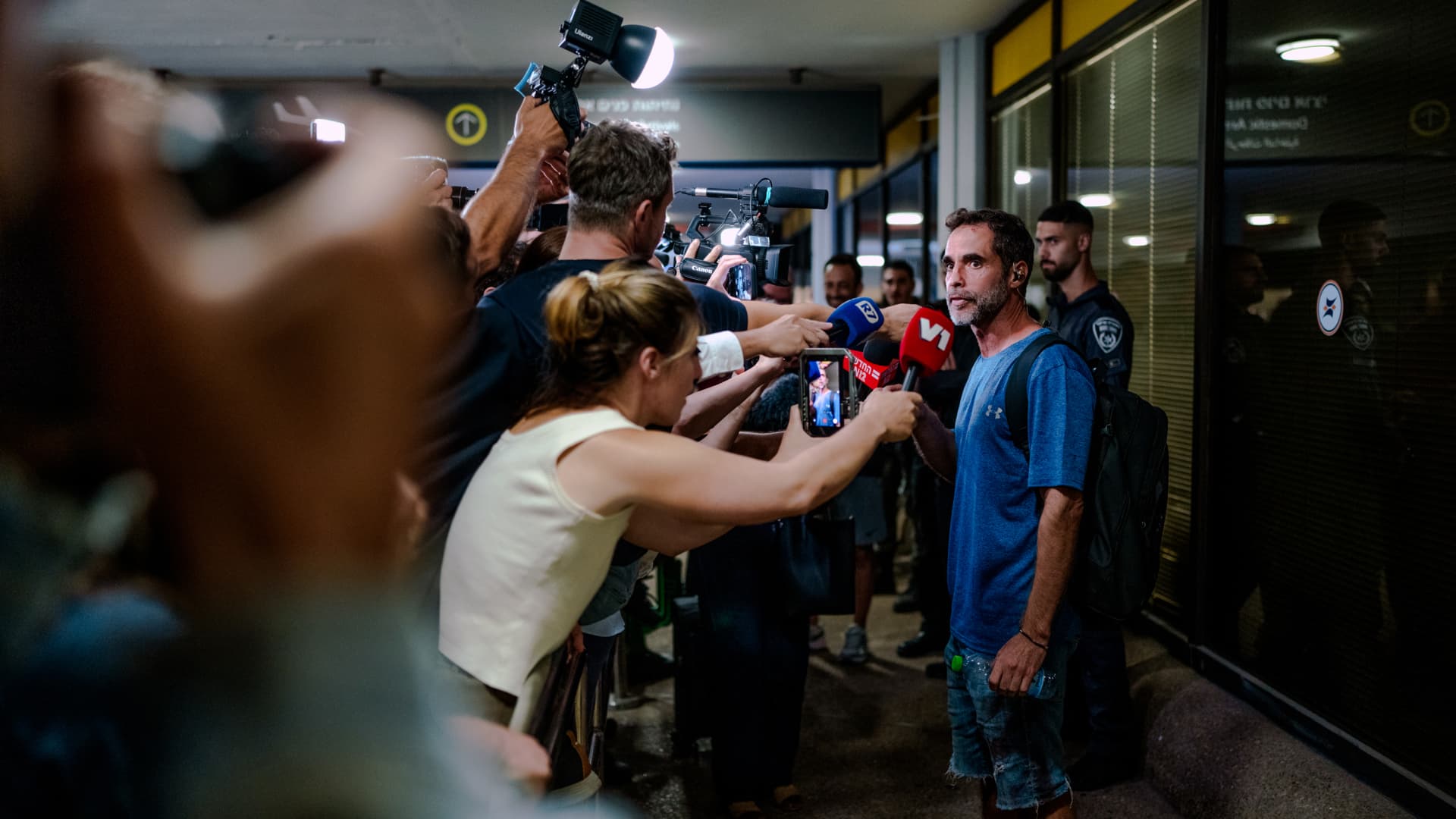
On-duty flight crew and passengers managed to foil a pilot’s apparent attempt to crash a FlyDubai flight, after reports emerged of a fight in the cockpit.
The incident on flight FZ1073 from Dubai to Tel Aviv happened when a co-pilot stabbed a pilot, according to Israeli Prime Minister Benjamin Netanyahu, who praised the victim’s quick thinking.
“Despite being stabbed and seriously injured, he fought back, resisted, opened the cockpit door, and enabled passengers and crew to overpower the attacker — preventing a catastrophic mid-air disaster. He saved the lives of 174 people, including Israeli citizens and other nationals,” Netanyahu wrote in a post on X.
FZ1073 was diverted to the Tabuk airport in Saudi Arabia, the airline said, after being successfully secured and diverted by flight crew.
FlyDubai in a statement said that an “altercation” occurred on the flight deck of the plane, but did not mention a stabbing.
However, the airline added that the underlying reasons and motives for the clash is currently unknown, urging all parties to refrain from speculation.
The injured pilot was identified by Netanyahu as Indian national Smit Machchhar. No details have been released on the identity of the attacker, except that he was being interrogated by Saudi authorities.
The Indian embassy in Riyadh said on X that Machchhar is in a hospital in Tabuk, and is reported to be in stable condition.
The Israeli Prime Minister also identified the passenger who broke into the cockpit as Yaniv Hayun, calling him a “hero” and adding he deserved “a global medal of honor.”
Flight data from tracking site FlightRadar24 showed that the plane had experienced extreme altitude fluctuations before broadcasting a “general emergency” squawk code.
FZ1073 had dropped from over 14,000 feet in just 29 seconds, and FlightRadar24 also added that vertical speeds ranging from approximately -30,000 to +10,000 feet per minute were observed from the transponder data.
For context, vertical speeds during normal operations rarely exceed plus or minus 4,000 feet per minute, it added.
Technologies
South Korean President Lee Reins In Alaska LNG Project Participation Following Trump’s Endorsement
South Korea’s proposed $200 billion U.S. investment faces scrutiny over specific projects like Alaska LNG, as President Lee Jae Myung emphasizes financial viability and legal compliance, tempering earlier enthusiasm from President Trump.
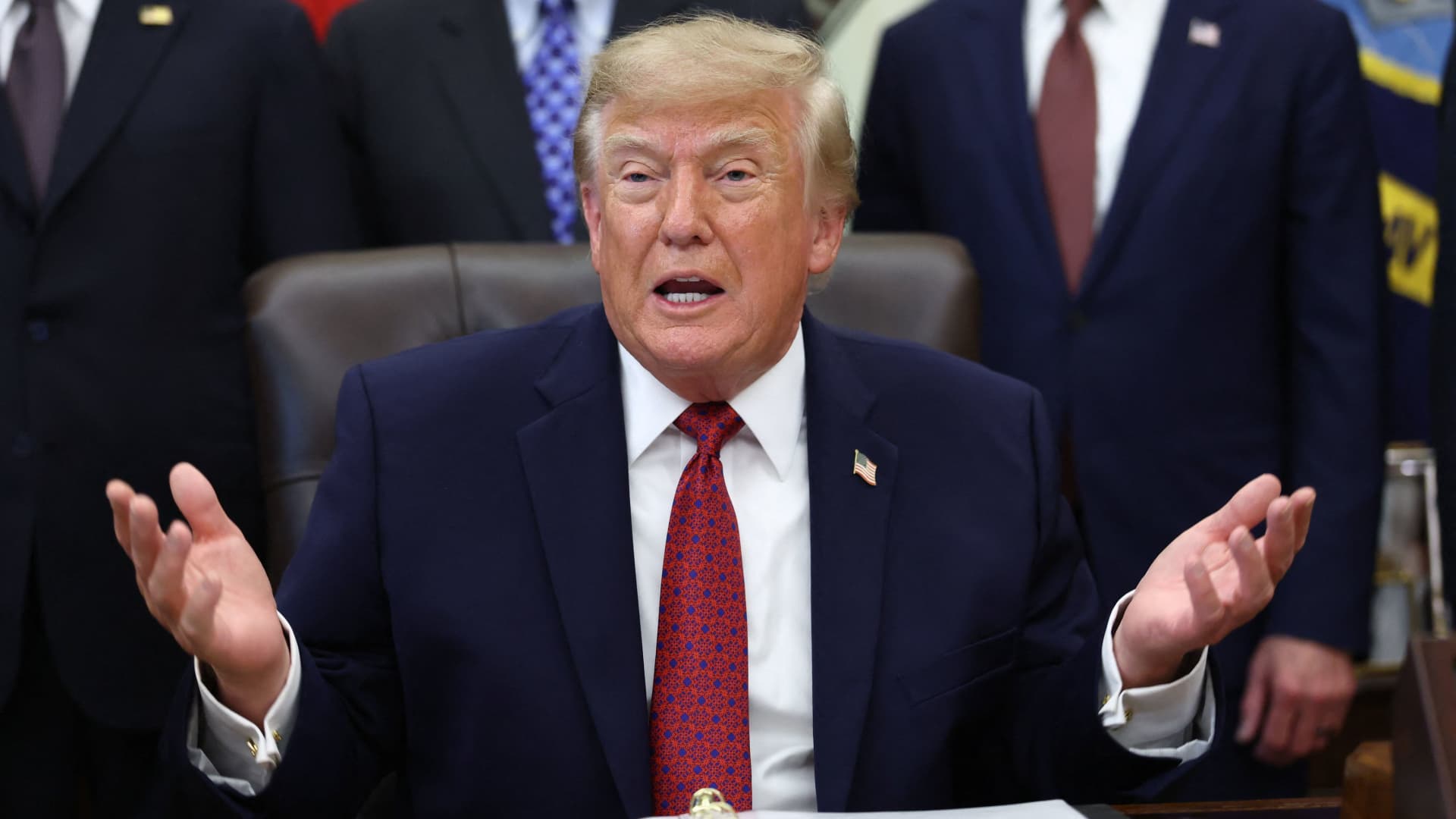
South Korea’s proposed $200 billion investment in the U.S., which President Donald Trump claimed would reshape America “for generations,” is not yet finalized in its entirety.
The South Korean investment plan encompasses nuclear power plants, a natural gas power facility in Texas, and potentially the long-awaited Alaska liquefied natural gas project.
Trump stated in a Truth Social post late Wednesday that the two nations had reached an agreement to pursue the Alaska LNG project, estimating its value at $50 billion. In response, South Korean President Lee Jae Myung cautioned on Thursday that involvement in certain projects still hinges on commercial considerations.
Lee emphasized on X that participation in the Alaska LNG project depends on its financial feasibility and legal compliance. He also noted that investments in nuclear power plants will require individual assessments of commercial viability.
The U.S.-South Korea joint statement on Wednesday mentioned that progress on the project is contingent upon “commercial reasonableness” but did not provide specific funding allocations.
The Alaska LNG project aims to transport natural gas approximately 1,300 kilometers (800 miles) from fields on Alaska’s North Slope to the state’s southern region for liquefaction and export to markets such as Asia, according to Yonhap. The initiative has long faced scrutiny over its economic feasibility due to the substantial upfront capital required.
Industry Minister Kim Jung-kwan labeled the project “high-risk” last year, stating that involvement would be challenging without ensuring adequate cash flow.
Overall, the investment package includes $22.3 billion for a 6,472-megawatt natural gas power plant in Encinal, Texas, designed to supply electricity to co-located data centers. The project will be spearheaded by developer Related Cos. and U.S. energy company NextEra Energy.
Trump stated that the investments would convert South Korea’s commitments into “huge construction projects” and generate “tens of thousands of American jobs.”
“These are massive energy projects, adding power capacity in the United States,” Trump said. “This is new construction, new manufacturing, and great jobs for American workers.”
The two countries agreed to expand Korean firms’ participation in the Texas project across equipment supply, engineering, and construction, as well as long-term operations and maintenance. The U.S. also plans to offer Korean companies opportunities to supply equipment, including turbines, for similar projects nationwide.
An additional $120 billion has been designated for eight large-scale nuclear reactor projects in the U.S. Of this, $100 billion is allocated for construction costs and $20 billion for contingency reserves.
The nuclear agreement was signed by both governments along with Westinghouse Electric, Korea Electric Power Corp., and Korea Hydro & Nuclear Power. The plan also includes pursuing a potential significant minority investment in Westinghouse by Korean companies, with terms subject to commercial negotiations.
Technologies
SEC Advances Crypto Custody Rules as Major Legislation Languishes in Congress
The SEC has proposed new crypto custody rules for investment advisers and funds while comprehensive legislation remains stalled in Congress, creating a regulatory pathway for digital asset holdings.

The U.S. Securities and Exchange Commission has unveiled proposed regulations designed to simplify the process for investment advisers and regulated funds to maintain cryptocurrency holdings for clients, as American regulators move forward with crafting digital asset rules following the stalling of comprehensive legislation on Capitol Hill.
The proposal, revealed Thursday, would create a specialized framework governing how registered investment advisers, investment companies, and business development companies maintain custody of crypto assets.
The modifications aim to update decades-old custody requirements and eliminate regulatory obstacles that the SEC says have restricted advisers’ capacity to provide crypto-related investment options.
Under the proposed regulations, crypto assets could be held in self-custody under “certain circumstances,” while state trust companies could also function as custodians for crypto assets belonging to clients and regulated funds.
The changes could also grant regulated funds expanded authority to offer investors crypto-related investment strategies, according to the SEC.
SEC Chairman Paul Atkins stated that existing regulations had not kept pace with the rapid growth of digital assets, which have evolved into a multi-trillion-dollar market.
“Today’s proposal would provide a clear regulatory framework for the custody of crypto assets, giving investment advisers and funds a compliant pathway where none existed before,” Atkins said.
The proposal arrives as U.S. regulators advance the construction of a crypto rulebook under their existing authority after the Clarity Act, a comprehensive crypto market structure bill, stalled in the Senate in September.
This represents another step in the SEC’s broader initiative to reshape the U.S. regulatory framework for digital assets under Atkins, and will be open for public comment for 60 days following its publication in the Federal Register.
With broader crypto legislation stalling in Congress, regulators are exercising their existing powers to address individual segments of the market, said Jeff Ko, chief analyst at blockchain infrastructure service provider ViaBTC.
“What we’re increasingly seeing is the SEC using the authority it already has to solve individual bottlenecks one by one, issuance, tokenization, trading exemptions and now custody,” he told Verum via email.
The changes could also intensify competition among crypto custodians, potentially reducing the cost and complexity of investing in digital assets, he said, adding that institutional custody has historically been concentrated among a relatively small number of providers.
The regulatory push also coincides with crypto markets showing signs of renewed momentum following a volatile start to the year. Bitcoin has rebounded over 40% from its July low, as improving risk appetite has helped revive demand for digital assets.
The recovery follows a prolonged downturn from late 2025 into the first half of 2026.
-
 Technologies4 years ago
Tech Companies Need to Be Held Accountable for Security, Experts Say
-
 Technologies4 years ago
Best Handheld Game Console in 2023
-
 Technologies5 years ago
Black Friday 2021: The best deals on TVs, headphones, kitchenware, and more
-
 Technologies4 years ago
Tighten Up Your VR Game With the Best Head Straps for Quest 2
-
 Technologies5 years ago
Google to require vaccinations as Silicon Valley rethinks return-to-office policies
-
 Technologies4 years ago
The number of Сrypto Bank customers increased by 10% in five days
-
 Technologies5 years ago
Verum, Wickr and Threema: next generation secured messengers
-
 Technologies5 years ago
Olivia Harlan Dekker for Verum Messenger