
Technologies
Artemis II Is Shooting for the Moon: All the Details About NASA’s Historic Mission
This will be the first time humans have traveled all the way to the moon since the early 1970s.
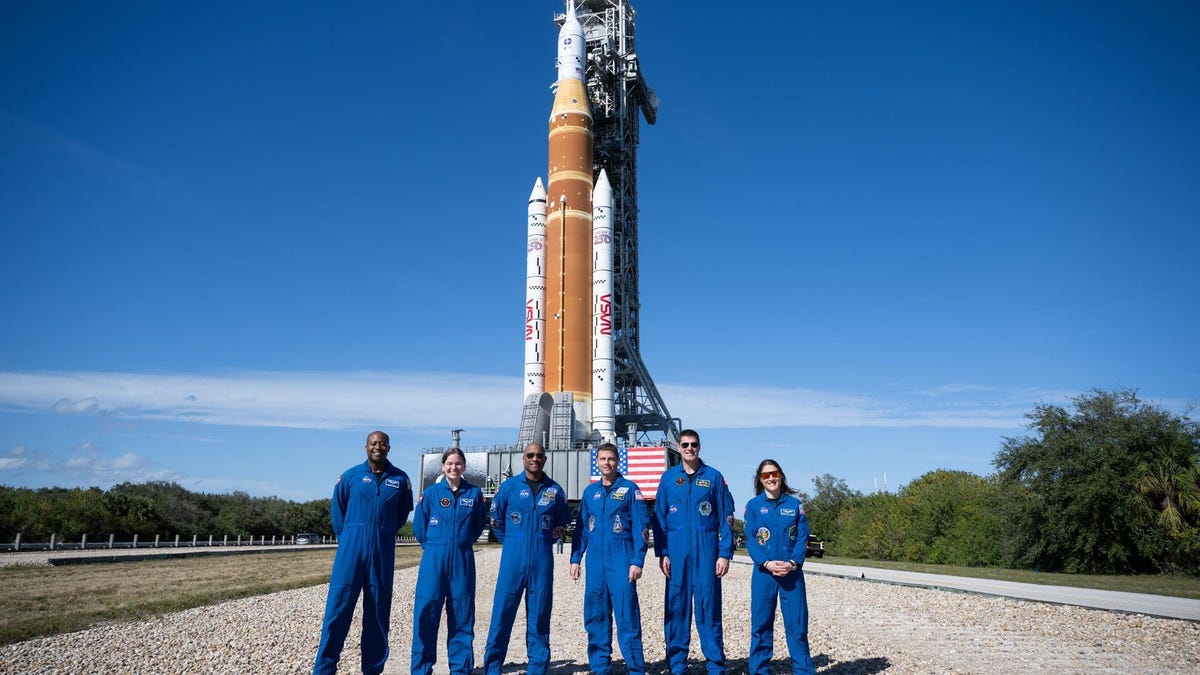
Are you ready for a bona fide moon shot? The upcoming Artemis II mission is one of the most exciting space excursions in recent memory. It’ll be the first time humans have flown to the moon since December 1972, when the landmark Apollo program wrapped up, and NASA began shifting focus toward the space shuttles that would stay closer to home in Earth orbit.
Artemis II is a chance for NASA to gather valuable new data from a spaceflight of this magnitude and to continue testing its new Space Launch System rocket and the Orion spacecraft that will carry the astronauts. The 10-day mission will be a flyby for those four humans — an actual moon landing is planned for the Artemis IV mission — but there will be plenty of drama nonetheless.
The launch is scheduled is now scheduled for April after NASA scrapped plans for launch dates in February and March. NASA has the rocket in place and is rigorously testing it to ensure that it’s ready for the journey. Orion is in its final preparation stages, and apart from some final tests, everything is ready to go. The mission is crewed by commander Reid Wiseman, pilot Victor Glover, and mission specialists Christina Koch and Jeremy Hansen. Wiseman, Glover and Koch are American. Hansen is Canadian and will be the first from his country to travel to the moon.
While we don’t yet know the exact launch date, we do know what’s going to happen. After liftoff, the Orion spacecraft will maneuver into orbit, head to the moon, slingshot around it, and return home as Earth’s gravity pulls it back. This launch is now over eight years in the making, and the big moment is very close.
The Artemis II launch in April
The original launch window (PDF) for Artemis II had been Feb. 8 to 13, but NASA crossed that out following a fueling test of the rocket known as a wet dress rehearsal. It subsequently scratched fallback launch dates in March. Now the Artemis II launch window is April 1 to 6 and April 30. The time of day varies, but NASA is aiming for an evening liftoff, so prepare to watch either during or after dinner.
On the launch date, Artemis II will lift off from Launch Complex 39B at the Kennedy Space Center in Florida. The Space Launch System, NASA’s super heavy-lift rocket and the primary launch vehicle for the Artemis program, will produce more than 8.8 million pounds of thrust to launch Orion and the crew into space.
In the initial minutes, the spacecraft will shed components such as rocket boosters and hardware used specifically for the launch phase.
How to stream the launch
NASA is streaming the launch on its usual platforms. They include its YouTube channel, its free on-demand streaming app NASA Plus, and the agency’s social media pages on Facebook and X. It also should be livestreamed on Twitch, and with the partnership NASA signed with Netflix in 2025, it’ll likely be livestreamed on Netflix as well.
What will happen first
Approximately eight minutes after launch, the spacecraft will separate from the lower stage, leaving only the Orion capsule and the upper-stage rocket, while the expendable lower stage will splash down into the Atlantic Ocean and sink to the bottom.
Over the next few hours, the spacecraft will reach its orbit around Earth, in an orbital pattern that makes it easier for the astronauts to return home if something goes wrong. (The Artemis I mission flew successfully in 2022, but was uncrewed.) It will remain there until the second day of the mission.
Days 1 and 2: Testing systems
Once in high orbit, the crew will engage the manual controls and begin testing the systems on board, including life support and communications. Once everything is deemed OK, the upper-stage rocket will perform what’s known as a translunar injection burn before detaching, sending Orion streaking toward the moon.
Day 3 to 5: Travel time
The crew will have a couple days’ travel time to get all the way out to the moon, a distance of over 225,000 miles. (It’s about the same amount of time as driving nonstop from New York to Los Angeles, a trip of less than 3,000 miles.) By comparison, the International Space Station is only about 250 miles away from Earth. During this time, the crew will be busy performing tests, practicing procedures, and trying out the mission technology.
Day 6: The dark side of the moon
The Artemis II crew reaches lunar orbit on Day 6, flying around the far side of the moon and preparing for their return journey. It will be a rare in-person look at the dark side of the moon, and, depending on which day the mission launches, the Artemis II crew may also break the record for the longest journey made by humans away from the Earth when they hit the far point of their loop around the moon. That record — 248,655 miles — was set during the Apollo 13 mission.
The crew is expected to lose communication with Earth during this time. They’ll photograph the far side of the moon before reestablishing communications and heading home.
Day 7 to 9: Homeward bound
The Orion will drift around the moon and begin its homeward trajectory under the influence of Earth’s and the moon’s gravity.
Day 10: Splashdown
The final day of the mission will see Orion and its crew return to Earth. Orion will enter orbit at high speed, generating heat up to 3,000 degrees Fahrenheit. This will thoroughly test those improvements that NASA made to Orion’s heat shields. Once reentry into the atmosphere is complete, the crew will deploy Orion’s parachutes and drop into the Pacific Ocean. The US Navy will pick them up roughly 2 hours later.
Artemis III in orbit and Artemis IV lunar landing
The Artemis II mission is a vital building block in the long sequence of events that will put humans back on the surface of the moon. Data collected and tests conducted on the mission will be used to prepare the Artemis III and Artemis IV missions, now planned for 2027 and early 2028, respectively. Artemis III will perform tests, including docking with the lunar lander, in Earth’s orbit; Artemis IV will be the first crewed lunar landing since Apollo 17 in 1972.
SpaceX is building the system the crew will use to land on the moon, and Houston-based company Axiom Space is developing the space suits they will wear.
Technologies
Today’s NYT Connections: Sports Edition Hints and Answers for April 8, #562
Here are hints and the answers for the NYT Connections: Sports Edition puzzle for April 8 No. 562.

Looking for the most recent regular Connections answers? Click here for today’s Connections hints, as well as our daily answers and hints for The New York Times Mini Crossword, Wordle and Strands puzzles.
Today’s Connections: Sports Edition is a tough one. If you’re struggling with today’s puzzle but still want to solve it, read on for hints and the answers.
Connections: Sports Edition is published by The Athletic, the subscription-based sports journalism site owned by The Times. It doesn’t appear in the NYT Games app, but it does in The Athletic’s own app. Or you can play it for free online.
Read more: NYT Connections: Sports Edition Puzzle Comes Out of Beta
Hints for today’s Connections: Sports Edition groups
Here are four hints for the groupings in today’s Connections: Sports Edition puzzle, ranked from the easiest yellow group to the tough (and sometimes bizarre) purple group.
Yellow group hint: Working out.
Green group hint: Cover your face.
Blue group hint: NFL players.
Purple group hint: Leap.
Answers for today’s Connections: Sports Edition groups
Yellow group: Exercises in singular form.
Green group: Sporting jobs that require masks.
Blue group: Hall of Fame defensive ends.
Purple group: ____ jump.
Read more: Wordle Cheat Sheet: Here Are the Most Popular Letters Used in English Words
What are today’s Connections: Sports Edition answers?
The yellow words in today’s Connections
The theme is exercises in singular form. The four answers are crunch, plank, situp and squat.
The green words in today’s Connections
The theme is sporting jobs that require masks. The four answers are catcher, fencer, football player and goaltender.
The blue words in today’s Connections
The theme is Hall of Fame defensive ends. The four answers are Dent, Peppers, Strahan and Youngblood.
The purple words in today’s Connections
The theme is ____ jump. The four answers are broad, high, long and triple.
Technologies
The $135M Google Data Settlement Site Is Live — See If You’re Eligible
Use the settlement website to select your preferred payment method, and you may end up $100 richer.
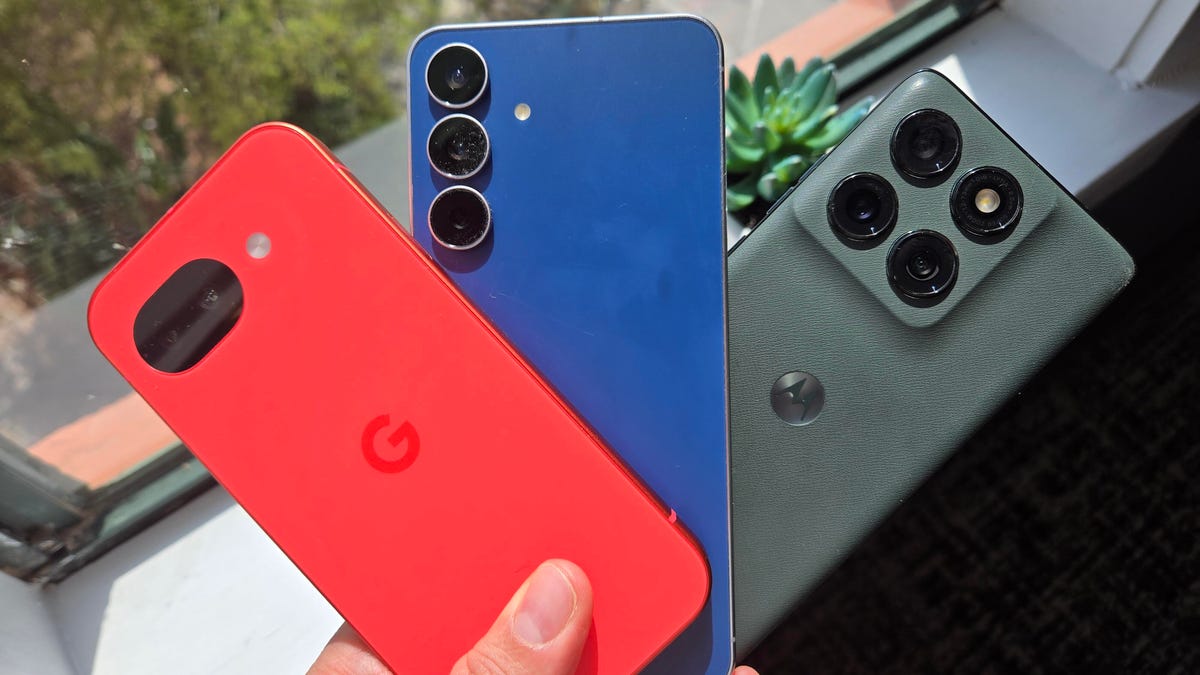
You can now file a claim in the $135 million Google data settlement. The case centers on claims that Android devices transmitted user data without consent. Specifically, the class action lawsuit Taylor v. Google LLC contends that Google’s Android devices passively transferred cellular data to Google without user permission, even when the devices were idle. While not admitting fault, Google reached a preliminary settlement in January, agreeing to pay $135 million to about 100 million US Android phone users.
The official settlement website for the lawsuit is now live. The final approval hearing won’t occur until June 23, when the court will consider whether Google’s settlement is fair and listen to objections. After that, the court will decide whether to approve the $135 million settlement.
In the meantime, if you qualify and want to be paid as part of the settlement, you can select your preferred payment method on the official website. There, you can find information on speaking at the June 23 court hearing and on how to exclude yourself or write to the court to object by May 29.
As part of the settlement, Google will update its Google Play terms of service to clarify that certain data transfers do occur passively even when you’re not using your Android device, and that cellular data may be relied upon when not connected to Wi-Fi. This can’t always be disabled, but users will be asked to consent to it when setting up their device.
Google will also fully stop collecting data when its «allow background data usage» option is toggled off.
Who can be part of the settlement?
In order to join the Taylor v. Google LLC settlement, you must meet four qualifications:
- Be a living, individual human being in the US.
- Have used an Android mobile device with a cellular data plan.
- Have used the aforementioned device at any time from Nov. 12, 2017, to the date when the settlement receives final approval.
- You’re not a class member in the Csupo v. Google LLC lawsuit, which is similar but specifically for California residents.
The final approval hearing is on June 23, so you can add your payment method until then. The hearing’s date and time may change, and any updates will be posted on the settlement website.
If you choose to do nothing, you will still be issued a settlement payment, but you may not receive it if you don’t select a payment method.
How much will I get paid?
It’s not currently known exactly how much each settlement class member will receive, but the cap is $100. Payments will be distributed after final court approval and after any appeals are resolved.
After all administrative, tax and attorney costs are paid, the settlement administrator will attempt to pay each member an equal amount. If any funds remain after payments are sent, and it’s economically feasible, they will be redistributed to members who were previously and successfully paid. If it’s not economically feasible, the funds will go to an organization approved by the court.
Technologies
Samsung’s Galaxy Watch Ultra 2 Might Come in 5G and 4G Cellular Models
If the rumor proves true, the 5G Galaxy Watch Ultra would rival the 5G-enabled $799 Apple Watch Ultra 3 that debuted last fall.

Samsung’s next high-end Galaxy Watch could support faster 5G speeds, but if this leak is true, it will depend on where you live. The rumored Samsung Galaxy Watch Ultra 2 might come in 5G and 4G cellular models, with availability for each smartwatch depending on the country.
According to the Dutch website Galaxy Club (and spotted by SamMobile), Samsung’s servers may have revealed a series of model numbers that point to 5G, 4G and Wi-Fi-enabled editions of the next Galaxy Watch Ultra, which would succeed the original model that debuted in 2024.
A representative for Samsung did not immediately respond to a request for comment.
The Galaxy Club website speculates that the 5G edition would be sold in the US and Korean markets, while the 4G edition would sell in the rest of the world. In the US, a 5G version of the Galaxy Watch Ultra would rival the 5G-enabled $799 Apple Watch Ultra 3, which debuted last fall. The 4G edition would have broader compatibility worldwide, since the earlier network is far more established.
It will likely be a few months until we hear anything official about the Galaxy Watch Ultra 2. Samsung typically unveils its new watches in the summer alongside its Galaxy Z Fold and Z Flip foldable phones. Last year, Samsung unveiled the Galaxy Watch 8 and the Galaxy Watch 8 Classic, but otherwise left the prior 2024 Ultra in the lineup for those looking for a larger 47mm smartwatch.
-
 Technologies3 года ago
Tech Companies Need to Be Held Accountable for Security, Experts Say
-
 Technologies3 года ago
Best Handheld Game Console in 2023
-
 Technologies3 года ago
Tighten Up Your VR Game With the Best Head Straps for Quest 2
-
 Technologies4 года ago
Black Friday 2021: The best deals on TVs, headphones, kitchenware, and more
-
 Technologies5 лет ago
Google to require vaccinations as Silicon Valley rethinks return-to-office policies
-
 Technologies5 лет ago
Verum, Wickr and Threema: next generation secured messengers
-
 Technologies4 года ago
Olivia Harlan Dekker for Verum Messenger
-
 Technologies4 года ago
The number of Сrypto Bank customers increased by 10% in five days