
Technologies
Virtual Boy Review: Nintendo’s Oddest Switch Accessory Yet Is an Immersive ’90s Museum
No one needs a Virtual Boy. But I always wanted one. And now it’s living with me at last.
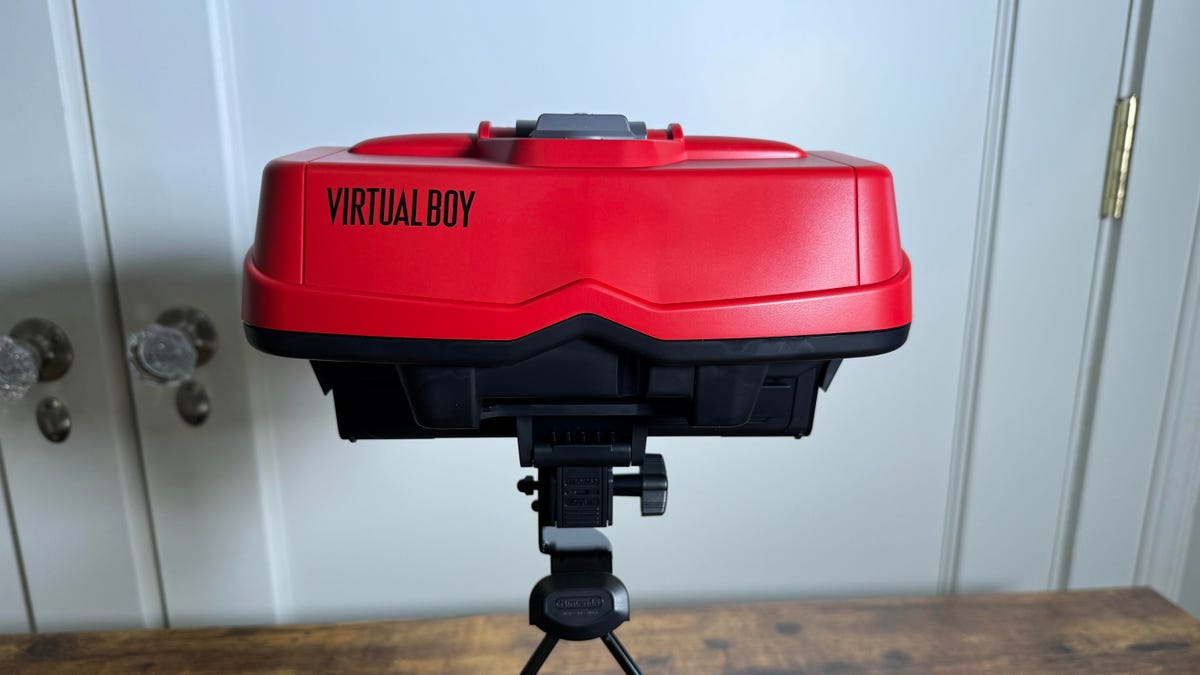
On my desk is a Nintendo device that looks like equipment stolen from a cyberpunk optical shop. It’s big, it’s red and black, it sits on a tripod, it has an eyepiece, and it has a Nintendo Switch 2 nestled inside. Hello, Virtual Boy, you’re back.
Nintendo has made a lot of weird consoles over the years, but the Virtual Boy was the weirdest. And the shortest lived. Released in 1995 and discontinued a year later, it lived for a blink of an eye during my final year in college. I never really had time to consider buying one.
It would have been perfect for me, a Game Boy fan who was in love with the idea of VR even back then. Nintendo has been flirting with virtual reality in various forms for decades, and the Virtual Boy was the biggest swing. But it wasn’t VR at all, really. It was a 3D game console in red and black monochrome, a 3D Game Boy in tripod form.
I’m setting the stage because right now you can order a $100 Virtual Boy recreation that’s a big, strange Switch accessory. It’s staring at me now, taking up a lot of space. It’s too big to fit in a bag. It’s a tabletop console, really, and Nintendo has created this Virtual Boy viewer as a way to play a set of free-with-subscription games on the Switch and Switch 2.
Is it worth your money? I’d call it a museum-piece collectible, not a serious piece of gaming hardware. Still, my kid stuck his head in, played 3D Wario Land, and came out declaring it was really cool. He loves old retro games. But I don’t know how often he’ll pop his head back in.
Nintendo’s first stab at 3D now feels like a museum piece
For comparison, I pulled my old Nintendo 3DS XL out of the drawer where it had been tucked away and booted it up, marveling again that Nintendo actually made a glasses-free 3D game handheld once upon a time. The 3DS is a far more capable and advanced game system, but consider the Virtual Boy an ancient attempt to get there first.
The Virtual Boy was a monochrome red-and-black LED display system, a tabletop-only device that was neither handheld nor TV-connected. The Nintendo Switch’s tabletop-style game modes feel like a bit of an evolutionary link to the Virtual Boy, so it’s poetic that the Switch pops into the new Virtual Boy to power the games and provide the display.
The plastic Virtual Boy is just an odd set of VR goggles for the Switch, but with a red filter on the lenses. Also, you can’t wear it. You keep your head stuck in it.
Awkward and easy to use
All the trappings on this recreation look like the old Virtual Boy but don’t work: You can see a simulated headphone jack, controller port, a sort of knob on top. I just unsnap the plastic case and slide the Switch in, carefully, and then snap it back over. That’s all it is.
To control it, you use the Switch controllers detached or another Switch-compatible controller. Launching the Virtual Boy app — free on the eShop, but you need a Switch Online Plus Expansion Pack account, which costs $50 a year, or $80 for a family membership — splits the Switch display into two smaller, distorted screens. In the Virtual Boy, it looks properly 3D. When I’m done playing, I pop the Switch back out.
As I said in my first hands-on, the big foam-covered eyepiece is more than wide enough for big glasses, and was fine to dip my face into. Getting a comfortable angle to stay playing for a while is another challenge. The Virtual Boy’s included tripod-like stand can adjust the angle, but not as wide as I’d like. I’m sort of hunched over while playing, which gives me a bit of pain. Leaning on the table with my controllers in hand helps.
The red-lensed front eyepiece can be removed, and a later software update will allow Virtual Boy games to be played in several color mixes beyond red and black. Also, you can unscrew an inner bracket to hold the Switch 2 and swap in an included Switch-sized bracket instead. The Switch Lite doesn’t work with the Virtual Boy, however.
The weirdness is my type of indie
All you get right now are seven of the 16 games Nintendo has promised to release for the Virtual Boy. Believe it or not, there were only 22 games ever released for this system. The 16 will include two that were never released before, which is a fun collector’s novelty.
But what’s amazing to me now is that, sinking into these oddball retro games with their pixelated NES-slash-Game Boy aesthetics in red and black, they feel weirdly timely. The janky, oddball, almost-parallel-universe Nintendo vibe feels like the indie retro aesthetic that’s been big for a while now. After all these years, is the Virtual Boy now finally awesome?
Games like UFO 50 (a compilation of new indie games made to feel like an archive of ’80s games for a console that never was) and indie consoles like Panic Playdate (still my favorite black and white mini handheld, a home for all sorts of homebrew retro games) match my feeling diving into these Virtual Boy games and figuring them out.
Wario Land is probably the best: A side-scrolling Wario game with multiple depth levels, it gives me Game Boy Mario game vibes. Golf has multiple holes and an aiming system, and it’s relaxed and basic (and hard to perfect). 3D Tetris has you dropping blocks down a well to fill in layers, with a Tron-like puzzle feel. Red Alert’s wireframe 3D shooter design is like Star Fox, but boiled all the way down to simple vector lines. Galactic Pinball has several tables, and it’s some lovely, very old-school 3D Nintendo pinball fun. Teleroboxer is Punch-Out with robots, with a style that also reminds me of the early Switch game Arms. And The Mansion of Innsmouth is a creepy 3D dungeon-crawling game (in Japanese) where you try to get to exits before time runs out… or monsters get you.
The remaining games coming this year include Mario Tennis, another Tetris game, a wireframe 3D racer, a 3D reinvention of the original Mario Bros. game called Mario Clash and a 3D Space Invaders. By the end of Nintendo’s release schedule, a good chunk of Virtual Boy’s catalog will be there.
A novelty that’s niche as hell
Worth it? Again, if you love weird and retro, and are intrigued by lost Nintendo 3D games, then yes. But if you’re looking for cutting-edge, then no.
Keep in mind: You can buy a cheaper $25 cardboard set of goggles for the Switch that lets you play the Virtual Boy games, too (or use the old Labo VR goggles Nintendo made in 2019, if you have them). That’s a more sensible path. There are even unofficial emulators for Virtual Boy games on the Meta Quest and Apple Vision Pro. But who said the Virtual Boy was sensible?
A Nintendo game system that’s a big set of red goggles on a tripod is inherently absurd. And I welcome its weird footprint in my home, because that’s exactly who I am. But it’s also a testament to Nintendo’s perpetual interest in the bleeding edge of gaming. VR, glasses-free 3D, AR, modular consoles… Nintendo’s poking around the edges.
Is the Virtual Boy a sign that Nintendo could make its own VR or AR game system again someday soon, or as an extension of the Switch 2? Who knows? Shigeru Miyamoto, Nintendo’s legendary video game designer, sounded intrigued and elusive about it when I asked him last year. But there’s never any real way to guess where Nintendo’s heading. The Virtual Boy is a museum-piece reminder of that.
Technologies
Get Organized for Just $28 With This 6-in-1 Baseus Charging Station Deal
Ditch the cluttered cables and upgrade to this sleek USB power strip while it’s on sale for a record-low price.
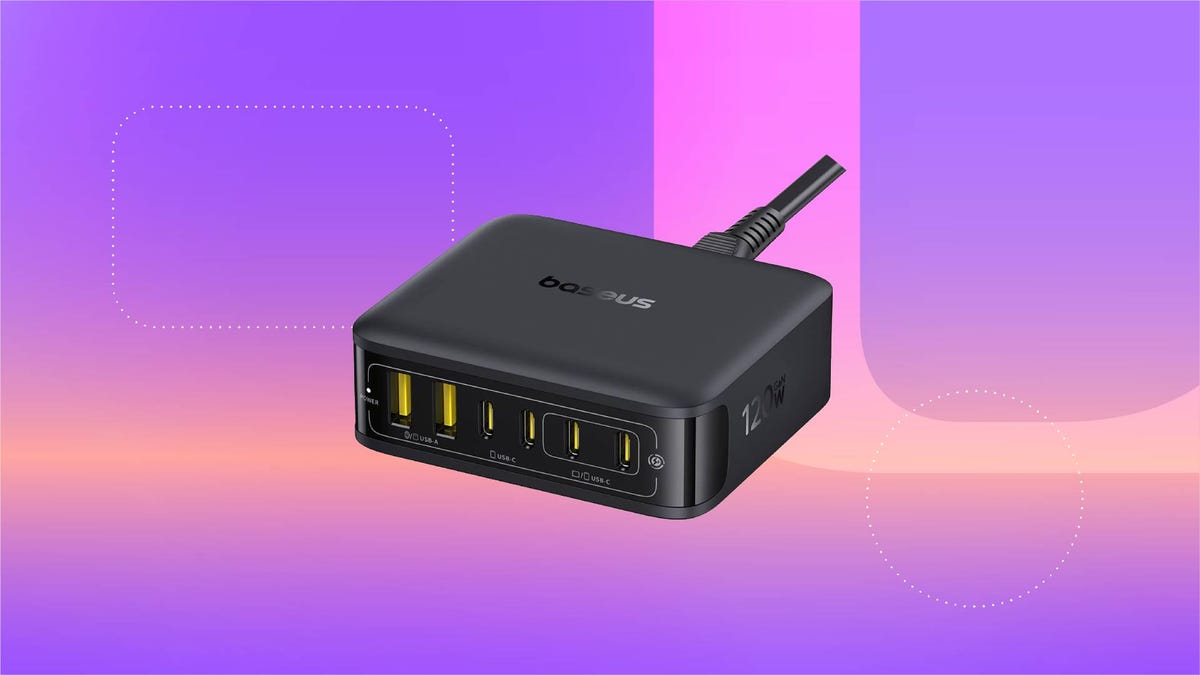
For just $28, this six-in-one Baseus charging station can help you keep your desk organized. That’s 20% off and the all-time lowest price we’ve seen for this 120-watt USB power strip. We don’t expect this limited-time deal to last for long, however, so you’ll want to get your order in sooner rather than later.
You can use this charging station for just about all of your devices, including phones, tablets, headphones and laptops. It’s equipped with four USB-C ports and two USB-A ports, so you can charge up to six devices at once. It also boasts a 65-watt single-port output, enough to fully recharge a MacBook Air in less than 2 hours. And at just 323 grams, it’s light enough to take on the go, making it a great buy for frequent travelers.
Why this deal matters
This sleek Baseus charging station can connect to up to six devices at once, and is still small enough that you can take it on the go. Plus, this is the all-time lowest price we’ve seen, making it a pretty great value.
Technologies
Today’s Wordle Hints, Answer and Help for April 7, #1753
Here are hints and the answer for today’s Wordle for April 7, No. 1,753.
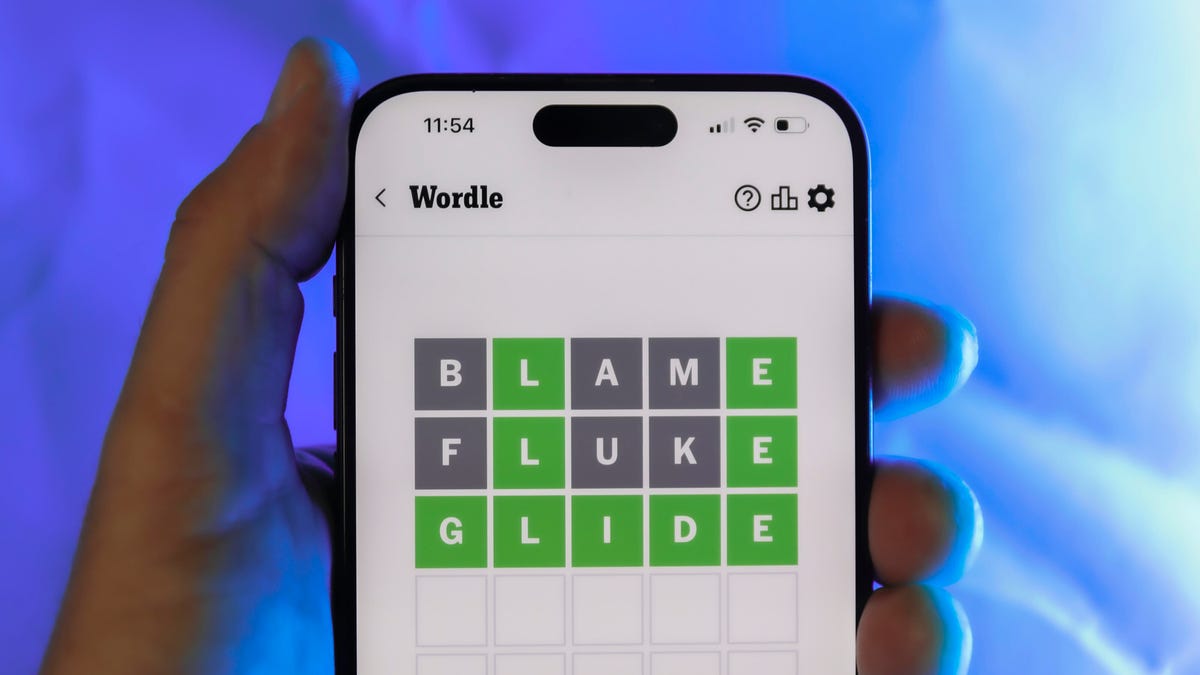
Looking for the most recent Wordle answer? Click here for today’s Wordle hints, as well as our daily answers and hints for The New York Times Mini Crossword, Connections, Connections: Sports Edition and Strands puzzles.
Today’s Wordle puzzle wasn’t too tricky, for a change. If you need a new starter word, check out our list of which letters show up the most in English words. If you need hints and the answer, read on.
Read more: New Study Reveals Wordle’s Top 10 Toughest Words of 2025
Today’s Wordle hints
Before we show you today’s Wordle answer, we’ll give you some hints. If you don’t want a spoiler, look away now.
Wordle hint No. 1: Repeats
Today’s Wordle answer has one repeated letter.
Wordle hint No. 2: Vowels
Today’s Wordle answer has one vowel, but it’s the repeated letter, so you’ll see it twice.
Wordle hint No. 3: First letter
Today’s Wordle answer begins with D.
Wordle hint No. 4: Last letter
Today’s Wordle answer ends with E.
Wordle hint No. 5: Meaning
Today’s Wordle answer can relate to something that is closely compacted.
TODAY’S WORDLE ANSWER
Today’s Wordle answer is DENSE.
Yesterday’s Wordle answer
Yesterday’s Wordle answer, April 6, No. 1752, was SWORN.
Recent Wordle answers
April 2, No. 1748: SOBER
April 3, No. 1749: SINGE
April 4, No. 1750: SANDY
April 5, No. 1751: ENVOY
What’s the best Wordle starting word?
Don’t be afraid to use our tip sheet ranking all the letters in the alphabet by frequency of uses. In short, you want starter words that lean heavy on E, A and R, and don’t contain Z, J and Q.
Some solid starter words to try:
ADIEU
TRAIN
CLOSE
STARE
NOISE
Technologies
Today’s NYT Mini Crossword Answers for Tuesday, April 7
Here are the answers for The New York Times Mini Crossword for April 7.
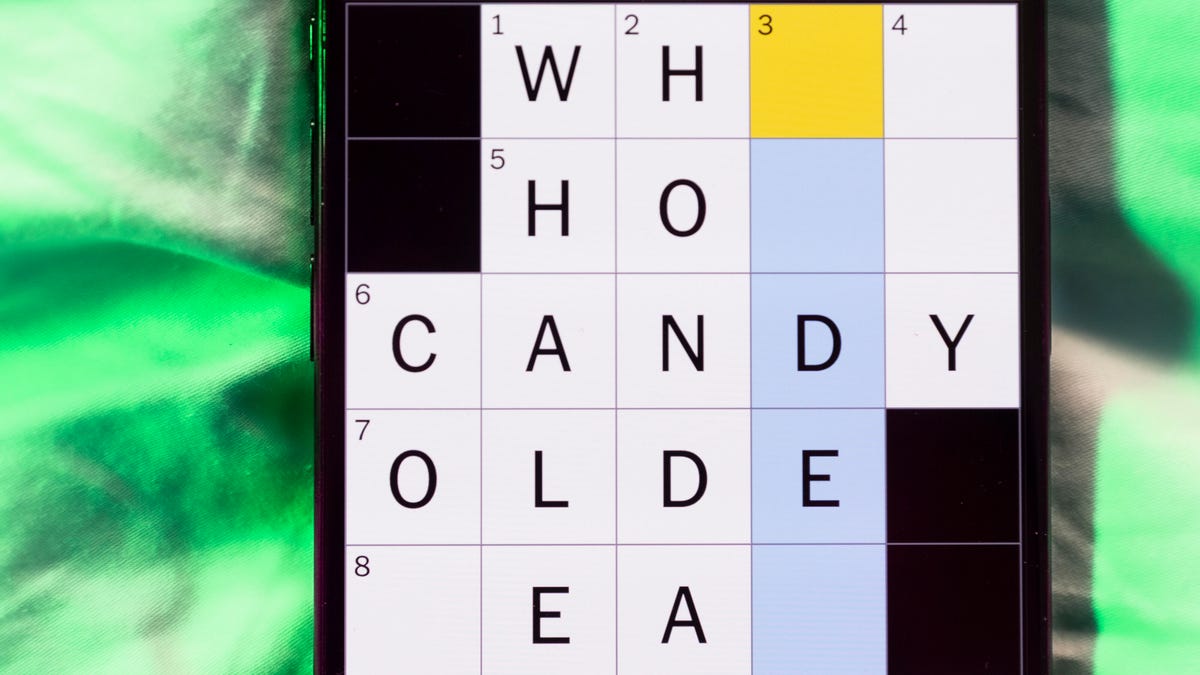
Looking for the most recent Mini Crossword answer? Click here for today’s Mini Crossword hints, as well as our daily answers and hints for The New York Times Wordle, Strands, Connections and Connections: Sports Edition puzzles.
Need some help with today’s Mini Crossword? Read on for all the answers. And if you could use some hints and guidance for daily solving, check out our Mini Crossword tips.
If you’re looking for today’s Wordle, Connections, Connections: Sports Edition and Strands answers, you can visit CNET’s NYT puzzle hints page.
Read more: Tips and Tricks for Solving The New York Times Mini Crossword
Let’s get to those Mini Crossword clues and answers.
Mini across clues and answers
1A clue: Informative commercial, for short
Answer: PSA
4A clue: Something you trace to draw a Thanksgiving turkey
Answer: HAND
5A clue: ___ Johnson, former Prime Minister of the U.K.
Answer: BORIS
6A clue: Opposite of include
Answer: OMIT
7A clue: Crosses (out)
Answer: XES
Mini down clues and answers
1D clue: City with the Notre-Dame Cathedral
Answer: PARIS
2D clue: Bad mood
Answer: SNIT
3D clue: About eight minutes of the average half-hour sitcom
Answer: ADS
4D clue: Remote worker’s office, perhaps
Answer: HOME
5D clue: Word that can follow each group of circled letters (and hints at its shape)
Answer: BOX
-
 Technologies3 года ago
Tech Companies Need to Be Held Accountable for Security, Experts Say
-
 Technologies3 года ago
Best Handheld Game Console in 2023
-
 Technologies3 года ago
Tighten Up Your VR Game With the Best Head Straps for Quest 2
-
 Technologies4 года ago
Black Friday 2021: The best deals on TVs, headphones, kitchenware, and more
-
 Technologies5 лет ago
Google to require vaccinations as Silicon Valley rethinks return-to-office policies
-
 Technologies5 лет ago
Verum, Wickr and Threema: next generation secured messengers
-
 Technologies4 года ago
Olivia Harlan Dekker for Verum Messenger
-
 Technologies4 года ago
The number of Сrypto Bank customers increased by 10% in five days