
Technologies
PS5 vs. PC vs. Steam Machine: What’s the Right Gear for Gaming?
It may not be apples to apples, but there’s plenty that can be compared between these gaming platforms.
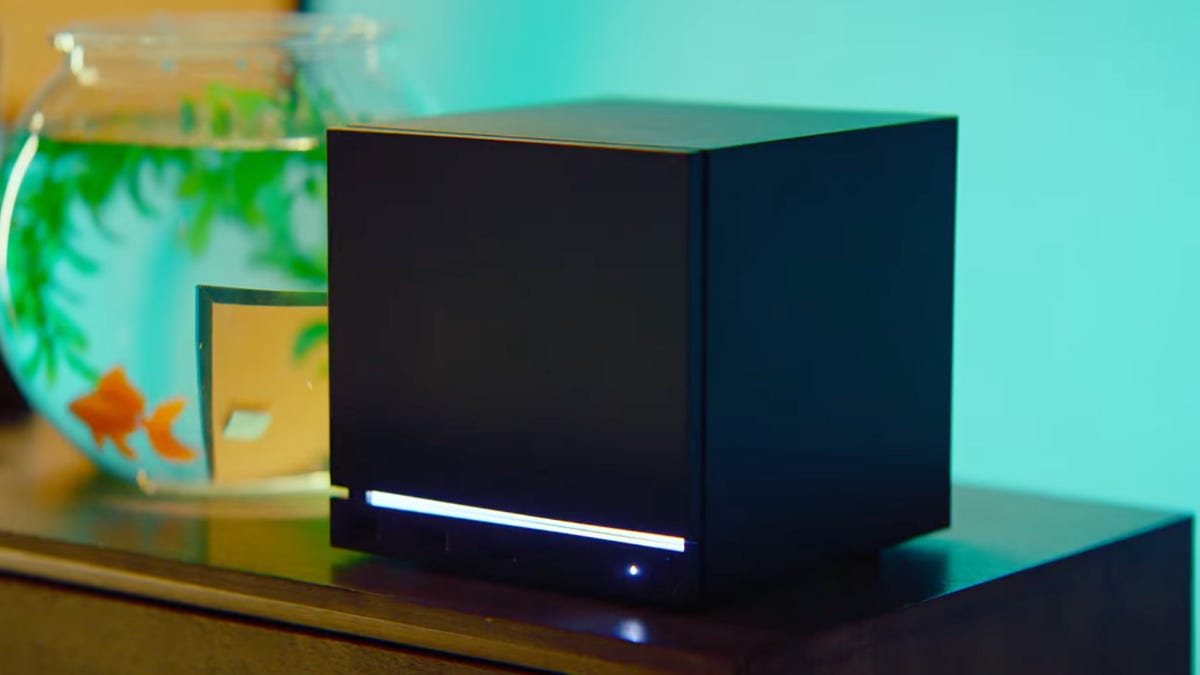
Valve’s upcoming Steam Machine is an exciting prospect for both the console and gaming PC markets, as it looks like it’ll straddle both realms. However, it will also add another option to the diverse and potentially confusing home gaming scene. The hard choice between Sony’s PlayStation 5 console and a gaming PC looms as large as ever, and now the Steam Machine turns the situation into a three-horse race (especially with Microsoft focused less on hardware and more on playing Xbox anywhere).
While some key details about the Steam Machine are still unknown — including any firm performance numbers, an exact release date or even a confirmed price — we’ve used the information we do have about it, and everything we know about gaming PCs and the PS5, to piece together a picture of how these platforms compete against each other.
Cost of entry
One of the big dividing lines between consoles and gaming PCs is price. None of this type of hardware comes cheap, but the PlayStation 5 in all its iterations still has the price advantage over comparable PC hardware.
The standard PS5 Digital Edition has a $499 retail price, even though it was introduced several years ago — tariffs and other economic turmoil have kept prices from going down. Getting a disc drive costs an additional $50. For the PS5 Pro, the price jumps to $749, but it offers a performance boost over its basic siblings.
Meanwhile, PC pricing ranges from far below the price of a PS5 to simply atmospheric compared to Sony’s console. You can find PCs from a couple of hundred dollars to well into the thousands, depending on the quality of components included. What you get for the money will vary considerably. Short of buying used or refurbished, you’ll be unlikely to find a PC that can operate on the level of a PS5 for under $800, with much recent fluctuation due to factors such as the RAM shortage.
The Steam Machine still has no confirmed price, but rumors have given us a predicted range. It is expected to be priced above console levels based on a discussion between Valve and Linus Sebastian shared on the WAN show and reported by IGN. Given the hardware inside, I’d wager it’ll sit somewhere in the $800 to $1,000 range, though it could go higher due to RAM and storage costs. It seems to have much in common with the Framework Desktop, which currently has a base price of $1,139, for reference.
Raw performance and specs
The PlayStation 5 is a known quantity at this point. It uses custom AMD hardware, combining what are now fairly dated Zen 2 CPU cores and an RDNA 2 GPU with 36 compute units capable of 10.3 teraflops. It also comes with 825GB of storage. This has been enough to let it run games in 4K at 30 to 60 frames per second, though it uses special graphics settings tailored to its capabilities and tends to rely on subsampling rather than native resolution. The PS5 Pro steps this up with a newer GPU that uses RDNA 3 architectures and 60 compute units for a rated 16.7 teraflops.
While the PS5’s specifications and performance are known and set, that can’t be said of PCs. PCs can be built with infinite combinations of parts, ranging from barely enough performance to run Windows to high-end configurations that make the PS5’s performance look laughable. You can also tune a PC’s capabilities in more variable ways. Different cooling setups, configurations and BIOS settings can make the same components operate in vastly different ways. The games themselves typically offer more granular graphics settings that let you choose higher frame rates for smoother play over visual quality, and vice versa.
The Steam Machine will be akin to the PS5 in that it will also use semicustom AMD hardware, but it has the advantage of being newer. It will reportedly feature a Zen 4 CPU and an RDNA 3 GPU with 28 compute units intended to enable 4K gaming at 60 frames per second with ray tracing. Given that the PS5 Pro also runs on RDNA 3 architecture, but has more than double the compute units, it seems likely the Steam Machine will fall a bit short of that performance level.
We do have a rough performance ceiling of what the Steam Machine is likely to accomplish. The Framework Desktop I recently tested had an AMD Ryzen AI Max Plus 395 CPU, a powerful 16-core Zen 5 CPU with an integrated RDNA 3.5 GPU with 40 compute units. That hardware was enough to give the system performance somewhere between the mobile variants of an RTX 4060 and 4070. With the Steam Machine featuring older CPU and GPU architectures and fewer compute units, it’s all but guaranteed to deliver lower performance.
Exclusive games and library access
One perk of the PlayStation 5 is its access to exclusive games. There are some games, such as Ghost of Yōtei and Gran Turismo 7, that are still only available on PlayStation. That said, this perk is quickly eroding. Many games that launch as PS5 exclusives are actually timed exclusives that eventually come to PC.
The PC ports of these games also tend to offer more support for graphics customization, including higher graphics presets that can cost extra to unlock on PlayStation (I’m looking at you, Ghost of Tsushima).
So, there are pros and cons to the PS5’s game options. It is, by its nature, limited in what games it can support, i.e., only PlayStation games. There’s a big selection, but not nearly as extensive as what you can find on PC. Also, how you get those games also comes down to just a couple of avenues: You either use Sony’s digital marketplace or buy physical discs (if you have a disc drive). This more limited marketplace can mean higher prices. However, second-hand discs are an affordable way to grow your library.
PC, meanwhile, gets just about every game under the sun. Microsoft hardly keeps anything exclusive to its consoles, with many games launching on PC at the same time. The PC can run web-based games, cloud gaming and supports a ton of different game launchers and stores. This provides PC gamers not only with a huge selection of games to play but also with many ways to buy and run them.
The Steam Machine should be much like the PC in this area. Simply having the Steam store and library of games will give gamers plenty of options. The Steam Machine will theoretically support third-party game stores and libraries, like its gaming handheld, the Steam Deck, but they will likely be just as hard to install as on that system. All that said, since SteamOS is also Linux-based, it may be compatible with more games.
User experience
PS5:
- Just three sizes, with little difference between them in terms of how much space they take
- Every PS4 and PS5 game will run
- Some variability between Pro/base models, including options for performance or visual quality
Steam Machine:
- One size, though potentially other companies will make them
- Presumably, like the Steam Deck, there will be verified titles that will just work, perhaps with optimized settings
- Performance should be adequate, but not as powerful as a new gaming PC
PC:
- Every size imaginable
- There can be issues, and checking system requirements also becomes crucial on low-end systems
- Occasionally, less obvious things become an issue, like TPM 2.0 support for Battlefield 6
- Performance can be anything from poor to epic, depending on your wallet
The simplicity award goes straight to the PlayStation 5. In true console fashion, it makes things easy. If a game says it’s for PS5, you can put it on any PS5 and play it, perhaps with just a required update or installation. Maybe you’ll need a paid online service plan, but the simple fact is that the PS5 can play all PS5 games. The operating system is designed to make navigation easy and get you playing quickly. There are some limitations: The console doesn’t allow much customization of the user interface, and it doesn’t support every display you might want (1440p went unsupported for a surprisingly long time, and ultrawide monitors are still a no-go, for instance).
PCs are essentially the opposite. You might buy a game only to find your PC can’t play it well or at all. The potential reasons for an issue are vast. You might even have a PC that’s overpowered for the game you’re trying to play and still have an issue simply because something isn’t enabled, like Battlefield 6’s requirement for TPM 2.0.
The complexity means there’s also a lot of flexibility. You can tweak your PC to offer a console-like experience or not. You can generally adjust game visuals to your liking, choosing between higher frame rate or more visual fidelity. You can also set up PCs with just about any display type and make it work (assuming the graphics card supports the output format), from ultrawide monitors to the best TVs. There’s certainly more fuss involved, but it’s worth pointing out that even though there can be all sorts of issues with PC gaming, there usually won’t be issues, as long as you’re on a decently powerful machine with up-to-date software and drivers.
The Steam Machine should work a bit more like the PS5, with a simplified interface to make getting into games quick and easy. Presumably, it will also support a desktop-like mode like the Steam Deck. However, unlike the PS5, the Steam Machine won’t support every game available to it. The Steam Deck has suffered from plenty of games in the Steam library not working properly, or not at all. Valve’s Deck Verified program helps guide users toward seamless experiences, but plenty of games are still in the fog of uncertainty, even if they could actually run just fine. The Steam Machine will presumably see similar guidance, but still won’t be as surefire as the PS5’s compatibility.
Longevity and futureproofing
The PlayStation 5 launched at the end of 2020, making it over 5 years old. In the world of computer hardware, that’s long in the tooth. Even when it launched, it wasn’t at the cutting edge of what gaming hardware could offer. The PS5 Pro may have stepped up that performance when it launched in 2024, but it also lags behind the levels of performance that mid- and high-end PCs can attain.
With PS5 hardware, there’s also little you can do to upgrade short of replacing the whole system. Storage is the only real upgrade you can make, and even that’s limited. Given the platform’s age, it’s probably only two or three years until we see a PlayStation 6. Who knows what that’ll mean for the PS5? Probably, like the PS4, we’ll see some PS6 games with PS5 versions, perhaps at lower graphics settings, but inevitably, the PS5 will be left in the dust just like all previous PlayStations.
With desktop gaming PCs, it’s almost impossible to get completely left behind. When one component becomes the outdated weak link, it’s generally possible to make the leap to a newer one while retaining much of the rest of the PC. Many gaming PCs can have their graphics cards swapped out every few years and still run the latest games very competently. You can often also swap your CPU and motherboard while keeping your graphics card, memory, storage, cooler and case. Keeping a gaming PC up to date is generally a more frequent, small purchase.
Some components can cost as much as an entire console, so it all depends on what you’re going for. All of that only applies to tower desktops, too. When it comes to smaller desktop PCs, all-in-ones and laptops, upgradability is less of an option. Most laptops can’t have their CPU or GPU upgraded. And some AIOs and compact PCs like the Framework Desktop have their components integrated, so there’s no changing out memory or upgrading the CPU/GPU without a full mainboard swap. Even some prebuilt tower PCs will come with proprietary components that can make upgrading difficult. Suffice to say, the PC is very variable. For better or worse, the options available to you are vast.
Given the hardware inside and the footprint Valve is going for, the Steam Machine seems more like what we see with highly integrated PCs. Which is to say, upgrade options will probably be limited. The Steam Machine has two M.2 storage slots, giving you some expansion potential. However, it’s an open question whether the memory can be upgraded. It’s all but certain that the CPU/GPU combo is permanently in place until a theoretical “Steam Machine 2” or other mainboard upgrade comes along.
Final verdict: PlayStation 5, PC or Steam Machine?
For simplicity, the PlayStation 5 is still the winner. You can get games running with ease, no specialized knowledge necessary, and the library of game options is certainly not anemic. For the money, it offers a polished experience that’s hard to match with a PC of similar cost.
Gaming PCs remain the ultimate option for those who want flexibility and the freedom to achieve the game performance they want, plus the ability to upgrade only the necessary components for greater performance or to keep the machine in service. The library of PC games is also simply unbeatable, and the availability of deals and free games, not to mention the ability to play online games (generally) without any kind of subscription, can all add up to considerable savings over the years. There can be a little extra fuss with PC gaming, especially when trying to get games working on older or less powerful hardware, but every hour of headache sorting out some gaming PC issue is balanced out by a hundred hours of great gameplay.
The Steam Machine finds itself in an unenviable position, somewhere between the PS5 and proper gaming PCs. A lot will depend on its price. With Valve suggesting it won’t be priced like a console, it’s hard to imagine it offering performance worth the money compared to a similarly priced PC.
Given I can go out and buy a refurbished desktop PC with an RTX 4060 for under $700 or a new one with an RTX 5060 for about $1,000 today, I can’t think of much reason to wait for a Steam Machine unless it’s somehow cheaper than those. It might be easier to use, smaller, require less PC-specialized knowledge and so on, but at what price premium and performance deficit? We’ll find out soon when we get our hands on it.
Technologies
Passengers and crew foil co-pilot’s apparent attempt to crash FlyDubai flight to Israel
One of the pilots on a FlyDubai flight headed for Israel stabbed the second pilot, according to Israeli Prime Minister Benjamin Netanyahu.

On-duty flight crew and passengers managed to foil a pilot’s apparent attempt to crash a FlyDubai flight, after reports emerged of a fight in the cockpit.
The incident on flight FZ1073 from Dubai to Tel Aviv happened when a co-pilot stabbed a pilot, according to Israeli Prime Minister Benjamin Netanyahu, who praised the victim’s quick thinking.
“Despite being stabbed and seriously injured, he fought back, resisted, opened the cockpit door, and enabled passengers and crew to overpower the attacker — preventing a catastrophic mid-air disaster. He saved the lives of 174 people, including Israeli citizens and other nationals,” Netanyahu wrote in a post on X.
FZ1073 was diverted to the Tabuk airport in Saudi Arabia, the airline said, after being successfully secured and diverted by flight crew.
FlyDubai in a statement said that an “altercation” occurred on the flight deck of the plane, but did not mention a stabbing.
However, the airline added that the underlying reasons and motives for the clash is currently unknown, urging all parties to refrain from speculation.
The injured pilot was identified by Netanyahu as Indian national Smit Machchhar. No details have been released on the identity of the attacker, except that he was being interrogated by Saudi authorities.
The Indian embassy in Riyadh said on X that Machchhar is in a hospital in Tabuk, and is reported to be in stable condition.
The Israeli Prime Minister also identified the passenger who broke into the cockpit as Yaniv Hayun, calling him a “hero” and adding he deserved “a global medal of honor.”
Flight data from tracking site FlightRadar24 showed that the plane had experienced extreme altitude fluctuations before broadcasting a “general emergency” squawk code.
FZ1073 had dropped from over 14,000 feet in just 29 seconds, and FlightRadar24 also added that vertical speeds ranging from approximately -30,000 to +10,000 feet per minute were observed from the transponder data.
For context, vertical speeds during normal operations rarely exceed plus or minus 4,000 feet per minute, it added.
Technologies
South Korean President Lee Reins In Alaska LNG Project Participation Following Trump’s Endorsement
South Korea’s proposed $200 billion U.S. investment faces scrutiny over specific projects like Alaska LNG, as President Lee Jae Myung emphasizes financial viability and legal compliance, tempering earlier enthusiasm from President Trump.

South Korea’s proposed $200 billion investment in the U.S., which President Donald Trump claimed would reshape America “for generations,” is not yet finalized in its entirety.
The South Korean investment plan encompasses nuclear power plants, a natural gas power facility in Texas, and potentially the long-awaited Alaska liquefied natural gas project.
Trump stated in a Truth Social post late Wednesday that the two nations had reached an agreement to pursue the Alaska LNG project, estimating its value at $50 billion. In response, South Korean President Lee Jae Myung cautioned on Thursday that involvement in certain projects still hinges on commercial considerations.
Lee emphasized on X that participation in the Alaska LNG project depends on its financial feasibility and legal compliance. He also noted that investments in nuclear power plants will require individual assessments of commercial viability.
The U.S.-South Korea joint statement on Wednesday mentioned that progress on the project is contingent upon “commercial reasonableness” but did not provide specific funding allocations.
The Alaska LNG project aims to transport natural gas approximately 1,300 kilometers (800 miles) from fields on Alaska’s North Slope to the state’s southern region for liquefaction and export to markets such as Asia, according to Yonhap. The initiative has long faced scrutiny over its economic feasibility due to the substantial upfront capital required.
Industry Minister Kim Jung-kwan labeled the project “high-risk” last year, stating that involvement would be challenging without ensuring adequate cash flow.
Overall, the investment package includes $22.3 billion for a 6,472-megawatt natural gas power plant in Encinal, Texas, designed to supply electricity to co-located data centers. The project will be spearheaded by developer Related Cos. and U.S. energy company NextEra Energy.
Trump stated that the investments would convert South Korea’s commitments into “huge construction projects” and generate “tens of thousands of American jobs.”
“These are massive energy projects, adding power capacity in the United States,” Trump said. “This is new construction, new manufacturing, and great jobs for American workers.”
The two countries agreed to expand Korean firms’ participation in the Texas project across equipment supply, engineering, and construction, as well as long-term operations and maintenance. The U.S. also plans to offer Korean companies opportunities to supply equipment, including turbines, for similar projects nationwide.
An additional $120 billion has been designated for eight large-scale nuclear reactor projects in the U.S. Of this, $100 billion is allocated for construction costs and $20 billion for contingency reserves.
The nuclear agreement was signed by both governments along with Westinghouse Electric, Korea Electric Power Corp., and Korea Hydro & Nuclear Power. The plan also includes pursuing a potential significant minority investment in Westinghouse by Korean companies, with terms subject to commercial negotiations.
Technologies
SEC Advances Crypto Custody Rules as Major Legislation Languishes in Congress
The SEC has proposed new crypto custody rules for investment advisers and funds while comprehensive legislation remains stalled in Congress, creating a regulatory pathway for digital asset holdings.

The U.S. Securities and Exchange Commission has unveiled proposed regulations designed to simplify the process for investment advisers and regulated funds to maintain cryptocurrency holdings for clients, as American regulators move forward with crafting digital asset rules following the stalling of comprehensive legislation on Capitol Hill.
The proposal, revealed Thursday, would create a specialized framework governing how registered investment advisers, investment companies, and business development companies maintain custody of crypto assets.
The modifications aim to update decades-old custody requirements and eliminate regulatory obstacles that the SEC says have restricted advisers’ capacity to provide crypto-related investment options.
Under the proposed regulations, crypto assets could be held in self-custody under “certain circumstances,” while state trust companies could also function as custodians for crypto assets belonging to clients and regulated funds.
The changes could also grant regulated funds expanded authority to offer investors crypto-related investment strategies, according to the SEC.
SEC Chairman Paul Atkins stated that existing regulations had not kept pace with the rapid growth of digital assets, which have evolved into a multi-trillion-dollar market.
“Today’s proposal would provide a clear regulatory framework for the custody of crypto assets, giving investment advisers and funds a compliant pathway where none existed before,” Atkins said.
The proposal arrives as U.S. regulators advance the construction of a crypto rulebook under their existing authority after the Clarity Act, a comprehensive crypto market structure bill, stalled in the Senate in September.
This represents another step in the SEC’s broader initiative to reshape the U.S. regulatory framework for digital assets under Atkins, and will be open for public comment for 60 days following its publication in the Federal Register.
With broader crypto legislation stalling in Congress, regulators are exercising their existing powers to address individual segments of the market, said Jeff Ko, chief analyst at blockchain infrastructure service provider ViaBTC.
“What we’re increasingly seeing is the SEC using the authority it already has to solve individual bottlenecks one by one, issuance, tokenization, trading exemptions and now custody,” he told Verum via email.
The changes could also intensify competition among crypto custodians, potentially reducing the cost and complexity of investing in digital assets, he said, adding that institutional custody has historically been concentrated among a relatively small number of providers.
The regulatory push also coincides with crypto markets showing signs of renewed momentum following a volatile start to the year. Bitcoin has rebounded over 40% from its July low, as improving risk appetite has helped revive demand for digital assets.
The recovery follows a prolonged downturn from late 2025 into the first half of 2026.
-
 Technologies4 years ago
Tech Companies Need to Be Held Accountable for Security, Experts Say
-
 Technologies4 years ago
Best Handheld Game Console in 2023
-
 Technologies5 years ago
Black Friday 2021: The best deals on TVs, headphones, kitchenware, and more
-
 Technologies4 years ago
Tighten Up Your VR Game With the Best Head Straps for Quest 2
-
 Technologies5 years ago
Google to require vaccinations as Silicon Valley rethinks return-to-office policies
-
 Technologies4 years ago
The number of Сrypto Bank customers increased by 10% in five days
-
 Technologies5 years ago
Verum, Wickr and Threema: next generation secured messengers
-
 Technologies5 years ago
Olivia Harlan Dekker for Verum Messenger