
Technologies
NASA’s Artemis II Moon Mission: How to Watch and What to Know
This will be the first time that humans have traveled all the way to the moon since the early 1970s.
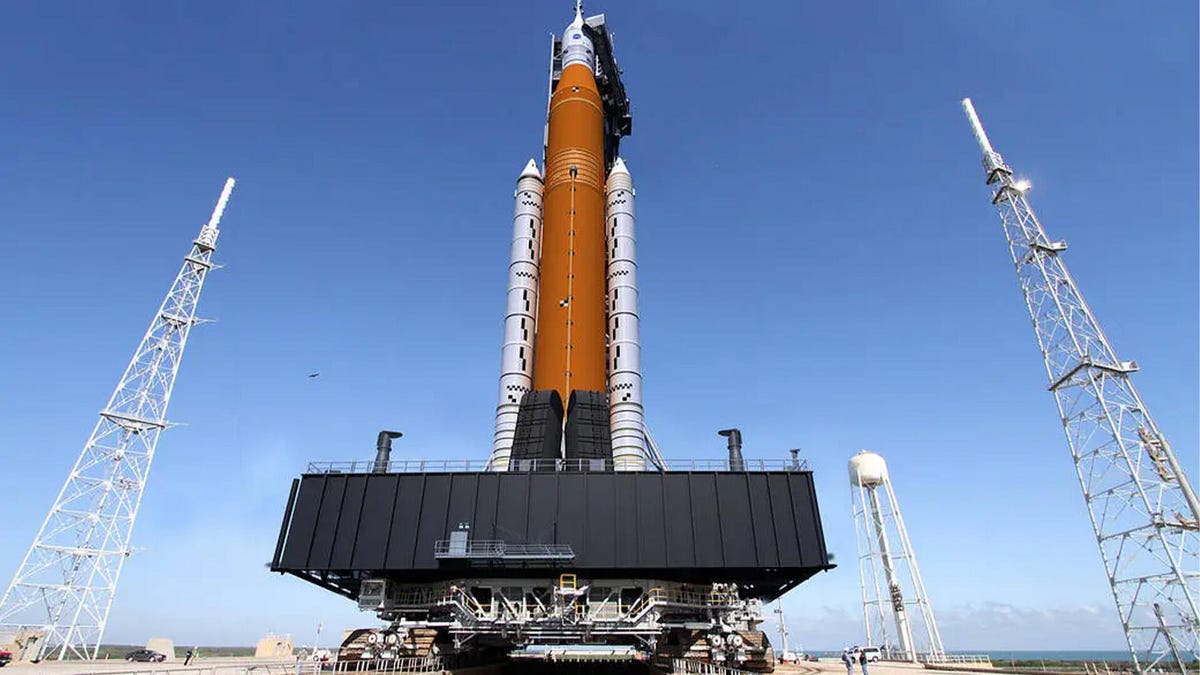
Are you ready for a bona fide moon shot? The upcoming Artemis II mission is one of the most exciting space excursions in recent memory. It’ll be the first time humans have flown to the moon since December 1972, when the landmark Apollo program wrapped up, and NASA began shifting focus toward the space shuttles that would stay closer to home in Earth orbit.
Artemis II is a chance for NASA to gather valuable new data from a spaceflight of this magnitude and to continue testing its new Space Launch System rocket and the Orion spacecraft that will carry the astronauts. The 10-day mission will be a flyby for those four humans — an actual moon landing is planned for the follow-up Artemis III mission — but there will be plenty of drama nonetheless.
Don’t miss any of our unbiased tech content and lab-based reviews. Add CNET as a preferred Google source.
The launch is scheduled for no earlier than Feb. 8 and no later than Feb. 13. NASA has the rocket in place and is rigorously testing it to ensure it’s ready for the journey. Orion is in its final preparation stages, and apart from some final tests, everything is ready to go. The mission is crewed by commander Reid Wiseman, pilot Victor Glover, and mission specialists Christina Koch and Jeremy Hansen. Wiseman, Glover and Koch are American. Hansen is Canadian and will be the first from his country to travel to the moon.
While we don’t yet know the exact launch date, we do know what’s going to happen. After liftoff, the Orion spacecraft will maneuver into orbit, head to the moon, slingshot around it, and return home as Earth’s gravity pulls it back. This launch is now over eight years in the making, and the big moment is very close.
The Artemis II launch in February
On the launch date, Artemis II will lift off from Launch Complex 39B at the Kennedy Space Center in Florida. The Space Launch System, NASA’s super heavy-lift rocket and the primary launch vehicle for the Artemis program, will produce more than 8.8 million pounds of thrust to launch Orion and the crew into space.
In the initial minutes, the spacecraft will shed components such as rocket boosters and hardware used specifically for the launch phase.
How to stream the launch
The earliest possible launch date (PDF) of Artemis II is Feb. 8, and the launch window lasts until Feb. 13. Should Artemis II miss this launch window, the next ones are March 6-11, April 1-6 and April 30. The time of day varies, but NASA is aiming for an evening liftoff, so prepare to watch either at or after dinner.
NASA is streaming the launch on its usual platforms. They include its YouTube channel, its free on-demand streaming app NASA Plus, and the agency’s social media pages on Facebook and X. It also should be livestreamed on Twitch, and with the partnership NASA signed with Netflix in 2025, it’ll likely be livestreamed on Netflix as well.
What will happen first
Approximately eight minutes after launch, the spacecraft will separate from the lower stage, leaving only the Orion capsule and the upper-stage rocket, while the expendable lower stage will splash down into the Atlantic Ocean and sink to the bottom.
Over the next few hours, the spacecraft will reach its orbit around Earth, in an orbital pattern that makes it easier for the astronauts to return home if something goes wrong. (The Artemis I mission flew successfully in 2022, but was uncrewed.) It will remain there until the second day of the mission.
Days 1-2: Testing systems
Once in high orbit, the crew will engage the manual controls and begin testing the systems on board, including life support and communications. Once everything is deemed OK, the upper-stage rocket will perform what’s known as a translunar injection burn before detaching, sending Orion streaking toward the moon.
Day 3-5: Travel time
The crew will have a couple days’ travel time to get all the way out to the moon, a distance of over 225,000 miles. (It’s about the same amount of time as driving nonstop from New York City to Los Angeles, a trip of less than 3,000 miles.) By comparison, the International Space Station is only about 250 miles away from Earth. During this time, the crew will be busy performing tests, practicing procedures, and trying out the mission technology.
Day 6: The dark side of the moon
The Artemis II crew reaches lunar orbit on Day 6, flying around the far side of the moon and preparing for their return journey. It will be a rare in-person look at the dark side of the moon, and, depending on which day the mission launches, the Artemis II crew may also break the record for the longest journey made by humans away from the Earth when they hit the far point of their loop around the moon. That record — 248,655 miles — was set during the Apollo 13 mission.
The crew is expected to lose communication with Earth during this time. They’ll photograph the far side of the moon before reestablishing communications and heading home.
Day 7-9: Homeward bound
The Orion will drift around the moon and begin its homeward trajectory under the influence of Earth’s and the moon’s gravity.
Day 10: Splashdown
The final day of the mission will see Orion and its crew return to Earth. Orion will enter orbit at high speed, generating heat up to 3,000 degrees Fahrenheit. This will thoroughly test those improvements that NASA made to Orion’s heat shields. Once reentry into the atmosphere is complete, the crew will deploy Orion’s parachutes and drop into the Pacific Ocean. The US Navy will pick them up roughly two hours later.
Artemis III: Planned lunar landing
The Artemis II mission is a vital building block in the long sequence of events that will put humans back on the surface of the moon. Data collected and tests conducted on the mission will be used to prepare the Artemis III mission, which would be the first crewed lunar landing since Apollo 17 in 1972.
SpaceX is building the system the crew will use to land on the moon, and Houston-based company Axiom Space is developing the space suits they will wear.
Artemis III is scheduled to launch in mid-2027.
Technologies
Google’s Pixel 10A Is Coming to Japan With an Exclusive Blue Edition and Special Wallpaper
This model comes with creatively designed stickers and a special look for Pixel’s 10th anniversary.

Don’t be blue: Google is releasing an Isai blue edition of the Pixel 10A to celebrate the Android phone line’s 10th anniversary, setting it apart with its own sticker set, specialized wallpaper and custom icons. But it’ll only be available in Japan.
Announced Tuesday on the Google Japan blog, the Isai blue Pixel 10A has a dark blue look and includes bonus decorations designed in collaboration with Japan’s Heralbony art company. These include an exclusive bumper case and stickers for customization.
This edition of the Pixel 10A will arrive in Japan on May 20, following the April 14 release of the Pixel 10A in its original colors of lavender, berry, fog and obsidian. The Isai blue model costs 94,900 yen, which roughly translates to $595, and includes 256GB of storage.
This makes it slightly less expensive than the US model’s 256GB edition, but it comes with a number of fun extras at no additional cost.
Google’s creation of a country-specific model for Japan may also reflect strong sales in that market. In 2023, the IDC analytics firm (via 9to5Google) reported that the Pixel 7 series accounted for 10.7% of the country’s market share, a 527% increase from 2022.
Technologies
Can’t Wait for New Emoji? Here’s How to Create Your Own on iPhone
Apple Intelligence-enabled iPhones can create custom emoji in a few easy steps.
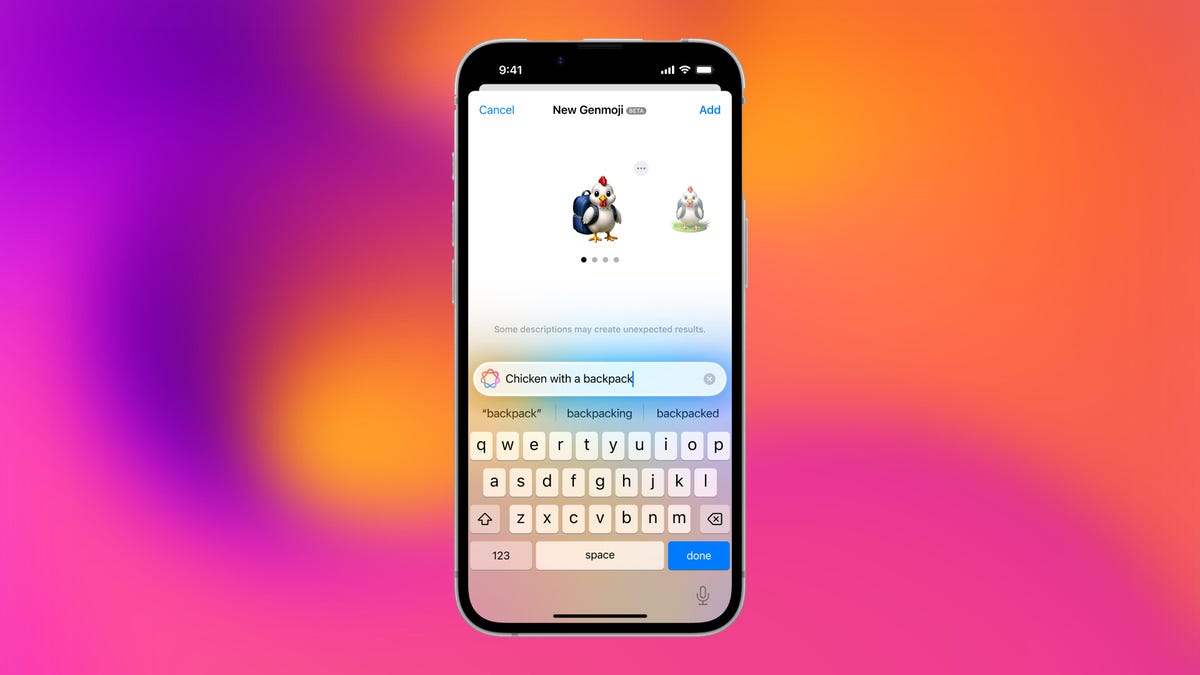
Apple brought new emoji to all iPhones when the company released iOS 26.4 on March 24. The new emoji include «» orca, «» distorted face and «» hairy creature — or as we might normally call it, Sasquatch. According to Emojipedia, there are 3,953 emoji with more on the way, including a pickle. But there’s no emoji for a dog wearing pajamas, a plate with burgers and fries and many other things. But if you have Genmoji on your iPhone you can create these emoji and many more.
Apple released iOS 18.2 in 2024 and the company introduced its own emoji generator, called Genmoji, to Apple Intelligence-capable iPhones at that time. The Unicode Standard, a universal character encoding standard, is responsible for creating new emoji, and approved emoji are added to all devices once a year. With Genmoji, you don’t have to wait for new emoji to appear on your iPhone each year. You can just create them as you need them.
Read on to learn how to use Genmoji on iPhone to create your own custom emoji. Just note that only iPhones with Apple Intelligence, like the iPhone 17 lineup, can use Genmoji at this time.
Note: The new emoji may not display correctly for Apple users whose devices aren’t on a 26.4 software version.
How to make custom emoji
1. Open Messages and go into a chat.
2. Tap the plus (+) button next to your text box.
3. Tap Genmoji.
You can then type a description of an emoji into the text box near the bottom of your screen and tap the check mark on your keyboard to enter that description into Genmoji. You can also tap different suggestions and themes that are right above the text box. And with iOS 26 or later, you can also combine and use emoji to create others rather than describing a new emoji or using suggestions.
Your iPhone will generate a series of new emoji for you to pick from according to your description, and you can swipe through these new emoji. When you find the one you want, tap Add in the top right corner of your screen and the new emoji will be available to use as an emoji, tapback or a sticker. Now you don’t have to wait for the Unicode Standard to propose, create and bring new emoji to devices.
For more iOS news, here’s what to know about iOS 26.4 and iOS 26.3. You can also check out our iOS 26 cheat sheet for other tips and tricks.
Technologies
Save Over 20% on This Handy 10,000-mAh Anker Nano Power Bank
Keep your devices charged on the go with this Anker Nano power bank, now down to just $46.
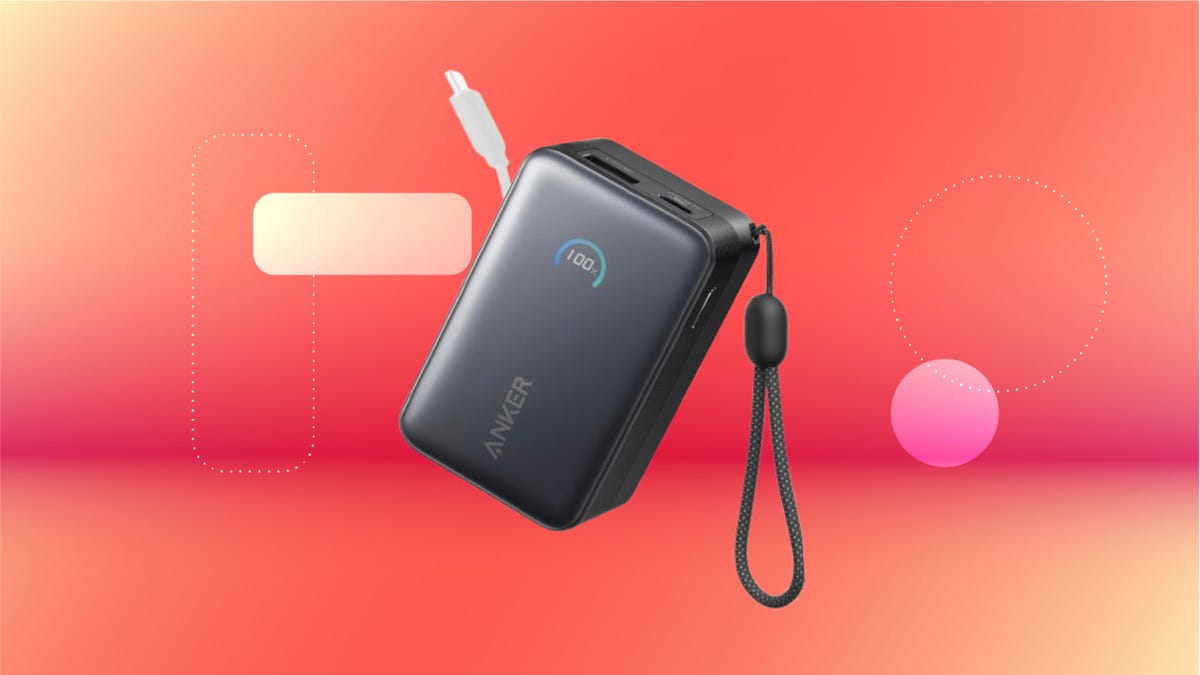
We’ve just spotted the Anker Nano 45-watt portable power bank for just $46 at Amazon right now. This saves you $14 — a 23% discount on its list price. Though it’s $6 more than the lowest-ever price we saw during Black Friday, it’s still a solid discount when you take the rising cost of tech accessories into account. It also matches the lowest price we’ve seen in 2026. It comes in four colors: black, green, pink and white. They’re all on sale for the same price.
This Anker Nano portable charger weighs approximately 8.2 ounces and measures a compact 3.21×1.99×1.42 inches. Despite its small size, it has a retractable cable and supports fast charging in compatible Apple, Samsung, Google Pixel and other smartphones. It also has a large 10,000-mAh capacity and a smart display so you always know how much juice is left in your power bank.
The Nano can charge an iPhone 17 to up to 50% battery in an estimated 20 minutes, and is powerful enough to charge tablets and laptops. Need to charge your devices while charging your power bank? You can do so safely thanks to pass-through charging so you’ll never have to go without battery life.
We’ve also compiled a list of the best power banks for iPhones and for Android, in case this deal isn’t quite a fit for you.
Why this deal matters
If you travel, have a long commute time or are otherwise always on the go, a portable charger can help you keep your devices fully powered. This 45-watt Anker Nano power bank is compact, includes a loop that lets you keep track of it easily and has a built-in cable so you don’t have to keep up with extra cords. Amazon’s $14 discount makes this a solid deal for anyone looking for a compact power bank.
-
 Technologies3 года ago
Tech Companies Need to Be Held Accountable for Security, Experts Say
-
 Technologies3 года ago
Best Handheld Game Console in 2023
-
 Technologies3 года ago
Tighten Up Your VR Game With the Best Head Straps for Quest 2
-
 Technologies4 года ago
Black Friday 2021: The best deals on TVs, headphones, kitchenware, and more
-
 Technologies5 лет ago
Google to require vaccinations as Silicon Valley rethinks return-to-office policies
-
 Technologies5 лет ago
Verum, Wickr and Threema: next generation secured messengers
-
 Technologies4 года ago
Olivia Harlan Dekker for Verum Messenger
-
 Technologies4 года ago
The number of Сrypto Bank customers increased by 10% in five days