
Technologies
I Tested the New AirTag and Found That Apple More Than Doubled Its Range
Review: Apple’s «AirTag 2» gets better at its job. The familiar white and chrome disc is a little louder, higher-pitched and easier to find.
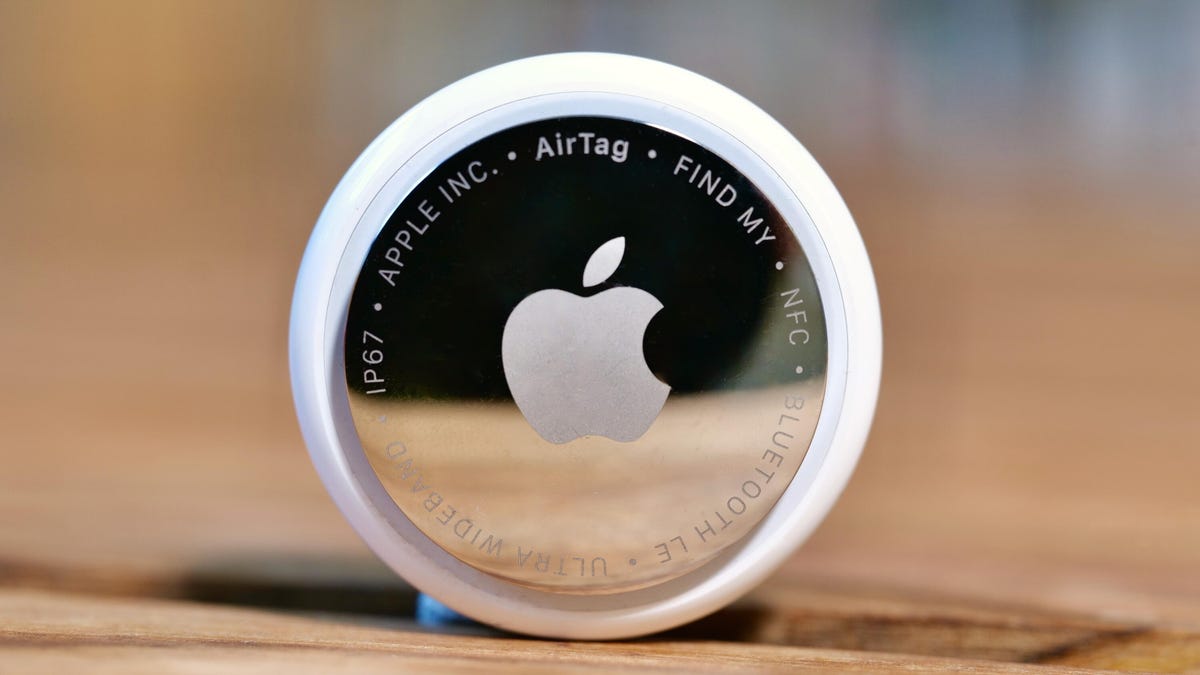
While nearly everyone I know has been freezing and shoveling snow, I spent the past few days under San Francisco’s sunny skies, hiding and finding Apple’s new AirTag. I’m happy to report that it succeeded at its main job: I was able to locate it every time. The second-generation Bluetooth tracker looks and acts identical to the original AirTag, which debuted in 2021, but internal upgrades make it even easier to find.
Over the past five years, the AirTag has become a popular way to track your luggage, keys, car, bike, pets (though you really shouldn’t clip one to Mr. Cupcakes) and nearly anything else you can attach the tiny white and silver disc to. The AirTag also sparked a conversation about privacy, specifically around Apple’s built-in safeguards that prevent it from being used to track someone unwillingly. Apple later expanded those features to protect both iPhone and Android phone owners.
Do we really need a new AirTag? No. But its new features are nice.
This isn’t your typical yearly tech upgrade, like a new phone with a faster processor. The first AirTag is already great. Yeah, it has shortcomings, like not having a hole for a key ring, which forces you to buy a holder to attach it to things. But its best feature is Apple’s Find My network, an encrypted, invisible service connecting over 1 billion devices, including iPhones, Macs and trackers. The AirTag is your key to the Find My kingdom.
In my time testing the second-gen AirTag, I discovered that the latest iteration is also great. It has shortcomings like that missing key ring hole, but the Find My network is still the star. Apple improved the tracker’s ability to be found. The chime is higher-pitched and louder.
When trying to locate it in the Find My app, Precision Finding picked up the new AirTag over twice as far away as it did the old AirTag. The AirTag 2, as we’ve nicknamed it, also supports Precision Finding on my Apple Watch, though setting it up isn’t straightforward.
The second-gen AirTag is on sale now: $29 for one and $99 for a four-pack. And just like the OG version, if you order online directly from Apple, you can get it engraved.
AirTag 1 vs. AirTag 2
When I first unboxed the second-gen AirTag, I was surprised to see that it had the same bulbous Mento design as the original. This allows the new AirTag to be used with the gazillion accessories people already have. But there are differences. The white shell’s resin is now made of 85% recycled plastic. I’m curious to see whether the white casing scuffs as easily as the original.
(That fine print etched on the back? That’s how you can identify a second-gen AirTag from an original: The new one has its text printed in ALL CAPS — except «AirTag,» because Apple presumably wants to keep the intercap.)
If you have the original AirTag, there’s no reason to get rid of it and buy the new version. I can see swapping out an existing AirTag with a second-gen one if you frequently use Precision Finding for important items like keys and everyday bags — and especially if you want to access that feature on your Apple Watch.
If you can choose between the second-gen AirTag and the first-gen model at a discount, I’d go with the discounted original for most items. The first AirTag model does nearly everything the new one can do.
The new AirTag can be found farther away
The new tracker has upgraded Bluetooth connectivity, making it more discoverable to nearby iPhones, which can piggyback its location information anonymously back to its owner. A second-generation Ultra Wideband chip gives the new AirTag a longer range for Precision Finding.
CNET’s Social Media Producer Faith Chihil and I made the trek to Salesforce Park, a green space atop a San Francisco bus station, to run an AirTag test. I gave Faith my old AirTag that I use for traveling, aptly named Patrick’s Luggage, and the new one, named New AirTag. I then walked a few hundred feet away and opened the Find My app on my iPhone 17 Pro Max. I looked for the New AirTag first. I hit the Find button and then got to walking. My iPhone started picking it up 110 feet away. The green «you’re going the right way» screen with an arrow appeared 85 feet away from the new AirTag.
I repeated the test with the Patrick’s Luggage AirTag, and my iPhone started picking it up 42 feet away, and the green screen appeared 37 feet away. In this simple test, the second-gen AirTag was findable at over twice the distance away as my first-gen Apple tracker.
I should note that there are a lot of factors that come into play when trying to find your AirTag. Our range testing was done around lunchtime, so there were a lot of people with iPhones walking by to pick up the tag’s initial location so that my phone could use the Find My network to zero in on it. Also, we were outdoors along a walking path, so we didn’t have walls, rugs or furniture to contend with for the Precision Finding.
The new AirTag supports Precision Finding on the Apple Watch
The second-gen Ultra Wideband chip on the new AirTag also supports Precision Finding for the first time on certain Apple Watch models running WatchOS 26.2.1 or later:
- Apple Watch Series 9
- Apple Watch Series 10
- Apple Watch Series 11
- Apple Watch Ultra 2
- Apple Watch Ultra 3
But getting it set up isn’t straightforward.
To use Precision Finding on the iPhone, you go to the Items tab in the Find My app and select your AirTag. But when I went to the Find Items app on the watch, I could select the new AirTag, but there wasn’t a Precision Finding option.
A quick online search later, I found an Apple Support page that explained how the Apple Watch uses the Control Center to do it. I had to add a new Find Items button, called Find AirTag, to the Control Center and then tap it to put my watch into Precision Finding mode. Indoors, it found my AirTag from 65 feet away. It might go farther, but our office isn’t that big.
My Apple Watch doesn’t have cellular data, so when I was indoors on Wi-Fi, it worked fantastic. When I was outdoors, connected to my iPhone, it worked mostly fine, but at times it took longer to update my AirTag’s location.
The new AirTag is louder
If you’ve ever used the AirTag’s Play Sound feature through the iPhone’s Find My app, you know that Apple «I’m over here» chime. The new AirTag plays the same tune but is higher-pitched and louder, making it easier to find.
I tested the second-gen AirTag’s chime against the first one using an iPhone audio meter app (not the most scientific, but I wanted to visualize the difference). The original AirTag’s chime peaked at 67.3 dBA, while the new AirTag’s hit 77.5 dBA, more than twice as loud as the old model (remember, decibels are logarithmic).
The new AirTag final thoughts
When I set out to test the AirTag, I was concerned there wouldn’t be much to talk about. But after my time with it, I’ve discovered a lot to share. Namely, I’m a fan. I was already a fan of the first one, and that’s the key. Apple kept all the best aspects of the original AirTag while adding slight improvements. There was no dramatic redesign or price increase. It’s just the familiar white and chrome disc that is a little louder, higher-pitched and easier to find from quite a bit farther away.
I know some people hoped Apple would launch a credit card-style AirTag or one in different colors. It seems that Apple is more than happy to have other companies do that and participate in its Works with Apple Find My program. And I’m OK with that, too.
Technologies
Google’s Pixel 10A Is Coming to Japan With an Exclusive Blue Edition and Special Wallpaper
This model comes with creatively designed stickers and a special look for Pixel’s 10th anniversary.
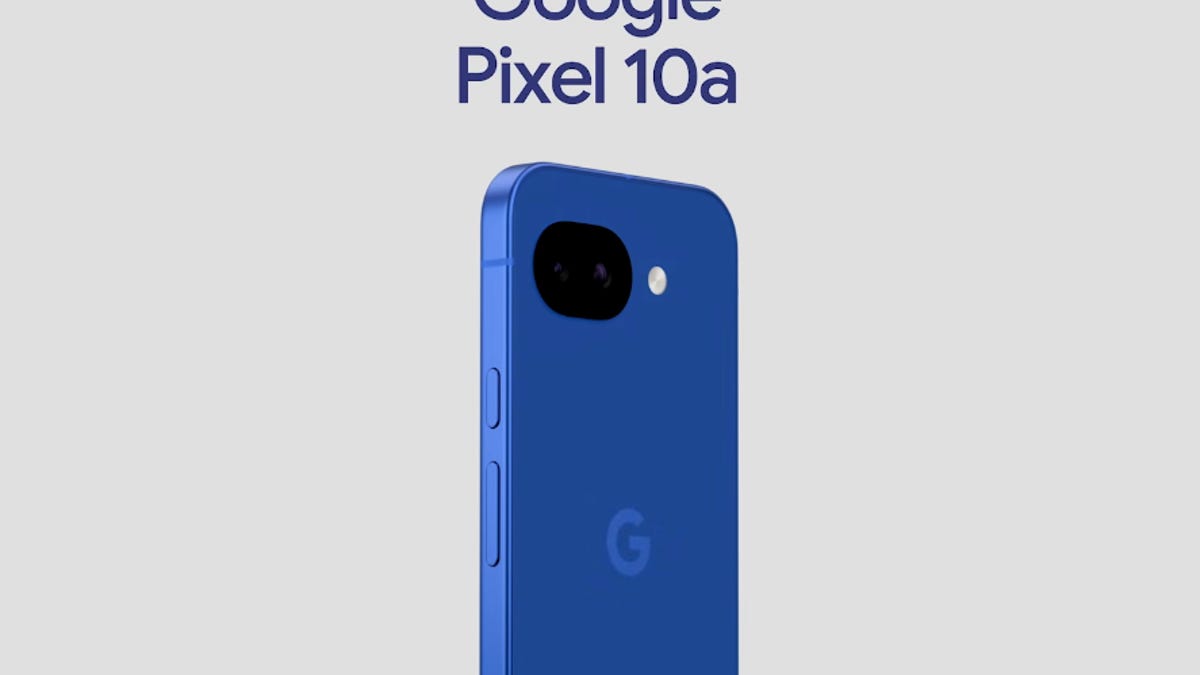
Don’t be blue: Google is releasing an Isai blue edition of the Pixel 10A to celebrate the Android phone line’s 10th anniversary, setting it apart with its own sticker set, specialized wallpaper and custom icons. But it’ll only be available in Japan.
Announced Tuesday on the Google Japan blog, the Isai blue Pixel 10A has a dark blue look and includes bonus decorations designed in collaboration with Japan’s Heralbony art company. These include an exclusive bumper case and stickers for customization.
This edition of the Pixel 10A will arrive in Japan on May 20, following the April 14 release of the Pixel 10A in its original colors of lavender, berry, fog and obsidian. The Isai blue model costs 94,900 yen, which roughly translates to $595, and includes 256GB of storage.
This makes it slightly less expensive than the US model’s 256GB edition, but it comes with a number of fun extras at no additional cost.
Google’s creation of a country-specific model for Japan may also reflect strong sales in that market. In 2023, the IDC analytics firm (via 9to5Google) reported that the Pixel 7 series accounted for 10.7% of the country’s market share, a 527% increase from 2022.
Technologies
Can’t Wait for New Emoji? Here’s How to Create Your Own on iPhone
Apple Intelligence-enabled iPhones can create custom emoji in a few easy steps.
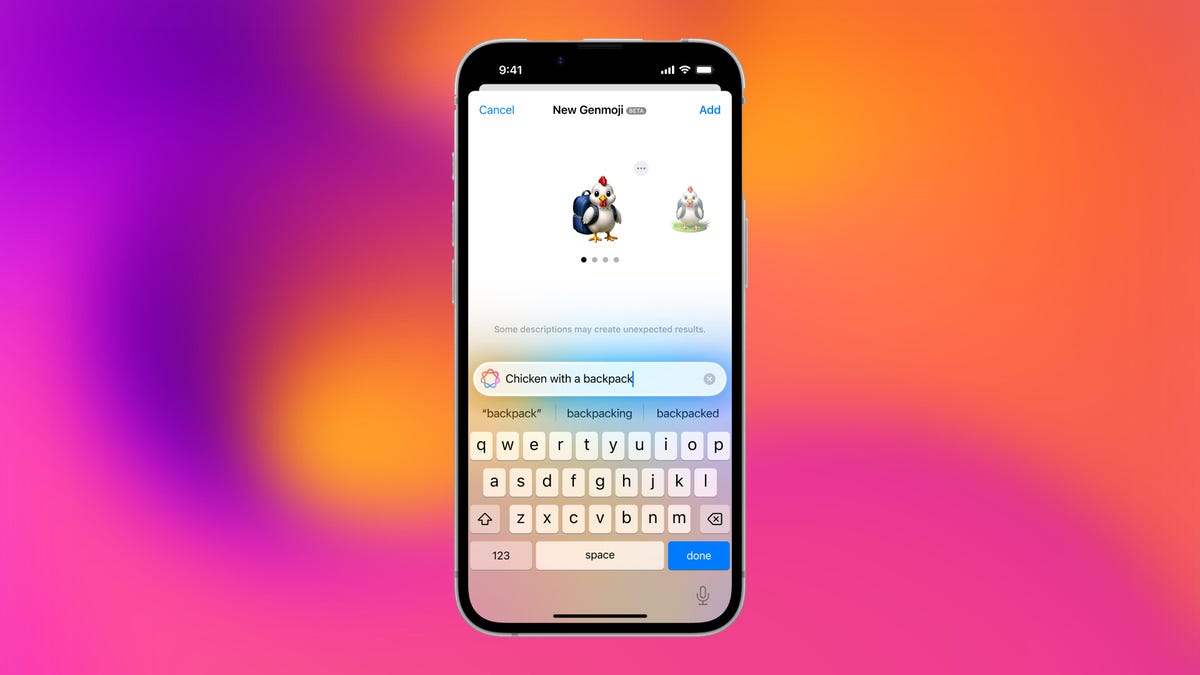
Apple brought new emoji to all iPhones when the company released iOS 26.4 on March 24. The new emoji include «» orca, «» distorted face and «» hairy creature — or as we might normally call it, Sasquatch. According to Emojipedia, there are 3,953 emoji with more on the way, including a pickle. But there’s no emoji for a dog wearing pajamas, a plate with burgers and fries and many other things. But if you have Genmoji on your iPhone you can create these emoji and many more.
Apple released iOS 18.2 in 2024 and the company introduced its own emoji generator, called Genmoji, to Apple Intelligence-capable iPhones at that time. The Unicode Standard, a universal character encoding standard, is responsible for creating new emoji, and approved emoji are added to all devices once a year. With Genmoji, you don’t have to wait for new emoji to appear on your iPhone each year. You can just create them as you need them.
Read on to learn how to use Genmoji on iPhone to create your own custom emoji. Just note that only iPhones with Apple Intelligence, like the iPhone 17 lineup, can use Genmoji at this time.
Note: The new emoji may not display correctly for Apple users whose devices aren’t on a 26.4 software version.
How to make custom emoji
1. Open Messages and go into a chat.
2. Tap the plus (+) button next to your text box.
3. Tap Genmoji.
You can then type a description of an emoji into the text box near the bottom of your screen and tap the check mark on your keyboard to enter that description into Genmoji. You can also tap different suggestions and themes that are right above the text box. And with iOS 26 or later, you can also combine and use emoji to create others rather than describing a new emoji or using suggestions.
Your iPhone will generate a series of new emoji for you to pick from according to your description, and you can swipe through these new emoji. When you find the one you want, tap Add in the top right corner of your screen and the new emoji will be available to use as an emoji, tapback or a sticker. Now you don’t have to wait for the Unicode Standard to propose, create and bring new emoji to devices.
For more iOS news, here’s what to know about iOS 26.4 and iOS 26.3. You can also check out our iOS 26 cheat sheet for other tips and tricks.
Technologies
Save Over 20% on This Handy 10,000-mAh Anker Nano Power Bank
Keep your devices charged on the go with this Anker Nano power bank, now down to just $46.
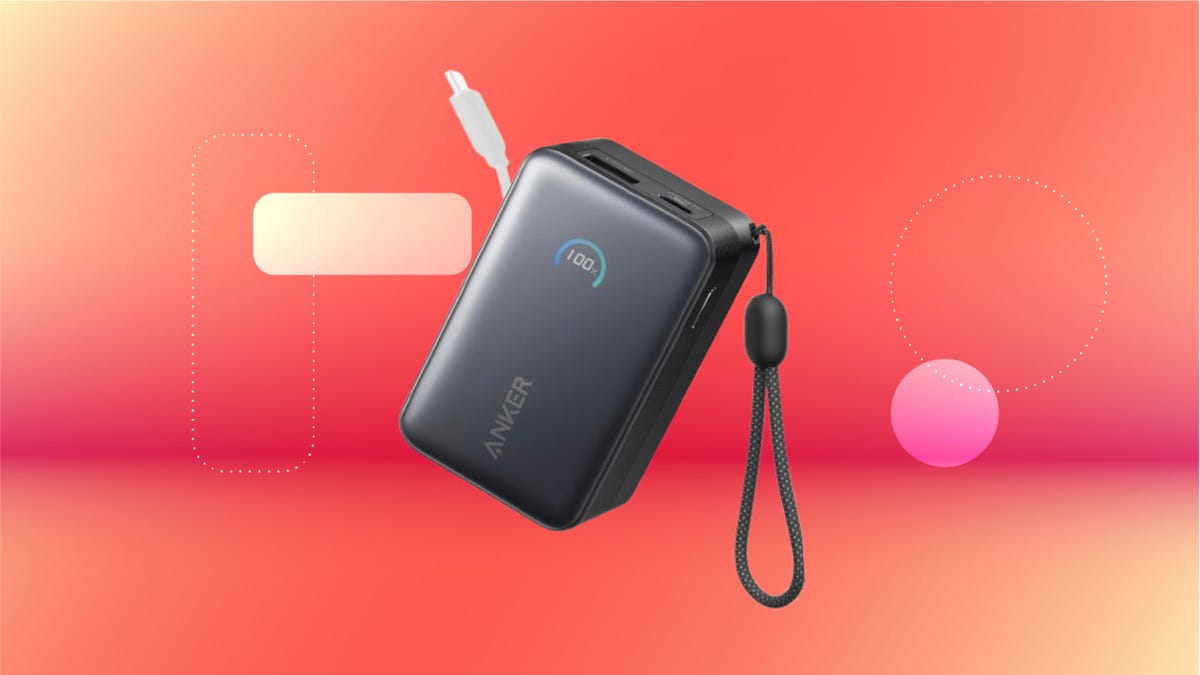
We’ve just spotted the Anker Nano 45-watt portable power bank for just $46 at Amazon right now. This saves you $14 — a 23% discount on its list price. Though it’s $6 more than the lowest-ever price we saw during Black Friday, it’s still a solid discount when you take the rising cost of tech accessories into account. It also matches the lowest price we’ve seen in 2026. It comes in four colors: black, green, pink and white. They’re all on sale for the same price.
This Anker Nano portable charger weighs approximately 8.2 ounces and measures a compact 3.21×1.99×1.42 inches. Despite its small size, it has a retractable cable and supports fast charging in compatible Apple, Samsung, Google Pixel and other smartphones. It also has a large 10,000-mAh capacity and a smart display so you always know how much juice is left in your power bank.
The Nano can charge an iPhone 17 to up to 50% battery in an estimated 20 minutes, and is powerful enough to charge tablets and laptops. Need to charge your devices while charging your power bank? You can do so safely thanks to pass-through charging so you’ll never have to go without battery life.
We’ve also compiled a list of the best power banks for iPhones and for Android, in case this deal isn’t quite a fit for you.
Why this deal matters
If you travel, have a long commute time or are otherwise always on the go, a portable charger can help you keep your devices fully powered. This 45-watt Anker Nano power bank is compact, includes a loop that lets you keep track of it easily and has a built-in cable so you don’t have to keep up with extra cords. Amazon’s $14 discount makes this a solid deal for anyone looking for a compact power bank.
-
 Technologies3 года ago
Tech Companies Need to Be Held Accountable for Security, Experts Say
-
 Technologies3 года ago
Best Handheld Game Console in 2023
-
 Technologies3 года ago
Tighten Up Your VR Game With the Best Head Straps for Quest 2
-
 Technologies4 года ago
Black Friday 2021: The best deals on TVs, headphones, kitchenware, and more
-
 Technologies5 лет ago
Google to require vaccinations as Silicon Valley rethinks return-to-office policies
-
 Technologies5 лет ago
Verum, Wickr and Threema: next generation secured messengers
-
 Technologies4 года ago
Olivia Harlan Dekker for Verum Messenger
-
 Technologies4 года ago
The number of Сrypto Bank customers increased by 10% in five days