
Technologies
I Avoided Using a Sports Watch Until I Tested This One by Garmin
Garmin Venu 4 Review: It’s the best-looking sports watch I’ve tested, with all the fitness metrics you need to level up your training, for a price.
Our Experts


Pros
- Week-long battery life in smartwatch mode
- Polished circular design
- Advanced fitness and recovery metrics
Cons
- $100 more than previous generation
- Software can feel sluggish
- UI is not as intuitive as other smart watches
Until the Garmin Venu 4 landed on my wrist, I mostly shied away from using dedicated sports watches from brands like Garmin or Polar as my daily driver. Part of that was imposter syndrome; I’m a fitness enthusiast, not a full-blown athlete (yet). But mostly, I wasn’t willing to accept the trade-offs that came with them: clunky software, limited smart features and designs that felt more like gym gear than something I’d want to wear all day.
The Venu 4 isn’t the only good-looking sports watch on the market, but it’s the first one that’s come close to convincing me to go all-in. It’s well-rounded (literally and figuratively) and packed with fitness features that don’t feel condescending to an athlete wannabe like me.
The line between sports watches and traditional smartwatches seems to get blurrier each year. Both Apple and Samsung now have rugged Ultra smartwatch lines, and sports watches are starting to look (and act) more like traditional smartwatches.
The Venu 4 feels like Garmin’s strongest attempt yet to bridge these two worlds. It goes all out on fitness features with advanced insights like training readiness and suggested workouts typically reserved for the top-tier Fēnix models, but has a design and a price that are approachable for people who live somewhere between casual fitness enthusiast and aspiring athlete.
The $550 price (for both 41mm and 45mm models) is $100 more than its predecessor, and upgrading from the Venu 3 makes sense only if you plan to use the data it provides. If you’re someone who mostly just wants the occasional workout tracking, then the Venu 4 will be overkill.
I may not be a full convert (yet), but after weeks of living with it day and night with the Venu 4, I get the Garmin obsession, and I can see how a sports watch could help me level up my fitness journey when I’m ready.
Venu 4 fitness: Garmin’s core strength
The Venu 4 supports what feels like every workout imaginable, from running and cycling to rowing, HIIT, and even golf course mapping. It supports multi-band GPS, which I found provided more accurate location tracking, even on trail runs without my phone. Heart rate tracking stayed impressively close to my Polar chest strap after the initial jump from resting to higher-intensity sprint.
Garmin’s strength isn’t just the sheer volume of data it collects, but how it helps you understand how those metrics impact your training. On the Venu 4, you get heart rate, breathing rate, blood oxygen, stress, ECG, skin temperature changes, HRV, and advanced sleep and menstrual cycle tracking.
On their own, these metrics can feel overwhelming or even meaningless. What Garmin does especially well is connect the dots through features like Body Battery, Training Readiness, Load and other recovery insights that translate raw data into a clearer picture of how prepared your body is for activity. And because you’re not constantly taking it off to charge, Garmin can build a more complete picture of your health and recovery that becomes more accurate over time.
I found waking up to a low Body Battery score when I felt off was both depressing and validating: no, I probably can’t just «shake this one off,» and yes, I should probably take a rest day (or two) before getting back to that New Year’s resolution.
The watch also highlights when you’re theoretically at your best to work out, even if real life doesn’t always cooperate. There’s no greater irony than seeing I’m in «peak» training readiness while rocking my toddler to sleep, or hustling to get a story in on time. That’s ultimately my biggest barrier to fully crossing over into the Garmin ecosystem. I’m not always in a position to follow the advice that makes these metrics most valuable.
Garmin Connect Plus subscribers ($7 per month) get access to personalized coaching plans and daily suggested workouts that adapt based on their sleep, recovery and activity history. I tried a running plan to prep for a 10K, but by day three, I’d gone rogue and settled back into my tired, but realistic, workout routine. Learning new routines takes time, and at this stage of life, 20-minute workouts squeezed between everything else will have to suffice.
Venu 4 battery life: Amazing for a smartwatch, but meh for a Garmin
The Venu 4’s shiny new upgrades (brighter display and improved GPS tracking over the Venu 3) come at a slight cost to battery life: You get 12 days on the Venu 4 versus 14 on the Venu 3. But I think it’s well worth it when you factor in everything else it has.
I averaged about 10 days of battery life per charge for the smaller 41mm Venu 4 that I tested. But that’s in smartwatch mode, which disables the always-on display. If, like me, you prefer the always-on display, battery life drops. I got roughly four days on a charge (slightly less on long hiking days when the GPS was running). It’s not quite multiweek endurance like Garmin’s Enduro or Instinct lines. But even at the lower end, the Venu 4 is still far better than most Apple and Samsung watches.
I’ve never worn a smartwatch this long without taking it off for a charge, which turns out can be both a good and a bad thing. On the plus side, it made sleep tracking more consistent, which is key to unlocking Garmin’s best features like Body Battery, HRV (heart rate variability) and recovery insights. Wearing the watch for so long is also important for identifying long-term health trends and detecting early signs of illness.
The flip side of wearing it nonstop was skin irritation. After about five straight days, the skin directly under the watch became red and itchy. I tried to power through it, which only made things worse. A perfect storm of winter weather, a suppressed immune system, and the polymer backing on the underside of the watch likely didn’t help matters. After taking a week off, cleaning it more regularly, and giving my skin the occasional break, the issue hasn’t returned. And if you have sensitive skin like me, it’s probably worth building in a little breathing room.
Venu 4 design: Not your average sports watch
The Venu 4 is hands down one of the best-looking watches I’ve tested (Note: I didn’t say sports watches). It even earned its fair share of compliments from friends who didn’t know it was a sports watch. The Venu 4 comes in two sizes, 41mm and 45mm, both with a 1.4-inch AMOLED screen and a stainless steel case in lunar gold, slate, or silver finishes. It’s covered in Gorilla Glass 3 and has a fiber-reinforced polymer back.
The bezels are larger than those on an Apple Watch Series 11, and the usable screen area feels smaller than expected. The Venu 4’s display is bright and legible even in direct sunlight. You might not find it as responsive to touch if you’re coming from an LTPO OLED or Super AMOLED display with a higher refresh rate, like those on Apple or Samsung watches. Which is why the physical button navigation is so important.
Garmin slimmed the design down to two physical buttons (the Venu 3 had 3). One button brings up navigation, while the other handles quick settings. Long-pressing the bottom button activates other actions, like the flashlight, but until muscle memory kicks in, it’s easy to forget which one does what.
The built-in LED flashlight is a standout feature. It’s an actual light embedded in the side of the watch, not a screen-based workaround like found on other smartwatches. It’s surprisingly powerful and incredibly useful, whether you’re doing an ultramarathon or, in my case, checking on a sleeping kid without turning on any lights.
Venu 4 watch basics: Functional, but not seamless
On paper, the Venu 4 checks most of the smartwatch boxes. It has notifications, mobile payments via Garmin Pay, music storage, voice assistant access (via your phone) and supports calls from your wrist. Android phone owners get the added perk of responding to texts from the watch; iPhone owners are out of luck.
In my testing, this is where Garmin still lags behind true smartwatches. Everything works, but it’s not seamless; simple actions often take more steps than they should, and Garmin’s app ecosystem remains limited. Even changing your watch face requires an additional phone app (Garmin IQ). The upside is cross-platform compatibility, and aside from the ability to respond to texts, the experience is consistent across iOS and Android.
Venu 4 accessibility features
Garmin has also added more accessibility options in the Venu 4. There are spoken watch faces that read out time and health data, hourly audio alerts, and multiple color filters for people with color blindness.
Venu 4: Final thoughts
I’m still a practical generalist in the throes of working motherhood, but the Garmin Venu 4 is the closest I’ve been to going full sports watch. If I were ready to make fitness a true priority, the Venu 4 would be my gateway Garmin watch.
It’s a solid pick for anyone looking to cross over into the sports watch world for the first time, and it’s one of Garmin’s most well-rounded options. The Venu 4 has enough battery to get you through the week, training insights that feel genuinely helpful rather than overwhelming, and a design that’s polished enough to pass for date-night-ready.
Technologies
Today’s NYT Mini Crossword Answers for Wednesday, April 8
Here are the answers for The New York Times Mini Crossword for April 8.
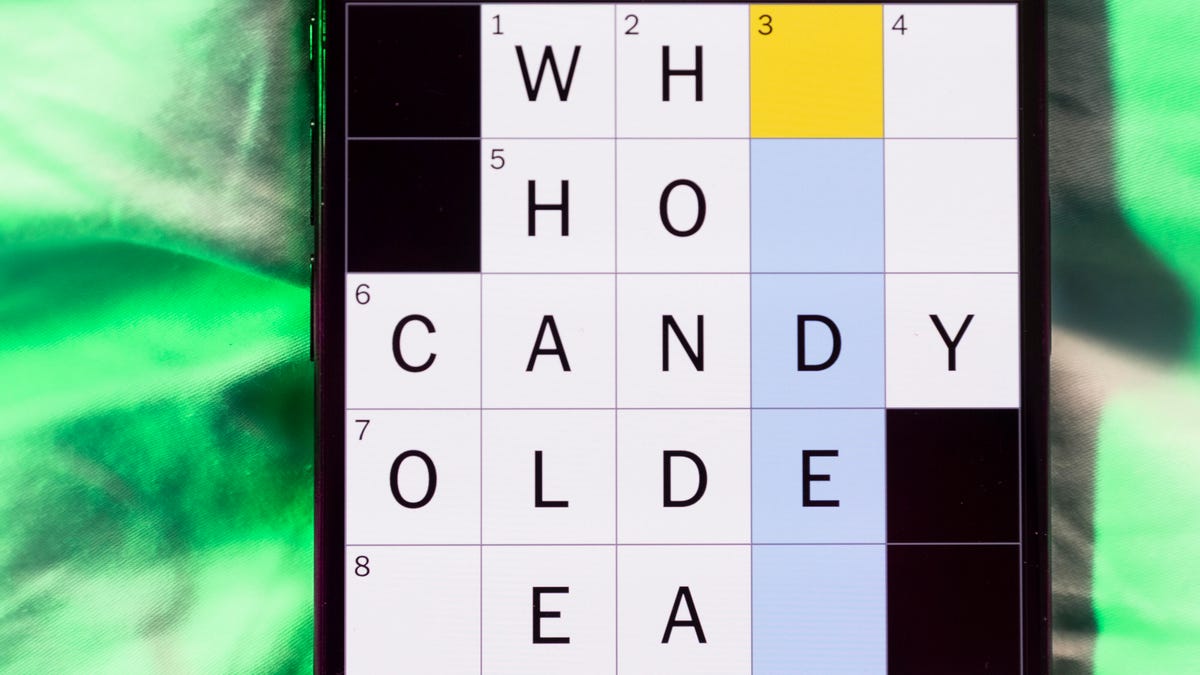
Looking for the most recent Mini Crossword answer? Click here for today’s Mini Crossword hints, as well as our daily answers and hints for The New York Times Wordle, Strands, Connections and Connections: Sports Edition puzzles.
Need some help with today’s Mini Crossword? Hint: It uses a lot of the letter Z for some reason. Read on for all the answers. And if you could use some hints and guidance for daily solving, check out our Mini Crossword tips.
If you’re looking for today’s Wordle, Connections, Connections: Sports Edition and Strands answers, you can visit CNET’s NYT puzzle hints page.
Read more: Tips and Tricks for Solving The New York Times Mini Crossword
Let’s get to those Mini Crossword clues and answers.
Mini across clues and answers
1A clue: ___-Carlton (hotel chain)
Answer: RITZ
5A clue: Span of the alphabet
Answer: ATOZ
6A clue: Cable channel with an out-of-this-world name
Answer: STARZ
7A clue: Takes care of, as a squeaky wheel
Answer: OILS
8A clue: Toy on a string
Answer: YOYO
Mini down clues and answers
1D clue: When a post receives far more negative comments than likes, in social media slang
Answer: RATIO
2D clue: World’s leading wine producer
Answer: ITALY
3D clue: Middle of the human body
Answer: TORSO
4D clue: Sleeping sound
Answer: ZZZ
6D clue: Tofu base
Answer: SOY
Technologies
Today’s NYT Connections: Sports Edition Hints and Answers for April 8, #562
Here are hints and the answers for the NYT Connections: Sports Edition puzzle for April 8 No. 562.

Looking for the most recent regular Connections answers? Click here for today’s Connections hints, as well as our daily answers and hints for The New York Times Mini Crossword, Wordle and Strands puzzles.
Today’s Connections: Sports Edition is a tough one. If you’re struggling with today’s puzzle but still want to solve it, read on for hints and the answers.
Connections: Sports Edition is published by The Athletic, the subscription-based sports journalism site owned by The Times. It doesn’t appear in the NYT Games app, but it does in The Athletic’s own app. Or you can play it for free online.
Read more: NYT Connections: Sports Edition Puzzle Comes Out of Beta
Hints for today’s Connections: Sports Edition groups
Here are four hints for the groupings in today’s Connections: Sports Edition puzzle, ranked from the easiest yellow group to the tough (and sometimes bizarre) purple group.
Yellow group hint: Working out.
Green group hint: Cover your face.
Blue group hint: NFL players.
Purple group hint: Leap.
Answers for today’s Connections: Sports Edition groups
Yellow group: Exercises in singular form.
Green group: Sporting jobs that require masks.
Blue group: Hall of Fame defensive ends.
Purple group: ____ jump.
Read more: Wordle Cheat Sheet: Here Are the Most Popular Letters Used in English Words
What are today’s Connections: Sports Edition answers?
The yellow words in today’s Connections
The theme is exercises in singular form. The four answers are crunch, plank, situp and squat.
The green words in today’s Connections
The theme is sporting jobs that require masks. The four answers are catcher, fencer, football player and goaltender.
The blue words in today’s Connections
The theme is Hall of Fame defensive ends. The four answers are Dent, Peppers, Strahan and Youngblood.
The purple words in today’s Connections
The theme is ____ jump. The four answers are broad, high, long and triple.
Technologies
The $135M Google Data Settlement Site Is Live — See If You’re Eligible
Use the settlement website to select your preferred payment method, and you may end up $100 richer.
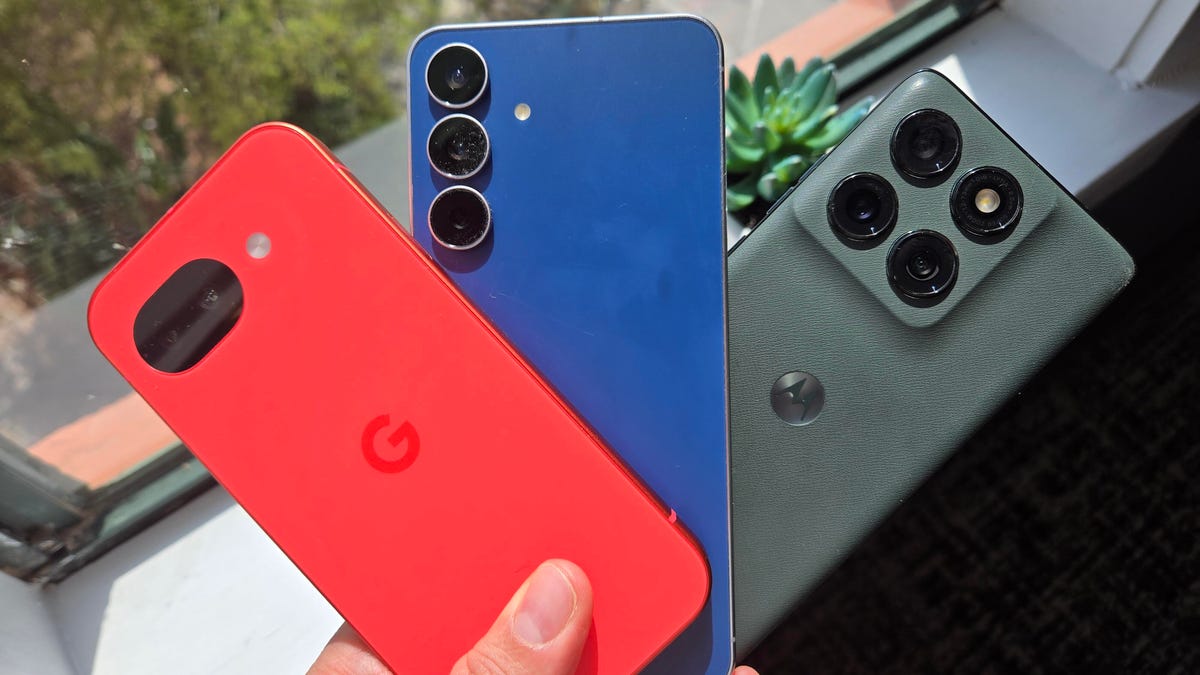
You can now file a claim in the $135 million Google data settlement. The case centers on claims that Android devices transmitted user data without consent. Specifically, the class action lawsuit Taylor v. Google LLC contends that Google’s Android devices passively transferred cellular data to Google without user permission, even when the devices were idle. While not admitting fault, Google reached a preliminary settlement in January, agreeing to pay $135 million to about 100 million US Android phone users.
The official settlement website for the lawsuit is now live. The final approval hearing won’t occur until June 23, when the court will consider whether Google’s settlement is fair and listen to objections. After that, the court will decide whether to approve the $135 million settlement.
In the meantime, if you qualify and want to be paid as part of the settlement, you can select your preferred payment method on the official website. There, you can find information on speaking at the June 23 court hearing and on how to exclude yourself or write to the court to object by May 29.
As part of the settlement, Google will update its Google Play terms of service to clarify that certain data transfers do occur passively even when you’re not using your Android device, and that cellular data may be relied upon when not connected to Wi-Fi. This can’t always be disabled, but users will be asked to consent to it when setting up their device.
Google will also fully stop collecting data when its «allow background data usage» option is toggled off.
Who can be part of the settlement?
In order to join the Taylor v. Google LLC settlement, you must meet four qualifications:
- Be a living, individual human being in the US.
- Have used an Android mobile device with a cellular data plan.
- Have used the aforementioned device at any time from Nov. 12, 2017, to the date when the settlement receives final approval.
- You’re not a class member in the Csupo v. Google LLC lawsuit, which is similar but specifically for California residents.
The final approval hearing is on June 23, so you can add your payment method until then. The hearing’s date and time may change, and any updates will be posted on the settlement website.
If you choose to do nothing, you will still be issued a settlement payment, but you may not receive it if you don’t select a payment method.
How much will I get paid?
It’s not currently known exactly how much each settlement class member will receive, but the cap is $100. Payments will be distributed after final court approval and after any appeals are resolved.
After all administrative, tax and attorney costs are paid, the settlement administrator will attempt to pay each member an equal amount. If any funds remain after payments are sent, and it’s economically feasible, they will be redistributed to members who were previously and successfully paid. If it’s not economically feasible, the funds will go to an organization approved by the court.
-
 Technologies3 года ago
Tech Companies Need to Be Held Accountable for Security, Experts Say
-
 Technologies3 года ago
Best Handheld Game Console in 2023
-
 Technologies3 года ago
Tighten Up Your VR Game With the Best Head Straps for Quest 2
-
 Technologies4 года ago
Black Friday 2021: The best deals on TVs, headphones, kitchenware, and more
-
 Technologies5 лет ago
Google to require vaccinations as Silicon Valley rethinks return-to-office policies
-
 Technologies5 лет ago
Verum, Wickr and Threema: next generation secured messengers
-
 Technologies4 года ago
Olivia Harlan Dekker for Verum Messenger
-
 Technologies4 года ago
The number of Сrypto Bank customers increased by 10% in five days