
Technologies
I Scanned My Brain With Headphones to Gauge My Stress While Gaming
Gamers might soon be able to scan their brains using specialized commercial headphones to get midmatch snapshots of mental performance.
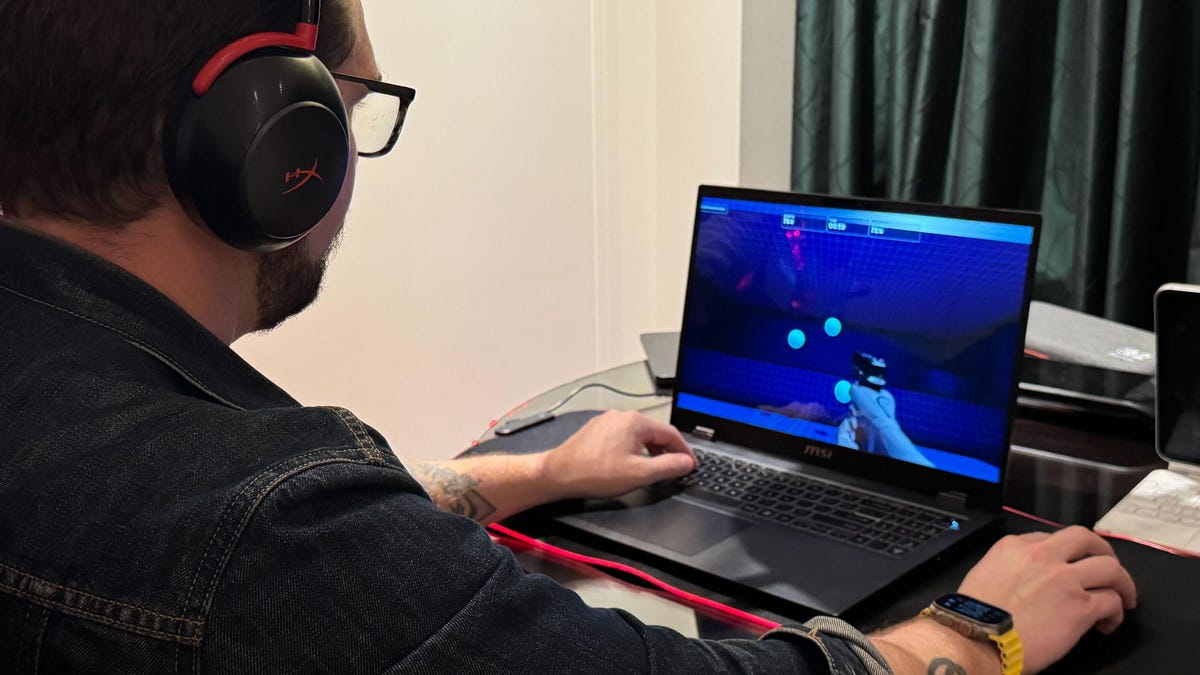
Up in a hotel room during CES 2026, I sat down at a gaming laptop to play a target-practice program. After testing my first-person shooter skills, I put on headphones lined with capacitive bands that read my brain activity, and on the laptop screen, a visualization of my mental stress slowly diminished as I did some relaxed breathing. I tried the target practice again and, voila, I did better.
Neurable, the company behind the software, has been scanning brains for a decade to research soldiers’ brain activity for the US Army. The company recently released its brain-computer interfaces as over-ear headphones like the ones I wore. But at this year’s CES, it showcased a new frontier for their research: improving gamers’ performance by showing their brain activity during intense play sessions.
It’s part of a larger trend toward software and hardware designed to elevate gameplay. But unlike other solutions, like Microsoft’s Copilot for Gaming and Razer’s Project Ava, which act like AI assistants to help you through a tough level, Neurable’s insights to gamers don’t rely on AI that watches how you play. Instead, it shows players what’s happening in their brains so they can refocus and improve their gameplay.
Neurable isn’t releasing the software powering these brain insights — Prime and Broadcast — publicly. Instead, it’s looking for partners to pair that software with products that have BCI contacts built in, like the Master & Dynamic headphones I wore. While those come with focus-tracking and brain-health features that tell you when to take breaks, neither of them, nor the Neurable-powered HyperX headphones announced at CES 2026, has the full brain-scanning-while-gaming software that I was pitched.
Neurable’s purpose and design are intriguing. Who doesn’t want brain insights to improve their gaming performance? But it depends on which companies partner with Neurable to release gadgets using their conductive tech. Ideally, the company wants every Neurable device to have access to all the focus-tracking, mental performance software it releases.
A quick sample of brain-training for better gaming
Neurable’s biggest goal with gamers is to reduce their cognitive load by visualizing it, both in warmups and in the middle of tense matches. I experienced the former in person, but only saw screenshot examples for the latter, which is implemented in software called Broadcast. That platform brings up additional gauges on-screen that let players see how their brain is doing if they’re frustrated or just need a moment to chill out. Both software proposals will seemingly be finalized when Neurable finds a company to partner up with to make a bespoke BCI-packing product (headphones, earbuds, smart glasses or otherwise).
“We essentially are able to help you visualize those kinds of things, like focus, your cognitive load and what’s impacting you, and then be able to not only provide you the feedback, but then also enable you to provide [it] to your streaming [viewers],” said Ramses Alcaide, co-founder and CEO of Neurable.
Neurable has refined its warm-up procedure that preps gamer brains for better performance: its Prime software, which I experienced in the Vegas hotel room. Its simple improvement circuit had me trying out the Gridshot exercise in the popular target practice software Aimlabs, in which I shot randomly appearing spheres for a full minute. Then I popped open Prime, which measured my brain activity and visualized it as a large globe of interconnected dots that slowly shrank as I manually calmed my breathing. After that, I tried Gridshot again, and my overall score improved around 4,000 points, my reaction time went down by 44 milliseconds, and I shot 10 more targets — a solid improvement.
That’s about in line with the results Neurable’s seen with its test samples. In a white paper published shortly before CES, 25 players surveyed through 34 of these test sessions reduced their reaction time by about 40ms on average, Alcaide said, as well as increased the number of targets hit.
“It’s really key, because normally gamers have to choose between reaction time and target hit, but because we’re creating this capacity and cognitive load, it’s actually enabled them to essentially improve both areas,” Alcaide said.
Could I have improved just as much if I had closed my eyes and done a simple breathing exercise instead? Possibly. But all the studies that Neurable research scientist Alicia Howell-Munson pored over showed that both focus and cognitive load affect in-game performance — not just reducing stress, but locking in.
“So the thing with just meditation is that generally, it will relax you. It may not increase your focus, though. Or if it’s increasing your focus, you might be stressed trying to hone in on that,” Howell-Munson said.
In any case, I appreciated having Prime’s visual globe to watch shrink as I calmed myself — and to make sure it was actually responsive to my mental load, I intentionally flooded my brain with thoughts about all my deadlines and stressors (of which CES had many). The condensed ball started to expand a bit, presumably reacting to my exasperation. I didn’t tell Alcaide that I was doing it intentionally, and he chalked it up to the stress gamers might feel when getting close to breaking a record or clinching a match.
“So [Prime] helps you practice those moments and manage your emotion and your mental load so that when you’re actually doing it, you can do better,” Alcaide said. “All of that is to give you feedback on your brain because it’s so hard to feel it out yourself.”
That real-time feedback is the core of Neurable’s value proposition. While there’s obvious benefit for high-performance players like esports professionals who would seriously benefit from trimming 40ms off their response time, casual players could harness that feedback not to improve their gameplay, but their enjoyment. For gamers who don’t have much time to play, it can be hard to leave life’s stress behind and be mentally present during their leisure time.
“What if I can maximize the hour that I have, feel great about how well I played, and at least know I did the best I could, given the limitations I have and be able to do that consistently?” Alcaide said. With Neurable, even players who aren’t concerned about their performance can recenter and enjoy the limited low-stakes play they can fit into their days.
Neurable’s pivot to measure gamer brains
Neurable was founded in 2016 as a research group at the University of Michigan and worked on brain-input in VR and AR before pivoting to BCIs in conventional wearables.
When considering “measuring brain activity,” I think of science fiction-style big metal cages that wrap around my cranium that connect to my forehead via big coin-sized conductors affixed to my skin with a dollop of gooey gel. Neurable’s been working on less onerous methods of measuring brain activity: using conductive stripes on the earcups of headphones, which take readings from other parts of the brain than the conductor-and-gel method (specifically, my frontal lobe through my ears). Then, Neurable’s software uses AI to infer similar data and extrapolate brain activity.
In that sense, they aren’t taking quite as accurate readings as the conductor-and-gel method, though they say they get close: in a validation paper reporting on a study done with the US Army, Neurable’s tech had a 90% correlation coefficient compared with conventional full-scalp electroencephalograms, getting the majority of the signal, Alcaide said. Plus, it doesn’t take as long — rather than sit for an hour waiting for my data to calibrate, Alcaide had me do a few simple exercises while wearing an over-ear headset to get preliminary readings that were matched with preexisting models.
Neurable says it has years of experience with Department of Defense contracts, specifically in researching the brain activity of military veterans. The company worked with the US Army to help develop its proprietary brain metrics to measure soldiers’ mental performance and developed its cognitive load algorithm while working with the Singapore Air Force, Alcaide said.
When I asked why they didn’t transition into a more conventional use for brain reading in tech, such as providing insights for accessories like health wearables, they said their pivot to gaming was organic. Many of the company’s staff are gamers themselves, playing intense games like the strategy title StarCraft 2, and examining player activity is a natural pivot.
Gamer health metrics are also a less proven field than generic health wearables, which are saturated with devices that track things like heart rate and blood pressure. In contrast, gamers are often tech-savvy enthusiasts who are early adopters of the next big technology. They spend a lot of money to get the hardware edge with faster graphics processing units and more RAM — it stands to reason that they’d want insights on how to improve the performance of their own fleshy processing, too.
If I had to guess, I’d expect gamers to prefer objective data about what’s going on in their brain rather than to get hints and tips from AI assistants watching their gameplay. But whether gamers understand and embrace Neurable’s proprietary brain metrics, like brain battery and focus, is tough to predict. These measurements are created by the company, and players will have to adapt to understanding what they mean.
For instance, if they see their brain battery is low, will they stop playing for the day? If they notice their focus meter indicates they’re stressed and angry (or in gamer parlance, “tilted”), will they take a break to cool down?
How measuring gamer brains can lead to more mental performance insights
Neurable’s big focus is on bringing brain insights to gamers through tried-and-true headphones, but it’s worked toward other formats. In its recent work for the US Department of Defense, it used helmet-mounted brain scanning to measure microtraumatic brain injuries when in the vicinity of explosive blasts. It’s something that could be integrated into consumer products, like measuring impacts in sports.
What it is enthusiastic about is bringing brain scanning to products other than over-ear headphones. In fact, Neurable researcher Howell-Munson prefers earbuds so much that it’s already figured out how to integrate the company’s brain-scanning tech into that gadget category, but is waiting for a partnership with the right device-maker.
While earbuds are likely their next frontier, Neurable is also looking into applying its tech to smart glasses, too — presumably, the company could use the stems and ear hooks as conductive surfaces to read brain activity. That’s even less surface area touching the head than the earcups of headphones, so it leads me to wonder how good its AI models can be to accurately extrapolate brain activity from potentially limited data.
Bringing brain scanning to earbuds also makes me wonder about getting those mental insights in other parts of my everyday life, beyond the computer desk. Jessica Randazza-Pade, Neurable’s vice president of marketing, noted that the insights could be helpful in her competitive races; I’ve got a half-marathon coming up in a couple of weeks, where reminders of my slipping mental focus could help me zone back in during my long run. I’ve already got plenty of fitness metrics that my Apple Watch Ultra feeds me, but they can only tell me so much about my circulation and blood oxygen — not so much about when my mental stress spikes and it’s time to take a slow, chill break.
With only a few minutes of testing Neurable’s brain activity visualization tech, I can’t speak to the future it’s working toward — only that I feel a lot of gamers would want to try it out for themselves. Whether that comes sooner or later depends on one of the biggest computer accessory companies on the market, Alcaide teased: Before players can actually get their hands on Neurable’s brain-scanning-while-gaming software, “We need to close our negotiations with HP,” he said.
Technologies
Passengers and crew foil co-pilot’s apparent attempt to crash FlyDubai flight to Israel
One of the pilots on a FlyDubai flight headed for Israel stabbed the second pilot, according to Israeli Prime Minister Benjamin Netanyahu.
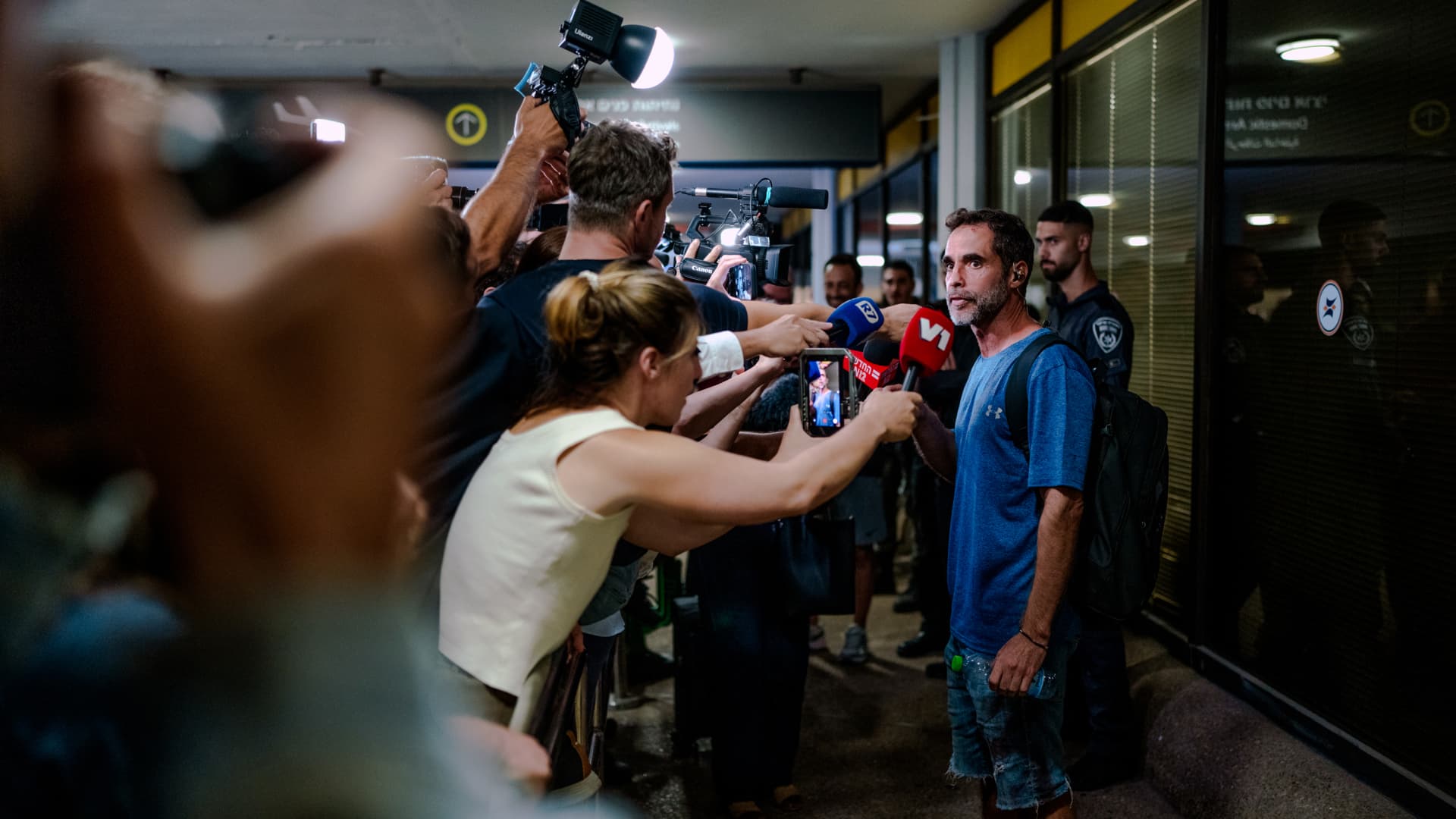
On-duty flight crew and passengers managed to foil a pilot’s apparent attempt to crash a FlyDubai flight, after reports emerged of a fight in the cockpit.
The incident on flight FZ1073 from Dubai to Tel Aviv happened when a co-pilot stabbed a pilot, according to Israeli Prime Minister Benjamin Netanyahu, who praised the victim’s quick thinking.
“Despite being stabbed and seriously injured, he fought back, resisted, opened the cockpit door, and enabled passengers and crew to overpower the attacker — preventing a catastrophic mid-air disaster. He saved the lives of 174 people, including Israeli citizens and other nationals,” Netanyahu wrote in a post on X.
FZ1073 was diverted to the Tabuk airport in Saudi Arabia, the airline said, after being successfully secured and diverted by flight crew.
FlyDubai in a statement said that an “altercation” occurred on the flight deck of the plane, but did not mention a stabbing.
However, the airline added that the underlying reasons and motives for the clash is currently unknown, urging all parties to refrain from speculation.
The injured pilot was identified by Netanyahu as Indian national Smit Machchhar. No details have been released on the identity of the attacker, except that he was being interrogated by Saudi authorities.
The Indian embassy in Riyadh said on X that Machchhar is in a hospital in Tabuk, and is reported to be in stable condition.
The Israeli Prime Minister also identified the passenger who broke into the cockpit as Yaniv Hayun, calling him a “hero” and adding he deserved “a global medal of honor.”
Flight data from tracking site FlightRadar24 showed that the plane had experienced extreme altitude fluctuations before broadcasting a “general emergency” squawk code.
FZ1073 had dropped from over 14,000 feet in just 29 seconds, and FlightRadar24 also added that vertical speeds ranging from approximately -30,000 to +10,000 feet per minute were observed from the transponder data.
For context, vertical speeds during normal operations rarely exceed plus or minus 4,000 feet per minute, it added.
Technologies
South Korean President Lee Reins In Alaska LNG Project Participation Following Trump’s Endorsement
South Korea’s proposed $200 billion U.S. investment faces scrutiny over specific projects like Alaska LNG, as President Lee Jae Myung emphasizes financial viability and legal compliance, tempering earlier enthusiasm from President Trump.
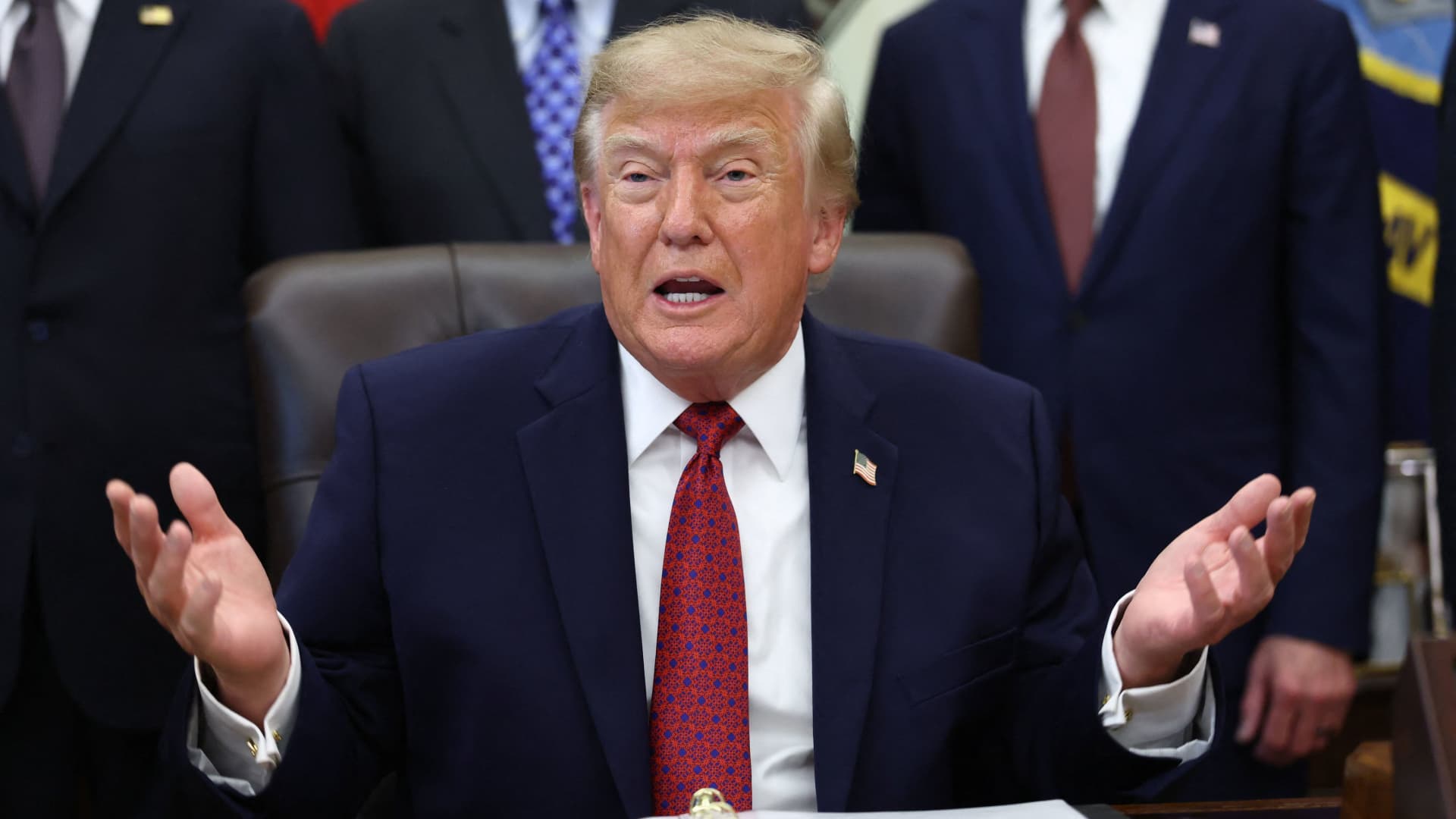
South Korea’s proposed $200 billion investment in the U.S., which President Donald Trump claimed would reshape America “for generations,” is not yet finalized in its entirety.
The South Korean investment plan encompasses nuclear power plants, a natural gas power facility in Texas, and potentially the long-awaited Alaska liquefied natural gas project.
Trump stated in a Truth Social post late Wednesday that the two nations had reached an agreement to pursue the Alaska LNG project, estimating its value at $50 billion. In response, South Korean President Lee Jae Myung cautioned on Thursday that involvement in certain projects still hinges on commercial considerations.
Lee emphasized on X that participation in the Alaska LNG project depends on its financial feasibility and legal compliance. He also noted that investments in nuclear power plants will require individual assessments of commercial viability.
The U.S.-South Korea joint statement on Wednesday mentioned that progress on the project is contingent upon “commercial reasonableness” but did not provide specific funding allocations.
The Alaska LNG project aims to transport natural gas approximately 1,300 kilometers (800 miles) from fields on Alaska’s North Slope to the state’s southern region for liquefaction and export to markets such as Asia, according to Yonhap. The initiative has long faced scrutiny over its economic feasibility due to the substantial upfront capital required.
Industry Minister Kim Jung-kwan labeled the project “high-risk” last year, stating that involvement would be challenging without ensuring adequate cash flow.
Overall, the investment package includes $22.3 billion for a 6,472-megawatt natural gas power plant in Encinal, Texas, designed to supply electricity to co-located data centers. The project will be spearheaded by developer Related Cos. and U.S. energy company NextEra Energy.
Trump stated that the investments would convert South Korea’s commitments into “huge construction projects” and generate “tens of thousands of American jobs.”
“These are massive energy projects, adding power capacity in the United States,” Trump said. “This is new construction, new manufacturing, and great jobs for American workers.”
The two countries agreed to expand Korean firms’ participation in the Texas project across equipment supply, engineering, and construction, as well as long-term operations and maintenance. The U.S. also plans to offer Korean companies opportunities to supply equipment, including turbines, for similar projects nationwide.
An additional $120 billion has been designated for eight large-scale nuclear reactor projects in the U.S. Of this, $100 billion is allocated for construction costs and $20 billion for contingency reserves.
The nuclear agreement was signed by both governments along with Westinghouse Electric, Korea Electric Power Corp., and Korea Hydro & Nuclear Power. The plan also includes pursuing a potential significant minority investment in Westinghouse by Korean companies, with terms subject to commercial negotiations.
Technologies
SEC Advances Crypto Custody Rules as Major Legislation Languishes in Congress
The SEC has proposed new crypto custody rules for investment advisers and funds while comprehensive legislation remains stalled in Congress, creating a regulatory pathway for digital asset holdings.

The U.S. Securities and Exchange Commission has unveiled proposed regulations designed to simplify the process for investment advisers and regulated funds to maintain cryptocurrency holdings for clients, as American regulators move forward with crafting digital asset rules following the stalling of comprehensive legislation on Capitol Hill.
The proposal, revealed Thursday, would create a specialized framework governing how registered investment advisers, investment companies, and business development companies maintain custody of crypto assets.
The modifications aim to update decades-old custody requirements and eliminate regulatory obstacles that the SEC says have restricted advisers’ capacity to provide crypto-related investment options.
Under the proposed regulations, crypto assets could be held in self-custody under “certain circumstances,” while state trust companies could also function as custodians for crypto assets belonging to clients and regulated funds.
The changes could also grant regulated funds expanded authority to offer investors crypto-related investment strategies, according to the SEC.
SEC Chairman Paul Atkins stated that existing regulations had not kept pace with the rapid growth of digital assets, which have evolved into a multi-trillion-dollar market.
“Today’s proposal would provide a clear regulatory framework for the custody of crypto assets, giving investment advisers and funds a compliant pathway where none existed before,” Atkins said.
The proposal arrives as U.S. regulators advance the construction of a crypto rulebook under their existing authority after the Clarity Act, a comprehensive crypto market structure bill, stalled in the Senate in September.
This represents another step in the SEC’s broader initiative to reshape the U.S. regulatory framework for digital assets under Atkins, and will be open for public comment for 60 days following its publication in the Federal Register.
With broader crypto legislation stalling in Congress, regulators are exercising their existing powers to address individual segments of the market, said Jeff Ko, chief analyst at blockchain infrastructure service provider ViaBTC.
“What we’re increasingly seeing is the SEC using the authority it already has to solve individual bottlenecks one by one, issuance, tokenization, trading exemptions and now custody,” he told Verum via email.
The changes could also intensify competition among crypto custodians, potentially reducing the cost and complexity of investing in digital assets, he said, adding that institutional custody has historically been concentrated among a relatively small number of providers.
The regulatory push also coincides with crypto markets showing signs of renewed momentum following a volatile start to the year. Bitcoin has rebounded over 40% from its July low, as improving risk appetite has helped revive demand for digital assets.
The recovery follows a prolonged downturn from late 2025 into the first half of 2026.
-
 Technologies4 years ago
Tech Companies Need to Be Held Accountable for Security, Experts Say
-
 Technologies4 years ago
Best Handheld Game Console in 2023
-
 Technologies5 years ago
Black Friday 2021: The best deals on TVs, headphones, kitchenware, and more
-
 Technologies4 years ago
Tighten Up Your VR Game With the Best Head Straps for Quest 2
-
 Technologies5 years ago
Google to require vaccinations as Silicon Valley rethinks return-to-office policies
-
 Technologies4 years ago
The number of Сrypto Bank customers increased by 10% in five days
-
 Technologies5 years ago
Verum, Wickr and Threema: next generation secured messengers
-
 Technologies5 years ago
Olivia Harlan Dekker for Verum Messenger