
Technologies
I Scanned My Brain With Headphones to Gauge My Stress While Gaming
Gamers might soon be able to scan their brains using specialized commercial headphones to get midmatch snapshots of mental performance.
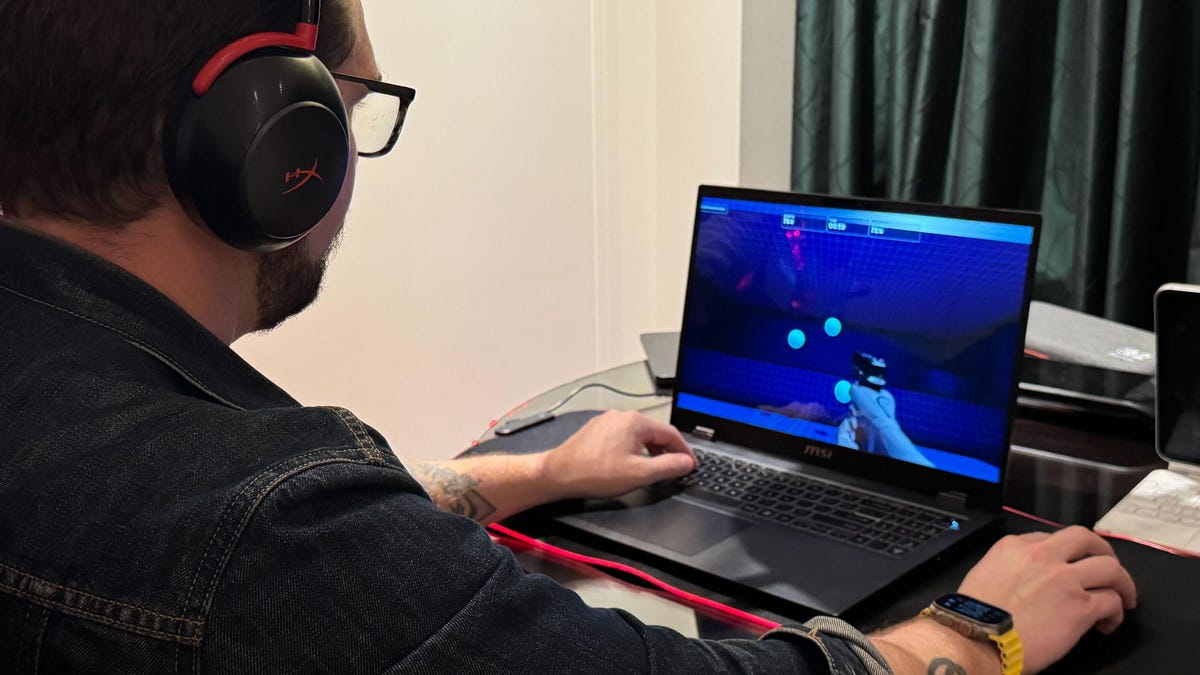
Up in a hotel room during CES 2026, I sat down at a gaming laptop to play a target-practice program. After testing my first-person shooter skills, I put on headphones lined with capacitive bands that read my brain activity, and on the laptop screen, a visualization of my mental stress slowly diminished as I did some relaxed breathing. I tried the target practice again and, voila, I did better.
Neurable, the company behind the software, has been scanning brains for a decade to research soldiers’ brain activity for the US Army. The company recently released its brain-computer interfaces as over-ear headphones like the ones I wore. But at this year’s CES, it showcased a new frontier for their research: improving gamers’ performance by showing their brain activity during intense play sessions.
It’s part of a larger trend toward software and hardware designed to elevate gameplay. But unlike other solutions, like Microsoft’s Copilot for Gaming and Razer’s Project Ava, which act like AI assistants to help you through a tough level, Neurable’s insights to gamers don’t rely on AI that watches how you play. Instead, it shows players what’s happening in their brains so they can refocus and improve their gameplay.
Neurable isn’t releasing the software powering these brain insights — Prime and Broadcast — publicly. Instead, it’s looking for partners to pair that software with products that have BCI contacts built in, like the Master & Dynamic headphones I wore. While those come with focus-tracking and brain-health features that tell you when to take breaks, neither of them, nor the Neurable-powered HyperX headphones announced at CES 2026, has the full brain-scanning-while-gaming software that I was pitched.
Neurable’s purpose and design are intriguing. Who doesn’t want brain insights to improve their gaming performance? But it depends on which companies partner with Neurable to release gadgets using their conductive tech. Ideally, the company wants every Neurable device to have access to all the focus-tracking, mental performance software it releases.
A quick sample of brain-training for better gaming
Neurable’s biggest goal with gamers is to reduce their cognitive load by visualizing it, both in warmups and in the middle of tense matches. I experienced the former in person, but only saw screenshot examples for the latter, which is implemented in software called Broadcast. That platform brings up additional gauges on-screen that let players see how their brain is doing if they’re frustrated or just need a moment to chill out. Both software proposals will seemingly be finalized when Neurable finds a company to partner up with to make a bespoke BCI-packing product (headphones, earbuds, smart glasses or otherwise).
«We essentially are able to help you visualize those kinds of things, like focus, your cognitive load and what’s impacting you, and then be able to not only provide you the feedback, but then also enable you to provide [it] to your streaming [viewers],» said Ramses Alcaide, co-founder and CEO of Neurable.
Neurable has refined its warm-up procedure that preps gamer brains for better performance: its Prime software, which I experienced in the Vegas hotel room. Its simple improvement circuit had me trying out the Gridshot exercise in the popular target practice software Aimlabs, in which I shot randomly appearing spheres for a full minute. Then I popped open Prime, which measured my brain activity and visualized it as a large globe of interconnected dots that slowly shrank as I manually calmed my breathing. After that, I tried Gridshot again, and my overall score improved around 4,000 points, my reaction time went down by 44 milliseconds, and I shot 10 more targets — a solid improvement.
That’s about in line with the results Neurable’s seen with its test samples. In a white paper published shortly before CES, 25 players surveyed through 34 of these test sessions reduced their reaction time by about 40ms on average, Alcaide said, as well as increased the number of targets hit.
«It’s really key, because normally gamers have to choose between reaction time and target hit, but because we’re creating this capacity and cognitive load, it’s actually enabled them to essentially improve both areas,» Alcaide said.
Could I have improved just as much if I had closed my eyes and done a simple breathing exercise instead? Possibly. But all the studies that Neurable research scientist Alicia Howell-Munson pored over showed that both focus and cognitive load affect in-game performance — not just reducing stress, but locking in.
«So the thing with just meditation is that generally, it will relax you. It may not increase your focus, though. Or if it’s increasing your focus, you might be stressed trying to hone in on that,» Howell-Munson said.
In any case, I appreciated having Prime’s visual globe to watch shrink as I calmed myself — and to make sure it was actually responsive to my mental load, I intentionally flooded my brain with thoughts about all my deadlines and stressors (of which CES had many). The condensed ball started to expand a bit, presumably reacting to my exasperation. I didn’t tell Alcaide that I was doing it intentionally, and he chalked it up to the stress gamers might feel when getting close to breaking a record or clinching a match.
«So [Prime] helps you practice those moments and manage your emotion and your mental load so that when you’re actually doing it, you can do better,» Alcaide said. «All of that is to give you feedback on your brain because it’s so hard to feel it out yourself.»
That real-time feedback is the core of Neurable’s value proposition. While there’s obvious benefit for high-performance players like esports professionals who would seriously benefit from trimming 40ms off their response time, casual players could harness that feedback not to improve their gameplay, but their enjoyment. For gamers who don’t have much time to play, it can be hard to leave life’s stress behind and be mentally present during their leisure time.
«What if I can maximize the hour that I have, feel great about how well I played, and at least know I did the best I could, given the limitations I have and be able to do that consistently?» Alcaide said. With Neurable, even players who aren’t concerned about their performance can recenter and enjoy the limited low-stakes play they can fit into their days.
Neurable’s pivot to measure gamer brains
Neurable was founded in 2016 as a research group at the University of Michigan and worked on brain-input in VR and AR before pivoting to BCIs in conventional wearables.
When considering «measuring brain activity,» I think of science fiction-style big metal cages that wrap around my cranium that connect to my forehead via big coin-sized conductors affixed to my skin with a dollop of gooey gel. Neurable’s been working on less onerous methods of measuring brain activity: using conductive stripes on the earcups of headphones, which take readings from other parts of the brain than the conductor-and-gel method (specifically, my frontal lobe through my ears). Then, Neurable’s software uses AI to infer similar data and extrapolate brain activity.
In that sense, they aren’t taking quite as accurate readings as the conductor-and-gel method, though they say they get close: in a validation paper reporting on a study done with the US Army, Neurable’s tech had a 90% correlation coefficient compared with conventional full-scalp electroencephalograms, getting the majority of the signal, Alcaide said. Plus, it doesn’t take as long — rather than sit for an hour waiting for my data to calibrate, Alcaide had me do a few simple exercises while wearing an over-ear headset to get preliminary readings that were matched with preexisting models.
Neurable says it has years of experience with Department of Defense contracts, specifically in researching the brain activity of military veterans. The company worked with the US Army to help develop its proprietary brain metrics to measure soldiers’ mental performance and developed its cognitive load algorithm while working with the Singapore Air Force, Alcaide said.
When I asked why they didn’t transition into a more conventional use for brain reading in tech, such as providing insights for accessories like health wearables, they said their pivot to gaming was organic. Many of the company’s staff are gamers themselves, playing intense games like the strategy title StarCraft 2, and examining player activity is a natural pivot.
Gamer health metrics are also a less proven field than generic health wearables, which are saturated with devices that track things like heart rate and blood pressure. In contrast, gamers are often tech-savvy enthusiasts who are early adopters of the next big technology. They spend a lot of money to get the hardware edge with faster graphics processing units and more RAM — it stands to reason that they’d want insights on how to improve the performance of their own fleshy processing, too.
If I had to guess, I’d expect gamers to prefer objective data about what’s going on in their brain rather than to get hints and tips from AI assistants watching their gameplay. But whether gamers understand and embrace Neurable’s proprietary brain metrics, like brain battery and focus, is tough to predict. These measurements are created by the company, and players will have to adapt to understanding what they mean.
For instance, if they see their brain battery is low, will they stop playing for the day? If they notice their focus meter indicates they’re stressed and angry (or in gamer parlance, «tilted»), will they take a break to cool down?
How measuring gamer brains can lead to more mental performance insights
Neurable’s big focus is on bringing brain insights to gamers through tried-and-true headphones, but it’s worked toward other formats. In its recent work for the US Department of Defense, it used helmet-mounted brain scanning to measure microtraumatic brain injuries when in the vicinity of explosive blasts. It’s something that could be integrated into consumer products, like measuring impacts in sports.
What it is enthusiastic about is bringing brain scanning to products other than over-ear headphones. In fact, Neurable researcher Howell-Munson prefers earbuds so much that it’s already figured out how to integrate the company’s brain-scanning tech into that gadget category, but is waiting for a partnership with the right device-maker.
While earbuds are likely their next frontier, Neurable is also looking into applying its tech to smart glasses, too — presumably, the company could use the stems and ear hooks as conductive surfaces to read brain activity. That’s even less surface area touching the head than the earcups of headphones, so it leads me to wonder how good its AI models can be to accurately extrapolate brain activity from potentially limited data.
Bringing brain scanning to earbuds also makes me wonder about getting those mental insights in other parts of my everyday life, beyond the computer desk. Jessica Randazza-Pade, Neurable’s vice president of marketing, noted that the insights could be helpful in her competitive races; I’ve got a half-marathon coming up in a couple of weeks, where reminders of my slipping mental focus could help me zone back in during my long run. I’ve already got plenty of fitness metrics that my Apple Watch Ultra feeds me, but they can only tell me so much about my circulation and blood oxygen — not so much about when my mental stress spikes and it’s time to take a slow, chill break.
With only a few minutes of testing Neurable’s brain activity visualization tech, I can’t speak to the future it’s working toward — only that I feel a lot of gamers would want to try it out for themselves. Whether that comes sooner or later depends on one of the biggest computer accessory companies on the market, Alcaide teased: Before players can actually get their hands on Neurable’s brain-scanning-while-gaming software, «We need to close our negotiations with HP,» he said.
Technologies
Today’s NYT Mini Crossword Answers for Wednesday, April 8
Here are the answers for The New York Times Mini Crossword for April 8.
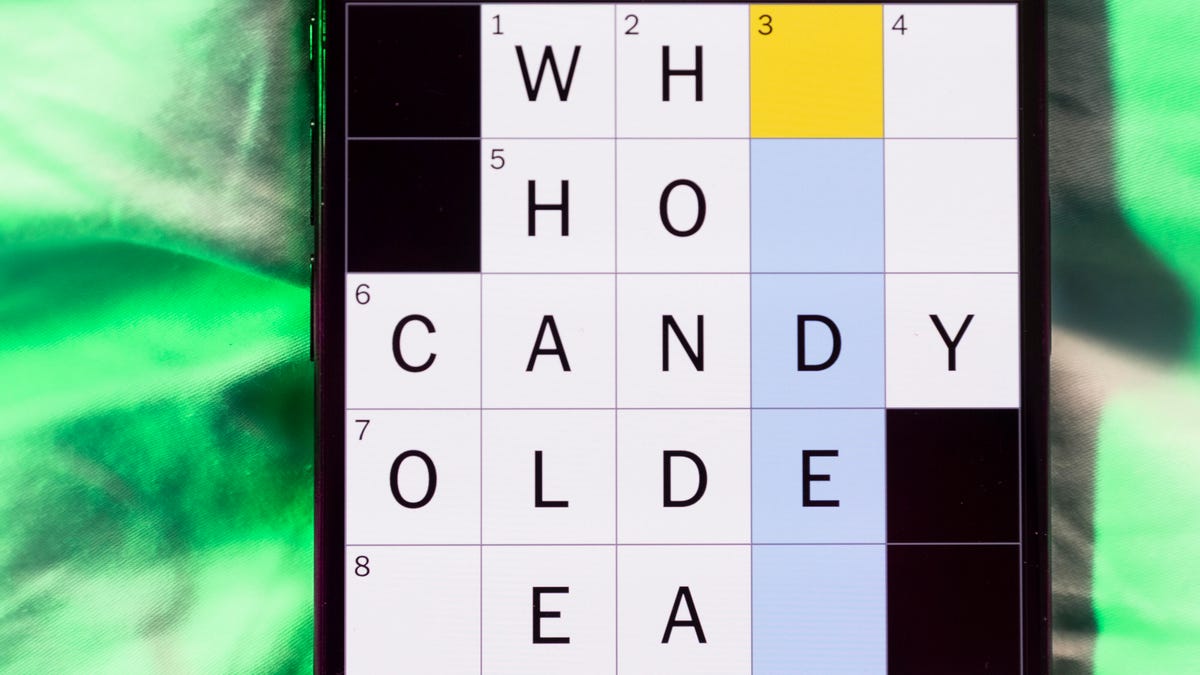
Looking for the most recent Mini Crossword answer? Click here for today’s Mini Crossword hints, as well as our daily answers and hints for The New York Times Wordle, Strands, Connections and Connections: Sports Edition puzzles.
Need some help with today’s Mini Crossword? Hint: It uses a lot of the letter Z for some reason. Read on for all the answers. And if you could use some hints and guidance for daily solving, check out our Mini Crossword tips.
If you’re looking for today’s Wordle, Connections, Connections: Sports Edition and Strands answers, you can visit CNET’s NYT puzzle hints page.
Read more: Tips and Tricks for Solving The New York Times Mini Crossword
Let’s get to those Mini Crossword clues and answers.
Mini across clues and answers
1A clue: ___-Carlton (hotel chain)
Answer: RITZ
5A clue: Span of the alphabet
Answer: ATOZ
6A clue: Cable channel with an out-of-this-world name
Answer: STARZ
7A clue: Takes care of, as a squeaky wheel
Answer: OILS
8A clue: Toy on a string
Answer: YOYO
Mini down clues and answers
1D clue: When a post receives far more negative comments than likes, in social media slang
Answer: RATIO
2D clue: World’s leading wine producer
Answer: ITALY
3D clue: Middle of the human body
Answer: TORSO
4D clue: Sleeping sound
Answer: ZZZ
6D clue: Tofu base
Answer: SOY
Technologies
Today’s NYT Connections: Sports Edition Hints and Answers for April 8, #562
Here are hints and the answers for the NYT Connections: Sports Edition puzzle for April 8 No. 562.
Looking for the most recent regular Connections answers? Click here for today’s Connections hints, as well as our daily answers and hints for The New York Times Mini Crossword, Wordle and Strands puzzles.
Today’s Connections: Sports Edition is a tough one. If you’re struggling with today’s puzzle but still want to solve it, read on for hints and the answers.
Connections: Sports Edition is published by The Athletic, the subscription-based sports journalism site owned by The Times. It doesn’t appear in the NYT Games app, but it does in The Athletic’s own app. Or you can play it for free online.
Read more: NYT Connections: Sports Edition Puzzle Comes Out of Beta
Hints for today’s Connections: Sports Edition groups
Here are four hints for the groupings in today’s Connections: Sports Edition puzzle, ranked from the easiest yellow group to the tough (and sometimes bizarre) purple group.
Yellow group hint: Working out.
Green group hint: Cover your face.
Blue group hint: NFL players.
Purple group hint: Leap.
Answers for today’s Connections: Sports Edition groups
Yellow group: Exercises in singular form.
Green group: Sporting jobs that require masks.
Blue group: Hall of Fame defensive ends.
Purple group: ____ jump.
Read more: Wordle Cheat Sheet: Here Are the Most Popular Letters Used in English Words
What are today’s Connections: Sports Edition answers?
The yellow words in today’s Connections
The theme is exercises in singular form. The four answers are crunch, plank, situp and squat.
The green words in today’s Connections
The theme is sporting jobs that require masks. The four answers are catcher, fencer, football player and goaltender.
The blue words in today’s Connections
The theme is Hall of Fame defensive ends. The four answers are Dent, Peppers, Strahan and Youngblood.
The purple words in today’s Connections
The theme is ____ jump. The four answers are broad, high, long and triple.
Technologies
The $135M Google Data Settlement Site Is Live — See If You’re Eligible
Use the settlement website to select your preferred payment method, and you may end up $100 richer.
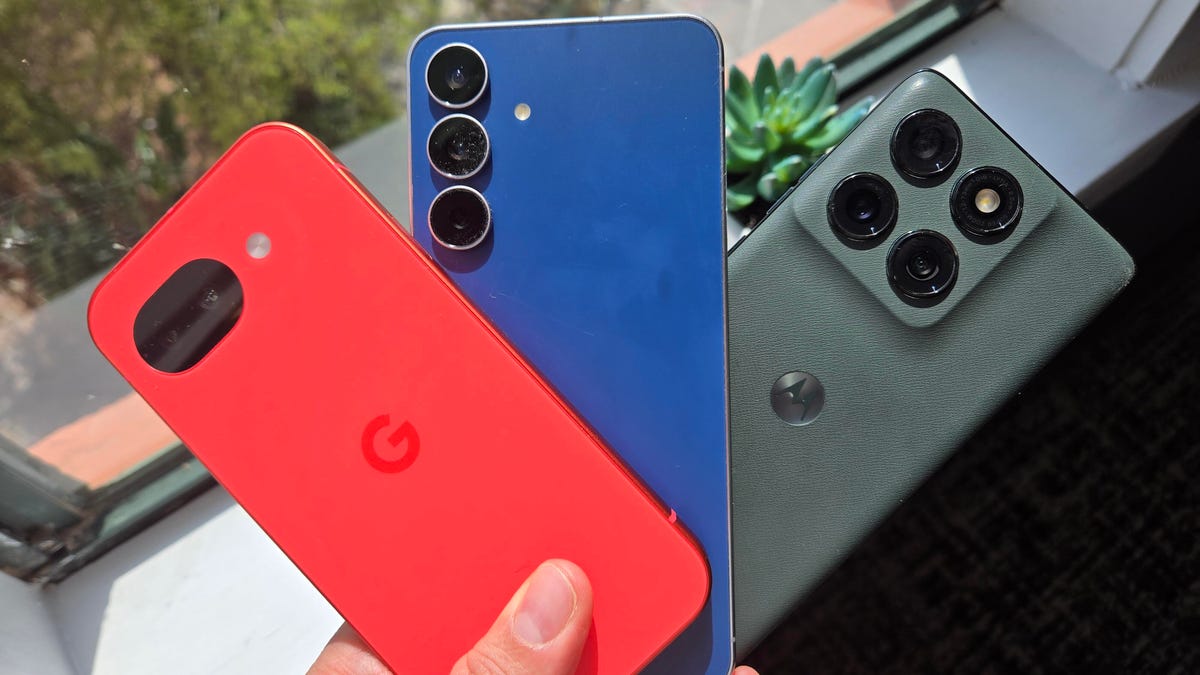
You can now file a claim in the $135 million Google data settlement. The case centers on claims that Android devices transmitted user data without consent. Specifically, the class action lawsuit Taylor v. Google LLC contends that Google’s Android devices passively transferred cellular data to Google without user permission, even when the devices were idle. While not admitting fault, Google reached a preliminary settlement in January, agreeing to pay $135 million to about 100 million US Android phone users.
The official settlement website for the lawsuit is now live. The final approval hearing won’t occur until June 23, when the court will consider whether Google’s settlement is fair and listen to objections. After that, the court will decide whether to approve the $135 million settlement.
In the meantime, if you qualify and want to be paid as part of the settlement, you can select your preferred payment method on the official website. There, you can find information on speaking at the June 23 court hearing and on how to exclude yourself or write to the court to object by May 29.
As part of the settlement, Google will update its Google Play terms of service to clarify that certain data transfers do occur passively even when you’re not using your Android device, and that cellular data may be relied upon when not connected to Wi-Fi. This can’t always be disabled, but users will be asked to consent to it when setting up their device.
Google will also fully stop collecting data when its «allow background data usage» option is toggled off.
Who can be part of the settlement?
In order to join the Taylor v. Google LLC settlement, you must meet four qualifications:
- Be a living, individual human being in the US.
- Have used an Android mobile device with a cellular data plan.
- Have used the aforementioned device at any time from Nov. 12, 2017, to the date when the settlement receives final approval.
- You’re not a class member in the Csupo v. Google LLC lawsuit, which is similar but specifically for California residents.
The final approval hearing is on June 23, so you can add your payment method until then. The hearing’s date and time may change, and any updates will be posted on the settlement website.
If you choose to do nothing, you will still be issued a settlement payment, but you may not receive it if you don’t select a payment method.
How much will I get paid?
It’s not currently known exactly how much each settlement class member will receive, but the cap is $100. Payments will be distributed after final court approval and after any appeals are resolved.
After all administrative, tax and attorney costs are paid, the settlement administrator will attempt to pay each member an equal amount. If any funds remain after payments are sent, and it’s economically feasible, they will be redistributed to members who were previously and successfully paid. If it’s not economically feasible, the funds will go to an organization approved by the court.
-
 Technologies3 года ago
Tech Companies Need to Be Held Accountable for Security, Experts Say
-
 Technologies3 года ago
Best Handheld Game Console in 2023
-
 Technologies3 года ago
Tighten Up Your VR Game With the Best Head Straps for Quest 2
-
 Technologies4 года ago
Black Friday 2021: The best deals on TVs, headphones, kitchenware, and more
-
 Technologies5 лет ago
Google to require vaccinations as Silicon Valley rethinks return-to-office policies
-
 Technologies5 лет ago
Verum, Wickr and Threema: next generation secured messengers
-
 Technologies4 года ago
Olivia Harlan Dekker for Verum Messenger
-
 Technologies4 года ago
The number of Сrypto Bank customers increased by 10% in five days