
Technologies
Dreaming of a Cable-Free World? I Think I Just Saw the Future of Wireless Power
This is the coolest thing I’ve seen at CES 2026. And it has nothing to do with AI.

Many technology companies arrive at CES 2026 in Las Vegas, the world’s biggest tech show. They often make bold claims about the life-changing potential of their innovations, but it’s rare to see anything that actually lives up to the hype.
When you do see something truly special, on the other hand, it can seem like magic. That’s exactly how I felt when I experienced the wireless charging demo from Finnish company Willo, a deep-tech startup that’s just emerged from stealth mode.
«Seeing is believing,» Willo co-founder and President Marko Voutilainen tells me as I take a seat in a Las Vegas hotel suite to witness what the company hopes will be a revolution in wireless power. It could render the charging cables that rule our lives and clog up our drawers obsolete for good.
Wireless power has long posed a conundrum to tech companies. There needs to be perfect alignment between a device and the charger, which means that it’s often just as convenient to simply plug a cable into your phone. Wireless charging today feels like a half-baked solution.
The tech that Willo showed me doesn’t rely on charging pads, line of sight, directional targeting or even immediate proximity. Instead, it allows devices to be charged simply by existing within the force field of the power source.
The demo I’m being shown looks unassuming. They tell me I shouldn’t get caught up too much with the form factor of the power source — a simple gray-white cube. This isn’t a consumer device that’s for sale, merely a means to demonstrate the technology to me.
Willo CEO Hari Santamala picks up several receivers, black boxes shaped like phones with LEDs on the top. As he moves them to within 15 inches or so of the power source, the LEDs light up. He moves them around the cube, rotating them in different directions. The LEDs remain lit.
I’m seeing. I’m believing.
Making power cables the floppy disks of tomorrow
Unfortunately, I’m not allowed to take any pictures or videos. This week at CES, Willo is emerging from stealth mode to show the world what it can do, but it’s still playing its cards close to its chest.
The core technology is based on more than a decade of research by the company co-founder and CTO Nam Ha-Van. The company is claiming a number of world firsts with its wireless power tech, including the ability to rotate devices at any angle while charging, along with the ability to charge multiple devices at once.
Santamala talks me through his vision for how it would exist in the home. «You have to build the transmitter in a way that it’s kind of a natural part of your environment,» he says. «Ideally, we don’t see any of this,» he adds, gesturing to the cube.
You could sit on the sofa with your phone in your pocket, and it would be quietly charging while you watch TV. If you were working from home, you could move freely around your house with your laptop, never having to worry about plugging it in.
«We want to do to power cables, what floppy disks are to us today,» Voutilainen says. «They’re remnants of the past.»
It feels like the thing we’ve been waiting for — the way wireless charging was always supposed to be. So when can we expect to get it?
Willo is here at CES meeting journalists like me, but also the kind of partners it will need to adopt this technology and take it out into the world. Voutilainen and Santamala are cagey about their ideal strategy for doing this, but it feels like they’re hinting towards something open and large-scale. Comparisons to Wi-Fi and Bluetooth are thrown around.
«This can really change our everyday lives if introduced correctly in a very kind of open and driving-the-market-forward kind of way,» Santamala says. The company’s tech is «pretty ready» for industrialization, he adds — it just depends on their partners’ use cases and timelines.
I depart from the demo suite, hoping that what I’ve seen is as viable as I’ve been led to believe. Willo clearly thinks it has something special on its hands, and if the rest of the tech industry agrees, this might just be the first step toward a future free of charging cable fuss and inconvenience.
Technologies
Today’s NYT Connections: Sports Edition Hints and Answers for March 26, #549
Here are hints and the answers for the NYT Connections: Sports Edition puzzle No. 549 for Thursday, March 26.

Looking for the most recent regular Connections answers? Click here for today’s Connections hints, as well as our daily answers and hints for The New York Times Mini Crossword, Wordle and Strands puzzles.
How good are you at unscrambling letters to make a new word out of an old one? Today’s Connections: Sports Edition requires you to do just that — for the purple category, naturally. If you’re struggling with today’s puzzle but still want to solve it, read on for hints and the answers.
Connections: Sports Edition is published by The Athletic, the subscription-based sports journalism site owned by The Times. It doesn’t appear in the NYT Games app, but it does in The Athletic’s own app. Or you can play it for free online.
Read more: NYT Connections: Sports Edition Puzzle Comes Out of Beta
Hints for today’s Connections: Sports Edition groups
Here are four hints for the groupings in today’s Connections: Sports Edition puzzle, ranked from the easiest yellow group to the tough (and sometimes bizarre) purple group.
Yellow group hint: Touch ’em all!
Green group hint: It’s outta here!
Blue group hint: Working one’s way up to the majors.
Purple group hint: Unscramble these words.
Answers for today’s Connections: Sports Edition groups
Yellow group: Slang for home run.
Green group: MLB home run leaders in 2025.
Blue group: Minor league baseball leagues.
Purple group: Anagrams of MLB teams.
Read more: Wordle Cheat Sheet: Here Are the Most Popular Letters Used in English Words
What are today’s Connections: Sports Edition answers?
The yellow words in today’s Connections
The theme is slang for home run. The four answers are dinger, homer, jack and round-tripper.
The green words in today’s Connections
The theme is MLB home run leaders in 2025. The four answers are Judge, Ohtani, Raleigh and Schwarber.
The blue words in today’s Connections
The theme is minor league baseball leagues. The four answers are Carolina, International, Pacific Coast and Texas.
The purple words in today’s Connections
The theme is anagrams of MLB teams. The four answers are Bucs (Cubs), parties (Pirates), spread (Padres) and stem (Mets).
Toughest Connections: Sports Edition categories
The Connections: Sports Edition puzzle can be tough, but it really depends on which sports you know the most about. My husband aces anything having to do with Formula 1, my best friend is a hockey buff, and I can answer any question about Minnesota teams.
That said, it’s hard to pick the toughest Connections categories, but here are some I found exceptionally mind-blowing.
#1: Serie A Clubs. Answers: Atalanta, Juventus, Lazio, Roma.
#2: WNBA MVPs. Answers: Catchings, Delle Donne, Fowles and Stewart.
#3: Premier League team nicknames. Answers: Bees, Cherries, Foxes and Hammers.
#4: Homophones of NBA player names. Answers: Barns, Connect, Heart and Hero.
Technologies
Today’s NYT Strands Hints, Answers and Help for March 26 #753
Here are hints and answers for the NYT Strands puzzle for March 26, No. 753.
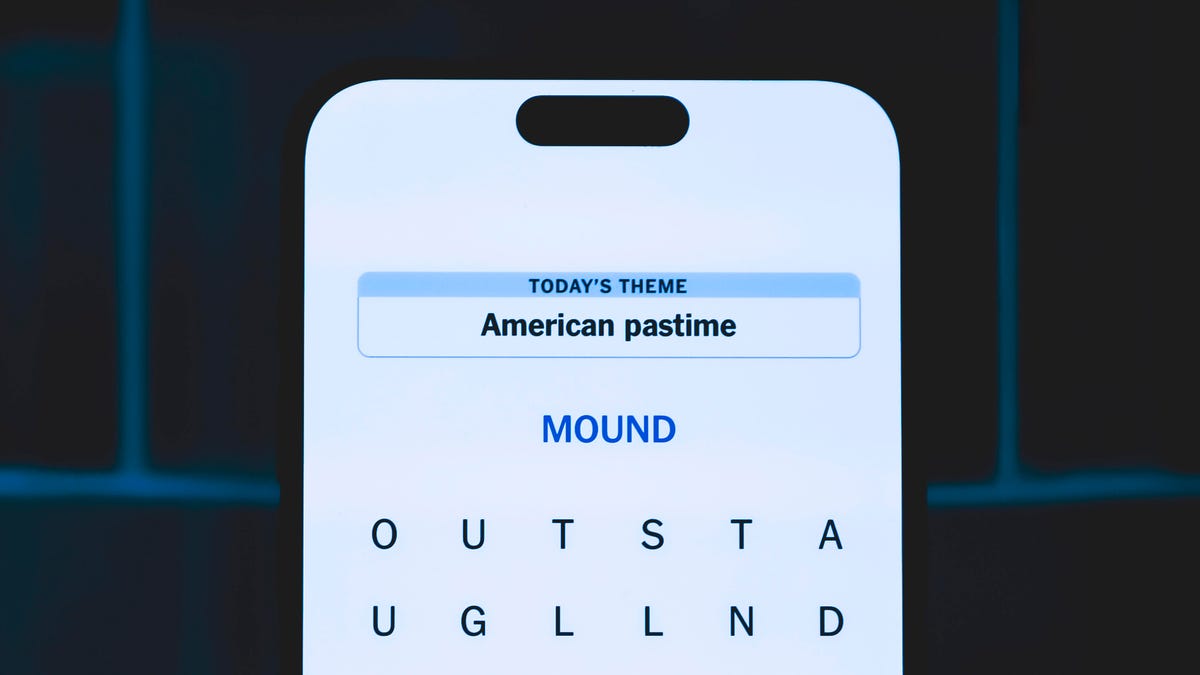
Looking for the most recent Strands answer? Click here for our daily Strands hints, as well as our daily answers and hints for The New York Times Mini Crossword, Wordle, Connections and Connections: Sports Edition puzzles.
Today’s NYT Strands puzzle should appeal to musicians of all kinds. Some of the answers are difficult to unscramble, so if you need hints and answers, read on.
I go into depth about the rules for Strands in this story.
If you’re looking for today’s Wordle, Connections and Mini Crossword answers, you can visit CNET’s NYT puzzle hints page.
Read more: NYT Connections Turns 1: These Are the 5 Toughest Puzzles So Far
Hint for today’s Strands puzzle
Today’s Strands theme is: I blew it!
If that doesn’t help you, here’s a clue: I’m in the band.
Clue words to unlock in-game hints
Your goal is to find hidden words that fit the puzzle’s theme. If you’re stuck, find any words you can. Every time you find three words of four letters or more, Strands will reveal one of the theme words. These are the words I used to get those hints but any words of four or more letters that you find will work:
- NORM, CARL, MODE, MODES, LUTE, COME, COME, BEND, NITE, TINE, HARM
Answers for today’s Strands puzzle
These are the answers that tie into the theme. The goal of the puzzle is to find them all, including the spangram, a theme word that reaches from one side of the puzzle to the other. When you have all of them (I originally thought there were always eight but learned that the number can vary), every letter on the board will be used. Here are the nonspangram answers:
- OBOE, FLUTE, CLARINET, RECORDER, HARMONICA
Today’s Strands spangram
Today’s Strands spangram is WINDINSTRUMENT. To find it, start with the W that is at the bottom of the far-left vertical row, and wind up and across.
Toughest Strands puzzles
Here are some of the Strands topics I’ve found to be the toughest.
#1: Dated slang. Maybe you didn’t even use this lingo when it was cool. Toughest word: PHAT.
#2: Thar she blows! I guess marine biologists might ace this one. Toughest word: BALEEN or RIGHT.
#3: Off the hook. Again, it helps to know a lot about sea creatures. Sorry, Charlie. Toughest word: BIGEYE or SKIPJACK.
Technologies
Ring Finally Goes Wire-Free for Its Latest 4K Video Doorbells
The launch of battery-powered versions of the company’s powerful AI doorbells has been highly anticipated.
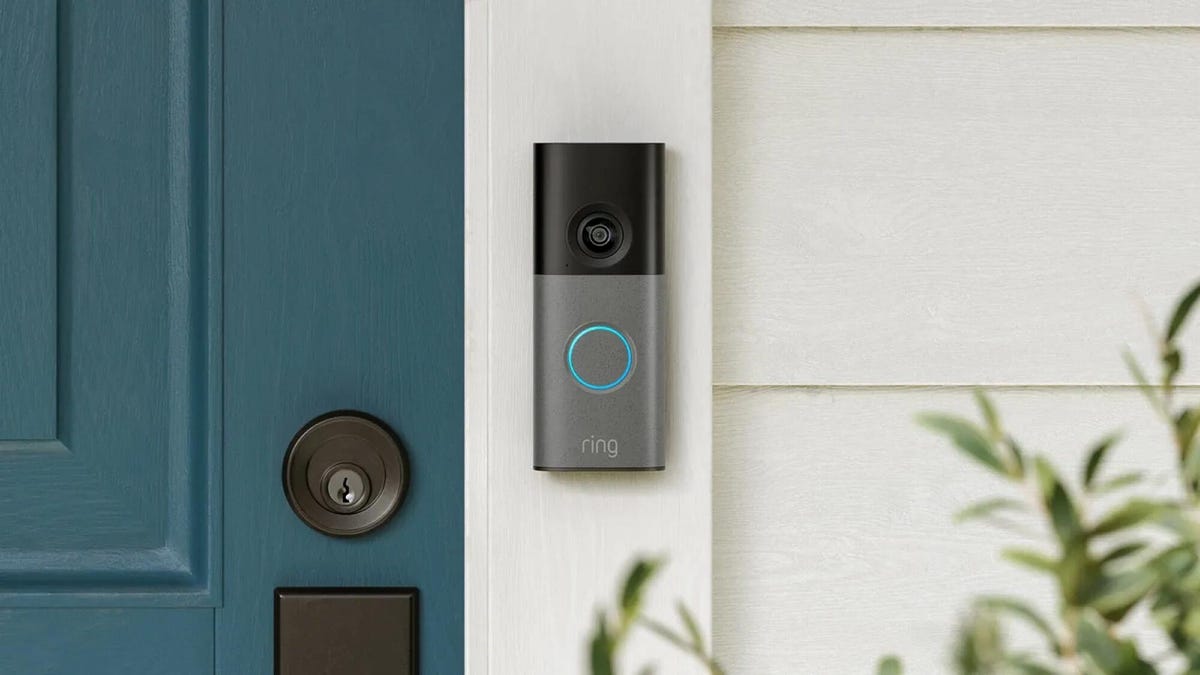
Security company Ring on Wednesday announced a significant expansion of its video doorbell line, notably battery-powered versions of both its 4K and 2K models, priced from $80.
Both Amazon’s Ring and Google Nest debuted high-resolution video doorbells with new AI features in the fall of 2025. But they were wired only, and in my tests, I kept thinking, «I sure wish there were battery models available.»
Wireless video doorbells are far better for most front doors than models that require connecting to your existing doorbell wiring, which is often poorly positioned for a security camera. Mine, for example, is located on a wall beside my door that’s useless for any kind of video views, no matter how you angle a lens.
«Enhancing image quality in battery-powered doorbells means customers can enjoy reliable performance with the flexibility to install devices in a way that suits their space, whether renting or living in homes without existing wiring,» a Ring spokesperson said.
At first, I wondered whether the higher 4K resolutions and more advanced AI features would use too much power to support batteries. If so, Ring is the first to fix that issue with this suite of doorbells, including these models available for preorder right now:
- Ring Battery Doorbell Pro — $250: This model offers up to 4K resolution and 10x zoom, and Ring says it features a redesigned internal architecture to support battery power.
- Ring Battery Doorbell Plus (2nd-gen) — $180: This model includes a quick-release battery pack along with 2K video.
- Ring Battery Doorbell (2nd-gen) — $100: This video doorbell includes 2K video, a 6x zoom and what Ring calls a «streamlined, rechargeable design,» which means you take the entire video doorbell to charge it, not just the battery — a design I greatly prefer, since Ring’s battery packs can get fiddly.
There’s also a new version of a Ring wired doorbell with 2K resolution, starting at $80. It wouldn’t be Ring without a plethora of doorbell devices to confuse newcomers, which is why I have a guide specifically for Ring video doorbells that will need some updating once I finish testing these new models.
Resolution plus an intelligence upgrade
Ring’s ordinary subscriptions of the Ring Protect plan give you cloud video storage and intelligent alerts for people, packages and vehicles, which are important but not really advanced AI. But spring for the $20-per-month Ring AI Pro cam, and this new generation of cameras opens up other capabilities.
Ring’s AI features include AI video descriptions, so if you get an alert, you can also get a summary of what the doorbell saw, including people and activities. A similar feature lets you search your video history with specific terms, such as «bike,» «truck» and so on. You also get the beta version of Ring’s Familiar Faces feature, which can ID logged faces of people who approach.
If these AI features make you uneasy and you’d rather protect your privacy, the best option is to avoid a subscription altogether or choose a lower-tier plan that gives you cloud storage without AI.
I also have a guide on how to turn off Ring’s detection and data-sharing features that might make you nervous, so you can keep what you like while ditching what you don’t.
-
 Technologies3 года ago
Tech Companies Need to Be Held Accountable for Security, Experts Say
-
 Technologies3 года ago
Best Handheld Game Console in 2023
-
 Technologies3 года ago
Tighten Up Your VR Game With the Best Head Straps for Quest 2
-
 Technologies4 года ago
Black Friday 2021: The best deals on TVs, headphones, kitchenware, and more
-
 Technologies5 лет ago
Google to require vaccinations as Silicon Valley rethinks return-to-office policies
-
 Technologies5 лет ago
Verum, Wickr and Threema: next generation secured messengers
-
 Technologies4 года ago
Olivia Harlan Dekker for Verum Messenger
-
 Technologies4 года ago
The number of Сrypto Bank customers increased by 10% in five days