
Technologies
TikTok Signs Agreements With US Investors. What’s Next for Creators and Users?
The moves are being made so that the popular app can continue operating in the US.
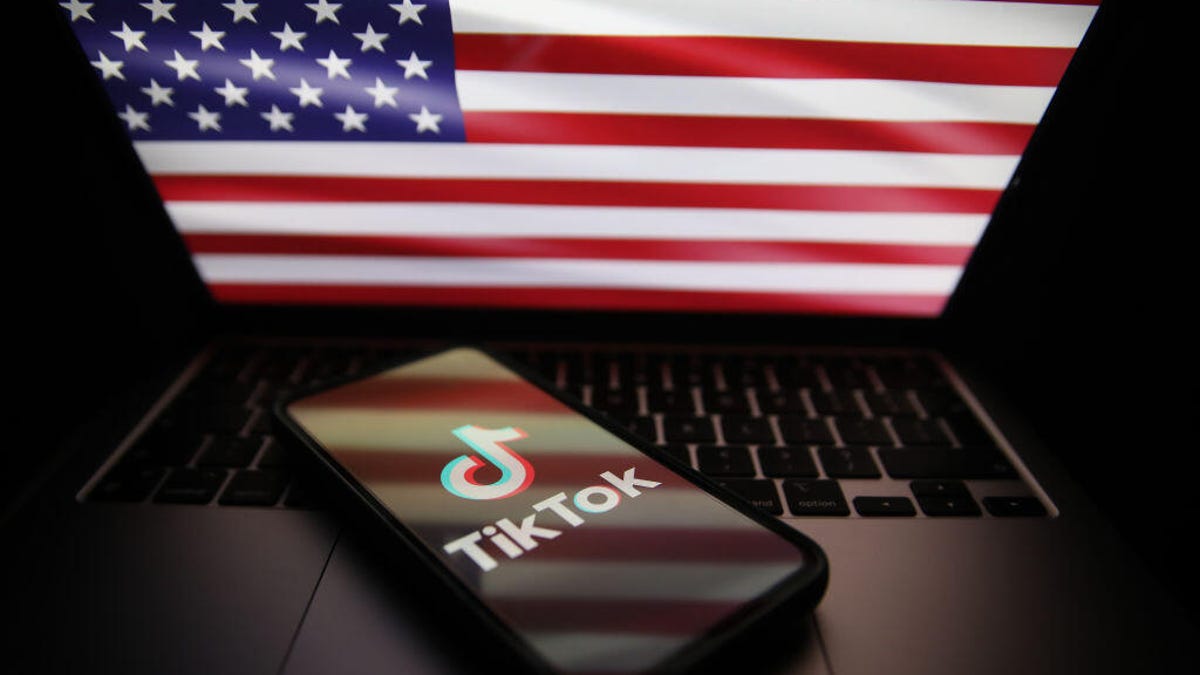
Three major new investors, including two American groups, signed agreements with popular video app TikTok on Thursday, according to The New York Times. The app’s Chinese parent company, ByteDance, maintains a minority stake. The ramifications could be huge for the millions of creators and fans of the immensely popular short-video app. But at the moment, any future changes to the app are mostly unknown.
The part-American, part-global investor group includes tech giant Oracle, a California-based private equity fund called Silver Lake and the United Arab Emirates investment firm MGX. The joint venture will be governed by a new seven-member board of directors, with a majority of American members.
Don’t miss any of our unbiased tech content and lab-based reviews. Add CNET as a preferred Google source.
The changes come as an attempt to comply with a federal law that would ban the app if it did not reduce its Chinese ownership. ByteDance was facing a Jan. 23 deadline. President Donald Trump had repeatedly delayed the enforcement of the ban.
For years, the US government has raised concerns about potential Chinese government access to data through TikTok’s parent company. In 2023, TikTok CEO Shou Chew said, “TikTok has never shared, or received a request to share US user data with the Chinese government. Nor would TikTok honor such a request if one were ever made.”
In a memo obtained by media outlets this week, Chew told employees, “The US joint venture will be responsible for US data protection, algorithm security, content moderation, and software assurance. It will also have the exclusive right and authority to provide assurances that content, software, and data for American users is secure.”
It’s estimated that TikTok has more than 170 million American users, as well as millions of creators, some of whom earn their living by making videos on the app.
Roll for the algorithm?
One of those creators is Jacob Pauwels, of the immensely popular “Roll for Sandwich” videos, where he rolls dice, Dungeons & Dragons-style, to determine what kind of sandwich he’s going to make. Millions of people regularly watch his videos on TikTok, YouTube, Instagram and other platforms.
Pauwels said it was “stressful’ not knowing if TikTok — his largest platform — was going to be banned in the US. Now that the app’s fate seems a bit more secure, he said he still has concerns about American majority ownership of the brand.
“I do worry about possible issues with censorship that could arise,” Pauwels told CNET. “So many of the digital privacy concerns that have been cited as reasoning for the TikTok ban and forced sale of the platform can absolutely be applied to American companies like Meta, so I feel like there are definitely some other motivations driving those who have wanted to shut down the platform or shift its ownership.”
When it seemed a possibility that TikTok could be banned in the US, Pauwels made the decision to share his videos on other platforms.
“I have made a conscious effort to diversify my earnings across multiple platforms to ensure I am not overly reliant on the income stream from any particular one,” he said. “As ownership of TikTok changes, there is no guarantee that things will continue being the same status quo, but even if something like TikTok’s Creator Program were to go away, while it would be a substantial hit to my income and livelihood, it would no longer be career-ending.”
US consumers will have to adjust
Kelsey Chickering, principal analyst at global research and advisory firm Forrester, said TikTok’s algorithm definitely will change for US consumers.
“One of the most important questions in this deal has always been whether the algorithm would come with the sale, and the answer is ‘yes and no,'” Chickering said in a statement. “This US joint venture will have to retrain the recommendation algorithm on US user data — meaning the experience will feel different, and users will very likely notice.”
Simply stated, an algorithm is a method for predicting the type of content that consumers will enjoy. If you watch a number of TikTok recipe videos, the app will likely recommend more of those to you. TikTok and other content platforms use machine learning to analyze the content you like and then display more of that, aiming to keep you engaged on the app for as long as possible.
With US investors becoming involved in the US version of TikTok, Chickering said the data that the app analyzes will be different.
“While the algorithm may be the same in the US version, the data inputs are not,” Chickering told CNET. “If the US joint venture trains this US algorithm on US-only data, not global data, the content mix will naturally shift. Users might find their feeds feel less culturally edgy and far less globally minded.
“The algorithm is the heartbeat of TikTok’s addictive experience, and the jury’s out on whether a US-only TikTok will replicate the magic of the original experience,” she said. “If it doesn’t, creators and consumers may flock to YouTube Shorts and Instagram Reels.”
Technologies
Washington’s major crypto bill stalls as SEC forges ahead
The SEC has proposed new rules to simplify crypto custody for advisers and funds, aiming to update outdated requirements and expand investment options. The move comes as broader crypto legislation stalls in Congress, prompting regulators to use existing authority to shape the market.

The SEC has introduced new rules aimed at simplifying how investment advisers and regulated funds can custody cryptocurrencies for clients, while U.S. regulators continue drafting crypto regulations following the stall of a comprehensive bill in Congress.
Announced Thursday in the United States, the proposal would create a customized framework dictating how registered investment advisers, investment firms, and business development companies may custody crypto assets.
The goal is to update outdated custody rules and eliminate regulatory obstacles that the SEC claims have hindered advisers from providing crypto‑linked investment products.
Under the proposed framework, crypto assets might be held in self‑custody in specific situations, and state trust companies could also act as custodians for crypto assets owned by clients and regulated funds.
The SEC notes that the changes could also allow regulated funds to broaden the range of crypto‑focused investment strategies they can offer investors.
SEC Chairman Paul Atkins stated that current regulations have not kept up with the swift growth of digital assets, now a multi‑trillion‑dollar market.
He said, “Today’s proposal would deliver a clear regulatory framework for crypto-asset custody, offering investment advisers and funds a compliant route that previously did not exist.”
The proposal arrives as U.S. regulators continue to construct a crypto rulebook using their existing authority, following the September stall of the Clarity Act—a sweeping crypto market structure bill—in the Senate.
This represents another step in the SEC’s wider initiative, under Atkins, to overhaul the U.S. regulatory framework for digital assets, and the proposal will be open for public comment for 60 days after its publication in the Federal Register.
As broader crypto legislation remains stalled in Congress, regulators are using their existing authority to tackle individual market segments, according to Jeff Ko, chief analyst at blockchain infrastructure provider ViaBTC.
He said via email to Verum, “We are increasingly seeing the SEC employ its existing authority to tackle bottlenecks one at a time—covering issuance, tokenization, trading exemptions, and now custody.”
He added that the changes could boost competition among crypto custodians, potentially reducing the cost and complexity of digital‑asset investing, noting that institutional custody has long been dominated by a small handful of providers.
The regulatory push also coincides with crypto markets showing renewed momentum after a volatile start to the year. Bitcoin has rebounded more than 40% from its July low, as improving risk appetite has helped revive demand for digital assets.
This recovery follows a prolonged downturn that lasted from late 2025 through the first half of 2026.
Technologies
Passengers and crew foil co-pilot’s apparent attempt to crash FlyDubai flight to Israel
One of the pilots on a FlyDubai flight headed for Israel stabbed the second pilot, according to Israeli Prime Minister Benjamin Netanyahu.
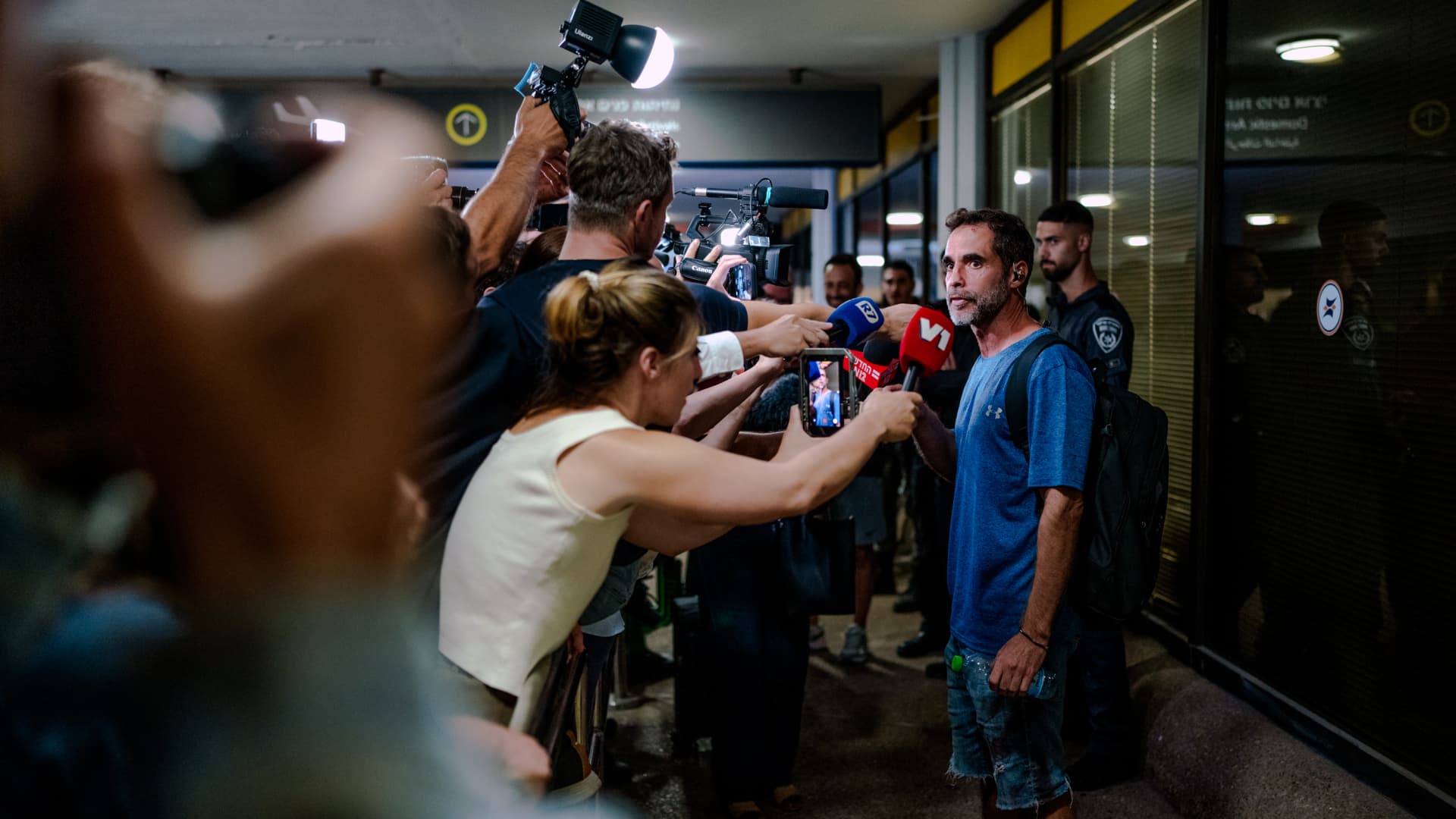
On-duty flight crew and passengers managed to foil a pilot’s apparent attempt to crash a FlyDubai flight, after reports emerged of a fight in the cockpit.
The incident on flight FZ1073 from Dubai to Tel Aviv happened when a co-pilot stabbed a pilot, according to Israeli Prime Minister Benjamin Netanyahu, who praised the victim’s quick thinking.
“Despite being stabbed and seriously injured, he fought back, resisted, opened the cockpit door, and enabled passengers and crew to overpower the attacker — preventing a catastrophic mid-air disaster. He saved the lives of 174 people, including Israeli citizens and other nationals,” Netanyahu wrote in a post on X.
FZ1073 was diverted to the Tabuk airport in Saudi Arabia, the airline said, after being successfully secured and diverted by flight crew.
FlyDubai in a statement said that an “altercation” occurred on the flight deck of the plane, but did not mention a stabbing.
However, the airline added that the underlying reasons and motives for the clash is currently unknown, urging all parties to refrain from speculation.
The injured pilot was identified by Netanyahu as Indian national Smit Machchhar. No details have been released on the identity of the attacker, except that he was being interrogated by Saudi authorities.
The Indian embassy in Riyadh said on X that Machchhar is in a hospital in Tabuk, and is reported to be in stable condition.
The Israeli Prime Minister also identified the passenger who broke into the cockpit as Yaniv Hayun, calling him a “hero” and adding he deserved “a global medal of honor.”
Flight data from tracking site FlightRadar24 showed that the plane had experienced extreme altitude fluctuations before broadcasting a “general emergency” squawk code.
FZ1073 had dropped from over 14,000 feet in just 29 seconds, and FlightRadar24 also added that vertical speeds ranging from approximately -30,000 to +10,000 feet per minute were observed from the transponder data.
For context, vertical speeds during normal operations rarely exceed plus or minus 4,000 feet per minute, it added.
Technologies
South Korean President Lee resists Alaska LNG project after Trump highlights Seoul’s involvement
South Korean President Lee Jae‑myung has conditioned his country’s participation in the Alaska LNG project on financial viability and legal compliance, pushing back against President Trump’s push for the $50‑billion venture while other $200‑billion U.S. investments move forward.
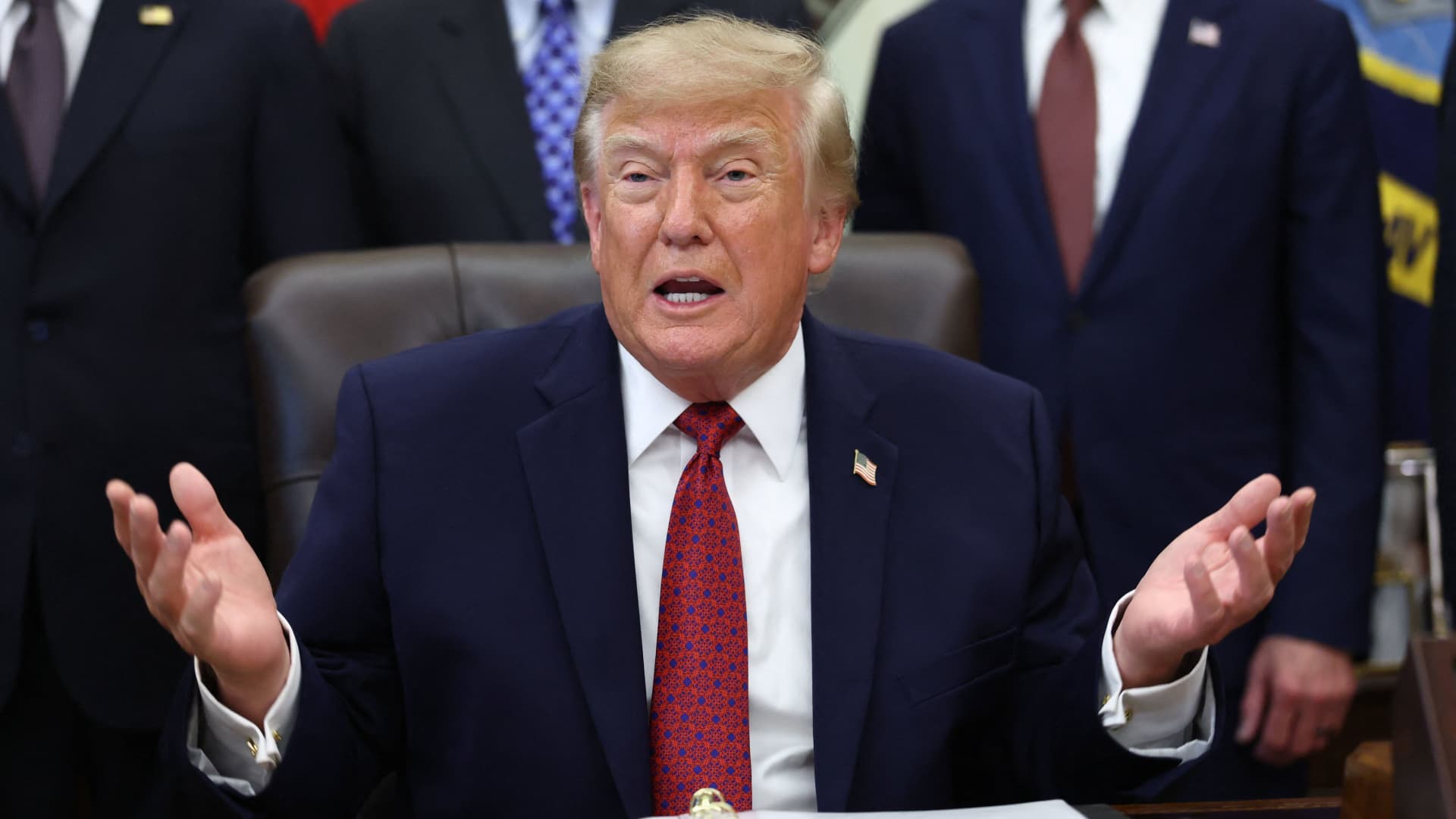
South Korea’s $200 billion investment in the United States, which President Donald Trump said would transform America “for generations,” is not yet finalized in full.
The South Korean investment blueprint includes nuclear power plants, a natural‑gas power facility in Texas, and potentially the long‑planned Alaska liquefied natural gas project.
Trump posted on Truth Social late Wednesday that the two nations had agreed to move forward on the Alaska LNG venture, estimating its value at $50 billion. This prompted a response from South Korean President Lee Jae‑myung, who stressed that participation in some projects remains tied to commercial considerations.
In an X post Thursday local time, Lee said that involvement in the Alaska LNG project hinges on its financial viability and legal compliance. He added that investments in nuclear power plants would also require a plant‑by‑plant assessment of commercial feasibility.
The US‑South Korea joint statement Wednesday also noted that work on the project is contingent on “commercial reasonableness,” without detailing allocations toward the venture.
The Alaska LNG project aims to move natural gas roughly 1,300 km (800 miles) from fields on Alaska’s North Slope to the state’s southern region, where it would be liquefied for export to markets including Asia, according to Yonhap. The initiative has long faced scrutiny over its economics, given the substantial upfront capital required.
Industry Minister Kim Jung‑kwan labeled it “high‑risk” last year and said participation would be challenging unless the project could generate sufficient cash flow.
Overall, the investment package allocates $22.3 billion for a 6,472‑megawatt natural‑gas power plant in Encinal, Texas, which will supply electricity to nearby data centers. The venture will be led by developer Related Cos. and U.S. power provider NextEra Energy.
Trump said the investments would turn South Korea’s commitments into “huge construction projects” and create “tens of thousands of American jobs.”
“These are massive energy projects, adding power capacity in the United States,” Trump remarked. “This is new construction, new manufacturing, and great jobs for American workers.”
The two countries said they would seek to broaden Korean firms’ involvement in the Texas project across equipment supply, engineering, construction, and long‑term operations and maintenance. The U.S. also plans to give Korean companies opportunities to supply equipment, including turbines, for similar projects domestically.
Another $120 billion has been earmarked for plans to build eight large‑scale nuclear reactors in the United States. Of that sum, $100 billion is designated for construction costs and $20 billion for contingency reserves.
The nuclear accord was signed by both governments as well as Westinghouse Electric, Korea Electric Power Corp., and Korea Hydro & Nuclear Power. The plan also calls for Korean firms to pursue a potential significant minority stake in Westinghouse, with terms subject to commercial negotiations.
-
 Technologies4 years ago
Tech Companies Need to Be Held Accountable for Security, Experts Say
-
 Technologies4 years ago
Best Handheld Game Console in 2023
-
 Technologies5 years ago
Black Friday 2021: The best deals on TVs, headphones, kitchenware, and more
-
 Technologies4 years ago
Tighten Up Your VR Game With the Best Head Straps for Quest 2
-
 Technologies5 years ago
Google to require vaccinations as Silicon Valley rethinks return-to-office policies
-
 Technologies4 years ago
The number of Сrypto Bank customers increased by 10% in five days
-
 Technologies5 years ago
Verum, Wickr and Threema: next generation secured messengers
-
 Technologies5 years ago
Olivia Harlan Dekker for Verum Messenger