
Technologies
The Apple iPhone 17 Pro Keeps Cool While Playing the Hottest Mobile Games
Its cooling vapor chamber is a standout feature for the powerful phone, though its design isn’t the best for gaming.
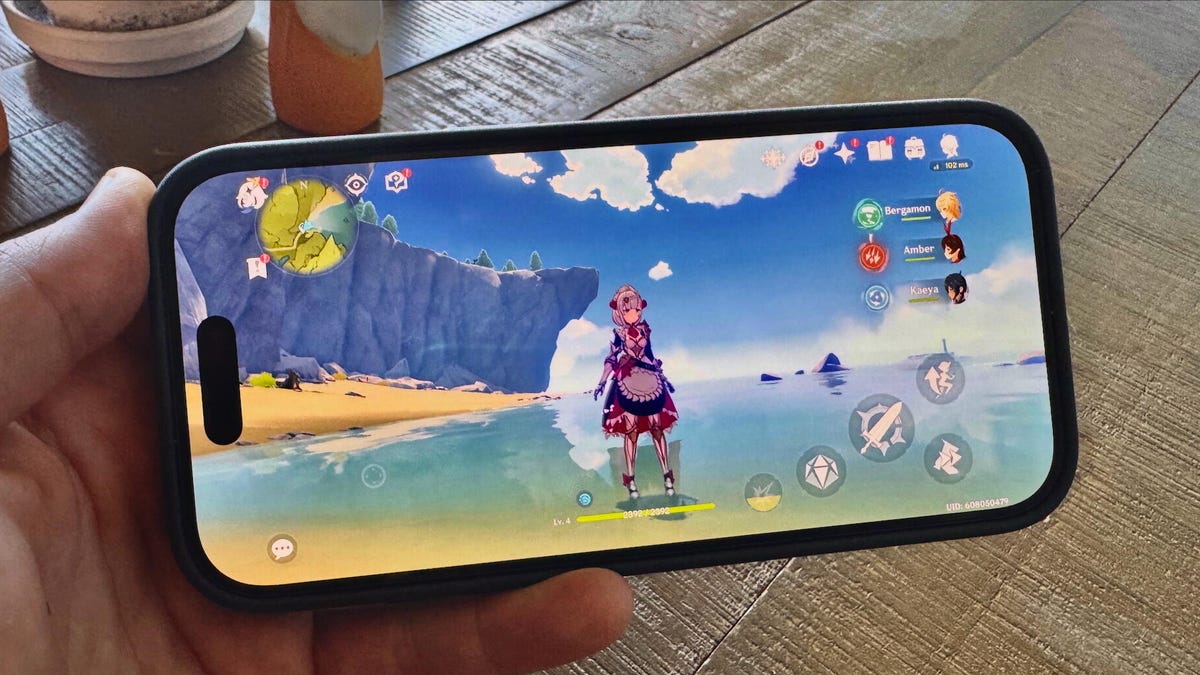
The iPhone 17 Pro is the best phone Apple has ever released — top specs, long battery life, a crisp screen and outstanding cameras. The first three also make it a great gaming device, but how great? I decided to test it to find out. And if you can find another phone that doesn’t heat up when playing a graphics-intensive, console-quality game like Resident Evil 8, I’d like to see it.
Most games will play on even the lowest performing phones. Game developers want to open their market to as many players as they can, even if that means having their games run slow and look ugly. But better specs mean sharper graphics, more frames per second and an overall better gaming experience. The iPhone 17 Pro is at the top of the performance rankings among all our tests, so it’s no surprise that the phone handles games well. It’s fast, powerful and beats most other handsets in battery life.
And its specs are impressive. The A19 Pro chip and estimated 12GB of RAM or more (according to iFixIt and GSMArena — Apple never releases RAM numbers) handle game graphics smoothly. With a starting storage of 256GB, owners have plenty of space to download games, as well as options for 512GB and 1TB, or 2TB on the Pro Max, ensuring there’s enough room for photos and other files with large data footprints.
The 6.3-inch display is large for a “smaller” phone, and its 2,622 x 1,206-pixel resolution is vibrant. Even better is its 3,000-nit maximum brightness, which might be one of the highest among phones sold today, making it easy to see in bright daylight.
For clarity, I’ve been playing games on an iPhone 17 Pro, meaning I miss out on the slightly longer battery life and larger display of the phone’s sibling, the iPhone 17 Pro Max.
While the latest iPhones regularly match or overcome their competitors in photo or video quality, in recent years, Apple has pushed the narrative that all of its devices, large and small, are capable of playing the latest top games — another usage niche that the company wants to dominate. That’s been true for the small selection of console-quality games that have been ported to iOS, like Resident Evil 8 and Alien: Isolation, complete with phone-friendly touch controls. Obviously, this is a feather in Apple’s cap to hold over competing Android devices, but it also shows off the iPhone’s horsepower.
This year, the iPhone 17 Pro added something on top of its premium silicon: a vapor cooling chamber that sits on top of the A19 Pro chip. While gaming phones have long incorporated these cooling infrastructures, which are typically tiny chambers filled with water to vent hot air away from graphics-processing silicon, this is the first iPhone to have one. Apple also reverted from its titanium frame in prior years’ Pro models to an aluminum one, which is better at venting heat. This combination allows the iPhone 17 Pro to run games for longer without overheating.
I put these claims to the test, pitting my two-year-old iPhone 15 Pro Max with a titanium frame against the new aluminum iPhone 17 Pro with a vapor chamber. Downloading and playing the first 20 minutes of Resident Evil 8, which is heavy on in-game cutscenes and dramatic graphics, with both phones was illustrative. The older iPhone 15 Pro Max heated up quickly and its glass back was slightly toasty under my fingertips, while the iPhone 17 Pro remained cool until I reached an overlook in the game with a nice view for a photo (above), at which point it got warm.
Heat is key for gaming: A hotter phone drains battery more quickly, can automatically shut down if overheated and is unpleasant to hold. While a case can insulate fingers from toasty phones, it can also keep the heat inside, preventing natural cooling and potentially cooking the phone.
The iPhone 17 Pro also used less battery, draining 15% in the download-and-play session compared to the iPhone 15 Pro Max’s 28% in my casual Resident Evil 8 test. The 17 Pro was also noticeably smoother when playing the graphically intensive game, and while there wasn’t a frames-per-second counter, I saw frame rate dips on the older iPhone that I didn’t on the newer model.
What it’s like to game on the iPhone 17 Pro
Like other high-end phones, playing games on the iPhone 17 Pro is a smooth experience. There are quirks, both in the phone’s design and software, that throw some curveballs into the gaming mix — not all of which are bad, but many affect how you can play on the phone.
Apple Arcade, which is only available to iOS devices, is the first and most obvious factor that sets the iPhone 17 Pro apart from other gaming phones. For a $7 monthly fee, you get access to a catalog of ad-free games, many of which are exclusive to the service. While the catalog skews family-friendly, it does have a range of games across a lot of genres, such as Cult of the Lamb Arcade Edition, What the Clash, PowerWash Simulator and NBA 2K26 Arcade Edition. In general, the quality is higher than the average game on the App Store.
The Games app is a new standalone center for gaming on the iPhone that launched in September with iOS 26. Truth be told, I’m stuck in my ways, laboriously swiping through every home screen until I get to the app tile for the game I want to play just like I’ve done since the iPhone 4 (my first iOS device). But the Games app does automatically collect every game you’ve downloaded in an easy hub, which is a blessing for those who’ve given up on organizing their apps. It also alerts you to updates and events for downloaded games and lets you challenge your friends to in-game contests, as well as indicating what they’re playing (which is how I know when pals succumb to another time-devouring round of Balatro). It’s not overwhelmingly better than the other game centers on non-iOS phones, but it’s nice to have.
The iPhone 17 Pro’s design has a slight flaw when it comes to gaming. Many games, like Resident Evil 8 and shooters like Call of Duty: Mobile, require the phone to be rotated on its side for a widescreen format. When it’s oriented horizontally, my right hand cups the side of the handset covering the single downward-firing speaker, which noticeably mutes the game’s audio. Other phones have better-placed speakers, and some, like the OnePlus 15, even blast audio from under the display, meaning it isn’t covered up no matter where your hand is placed.
The camera block (or plateau) is another design quirk that unexpectedly affects gaming. This year’s camera bump extends across the width of the phone, and I feel it under my fingers while holding the phone horizontally. (Vertically oriented games like Pokemon Go or What The Clash aren’t affected.) I can curl my fingertips around the lip to get a bit of grip while playing, so it’s just an oddity to get used to. Its raised surface is evened out with a case. (I prefer Apple’s TechWoven case for the texture under my fingers while I’m gaming.)
The camera bump is more of an issue with third-party controllers wrapping around the iPhone 17 Pro. I tucked the phone into my Backbone One controller after taking off the TechWoven case, which was blocking the USB-C port on the peripheral, and tried to fit the top end into the spacing tab — a wedge that can be removed and replaced with different sizes to fit various phones. I found that the iPhone 17 Pro’s camera bump sticks out too far from the back of the phone to fit the spacing tab. These can be swapped out, but even the smaller tab didn’t fit, so I had to remove it. Not a deal-breaker, but the camera bump’s thickness protruding from the back of the phone might block its compatibility with some third-party accessories.
Speaking of cameras, the Camera Control button on the bottom right side of the phone (where a shutter button would be on a conventional camera once the phone is rotated horizontally) is suitably positioned to be a useful extra button for gaming. Alas, as of iOS 26, it can only be set as a shortcut to open the camera app or a couple other functions, and can’t be put to use while playing games. This is unfortunate, since gaming phones like those from the RedMagic line have been using capacitive shoulder buttons for years.
Once I got it situated, the Backbone was a dream to use with the iPhone, giving me physical and shoulder buttons I sorely missed. While the touch controls of most games make them roughly playable on phones, having controller inputs elevates gameplay significantly. Games like Dead Cells that benefit from fast reaction times are so much more enjoyable when I have the security of a physical button under my fingers, unlike onscreen buttons that my fat thumbs somehow find ways to miss. Shooters like Call of Duty Mobile are also better with the Backbone than touch controls, as I can aim, jump, move and shoot at the same time with dedicated thumbstick and trigger inputs. Fast-paced horror games like Resident Evil 8 are improved when it’s the fright that keeps me from playing well, not mistakenly tapping the wrong cluster of onscreen touch controls.
There are some quirks that even controllers can’t overcome. Unlike other phones, the iPhone 17 Pro’s iOS settings are limited in tweaking its display refresh rate, meaning you’re stuck with whatever 1-120 frames per second the phone decides is appropriate unless you want to manually cap it at 60Hz through roundabout controls (Settings > Accessibility > Motion > Limit Frame Rate). Without an FPS counter, I wasn’t sure how good the performance is relative to other handsets. And unlike other phones, I can’t drop the frame rate down a step to 90Hz, otherwise I’d have to hope that games themselves would have FPS limits included in their app settings.
The battery seems about average for a premium smartphone, draining no more or less than similar devices like the Samsung Galaxy S25. Playing a round of Call of Duty Mobile might drain 1-2% at maximum settings, while playing Dead Cells for 10 minutes might shave off another 3%. The phone’s 40-watt maximum recharging is a nice upgrade from previous iPhones, and while it’s not as fast as the 80-watt charger included in the OnePlus 15’s box, Apple says it’ll juice an iPhone 17 Pro 50% of its battery in 20 minutes — which is nice to top back up after playing games on the road.
Luckily, CNET’s Patrick Holland found that to be true in testing. In CNET Labs 30-minute wired charging test, the iPhone 17 Pro went from empty to 74% and the Pro Max from 0% to 69%. By comparison, the OnePlus 15 gained 72% in the same test. And both of Apple’s Pro phones almost hit 50% after 20 minutes, with the Pro adding 55% and the Pro Max with 49% in that time.
Ultimately, the iPhone 17 Pro is a powerful gaming device in addition to being a top-notch photography and videography phone. Its premium specs deliver smooth gameplay, though its design is a mixed bag, with an inconvenient speaker and obtrusive camera block that is balanced by the heat-managing vapor chamber and good battery life. Compared to Android phones, Apple’s software perks give it a slight edge, with Apple Arcade and the App Store’s try-before-you-buy feature giving players more options than in the Google Play Store.
There’s nothing revolutionary about gaming on an iPhone 17 Pro, but considering everything else it does well, that it’s also a good gaming device (and even better with a Backbone or other controller) makes it a serious contender for people who want to play on a device that does everything else well, too.
Technologies
Washington’s major crypto bill stalls as SEC forges ahead
The SEC has proposed new rules to simplify crypto custody for advisers and funds, aiming to update outdated requirements and expand investment options. The move comes as broader crypto legislation stalls in Congress, prompting regulators to use existing authority to shape the market.
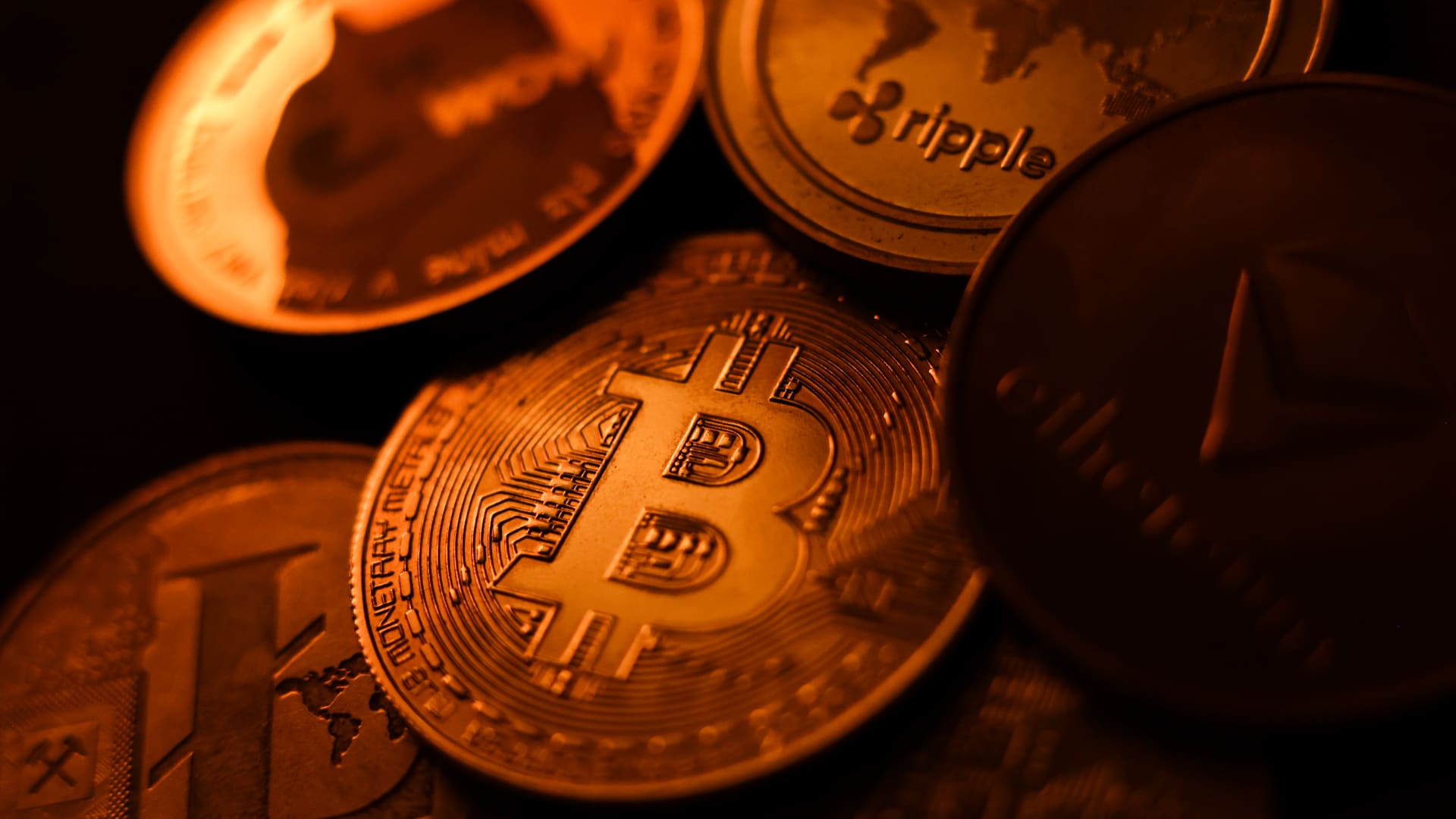
The SEC has introduced new rules aimed at simplifying how investment advisers and regulated funds can custody cryptocurrencies for clients, while U.S. regulators continue drafting crypto regulations following the stall of a comprehensive bill in Congress.
Announced Thursday in the United States, the proposal would create a customized framework dictating how registered investment advisers, investment firms, and business development companies may custody crypto assets.
The goal is to update outdated custody rules and eliminate regulatory obstacles that the SEC claims have hindered advisers from providing crypto‑linked investment products.
Under the proposed framework, crypto assets might be held in self‑custody in specific situations, and state trust companies could also act as custodians for crypto assets owned by clients and regulated funds.
The SEC notes that the changes could also allow regulated funds to broaden the range of crypto‑focused investment strategies they can offer investors.
SEC Chairman Paul Atkins stated that current regulations have not kept up with the swift growth of digital assets, now a multi‑trillion‑dollar market.
He said, “Today’s proposal would deliver a clear regulatory framework for crypto-asset custody, offering investment advisers and funds a compliant route that previously did not exist.”
The proposal arrives as U.S. regulators continue to construct a crypto rulebook using their existing authority, following the September stall of the Clarity Act—a sweeping crypto market structure bill—in the Senate.
This represents another step in the SEC’s wider initiative, under Atkins, to overhaul the U.S. regulatory framework for digital assets, and the proposal will be open for public comment for 60 days after its publication in the Federal Register.
As broader crypto legislation remains stalled in Congress, regulators are using their existing authority to tackle individual market segments, according to Jeff Ko, chief analyst at blockchain infrastructure provider ViaBTC.
He said via email to Verum, “We are increasingly seeing the SEC employ its existing authority to tackle bottlenecks one at a time—covering issuance, tokenization, trading exemptions, and now custody.”
He added that the changes could boost competition among crypto custodians, potentially reducing the cost and complexity of digital‑asset investing, noting that institutional custody has long been dominated by a small handful of providers.
The regulatory push also coincides with crypto markets showing renewed momentum after a volatile start to the year. Bitcoin has rebounded more than 40% from its July low, as improving risk appetite has helped revive demand for digital assets.
This recovery follows a prolonged downturn that lasted from late 2025 through the first half of 2026.
Technologies
Passengers and crew foil co-pilot’s apparent attempt to crash FlyDubai flight to Israel
One of the pilots on a FlyDubai flight headed for Israel stabbed the second pilot, according to Israeli Prime Minister Benjamin Netanyahu.
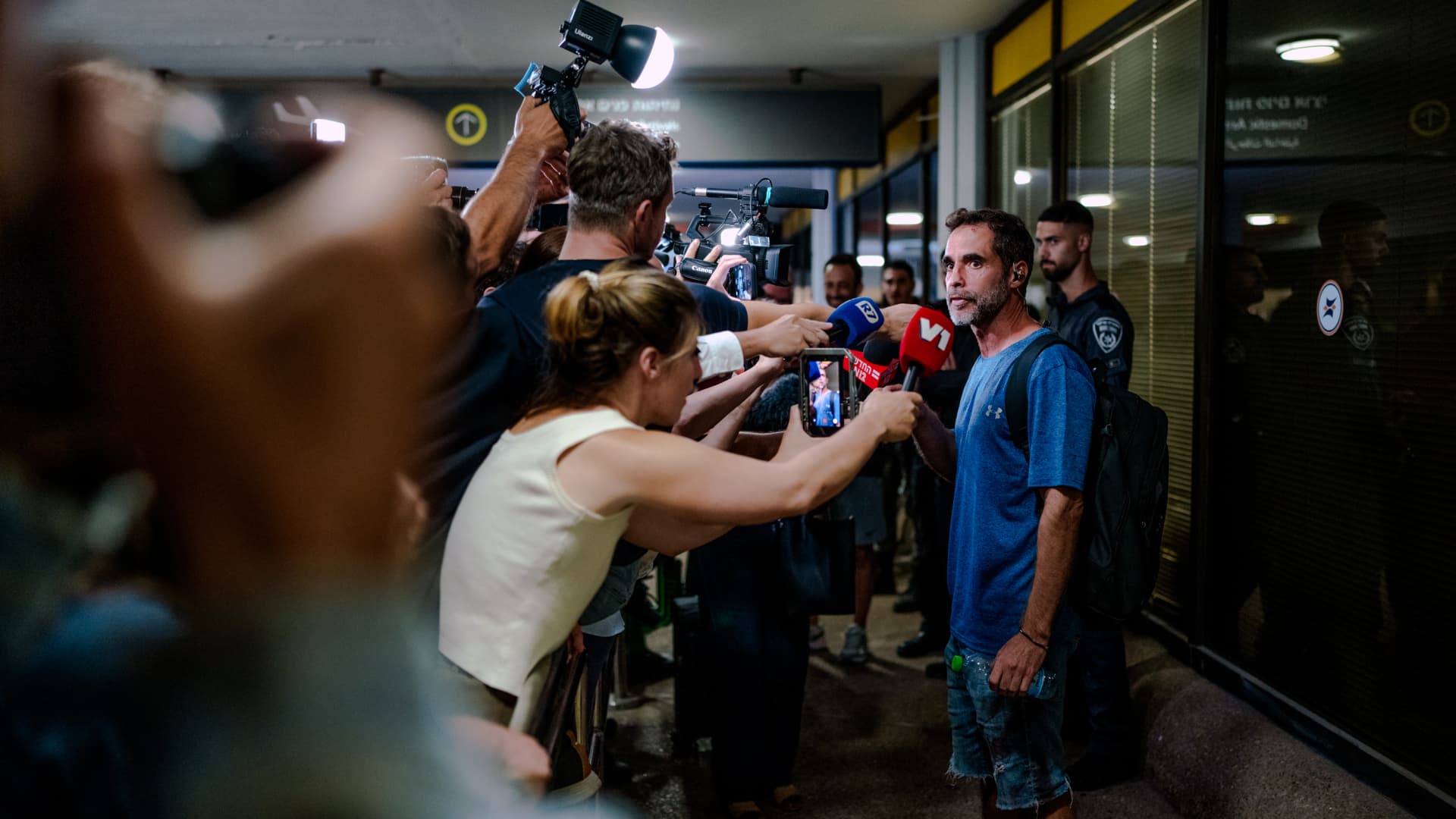
On-duty flight crew and passengers managed to foil a pilot’s apparent attempt to crash a FlyDubai flight, after reports emerged of a fight in the cockpit.
The incident on flight FZ1073 from Dubai to Tel Aviv happened when a co-pilot stabbed a pilot, according to Israeli Prime Minister Benjamin Netanyahu, who praised the victim’s quick thinking.
“Despite being stabbed and seriously injured, he fought back, resisted, opened the cockpit door, and enabled passengers and crew to overpower the attacker — preventing a catastrophic mid-air disaster. He saved the lives of 174 people, including Israeli citizens and other nationals,” Netanyahu wrote in a post on X.
FZ1073 was diverted to the Tabuk airport in Saudi Arabia, the airline said, after being successfully secured and diverted by flight crew.
FlyDubai in a statement said that an “altercation” occurred on the flight deck of the plane, but did not mention a stabbing.
However, the airline added that the underlying reasons and motives for the clash is currently unknown, urging all parties to refrain from speculation.
The injured pilot was identified by Netanyahu as Indian national Smit Machchhar. No details have been released on the identity of the attacker, except that he was being interrogated by Saudi authorities.
The Indian embassy in Riyadh said on X that Machchhar is in a hospital in Tabuk, and is reported to be in stable condition.
The Israeli Prime Minister also identified the passenger who broke into the cockpit as Yaniv Hayun, calling him a “hero” and adding he deserved “a global medal of honor.”
Flight data from tracking site FlightRadar24 showed that the plane had experienced extreme altitude fluctuations before broadcasting a “general emergency” squawk code.
FZ1073 had dropped from over 14,000 feet in just 29 seconds, and FlightRadar24 also added that vertical speeds ranging from approximately -30,000 to +10,000 feet per minute were observed from the transponder data.
For context, vertical speeds during normal operations rarely exceed plus or minus 4,000 feet per minute, it added.
Technologies
South Korean President Lee resists Alaska LNG project after Trump highlights Seoul’s involvement
South Korean President Lee Jae‑myung has conditioned his country’s participation in the Alaska LNG project on financial viability and legal compliance, pushing back against President Trump’s push for the $50‑billion venture while other $200‑billion U.S. investments move forward.
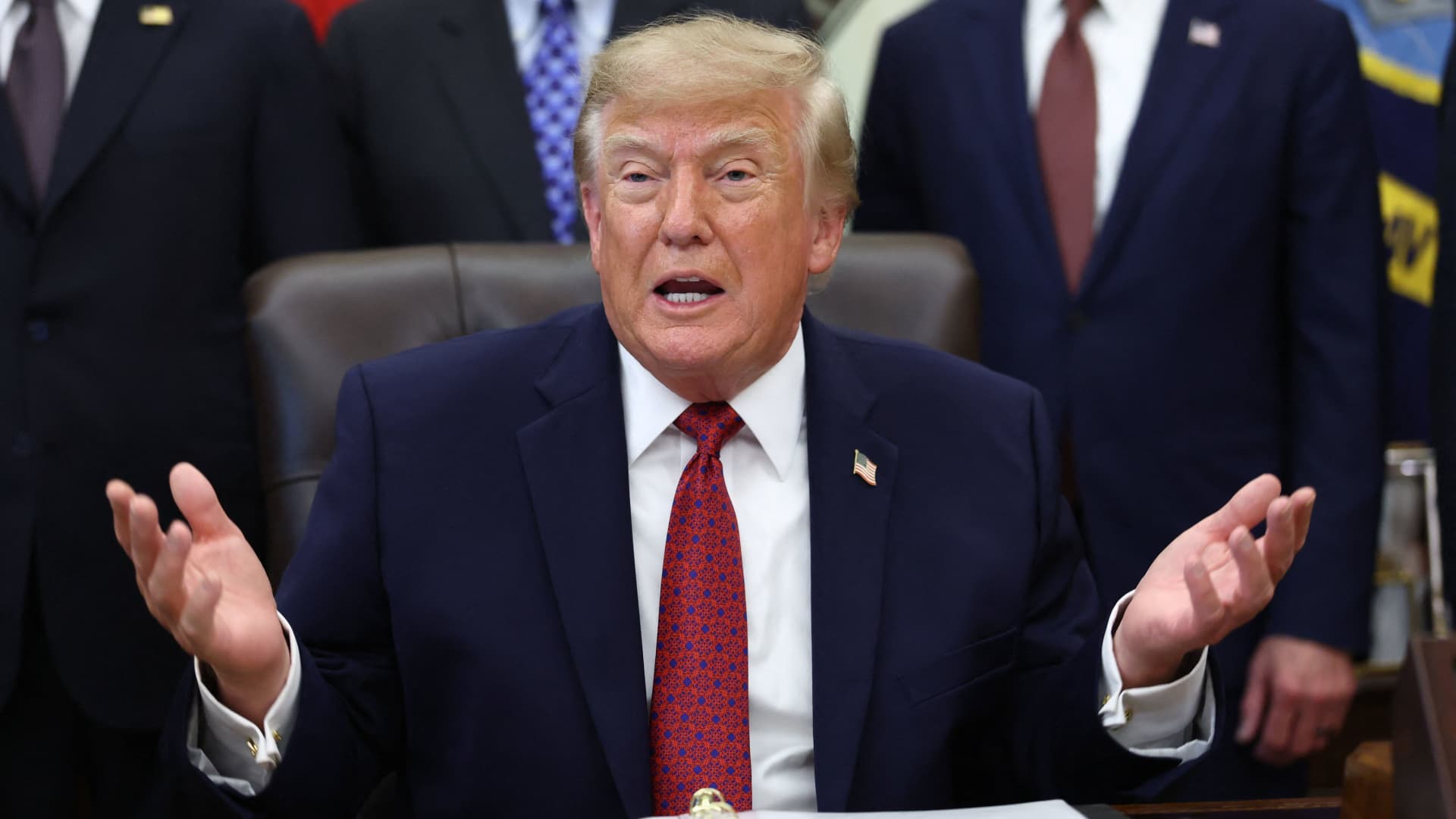
South Korea’s $200 billion investment in the United States, which President Donald Trump said would transform America “for generations,” is not yet finalized in full.
The South Korean investment blueprint includes nuclear power plants, a natural‑gas power facility in Texas, and potentially the long‑planned Alaska liquefied natural gas project.
Trump posted on Truth Social late Wednesday that the two nations had agreed to move forward on the Alaska LNG venture, estimating its value at $50 billion. This prompted a response from South Korean President Lee Jae‑myung, who stressed that participation in some projects remains tied to commercial considerations.
In an X post Thursday local time, Lee said that involvement in the Alaska LNG project hinges on its financial viability and legal compliance. He added that investments in nuclear power plants would also require a plant‑by‑plant assessment of commercial feasibility.
The US‑South Korea joint statement Wednesday also noted that work on the project is contingent on “commercial reasonableness,” without detailing allocations toward the venture.
The Alaska LNG project aims to move natural gas roughly 1,300 km (800 miles) from fields on Alaska’s North Slope to the state’s southern region, where it would be liquefied for export to markets including Asia, according to Yonhap. The initiative has long faced scrutiny over its economics, given the substantial upfront capital required.
Industry Minister Kim Jung‑kwan labeled it “high‑risk” last year and said participation would be challenging unless the project could generate sufficient cash flow.
Overall, the investment package allocates $22.3 billion for a 6,472‑megawatt natural‑gas power plant in Encinal, Texas, which will supply electricity to nearby data centers. The venture will be led by developer Related Cos. and U.S. power provider NextEra Energy.
Trump said the investments would turn South Korea’s commitments into “huge construction projects” and create “tens of thousands of American jobs.”
“These are massive energy projects, adding power capacity in the United States,” Trump remarked. “This is new construction, new manufacturing, and great jobs for American workers.”
The two countries said they would seek to broaden Korean firms’ involvement in the Texas project across equipment supply, engineering, construction, and long‑term operations and maintenance. The U.S. also plans to give Korean companies opportunities to supply equipment, including turbines, for similar projects domestically.
Another $120 billion has been earmarked for plans to build eight large‑scale nuclear reactors in the United States. Of that sum, $100 billion is designated for construction costs and $20 billion for contingency reserves.
The nuclear accord was signed by both governments as well as Westinghouse Electric, Korea Electric Power Corp., and Korea Hydro & Nuclear Power. The plan also calls for Korean firms to pursue a potential significant minority stake in Westinghouse, with terms subject to commercial negotiations.
-
 Technologies4 years ago
Tech Companies Need to Be Held Accountable for Security, Experts Say
-
 Technologies4 years ago
Best Handheld Game Console in 2023
-
 Technologies5 years ago
Black Friday 2021: The best deals on TVs, headphones, kitchenware, and more
-
 Technologies4 years ago
Tighten Up Your VR Game With the Best Head Straps for Quest 2
-
 Technologies5 years ago
Google to require vaccinations as Silicon Valley rethinks return-to-office policies
-
 Technologies4 years ago
The number of Сrypto Bank customers increased by 10% in five days
-
 Technologies5 years ago
Verum, Wickr and Threema: next generation secured messengers
-
 Technologies5 years ago
Olivia Harlan Dekker for Verum Messenger