
Technologies
Beats Solo 4 Headphones in This Exclusive Color Are Down to Their Lowest Price Ever of Just $79
Upgrade your listening experience without blowing your budget with this rare deal.

Commuting, gym workouts and even just doing your daily chores can all be improved when you have a great pair of headphones. Good music and podcasts can help you get through less exciting tasks with ease. The market is filled with options, but the Beats Solo 4 are some of our favorites, and today is a great time to pick up a pair for yourself or as a gift for a loved one.
Walmart is offering its exclusive “drenched gray” Beats Solo 4 headphones for just $79 right now. The catch? We don’t know how long the discount is going to last, so time is definitely of the essence. Order your new headphones soon to lock your $50 savings in.
Beats frequently tops our lists of best headphones and the Beats Solo 4 are equipped with improved drivers for high-quality audio. Their UltraPlush cushions are comfortable, which makes them perfect for use during long listening sessions or calls. These headphones are designed with better Bluetooth that prevents connection drops over longer distances than their predecessors.
“Upgrades on the inside make the Solo 4 significantly better headphones than past versions,” said CNET’s headphone expert David Carnoy, who thought they were too pricey at $200 and recommended you wait till they went below $130. Lucky for you, they are way below that price right now. If you’ve got a music fan in your life, now would be a great time to pick these up.
The 50-hour battery life on these headphones is more than enough for long flights and full workdays. Need to make a work call or use voice control options? The Solo 4 has a built-in microphone. Whether you own iOS or Android devices, you’ll be able to connect them easily (unlike Apple-branded headphones). It’s also worth noting that Beats includes a 3.5mm wire if you’d rather not use Bluetooth. The Solo 4 headphones don’t include active noise cancellation, but they do passively block out noises that can decrease your focus.
HEADPHONE DEALS OF THE WEEK
-
$248 (save $152)
-
$170 (save $181)
-
$398 (save $62)
-
$200 (save $250)
Why this deal matters
Beats are some of the best headphones around, and that’s true at full price. So being able to save 50% on these excellent headphones is a great opportunity. The deal likely won’t last long, though.
Technologies
Major League Baseball proposes shortening its regular season as it pushes for a salary cap
Major League Baseball proposed a return to a shorter 154-game regular season schedule as it attempts to convince players to approve a salary cap.

Major League Baseball proposed shortening its regular season to 154 games from 162 as it attempts to convince players to approve a salary cap in the league’s next collective bargaining agreement. The new shortened schedule would begin in 2029.
MLB’s CBA expires Dec. 1, after the conclusion of this season’s World Series. The most contentious issue is the introduction of a salary cap on players. MLB is the only major American sports league without a cap. The league has failed to convince the players’ union to adopt one in several previous CBA negotiations.
A 154-game season was used between 1904 and 1960, except for 1918 and 1919 when the schedule was abbreviated because of World War I. For the past 66 years, 162 regular season games has been the standard, though some seasons have been shortened.
Lopping off eight games “is good for player health, while also creating a new national broadcast window to showcase our most exciting teams and players,” MLB spokesman Glen Caplin said in a statement. “A shorter regular season unlocks making October even better for our fans — with fewer weekday afternoon games, a longer Division Series, and more opportunities to see the game’s best pitchers on the biggest stage.”
As part of the proposal, MLB wants to cement Monday as an exclusive broadcast window for one or two games to “increase national exposure for the sport.” The league could conceivably sell a package of Monday-only games to a streaming service looking to increase subscriber and advertising revenue. Every team not playing in the national game or games would have an off day.
Teams that play Monday would be off on Thursday, MLB said.
In addition to lowering the number of regular season games, MLB would extend the divisional round of the playoffs to seven games from five and would allow the higher-seeded teams in both the wild card round and in the divisional round to choose their lower-seeded opponent.
The Major League Baseball Players Association responded to the MLB’s proposed changes by claiming the league “once again made clear that all of its proposals are contingent on players’ agreement to a salary cap, a system that guts player rights and compensation, as well as its other anti-player proposals.”
An MLB spokesperson confirmed that Thursday’s proposed changes are contingent on adopting a cap – and a salary floor, which would force teams to spend a certain amount on players. Still, the MLBPA said it would review the proposed changes. “Players will weigh in on these proposals and we will respond at the bargaining table,” MLBPA said in a statement.
Technologies
Hurricane Isaias disrupts U.S. oil production in Gulf of Mexico, threatens refineries
The hurricane could tighten a fuel market that is already facing big disruptions from the wars in Eastern Europe and the Middle East.
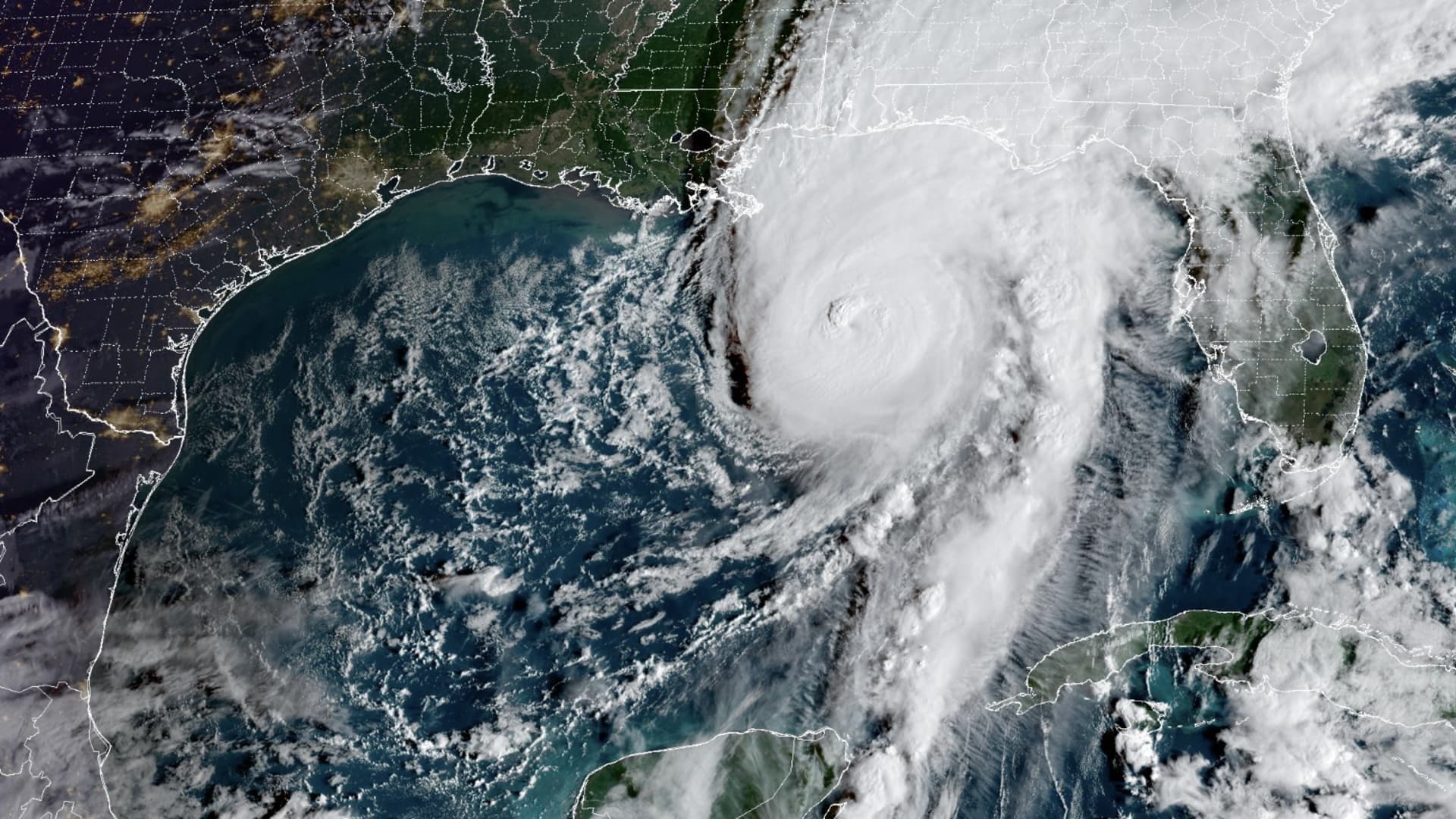
Hurricane Isaias is disrupting U.S. crude oil production in the Gulf of Mexico and could limit about 2% of the country’s refining capacity, at a time when fuel markets are already tight around the world.
Isaias is churning toward Mississippi, Alabama and the Florida panhandle as a Category 3 storm with maximum sustained winds of 120 mph, according to the National Hurricane Center, and is expected to make landfall Friday night or early Saturday.
As of Thursday, oil companies had shut in about 1.3 million barrels per day, or roughly 63% of total U.S. production in the Gulf, according to the Bureau of Safety and Environmental Enforcement.
The hurricane appeared to be veering away from the dense refining region in southern Louisiana near New Orleans and Baton Rouge.
But the storm could affect Chevron
“Of course, losing any refinery capacity when diesel supplies are at their lowest level for this time of year since the EIA began reporting in 1982 is not a good thing,” Lipow wrote in a Friday note, referring to the Energy Information Administration.
Chevron’s refinery at Pascagoula remains operational, spokesperson Ross Allen said Thursday. Vertex officials weren’t immediately available for comment about its Saraland refinery.
″The biggest risk to these two refineries are a loss of electricity or flooding damage,” Lipow wrote in a note Friday. If the refineries do shut down, it would take one to two weeks to restart them if they did not sustain damage, he said.
Refineries on the Gulf Coast are running at 95% of their capacity, so there is no slack in the system to make up for lost production, Lipow said.
Diesel prices have soared as the wars in Eastern Europe and the Middle East knock out refining capacity. Ukraine’s strikes on Russian refineries forced Moscow to ban diesel exports. Iran and its Houthi allies have also attacked refineries in the Middle East.
U.S. refiners have stepped in to take advantage of wide profit margins to export diesel around the world, particularly to Europe.
In the past, fuel prices rose while crude prices fell during outages at Gulf refineries, said Kevin Book, managing director at ClearView Energy Partners. That’s a result of those refineries not demanding crude and not producing fuel for consumers, Book told CNBC’s “Squawk Box” on Thursday.
Lipow warned that tanker traffic will also be disrupted.
“Tankers will be delayed delivering crude oil to the refineries while other tankers are delayed loading gasoline, jet fuel and diesel out of the refineries,” the analyst said. “Florida will experience delays in receiving gasoline, jet fuel and diesel.”
Technologies
Americans’ debt problems are flashing a warning not seen since the Great Recession
Researchers found that while wealth disparities narrowed somewhat, the ability to meet debt payments deteriorated significantly.
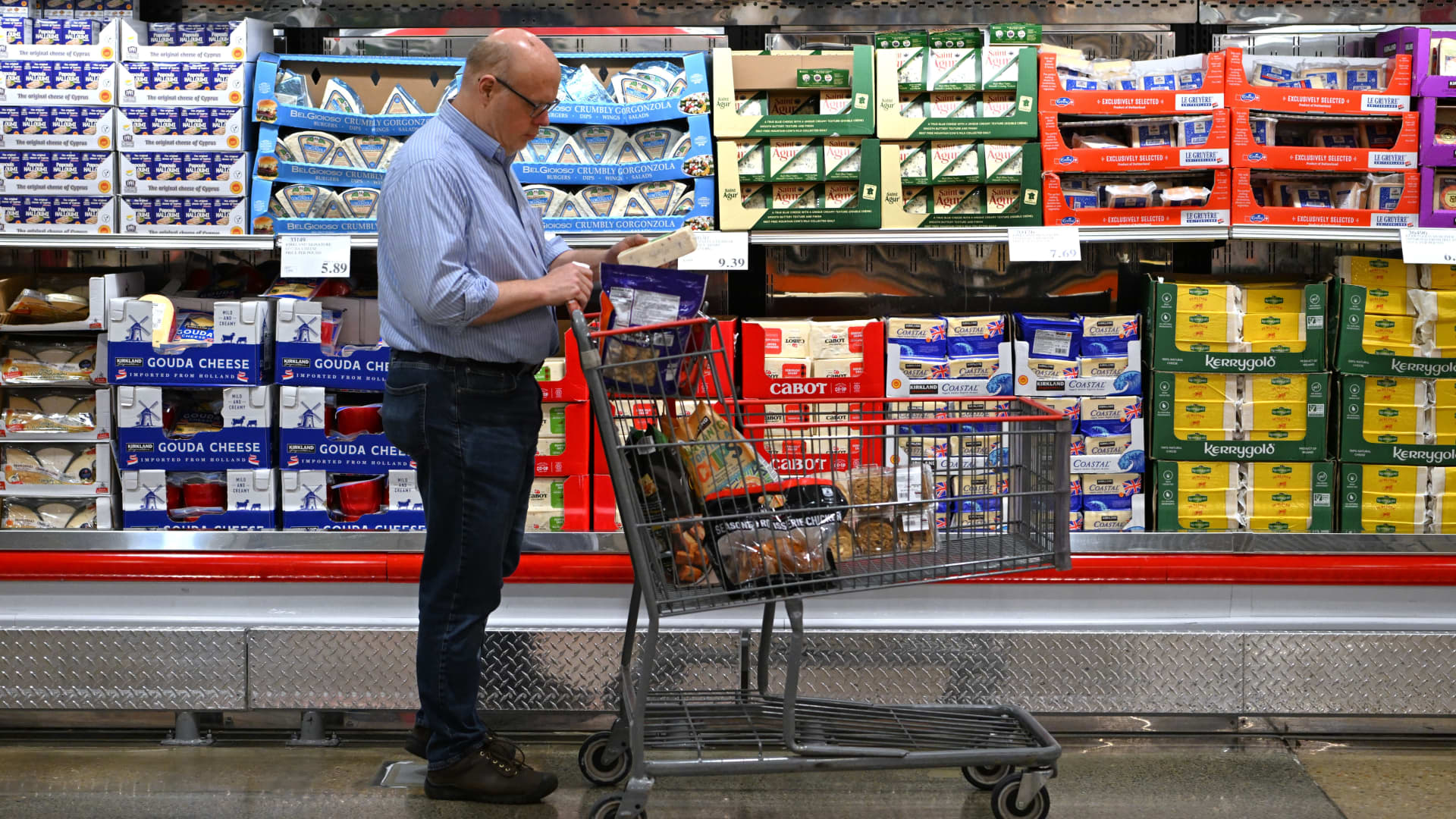
The ability of U.S. families to stay current on their debts worsened over the past three years, hitting levels not seen since the aftermath of the global financial crisis, the Federal Reserve reported Friday.
In the central bank’s Survey of Consumer Finances, researchers found that while wealth disparities narrowed somewhat, the ability to meet debt payments deteriorated significantly.
“Families were more likely to be behind on their financial obligations than at any point since the 2010 survey,” stated the survey, a data-rich document the Fed releases every three years to chronicle the nation’s financial health.
The country in 2010 was just emerging from what became known as the Great Recession, a period that ran from December 2007 to June 2009. A collapse in the subprime mortgage market resulted in contagion across the largest financial institutions in the U.S. and the world, sending unemployment at one point to 10%.
According to the new findings, the portion of families behind on loan payments at the end of 2025 soared from about 12% in the prior survey to nearly 20%, a gain of some 67%. Those behind by two months or more also accelerated considerably, moving to more than 8% from 5% in 2022.
While the report covered the period through 2025, Americans’ concerns over their finances have persisted. A New York Fed survey released earlier this week showed that households reported their financial situations had worsened from a year ago and were likely to be weaker in the year ahead.
Friday’s Fed report showed the share of debt to income also posted a large gain. Families with payment-to-income ratios of greater than 40% jumped to 8.6%, up from 6.5% in 2022 and the highest level since 2013.
At the same time, the net worth of higher earners soared, with those in the top income group seeing their median net worth rise 31%.
The report covers a period where the economy continued to grow but with inflation rates not seen since the early 1980s.
Amid that climate, the Fed found that real median, or midpoint, family income increased 7% but average income dropped 6%.
“Families in the lower ends of the income and net worth distributions saw modest increases in median and mean income, while families in the upper ends saw declines,” the report stated. “These patterns indicate that income inequality decreased slightly between surveys.”
The report noted that income gains were particularly strong with families aged 75 or older while tumbling 25% for those aged 35 to 44, which the Fed attributed to declines in capital gains income for that group.
“The exceptions to the general pattern of a rise in median income were for Black non-Hispanic families, Asian families, and families toward the top of the usual income and net worth distributions,” the report stated. “For these families, both median and mean income fell.”
Overall, net worth generally increased.
Inflation-adjusted average net worth rose 7% to $1.24 million, though median net worth climbed just 2% to $215,900, reflecting gains among those at the higher end. The report noted that net worth was “much slower” than the prior report that covered the 2019-22 period.
There were considerable disparities among education groups. Those with a college degree had 1.9 times the median income level than those with “some college” and nearly three times the median net worth. Lower-income families “saw some declines” in wealth while those with higher incomes saw gains. Families in the bottom one-fourth of income median net worth declined 6% while average net worth fell 4%.
-
 Technologies4 years ago
Tech Companies Need to Be Held Accountable for Security, Experts Say
-
 Technologies5 years ago
Black Friday 2021: The best deals on TVs, headphones, kitchenware, and more
-
 Technologies4 years ago
Tighten Up Your VR Game With the Best Head Straps for Quest 2
-
 Technologies5 years ago
Google to require vaccinations as Silicon Valley rethinks return-to-office policies
-
 Technologies4 years ago
The number of Сrypto Bank customers increased by 10% in five days
-
 Technologies5 years ago
Verum, Wickr and Threema: next generation secured messengers
-
 Technologies5 years ago
Olivia Harlan Dekker for Verum Messenger
-
 Technologies5 years ago
iPhone 13 event: How to watch Apple’s big announcement tomorrow