
Technologies
I Tested 3 Top Camera Phones in Dazzling Las Vegas. I’m Glad I Didn’t Bet on the Results
This camera test didn’t stay in Vegas: I pitted the iPhone 17 Pro, Samsung S25 Ultra and Pixel 10 Pro XL during the Formula 1 Grand Prix.
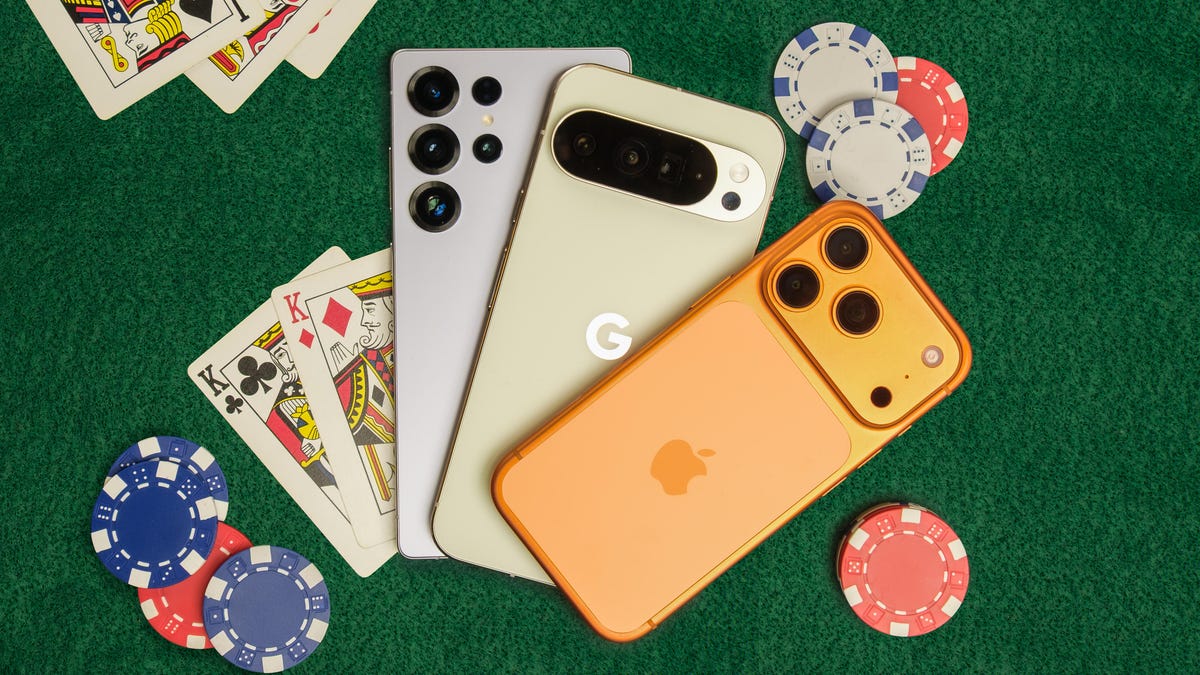
Las Vegas and Formula 1 are a perfect pairing for photography: bright colors, late-night lights and high intensity. So when I came here to cover the Formula 1 Las Vegas Grand Prix, which ran Nov. 20-22, I couldn’t resist bringing three top camera phones to see how they perform against one another. Between the Samsung Galaxy S25 Ultra, the Google Pixel 10 Pro XL, and the Apple iPhone 17 Pro, which would occupy spots P1, P2 and P3 at the event?
My plan quickly skidded on wet tarmac (matching the unexpectedly rainy weather in Vegas), because I discovered late that I wouldn’t be allowed to take photos or videos in race areas. The Formula 1 organization, which owns and operates the Las Vegas Grand Prix, completed the press accreditation process well in advance of this opportunity; I was invited by T-Mobile, a co-sponsor of the event, a few weeks prior to the race.
Read more: Best Camera Phone in 2025
Although I couldn’t capture any photos of the main event, there was still plenty to see in Las Vegas, which gets transformed each year for the Grand Prix. The Strip (South Las Vegas Blvd., where most of the big hotels are) and surrounding public streets are converted into the race track. That disrupts car traffic and walking routes, adding stress to everyone.
Here’s a slice of the F1 Las Vegas Grand Prix weekend, shot on three cameras. Keep in mind that photo quality is subjective, and in many cases, the differences between them might be hard to spot. All photos were captured using default settings using each phone’s camera app. For the iPhone 17 Pro images, the Standard photographic style was used to keep the processing as basic as possible. The photos were exported to JPEG format with no HDR (high-dynamic range) applied, no edits and resized using Apple’s Photomator app.
Don’t miss any of our unbiased tech content and lab-based reviews. Add CNET as a preferred Google source.
Although I couldn’t publish any photos from the race or around the track, there were still opportunities to get up close to F1 cars. Several hotels had cars set up in their lobbies. This racer from the Haas team was in The Cosmopolitan Resort. It’s awash in red, on the car itself, but also that carpet, which can sometimes be a challenge for small camera sensors. Plus, despite some spot lighting, you have to remember that this is in a generally dark, indoor environment.
Although all three photos look good, the iPhone 17 Pro seems to be warmer and more saturated — a tad too much. The S25 Ultra and Pixel 10 Pro XL shots have better white balance; for this comparison, I like the Pixel’s photo.
Here’s another car, from the Mercedes team. Photographically, this has a lot of challenges for a phone camera. There’s light coming through the windows, a platform that’s lit from below and lots of reflected details in the middle section of the car.
None of the cameras blew out the windows to white, which can be common when you’ve got a large light source in the background (it helped that the weather was cloudy and gray). The S25 Ultra and Pixel 10 Pro XL resolve more details in the buildings outside, but at the expense of toning down the brightness in the foreground; the white platform looks muted and green in both. The iPhone photo looks best to my eyes.
Near the Mercedes car was this helmet in glass, with racing simulators that people stood in long lines to play. All three phones have captured the variety of colors, reflections and textures well. I prefer the Galaxy S25 Ultra shot for its color, like the slot machines in the back, but it focused on the driver in the back instead of the helmet, so the foreground is a little out of focus. For that reason, I think the iPhone 17 Pro has made a successful overtake.
You’ve got to love Las Vegas for its willingness to smash together any look or influence it wants. This is the F1 Arcade, an F1-themed “ultimate bar experience” adjacent to Caesar’s Palace (hence the columnar design). The statues are clearly cast from the same mold, but I’m not sure the F1 logo and “Arcade” evoke original Greek typography.
Once again, the iPhone takes a different approach to its coloring, coming across as warmer and a little greener than the other two phones. Still, there’s plenty of fine detail, and each camera has retained the hint of blue in the sky. This is also where the zoom ranges are noticeable: The iPhone’s 4x zoom is wider than the 5x zoom on the Pixel or Galaxy.
Zoom aside, I like the Pixel 10 Pro XL image best (despite not being very level — I was distracted by a security guard looking at me funny for apparently standing in a place just off the main walkway). The “Arcade” letters are oddly crisp and bright on the Galaxy S25 Ultra image.
T-Mobile held a flashy keynote for its new 15 Minutes or Better feature for switching from other carriers, and after the keynote, the crowd was ushered into another room where musician T-Pain performed a live set. A concert like this is one of the more difficult tasks for phone cameras, since it’s in a dark environment, lit with multiple colored lights (so much magenta) and the star is moving at all times. It’s also when everyone’s phones come out to take pictures and record video.
The photos from this trio of cameras don’t stack up to traditional cameras with larger lenses, but they still hold their own. Nailing focus on T-Pain isn’t easy, so there’s a fair amount of motion blur — which isn’t a bad thing when capturing an energetic performance. Plus, since I wasn’t at the front, I was shooting with the 4x (iPhone) and 5x (Galaxy and Pixel) zooms to focus on him, and not Paris Hilton dancing at the front. On each phone, the main cameras have the best light-gathering abilities, so I was making a choice of composition over image quality by picking the telephoto options. I think the Pixel 10 Pro XL made the best shot of this test.
The Ski Lodge is a semi-secret bar in The Cosmopolitan that’s absolutely worth waiting in a line next to a blank white wall and a single nondescript door. Inside, the bar was decorated for Heavy Metal Holiday, with detail everywhere you look. Is this a cruel test of a cellphone camera? Absolutely.
Of the three photos, I give the iPhone 17 Pro a slight edge. It’s keeping up with its characteristic warmer tones, but they work here. It’s also done a better job of rendering the lights above that are wrapped in the tree boughs (they’re actually skulls, keeping with the heavy metal theme). The Pixel 10 Pro XL is a little soft, perhaps because its night mode uses a 1/7-second exposure versus 1/15 seconds for the other two phones.
Las Vegas is always associated with its elaborate neon signs, and the Flamingo is one of the classics. The fact that it was reflected on a polished surface at left was just extra candy for this photographer.
Of these three images testing the 2x zoom, the Galaxy S25 Ultra stands out to me for its color and clarity in the reflection. The Pixel 10 Pro XL is also good, but its 2x zoom is too tight for this composition; normally I would back up and reframe, but I was trying to take all shots from the same vantage point, and stepping back would put me into busy pedestrian traffic. The iPhone 17 Pro is underserved partially because it caught a moment when not as many of the bright white lights were illuminated on the flashing sign.
It rained in Las Vegas, a city in the desert that doesn’t get a lot of precipitation. Although the wet surfaces made things difficult for the F1 drivers, it was great for capturing reflected light. I’m happy with all three of these; the Galaxy S25 Ultra did a better job of catching detail in the sign to the left of the garden entrance, but I should have framed it to include more of the lions like the other shots. Also notable is the coloring on the structure — in Vegas, there’s so much light coming from screens all around that the lighting changes color frequently. So in this case, that isn’t from the cameras misinterpreting the scene.
For the Las Vegas Grand Prix, the Strip is turned into the racetrack, which needs maintenance every night after practice sessions and the qualifying race. Here’s a look at the infrastructure outside the Paris Las Vegas Hotel and Casino, including the lighting, scaffolding and the crash barriers.
Of these, the iPhone stands out for its warmth and detail. It was captured using the main camera, so it didn’t need to switch to Night Mode for this shot. The Galaxy S25 Ultra is more cool, and if I wasn’t pitting it against the others I’d say it was also a good shot. The Pixel 10 Pro XL image has somehow rendered the color in the Eiffel Tower more blue than purple, though I can’t recall if the tower was changing color or not; sometimes it’s colored red, white and blue like the French flag.
These are not stellar pictures, let’s be perfectly clear. But I wanted to share the lengths the organizers go to make sure not just anyone can watch the race in Las Vegas. Temporary barriers are set up on the walkways over the Strip to ensure that you can’t see the track below. All images were shot with the ultra-wide camera on each phone. I like the Galaxy S25 Ultra the best here for its color, compared to the too-warm hues of the other two. Again, in isolation, they’re all fine, but side-by-side, the Galaxy phone takes the win.
Speaking of the ultra-wide cameras, here’s a shot you won’t get in Paris, France: the Arc de Triomphe and Eiffel Tower right next to each other. (True story: A guy I once knew had no interest in going to the original Eiffel Tower when he was in Paris because he’d already seen it in Vegas.)
I was standing at the base of the arch, so the ultra-wide angle distortion is pronounced here, but it makes for a dramatic image. In terms of image quality, I’m partial to the iPhone 17 Pro because it caught a little glare from the sun at left, which gives it some character. The framing of the other two is better, and yet again they’re perfectly fine, if a little flat to compensate for the bright clouds at the top left, in the case of the Pixel 10 Pro XL version.
At the New York-New York Hotel and Casino, a scale replica of the Statue of Liberty overlooks one corner, providing a great opportunity to see how telephoto cameras perform. (Fun fact: When the US Postal Service designed a postage stamp of the Statue of Liberty, they accidentally did so from a stock photo of the Las Vegas version.)
Taken late at night, this subject shows the most color variation among the three cameras. The Galaxy S25 Ultra did the best with the statue’s green color, reducing the exposure slightly. The Pixel 10 Pro XL boosted the green, making a version that still looks OK. But the iPhone 17 Pro has misinterpreted the green as a color to be corrected, and bled the image of most of it. Samsung gets the win this time.
This view from the Venetian Resort is underexposed in all three cameras, each of which appears to be compensating for the bright areas of the sky. In terms of color, the Pixel 10 Pro XL looks best to my eye, keeping plenty of texture in the clouds while also making the gold windows of the former Mirage hotel pop. In the middle ground is construction on the Hard Rock Hotel and Casino Las Vegas, which will look like the base of an electric guitar.
Finally, we come to a selfie at midnight taken in front of New York New York, after your humble correspondent had walked the entire Strip to take photos. Each destination in Las Vegas looks closer than it is, and when you’re on foot it turns out to be even farther than that. However, it still capped a day of F1 racing, meeting new people and exploring this city oddity firsthand.
The iPhone 17 Pro selfie looks natural but softer than I would expect from Apple’s newly designed front-facing camera. The Galaxy S25 camera is similarly drab, with the detail in my beard appearing smudgy. But the Pixel 10 Pro XL, while oversharpening slightly, holds onto that detail and also has the best nighttime exposure.
Which phone camera captured Vegas the best?
So how do we rank these three cameras on a podium? Adding up my preferences above, the Pixel 10 Pro XL and iPhone 17 Pro each nabbed five wins, with the Galaxy S25 Ultra trailing just behind at four. As I said at the beginning, in most cases they each do an excellent job taking photos, so you won’t go wrong with any of them.
And if you wanted to keep the F1 theme going, thanks to the IP68 rating for dust and water resistance on each one, you can spray them all with victory champagne and not worry about destroying your finely tuned machine.
Technologies
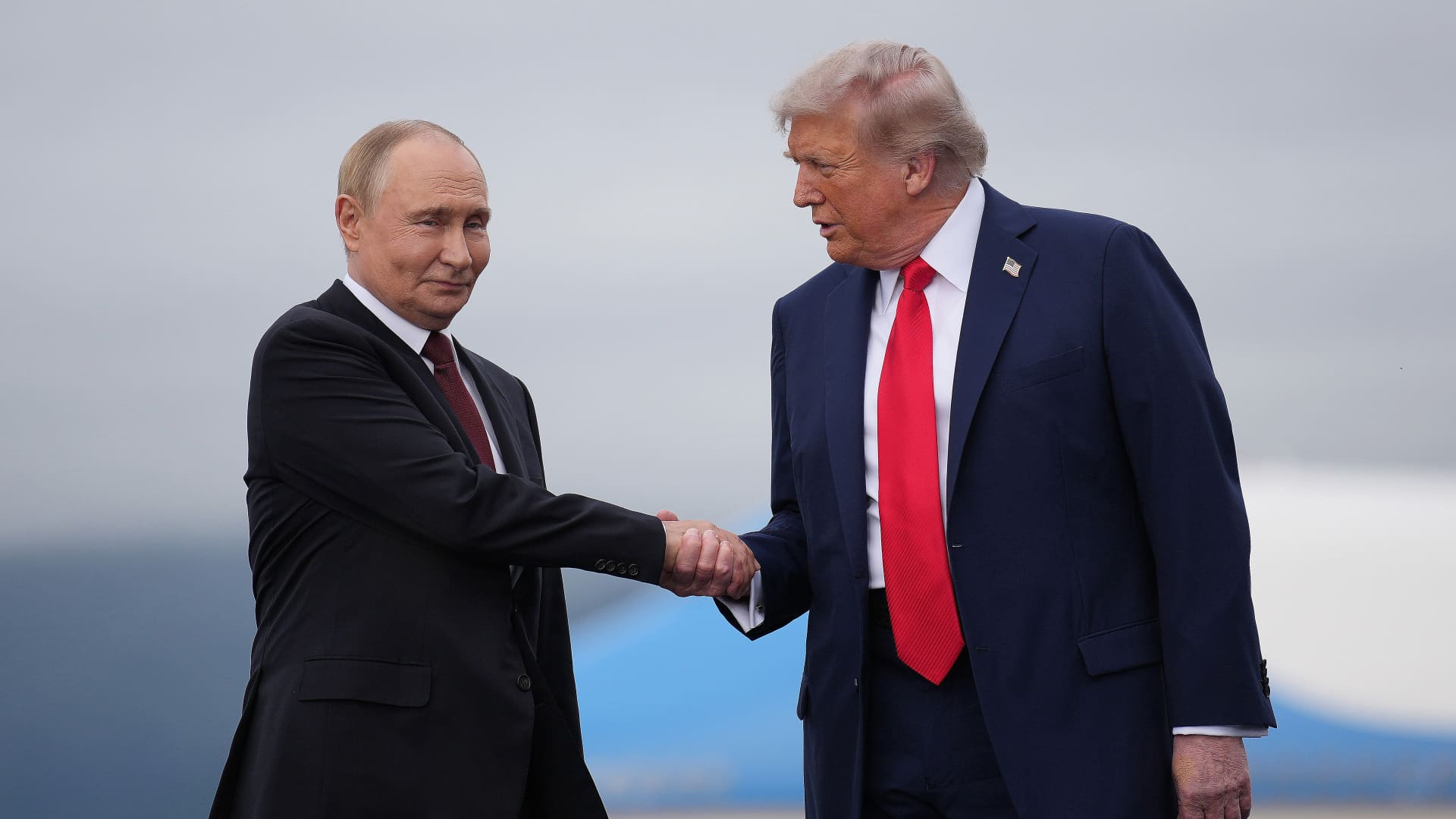
Trump strikes deal with Putin to supply Russian diesel to U.S. and global markets
This site is now part of
Versant
. By continuing to use this service, you agree to our
Terms
. You also acknowledge that our updated
Privacy Policy
applies, including to your existing data. For details on your data rights, click
here
.
On this service, we and our vendors…
This site is now part of
Versant
. By continuing to use this service, you agree to our
Terms
. You also acknowledge that our updated
Privacy Policy
applies, including to your existing data. For details on your data rights, click
here
.
On this service, we and our vendors use cookies and other tools (“Cookies”) to store and access information on your device, such as device identifiers, IP address, and your browser type. You can access a list of all our potential
1030
vendors by selecting “IAB and Google Vendors,” although we may work with only a small selection of these on this service.
Your data may be used to save and communicate your privacy choices; ensure security, prevent fraud, and debug our products and services; personalize advertising and content; for advertising and content measurement; to conduct audience research and services development; so we can improve our services and develop new ones; to match and combine offline data with your online activity; and for social features.
We may share this data with select vendors with your consent.
Click “I Accept”, to consent to our use of these Cookies or “Reject All” to reject our use of these Cookies. Click “Manage Choices” to set your preferences.
If you previously made choices with respect to Versant’s use of Cookies on this browser and device, you will need to update them. You can adjust your choices any time through the “Cookie Preferences” link in the footer of relevant Versant sites or in-app settings.
Visit our
Cookie Notice
and
Privacy Policy
to learn more.
We will also use other Cookies that are essential or related to our services, including for security and fraud prevention.
Technologies
Major League Baseball proposes shortening its regular season as it pushes for a salary cap
Major League Baseball proposed a return to a shorter 154-game regular season schedule as it attempts to convince players to approve a salary cap.
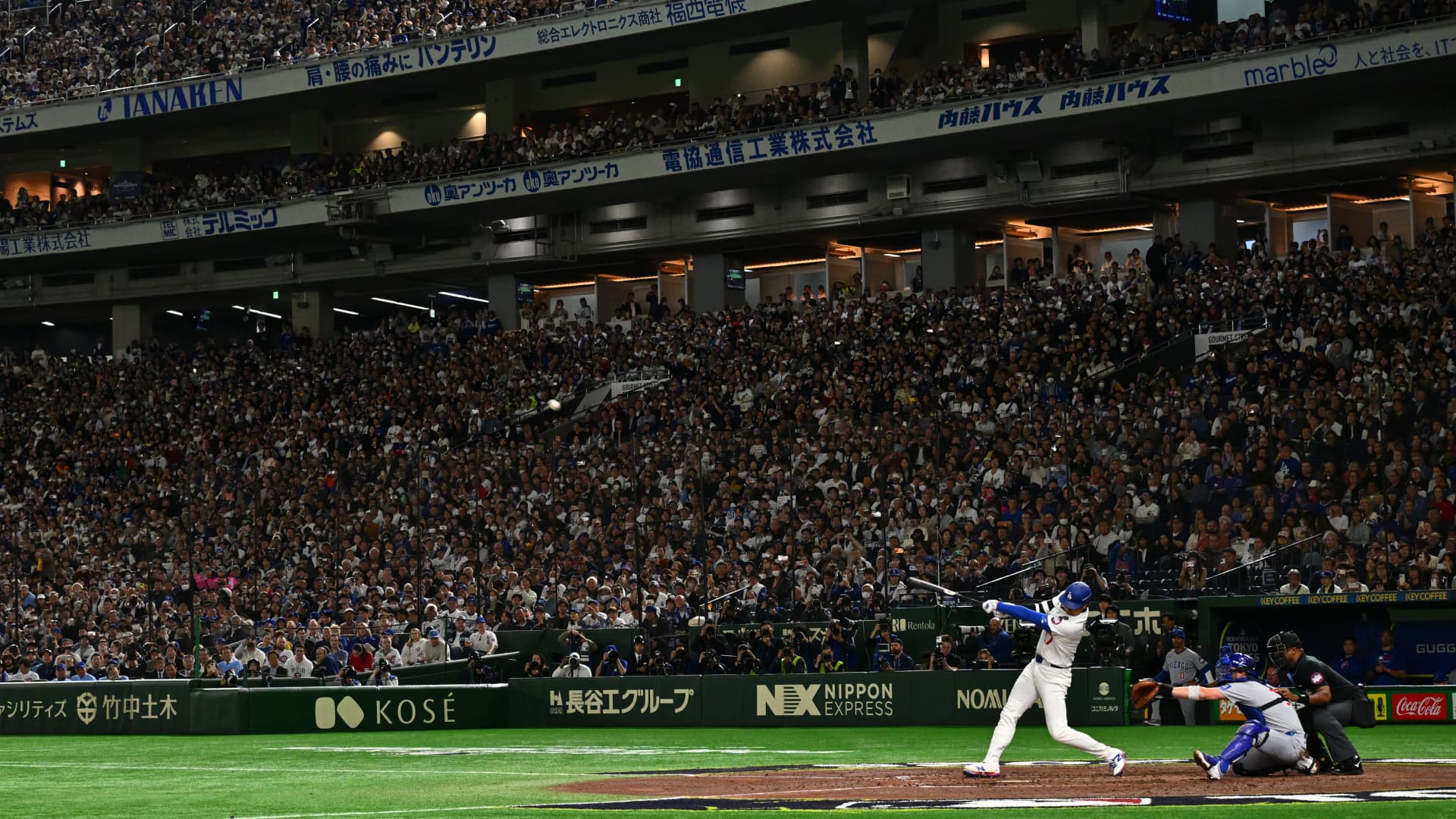
Major League Baseball proposed shortening its regular season to 154 games from 162 as it attempts to convince players to approve a salary cap in the league’s next collective bargaining agreement. The new shortened schedule would begin in 2029.
MLB’s CBA expires Dec. 1, after the conclusion of this season’s World Series. The most contentious issue is the introduction of a salary cap on players. MLB is the only major American sports league without a cap. The league has failed to convince the players’ union to adopt one in several previous CBA negotiations.
A 154-game season was used between 1904 and 1960, except for 1918 and 1919 when the schedule was abbreviated because of World War I. For the past 66 years, 162 regular season games has been the standard, though some seasons have been shortened.
Lopping off eight games “is good for player health, while also creating a new national broadcast window to showcase our most exciting teams and players,” MLB spokesman Glen Caplin said in a statement. “A shorter regular season unlocks making October even better for our fans — with fewer weekday afternoon games, a longer Division Series, and more opportunities to see the game’s best pitchers on the biggest stage.”
As part of the proposal, MLB wants to cement Monday as an exclusive broadcast window for one or two games to “increase national exposure for the sport.” The league could conceivably sell a package of Monday-only games to a streaming service looking to increase subscriber and advertising revenue. Every team not playing in the national game or games would have an off day.
Teams that play Monday would be off on Thursday, MLB said.
In addition to lowering the number of regular season games, MLB would extend the divisional round of the playoffs to seven games from five and would allow the higher-seeded teams in both the wild card round and in the divisional round to choose their lower-seeded opponent.
The Major League Baseball Players Association responded to the MLB’s proposed changes by claiming the league “once again made clear that all of its proposals are contingent on players’ agreement to a salary cap, a system that guts player rights and compensation, as well as its other anti-player proposals.”
An MLB spokesperson confirmed that Thursday’s proposed changes are contingent on adopting a cap – and a salary floor, which would force teams to spend a certain amount on players. Still, the MLBPA said it would review the proposed changes. “Players will weigh in on these proposals and we will respond at the bargaining table,” MLBPA said in a statement.
Technologies
Hurricane Isaias disrupts U.S. oil production in Gulf of Mexico, threatens refineries
The hurricane could tighten a fuel market that is already facing big disruptions from the wars in Eastern Europe and the Middle East.
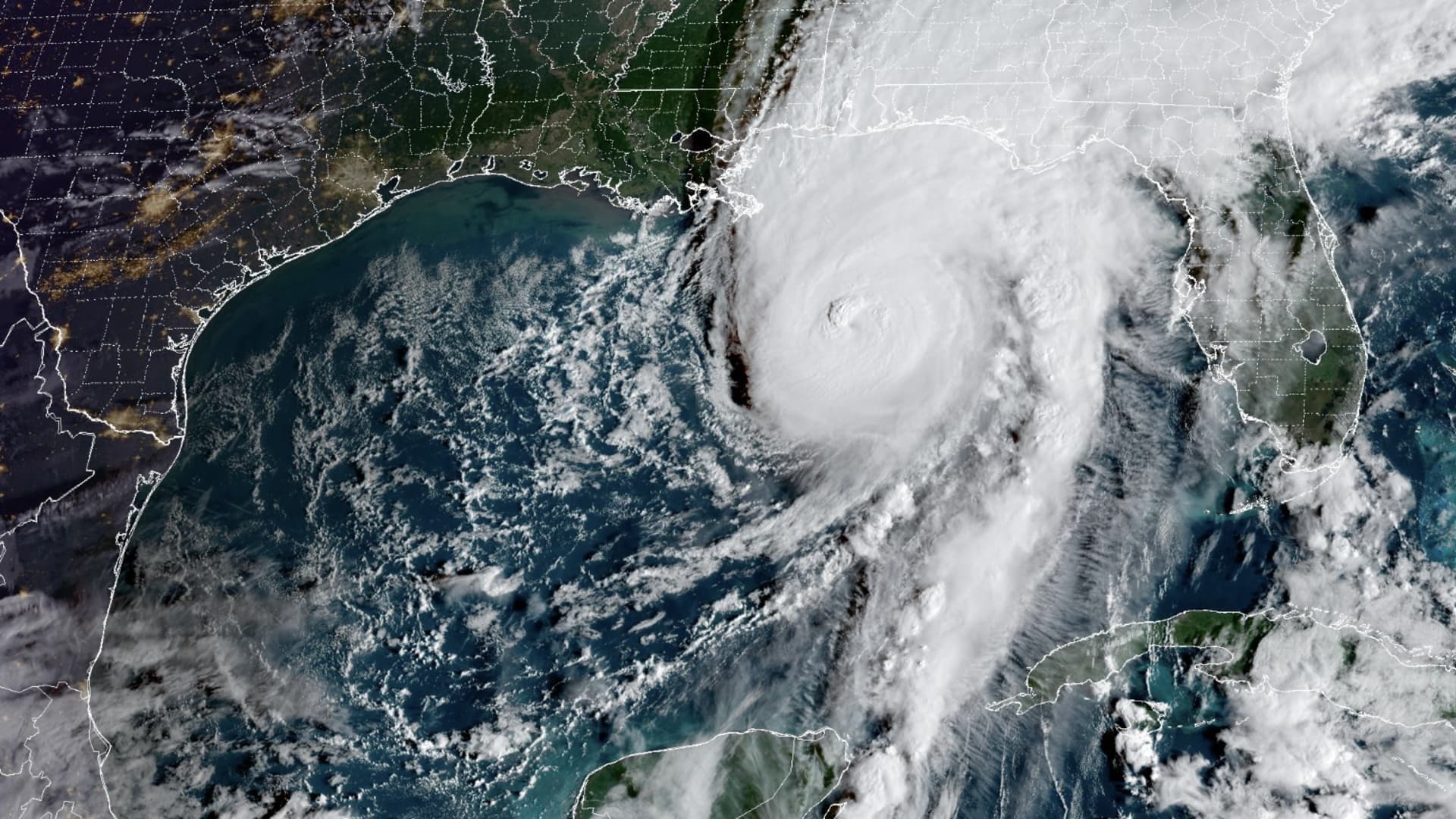
Hurricane Isaias is disrupting U.S. crude oil production in the Gulf of Mexico and could limit about 2% of the country’s refining capacity, at a time when fuel markets are already tight around the world.
Isaias is churning toward Mississippi, Alabama and the Florida panhandle as a Category 3 storm with maximum sustained winds of 120 mph, according to the National Hurricane Center, and is expected to make landfall Friday night or early Saturday.
As of Thursday, oil companies had shut in about 1.3 million barrels per day, or roughly 63% of total U.S. production in the Gulf, according to the Bureau of Safety and Environmental Enforcement.
The hurricane appeared to be veering away from the dense refining region in southern Louisiana near New Orleans and Baton Rouge.
But the storm could affect Chevron
“Of course, losing any refinery capacity when diesel supplies are at their lowest level for this time of year since the EIA began reporting in 1982 is not a good thing,” Lipow wrote in a Friday note, referring to the Energy Information Administration.
Chevron’s refinery at Pascagoula remains operational, spokesperson Ross Allen said Thursday. Vertex officials weren’t immediately available for comment about its Saraland refinery.
″The biggest risk to these two refineries are a loss of electricity or flooding damage,” Lipow wrote in a note Friday. If the refineries do shut down, it would take one to two weeks to restart them if they did not sustain damage, he said.
Refineries on the Gulf Coast are running at 95% of their capacity, so there is no slack in the system to make up for lost production, Lipow said.
Diesel prices have soared as the wars in Eastern Europe and the Middle East knock out refining capacity. Ukraine’s strikes on Russian refineries forced Moscow to ban diesel exports. Iran and its Houthi allies have also attacked refineries in the Middle East.
U.S. refiners have stepped in to take advantage of wide profit margins to export diesel around the world, particularly to Europe.
In the past, fuel prices rose while crude prices fell during outages at Gulf refineries, said Kevin Book, managing director at ClearView Energy Partners. That’s a result of those refineries not demanding crude and not producing fuel for consumers, Book told CNBC’s “Squawk Box” on Thursday.
Lipow warned that tanker traffic will also be disrupted.
“Tankers will be delayed delivering crude oil to the refineries while other tankers are delayed loading gasoline, jet fuel and diesel out of the refineries,” the analyst said. “Florida will experience delays in receiving gasoline, jet fuel and diesel.”
-
 Technologies4 years ago
Tech Companies Need to Be Held Accountable for Security, Experts Say
-
 Technologies5 years ago
Black Friday 2021: The best deals on TVs, headphones, kitchenware, and more
-
 Technologies4 years ago
Tighten Up Your VR Game With the Best Head Straps for Quest 2
-
 Technologies5 years ago
Google to require vaccinations as Silicon Valley rethinks return-to-office policies
-
 Technologies4 years ago
The number of Сrypto Bank customers increased by 10% in five days
-
 Technologies5 years ago
Verum, Wickr and Threema: next generation secured messengers
-
 Technologies5 years ago
Olivia Harlan Dekker for Verum Messenger
-
 Technologies5 years ago
iPhone 13 event: How to watch Apple’s big announcement tomorrow