
Technologies
Should You Upgrade to the iPhone 17? Specs, Price and Features vs. Older Models
Apple’s base iPhone 17 appears to be a sleeper hit, but does it offer enough to upgrade from an earlier model? See how it fares against recent iPhones.
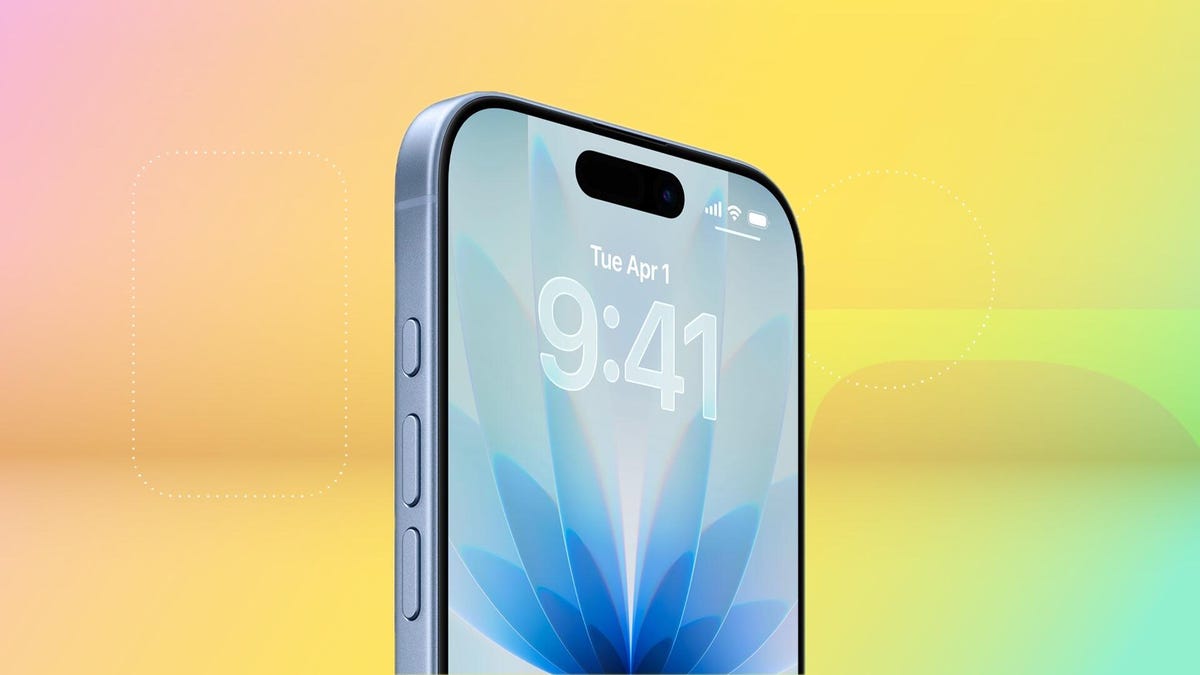
While the bright orange iPhone 17 Pro gets all the attention, Apple’s iPhone 17 has quietly turned out to be this year’s early roaring success, with preorders beating out the iPhone 16. If your current serviceable but aging iPhone is starting to feel rusty, maybe this is the year to replace it with a new iPhone 17.
But is the iPhone 17 worth it, or is it better to look for an older iPhone? The new model starts at $829, but here’s the kicker: Apple finally did away with the measly 128GB base storage. The new entry-level model now starts at a much more reasonable 256GB, which is a long-overdue bump that might just make the upgrade a no-brainer.
Don’t miss any of our unbiased tech content and lab-based reviews. Add CNET as a preferred Google source.
Several noteworthy updates to the iPhone 17 make it feel like a tempting choice, even over the pricier iPhone 17 Pro models. At long last, Apple has extended a 1-120Hz display across its entire lineup, so you can have smoother scrolling and an always-on display without spending upwards of $1,100 on a Pro model. An anti-reflective coating and higher 3,000-nit peak brightness make the screen slightly easier to see outdoors. And camera upgrades help to level up photos and selfies.
Here’s how the iPhone 17 compares to older iPhones, ranging from last year’s iPhone 16 to 2020’s iPhone 12.
iPhone 17 vs. iPhone 16
Appearance-wise, the iPhone 17 has a lot in common with the iPhone 16. But beneath the surface, there are some key differences.
The display goes from a meager 60Hz on the iPhone 16 to 120Hz on the iPhone 17 (at long last). That means the iPhone 17 finally supports an always-on display, so you can glance at the time and your notifications without waking the screen and enjoy smoother scrolling. A new anti-reflective coating helps reduce glare, especially in the bright outdoor conditions.
The iPhone 17 has a larger 6.3-inch display, versus the iPhone 16’s 6.1-inch screen, thanks to slimmer bezels. That can make viewing content slightly more immersive, though it won’t be a hugely noticeable difference. And a new Ceramic Shield 2 cover on the iPhone 17 offers three times better scratch resistance, according to Apple, so you can worry a little less about etching into your phone’s screen (but maybe still get a screen protector to be safe).
The iPhone 16 and 17 have a 48-megapixel wide-angle camera, but the iPhone 17 bumps the ultrawide camera from 12 megapixels to 48 megapixels. The front-facing camera also gets upgraded from 12 megapixels (on the iPhone 16) to 18 megapixels on the iPhone 17. Both phones have a Camera Control button for quickly launching the camera and snapping photos.
A new Center Stage feature can automatically adjust selfie photos from portrait orientation to landscape to ensure everyone is in the shot, so you don’t have to manually rotate your phone to its side anymore. Dual Capture lets you simultaneously record on your front and back cameras. These upgrades are specifically catered to the latest iPhone lineup, so that they won’t be coming to older models like the iPhone 16, even with an iOS 26 update.
Battery life is a little longer on the iPhone 17. Apple says the iPhone 17 supports up to 8 hours more of video playback than the iPhone 16. This change aligns with improvements CNET noticed in our battery tests. In a 3-hour streaming test, for example, the iPhone 17’s battery dropped from 100% to 89%, while the iPhone 16 hit 86%. It’s an incremental update, but even a little more battery life is a welcome change. The iPhone 17 also supports up to 40-watt charging, which is a boost over the 25 watts you get with the iPhone 16, helping you top off your battery a little faster.
The bottom line: While the updates to the iPhone 17 help it stand out as an all-around solid device, the changes over last year’s iPhone 16 are incremental enough that there’s not much reason to upgrade — unless you’re really excited about that smoother display and faster charging. But for most people, subtle differences mean you should probably just hold onto your iPhone 16.
iPhone 17 vs. iPhone 15
The iPhone 15 has a lot in common with the iPhone 16, including a 48-megapixel wide-angle camera, a 12-megapixel ultrawide camera and a 6.1-inch display. The 6.3-inch display on the iPhone 17 has slimmer bezels to expand that real estate a bit, and the 48-megapixel ultrawide camera can lead to slightly sharper shots.
The baseline iPhone 15 doesn’t have an Action button that you can customize to launch various apps and functions, and instead has the more traditional ring/silent switch. The iPhone 17 has an Action button and a Camera Control button.
Both phones have a Dynamic Island cutout at the top of the display for showing alerts and Live Activities, such as the time your DoorDash order is arriving, flight updates and what song is currently playing.
With each generation, Apple touts longer battery life, so you can expect to get a couple more hours of video playback with the iPhone 17 than you would with the 15.
Perhaps the most significant difference between the iPhone 15 and 17 is that the iPhone 15 doesn’t have Apple Intelligence; those AI features only arrived on that year’s Pro models. If you upgrade to the iPhone 17, you’ll have access to writing and image editing tools, as well as newer features like Live Translation for calls and messages.
The bottom line: Like the iPhone 16, there aren’t many drastic differences between the iPhone 15 and 17, though upgrading will notably grant you access to Apple Intelligence. But the other hardware and software-related updates are relatively minimal, so you’re probably good keeping your iPhone 15 for at least another year.
iPhone 17 vs. iPhone 14
The iPhone 14 was the last Apple phone with a Lightning port and that’s one of most significant differences between it and the iPhone 17, which has a USB-C port. Upgrading to the iPhone 17 means you won’t have to rely on an outdated and limited-use charging cable anymore, and can instead use one that works with most of your other devices.
The baseline iPhone 14 also doesn’t have a Dynamic Island cutout in the display, as that feature launched with just the Pro models that year. Upgrading to the iPhone 17 will let you quickly tap into activities like your rideshare trip or flight information.
The iPhone 14 has a 12-megapixel wide and ultrawide-angle camera on the back, while the iPhone 17 bumps that to 48 megapixels across the board. The iPhone 17 also increases the front-facing camera’s resolution from 12 megapixels to 18 megapixels, while adding a new Center Stage selfie feature to automatically adjust between portrait and landscape images without you having to rotate your phone.
But the two phones also some key similarities, like having eSIM and satellite connectivity on board.
The bottom line: The iPhone 14 has the most noticeable differences with the iPhone 17. Upgrading could offer some fresh features like an Action button and, at last, a USB-C port, as well as Dynamic Island and an upgraded camera. But if you want to save some money and keep your current phone, you won’t be missing out on anything too drastic.
iPhone 17 vs. iPhone 13
The iPhone 13 has a similar A15 Bionic chip as the iPhone 14, and shares the same dual 12-megapixel camera system. But unlike the iPhone 14, the iPhone 13 doesn’t have crash detection or satellite connectivity, or camera features like Action mode for more stable videos.
At this point, your iPhone 13 may be showing its age. Upgrading to the iPhone 17 will give you access to newer features like Apple Intelligence, Dynamic Island, USB-C charging and the Camera Control and Action buttons. You might also notice faster speeds by switching to the iPhone 17, now that it’s been a few years since the iPhone 13 came out.
The bottom line: It may be time to upgrade to the iPhone 17 if you have an iPhone 13. It’s possible your phone is starting to show its age, and switching to Apple’s latest baseline will get you a longer-lasting battery, an upgraded camera, AI features and a handful of new hardware and software capabilities.
iPhone 17 vs. iPhone 12
Like the next couple of iPhones after it, the iPhone 12 has a dual 12-megapixel camera system, as well as a 6.1-inch display. Upgrading to the iPhone 17 will get you a slightly more immersive 6.3-inch display with thinner bezels, along with a 48-megapixel dual camera system.
The iPhone 12 lacks features like crash detection, satellite connectivity, Dynamic Island and USB-C charging. It also doesn’t support the Apple Intelligence suite of AI features for writing, photo editing, language translation and more.
It’s possible your iPhone 12 has become sluggish and your battery isn’t holding up like it used to. Taking age out of the equation, at launch, the iPhone 12 boasted up to 17 hours of video playback, while Apple says the iPhone 17 supports up to 30 hours. So there’s likely to be a noticeable difference between how long each phone can hold up.
The bottom line: Swapping your iPhone 12 for the iPhone 17 could be a smart move. There have been noticeable changes over the last several years, from the addition of the Action and Camera Control buttons to the introduction of Apple Intelligence. The swap to USB-C and expanded battery capacity can also make the newest iPhone more tempting; you won’t have to cling to your now-outdated Lightning cable. And you’ll likely notice faster speeds and higher performance across the board when switching from a 5-year-old device to the latest generation.
Apple iPhone 17 vs. Older iPhones
| Apple iPhone 17 | Apple iPhone 16 | Apple iPhone 15 | Apple iPhone 14 | Apple iPhone 13 | Apple iPhone 12 | |
| Display size, tech, resolution, refresh rate | 6.3-inch OLED; 2,622 x 1,206 pixel resolution; 1-120Hz variable refresh rate | 6.1-inch OLED; 2,556 x 1,179 pixel resolution; 60Hz refresh rate | 6.1-inch OLED; 2,556×1,179 pixels | 6.1-inch OLED; 2,532×1,170 pixels | 6.1-inch OLED; 2,532×1,170 pixels | 6.1-inch OLED; 2,532×1,170 pixels |
| Pixel density | 460ppi | 460 ppi | 460 ppi | 460 ppi | 460 ppi | 460ppi |
| Dimensions (inches) | 5.89 x 2.81 x 0.31 in | 5.81 x 2.82 x 0.31 inches | 2.82 x 5.81 x 0.31 in | 5.78 x 2.82 x 0.31 in | 5.78 x 2.82 x 0.3 in | 5.78 x 2.82 x 0.29 in |
| Dimensions (millimeters) | 149.6 x 71.5 x 7.95 mm | 147.6 x 71.6 x 7.8mm | 71.6 x 147.6 x 7.8 mm | 147 x 72 x 7.8 mm | 147 x 72 x 7.65 mm | 146.7 x 71.5 x 7.4 mm |
| Weight (grams, ounces) | 177 g (6.24 oz) | 170 g (6 oz.) | 171g (6.02 oz) | 172 g (6.07 oz) | 6.14 oz; 174g | 5.78oz; 164g |
| Mobile software | iOS 26 | iOS 18 | iOS 17 | iOS 16 | iOS 15 | iOS 14 |
| Camera | 48-megapixel (wide) 48-megapixel (ultrawide) | 48-megapixel (wide), 12-megapixel (ultrawide) | 48-megapixel (wide), 12-megapixel (ultrawide) | 12-megapixel (wide), 12-megapixel (ultrawide) | 12-megapixel (wide), 12-megapixel (ultrawide) | 12-megapixel (wide), 12-megapixel (ultra-wide) |
| Front-facing camera | 18-megapixel | 12-megapixel | 12-megapixel | 12-megapixel | 12-megapixel | 12-megapixel |
| Video capture | 4K | 4K | 4K | 4K at 60 fps | HDR video recording with Dolby Vision up to 4K at 60 fps | 4K |
| Processor | Apple A19 | Apple A18 | A16 Bionic | Apple A15 Bionic | Apple A15 Bionic | Apple Bionic 14 |
| RAM + storage | RAM N/A + 256GB, 512GB | RAM N/A + 128GB, 256GB, 512GB | 128GB, 256GB, 512GB | RAM NA; 128GB, 256GB, 512GB | 128GB, 256GB, 512GB | 64GB, 128GB, 256GB |
| Expandable storage | None | None (Face ID) | None | None | Undisclosed | Undisclosed |
| Battery | Up to 30 hours video playback; up to 27 hours video playback (streamed) | Up to 22 hours video playback; up to 18 hours video playback (streamed). 20W wired charging. MagSafe wireless charging up to 25W with 30W adapter or higher; Qi2 up to 15W | Undisclosed; Apple claims up to 20 hours of video playback (16 hours streamed) | Undisclosed; Apple claims 20 hours of video playback | No | No |
| Fingerprint sensor | None (Face ID) | None (Face ID) | None (Face ID) | None (Face ID) | Undisclosed; Apple lists 19 hours of video playback | Undisclosed; Apple lists 15 hours of video playback |
| Connector | USB-C | USB-C | USB-C (USB 2.0) | Lightning | No (Face ID) | No (FaceID) |
| Headphone jack | None | None | None | None | Lightning | Lightning |
| Special features | Apple N1 wireless networking chip (Wi-Fi 7 (802.11be) with 2×2 MIMO), Bluetooth 6, Thread. Action button. Camera Control button. Dynamic Island. Apple Intelligence. Visual Intelligence. Dual eSIM. 1 to 3,000 nits brightness display range. IP68 resistance. Colors: black, white, mist blue, sage, lavender. Fast charge up to 50% in 20 minutes using 40W adapter or higher via charging cable. Fast charge up to 50% in 30 minutes using 30W adapter or higher via MagSafe Charger. | Apple Intelligence, Action button, Camera Control button, Dynamic Island, 1 to 2,000 nits display brightness range, IP68 resistance. Colors: black, white, pink, teal, ultramarine. | Dynamic Island; 5G (mmw/Sub6); MagSafe; water resistant (IP68); wireless charging; eSIM; satellite connectivity | 5G (mmw/Sub6); MagSafe; water resistant (IP68); wireless charging; eSIM; satellite connectivity | No | No |
| US price starts at | $829 (256GB) | $799 (128GB) | $799 (128GB), $899 (256GB), $1,099 (512GB) | $799 (128GB), $899 (256GB), $1,099 (512GB) | 5G enabled; MagSafe; water resistant (IP68); wireless charging; dual-SIM capabilities (nano-SIM and e-SIM) | 5G enabled; MagSafe; water resistant (IP68); wireless charging; dual-SIM capabilities (nano-SIM and e-SIM) |
Technologies
AI may change the price of your Big Mac and groceries — what this means for shoppers
As retailers turn to AI tools to streamline operations, experts warn that collecting more detailed consumer data increases the risk of personalized pricing.

Fast-food giants and supermarkets are rolling out a range of AI tools that could affect the prices shoppers pay, but experts warn the spread of data-driven tools could make personalized pricing easier to deploy.
Just this week, a federal antitrust lawsuit filed against McDonald’s
McDonald’s has denied that it’s using AI to determine what individual customers are willing to pay and said it provides its franchisees with “tools, resources, research and recommendations to help them make informed decisions.”
Even so, food businesses globally are increasingly digitizing operations with AI. Earlier this year, American grocery chain Kroger
Meanwhile, electronic shelf labels (ESLs), which display the price of items in store on digital screens, are becoming increasingly popular at supermarkets like Kroger, Amazon
The technology is also gaining traction among U.K. supermarkets such as Tesco
CNBC reached out to Amazon Fresh, Whole Foods, Tesco, Morrisons, Asda and Revolut for comment on the use of AI but didn’t immediately hear back.
As AI use becomes normalized among retailers, experts warn that this could lead to more dynamic pricing, which refers to frequent, rapid real-time changes in prices that could dramatically affect shoppers’ experiences.
“Dynamic pricing means changing prices in response to changing market conditions, such as demand, timing, capacity or competitors’ prices,” Miroslava Marinova, a senior lecturer of commercial law at the University of East London, told CNBC. “It is not new. Airlines, hotels, and ride-hailing services have used it for years.”
Bank of England economists Clare Lombardelli and Rupal Patel said in April that more sophisticated technology is leading to prices changing more frequently and also becoming more individualized, which could see more firms charging “as close to the maximum price a consumer is willing to pay for a good or service,” which they defined as “perfect price discrimination.”
These conditions could make it harder for statisticians to “measure and interpret” month-to-month inflation data, as the consumer price index is based on a representative sample of prices for shoppers.
“That works well when prices mostly move slowly and uniformly. But when prices shift continually – and differently for each shopper – the idea of a ‘representative’ price becomes strained,” the BOE economists added.
AI collects more consumer data
While dynamic pricing has been in play for a long time, the BOE economists and Marinova noted that AI tools such as ESLs and facial recognition checkout are changing the amount of information that companies can collect on consumers, from transaction histories to browsing behavior, location, and purchasing patterns.
On Wednesday, U.K. supermarket chain Sainsbury’s released “SmartLists,” an AI feature that helps customers create shopping lists and find products just by uploading pictures of what they need or by typing out meal ideas.
“This is also why the traditional distinction between dynamic and personalised pricing is becoming less clear in practice,” Marinova explained. “Dynamic pricing responds primarily to market conditions, whereas personalised pricing uses information about the consumer to estimate willingness to pay.”
As companies use both pricing systems, it raises questions around whether customer information is being used to determine the prices consumers see.
“As retailers combine market-level information with increasingly detailed consumer data, the boundary between dynamic and personalised pricing becomes thinner,” Marinova added.
Walmart and Kroger have publicly insisted in recent years that they do not use dynamic or surge pricing to set individualized prices for customers, but have instead used tools to streamline operations.
Several U.S. states are moving to curb data-driven pricing. New York requires most businesses using customers’ personal data to set prices to disclose it clearly. Maryland has restricted food retailers and delivery services from using personalised, data-driven pricing to charge higher prices for certain food, while New Jersey and Connecticut have enacted measures targeting “surveillance pricing.”
Consumer choice compromised
Dynamic and personalized pricing are not automatically bad for shoppers, Marinova said, explaining that it can discount items for some consumers, making some products and services more accessible.
However, the risk of individualized pricing is that consumers are no longer aware of whether the price they’re getting reflects general market conditions or if it’s been influenced by information about their own behavior.
“That makes it much harder to compare prices and to know whether another consumer is being offered a different price for the same product,” she said. “If consumers cannot understand why they received a particular price, cannot compare it with prices offered to others, and cannot effectively switch to another supplier, the normal disciplining effect of consumer choice becomes weaker.”
The BOE economists added that an additional challenge is that personalized pricing “splinters the consumer experience,” which means households will face increasingly different inflation rates.
“And when prices differ for the same thing, inflation becomes even more personalised – and aggregate measures may no longer reflect households’ experience,” they said.
Technologies
After France, is Italy next? Goldman Sachs flags bond risks as Rome’s deficit widens
Goldman Sachs says Italy’s higher 2027-28 deficit targets, rising yields and election uncertainty could weaken its debt outlook.

French debt turmoil has thrust Europe’s fiscal pressures into sharp focus in recent weeks, but investors’ attention is quickly turning to Italy amid contentious new government spending plans.
The Italian government will next week present a budget encompassing recently approved allocations to defense and energy, which are set to widen the country’s deficit over the next two years and put Italy’s debt-to-GDP ratio on track to become the highest in Europe, according to analysts at Goldman Sachs.
Filippo Taddei, senior European economist at Goldman, said the changes could heap further pressure on Italian government bonds ahead of next year’s general election.
On Oct. 2, Prime Minister Giorgia Meloni’s center-right government approved an extra 28 billion euros ($31 billion) in borrowing over the next two years for defense and energy spending. Although scaled back, the spending plans have raised Italy’s 2027 deficit target to 3.4% of GDP, and its 2028 target to 3.2%. That’s up from earlier April projections of 2.8% and 2.5%, respectively, and above Goldman forecasts.
The measures — which are split evenly between defense and energy, with each worth about 0.3% of GDP per year in 2027 and 2028 — come amid rising investor jitters over runaway government borrowing across the continent.
French bond woes
Yields on French government bonds have surged to multiyear highs in recent days, as the country’s mounting debt crisis fuels wider concerns about Europe’s strained public finances.
France’s benchmark 10-year OAT
Taddei said Italy’s fiscal risk premia could rise ahead of the country’s next general election, due no later than December 22, 2027, on the back of the widening deficit.
A close-run election could leave little scope for fiscal consolidation, as parties on both the right and left look to “add spending-supportive partners” to build viable coalitions, he explained.
“Looser fiscal policy, tighter financial conditions and a close electoral race appear poised to weaken the debt outlook after four years of fiscal consolidation,” he said in a note Thursday.
‘Significant upward surprise’
Italian lawmakers voted Thursday to overhaul the country’s electoral process, switching from a hybrid model to a more proportional system. Meloni’s right-wing coalition says the change will lead to more stable governments and avoid chaotic post-election dealmaking.
But left-leaning opponents said the changes are designed to help Meloni cling to power.
Meloni’s administration — which will deliver its final pre-election budget next week — has been praised for lowering the deficit, which reached 3.1% in 2025.
Bond markets, in turn, have rewarded the country’s new-found political stability, with Meloni recently becoming the longest-serving Italian leader since the World War II.
The spending hikes comply with the EU’s National Escape Clause, which permits member states temporary budget flexibility on defense and energy investments to address shocks caused by Russia’s war in Ukraine and the Middle East conflict.
Still, Taddei said the new deficit targets are a “significant upward surprise”.
“We find that higher fiscal deficits, in addition to rising yields, look set to put the debt-to-GDP ratio on an upward path until 2028, before stabilizing around 137% — the highest in Europe by then,” Taddei noted.
“Higher yields provide a key challenge in the current environment, and we find that a structural shift to 10-year yields higher than 4% would likely set Italy’s debt-to-GDP ratio on an increasing path beyond that.”
‘Difficult fiscal decisions’
Konstantin Veit, portfolio manager at PIMCO, said the recent selloff in global bond yields has renewed the focus on countries with relatively weaker fundamentals.
Veit noted that while French government bonds are widely held by overseas investors — leaving them more exposed to negative news flow — Italian sovereign debt, in contrast, is mainly in domestic hands, which is typically “a stabilizing factor.”
“While Italy has higher debt, it has a stronger primary balance, a relatively favorable trajectory, political stability and a history of making the necessary adjustments,” Veit said.
Compared to France, Italy overall seems in a “relatively better place” at this stage, he added, with “stronger fundamentals, a more straightforward political configuration, and a track record of taking difficult fiscal decisions.”
But investors are already zeroing in on opportunities in Italian debt.
Reinout De Bock, head of European rates strategy at UBS Investment Bank, recently unveiled a short position in Italian BTPs, wagering that Italian debt could emerge as the next weak link in European sovereign debt.
“I think Italy maybe will catch up, and people will get more concerned about Italy as well at these higher yields, despite a lot of reforms that have been done in Italy,” de Bock told CNBC’s “Squawk Box Europe.”
Technologies
Microsoft’s Nadella says AI needs an ‘emergency brake’ that humans control
Nadella joined other tech moguls and researchers in calling for stronger safeguards and, in some cases, for the pacing of frontier development.
Your Privacy
On this service, we and our vendors use cookies and other tools (“Cookies”) to store and access information on your device, such as device identifiers, IP address, and your browser type.
Your data may be used to save and communicate your privacy choices; ensure security, prevent fraud, and debug our products and services; personalize advertising and content; for advertising and content measurement; to conduct audience research and services development; so we can improve our services and develop new ones; to match and combine offline data with your online activity; and for social features.
We may share this data with select vendors with your consent. You can adjust your choices any time through the “Cookie Preferences” link in the footer of relevant Versant sites or in-app settings.
We will also use other Cookies that are essential or related to our services, including for security and fraud prevention. To learn more about some of our vendors, see the IAB and Google Vendors under each purpose. Visit our Cookie Notice and Privacy Policy to learn more.
These Cookies and SDKs are required for Service functionality, including security and fraud prevention, and to enable any purchasing capabilities. You can set your browser to block these tracking technologies, but some parts of the site may not function properly.
The choices you make regarding the purposes and entities listed in this notice are saved and made available to those entities in the form of digital signals (such as a string of characters). This is necessary in order to enable both this service and those entities to respect such choices.
Your data can be used to monitor for and prevent unusual and possibly fraudulent activity (for example, regarding advertising, ad clicks by bots), and ensure systems and processes work properly and securely. It can also be used to correct any problems you, the publisher or the advertiser may encounter in the delivery of content and ads and in your interaction with them.
Certain information (like an IP address or device capabilities) is used to ensure the technical compatibility of the content or advertising, and to facilitate the transmission of the content or ad to your device.
Cookies, device or similar online identifiers (e.g. login-based identifiers, randomly assigned identifiers, network based identifiers) together with other information (e.g. browser type and information, language, screen size, supported technologies etc.) can be stored or read on your device to recognise it each time it connects to an app or to a website, for one or several of the purposes presented here.
– Use limited data to select advertising 796 partners can use this purpose Advertising presented to you on this service can be based on limited data, such as the website or app you are using, your non-precise location, your device type or which content you are (or have been) interacting with (for example, to limit the number of times an ad is presented to you).
– Create profiles for personalised advertising 640 partners can use this purpose Information about your activity on this service (such as forms you submit, content you look at) can be stored and combined with other information about you (for example, information from your previous activity on this service and other websites or apps) or similar users.
This is then used to build or improve a profile about you (that might include possible interests and personal aspects). Your profile can be used (also later) to present advertising that appears more relevant based on your possible interests by this and other entities.
– Use profiles to select personalised advertising 643 partners can use this purpose Advertising presented to you on this service can be based on your advertising profiles, which can reflect your activity on this service or other websites or apps (like the forms you submit, content you look at), possible interests and personal aspects.
– Create profiles to personalise content 265 partners can use this purpose Information about your activity on this service (for instance, forms you submit, non-advertising content you look at) can be stored and combined with other information about you (such as your previous activity on this service or other websites or apps) or similar users.
This is then used to build or improve a profile about you (which might for example include possible interests and personal aspects). Your profile can be used (also later) to present content that appears more relevant based on your possible interests, such as by adapting the order in which content is shown to you, so that it is even easier for you to find content that matches your interests.
– Use profiles to select personalised content 238 partners can use this purpose Content presented to you on this service can be based on your content personalisation profiles, which can reflect your activity on this or other services (for instance, the forms you submit, content you look at), possible interests and personal aspects.
This can for example be used to adapt the order in which content is shown to you, so that it is even easier for you to find (non-advertising) content that matches your interests.
– Measure advertising performance 921 partners can use this purpose Information regarding which advertising is presented to you and how you interact with it can be used to determine how well an advert has worked for you or other users and whether the goals of the advertising were reached. For instance, whether you saw an ad, whether you clicked on it, whether it led you to buy a product or visit a website, etc.
This is very helpful to understand the relevance of advertising campaigns.
– Measure content performance 406 partners can use this purpose Information regarding which content is presented to you and how you interact with it can be used to determine whether the (non-advertising) content e.g. reached its intended audience and matched your interests.
For instance, whether you read an article, watch a video, listen to a podcast or look at a product description, how long you spent on this service and the web pages you visit etc. This is very helpful to understand the relevance of (non-advertising) content that is shown to you.
– Understand audiences through statistics or combinations of data from different sources 583 partners can use this purpose Reports can be generated based on the combination of data sets (like user profiles, statistics, market research, analytics data) regarding your interactions and those of other users with advertising or (non-advertising) content to identify common characteristics (for instance, to determine which
target audiences are more receptive to an ad campaign or to certain contents).
– Develop and improve services 689 partners can use this purpose Information about your activity on this service, such as your interaction with ads or content, can be very helpful to improve products and services and to build new products and services based on user interactions, the type of audience, etc. This specific purpose does not include the development or improvement of user profiles and identifiers.
– Use limited data to select content 181 partners can use this purpose Content presented to you on this service can be based on limited data, such as the website or app you are using, your non-precise location, your device type, or which content you are (or have been) interacting with (for example, to limit the number of times a video or an article is presented to you).
These Cookies and SDKs are used to collect data about your browsing habits, use of the Services, your preferences, and your interaction with advertisements across platforms and devices for the purpose of delivering targeted advertising content, both on our Services and on third party sites.
Third-party sites and services also use Targeting Cookies to deliver content, including advertisements relevant to your interests on the Services. If you reject these Cookies or SDKs, you will see less relevant advertising.
Data collected under this category through Cookies and SDKs can also be used to select and deliver personalized content, such as news articles and videos.
-
 Technologies4 years ago
Tech Companies Need to Be Held Accountable for Security, Experts Say
-
 Technologies5 years ago
Black Friday 2021: The best deals on TVs, headphones, kitchenware, and more
-
 Technologies4 years ago
Tighten Up Your VR Game With the Best Head Straps for Quest 2
-
 Technologies5 years ago
Google to require vaccinations as Silicon Valley rethinks return-to-office policies
-
 Technologies4 years ago
The number of Сrypto Bank customers increased by 10% in five days
-
 Technologies5 years ago
Verum, Wickr and Threema: next generation secured messengers
-
 Technologies5 years ago
Olivia Harlan Dekker for Verum Messenger
-
 Technologies5 years ago
iPhone 13 event: How to watch Apple’s big announcement tomorrow