
Technologies
ARC Raiders Review: This Is the Best Extraction Shooter I’ve Ever Played
Embark Studios’ new game has tight gunplay and great maps. More importantly, there are quality-of-life features that every extraction shooter should implement.
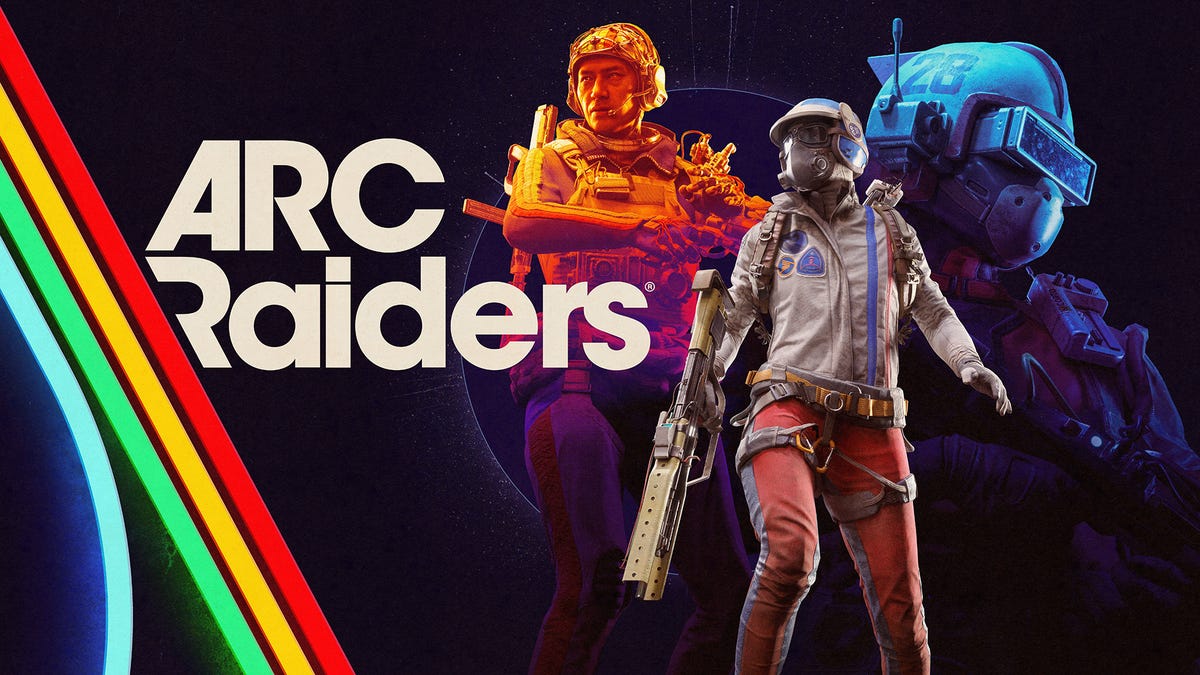
I gingerly step through broken glass, flanked by two world-weary teammates, entering a long-abandoned supermarket to hunker down as rotors whir overhead. We’d already wasted enough precious ammunition fighting a pack of flying ARC drones — the latest from an annihilation wave of killer robots responsible for wiping out most of humanity. As we poke around the burnt-out remains of cash registers and store shelves, a distinctly human voice shouts down a nearby hallway. I check my bullet count, raise my weapon, hold my breath and say a prayer as we prepare for another fight.
Every moment is «go time» in developer Embark Studios’ ARC Raiders, an online multiplayer shooter where dual threats — man and machine — threaten to take your life around every corner. Players step into the role of the eponymous raiders, who are the only folks crazy enough to leave the underground city of Speranza (one of the final bastions of humanity) to gather supplies above ground.
Some raiders are after fame, some are after fortune. Most just want to eke out a modest living. A common interest in survival doesn’t mean instant trust, so expect most players to shoot first and ask questions later. Still, communication with strangers is possible, and during a previous press preview, I’d found that uncertain friendships can blossom amid the gunfire.
These emergent narratives are the bread and butter of ARC Raiders matches, in which squads of up to three players emerge from the underground to scavenge loot — either from the scraps of society or other players. As a so-called extraction shooter, each match requires juggling the risk of safely sneaking around the edge of the map or charging into the center for better loot before you make your escape. Meeting (and often dispatching) interesting people while robots threaten to rain hellfire on all of you makes for an addictive gameplay loop, one that often leaves me craving another match regardless of whether or not I just escaped with my life.
Beginner quests, skill point progression and free loadouts (that don’t risk your precious item hoard) exist so casual players have a way to improve their character without the stinging loss of loot from a failed run, which helps make early matches a little less daunting. But the truly exhilarating «a-ha» moment is when you realize that ARC Raiders has reprogrammed the way you see an in-game world.
Become an apex predator or risk becoming prey
A lone raider sits atop a long-abandoned spaceport with a bolt-action rifle, taking pot shots at a straggler who is being harassed by ARC drones hundreds of meters away. A squad of three makes use of heavy rain to flank a team attempting to breach a communications uplink full of valuable scrap. A well-prepared scavenger sees a flashlight bobbing up a winding flight of stairs and pulls the pin on their high-explosive grenade.
Vignettes of my successful ambushes blend together, the memories spiking dopamine and a whole lot of precious loot. Surviving above Speranza entails rummaging through containers and bringing back some crafting supplies, but to truly thrive topside requires a total perspective shift.
Tactical thinking is a far more potent weapon than crackshot aim. ARC Raiders puts a lot of tools in players’ hands: Grappling hooks, ziplines, smoke grenades, makeshift explosives and noisemakers that draw in nearby ARC robots are just a few of the gadgets that help you turn the tide of battle against an opposing player. Rechargeable shields enable players to run and recover. While a longer time-to-kill (meaning players can take more hits than in some similar games) can feel frustrating for ambushers, it does inspire cat-and-mouse pursuits and dramatic revenge arcs.
The constant flip-flop of control is absolute chaos, but that’s part of the game’s core design. One second, you’re the apex predator, hunting down a raider who’s none the wiser. A moment later, you have to band together to fight ARC robots leaping toward you from hundreds of feet away.
Even when all hope is lost and you know you’re losing your items, there are tools to call ARC robots to your location. The ultimate petty move is to get the AI to bomb out the location and eliminate the player who put you down. While plenty of other games feature the thrilling chance that a third party of players might crash the gunfight you’re having with another squad, ARC Raiders ensures there are often robot drones around to complicate combat.
The most recent build of the game concentrates more shiny weapons and crafting materials than ever in named points of interest around the map, with sparse loot around the edges, luring players toward the center. It seems Embark Studios recognizes that the best stories are told when players rub shoulders early and often in a match, so the developers have turned a few dials to make sure you always need to watch your back while breaking open the best containers in the game.
Whether I’m cutting down my foes or getting my lights punched out by a coordinated squad, every raider’s life is a tale inked in blood. The magic of ARC Raiders is that most matches tell a compelling story — you might make fast friends with a complete stranger or indiscriminately gun down man and machine as a one-man army. Either way, your personal narrative is never boring.
Grimy, cassette futurism vibes done right
While much of ARC Raiders’ appeal hinges on its intense moment-to-moment gameplay, the implementation of hulking robotic AI opponents and a more casual approach to the extraction shooter gameplay loop, it’s the pulpy sci-fi lore and grounded visual trappings that entranced me in the first place.
ARC Raiders developers say the game takes place in the «post-post-apocalypse,» a world where humanity has ultimately survived a near-extinction event. People persist beneath the ground as the natural world overtakes brutalist architecture, urban centers and even space launchpads. The synthesis of greenery and tech is absolutely beautiful, so it’s a shame that the game incentivizes you to turn down your graphical settings to have a better chance of seeing other players through dense foliage.
Persevering through an existential crisis made humans rekindle their appreciation for analog technology. Scavenger suits are adorned with a plethora of knobs, buttons and gauges that do heaven knows what, and barren office spaces are filled with bulky PC monitors. One map in particular features a spaceport that reminds me of grainy Space Race-era video footage that teachers would wheel out at school. It’s scary as hell to check your corners in abandoned industrial buildings, but taking a moment to really soak in the environments made me appreciate the haunted ode to humanity’s technological achievements.
If the ARC are the endpoint of machine advancement, it totally makes sense for humans in this world to make makeshift guns out of what amounts to PVC pipes, paperclips and chewing gum. But even the ARC feel delightfully retro, a vision of the future that is more HAL 9000 than T-1000 Terminator. These clean, efficient killers are like twisted parodies of an Asimov book cover, built to fulfill specific purposes and aid mankind before they turned on their masters.
Everything in ARC Raiders is built with a purpose, and when you look at cosmetics, weapons and enemy robots, you can understand what that purpose is at a single glance. This is well-executed visual design, which isn’t just important from an aesthetic standpoint. It’s crucial to be able to assess a threat right away in a competitive game with high stakes, where the wrong combat engagement can cost you hours of progress.
Games like Starfield and Concord angled for a grounded and grungy retrostyle, but a lack of interesting character designs meant those experiences largely fell flat. ARC Raiders oozes style — some visual motifs feel like they’re ripped straight off of industrial propaganda posters — and has the gameplay substance to back it up.
ARC Raiders stands tall among titans of the industry
To enter the extraction shooter arena, a developer has to be as fearless as an ARC Raider. The genre is infamous for high-profile failures like The Cycle: Frontier and projects that never come to fruition, such as Sega’s Hyenas. Bungie’s Marathon is supposed to be a serious contender, but that game has been marred with one black eye after another, and is now indefinitely delayed. Certainly, no game has come close to dethroning Escape From Tarkov from its spot as the top dog extraction shooter.
But Embark Studios has been a disruptive force in the industry before: The developer’s debut release, The Finals, took the world by storm with its Battlefield-like world destruction and its game show spin on the battle royale subgenre.
Embark Studios has captured lightning in a bottle once again with ARC Raiders. Other extraction shooters have had player-versus-AI elements to contend with in each match, like Escape From Tarkov’s scavengers and rogues and The Cycle: Frontier’s fearsome reptilian foes. None have ever felt quite as deadly, nor as intelligent, as the robots that roam the world of ARC Raiders.
Most importantly, ARC Raiders is perhaps the most easily accessible extraction shooter for a casual audience. If you’re scared of losing the last bits of valuable loot in your stash, you can enter a match with random shoddy equipment to try and earn better materials and weapons at very little personal risk. And with lower-quality gear, you’ll have to adjust your strategy and learn different ways to be effective in matches.
ARC Raiders’ unique spin on the extraction shooter formula, though, is a voluntary wipe system. While other games delete players’ loot hoards on a regular basis, Embark found a way to incentivize the more hard-core players to reset their stash to access special cosmetic rewards, while assuring casual players they won’t ever have to give up their entire inventory. Knowing that I won’t have to lose out on my strongest weapons or the skill points I’ve invested in my character makes ARC Raiders feel more approachable as a game that I can play «long-term,» as opposed to something I’ll only play for a brief stint before blitzing the next big thing.
This system might need balance passes as the game evolves, but it’s a clear signal from Embark Studios that tells casual players that the time and energy they spend on this game will be respected.
This game nails the fundamentals of extraction shooters with its tight gunplay, exciting loot and map designs rife with ambush locations. Its special blend of player-versus-player-versus-freakishly-intelligent-robot gameplay will enrapture extraction-shooter fans and newcomers alike. While losing your loot is always deflating, ARC Raiders has guardrails in place to get a casual gamer back in the action quickly and easily.
After every press preview, playtest and server slam ends, the only thing I can think of is this: When do I get to play ARC Raiders again? While I can’t speak to the game’s overall staying power in what is a very difficult genre to successfully breach, I also can’t imagine this game is going the way of The Cycle: Frontier anytime soon.
This is a review in progress. It will be updated after ARC Raiders is publicly released on Oct. 30.
Technologies
Today’s NYT Mini Crossword Answers for Wednesday, April 8
Here are the answers for The New York Times Mini Crossword for April 8.

Looking for the most recent Mini Crossword answer? Click here for today’s Mini Crossword hints, as well as our daily answers and hints for The New York Times Wordle, Strands, Connections and Connections: Sports Edition puzzles.
Need some help with today’s Mini Crossword? Hint: It uses a lot of the letter Z for some reason. Read on for all the answers. And if you could use some hints and guidance for daily solving, check out our Mini Crossword tips.
If you’re looking for today’s Wordle, Connections, Connections: Sports Edition and Strands answers, you can visit CNET’s NYT puzzle hints page.
Read more: Tips and Tricks for Solving The New York Times Mini Crossword
Let’s get to those Mini Crossword clues and answers.
Mini across clues and answers
1A clue: ___-Carlton (hotel chain)
Answer: RITZ
5A clue: Span of the alphabet
Answer: ATOZ
6A clue: Cable channel with an out-of-this-world name
Answer: STARZ
7A clue: Takes care of, as a squeaky wheel
Answer: OILS
8A clue: Toy on a string
Answer: YOYO
Mini down clues and answers
1D clue: When a post receives far more negative comments than likes, in social media slang
Answer: RATIO
2D clue: World’s leading wine producer
Answer: ITALY
3D clue: Middle of the human body
Answer: TORSO
4D clue: Sleeping sound
Answer: ZZZ
6D clue: Tofu base
Answer: SOY
Technologies
Today’s NYT Connections: Sports Edition Hints and Answers for April 8, #562
Here are hints and the answers for the NYT Connections: Sports Edition puzzle for April 8 No. 562.

Looking for the most recent regular Connections answers? Click here for today’s Connections hints, as well as our daily answers and hints for The New York Times Mini Crossword, Wordle and Strands puzzles.
Today’s Connections: Sports Edition is a tough one. If you’re struggling with today’s puzzle but still want to solve it, read on for hints and the answers.
Connections: Sports Edition is published by The Athletic, the subscription-based sports journalism site owned by The Times. It doesn’t appear in the NYT Games app, but it does in The Athletic’s own app. Or you can play it for free online.
Read more: NYT Connections: Sports Edition Puzzle Comes Out of Beta
Hints for today’s Connections: Sports Edition groups
Here are four hints for the groupings in today’s Connections: Sports Edition puzzle, ranked from the easiest yellow group to the tough (and sometimes bizarre) purple group.
Yellow group hint: Working out.
Green group hint: Cover your face.
Blue group hint: NFL players.
Purple group hint: Leap.
Answers for today’s Connections: Sports Edition groups
Yellow group: Exercises in singular form.
Green group: Sporting jobs that require masks.
Blue group: Hall of Fame defensive ends.
Purple group: ____ jump.
Read more: Wordle Cheat Sheet: Here Are the Most Popular Letters Used in English Words
What are today’s Connections: Sports Edition answers?
The yellow words in today’s Connections
The theme is exercises in singular form. The four answers are crunch, plank, situp and squat.
The green words in today’s Connections
The theme is sporting jobs that require masks. The four answers are catcher, fencer, football player and goaltender.
The blue words in today’s Connections
The theme is Hall of Fame defensive ends. The four answers are Dent, Peppers, Strahan and Youngblood.
The purple words in today’s Connections
The theme is ____ jump. The four answers are broad, high, long and triple.
Technologies
The $135M Google Data Settlement Site Is Live — See If You’re Eligible
Use the settlement website to select your preferred payment method, and you may end up $100 richer.

You can now file a claim in the $135 million Google data settlement. The case centers on claims that Android devices transmitted user data without consent. Specifically, the class action lawsuit Taylor v. Google LLC contends that Google’s Android devices passively transferred cellular data to Google without user permission, even when the devices were idle. While not admitting fault, Google reached a preliminary settlement in January, agreeing to pay $135 million to about 100 million US Android phone users.
The official settlement website for the lawsuit is now live. The final approval hearing won’t occur until June 23, when the court will consider whether Google’s settlement is fair and listen to objections. After that, the court will decide whether to approve the $135 million settlement.
In the meantime, if you qualify and want to be paid as part of the settlement, you can select your preferred payment method on the official website. There, you can find information on speaking at the June 23 court hearing and on how to exclude yourself or write to the court to object by May 29.
As part of the settlement, Google will update its Google Play terms of service to clarify that certain data transfers do occur passively even when you’re not using your Android device, and that cellular data may be relied upon when not connected to Wi-Fi. This can’t always be disabled, but users will be asked to consent to it when setting up their device.
Google will also fully stop collecting data when its «allow background data usage» option is toggled off.
Who can be part of the settlement?
In order to join the Taylor v. Google LLC settlement, you must meet four qualifications:
- Be a living, individual human being in the US.
- Have used an Android mobile device with a cellular data plan.
- Have used the aforementioned device at any time from Nov. 12, 2017, to the date when the settlement receives final approval.
- You’re not a class member in the Csupo v. Google LLC lawsuit, which is similar but specifically for California residents.
The final approval hearing is on June 23, so you can add your payment method until then. The hearing’s date and time may change, and any updates will be posted on the settlement website.
If you choose to do nothing, you will still be issued a settlement payment, but you may not receive it if you don’t select a payment method.
How much will I get paid?
It’s not currently known exactly how much each settlement class member will receive, but the cap is $100. Payments will be distributed after final court approval and after any appeals are resolved.
After all administrative, tax and attorney costs are paid, the settlement administrator will attempt to pay each member an equal amount. If any funds remain after payments are sent, and it’s economically feasible, they will be redistributed to members who were previously and successfully paid. If it’s not economically feasible, the funds will go to an organization approved by the court.
-
 Technologies3 года ago
Tech Companies Need to Be Held Accountable for Security, Experts Say
-
 Technologies3 года ago
Best Handheld Game Console in 2023
-
 Technologies3 года ago
Tighten Up Your VR Game With the Best Head Straps for Quest 2
-
 Technologies4 года ago
Black Friday 2021: The best deals on TVs, headphones, kitchenware, and more
-
 Technologies5 лет ago
Google to require vaccinations as Silicon Valley rethinks return-to-office policies
-
 Technologies5 лет ago
Verum, Wickr and Threema: next generation secured messengers
-
 Technologies4 года ago
Olivia Harlan Dekker for Verum Messenger
-
 Technologies4 года ago
The number of Сrypto Bank customers increased by 10% in five days