
Technologies
X Is Retiring Twitter.com. Update Your Account Now or Risk Lockout
The official retirement of the old domain is the next step in Elon Musk’s rebranding of the social media platform.
RIP Twitter.
X, the platform formerly known as Twitter, will retire its old domain. This comes with a warning for you: If you don’t update your account’s security settings soon, you could be locked out.
The shift marks another step in Elon Musk’s ongoing rebrand of the social network over the last two years. Musk, who bought Twitter in October 2022 and later renamed it X, has made sweeping changes to the platform’s features and policies.
Don’t miss any of our unbiased tech content and lab-based reviews. Add CNET as a preferred Google source.
The company notified users that anyone using hardware security keys or passkeys tied to twitter.com must reenroll them under the new x.com domain. The deadline is Nov. 10. After that date, affected accounts may be temporarily locked until the update is completed.
By November 10, we’re asking all accounts that use a security key as their two factor authentication (2FA) method to re-enroll their key to continue accessing X. You can re-enroll your existing security key, or enroll a new one.
A reminder: if you enroll a new security key, any…— Safety (@Safety) October 24, 2025
X emphasized that the move isn’t related to a data breach or security issue but is a necessary step in the platform’s domain transition, marking the end of Twitter’s last remnants.
«This change is not related to any security concern, and only impacts Yubikeys and passkeys, not other 2FA methods (such as authenticator apps),» the company’s Safety account stated on X. Because security keys enrolled as a two-factor authentication method are currently tied to the former domain, reenrolling your security key will associate them with the new domain.
For most users, the change will go unnoticed. But if you rely on physical security keys, such as YubiKeys, or use passkeys for password-less login, you could be caught off guard if you don’t take action before the cutoff date.
Read also: Time to Delete Your X (Twitter) Account? It’s Quick and Easy
How to reenroll your X account
- Check your login method. If you use a hardware security key or passkey, it’s likely tied to twitter.com.
- Reenroll your key or passkey. Go to Settings & privacy > Security and Account access > Two-factor authentication and add your method under x.com.
- Update your saved credentials. Make sure your logins now point to x.com instead of twitter.com.
Technologies
NASA’s Ignition Program: Skipping the Lunar Orbiter and Going Straight for a Moon Base
The new initiative includes a base on the moon, a nuclear-powered flight to Mars and a replacement for the ISS.
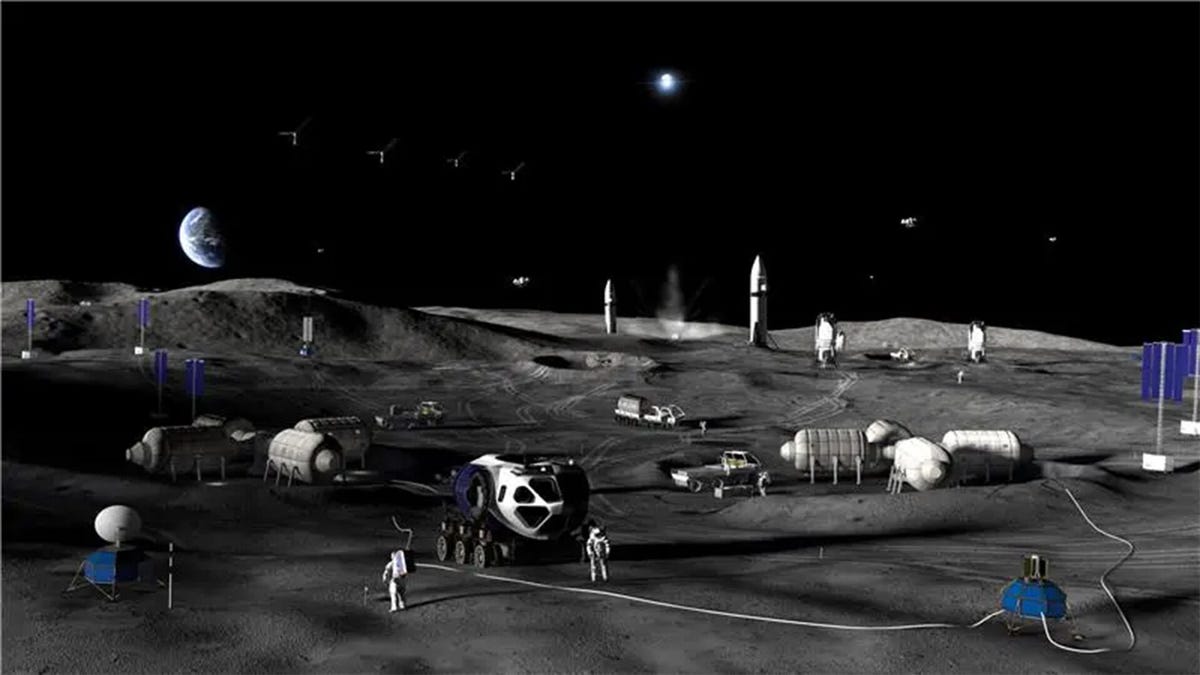
For the second time in as many months, NASA is flipping the script and changing its planned missions for the moon. At the end of last month, the agency pushed back its moon landing to the Artemis IV mission while vowing to complete lunar missions more quickly. This time, the agency said it’s scrapping the Lunar Gateway, a lunar orbiter scheduled to launch in 2027, in favor of building a base on the moon.
NASA formally introduced the new initiative, dubbed Ignition, during a 3-hour press conference on Tuesday. Ignition houses many plans for NASA’s immediate and long-term future, including replacing the International Space Station before it becomes unusable in 2030, and building «SR-1 Freedom,» a nuclear-powered spacecraft scheduled for launch to Mars in 2028.
«NASA is committed to achieving the near‑impossible once again: to return to the moon before the end of President Trump’s term, build a Moon base, establish an enduring presence and do the other things needed to ensure American leadership in space,» NASA Administrator Jared Isaacman said in a statement.
The new moon plan is set to happen in three phases over the next few years. Phase one would be to replace one-off missions with a «templated approach» to gain learning through experimentation. Phase two would see the construction of a «semi-habitable infrastructure» on the moon. Phase three would add permanent infrastructure to that moon base.
NASA hasn’t set a concrete timeline for any of these objectives, but Isaacman said the «clock is running in this great-power competition,» presumably alluding to China’s goal of putting humans on the moon by 2030. During a speech with various aerospace companies, international space agencies and Congress during an event at NASA headquarters, Isaacman said the entire initiative would take seven years and cost $20 billion.
This new plan also involves halting the construction of the Lunar Gateway station. The orbiter has been under construction for years and has been criticized for being a wasteful distraction from the real goal of putting humans back on the moon. Isaacman hinted that the orbiter will be repurposed for use on the lunar surface, which will no doubt come with its own set of challenges.
What else is NASA working on?
Ignition came with other announcements, including that the Nancy Grace Roman Telescope is ahead of schedule and under budget, the success of DART’s mission to change an asteroid’s trajectory by ramming into it, the Parker Solar probe’s continued success in studying the sun and a host of additional projects that are launching between 2026 and 2030.
Much like when it overhauled the Artemis missions last month, NASA is continuing its mission to get things done as quickly as possible. And while the moon base and the Artemis missions are the forefront of NASA’s current plans, according to Isaacman, thousands of ideas are being worked on behind the scenes.
«The whole point of today was not to come and give you a bunch of great PowerPoint [presentations] and sit and wait for it all to come to fruition,» Isaacman said. «This is about action right now … We want to get moving.»
Technologies
Apple Confirms It’s Bringing Ads to Maps as Part of New Apple Business Platform
Apple is adding advertising to its Maps, Mail, Wallet and Siri services this summer.
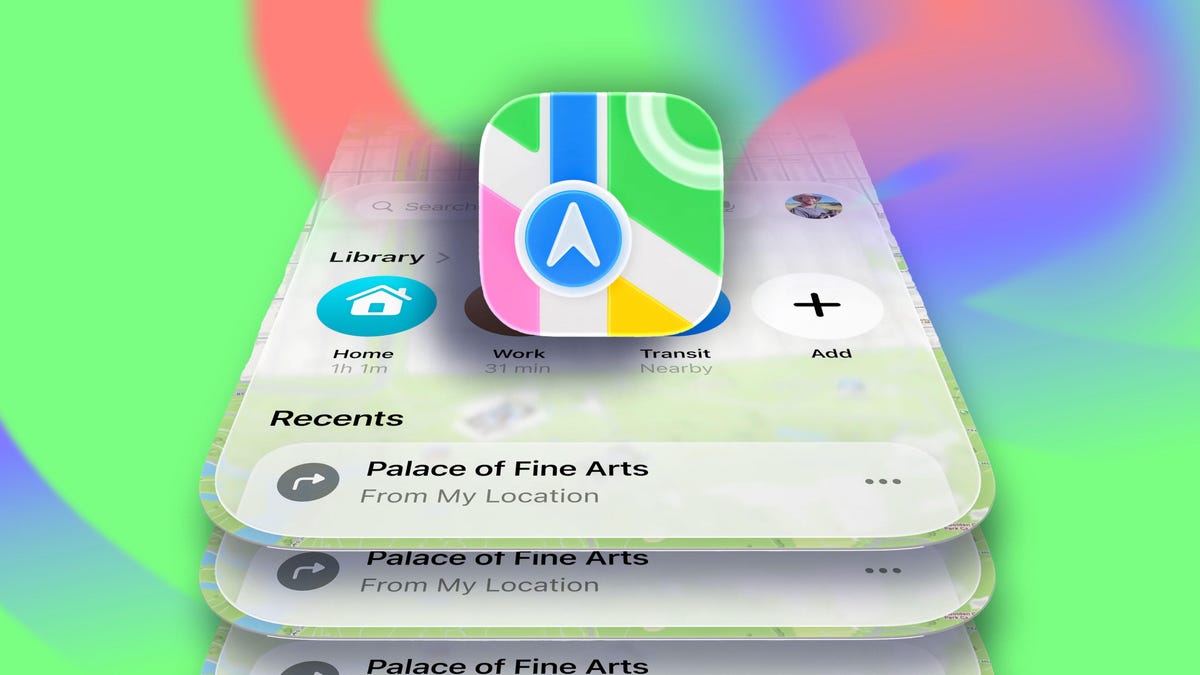
Apple is moving forward with plans to roll out advertising on its Maps platform, appearing on devices like iPhones and the web version of the app as early as this summer.
Bloomberg first reported on Apple’s plans last October, and now Apple has confirmed it’s a reality and part of a new platform called Apple Business, launching April 14, offering advertising opportunities across not only Maps but also Mail, Wallet and Siri.
The advertising system, as far as Maps goes, would work similarly to Google Maps advertising. Slots would be available for brands or businesses to purchase and would be tied to search results in Maps.
The Business platform that Apple is launching will be available in more than 200 countries and regions, according to the company.
Ads in Maps will initially only roll out in the US and Canada this summer.
The move is part of a larger plan to keep growing Apple’s services business, which includes subscriptions like Apple TV Plus, as well as Apple News, iCloud and the App Store. While Apple’s advertising business is a smart part of the company’s revenue, services now account for a quarter of Apple’s annual sales, reportedly more than $100 billion a year, according to a Bloomberg update.
Apple Business will also include options for companies to buy upgraded iCloud storage and AppleCare Plus for Business; there will also be a dedicated Business app that lets companies manage Apple accounts and devices and assign apps and roles within an organization.
Technologies
Spotify’s New SongDNA Feature Tells You How a Song Was Made
The much-teased feature is rolling out now to Premium users on Android and iOS.
When Spotify releases its end-of-year Wrapped, detailing my listening history over the last year, I’m 0% surprised when it shows that I’ve logged over 100,000 minutes on the app. Music is one of life’s greatest pleasures, and I love researching everything about how a song was created, from start to finish.
If you do the same, you might enjoy Spotify’s new SongDNA feature.
The feature rolled out globally to Premium users on Tuesday, March 24. It shows you every person involved in making a song, plus other interesting facts, like covers, which samples the song used, and other music the song’s engineers or mixers have worked on.
How SongDNA works
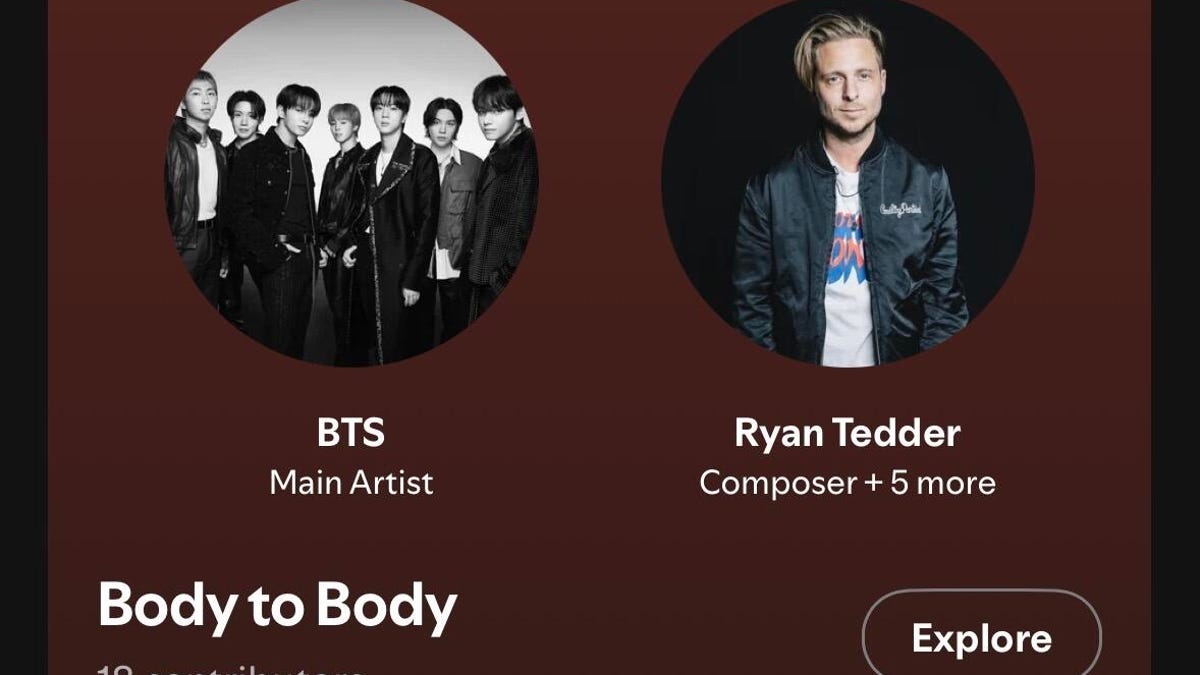
For instance, I’ve been really enjoying the new BTS album Arirang, released last week, especially the song Body to Body. I’ve been loving the production, so I went for a snoop to see who was involved.
When I clicked on the song in the app and scrolled down to the SongDNA section, one of the first names I noticed among the collaborators was Ryan Tedder. Known as the lead singer of OneRepublic, he’s also responsible for composing, writing and producing some huge hits: Halo by Beyoncé, Bleeding Love by Leona Lewis, Sucker by the Jonas Brothers, many Adele songs, etc.
Read also: AI-Recommended Music? Spotify Is Giving You the Power to Personalize
With SongDNA, you can now learn more about and give credit to the talented writers, producers, engineers and collaborators behind your favorite music.
«By bringing collaborators, samples and covers together in one place, we’re making it easier for fans to discover new music and see how songs connect and come to life,» said Jacqueline Ankner, Spotify’s head of songwriter and publisher partnerships. It also means that songwriters, producers and rightsholders get recognition for their role.
SongDNA has been rumored since the fall, and co-CEO Gustav Söderström recently teased the new feature during his SXSW panel.
SongDNA is finally rolling out in beta to Premium users on Android and iOS, with the launch expected to finish in April.
-
 Technologies3 года ago
Tech Companies Need to Be Held Accountable for Security, Experts Say
-
 Technologies3 года ago
Best Handheld Game Console in 2023
-
 Technologies3 года ago
Tighten Up Your VR Game With the Best Head Straps for Quest 2
-
 Technologies4 года ago
Black Friday 2021: The best deals on TVs, headphones, kitchenware, and more
-
 Technologies5 лет ago
Google to require vaccinations as Silicon Valley rethinks return-to-office policies
-
 Technologies5 лет ago
Verum, Wickr and Threema: next generation secured messengers
-
 Technologies4 года ago
Olivia Harlan Dekker for Verum Messenger
-
 Technologies4 года ago
The number of Сrypto Bank customers increased by 10% in five days