
Technologies
Does Charging Your Phone Overnight Damage the Battery? We Asked the Experts
Modern smartphones are protected against overcharging, but heat and use habits can still degrade your battery over time.

Plugging your phone in before you head to bed might seem like second nature. That way by the time your alarms go off in the morning, your phone has a full charge and is ready to help you conquer your day. However, over time, your battery will start to degrade. So is keeping your phone plugged in overnight doing damage to the battery?
The short answer is no. Keeping your phone plugged in all the time won’t ruin your battery. Modern smartphones are built with smart charging systems that cut off or taper power once they’re full, preventing the kind of “overcharging damage” that was common in older devices. So if you’re leaving your iPhone or Android on the charger overnight, you can relax.
That said, “won’t ruin your battery” doesn’t mean it has no effect. Batteries naturally degrade with age and use, and how you charge plays a role in how fast that happens. Keeping a phone perpetually at 100% can add extra stress on the battery, especially when paired with heat, which is the real enemy of longevity.
Understanding when this matters (and when it doesn’t) can help you make small changes to extend your phone’s lifespan.
Don’t miss any of our unbiased tech content and lab-based reviews. Add CNET as a preferred Google source.
The science behind battery wear
Battery health isn’t just about how many times you charge your phone. It’s about how it manages voltage, temperature and maintenance. Lithium-ion batteries age fastest when they’re exposed to extreme levels: 0% and 100%.
Keeping them near full charge for long stretches puts additional voltage stress on the cathode and electrolyte. That’s why many devices use “trickle charging” or temporarily pause at 100%, topping up only when needed.
Still, the biggest threat isn’t overcharging — it’s heat. When your phone is plugged in and running demanding apps, it produces heat that accelerates chemical wear inside the battery. If you’re gaming, streaming or charging on a hot day, that extra warmth does far more harm than leaving the cable plugged in overnight.
Apple’s take
Apple’s battery guide describes lithium-ion batteries as “consumable components” that naturally lose capacity over time. To slow that decline, iPhones use Optimized Battery Charging, which learns your daily routine and pauses charging at about 80% until just before you typically unplug, reducing time spent at high voltage.
Apple also advises keeping devices between 0 to 35 degrees Celsius (32 to 95 degrees Fahrenheit) and removing certain cases while charging to improve heat dissipation. You can read more on Apple’s official battery support page.
What Samsung (and other Android makers) do
Samsung offers a similar feature called Battery Protect, found in One UI’s battery and device care settings. When enabled, it caps charging at 85%, which helps reduce stress during long charging sessions.
Other Android makers like Google, OnePlus and Xiaomi include comparable options — often called Adaptive Charging, Optimized Charging or Battery Care — that dynamically slow power delivery or limit charge based on your habits. These systems make it safe to leave your phone plugged in for extended periods without fear of overcharging.
When constant charging can hurt
Even with these safeguards, some conditions can accelerate battery wear. As mentioned before, the most common culprit is high temperature. Even for a short period of time, leaving your phone charging in direct sunlight, in a car or under a pillow can push temperatures into unsafe zones.
Heavy use while charging, like gaming or 4K video editing, can also cause temperature spikes that degrade the battery faster. And cheap, uncertified cables or adapters may deliver unstable current that stresses cells. If your battery is already several years old, it’s naturally more sensitive to this kind of strain.
How to charge smarter
You don’t need to overhaul your habits but a few tweaks can help your battery age gracefully.
Start by turning on your phone’s built-in optimization tools: Optimized Battery Charging on iPhones, Battery Protect on Samsung devices and Adaptive Charging on Google Pixels. These systems learn your routine and adjust charging speed so your phone isn’t sitting at 100% all night.
Keep your phone cool while charging. According to Apple, phone batteries perform best between 62 and 72 degrees Fahrenheit (16 to 22 degrees Celsius). If your phone feels hot, remove its case or move it to a better-ventilated or shaded spot. Avoid tossing it under a pillow or too close to other electronics, like your laptop, and skip wireless chargers that trap heat overnight.
Use quality chargers and cables from your phone’s manufacturer or trusted brands. Those cheap “fast-charge” kits you find online often deliver inconsistent current, which can cause long-term issues.
Finally, don’t obsess over topping off. It’s perfectly fine to plug in your phone during the day for short bursts. Lithium-ion batteries actually prefer frequent, shallow charges rather than deep, full cycles. You don’t need to keep it between 20% and 80% all the time, but just avoid extremes when possible.
The bottom line
Keeping your phone plugged in overnight or on your desk all day won’t destroy its battery. That’s a leftover myth from a different era of tech. Modern phones are smart enough to protect themselves, and features like Optimized Battery Charging or Battery Protect do most of the heavy lifting for you.
Still, no battery lasts forever. The best way to slow the inevitable is to manage heat, use quality chargers and let your phone’s software do its job. Think of it less as “babying” your battery and more as charging with intention. A few mindful habits today can keep your phone running strong for years.
Technologies
Ford fends off Hyundai to retain No. 3 U.S. sales position in third quarter
Ford on Friday reported a year-over-year sales decline of 6.6% during the third quarter to 507,395 light-duty vehicles.

This site is now part of
Versant
. By continuing to use this service, you agree to our
Terms
. You also acknowledge that our updated
Privacy Policy
applies, including to your existing data. For details on your data rights, click
here
.
On this service, we and our vendors use cookies and other tools (“Cookies”) to store and access information on your device, such as device identifiers, IP address, and your browser type. You can access a list of all our potential
1029
vendors by selecting “IAB and Google Vendors,” although we may work with only a small selection of these on this service. Your data may be used to save and communicate your privacy choices; ensure security, prevent fraud, and debug our products and services; personalize advertising and content; for advertising and content measurement; to conduct audience research and services development; so we can improve our services and develop new ones; to match and combine offline data with your online activity; and for social features. We may share this data with select vendors with your consent.
Click “I Accept”, to consent to our use of these Cookies or “Reject All” to reject our use of these Cookies. Click “Manage Choices” to set your preferences. If you previously made choices with respect to Versant’s use of Cookies on this browser and device, you will need to update them. You can adjust your choices any time through the “Cookie Preferences” link in the footer of relevant Versant sites or in-app settings. Visit our
Cookie Notice
and
Privacy Policy
to learn more.
We will also use other Cookies that are essential or related to our services, including for security and fraud prevention.
Technologies
A Brexit reversal is on the table 10 years on from the vote that changed Britain. Here’s what’s at stake
Britain voted to leave the European Union in 2016.
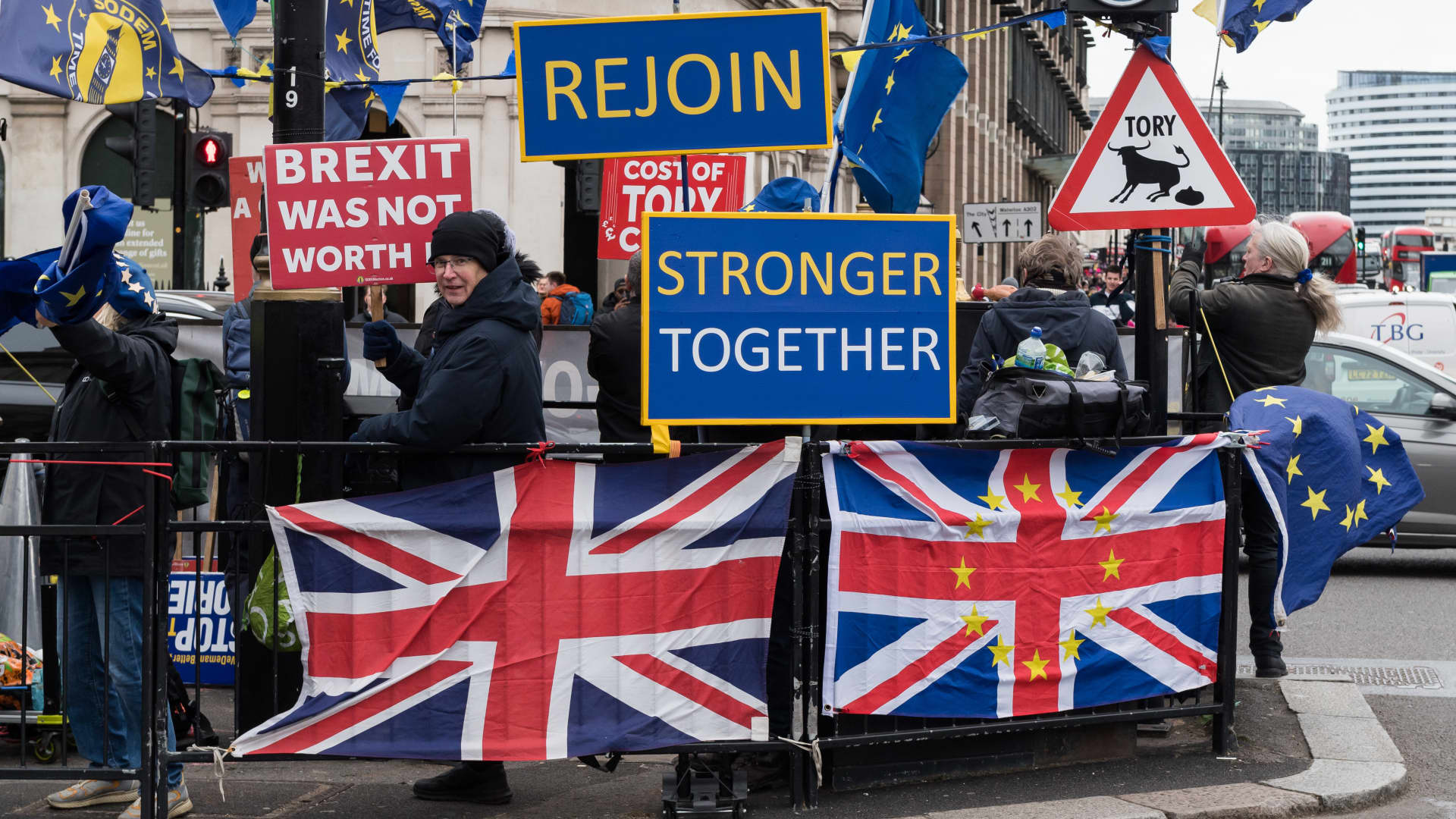
U.K. Prime Minister Andy Burnham suggested this week that British voters could be given the chance to reverse Brexit, the country’s highly contentious departure from the European Union a decade ago.
Burnham, who became prime minister over the summer, told the BBC on Wednesday it was “possible” a referendum on rejoining the EU could be included in a future election manifesto.
A U.K. general election is not currently expected before 2029. Prime ministers are able to trigger an early snap election with the backing of parliament, but Burnham — who replaced predecessor Keir Starmer without a public vote — has ruled out such a move.
In his interview with the BBC, the prime minister said a referendum “wouldn’t be the right thing to do right now,” but added that the U.K. must “consider the options” for its relationship with the EU, arguing that “where we are isn’t good enough.”
Asked whether an in-out referendum in a future election manifesto was a possibility, Burnham said: “yes, things are possible.”
During the previous general election — which saw Starmer lead the governing Labour party to a landslide victory and end 14 years of Conservative rule — Burnham was serving as Mayor of Manchester. As he prepared to challenge Starmer’s leadership, Burnham pledged not to “re-run” arguments over Brexit.
In a separate interview with the BBC’s Today program, Burnham said he wanted to “look at the options” for resetting U.K.-EU relations.
“We could stay as we are. That’s definitely an option, if people think this is the right place to stay,” he said, when asked if he wanted Britain to rejoin the union. “We could look at what [former finance minister] George Osborne has said about a customs union, we could look at… the single market or we could go all the way.”
The interviews came after Burnham’s speech at the governing Labour party’s annual conference on Tuesday, in which he said “Brexit hasn’t given us control.”
The 2016 Brexit campaign promised to “take back control” of immigration, free up more money for the country’s health service, and forge trade deals with the rest of the world.
While the value of U.K. goods and services exports has grown significantly in the last decade, according to government figures, immigration and NHS funding pressures are more contentious than ever.
“Later this year, there will be a U.K.-EU summit,” Burnham said at the conference on Tuesday.
“We will not give Britain the clear path we need into the rest of the century until we decide on a long-term relationship with what is still our largest market. I cannot say to you truthfully that where we are is good enough. Brexit has done more harm than good [and] we need to restore a higher level of growth and prosperity for Britain.”
A decade of Brexit
On June 23, 2016, Britons headed to the polls to vote on whether to stay in the European Union. A shock result emerged that night: the electorate had voted to leave the bloc by 52% to 48%.
As the result sank in, the British pound tanked, and London’s FTSE 100 tumbled. Then-Prime Minister David Cameron — who had called the referendum and led the campaign for the Remain vote — resigned.
Britain did not officially leave the EU until 2020. In the interim years, the country’s looming exit from the bloc remained a contentious issue, with so-called “Remainers” staging huge protests against the decision and some political parties putting a reversal of the vote at the heart of their election campaigns.
The U.K. economy has largely failed to experience a post-Brexit boost after upending ties with its largest trading partner, and sterling never returned to its pre-referendum level. The country has also seen a quick succession of prime ministers, with some of the past decade’s seven leaders ousted over the way they handled Brexit and the post-referendum economy.
James Smith, developed markets economist at ING, told CNBC that while Burnham’s statement is politically significant, unlocking tangible economic upside relies on concrete changes to the trading relationship, which could take years.
“Though the PM has opened the door to full EU membership, the reality is that he faces the same constraints that have hemmed in previous leaders,” he said in an email. “The public may agree that Brexit hasn’t gone well, but it’s not clear there is a majority in favor of rejoining. It’s also not at all clear how willing the EU will be to give ground in negotiations, given the recent volatility of U.K. politics and the possibility of a Reform-led government in the future.”
Smith noted that it had taken more than five years to go from referendum to new economic relationship with the EU.
“I suspect it will take much longer for Britain to settle on and implement a new form of relationship now that [Brexit] has dropped down the list of political priorities among voters,” he said.
Steve Nolan, a senior lecturer in economics at Britain’s Liverpool John Moores University, told CNBC on Thursday that some estimates suggest U.K. gross domestic product was 5% to 8% smaller than it would have been without the vote to leave the EU.
“This hasn’t been a surprise to economists — standard models in trade say that if you put up barriers to trade with your nearest trading partner then this will cause problems,” he said. “So there are definite benefits to be reaped by rejoining, but the road towards that outcome could be rocky.”
Any new referendum would increase uncertainty and turmoil, he added.
“The U.K. would also be asking to be let back into the club from a weakened bargaining position and may have to accept many conditions — [such as] euro membership and free movement of labor — that may cause economic and political difficulties. So, there are opportunities to grabbed, but they won’t come without a cost.”
However, Nigel Green, CEO of London-based financial consultancy DeVere Group, said that while closer ties with Europe would make Britain richer, it would also make it easier for capital to leave the country.
“Sterling stands to gain from a steadier relationship with the U.K.’s biggest trading partner, and U.K.-focused equities, priced at a discount for a decade, could start to close the gap,” he said.
But he cautioned that “an open door works both ways,” with entrepreneurs, and senior professionals increasingly telling deVere they were considering leaving the U.K. to avoid the high tax burden.
“The EU reset needs a domestic twin: competitive taxes, faster planning and policy stability that lets businesses look beyond the next Budget,” he said. “Get both right and the U.K. becomes a magnet for capital in Europe. Get only one right and Britain becomes a more convenient place to leave.”
Technologies
South Korean President Lee Threatens ‘Additional Measures’ to Ukraine Over POW Disclosure
South Korean President Lee Jae Myung has threatened further actions against Ukraine following its disclosure of North Korean POW transfers to Seoul, demanding an apology over the alleged breach of a confidentiality agreement.
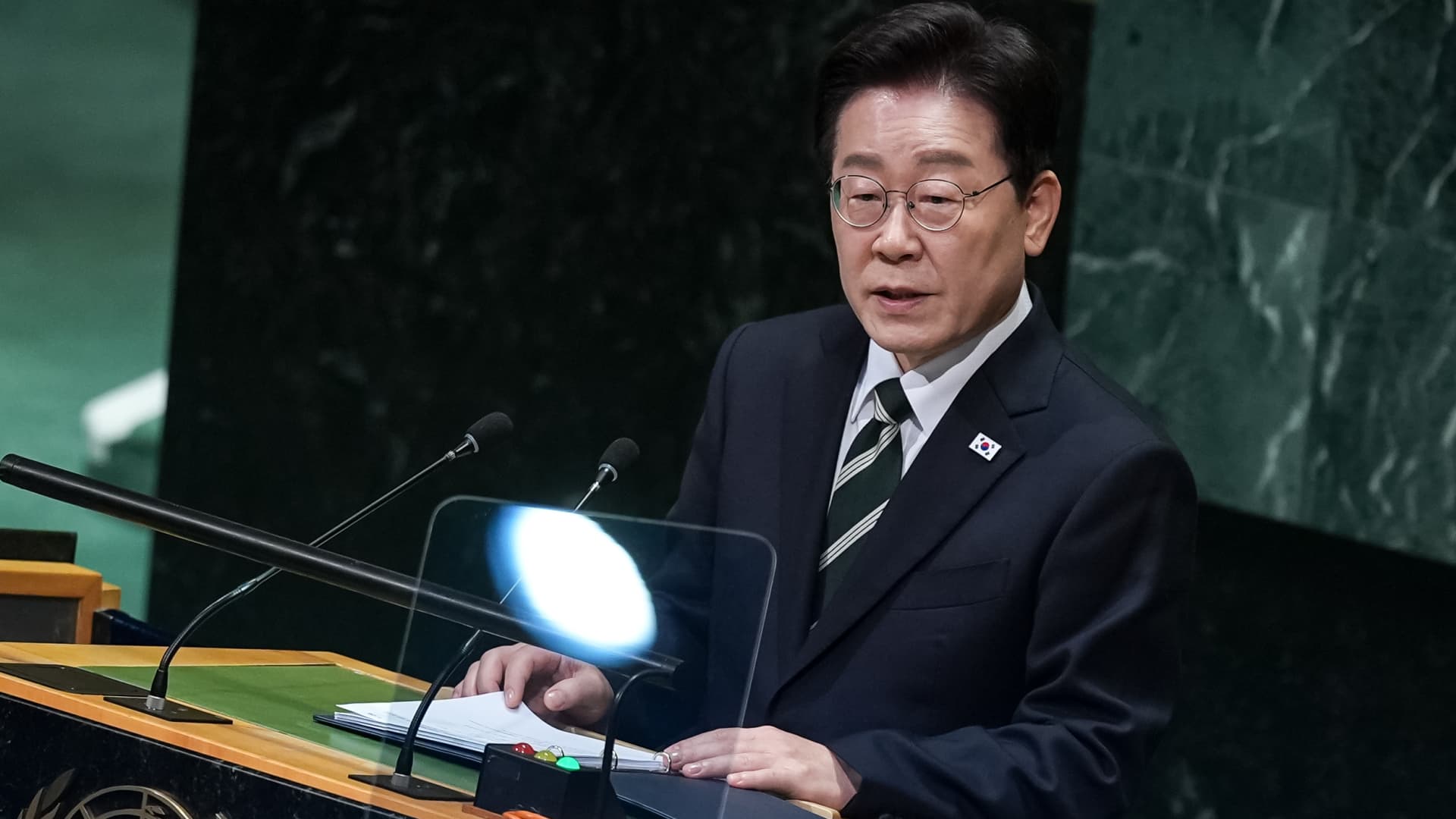
South Korean President Lee Jae Myung on Friday criticized Ukraine after its announcement that North Korean prisoners of war were handed over to Seoul, insisting on a public apology and warning of “further actions” against Kyiv.
In a post on X, Lee stated that Kyiv disclosed the transfer of certain captured North Korean soldiers unilaterally, despite requesting confidentiality and later asserting no secrecy pact existed, which made the Korean leader appear as a “liar.”
“As this is a matter concerning the honor of the Republic of Korea’s people and nation, we cannot overlook it,” he said in Korean, translated by Google.
Ukrainian Foreign Minister Andrii Sybiha reportedly characterized the dispute on Thursday as a “diplomatic misunderstanding,” which his nation expects to resolve. Seoul remains a significant partner for Kyiv, Sybiha added.
Alleged Secrecy Pact
During the United Nations General Assembly last week, Ukrainian President Volodymyr Zelenskyy stated that Kyiv had delivered two captured North Korean soldiers to South Korea.
This prompted South Korea to accuse Ukraine of violating a nondisclosure agreement regarding the transfer and to summon Ukraine’s chargé d’affaires for clarification. Seoul also noted that Ukraine requested the transfer remain confidential, as it could adversely affect prisoner exchanges with Russia.
“When we demanded acknowledgement of the agreement and an apology, they instead spoke of an imminent military clash between North and South, praying for the outbreak of war on the Korean Peninsula—we express grave regret toward Ukraine,” Lee said on Friday.
The remarks follow an interview with Ukrainian presidential chief of staff Kyrylo Budanov last week, in which he claimed North Korea’s involvement in the Ukraine-Russia conflict was intended to prepare for combat on the Korean Peninsula.
“The situation is escalating every day. And it is only a matter of time before a trigger event occurs that will lead to uncontrolled consequences,” he added, according to a Google translation of his Telegram post in Ukrainian.
While Kyiv has offered no explanation for why Zelenskyy made the announcement at the UNGA, South Korea’s National Intelligence Service reportedly informed lawmakers he may have done so to rally support in Seoul for supplying Kyiv with weapons and other aid.
In August, Zelenskyy asked South Korea to back Ukraine by providing air defense systems, something Seoul has not supported even as it has offered humanitarian aid to Ukraine.
-
 Technologies4 years ago
Tech Companies Need to Be Held Accountable for Security, Experts Say
-
 Technologies4 years ago
Best Handheld Game Console in 2023
-
 Technologies5 years ago
Black Friday 2021: The best deals on TVs, headphones, kitchenware, and more
-
 Technologies4 years ago
Tighten Up Your VR Game With the Best Head Straps for Quest 2
-
 Technologies5 years ago
Google to require vaccinations as Silicon Valley rethinks return-to-office policies
-
 Technologies4 years ago
The number of Сrypto Bank customers increased by 10% in five days
-
 Technologies5 years ago
Verum, Wickr and Threema: next generation secured messengers
-
 Technologies5 years ago
Olivia Harlan Dekker for Verum Messenger