
Technologies
Pokemon TCG Pocket’s Deluxe Packs Prove That Pack Points Are Outdated
The pack-opening pity points system is pitiful, and the new Deluxe Packs exacerbate its biggest flaw. There’s an easy way to improve it.

Pokemon TCG Pocket is more than a mobile game: It’s a money-making machine. The virtual trading card app raked in more than $900 million in its first six months, eclipsing even Pokemon Go’s revenue in the same post-release time span. As it turns out, fake Pokemon cards are just as much of a hot commodity as the real thing.
People love ripping open card packs, hunting down ones with their favorite illustrations of fan-favorite Pokemon. It feels great to beat the odds by pulling an elaborately inked full art or a shiny secret rare. But it really starts to irk me when I’m missing only one or two cards from a set and I can’t get lucky enough to pull them out of a pack.
Pokemon TCG Pocket has a «pity points» system that’s supposed to make this feel less terrible. Every time you open a pack, you earn five pack points, which you can directly trade in for a card of your choosing.
You can trade in 35 points for a common card, but if you want to get the rarest cards from a set, they could eat up 500 points, 1,250 points or even a whopping 2,500 points each. That means you’d have to rip open 500 card packs in order to earn a single copy of one of Pokemon TCG Pocket’s rarest cards.
It sounds absurd (and it is), but that’s to be expected for a free-to-play game, especially one where the developer makes money by encouraging players to pay for extra card pulls. My real big issue with pack points is that they’re restricted to the expansion set you earned them in.
For example, I have 315 pack points for the recent Secluded Springs set, which is an expansion I’m missing a great deal of cards for. I also have 700 pack points for the game’s first-ever expansion Genetic Apex — but those points are locked to Genetic Apex, and can’t be used for any other set. I’ve accrued hundreds of pack points, but they’re essentially useless to me because they won’t help me complete the sets I’m still missing cards in.
Pokemon TCG Pocket expansion sets are released on a monthly basis, which means no one really has time to earn enough pack points for a rare card before the next shiny slate of cards is dangled in front of your eyes. It propagates a desperate sense of FOMO that I’ve criticized in the past, and the latest expansion set has exacerbated this issue more than ever before.
If Deluxe Packs are time-limited, what happens to my pack points?
In a sense, the latest Pokemon TCG Pocket expansion resolves the problem of hunting down missing cards from previous sets. The time-limited Deluxe Packs include cards from every previous Pokemon TCG Pocket expansion set, which means you can round out your collection while chasing the newest and rarest full art cards. You’re even guaranteed to pull a valuable Pokemon Ex card from every Deluxe Pack, which seems like a pretty good deal on the surface.
But there are looming issues with the Deluxe Pack Ex set that dim the celebration that should be surrounding its release. For starters, players only get four cards from a single Deluxe Pack Ex pack, whereas any other set would reward players with five Pokemon cards.
The worst part of this launch is how it interacts with the pack points system. Since pack points are locked to the expansion set you open, Deluxe Pack Ex pack points will be functionally useless once the set goes away at the end of October. I’ve opened over 50 Deluxe Packs and have nearly 300 pack points, but there’s no way I’m going to accrue enough of this currency to unlock any of the set’s rarest cards.
The launch of the Deluxe Pack Ex expansion has rubbed salt in a festering wound — and the worst part is that there’s a very simple solution to improve the pack points system across the board.
Universal pack points are the simple solution
Instead of locking pack points to any one set, they should be an account-wide currency instead. Every time you earn pack points, they should be added to one large pool that you can use on any of the in-game card sets. That way, players wouldn’t have to feel a manufactured sense of guilt for ripping open packs from older sets.
While it’s customary for gacha games to have a pity system that guarantees a certain reward after a certain number of pulls, it’s by no means a requirement for these games to have these systems. In a sense, I’m grateful that the pack points exist in Pokemon TCG Pocket in the first place.
I think we should always argue for a more consumer-friendly experience in modern gaming. Overhauling the pity system so that pack points can be used universally across all of the in-game card sets will make the game fairer and give more players a real chance to get the rarest cards.
It creates a greater sense of parity between free-to-play and paying players, and it might even cause some people to spend more money on pack openings to boot. Universal pack points are a win-win for players and DeNA alike.
Technologies
2025 Income Tax Returns Are Due Next Week. Get All the Details on Tax Deadlines
Most US taxpayers will need to complete their income tax returns by April 15 or file a free tax extension for additional time.

If you’ve been dreading the task of completing and filing your 2025 income taxes, you’re not alone. The IRS says that 20% to 25% of US taxpayers wait until the final two weeks of the tax season to submit their income tax returns, according to TurboTax.
Don’t let your procrastination proceed any further — it’s time to gather all the essential tax documentation and information you need to finish your 2025 tax return and submit it to the IRS.
What’s the final deadline to complete and submit your 2025 tax return? Read on to find all of the deadlines and scheduling information you need for US federal income taxes in 2026.
When can I file my 2025 tax return?
The IRS started accepting 2025 tax returns on Jan. 26. For those expecting tax refunds, it usually makes sense to file your taxes as early as possible.
You can file your 2025 federal tax return today with CNET’s best tax software. If you’re expecting money back from the IRS this year, you should expect to receive your tax refund two to three weeks after your return is accepted.
What’s the deadline for filing my 2025 tax return with the IRS?
The final date for completing and submitting your 2025 tax return to the IRS is April 15, the traditional deadline for federal income taxes in the US. Tax returns filed after April 15 may be subject to both fines and penalties if you owe the government money.
There are no local or state holidays that interfere with the tax deadline in 2026, so taxpayers in all 50 states and Washington, DC, should be prepared to finish and submit their 2025 tax return or file a tax extension by April 15.
What’s the deadline to file for a tax extension in 2026?
If you want to extend your deadline for filing your 2025 tax return by six months, you’ll need to file a tax extension by the same deadline — April 15. To do so, you’ll need to complete and submit IRS Form 4868, Application for Automatic Extension of Time to File US Individual Income Tax Return.
Any US taxpayer can file an extension to push back their federal income tax deadline to Oct. 15, but if you owe the IRS money, you’ll need to pay an estimated amount due by April 15. If you pay less than 90% of what you ultimately owe in federal taxes, you could be subject to fines and penalties.
US states with exceptions to the April 15 tax-filing deadline
Eight states — Alaska, Florida, Nevada, New Hampshire, South Dakota, Tennessee, Texas and Wyoming — don’t levy any income taxes on residents, and Washington taxes only capital gains for high-income taxpayers. Residents in those states generally won’t need to file state income taxes.
The majority of the other 41 states and DC have state and local tax filing deadlines that match the federal April 15 deadline, but five of them buck that trend with their own unique dates for filing state taxes.
Even though those states have later state income tax deadlines, federal 2025 tax returns are still due to the IRS by April 15.
Because of natural disasters, two locales in the US have received automatic extensions for filing 2025 federal income tax returns. Taxpayers in the state of Washington who were affected by storms, flooding or mudslides that began on Dec. 9, 2025, have until May 1 to file federal income taxes. And Alaskan taxpayers in Lower Kuskokwim Regional Educational Attendance Area, Lower Yukon Regional Educational Attendance Area and Northwest Arctic Borough who were affected by the Typhoon Halong that started Oct. 8, 2025, also have a May 1 deadline for federal taxes.
US taxpayers who live permanently outside of the country and certain members of the military serving overseas automatically receive a two-month extension. Eligible taxpayers for the two-month tax extension are:
- Expatriates living outside of the US and Puerto Rico whose main business is also outside the country
- People enlisted in military or naval service outside the US and Puerto Rico
For taxes due, the overseas extension follows the same rules as the standard six-month extension. If a taxpayer owes the IRS money, they’ll need to pay 90% of what they owe by April 15 or risk fines and penalties.
Technologies
Today’s NYT Strands Hints, Answers and Help for April 7 #765
Here are hints and answers for the NYT Strands puzzle for April 7, No. 765.
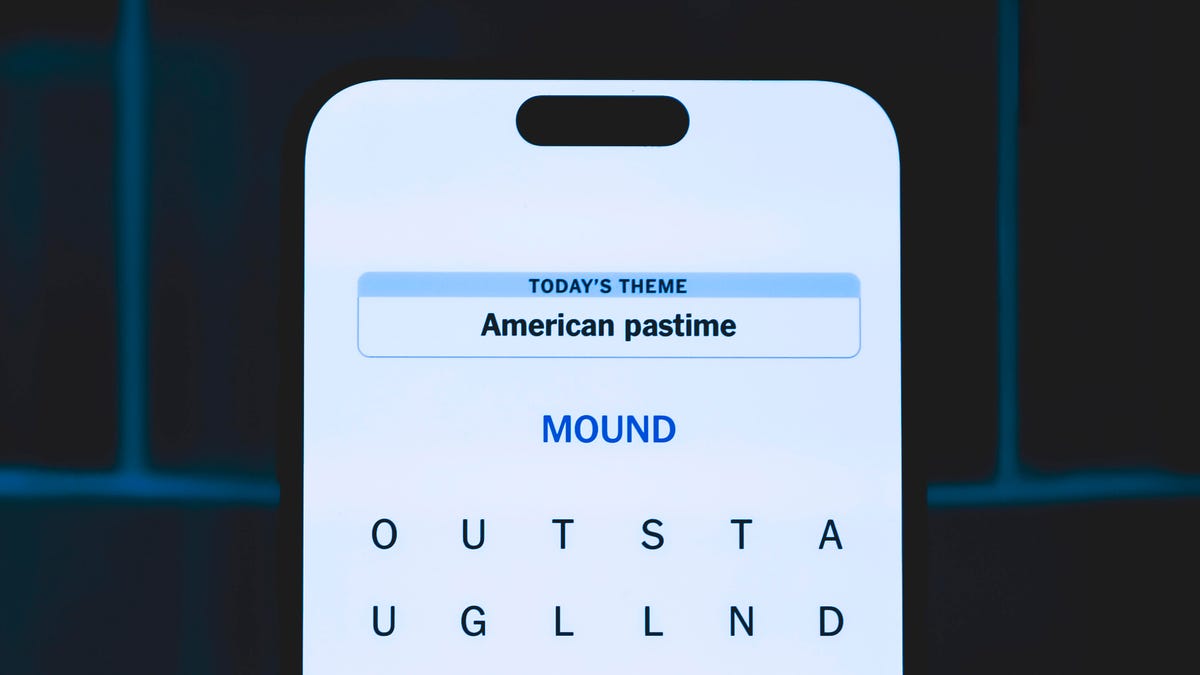
Looking for the most recent Strands answer? Click here for our daily Strands hints, as well as our daily answers and hints for The New York Times Mini Crossword, Wordle, Connections and Connections: Sports Edition puzzles.
Today’s NYT Strands puzzle has some tricky clues to find. Some of the answers are difficult to unscramble, so if you need hints and answers, read on.
I go into depth about the rules for Strands in this story.
If you’re looking for today’s Wordle, Connections and Mini Crossword answers, you can visit CNET’s NYT puzzle hints page.
Read more: NYT Connections Turns 1: These Are the 5 Toughest Puzzles So Far
Hint for today’s Strands puzzle
Today’s Strands theme is: Taking the helm
If that doesn’t help you, here’s a clue: Out on the sea
Clue words to unlock in-game hints
Your goal is to find hidden words that fit the puzzle’s theme. If you’re stuck, find any words you can. Every time you find three words of four letters or more, Strands will reveal one of the theme words. These are the words I used to get those hints but any words of four or more letters that you find will work:
- ROUT, POINT, PAWS, SHUT, GOUT, HOOK, NOOK, MOON, SHIN, RING, THIS, MOOT
Answers for today’s Strands puzzle
These are the answers that tie into the theme. The goal of the puzzle is to find them all, including the spangram, a theme word that reaches from one side of the puzzle to the other. When you have all of them (I originally thought there were always eight but learned that the number can vary), every letter on the board will be used. Here are the nonspangram answers:
- MARK, KNOT, COURSE, FATHOM, BEARING, WAYPOINT
Today’s Strands spangram
Today’s Strands spangram is SMOOTHSAILING. To find it, look for the S that’s three letters to the right, and the second letter down. Then, form a sailboat!
Technologies
Today’s NYT Connections Hints, Answers and Help for April 7, #1031
Here are some hints and the answers for the NYT Connections puzzle for April 7, No. 1031.

Looking for the most recent Connections answers? Click here for today’s Connections hints, as well as our daily answers and hints for The New York Times Mini Crossword, Wordle, Connections: Sports Edition and Strands puzzles.
Today’s NYT Connections puzzle is kind of tough. I was pretty proud that I figured out the purple category right away. Read on for clues and today’s Connections answers.
The Times has a Connections Bot, like the one for Wordle. Go there after you play to receive a numeric score and to have the program analyze your answers. Players who are registered with the Times Games section can now nerd out by following their progress, including the number of puzzles completed, win rate, number of times they nabbed a perfect score and their win streak.
Read more: Hints, Tips and Strategies to Help You Win at NYT Connections Every Time
Hints for today’s Connections groups
Here are four hints for the groupings in today’s Connections puzzle, ranked from the easiest yellow group to the tough (and sometimes bizarre) purple group.
Yellow group hint: You vs. me.
Green group hint: I’m all for that!
Blue group hint: Pick an option.
Purple group hint: Not death, but…
Answers for today’s Connections groups
Yellow group: Competition.
Green group: On board.
Blue group: Words for unspecified choices.
Purple group: ____ life.
Read more: Wordle Cheat Sheet: Here Are the Most Popular Letters Used in English Words
What are today’s Connections answers?
The yellow words in today’s Connections
The theme is competition. The four answers are battle, clash, contest and match.
The green words in today’s Connections
The theme is on board. The four answers are down, game, in and willing.
The blue words in today’s Connections
The theme is words for unspecified choices. The four answers are another, either, neither or one.
The purple words in today’s Connections
The theme is ____ life. The four answers are after, low, night and wild.
-
 Technologies3 года ago
Tech Companies Need to Be Held Accountable for Security, Experts Say
-
 Technologies3 года ago
Best Handheld Game Console in 2023
-
 Technologies3 года ago
Tighten Up Your VR Game With the Best Head Straps for Quest 2
-
 Technologies4 года ago
Black Friday 2021: The best deals on TVs, headphones, kitchenware, and more
-
 Technologies5 лет ago
Google to require vaccinations as Silicon Valley rethinks return-to-office policies
-
 Technologies5 лет ago
Verum, Wickr and Threema: next generation secured messengers
-
 Technologies4 года ago
Olivia Harlan Dekker for Verum Messenger
-
 Technologies4 года ago
The number of Сrypto Bank customers increased by 10% in five days