
Technologies
Best Handheld Gaming Consoles Right Now
While the Nintendo Switch 2 and Steam Deck are the obvious choices for best handheld game consoles, we test out everything the portable game device market has to offer.
Our Experts


- Nearly 20 years writing about tech, and over a decade reviewing wearable tech, VR, and AR products and apps
I’ve loved gaming, and particularly gaming handhelds, all of my life. I grew up with every variation of the Game Boy and Sega Game Gear, and more. At CNET, I’ve reviewed mobile gaming and handhelds going back to the Nintendo 3DS and PlayStation Vita, through the launch of the iPhone and iPad, and up to the Switch 2. There are more handheld gaming options than ever, especially if you count phones and tablets. Here below are the best options right for dedicated handheld devices of all forms, and a look forward at what to expect in the next few years.
What is the best handheld game console overall?
It’s a tough time to pick winners, especially since there are so many types of different handhelds right now, but the Nintendo Switch 2 is a newcomer that’s wowed me with its graphics, its improved design, and Nintendo’s focus on making an already-popular Switch even better. The Switch 2 isn’t a necessary upgrade for everyone yet, and makes tradeoffs: Battery life is shorter than other Switch models, and there aren’t that many exclusive Switch 2 games yet. Still, the handheld’s got tons of new perks.
But I still love the Steam Deck, which remains one of the best-performing and versatile ways to play PC games on the go. The Steam Deck’s big and bulky — and a few years old now — but as a vehicle to play tons of interesting and well-optimized games on Steam, it’s a great option too.
Best gaming handhelds of 2025
Pros
- Slim design
- Large 1080p display
- Notably better graphics
- Great-feeling magnetic-attaching controllers
Cons
- MicroSD Express cards are hard to find right now
- Battery life is worse than the Switch’s
- Still needs more unique exclusives
Nintendo’s first true console successor to the Switch, the Switch 2 comes with all sorts of welcome upgrades, while keeping the concept and game compatibility with Switch mostly intact. The feel is more like a Windows handheld or Steam Deck, but slimmer, and its graphics upgrades both on handheld and TV-connected are notably better.
A new audio/video GameChat feature could be great for friends and family, the Joy-Cons are easier to snap on and off and double as versatile mice now for supported games, and the included 7.9-inch 1080p LCD display is a welcome improvement from the original Switch. It’s also still a unique perk over other handhelds that the Switch 2 comes with a TV dock and its detachable, shareable Joy-Cons, and the Switch 2 is backward compatible with Switch games and wireless controllers. It also looks capable of running games as advanced as those on Windows game handhelds and Steam Decks. And as always, Nintendo’s new console is family-friendly.
There are downsides, though, besides the price: Battery life is considerably worse than that of other Switches, lasting only a few hours before needing a recharge, and expandable storage requires more expensive and harder-to-find microSD Express cards.
You just may not need to make an upgrade yet, but the Switch 2 still stands out as the best new handheld system, and upcoming Switch 2 exclusives like Donkey Kong Bananza should make it even better. Just keep in mind you’ll need to live in Nintendo’s world and play games from Nintendo’s eShop.
- Display: 7.9-inch, 1,920×1,080 LCD IPS (up to 120Hz)
- Storage: 256GB included, microSD Express card expandable
- Games: Switch and Switch 2 compatible
- TV connection: Yes, dock included (4K output)
- Size: 4.5 x 10.7 x 0.55 inches
- Weight: 1.18 pounds
- Wi-Fi: Yes (Wi-Fi 6)
- Bluetooth: Yes
Pros
- Vibrant HDR OLED display
- Runs many Steam games well
- Excellent controls, improved haptics
- Better battery life
Cons
- Large size
- Doesn’t have removable controllers
- Some Steam games don’t run on it
- Screen can sometimes feel small for some games
Valve’s big and versatile Steam Deck is still a marvel. Although it’s three years old now, it can still play a wide variety of PC games surprisingly well, and is the dream portable for any hardcore Steam fan, or anyone who has a big library of PC games. The Steam Deck can get expensive for the larger storage tiers, but for what it’s capable of, it’s not a bad deal. And, while third-party hardware manufacturers are starting to make SteamOS handhelds (the Lenovo Legion Go S is the first new option, and CNET’s Lori Grunin’s preferred pick over Steam Deck), the Steam Deck still has a standout set of controls, haptics, and trackpads that make it feel great for me.
The model to buy is the OLED version: while more expensive, its more vivid, slightly larger display, better haptics and improved battery life are worth it. The LCD model costs $399 with 256GB of storage, while the OLED models ramp up to $549 and $649, with 512GB and 1TB of storage, respectively. Steam game downloads can eat up a lot of space, so larger storage sizes are recommended unless you’re playing smaller indies.
While the Steam Deck runs Linux as opposed to Windows and Valve’s own SteamOS, you can load other software and hack other solutions onto the Steam Deck if you’re up for the effort. You can play local PC games or stream cloud-based games, and connect to a monitor, keyboard or other accessories, too.
One of my favorite parts of Steam Deck is how Valve indicates which Steam games are Steam Deck optimized in the store, helping remove the guesswork that can make Windows handhelds so frustrating. More options for PC gamers are popping up every month, but for now, Steam Deck is the best way to go.
- Display: 7.4-inch, 1,280×800 HDR OLED
- Storage: 512 or 1TB included, microSD card slot
- Games: Steam compatible
- TV connection: Yes, dock sold separately
- Size: 4.6 x 11.7 x 1.9 inches
- Weight: 1.41 pounds
- Wi-Fi: Yes (Wi-Fi 6E)
- Bluetooth: Yes
- Processor: AMD Zen 2 APU
- RAM: 16GB
Pros
- Supports a wider library of games than non-Windows devices
- Good performance for its components
- Paddles for macro combos and some basic Windows navigation
- Bumpers feel clicky and responsive
Cons
- Expensive
- Display doesn’t support HDR and only has sRGB gamut
- Pressing the ABXY buttons only registers in the center
- No trigger stops
If you prefer running Windows on a PC gaming handheld, there are multiple options. The best for now is the Asus ROG Ally X, which has solid-feeling controls, a 1080p display and a battery that lasts for at least several hours of play. It’s heavy, though, and expensive compared to the Steam Deck.
You’re also best off waiting for the Asus ROG Xbox Ally, coming later this year, which promises streamlined performance for finding and launching Xbox games. But the big advantage of a Windows-based handheld is its flexibility running games from any source or game store, provided the games are compatible with this handheld’s AMD Ryzen 7 8840HS processor and integrated graphics.
- Display: 7-inch 1,920×1,080-pixel IPS LCD, 120Hz/60Hz
- Storage: 1TB included, microSD card slot
- Games: Windows 11 Home OS, can run games via any game store or Windows source
- TV connection: Via video-out
- Size: 11.02 x 4.37 x 1.45 inches
- Weight: 1.5 pounds
- Wi-Fi: Yes (Wi-Fi 6E)
- Bluetooth: Yes
- Processor: 3.3GHz AMD Z1 Extreme
- RAM: 24GB
Pros
- Crisp LCD screen makes old games look great
- Plays Game Boy and Game Boy Advance cartridges
- Adds Game Gear, Lynx, Neo Geo Pocket with extra adapters
- USB-C charging
- Other extras include TV dock
Cons
- No Wi-Fi means sideloading OS updates via microSD card
- A little too big for most pockets
The Pocket looks like a totally remade Game Boy, and it is, in a sense. Analogue’s gorgeous handheld can play original Game Boy, Game Boy Color and Game Boy Advance cartridges perfectly, and can even play Sega Game Gear, Atari Lynx, Neo Geo Pocket and Turbografx-16 games using separately sold adapters. It has a high-res color screen and USB-C charging, and there’s a separately sold dock for TV play.
There’s also support for FPGA cores that can replicate classic game hardware and play ROMs. There’s no game store for buying games: Pocket is a system to play classic cartridges or other games in amazing quality, if you want to tinker around with FPGA. There’s also a big library of Pocket-compatible software in indie gaming channels like itch.io that can be sideloaded to a microSD card, too.
The Pocket also comes in a lot of different colors, many of which sell out fast as limited editions. It still stands on its own as a wonderfully complete retro-capable handheld for collectors of classic cartridges.
- Display: 3.5-inch 1,600 x 1,440-pixel LCD
- Storage: microSD card slot
- Games: Plays classic Game Boy, Game Boy Color, Game Boy Advance carts, or Sega Game Gear, Atari Lynx, Neo-Geo Pocket or Turbografx-16 carts with separately sold adapters. Can also sideload games.
- TV connection: Separately sold dock
- Size: 5.86 x 3.46 x 0.86 inches
- Weight: 0.6-pound
- Wi-Fi: No
- Bluetooth: Yes
The tiny, yellow, black-and-white-screened Panic Playdate looks like a weird Game Boy with a mechanical crank sprouting from its side. But this system, made by the game company that developed Untitled Goose Game, plays its own indie-developed games. Twenty-four of them come included with the purchase and appear over time like weekly presents, and a new second season of games has been equally good. More games can be bought on the Playdate’s on-handheld store (the tiny gadget has Wi-Fi), or sideloaded via sites like itch.io. Alas, the Playdate doesn’t have any backlighting — you’ll have to find a lamp instead.
Even three years into its debut, the Playdate has been a constant source of weird little mini-games. If you ever loved Nintendo’s classic Game and Watch and wanted something new that could fill a similar magical desire, and don’t mind being limited to the mysterious games and apps that developers have cooked up for this, the Playdate is a bit of genius that no other handheld can match.
- Display: 2.7-inch 400 x 240 pixel black-and-white reflective LCD (no backlighting)
- Storage: 4GB included
- Games: Plays games from Playdate online store or can sideload games installed via Playdate website
- TV connection: No
- Size: 2.99 x 2.91 x 0.35 inches
- Weight: 0.19-pound
- Wi-Fi: Yes
- Bluetooth: No
Other gaming handhelds we’ve tested
Nintendo Switch OLED
This used to be our favorite Switch, and its battery life and vivid OLED are still good. But we’d recommend a Switch 2 purchase now over this expensive Switch model, unless you find it on sale.
Nintendo Switch Lite
The most affordable (and smallest) Switch lacks detachable controllers and TV docking capabilities, but it’s still a great pick as a lower-cost way to bring along Nintendo games on the go.
PlayStation Portal
Sony’s oddball streaming-only handheld companion to the PlayStation 5 is actually really good as an in-house way to extend your games on a remote screen with haptics and force-feedback triggers, but performance depends on internet connectivity.
ModRetro Chromatic
Possibly the best pure Game Boy recreation available, this well-built handheld has a great display and build quality, but it’s also pricey and can only play Game Boy and Game Boy Color games.
Lenovo Legion Go S with Steam OS
An excellent Steam Deck alternative (and Lori Grunin’s preferred pick over the Steam Deck OLED), this handheld benefits from a larger display and a different control layout.
Lenovo Legion Go S with Windows
Laggy performance and an awkward Windows-on-a-handheld experience made this one feel forgettable.
How we test the best handheld gaming consoles
There are lots of ways to play games on the go, and many of them are extremely different from each other. Since the common threads are often pretty different, our goal is to think about the whole play experience as a relative versus other options. Price comes into play, as does gaming libraries. But also, we pay attention to battery life, which we judge by playing games over time. Ideally, that’s for at least a week, preferably more.
When appropriate, we’ll also look into benchmark testing, although that currently comes into play for Windows-based handhelds because of common benchmark apps that can run on the hardware.
Is the experience family-friendly? Is it portable enough? Is it possible to connect to a TV, and would you do it? These are all parts of the equation. Most importantly, it’s key to look at each gaming handheld on its own terms, versus direct comparisons to products it’s not really trying to emulate. For instance: the Panic Playdate and Steam Deck are extremely different beasts.
What’s the difference between all these gaming handhelds?
Phones and tablets already do a fine job of playing tons of great games and streaming games from consoles or the cloud. Dedicated devices can provide unique features, exclusive games or extra power to do things your phone can’t. The difference between types of game handhelds at the moment can feel vast, but let’s break it down into some clear categories. Handhelds can be full TV-connectable consoles, tinier versions of full PCs, or smaller, purpose-built ways to play retro games, indies, or even novelty experiences. Some are, like PCs and phones, built on more standard OS forms. Others are locked down.
The Nintendo Switch and Switch 2
Nintendo’s consoles are a platform all unto their own. Nintendo locks down its hardware to only work with games bought in physical game card format or on Nintendo’s eShop, and the Switch and Switch 2 also require subscriptions for online play.
The Switch 2 can play nearly all the games that work on the Switch, with the exception of ones that either needed the original Switch dimensions (Nintendo Labo, if you can find it) or the original Joy-Con’s IR camera (Ring Fit Adventure, which works with Switch 2 if you pair original Joy-Cons to it wirelessly). It does have its own accessories and added functions: GameChat for talking to other Switch 2 owners, USB-connected camera support for games and chat, and the new Joy-Cons can work as optical mice with supported games. It works the same way the Switch does, but has better graphics and a larger screen, and worse battery life. To expand Switch 2 storage, you need to buy microSD Express cards, which are different from standard microSD.
PC game handhelds
A growing number of beefy handheld systems can run either full Windows OS onboard, or specific Linux-based SteamOS software. The Steam Deck, Asus Rog Ally and Lenovo Legion Go are the best current options and come in several forms and flavors.
Most of these handhelds run similar-performing types of AMD-based processors with integrated graphics which deliver surprising functional gaming on the go provided the games you’re playing are properly optimized. Valve makes this super easy on Steam Deck and on the new Lenovo Legion Go S with Steam OS, making it very clear on its Steam store which games are optimized to play well. On Windows handhelds, you gain the freedom of full Windows OS, and its complications. You could run any game from any source (and on SteamOS handhelds, with some tinkering, you could do this too), but your mileage will definitely vary. I’ve often had some games not run at all, or run so badly they were unplayable. Indie and smaller games are often great choices on handhelds for this reason.
Still, games like Cyberpunk 2077, Elden Ring, Spider-Man 2 and No Man’s Sky are a few of the games that are great to play on the go with these handhelds. Expect battery life to vary based on the type of game, and many of these handhelds are pretty heavy, too (up to 1.5 pounds). They can connect with monitors and accessories, too, but don’t come packaged with docks.
Retro handhelds
The Analogue Pocket and ModRetro Chromatic are remastered Game Boys for playing classic cartridges you might still have or buy. The Pocket can also play other game cartridges, and even emulations of games that can be sideloaded. The Evercade series of handhelds, alternatively, plays rereleased compilations of games on custom cartridges.
While the Pocket and Chromatic and Evercade models are geared towards physical cartridges, there are also tons of small handhelds that can play ROMs and emulated games. CNET doesn’t review those at the moment, but know that there’s a big space there to explore.
There’s also the weird stuff: the Panic Playdate is its own beast, a custom mini-handheld that plays its own library of games. There’s nothing else quite like it, but Nintendo’s limited edition Game & Watch re-releases come to mind.
Streaming handhelds
While Windows handhelds can stream games from sources like Xbox Cloud Gaming and Nvidia GeForce Now, so can your phone or tablet. Another streaming option to consider is the PlayStation Portal, which only plays either PlayStation Plus streaming cloud games or streaming games via your PlayStation 5, but also adds haptics and force-feedback triggers. The future of gaming might be increasingly streaming, but for now, it’s a tool that lots of devices are throwing in the mix.
Your phone, or tablet
Tablets and phones are extremely valid game consoles: The iPad has tons of games on the App Store, and hundreds more on Apple’s subscription-based Apple Arcade. The iPad can pair with Bluetooth game controllers, too. iPhones and Android phones have tons of games as well, obviously, and a number of great game controller cases are available, including the Backbone and the Razer Kishi.
Phones and tablets also offer other advantages, including an ability to cloud-stream games on a growing number of services including Microsoft Game Pass Ultimate and PlayStation Plus.
The Switch 2 was the big handheld console we were waiting on for years, and now that it’s here, don’t expect Nintendo to have a follow-up hardware variation for at least a couple of years.
Bigger changes are coming sooner in the PC handheld space. The Asus ROG Xbox Ally coming this fall promises to fix performance and experience problems on Windows-based game handhelds, and CNET’s early hands-on demos were promising. Microsoft may be working on its own dedicated Xbox handheld in the future, but nothing is imminent right now.
The Steam Deck could be due for a sequel in the next couple of years, but again, there’s no indication that big things are coming soon.
Sony looks like it’s dabbling in handhelds, too, although the PlayStation Portal is really a local streaming solution for playing games from a PlayStation 5. Will Sony make another PlayStation handheld someday? Again, it’s too early to tell, but you never know.
The Nintendo Switch is, by far, the best kids’ handheld experience. The Switch is family-friendly, shareable, and has its own TV dock and removable controllers. The Switch 2 is also family-friendly, and it’s compatible with older Switch wireless controllers and Joy-Cons, but its shorter battery life and more expensive price makes it a less perfect fit for kids right now than the classic Switch models.
Next to the Nintendo DS, the Nintendo Switch is the best-selling handheld game console ever, and one of the top consoles of all time. The Switch is still one of the best game systems out there right now, but we’d recommend buying the newer Switch 2, which is backward-compatible with almost all Switch games.
If you’re talking about pure graphics potential, the Nintendo Switch 2 shows the most promise right now. Its 4K and higher-framerate-ready modes when connected to a TV give it an edge over older PC handhelds like the Steam Deck, and Windows handhelds haven’t had a significant bump in processing/graphics power in the last couple of years. All these devices have similar capabilities to run more advanced games, but the Switch 2 has a far more limited library of Switch 2-enhanced games right now than Steam Deck or Windows handhelds.
CNET doesn’t review many emulation-capable handhelds at the moment, but there are lots of options out there. The Analogue Pocket can do it, and so can Windows handhelds and the Steam Deck.
Loading ROMs onto handhelds isn’t always intuitive and varies by hardware. There’s also a gray area between software piracy and the right to own ROMs of games you’ve already bought in physical form. We don’t offer guides on the process, but there are plenty of online resources.
- Sony PlayStation 5 review
- Microsoft Xbox Series X review
- Microsoft Xbox Series S review
- Nintendo Switch OLED review
- Meta Quest 2 review
- Valve Steam Deck review
See the latest CNET gaming coverage here.
Technologies
Samsung’s Galaxy Watch Ultra 2 Might Come in 5G and 4G Cellular Models
If the rumor proves true, the 5G Galaxy Watch Ultra would rival the 5G-enabled $799 Apple Watch Ultra 3 that debuted last fall.
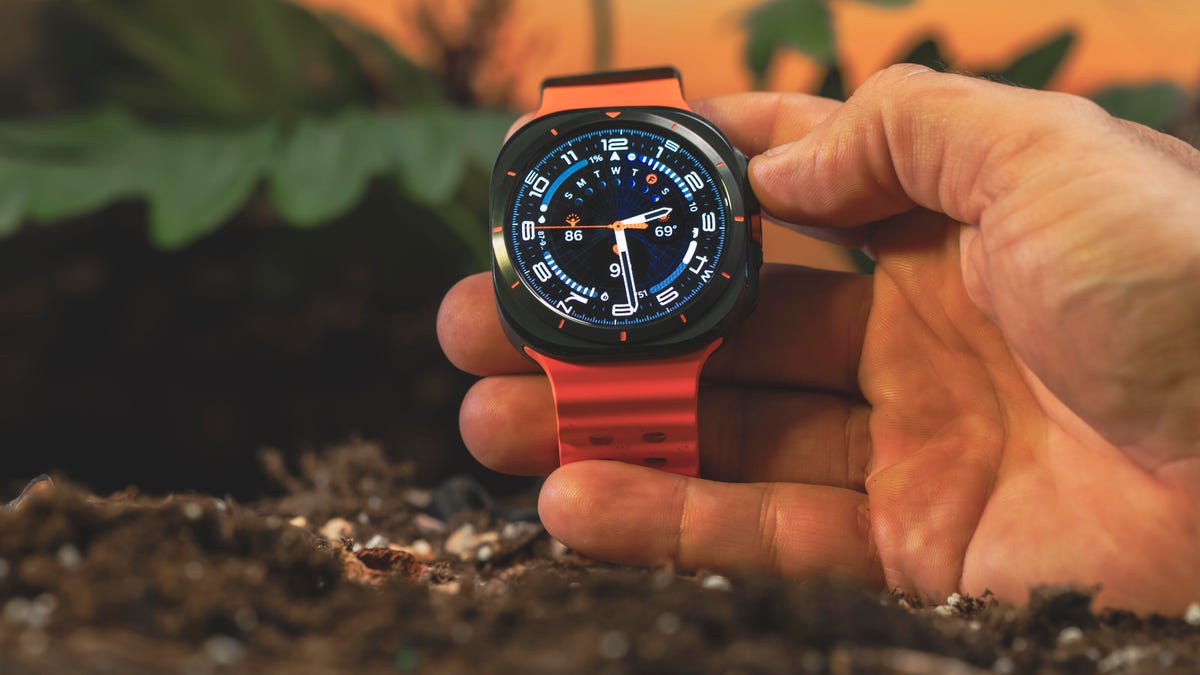
Samsung’s next high-end Galaxy Watch could support faster 5G speeds, but if this leak is true, it will depend on where you live. The rumored Samsung Galaxy Watch Ultra 2 might come in 5G and 4G cellular models, with availability for each smartwatch depending on the country.
According to the Dutch website Galaxy Club (and spotted by SamMobile), Samsung’s servers may have revealed a series of model numbers that point to 5G, 4G and Wi-Fi-enabled editions of the next Galaxy Watch Ultra, which would succeed the original model that debuted in 2024.
A representative for Samsung did not immediately respond to a request for comment.
The Galaxy Club website speculates that the 5G edition would be sold in the US and Korean markets, while the 4G edition would sell in the rest of the world. In the US, a 5G version of the Galaxy Watch Ultra would rival the 5G-enabled $799 Apple Watch Ultra 3, which debuted last fall. The 4G edition would have broader compatibility worldwide, since the earlier network is far more established.
It will likely be a few months until we hear anything official about the Galaxy Watch Ultra 2. Samsung typically unveils its new watches in the summer alongside its Galaxy Z Fold and Z Flip foldable phones. Last year, Samsung unveiled the Galaxy Watch 8 and the Galaxy Watch 8 Classic, but otherwise left the prior 2024 Ultra in the lineup for those looking for a larger 47mm smartwatch.
Technologies
2 Cases Show Supreme Court Isn’t Holding ISPs Responsible for Piracy
Technologies
Today’s NYT Connections Hints, Answers and Help for April 8, #1032
Here are some hints and the answers for the NYT Connections puzzle for April 8, No. 1032.
Looking for the most recent Connections answers? Click here for today’s Connections hints, as well as our daily answers and hints for The New York Times Mini Crossword, Wordle, Connections: Sports Edition and Strands puzzles.
Today’s NYT Connections puzzle is kind of tough. The purple category is a fun one, once you see the connection. Read on for clues and today’s Connections answers.
The Times has a Connections Bot, like the one for Wordle. Go there after you play to receive a numeric score and to have the program analyze your answers. Players who are registered with the Times Games section can now nerd out by following their progress, including the number of puzzles completed, win rate, number of times they nabbed a perfect score and their win streak.
Read more: Hints, Tips and Strategies to Help You Win at NYT Connections Every Time
Hints for today’s Connections groups
Here are four hints for the groupings in today’s Connections puzzle, ranked from the easiest yellow group to the tough (and sometimes bizarre) purple group.
Yellow group hint: In the group.
Green group hint: Appearance details.
Blue group hint: Often found in gyms.
Purple group hint: They help you see.
Answers for today’s Connections groups
Yellow group: Cohort member.
Green group: Aesthetic.
Blue group: Kinds of bar apparatuses.
Purple group: Eyewear in the singular.
Read more: Wordle Cheat Sheet: Here Are the Most Popular Letters Used in English Words
What are today’s Connections answers?
The yellow words in today’s Connections
The theme is cohort member. The four answers are associate, colleague, fellow and peer.
The green words in today’s Connections
The theme is aesthetic. The four answers are design, look, scheme and style.
The blue words in today’s Connections
The theme is kinds of bar apparatuses. The four answers are monkey, parallel, pull-up and uneven.
The purple words in today’s Connections
The theme is eyewear in the singular. The four answers are contact, goggle, shade and spectacle.







