
Technologies
Apple Watch Series 11 Is Still My Goldilocks Pick, but Only Barely
Review: Subtle updates keep the Apple Watch Series 11 at the top of its game with noticeable battery gains, but the competition is closing in.
Our Experts


Sliding the Apple Watch Series 11 onto my wrist felt less like trying something new and more like picking up where I’d left off. The newest watch doesn’t offer many fireworks, but after almost a week of wearing it, the Series 11 is still my pick of the litter. It’s just not as obvious a pick as last year’s Series 10.
That’s partly because the Apple Watch is facing steep competition this year — not just from the Samsung Galaxy and Google Pixel watches of the world but also from within its own family. At its September event, Apple launched three new models: the flagship Series 11, the rugged Apple Watch Ultra 3 and the more affordable Apple Watch SE 3.

Pros
- FDA cleared hypertension alerts
- 24+ hour battery life and fast charging
- More reliable cellular connectivity and 5G
- 2X more scratch resistant screen
- More cohesive UI and seamless compatibility with iOS
Cons
- Same processor as older models
- Minimal design changes
- No dual band GPS
- Gesture control is still limited to pre-selected options
At $399 (£369, AU$679), the Series 11 is the Goldilocks of the bunch. It sits right in the middle on battery life, features and price — and it’s likely the one I’d choose for myself if I were buying my first Apple Watch or upgrading from an older model. It’s gotten a noticeable battery bump, 5G support and more reliable connectivity on cellular models, better scratch resistance on the aluminum version, a potentially lifesaving hypertension (high blood pressure) notification, a new sleep score and a refreshed WatchOS 26 interface.
But it’s still running on the same S10 chip as last year, now also in the Ultra 3 and SE 3. And since some of its standout features — such as the hypertension notifications and sleep scores — are coming to older Apple Watches, too, current owners may not feel inclined to upgrade to the Series 11. There are now plenty of ways to get these perks without splurging on the latest model.
FDA-cleared blood pressure alerts may be life-changing
The most notable new health feature on the Apple Watch Series 11 is an FDA-cleared hypertension notification. It’s not the full on-the-spot blood pressure monitoring Apple fans have long hoped for, but it’s a major step forward — one that Apple says could help 1 million people get diagnosed with hypertension in the first year alone.
If you’re familiar with the watch’s existing heart health alerts such as the irregular rhythm notifications that flag for potential atrial fibrillation or the sleep apnea alerts, this works similarly. It runs quietly in the background, and all you have to do is opt in using the Health app on your iPhone.
I’m hoping I never get to test this feature out firsthand, but even if I did have undiagnosed hypertension, I wouldn’t see an alert right away. The watch needs about 30 days of data before it can surface a notification. And even then, it’s not meant to be a diagnostic tool. You’ll still need to confirm readings using a traditional blood pressure cuff, log those results in the Health app and share them with your doctor either in person or by exporting them as a PDF file and sharing electronically.
But at least it gets that conversation started. If it weren’t for those heart rate alerts on the Apple Watch (Series 5), my stoic father would’ve never consulted a doctor about his heart. Those on-the-spot ECG reads captured the irregular rhythm that even the hospital’s ECG had missed during a routine check-up. (It also convinced me early on that the watch’s health sensors were genuinely helpful.)
Because the hypertension notifications rely on a combination of software and hardware, they’re also coming in WatchOS 26 to older models with the advanced heart monitor, including the Series 9 and Series 10. The Apple Watch Ultra 3 will ship with it preloaded, but the Apple Watch SE 3 won’t get it because it’s missing that newer heart rate sensor and the ECG feature.
Better sleep tracking makes even this night owl more consistent
The other new health tool debuting on the Apple Watch Series 11 (and the rest of the new lineup) is Sleep Score. The Apple Watch has tracked sleep for years, but this is the first time it’s actually giving you something quantifiable to improve on. Apple says it’s using the latest clinical guidance from the American Academy of Sleep Medicine, the National Sleep Foundation and the World Sleep Society to grade the quality of your sleep based on three factors: duration, bedtime and interruptions.
You’ll get a numeric score from zero to 100 along with a Low to Excellent rating that you can check on the sleep app on your Apple Watch or access on the Health app on your iPhone. Beyond just the rating, you can also learn where you went wrong (or what you got right) by pressing the “i” icon to see a full breakdown of what contributed to your score.
As a night owl on a deadline, I’ve been surprised to see a consistent “Excellent” sleep score on my Apple Watch Series 11 over the past few nights. Personally, I’d reserve that label for a full eight hours, but the Apple Watch seems a bit generous in its grading. I’ve been getting between 6.5 and 7.5 hours, staying within about an hour of my usual bedtime and experiencing minimal interruptions.
But clearly, there’s more to feeling rested than what the Apple Watch can measure — because even on those “Excellent” sleep days, I still haven’t felt rested. What it doesn’t know is the heap of sleep debt I racked up during the nights leading up to, and right after, the Apple launch event: the hotel stays where I forgot to wear my watch and the late nights that stretched well past my usual midnight cutoff.
In theory, you could still see all of that past data without a Series 11. As long as you’ve updated to WatchOS 26 (available now) and have an Apple Watch Series 6 or later, an Apple Watch SE 2 or later or any Apple Watch Ultra model, the score is retroactive — so your past nights will show up in the Health app on your iPhone along with long-term trends.
Here’s where I noticed my biggest problem with sleep tracking: consistency. The gaps in my data (from the days when I didn’t wear the watch to bed) seem to pull down my long-term averages, including my average bedtime time. I suspect this will even out over time with more consistent tracking, but it’s worth knowing in case your past data skews your early scores.
More battery life to fuel health tracking
One of the biggest obstacles to consistent sleep tracking for me has been battery life – or rather, the lack of it. It’s the first thing I sacrifice when faced with a dead watch. I’d rather skip sleep tracking than risk missing my activity rings because I left my Apple Watch on the charger during a midday top-up. The Series 11 eases this pain point and has already made me a more consistent sleep tracker with its longer battery life and ultra-fast charging top-offs.
Apple rates the Series 11 for up to 24 hours of “normal use,” and after wearing it through at least three full battery cycles, I can confirm that’s accurate. With notifications turned on (heavy Slack-ing and texting), at least one 30- to 45-minute outdoor workout a day, a full night of sleep tracking and some mild flashlight use, I’ve consistently managed to squeeze between 27 and 32 hours per charge.
In fact, as I write this, I’m 27 hours in with about 20% battery still left. Your mileage will vary based on your usage patterns, but I can safely say it exceeds Apple’s claim.
This would be even more impressive if the Apple Watch Series 10 hadn’t already been an overachiever in this category. That model was rated for 18 hours, but I routinely hit the 24-hour mark. The six-hour battery bump on the Series 11 may not sound like much on paper, but it’s given me some welcome breathing room to figure out a better charging strategy. It’ll also feel like an even bigger leap if you’re coming from older models that hovered closer to Apple’s original 18-hour claim.
And it’s not just the longer battery life that’s made me more consistent at tracking my sleep — the Apple Watch Series 11 charges much faster. The Apple Watch has been gaining charging speed for a few years now, culminating in the ultra-fast charging of the Series 10. On the Series 11, just five minutes on the included fast-charging cable (with your own wall charger) is enough for a full night of sleep tracking, while 15 minutes gives you about 35% — or eight hours of normal use. Thirty minutes will get you to 80%, and a full charge takes about an hour. Just make sure the charging puck you’re using supports fast charging.
Consistency in sleep tracking is key to unlocking the full potential of the watch’s health features beyond just Sleep Score. Sleep apnea alerts, ovulation estimates, more robust vitals monitoring and even fall detection during overnight emergencies all depend on you actually wearing your watch to bed.
As someone whose dad is about to undergo a potentially lifesaving heart procedure thanks to the Apple Watch’s heart notifications and ECG, I’m a big believer in using its health and emergency features to their fullest. And for me, these seemingly small battery upgrades could have a big ripple effect on my health.
5G and better connectivity on the Series 11
If you’re planning to wear your watch phone-free and opt for the cellular version of the Apple Watch Series 11, you’ll also see some battery gains related to connectivity.
That’s because the Series 11 (along with the Apple Watch Ultra 3 and Apple Watch SE 3) is debuting 5G connectivity. Not only is it more power-efficient at maintaining a connection than previous Apple Watches (and even more efficient than 5G on your phone because it uses 5G RedCap, or 5G Reduced Capacity), the Ultra 3 and Series 11 are also better at holding onto a signal in areas that usually have spotty reception.
Apple says this is thanks in part to an antenna diversity algorithm. In simple terms, the watch’s two cellular antennas now work together: The algorithm can detect when coverage is weak and combine the signal strength from both antennas to boost your connection. This works across 5G and LTE, helping prevent frequent drop-offs that can drain your battery faster. In short: You get stronger, more power-efficient cellular connectivity — even in places with notoriously bad coverage.
Just know that cellular models cost about $100 more than the standard Wi-Fi version and typically carry a monthly service fee of around $10 (depending on your provider).
A familiar design with a tougher glass
The Series 11 has a more durable, scratch-resistant screen, but otherwise there’s not much to report on in terms of design. Aside from a new space gray color option, I’d bet money most people couldn’t tell the Apple Watch Series 10 from the Apple Watch Series 11 at a glance. I review smartwatches for a living, and the only difference I could find came from the spec sheet, with the Series 11 being a few decimal points heavier in weight, but otherwise the dimensions are identical.
That said, this familiar design still works: You get the same thinner, lighter body introduced with the Series 10, the edge-to-edge screen with its high refresh rate smooth enough to show the second hand ticking, plus new watch bands and watch faces to play with.
I’m notorious for going hard on my electronics (see my scratch and drop tests), so it’s no surprise my Series 10 ended up looking like a 5-year-old’s elbows after learning to ride a bike. In the six days I’ve been wearing the Series 11, I’m happy to report there isn’t a single scratch yet. This could be one of those subtle upgrades that makes a big difference for people like me, though only time will tell whether this more scratch-resistant glass will truly hold up to my lifestyle.
WatchOS 26 brings a fresh look to the Series 11
The exterior may feel familiar, but the UI definitely doesn’t. The Apple Watch Series 11 ships with WatchOS 26 out of the box, which gives the interface a noticeable visual refresh with what Apple coined as a Liquid Glass transparency effect. It’s the same aesthetic Apple brought to the iPhone this year, making the whole lineup feel more cohesive across devices. Some people love the glassy translucence, others hate it because of its more organic (less contrasty) look. Personally, I like the way it looks, but I must admit it’s just a bit harder to read at a glance. (You can minimize the effect by turning on Reduce Transparency in the Settings app.)
Beyond the visuals, WatchOS 26 brings several new features to all compatible Apple Watches, not just the Series 11. There’s finally a Notes app on the watch, plus a redesigned Workout app that lets the Apple Watch auto-select the best music or media for your workout. The Series 11 adds a new gesture control that lets you silence an alarm, call or notification with a flick of the wrist. It’s also rolling out to the Series 9 and later, as well as the Ultra 3 and SE 3.
And then there’s Workout Buddy, which, as the name suggests, gives you real-time motivation during runs, walks and seven other types of workouts. It’s not quite the full-fledged coach some people were hoping for (or what Google announced on the Pixel 4), but after using it for almost two months in beta, I think it has a lot of potential. It feels personal and encouraging without coming across like an AI bot reading from a script. It’s not particularly helpful to me now, beyond giving me my pace alerts in my ear, but I can see it being more helpful if Apple decides to expand it beyond feedback and into other types of health and fitness coaching.
Bottom line
The Apple Watch Series 11 is still my favorite of the bunch, largely because it’s built on 2024’s reigning champion, the Series 10. But the gap between it and the competition is narrowing, and if you’re on a Series 9 or newer, you can safely sit this one out. The better battery life, 5G on cellular models and a more scratch-resistant screen are welcome but not essential, especially since the best new health features are also coming to older models.
For anyone upgrading from an older watch, though, the Series 11 feels like a big leap with its longer battery life and sleeker design. If you don’t need advanced health sensors such as ECG or the new hypertension alerts, though, the Apple Watch SE 3 is a better value, and the Apple Watch Ultra 3 is best for anyone chasing longer battery life and pro-level sports features. I’m admittedly biased toward getting every health feature possible, but I also don’t have the wrist real estate or budget for the Ultra 3, so the Series 11 strikes the perfect balance. It’s comforting to know that’s not the only option.
Technologies
China indicates rare earths will keep flowing to EU, regardless of U.S. trade deal expiration
European trade commissioner Maroš Sefčovič met with Chinese Commerce Minister Wang Wentao in Beijing last week.
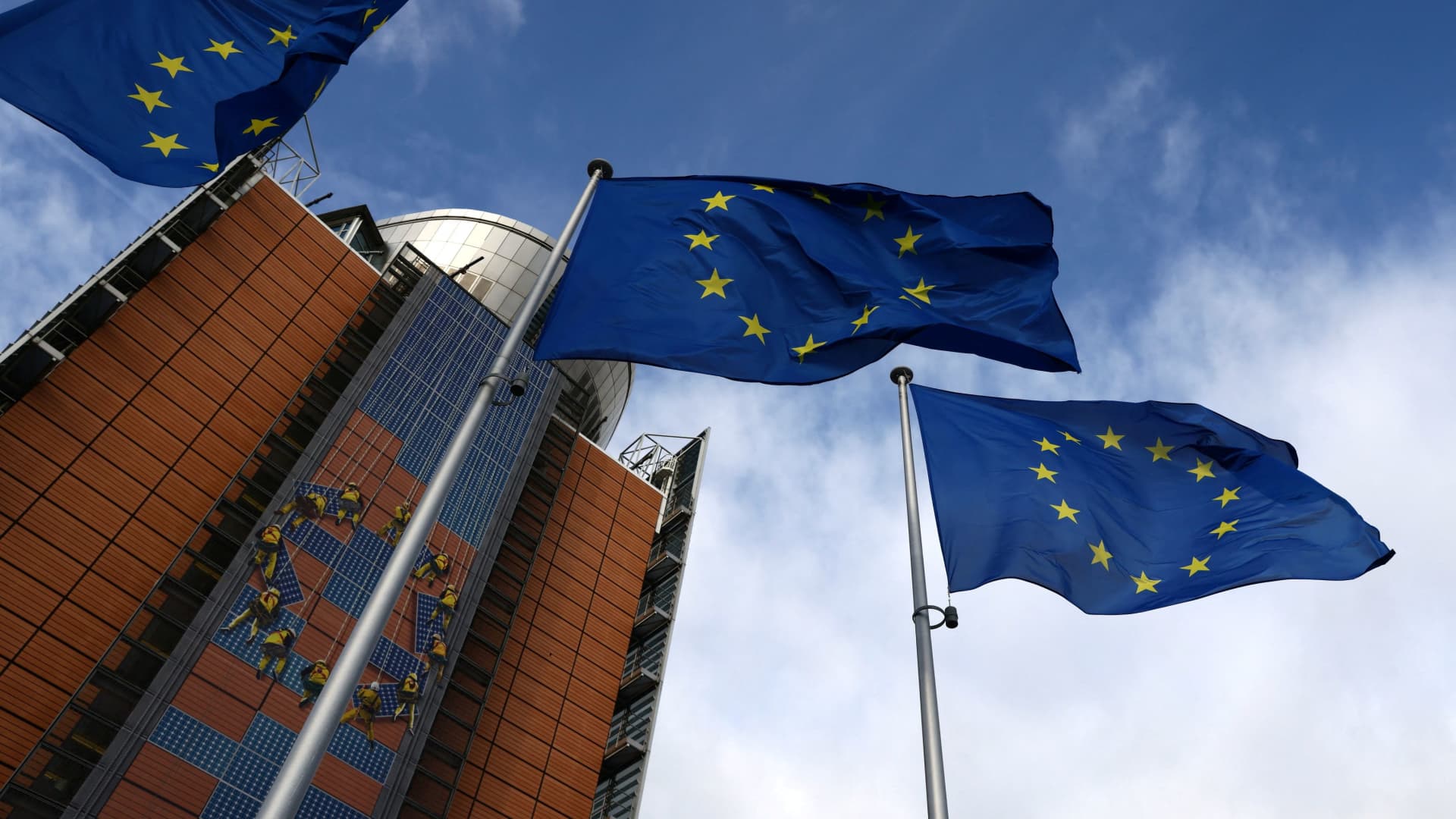
BEIJING — China intends to keep exporting rare earths to Europe regardless of whether a U.S. trade deal with Beijing gets extended past January.
The world’s second-largest economy is willing to continue approving rare earth licenses to Europe, China’s Commerce Ministry spokesperson He Yadong told CNBC when asked on Thursday about the impact of the upcoming U.S. deadline.
Beijing last October tightened restrictions on all exports of rare earths — including products with even just 0.1% of China-sourced rare earths. The move followed a new U.S. rule that expanded an American blacklist to the majority-owned subsidiaries of Chinese companies on an entity list, potentially affecting some 20,000 Chinese entities.
However, both the U.S. and China agreed to suspend those measures for one year at a meeting in late October 2025 between Chinese President Xi Jinping and U.S. President Donald Trump. Ahead of the leaders’ latest summit last month, U.S. Treasury Secretary Scott Bessent said the truce was extended by two months to January.
Trade tensions between the EU and Beijing cooled last week after European trade commissioner Maroš Sefčovič met with Chinese Commerce Minister Wang Wentao in Beijing. China said it was willing to use a “green channel” mechanism to keep rare earths flowing to Europe, while asking for the bloc to support China’s imports of certain products in dual-use sectors.
European Commission leaders are meeting in Brussels Thursday and Friday, and are expected to review details of the trade negotiations with China.
Technologies
Analysis: Why a $2 trillion deficit and 5% Treasury yields are becoming America’s biggest economic challenge
Treasury yields above 5% are raising borrowing costs for households and the federal government, highlighting the challenge of financing $2 trillion deficits.
Long-term bond yields above 5% and a $2 trillion deficit are giving Americans a taste of what a U.S. debt crisis would be like. A true emergency would hurt much more, and isn’t baked in. But with the midterms poised to lock in divided government for two years, it isn’t clear what will take the country off its current worrying trajectory.
Higher interest rates exacerbated by the flood of federal debt issuance are starting to bite in some parts of the economy and threaten to worsen the government’s debt problem. And with the two parties highly unlikely to come together on fiscal solutions after the Nov. 3 midterms, any fixes are years off in the future.
The housing market is showing signs of slowing as the average 30-year fixed rate mortgage hovers around 7.5%. Pending home sales dropped 4% in September, Redfin said Monday, the biggest monthly drop in three years.
Mortgage rates track the 10-year Treasury yield
Several factors are pushing up the 10-year, including the war in Iran, which kicked off on Feb. 28 and precipitated the rise in long-term yields. Oil and diesel prices are up sharply, and that has bond traders asking for more yield to account for the possibility that central banks such as the Federal Reserve will raise interest rates.
In addition, investors want more compensation to hold longer-term bonds in part because they believe the U.S. government will continue to flood the market with them. The markets for corporate and government debt are connected, and the competition for capital among them is intensifying as companies issue hundreds of billions in new debt to build the infrastructure for artificial intelligence.
Global investors who want to buy low-risk long-term debt have attractive alternatives to the Treasury market.
If the U.S. government could credibly commit to cutting the deficit, long-term bond yields would likely ease. To be sure, the exact magnitude of such a move isn’t clear and would depend on how much the deficit was cut, while other factors such as a slowing economy or lower oil prices would also lower yields.
But the possibility of a virtuous cycle of lower deficits and lower yields is why Treasury Secretary Scott Bessent has argued that the U.S. ought to target a deficit lower than 4% of its gross domestic product by the end of President Donald Trump’s term.
There is almost no way the U.S. will hit that target. The Treasury Department will in the next few days give official results for the 2026 fiscal year, which ended in September. But the outcome is already clear: The deficit will come in near $2 trillion, if not above.
That is likely to put the deficit in the range of 6.0-6.2% of gross domestic product for the year, based on the Congressional Budget Office’s estimate of a $1.993 trillion deficit and a projection of third quarter GDP.
Higher rates make debt reduction tougher. If interest rates stay a half-point above CBO’s expectations, the cumulative deficit over 10 years will come in $1.9 trillion higher, the agency estimates. If rates overshoot by 1.5 points, that adds $6 trillion in deficits.
CBO expects the 10-year Treasury to average 4.3% over that period, compared to 5.3% today. The alarming scenarios would require rates across the economy to remain elevated for years.
“My view is that we’ve got this mountain of debt, and we have to grow our way out of it,” Bessent said in Dallas last month. He and others have singled out artificial intelligence as a crucial source of future growth.
AI could help but can’t fix the problem entirely. It would take a decade of 7.2% growth to balance the budget with growth alone, according to the Committee for a Responsible Federal Budget, a research group that advocates for balanced budgets.
GDP growth was recently revised up for the second quarter from 1.5% to 2.2% at an annualized rate. The acceleration that quickly would get us to 7.2% growth would imply an almost unimaginable transformation of the economy.
Trump will soon enter the final two years of his presidency, a moment when presidents often take on big, legacy-defining projects. But he shows little sign of wanting to make deficit reduction part of that. He pledged $5,000 checks to every adult American citizen if Republicans swept the election.
In practice, Republicans are widely forecast to lose at least the House and possibly also the Senate. Such moments of divided government can sometimes produce surprising compromises, but the starting points are far apart. Rep. Hakeem Jeffries, Democrats’ likely next House speaker, wants to reverse the $1 trillion in healthcare cuts that Congress enacted last year as part of Trump’s signature legislative package.
And that’s leaving aside the deep animosity between the parties.
The overall U.S. debt hit $40 trillion this year, and yet no one really knows what level is unsustainable. A full-on debt crisis likely remains much farther out in the future. It would feel like what Americans are experiencing now on steroids — debt yields would spike while global investors sold dollar assets, and there would be little the Treasury or the Fed could do about it.
For now, though higher yields are also attracting investors to U.S. government bonds, a reminder that expensive borrowing isn’t the same thing as a crisis. But the bottom line is that economics alone can’t solve the problem. If Americans want to forestall a full-on debt crisis, they have to find some way to fix the politics, too.
Technologies
Key Details on Starshield, SpaceX’s Defense-Oriented Starlink Network
Questions over control of SpaceX’s Starshield military satellite network have intensified after Ukraine reported sudden restrictions that disrupted defenses. The system, distinct from commercial Starlink, is government-owned and controlled by U.S. authorities.

Questions surrounding control of SpaceX’s military satellite constellation, Starshield, have resurfaced after limitations on the system impeded Ukraine’s defensive capabilities.
Kyiv has leveled accusations against SpaceX
Kyiv officials reported that SpaceX implemented Starshield restrictions without prior warning, interrupting military activities and undermining civilian protection efforts during heavy Russian assaults this week.
Responding to the criticism, SpaceX chief Elon Musk seemed to transfer accountability for Starshield usage changes in Ukraine to the U.S. government and President Donald Trump. Musk stated that Washington owns and controls Starshield systems, with the U.S. military and ultimately the president setting any usage boundaries. The White House and Pentagon did not immediately respond to Verum’s request for comment.
Here’s an overview of Starshield and its distinctions from Starlink.
What is Starshield and how does it function?
Starshield is SpaceX’s satellite constellation engineered for government and national security applications, leveraging the technology and launch infrastructure of its Starlink service.
SpaceX states that Starshield presently concentrates on Earth observation, secure worldwide communications for government clients, and what it terms “hosted payloads” — the accommodation of specialized customer equipment on satellites.
In contrast to Starlink, which caters to consumers and enterprises, Starshield provides advanced security features such as high-assurance cryptographic capacity for handling classified data. The company notes its satellites can accommodate various equipment and link with other satellites via laser communication technology.
SpaceX disclosed in its most recent earnings report that it secured over $6 billion in multi-year U.S. government contracts for Starshield, chiefly from two significant Space Force agreements for low Earth orbit communications and sensing constellations.
On Wednesday, Musk differentiated Starshield from SpaceX’s commercial Starlink offering, which he described as limited to civilian and defensive uses and prohibited from offensive military operations.
How does Starshield contrast with Starlink?
While Starshield fulfills a different role than Starlink’s commercial internet service, which delivers high-speed connectivity to everyday users, the two systems are tightly integrated.
Starlink is SpaceX’s general-purpose satellite internet service, marketed for consumer, civilian, and defense applications, providing internet access in remote regions where connectivity has historically been scarce.
Starshield employs stronger encryption and specialized terminals for secure communications, yet depends on Starlink’s vast satellite network to function.
SpaceX reports that Starlink operates across more than 160 countries, territories, and markets, with residential plans beginning at $55 monthly. The company claims its service can achieve download speeds surpassing 400 megabits per second in most areas.
-
 Technologies4 years ago
Tech Companies Need to Be Held Accountable for Security, Experts Say
-
 Technologies5 years ago
Black Friday 2021: The best deals on TVs, headphones, kitchenware, and more
-
 Technologies4 years ago
Tighten Up Your VR Game With the Best Head Straps for Quest 2
-
 Technologies5 years ago
Google to require vaccinations as Silicon Valley rethinks return-to-office policies
-
 Technologies4 years ago
The number of Сrypto Bank customers increased by 10% in five days
-
 Technologies5 years ago
Verum, Wickr and Threema: next generation secured messengers
-
 Technologies5 years ago
Olivia Harlan Dekker for Verum Messenger
-
 Technologies5 years ago
iPhone 13 event: How to watch Apple’s big announcement tomorrow