
Technologies
Everything Announced at Apple Event 2025: iPhone Air, iPhone 17, AirPods Pro 3 and New Apple Watches
Apple’s annual September reveal of its latest mobile devices featured the brand new iPhone Air, AirPods Pro 3 with heart-rate sensing, the iPhone 17 lineup and new Apple Watches.
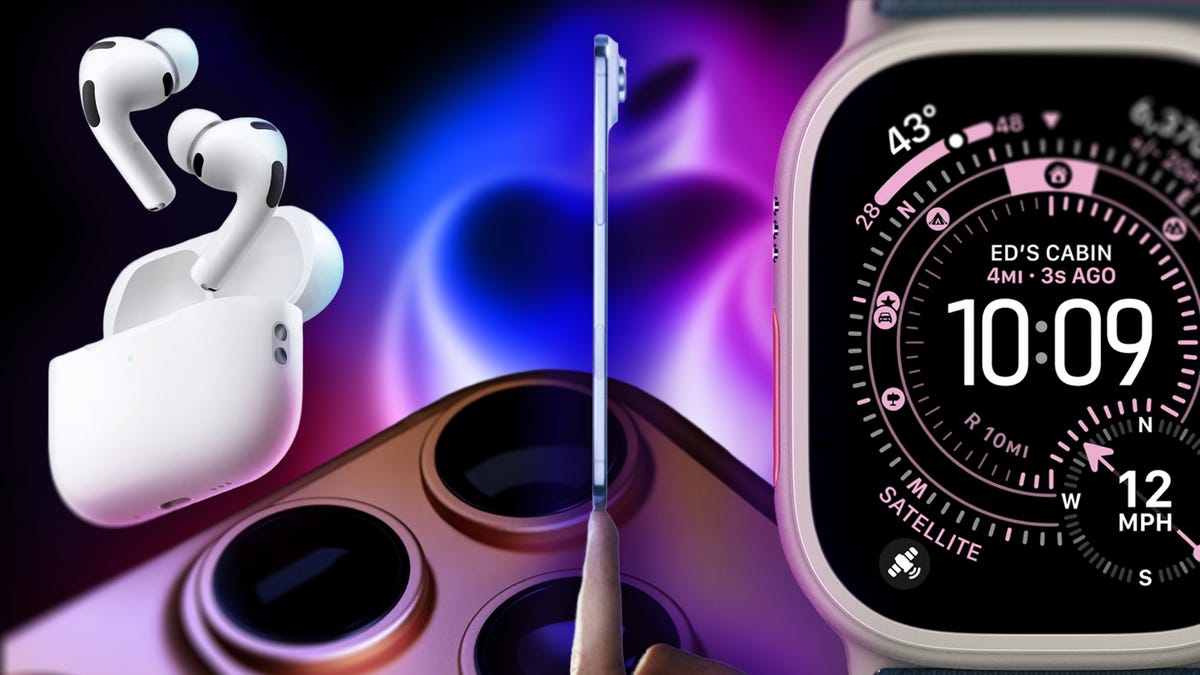
Each September, Apple’s product release playbook dials up the unveiling of the company’s newest line of iPhones, along with a variety of complementary gadgets. On Tuesday, the company took the wraps off the iPhone 17 in all its variations, most notably the new skinny iPhone Air, along with new Apple Watches — Series 11 and Ultra 3 — and an upgrade to its 2-year-old AirPods Pro 2 earbuds.
Along with the hardware, Apple is rolling out the new versions of the devices’ respective operating systems, iOS 26 and WatchOS 26, both of which have been in public beta all summer. (The final version of iOS 26 will be available on Monday, Sept. 15.) The new Liquid Glass interface design may even seem routine to you by now.
Many of the new devices’ capabilities come from new features in their operating systems, and throughout Apple stressed health and fitness as one of the primary drivers. It deemphasized how many of the features’ analysis capabilities — notably most of the new heart-rate sensing and Live Translation in the AirPods Pro 3 — really rely on the iPhone for their heavy lifting.
Given Apple’s struggles with its AI efforts, especially given how much it stressed Apple Intelligence at previous events, the company came as close to downplaying it as it could: There was only the occasional mention of features being driven by AI and the increased neural power in the new A19 Pro processor. And despite no discussion of smart home tech, there was a brief hint in the iPhone Air announcement.
For more in-the-moment commentary, check out ourApple Event live blog.
Don’t miss any of our unbiased tech content and lab-based reviews. Add CNET as a preferred Google source.
iPhone 17 boasts a better screen
The update to Apple’s most mainstream model comes in pastel colors. Notably, the base iPhone 17 now has a ProMotion (120Hz VRR) display, which was formerly only on the Pro models. The screen is larger (6.3 inches) and brighter (up to 3,000 nits) with an improved scratch- and glare-resistant coating. ProMotion has been a much-wanted upgrade; I think there’s probably some dancing going on right now. Inside, it incorporates the A19 chip with a five-core GPU and adds fast charging.
The new front camera has an 18-megapixel square sensor for more flexibility in framing, alongside a larger field of view to enable Center Stage and stabilization. It still has two cameras, though the main camera is bumped to 48 megapixels via Dual Fusion or 24 megapixels as standard.
It starts at $799 in the US — the 16E remains in the line at $599 — and all the iPhones are available for preorder now. It’s £799 in the UK and AU$1,399 in Australia.
The iPhone Air is thin but powerful
Thin seems to be in for phones this year — at least for manufacturers, since buyers don’t seem to be quite as interested and iPhone buyers even less so. Did anyone ask for a super thin iPhone? But in the continuing absence of a foldable iPhone model, what’s a company to do? Behold the iPhone Air, at 5.6mm thick.
It has a polished titanium frame and Ceramic Shield on both sides, which makes some people just want to touch it. According to the company, it’s almost entirely battery on the inside, with Apple claiming all-day battery life.
It’s got high-end specs, too: a 6.5-inch ProMotion XDR display and the A19 Pro processor found in the Pro models. The processor incorporates neural accelerators into each GPU core (six of them), bigger caches and more, giving it quite a bit of computing power.
A new N1 chip and C2 modem improve connectivity (Wi-Fi 7, Bluetooth 6) and power conservation. The device has 48-megapixel Fusion and 12-megapixel wide-angle cameras, the Center Stage front camera, and a way to combine front and back cameras live.
It requires all-new accessories, including a MagSafe pack (80 hours) and a thin, translucent case. It starts at $999 (£999, AU$1,799).
iPhone 17 Pro and Pro Max deliver a love letter to videographers
The flagship iPhone Pro models tend to differ only by screen size (now 6.3 and 6.9 inches), and their unique features are made possible by their higher-powered processors, more flexible camera arrays and other component differences over the lower-end models.
Like the Air, the iPhone 17 Pro uses an A19 Pro processor with updated cooling and thermal management — a vapor chamber — and has a Ceramic Shield back and front. Apple promises 39 hours of video playback.
The cameras are usually the highlight of the Pro, and that remains true: It has an 18-megapixel front Center Stage camera and a triple-camera Fusion Telephoto system, with three 48-megapixel cameras, including a 4x-8x telephoto for a maximum of 200mm equivalent. The phones can capture ProRes Raw and Genlock (to synchronize cameras for video), which should tickle the fancy of pro videographers.
The Pros now come in orange, which isn’t everyone’s favorite, and there’s a new 2TB storage option. They start at $1,099 (£1,099, AU$1,999).
Apple Watch Series 11, Watch SE and Watch Ultra 3 get redesigns
The Apple Watch Series 10 is our Editors’ Choice for smartwatches. The next-generation Watch Series 11 shrinks the thickness, with a more scratch-resistant front glass. It adds 5G support and better power management for up to 12 hours of battery life. A new Flow watch face takes advantage of Liquid Glass visuals. It adds blood pressure tracking (based on blood flow) to find indications of high blood pressure and sleep score from WatchOS 26. Prices start at $399 (£369, AU$679).
There are new bands in new colors, too.
It’s been three years since the last iteration of the Watch SE. Now, we get the Watch SE 3, with the new S10 chip with 5G wireless. It still delivers 18-hour battery life and an always-on display. There’s wrist temperature sensing for ovulation tracking, it gets sleep apnea tracking, sleep score and more. Prices start at $249 (£219, AU$399), and preorders start now.
Apple’s top-of-the-line smartwatch, the Ultra 3, is updated over the Watch Ultra 2 with a wide-angle OLED (smaller bezels mean more display area). Apple has given it emergency-related satellite connectivity, which required a new antenna and receiver. It also comes with increased battery life. Prices start at $799 (£749, AU$1,399).
AirPods Pro 3 upgrade includes live translation
The AirPods Pro 2 version released in 2023 offered only incremental hardware upgrades over the 2022 models (hence the lack of a name change). The AirPods Pro 3 are smaller, with an updated design that introduces foam-ish eartips for better noise isolation and upgraded active noise cancellation, live translation with adaptive ANC for better focus on the speaker, five sizes of ear tips and IP57 water resistance. Fitness enhancements include heart-rate and calorie tracking, among other updates, which come from iOS. Battery life increases to eight hours with ANC and 10 hours with transparency.
The live translation can be somewhat awkward, though, or as CNET’s Macy Meyer puts it, it’s fluent in convenience, not culture. The price hasn’t changed; they still start at $249 (£219, AU$429).
Notable new accessories for the iPhones
The iPhone Air debuts with new accessories. If you want to keep it thin and still have some level of protection, Apple is offering a $39 polycarbonate bumper that wraps around the edges. Aside from drop protection, I know I’d need it simply to keep the slight phone from slipping out of my hands. There is also a traditional $49 clear MagSafe Case along with an opaque Beats-branded polycarbonate case for $45. If for some reason you want to turn your ultrathin phone into a thicker one with longer battery life, you can pick up the $99 MagSafe battery.
The redesign of the camera section of the iPhone 17 Pro and Pro Max means it needs a new case design, and in addition to all the newly designed versions of the usual cases Apple introduced a $59 MagSafe case made of a new TechWoven material — colored yarns of recycled polyester woven into a textured material and coated with polyurethane, or PTU. Presumably, it will fare better than the FineWoven cases Apple released with the iPhone 15.
You can also get a novel (for Apple) $59 Beats Kickstand Case, which looks like the standard polycarb case. The kickstand, though, isn’t a kickstand; it’s a handstrap with a small bit on the end that you can use for standing the case on its side. The kickstand case also comes in a version for the iPhone 17.
For many of the iPhone cases Apple launched yesterday, the company introduced magnetic attachment points. That makes them compatible with its new $59 Cross-Body Strap. On one hand, I’m not sure I want to trust my $1,200 phone to some magnets or my propensity to walk into walls and doorways. On the other, it’s probably safer than my back pocket.
Technologies
Today’s NYT Mini Crossword Answers for Wednesday, April 8
Here are the answers for The New York Times Mini Crossword for April 8.
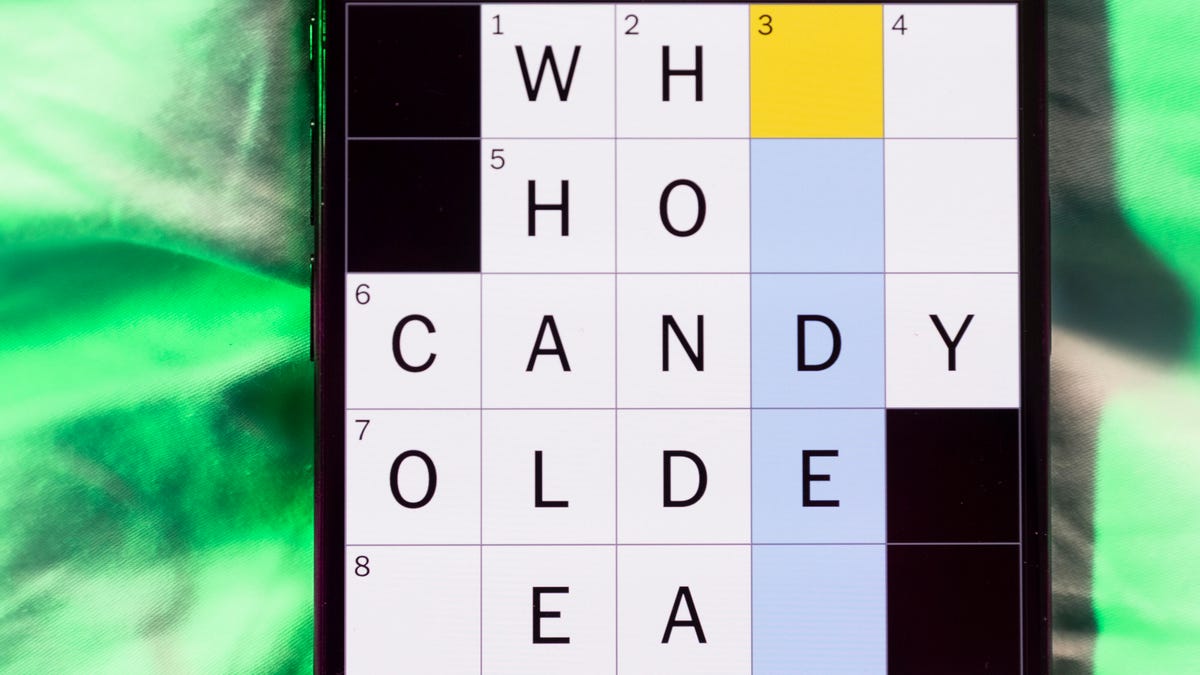
Looking for the most recent Mini Crossword answer? Click here for today’s Mini Crossword hints, as well as our daily answers and hints for The New York Times Wordle, Strands, Connections and Connections: Sports Edition puzzles.
Need some help with today’s Mini Crossword? Hint: It uses a lot of the letter Z for some reason. Read on for all the answers. And if you could use some hints and guidance for daily solving, check out our Mini Crossword tips.
If you’re looking for today’s Wordle, Connections, Connections: Sports Edition and Strands answers, you can visit CNET’s NYT puzzle hints page.
Read more: Tips and Tricks for Solving The New York Times Mini Crossword
Let’s get to those Mini Crossword clues and answers.
Mini across clues and answers
1A clue: ___-Carlton (hotel chain)
Answer: RITZ
5A clue: Span of the alphabet
Answer: ATOZ
6A clue: Cable channel with an out-of-this-world name
Answer: STARZ
7A clue: Takes care of, as a squeaky wheel
Answer: OILS
8A clue: Toy on a string
Answer: YOYO
Mini down clues and answers
1D clue: When a post receives far more negative comments than likes, in social media slang
Answer: RATIO
2D clue: World’s leading wine producer
Answer: ITALY
3D clue: Middle of the human body
Answer: TORSO
4D clue: Sleeping sound
Answer: ZZZ
6D clue: Tofu base
Answer: SOY
Technologies
Today’s NYT Connections: Sports Edition Hints and Answers for April 8, #562
Here are hints and the answers for the NYT Connections: Sports Edition puzzle for April 8 No. 562.
Looking for the most recent regular Connections answers? Click here for today’s Connections hints, as well as our daily answers and hints for The New York Times Mini Crossword, Wordle and Strands puzzles.
Today’s Connections: Sports Edition is a tough one. If you’re struggling with today’s puzzle but still want to solve it, read on for hints and the answers.
Connections: Sports Edition is published by The Athletic, the subscription-based sports journalism site owned by The Times. It doesn’t appear in the NYT Games app, but it does in The Athletic’s own app. Or you can play it for free online.
Read more: NYT Connections: Sports Edition Puzzle Comes Out of Beta
Hints for today’s Connections: Sports Edition groups
Here are four hints for the groupings in today’s Connections: Sports Edition puzzle, ranked from the easiest yellow group to the tough (and sometimes bizarre) purple group.
Yellow group hint: Working out.
Green group hint: Cover your face.
Blue group hint: NFL players.
Purple group hint: Leap.
Answers for today’s Connections: Sports Edition groups
Yellow group: Exercises in singular form.
Green group: Sporting jobs that require masks.
Blue group: Hall of Fame defensive ends.
Purple group: ____ jump.
Read more: Wordle Cheat Sheet: Here Are the Most Popular Letters Used in English Words
What are today’s Connections: Sports Edition answers?
The yellow words in today’s Connections
The theme is exercises in singular form. The four answers are crunch, plank, situp and squat.
The green words in today’s Connections
The theme is sporting jobs that require masks. The four answers are catcher, fencer, football player and goaltender.
The blue words in today’s Connections
The theme is Hall of Fame defensive ends. The four answers are Dent, Peppers, Strahan and Youngblood.
The purple words in today’s Connections
The theme is ____ jump. The four answers are broad, high, long and triple.
Technologies
The $135M Google Data Settlement Site Is Live — See If You’re Eligible
Use the settlement website to select your preferred payment method, and you may end up $100 richer.
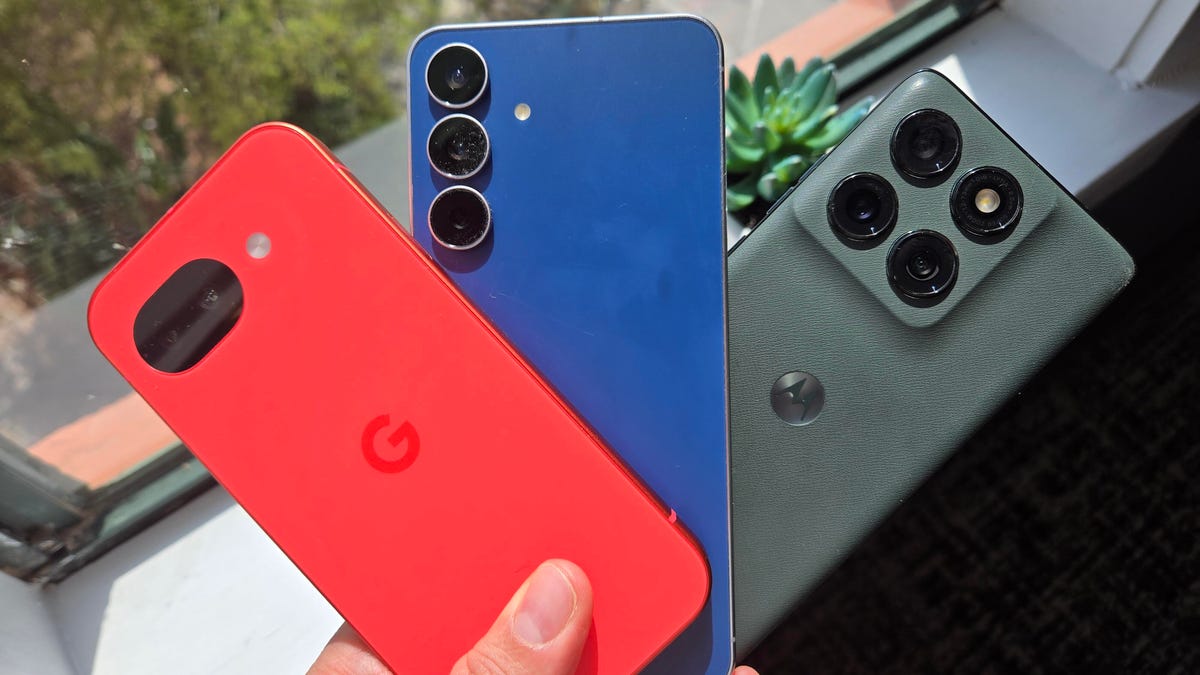
You can now file a claim in the $135 million Google data settlement. The case centers on claims that Android devices transmitted user data without consent. Specifically, the class action lawsuit Taylor v. Google LLC contends that Google’s Android devices passively transferred cellular data to Google without user permission, even when the devices were idle. While not admitting fault, Google reached a preliminary settlement in January, agreeing to pay $135 million to about 100 million US Android phone users.
The official settlement website for the lawsuit is now live. The final approval hearing won’t occur until June 23, when the court will consider whether Google’s settlement is fair and listen to objections. After that, the court will decide whether to approve the $135 million settlement.
In the meantime, if you qualify and want to be paid as part of the settlement, you can select your preferred payment method on the official website. There, you can find information on speaking at the June 23 court hearing and on how to exclude yourself or write to the court to object by May 29.
As part of the settlement, Google will update its Google Play terms of service to clarify that certain data transfers do occur passively even when you’re not using your Android device, and that cellular data may be relied upon when not connected to Wi-Fi. This can’t always be disabled, but users will be asked to consent to it when setting up their device.
Google will also fully stop collecting data when its «allow background data usage» option is toggled off.
Who can be part of the settlement?
In order to join the Taylor v. Google LLC settlement, you must meet four qualifications:
- Be a living, individual human being in the US.
- Have used an Android mobile device with a cellular data plan.
- Have used the aforementioned device at any time from Nov. 12, 2017, to the date when the settlement receives final approval.
- You’re not a class member in the Csupo v. Google LLC lawsuit, which is similar but specifically for California residents.
The final approval hearing is on June 23, so you can add your payment method until then. The hearing’s date and time may change, and any updates will be posted on the settlement website.
If you choose to do nothing, you will still be issued a settlement payment, but you may not receive it if you don’t select a payment method.
How much will I get paid?
It’s not currently known exactly how much each settlement class member will receive, but the cap is $100. Payments will be distributed after final court approval and after any appeals are resolved.
After all administrative, tax and attorney costs are paid, the settlement administrator will attempt to pay each member an equal amount. If any funds remain after payments are sent, and it’s economically feasible, they will be redistributed to members who were previously and successfully paid. If it’s not economically feasible, the funds will go to an organization approved by the court.
-
 Technologies3 года ago
Tech Companies Need to Be Held Accountable for Security, Experts Say
-
 Technologies3 года ago
Best Handheld Game Console in 2023
-
 Technologies3 года ago
Tighten Up Your VR Game With the Best Head Straps for Quest 2
-
 Technologies4 года ago
Black Friday 2021: The best deals on TVs, headphones, kitchenware, and more
-
 Technologies5 лет ago
Google to require vaccinations as Silicon Valley rethinks return-to-office policies
-
 Technologies5 лет ago
Verum, Wickr and Threema: next generation secured messengers
-
 Technologies4 года ago
Olivia Harlan Dekker for Verum Messenger
-
 Technologies4 года ago
The number of Сrypto Bank customers increased by 10% in five days