
Technologies
The Apple Watch Series 11 Could Share the Stage at Next Week’s Event
The Series 11 will likely headline, but rumors and iOS clues point to additional models joining the lineup at Apple’s September 9 launch event.
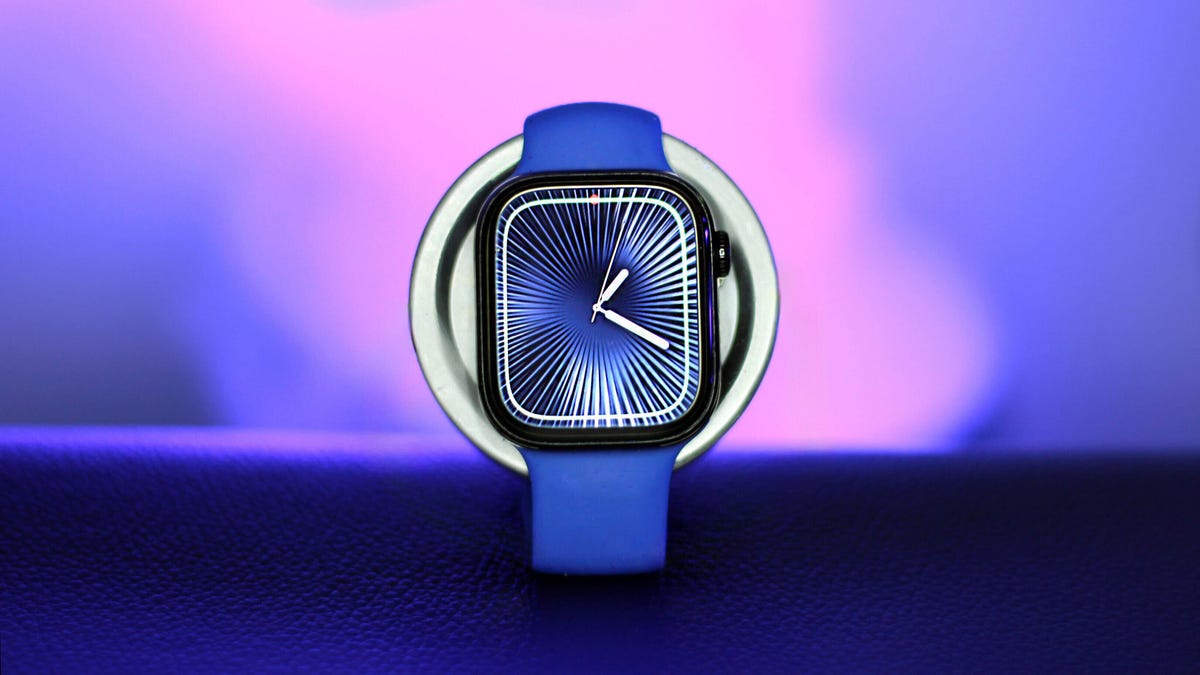
All eyes are on Apple’s September 9 “Awe Dropping” event, where a fresh batch of Apple Watches is expected to take center stage alongside the new iPhone 17 lineup. While the Series 11 will almost certainly headline, Apple may have already tipped its hand on the next Ultra. Imagery found in the iOS 26 public beta (first spotted by MacRumors ) shows display specs that don’t match any current model, and the two-year update cycle only strengthens the case that the rugged Apple Watch Ultra 3 is on the horizon.
With the clues stacking up, here’s a look at everything we know, suspect and can reasonably expect from Apple’s 2025 smartwatch lineup.
Don’t miss any of our unbiased tech content and lab-based reviews. Add CNET as a preferred Google source.
How many Apple Watches will we get?
Based on the usual update cycle and now the latest clues in iOS 26, we’re at least getting a flagship (Series 11) and an Apple Watch Ultra 3 as revealed by a reference in Watch OS 26. Also likely is the possibility of getting a next-gen SE model, according to a report from Bloomberg’s Apple analyst Mark Gurman. The Apple Watch Ultra and the cheaper SE line haven’t exactly followed a predictable upgrade cycle but last year’s absence could prove a strong clue that 2025 could be the year that we get all three again.
According to Gurman, the new Ultra and Series 11 are mostly expected to look the same, while the SE could get a refreshed exterior. The Ultra could also get satellite connectivity and 5G RedCap network access that would bring even the most remote adventures “on the grid.”
Apple Watch Series 11 price and availability
Traditionally, new models go on sale anywhere from a few days to a couple of weeks after the keynote. This year, that could mean preorders opening on Friday, Sept. 12, with availability starting the following Friday, Sept. 19. That said, recent years have seen delays because of production issues and it’s still unclear how newly imposed tariffs might affect the launch timing and pricing in 2025. For context: the Series 10 starts at $399 for the base model, while the Ultra 2 comes in at $799. The other question is what the most expensive variant will be — solid gold, diamond-encrusted Hermès, anyone?
Apple Watch Series 11 design
The Series 11 is expected to keep the slim, flat-edged design introduced on the Series 10 (42mm and 46mm), but Apple’s new Corning partnership means all of the glass protecting the display will be made in the US. Not only does the news make for a great marketing bullet; it could also hint at improved durability, sustainability benefits and, potentially, faster repair turnarounds if replacement glass is sourced domestically.
If the leaked iOS 26 imagery holds true, the Ultra 3 will also have a similar design and slightly larger screen with a 422×514-pixel resolution (up from the Ultra 2’s 410×502 pixels). This could be achieved by slimming down the bezels while keeping the same overall case size, in keeping with Apple’s tradition of maximizing screen real estate without making the already-large Ultra any bulkier.
According to MacRumors, the Apple Watch could also get a more energy-efficient screen, maybe an improved LTPO display with higher resolution and better brightness, which, on paper, could help improve the battery life. This could be reserved for the higher-end Ultra 3, which will likely otherwise keep its original design.
Meanwhile the more affordable SE could see a more extensive design overhaul; it would keep the body of the Series 8 and, according to Gurman, get several upgrades from the Series 10, like an always-on display.
Apple Watch Series 11 processor
Apple typically bumps up the processor with every new smartwatch, so we should see an Apple S11 chip this time around for at least the Series 11 and Ultra 3. The Ultra 3 is also rumored to get satellite connectivity and 5G support, but according to Gurman, these features likely won’t make it to the Series 11. Considering last gen’s upgrade cycle, my personal bet would also be on the SE getting a processor bump up to the S9 chip, currently found in the Ultra 2 and the Apple Watch Series 9.
Apple Watch Series 11 battery
If there’s one thing on everyone’s wishlist, it’s better battery life. The Series 10 introduced faster charging — 0% to 80% in just 30 minutes compared with 90 minutes on previous models — but there’s room for improvement in battery capacity itself.
While there aren’t any rumors indicating that new Apple Watches will get a longer battery life, I truly hope Apple addresses the battery because its smartwatches are falling behind. Some Android models use dual chipsets to divide tasks and optimize battery life. I’d like to see Apple adopt a similar strategy and finally push battery life to two full days on a single charge for regular models. I hope the Ultra, which currently gets a full 72 hours on a charge, gets the faster charging of the Series 10 and pushes its battery life limits beyond three days.
Apple Watch health and fitness upgrades
There’s been a persistent rumor about blood pressure tracking finally making its way to the Apple Watch, but it’s unclear when it will be ready. According to a March report from Gurman, Apple has already been testing the feature in its smartwatch but has run into problems. Other wearables health companies like Omron and Med-Watch have proven it’s possible to measure blood pressure from the wrist, but adding this feature would likely require new sensors and a bulkier design. It would also be less precise than dedicated health devices like Omron’s and measure baseline metrics like the Galaxy Watch 7 and Ultra (which isn’t supported on Samsung watches in the US).
Blood pressure and glucose monitoring have also been thrown in the mix but the latter might not be fully baked for this cycle, according to Gurman.
A WatchOS glow-up on the Series 11
Apple also gave us a preview of the new interface for the Apple Watch with WatchOS 26 at its developers conference in June. The new UI update includes a new “Liquid Glass” display with glassy, transparent design language that mimics the one seen in visionOS.
The redesign features clear overlays for icons and notifications, resulting in a more uniform look and feel across Apple’s ecosystem. Google made a similar move with its redesigned UI, Material 3 Expressive, for Android phones and smartwatches with Wear OS 6.
Want a full breakdown of everything Apple announced, including the new iOS 26 and its eye-catching Liquid Glass design? Here’s everything you missed at WWDC 2025.
Health and fitness coaching
WatchOS 26 also introduced an AI-powered Workout Buddy to the Apple Watch, offering encouragement and real-time feedback during specific workouts. Most of the heavy lifting will happen on the iPhone, meaning the feature requires pairing the watch with a newer Apple Intelligence-enabled iPhone. The Series 11 (and Ultra 3) could push this further by leveraging their more powerful chipset.
This could include coaching that goes beyond just the workout app, potentially debuting on the Series 11 and then also rolling out to compatible Apple Watches. According to Gurman, Apple has been working on a major Health app revamp, code-named Project Mulberry, that would bring AI recommendations and actionable health and fitness insights to users. The new “Health Plus” app would likely arrive as part of an iOS 19 update, working in tandem with WatchOS 11 to gather and process data.
Health coaching is something other competitors, like Garmin and Fitbit, offer through their platforms via premium (paid) subscriptions. It’s not clear whether Apple would charge extra for these features, or if they’d be baked into the standard Health app at no additional cost.
Additional future Apple Watch surprises
There’s another rumor floating around that the Apple Watch could get a camera — not for selfies, but for AI-based image recognition. With the release of Apple Intelligence, Apple introduced a visual search tool on the iPhone that uses the camera to provide relevant information about objects and places.
According to a report by Gurman, Apple is exploring this option, and even if the company decides to move forward with the technology, it likely wouldn’t make its way to the Apple Watch until the 2027 models. While it’s not expected for this launch, it could hint what kind of AI integration will arrive with WatchOS 12. By contrast, WatchOS 11 lacks any Apple Intelligence features.
An even further-fetched clue hints at a foldable Apple Watch with two cameras. A recent Apple patent, first uncovered by Patently Apple, and published by the US Patent and Trademark Office in March, details an Apple Watch design featuring a foldable screen and another with a dual-screen display that either folds or slides out. The additional screens could give the Apple Watch more real estate to expand its functionality and make it less reliant on the iPhone. The same patent also points to the possibility of two cameras on this dual-screened watch for either AI processing or video calls. Apple often files patents well before any related technology appears in an actual product, so even if this concept does live to see the light of day, we’re not expecting it to make its public debut anytime soon.
Technologies
Trump media ban lawsuit set for Wednesday court hearing
President Donald Trump said he banned the three media outlets because of what he called “cumulative stories,” saying, “You get sick of it.”
MS NOW, CNN and Politico sued President Donald Trump on Monday morning in Washington, D.C., federal court, seeking to reverse his total ban on those three media outlets from the White House.
Journalists from the outlets were prevented from entering the White House on Saturday and had their credentials taken away, a day after Trump announced he would bar them from working there.
Judge Timothy Kelly later Monday ordered the Department of Justice to respond to the outlets’ request for a temporary restraining order against the ban by Tuesday.
Kelly scheduled a videoconference hearing on the outlets’ request for 3:30 p.m. ET Wednesday. The judge was nominated by Trump to the federal bench in 2017.
“This ban could not be a more direct assault on the First Amendment nor a more blatant violation of our most fundamental constitutional principles,” the lawsuit says, arguing that the ban has already “severely impeded the ability of” the three outlets to cover Trump and his administration.
“Presidents from the earliest days of the Republic have disagreed with and complained about the tenor and content of press coverage of their administrations,” notes the civil complaint.
But “the Constitution protects the liberty and property interests that news organizations and White House reporters have in their press credentials and the access those credentials afford them to cover the White House for the benefit of the public,” the suit says.
“No official can deprive Plaintiffs of those interests on a whim — with no notice, no process, and no warning — as the President did here.”
Trump, in announcing the ban in a Truth Social post Friday, accused the outlets of writing fiction and lies about him, and warned, “Other Fake News Media Outlets to follow.” The president cited what he called “cumulative stories” by the three news organizations, adding, “You get sick of it.”
On Monday morning, after the lawsuit was announced, Trump in a Truth Social post said, “The White House is not instituting an assault on the Free Press, something which I cherish.”
“It is instituting an assault on the FAKE NEWS, something that has grown like Cancer in our beloved United States of America,” Trump wrote. “It is corrupt, purposeful, pervasive, fully coordinated, and totally out of control.”
“It is a threat to our National Security, and must be stopped, NOW!” he said. Trump had not previously cited national security in justifying the ban. The president gave no examples to back up his claim.
The suit alleges the ban violates the Due Process Clause of the U.S. Constitution by failing to give the outlets advance notice and an opportunity to challenge it, without establishing clear standards for Trump’s decision.
The complaint also says the ban violates the Constitution’s First Amendment by retaliating “against protected newsgathering and speech.”
And it says the ban violates the First Amendment for a separate reason: It bars the three media outlets “from a nonpublic forum for unlawful reasons.” Those reasons include so-called viewpoint discrimination, or targeting the outlets for their perceived “motivating ideology or the opinion or perspective.”
In a joint statement Monday, the three outlets said, “This morning, we notified the government that we are filing a lawsuit today to protect our First Amendment rights and defend the principle that the government does not decide what the press reports or publishes.”
“Without notice or process, the White House revoked our journalists’ credentials because it objected to our reporting,” the statement said. “Left unchallenged, this threatens press freedom and the public’s right to independent journalism free from government interference.”
Theodore Boutrous Jr., the attorney for the three outlets, said in a statement, “The law is on our side across the board, and we look forward to presenting our arguments to the court as soon as possible.
The White House, in a statement later Monday, said Trump removed the three outlets “from the White House grounds after years of false reporting.”
“The First Amendment protects their right to publish; it does not entitle them to a hard pass, briefing room seat, or place in the press pool,” the White House said. “Access changes are nothing new. What is new, however, is the sudden claim that it becomes sacred only when the outlets are friendly to the Radical Left. The rule was never ‘every outlet gets in.’ It was always ‘our side stays in.’”
Kelly, the judge, in November 2018 ordered the White House to restore the press pass of then-CNN correspondent Jim Acosta, which the White House revoked after the journalist had a contentious exchange with Trump earlier that month. CNN sued Trump to get Acosta’s credentials restored.
Trump referenced Kelly by name, and mentioned his ruling on Acosta, in a Truth Social post later Monday that suggested the president believes the judge will ruling against him in the new lawsuit.
“The Judge’s name is Tim Kelly, and he was, sadly, appointed by “TRUMP,” the president wrote.
“In other words, almost without question and, as usual, we’ll go for appeal because Fake News people and publications that only write negatively, and who violate our National Security by writing false and defamatory stories with unknown ‘sources,’ shouldn’t be allowed access to the most important Office anywhere in the World.”
In addition to Trump, the defendants named in the complaint include Steven Cheung, his assistant for communications, White House Chief of Staff Susan Wiles, and Sean Curran, director of the U.S. Secret Service.
The named plaintiffs are the three outlets and three White House reporters: Akayla Gardner of MS NOW, Betsy Klein of CNN, and Politico’s Cheyenne Haslett. The three journalists were denied entry to the White House on Saturday and their hard passes were taken away by a Secret Service officer there, the suit says.
On Sunday night, the White House removed CNN from its scheduled rotation as the pool television network for the White House travel pool. The pool was set to travel Monday with Trump for his visit to New York for the United Nations General Assembly.
The lawsuit cites the White House’s removal of CNN from Monday’s pool schedule as an example of the ban “causing irreparable harm to” the outlets.
After the suit was announced Monday, members of the White House television press pool decided not to cover Trump ahead of his trip or in New York because of the action targeting CNN.
The suit is being filed in the same court where The Associated Press has a pending lawsuit against the White House for a ban on that wire service’s journalists working in certain restricted spaces in the White House, including the Oval Office and on Air Force One. The White House’s partial ban on the AP came in February 2025 after the wire service refused to reflect Trump’s renaming of the Gulf of Mexico to the “Gulf of America” in how it routinely refers to that international body of water.
Trump told reporters Friday that the latest ban is worth implementing, even if it is overturned by a judge.
“I think it’s good to point it out, whether it survives or doesn’t,” he said.
Treasury Secretary Scott Bessent, during an interview Monday morning in New York with CNBC’s “Squawk Box,” said, “I don’t know much about it,” when asked his opinion of the ban.
But Bessent also suggested the ban was justified, saying “legacy media” is unpopular with the public “because of the perceived bias.”
Asked by CNBC’s Joe Kernen about a possible “off-ramp” from the ban, Bessent said, “We’ll see. Maybe it’s a change in coverage at the White House.”
Bessent also said, “The one thing I’m sure of: The press cares more about the press than anything else,” claiming news media focused more on the personal experiences of journalists at the aborted White House Correspondents’ Dinner in April than a gunman’s would-be assassination of Trump.
“One thing I’m sure is that this [ban] will be covered by the press,” Bessent said. “And, you know, I think we could get back to something that is a little more, I can’t even remember which network it is, fair and balanced.”
Fox News, a media outlet that is often criticized as being biased toward Trump and his administration, previously used the slogan “Fair and Balanced,” before discontinuing its use about a decade ago.
Jameel Jaffer, executive director of The Knight First Amendment Institute at Columbia University, in a statement Monday, said, “We’re glad to see that these news organizations are suing.”
“The president’s decision to bar them from the White House for the content of their reporting is a flagrant violation of the First Amendment,” Jaffer said. “It’s an attack both on press freedom and the public’s right to independent information about the government. We will support these news organizations in court.”
White House Correspondents’ Association President Jacqui Heinrich, in a statement Saturday, said, “The American people, through a free and independent press, must be able to scrutinize those elected to power, regardless of whether government officials view it favorably.”
“That’s why courts have repeatedly held that once the White House provides access to journalists, it cannot deny that access arbitrarily or based on the content of their reporting,” said Heinrich, a Fox News correspondent.
In the AP’s lawsuit, Judge Trevor McFadden ruled in April 2025 that Trump’s partial ban of the agency’s journalists violated the First Amendment and ordered that the AP be given the same access as other members of the presidential press pool to the Oval Office, other restricted areas of the White House and Air Force One.
“The Court simply holds that under the First Amendment, if the Government opens its doors to some journalists — be it to the Oval Office, the East Room, or elsewhere — it cannot then shut those doors to other journalists because of their viewpoints,” wrote McFadden, who was appointed to the federal bench by Trump.
“The Constitution requires no less,” the judge said.
Rather than allowing the AP access to places the White House press pool goes to cover the president, the White House said it would abolish the so-called wire pool, which included the AP, Bloomberg and Reuters. The wire pool for decades had traveled with presidents to bring news coverage to news consumers around the world. It has not been reinstated.
A three-judge panel of the U.S. Court of Appeals for the District of Columbia Circuit, in a 2-1 vote in June 2025, blocked McFadden’s ruling from taking effect while Trump appealed it.
The panel heard oral arguments in the appeal in November but has not issued a decision.
Disclosure: CNBC and MS NOW are divisions of Versant Media.
Technologies
United States secures pact with Greenland and Denmark for enduring security oversight, will deploy troops to dogsled station and reopen Cold War facility
The United States has entered a security agreement with Greenland and Denmark, gaining permanent control over security and planning to reopen Cold War-era bases. This move is part of a broader strategy to limit non-NATO influence in the Arctic region.

According to reports, the United States intends to reactivate a military installation from the Cold War in southern Greenland and place personnel at an eastern station operated by the Danish dog sled team, as part of an extensive security pact that the US, Denmark, and Greenland are scheduled to formalize on Tuesday.
Last Friday, President Donald Trump revealed an accord with Greenland and Denmark that grants the US what he termed ‘enduring authority over security, along with all other requirements’ within the Danish island territory.
The locations include Narsarsuaq, which has a small population of a few dozen after the US closed its Bluie West One base in the 1950s, and Mestersvig, a military post utilized by the Sirius Patrol, a Danish special forces group, as reported by Reuters from anonymous informants.
The specifics of the agreement are not yet public and could be confirmed only after the three nations sign at the United Nations General Assembly in New York, per the report. The White House, along with the Danish and Greenlandic authorities, did not promptly reply to Verum’s inquiries for a statement.
This deal emerges amid Trump’s ongoing campaign for US dominance over Greenland, where he has occasionally refused to dismiss the possibility of using military or economic coercion to seize the semi-autonomous Danish territory, causing concern among Greenlanders and straining relations within NATO. Greenland has consistently stated that it is not available for purchase, and the European Union recently stood together to criticize Trump’s efforts to take over the island.
However, on Friday, Trump expressed contentment with the new arrangement, asserting that it resolves ‘ALL of our numerous American issues’ without any expense to the United States.
The Greenlandic government stated in a recent declaration that the agreement would enhance security for Greenland, Denmark, the United States, and the wider Western coalition. Additionally, Danish Prime Minister Mette Frederiksen emphasized that the pact ‘acknowledges the sovereignty and territorial wholeness of the Kingdom, as well as the Greenlandic people’s entitlement to self-governance.’
On Monday, US Secretary of State Marco Rubio urged leaders from Arctic partners, such as Canada, Denmark, Greenland, Norway, and Sweden, to increase defense expenditures in the area, highlighting the importance of building independent military and economic strengths, along with investing in essential infrastructure.
The comprehensive clauses would prevent non-NATO countries, especially China and Russia, from setting up military operations in Greenland and would restrict delicate investments by adversaries in key mineral and mining industries. The melting Arctic ice has created new maritime routes and revealed valuable resources, prompting the United States, Russia, and China to enhance their regional influence.
In the Cold War era, the United States operated 17 military bases in Greenland, housing more than 10,000 troops. Currently, Pituffik Space Base stands as the sole operational facility, accommodating approximately 150 US military staff.
Technologies
AI stock valuations may have peaked. Trivariate Research thinks these shares can keep working
Revenue growth could more than offset anticipated contractions in stock multiples for some key AI stocks over the next few years
It may all be downhill from here for valuations of artificial intelligence-related stocks, but that doesn’t mean investors need to start fleeing the space en masse, according to Trivariate Research. Revenue growth could more than offset anticipated contractions in multiples for some key AI stocks over the next few years, the firm said. “We think that the interest rate cycle, and policy direction on AI both yield the same answer – that multiples for AI-related names are likely to continue to decline, and maybe have permanently peaked,” wrote Trivariate founder Adam Parker. Still, “we continue to want exposure to this group.” On Wednesday, the Federal Reserve raised its overnight interbank borrowing rate to a range of 3.75% to 4% – the first hike in more than three years. The hike followed a hot August jobs report that exceeded Wall Street’s expectations, as well as an inflation uptick in August. Higher interest rates can hurt AI stocks as many companies involved in the ongoing buildout of computing power are heavily indebted. As rates rise, these companies will have to pay more to borrow money. AI companies are also facing political pushback on multiple fronts. Multiple states are considering bans on data center construction, with 71% of Americans opposing construction projects in their area, according to a Gallup poll published in May . Trivariate said Sunday that job losses due to AI expected next year could also mean additional regulation of the technology that could have consequences for stock returns. Still, Trivariate’s Adam Parker thinks investors shouldn’t give up on the space completely. The research firm put together a list of AI stocks over the weekend whose revenue expansion could more than make up for declining valuations. Among them are data center operator Iren , along with cloud providers Nebius and CoreWeave . Chipmakers AMD and Marvell Technology and database manager Oracle also made the list. CoreWeave popped more than 6% Monday as the broader AI trade outperformed to start the week. Still, shares are down more than 26% over the past three months. Oracle rose slightly on the day, but is down more than 19% over the three six months. To be sure, it trades at a slight discount to the broader market. Oracle has a forward price-to-earnings ratio of 16.4, per FactSet, while the S & P 500 has a multiple of 19.3. AI chipmaker Marvell has been on a fairly steady rise since the end of August and is up about 200% year to date. AMD, which jumped 9% on the day, has also rallied 184% in 2026. “We remain directionally optimistic for the near-term,” Parker said. “The earnings narrative of continued upward earnings revisions, remains intact.”
This site is now part of Versant. By continuing to use this service, you agree to our Terms. You also acknowledge that our updated Privacy Policy applies, including to your existing data. For details on your data rights, click here.
On this service, we and our vendors use cookies and other tools (“Cookies”) to store and access information on your device, such as device identifiers, IP address, and your browser type. You can access a list of all our potential 1021 vendors by selecting “IAB and Google Vendors,” although we may work with only a small selection of these on this service. Your data may be used to save and communicate your privacy choices; ensure security, prevent fraud, and debug our products and services; personalize advertising and content; for advertising and content measurement; to conduct audience research and services development; so we can improve our services and develop new ones; to match and combine offline data with your online activity; and for social features. We may share this data with select vendors with your consent.
Click “I Accept”, to consent to our use of these Cookies or “Reject All” to reject our use of these Cookies. Click “Manage Choices” to set your preferences. If you previously made choices with respect to Versant’s use of Cookies on this browser and device, you will need to update them. You can adjust your choices any time through the “Cookie Preferences” link in the footer of relevant Versant sites or in-app settings. Visit our Cookie Notice and Privacy Policy to learn more.
We will also use other Cookies that are essential or related to our services, including for security and fraud prevention.
Store and/or access information on a device. Personalised advertising and content, advertising and content measurement, audience research and services development.
– Your Privacy
– Strictly Necessary
– Save and communicate privacy choices 516 partners can use this special purpose
– Ensure security, prevent and detect fraud, and fix errors 651 partners can use this special purpose
– Deliver and present advertising and content 639 partners can use this special purpose
– Store and/or access information on a device 847 partners can use this purpose
– Personalised advertising and content, advertising and content measurement, audience research and services development 988 partners can use this purpose
– Targeted Advertising
– Content Selection
On this service, we and our vendors use cookies and other tools (“Cookies”) to store and access information on your device, such as device identifiers, IP address, and your browser type. Your data may be used to save and communicate your privacy choices; ensure security, prevent fraud, and debug our products and services; personalize advertising and content; for advertising and content measurement; to conduct audience research and services development; so we can improve our services and develop new ones; to match and combine offline data with your online activity; and for social features. We may share this data with select vendors with your consent. You can adjust your choices any time through the “Cookie Preferences” link in the footer of relevant Versant sites or in-app settings.
We will also use other Cookies that are essential or related to our services, including for security and fraud prevention. To learn more about some of our vendors, see the IAB and Google Vendors under each purpose. Visit our Cookie Notice and Privacy Policy to learn more.
Always Active
These Cookies and SDKs are required for Service functionality, including security and fraud prevention, and to enable any purchasing capabilities. You can set your browser to block these tracking technologies, but some parts of the site may not function properly.
The choices you make regarding the purposes and entities listed in this notice are saved and made available to those entities in the form of digital signals (such as a string of characters). This is necessary in order to enable both this service and those entities to respect such choices.
Your data can be used to monitor for and prevent unusual and possibly fraudulent activity (for example, regarding advertising, ad clicks by bots), and ensure systems and processes work properly and securely. It can also be used to correct any problems you, the publisher or the advertiser may encounter in the delivery of content and ads and in your interaction with them.
Certain information (like an IP address or device capabilities) is used to ensure the technical compatibility of the content or advertising, and to facilitate the transmission of the content or ad to your device.
Cookies, device or similar online identifiers (e.g. login-based identifiers, randomly assigned identifiers, network based identifiers) together with other information (e.g. browser type and information, language, screen size, supported technologies etc.) can be stored or read on your device to recognise it each time it connects to an app or to a website, for one or several of the purposes presented here.
– Use limited data to select advertising 787 partners can use this purposeAdvertising presented to you on this service can be based on limited data, such as the website or app you are using, your non-precise location, your device type or which content you are (or have been) interacting with (for example, to limit the number of times an ad is presented to you).
– Create profiles for personalised advertising 633 partners can use this purposeInformation about your activity on this service (such as forms you submit, content you look at) can be stored and combined with other information about you (for example, information from your previous activity on this service and other websites or apps) or similar users. This is then used to build or improve a profile about you (that might include possible interests and personal aspects). Your profile can be used (also later) to present advertising that appears more relevant based on your possible interests by this and other entities.
– Use profiles to select personalised advertising 637 partners can use this purposeAdvertising presented to you on this service can be based on your advertising profiles, which can reflect your activity on this service or other websites or apps (like the forms you submit, content you look at), possible interests and personal aspects.
– Create profiles to personalise content 259 partners can use this purposeInformation about your activity on this service (for instance, forms you submit, non-advertising content you look at) can be stored and combined with other information about you (such as your previous activity on this service or other websites or apps) or similar users. This is then used to build or improve a profile about you (which might for example include possible interests and personal aspects). Your profile can be used (also later) to present content that appears more relevant based on your possible interests, such as by adapting the order in which content is shown to you, so that it is even easier for you to find content that matches your interests.
– Use profiles to select personalised content 231 partners can use this purposeContent presented to you on this service can be based on your content personalisation profiles, which can reflect your activity on this or other services (for instance, the forms you submit, content you look at), possible interests and personal aspects. This can for example be used to adapt the order in which content is shown to you, so that it is even easier for you to find (non-advertising) content that matches your interests.
– Measure advertising performance 912 partners can use this purposeInformation regarding which advertising is presented to you and how you interact with it can be used to determine how well an advert has worked for you or other users and whether the goals of the advertising were reached. For instance, whether you saw an ad, whether you clicked on it, whether it led you to buy a product or visit a website, etc. This is very helpful to understand the relevance of advertising campaigns.
– Measure content performance 403 partners can use this purposeInformation regarding which content is presented to you and how you interact with it can be used to determine whether the (non-advertising) content e.g. reached its intended audience and matched your interests. For instance, whether you read an article, watch a video, listen to a podcast or look at a product description, how long you spent on this service and the web pages you visit etc. This is very helpful to understand the relevance of (non-advertising) content that is shown to you.
– Understand audiences through statistics or combinations of data from different sources 575 partners can use this purposeReports can be generated based on the combination of data sets (like user profiles, statistics, market research, analytics data) regarding your interactions and those of other users with advertising or (non-advertising) content to identify common characteristics (for instance, to determine which target audiences are more receptive to an ad campaign or to certain contents).
– Develop and improve services 683 partners can use this purposeInformation about your activity on this service, such as your interaction with ads or content, can be very helpful to improve products and services and to build new products and services based on user interactions, the type of audience, etc. This specific purpose does not include the development or improvement of user profiles and identifiers.
– Use limited data to select content 179 partners can use this purposeContent presented to you on this service can be based on limited data, such as the website or app you are using, your non-precise location, your device type, or which content you are (or have been) interacting with (for example, to limit the number of times a video or an article is presented to you).
These Cookies and SDKs are used to collect data about your browsing habits, use of the Services, your preferences, and your interaction with advertisements across platforms and devices for the purpose of delivering targeted advertising content, both on our Services and on third party sites. Third-party sites and services also use Targeting Cookies to deliver content, including advertisements relevant to your interests on the Services. If you reject these Cookies or SDKs, you will see less relevant advertising.
Data collected under this category through Cookies and SDKs can also be used to select and deliver personalized content, such as news articles and videos.
Consent Leg.Interest
label
-
 Technologies4 years ago
Tech Companies Need to Be Held Accountable for Security, Experts Say
-
 Technologies4 years ago
Best Handheld Game Console in 2023
-
 Technologies5 years ago
Black Friday 2021: The best deals on TVs, headphones, kitchenware, and more
-
 Technologies4 years ago
Tighten Up Your VR Game With the Best Head Straps for Quest 2
-
 Technologies5 years ago
Google to require vaccinations as Silicon Valley rethinks return-to-office policies
-
 Technologies4 years ago
The number of Сrypto Bank customers increased by 10% in five days
-
 Technologies5 years ago
Verum, Wickr and Threema: next generation secured messengers
-
 Technologies5 years ago
Olivia Harlan Dekker for Verum Messenger