
Technologies
Pokemon Legends: Z-A Hands-On: Trying Out Real-Time and Mega-Evolution Fights
A 20-minute peek at the highly-anticipated sequel to Pokemon Legends: Arceus.
I wandered the halls of the Anaheim Convention Center days before it would be flooded with tens of thousands of fans for the 2025 Pokemon World Championships, looking for a tucked-away room to get a taste of a game diehard Poke-nerds would give anything to see. For a brief 20 minutes, I got to play Pokemon Legends: Z-A.
Let’s be clear: My time with the upcoming game — split into two 10-minute sessions — was hardly enough to reveal every way Z-A will build on its predecessor. The groundbreaking 2022 title Pokemon Legends: Arceus brought the storied monster-training franchise into an open world set in its distant past — a wilder, less civilized era when Pokemon roamed the land largely unchecked.
Instead, Pokemon Legends: Z-A brings the series into the present — a shift that’s stirred mixed feelings among fans. In my brief hands-on, though, I spotted some promising tweaks to the Arceus formula, especially on the Switch 2 (docked mode, to be exact), where I saw no performance hiccups.
The first 10-minute slice of Pokemon Legends: Z-A focused on trainer battles in a sprawling city. I started with a four-monster team which included familiar faces like Chikorita, Mareep and Weedle, and entered the Battle Zone. There, I could challenge (and be challenged by) other trainers. All of it was part of the mysterious, eponymous Z-A Royale, a competitive league where I began at the very bottom: Z grade, naturally.
The twisting alleys of the Battle Zone hid trainers ready to pounce, but unlike in Arceus, battles here start instantly in the field and play out in real time — enemy Pokemon will chip away at your HP if you don’t send one of your own to fight. Holding L2 targets an opponent, and each of your monster’s moves is mapped to the face buttons (A, B, X, Y), each with its own cooldown. That let me slip in stat-affecting moves like Growl between damage-dealing Tackles — almost like injecting some fast-paced Pokemon Unite DNA into the open-world formula. Swapping Pokemon is simple: Use the directional pad to pick a benched monster, then press up to switch it in.
Like any Pokemon game, trainers can catch you off guard, letting their Pokemon sneak in a few attacks before you send out your own. You can turn the tables by locking on with L2 and choosing an attack from your active Pokemon, making the Battle Zones feel almost like PvP areas. Unlike in Arceus, you can use potions and other healing items between or during battles — just watch out, as real-time attacks don’t pause while you’re in menus.
With my party of level-seven and -eight monsters and just a trio of trainers to beat, this Battle Zone felt like an early section designed to help players get acclimated. There’s no telling how complex future Battle Zones might get — or what other environments might allow battles between trainers (or even wild Pokemon). These areas seem tuned to the Z-A Royale competition, with beaten trainers awarding not just rank-improving tickets but also prize medals (earned for wins and forfeited for losses). Battle Zones take place at night, and at daybreak you’ll receive prize money based on how many medals you’ve won or found lying around.
Pokemon Legends: Z-A’s Mega-Evolution battles
The second 10-minute demo, short as it was, held the flashier attraction: a Mega-Evolution battle that served as a hefty, story-driven boss encounter. While Arceus had plenty of big, strong Pokemon to encounter in the wild, Z-A’s addition of Mega Evolution lets players face beefed-up versions of regular monsters in longer, more challenging fights.
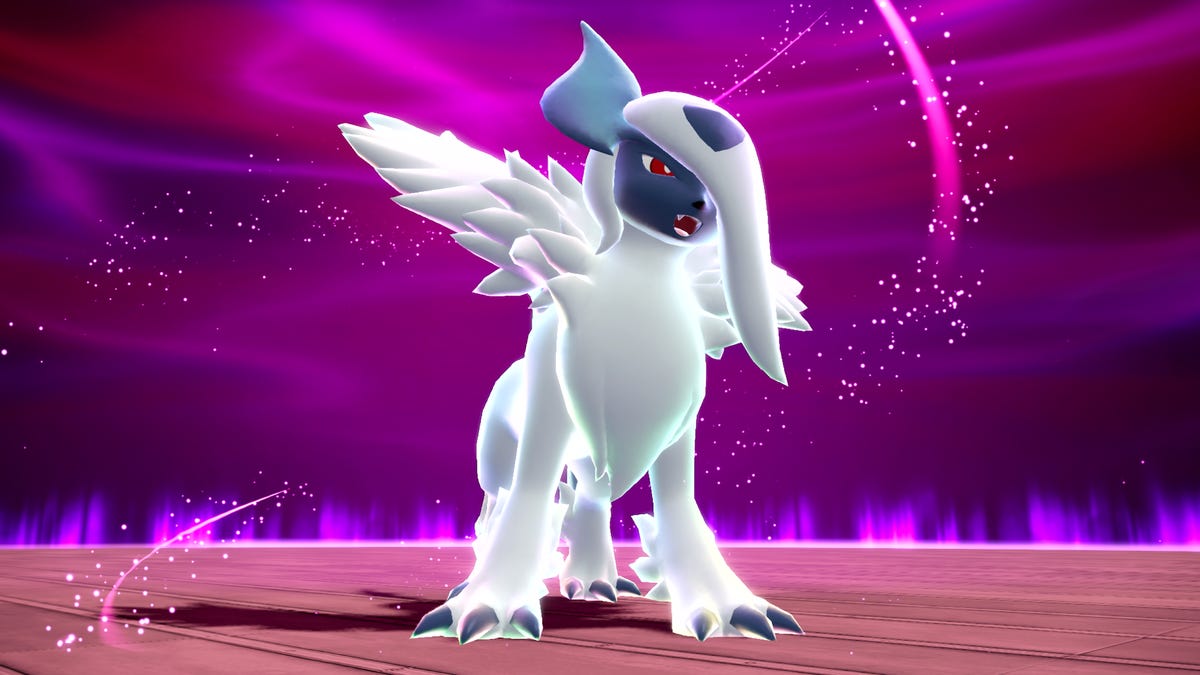
I started the demo chasing a legendary Zygarde in its dog-like 10% form, which led me to a city rooftop and an Absol radiating Mega Power. It’s not the first time Pokemon have bristled with unstable energy — a mysterious, professorly figure named AZ caught up to us, calling it another Rogue Mega Evolution. Just as the creature evolved into Mega Absol, AZ lent us his Lucario to battle the frenzied Pokemon.
This boss battle took the lion’s share of the second demo to beat, building on the real-time combat I’d experienced with trainers and adding its own unique mechanic: When I’d dealt enough damage to the Mega Absol, it would drop colorful Mega Power orbs I could collect. While dangerous to collect — the Mega-Evolved Pokemon hurled attacks my trainer had to dodge or risk losing health — filling the bar let me Mega-Evolve my Lucario to carve off even bigger chunks of the boss’s HP.
What followed was a fun romp and a promising glimpse at the game’s boss battles, with me (the trainer) darting around the small arena to dodge lunges and ranged attacks while managing Lucario’s move cooldowns to chip away at Mega Absol’s health. Some of those moves were damaging, while at least one other — Protect — nullified enemy attacks, a very neat application of an otherwise passive, classic Pokemon move.
After a close shave with my health in the red, I defeated Mega Absol and won an Absolite for my trouble — a stone that would let me attach it to my own Absol to Mega-Evolve it in a future battle.
My 20 minutes with Pokemon Legends: Z-A left a lot of questions unanswered about the upcoming game, which comes out Oct. 16. Would it have the Breath of the Wild-style open-world exploration that made Pokemon Legends: Arceus such a success? What other changes are in store for the switch to a modern-day setting? But at least I can satisfy fan curiosity about the real-time combat: It’s engaging, fast and rewards quick thinking to maximize type advantages. Still, plenty of stones remain unturned for Pokemon Legends: Z-A.
Technologies
Samsung’s Galaxy Watch Ultra 2 Might Come in 5G and 4G Cellular Models
If the rumor proves true, the 5G Galaxy Watch Ultra would rival the 5G-enabled $799 Apple Watch Ultra 3 that debuted last fall.
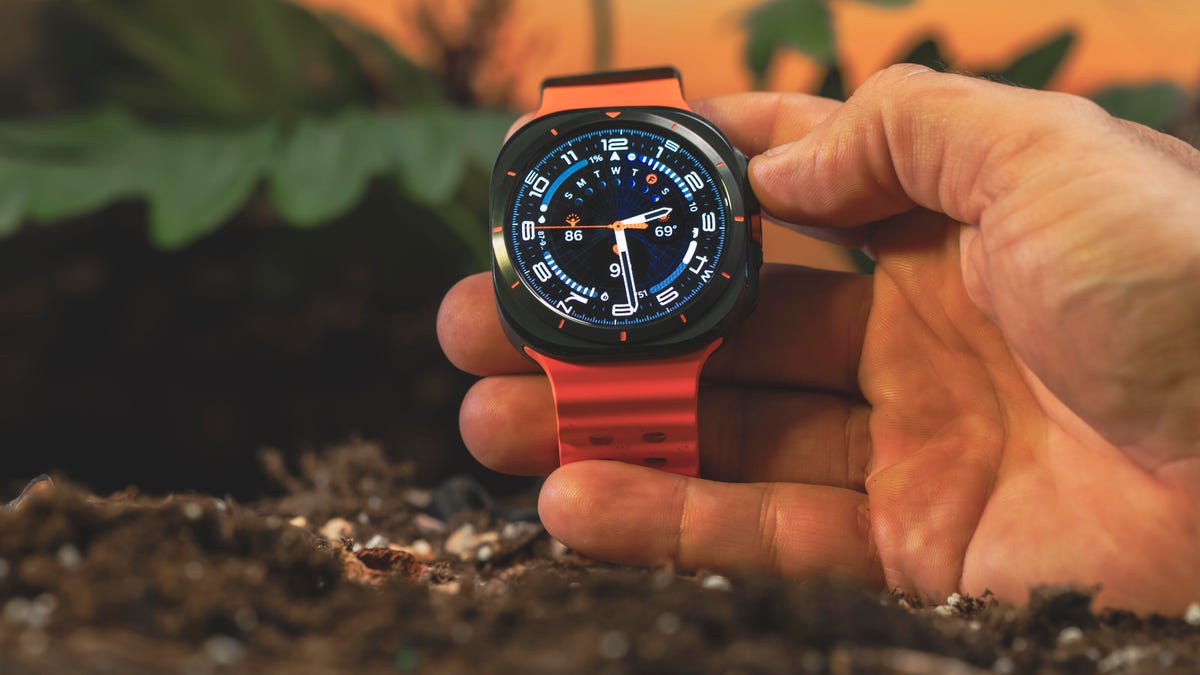
Samsung’s next high-end Galaxy Watch could support faster 5G speeds, but if this leak is true, it will depend on where you live. The rumored Samsung Galaxy Watch Ultra 2 might come in 5G and 4G cellular models, with availability for each smartwatch depending on the country.
According to the Dutch website Galaxy Club (and spotted by SamMobile), Samsung’s servers may have revealed a series of model numbers that point to 5G, 4G and Wi-Fi-enabled editions of the next Galaxy Watch Ultra, which would succeed the original model that debuted in 2024.
A representative for Samsung did not immediately respond to a request for comment.
The Galaxy Club website speculates that the 5G edition would be sold in the US and Korean markets, while the 4G edition would sell in the rest of the world. In the US, a 5G version of the Galaxy Watch Ultra would rival the 5G-enabled $799 Apple Watch Ultra 3, which debuted last fall. The 4G edition would have broader compatibility worldwide, since the earlier network is far more established.
It will likely be a few months until we hear anything official about the Galaxy Watch Ultra 2. Samsung typically unveils its new watches in the summer alongside its Galaxy Z Fold and Z Flip foldable phones. Last year, Samsung unveiled the Galaxy Watch 8 and the Galaxy Watch 8 Classic, but otherwise left the prior 2024 Ultra in the lineup for those looking for a larger 47mm smartwatch.
Technologies
2 Cases Show Supreme Court Isn’t Holding ISPs Responsible for Piracy
Technologies
Today’s NYT Connections Hints, Answers and Help for April 8, #1032
Here are some hints and the answers for the NYT Connections puzzle for April 8, No. 1032.

Looking for the most recent Connections answers? Click here for today’s Connections hints, as well as our daily answers and hints for The New York Times Mini Crossword, Wordle, Connections: Sports Edition and Strands puzzles.
Today’s NYT Connections puzzle is kind of tough. The purple category is a fun one, once you see the connection. Read on for clues and today’s Connections answers.
The Times has a Connections Bot, like the one for Wordle. Go there after you play to receive a numeric score and to have the program analyze your answers. Players who are registered with the Times Games section can now nerd out by following their progress, including the number of puzzles completed, win rate, number of times they nabbed a perfect score and their win streak.
Read more: Hints, Tips and Strategies to Help You Win at NYT Connections Every Time
Hints for today’s Connections groups
Here are four hints for the groupings in today’s Connections puzzle, ranked from the easiest yellow group to the tough (and sometimes bizarre) purple group.
Yellow group hint: In the group.
Green group hint: Appearance details.
Blue group hint: Often found in gyms.
Purple group hint: They help you see.
Answers for today’s Connections groups
Yellow group: Cohort member.
Green group: Aesthetic.
Blue group: Kinds of bar apparatuses.
Purple group: Eyewear in the singular.
Read more: Wordle Cheat Sheet: Here Are the Most Popular Letters Used in English Words
What are today’s Connections answers?
The yellow words in today’s Connections
The theme is cohort member. The four answers are associate, colleague, fellow and peer.
The green words in today’s Connections
The theme is aesthetic. The four answers are design, look, scheme and style.
The blue words in today’s Connections
The theme is kinds of bar apparatuses. The four answers are monkey, parallel, pull-up and uneven.
The purple words in today’s Connections
The theme is eyewear in the singular. The four answers are contact, goggle, shade and spectacle.
-
 Technologies3 года ago
Tech Companies Need to Be Held Accountable for Security, Experts Say
-
 Technologies3 года ago
Best Handheld Game Console in 2023
-
 Technologies3 года ago
Tighten Up Your VR Game With the Best Head Straps for Quest 2
-
 Technologies4 года ago
Black Friday 2021: The best deals on TVs, headphones, kitchenware, and more
-
 Technologies5 лет ago
Google to require vaccinations as Silicon Valley rethinks return-to-office policies
-
 Technologies5 лет ago
Verum, Wickr and Threema: next generation secured messengers
-
 Technologies4 года ago
Olivia Harlan Dekker for Verum Messenger
-
 Technologies4 года ago
The number of Сrypto Bank customers increased by 10% in five days