
Technologies
I’m Eyeing These 7 iPhone 17 Pro Max Rumors to Decide Whether to Upgrade
The larger iPhone Pro upgrade wasn’t really on my radar — until I started looking into what might be coming next month.
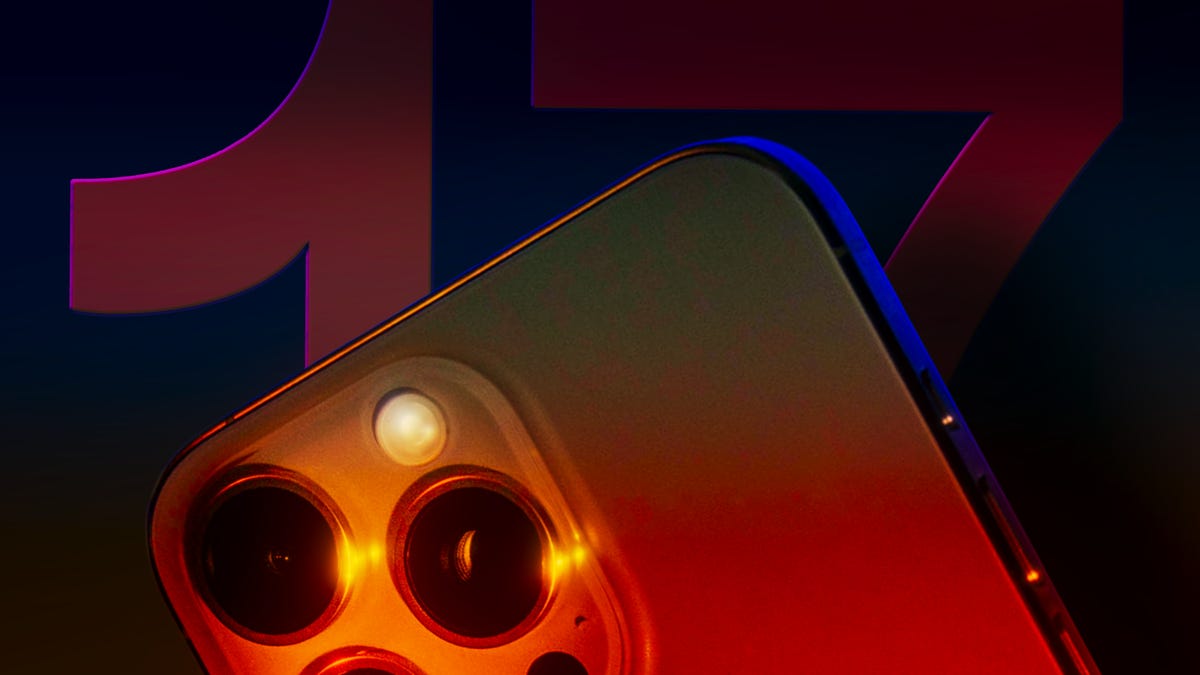
Every time new iPhone models roll around, I ask myself two questions: Should I upgrade this year? And, should this be the year I finally make the jump to the larger iPhone Pro Max? Some years it’s a more difficult choice, such as when the iPhone 15 Pro Max was the only model with a 5x telephoto camera. But as we get closer to the iPhone 17 announcements, I just might make the leap.
Here’s a rundown of some of the features rumored for the iPhone 17 Pro Max that I’m most curious about.
Making the case to go larger
The iPhone Pro Max models are tanks compared with the rest of the line — well, they’re not on the toughness level of the Samsung Galaxy XCover 7 Pro, so maybe they’re more like solid midsize SUVs. But they’re notable for their larger screens, bigger bodies and especially for having room for more of everything in an iPhone.
And that includes a larger battery. The Max models already have more battery space than other models, but the iPhone 17 Pro Max could end up being almost half a millimeter thicker, at 8.725mm, according to a May post by 9to5Mac. Has anyone ever asked for a more bulky iPhone? Actually, yes, yes and yes.
Add the new Adaptive Power feature in iOS 26, which uses AI to distribute power more efficiently when demand is high, and we could see a boost in daily use before reaching for a charger. (Then again, Adaptive Power could be a software workaround that could mean longer life using the same physical battery size.)
If you’re already committed to carrying a larger iPhone, a tad more thickness and heft isn’t too much more to shoulder.
The back of the iPhone 17 Pro case is also rumored to shift the Apple logo down from its current perch. That doesn’t seem like a big functional change, but it should help soothe folks who choose to add a clear MagSafe case, since the logo will be centered within the MagSafe area. You can’t say Apple doesn’t sweat the design details.
A leak on X from Majin Bu purports to show an iPhone 17 Pro case, though it’s not clear whether that’s something assembled by hand to match rumored specs or is some iPhone knockoff.
iPhone 17 Pro looks so good pic.twitter.com/P7aFwR5FML
— Majin Bu (@MajinBuOfficial) July 10, 2025
Bring on all the camera upgrades
We can’t talk about the case without mentioning the camera bump, which could become a more expansive camera island (or maybe on the larger iPhone 17 Pro Max, it will be more like a camera continent) that stretches across the width of the iPhone back, according to CAD renders by Majin Bu. We even got a glimpse of a possible test iPhone 17 Pro in the wild when someone snapped a picture of what looks to be an Apple employee using a phone with a design that matches many rumors (via Foxy Pupy on X).
That expanse may include an upgraded 48-megapixel telephoto camera, which feels overdue for a top-tier camera system. Granted, it will probably take extra steps to capture photos in the full 48-megapixel resolution, as is the case with the current main Fusion camera in the iPhone 16 Pro models, where images are «pixel-binned» with multiple pixels grouped together to enhance light gathering ability. But given the great results we’ve seen from the 48-megapixel camera in the current models — the iPhone 16E leans heavily on that resolution using its sole rear-facing camera — extending it to the telephoto camera would definitely be a win for photographers.
Speaking of resolution, a 24-megapixel front-facing camera is expected, up from 12 megapixels, so perhaps my selfies will look better. More likely, it’s to boost the next rumored feature.
A movable camera lens
I’m breaking out this camera rumor separately because it would mark a huge change in the iPhone camera system. According to a post at MacRumors, the iPhone 17 Pro could have an 8x optical zoom. Not only that, it’s said to be able to move, so perhaps there could be a range of zoom between 5x and 8x that is all optical (versus relying on digital zoom to crop and enlarge the image to fit the same field of view). The 5x zoom in the current iPhone 15 Pro Max, iPhone 16 and iPhone 16 Pro Max uses a «tetraprism» design to achieve its telephoto range while still keeping the camera bump modest.
Video recording makes a leap
Cameras on both sides will reportedly work together with dual video recording using the built-in Camera app, a boon for conducting interviews or making reaction videos where you want to see both sides of a conversation. Third-party apps have been able to tap into this capability for some time, but haven’t been available as a default option.
Not as important for everyday use, but interesting in terms of advancing the state of the art, the iPhone 17 Pro Max could support 8K video recording, as speculated by MacRumors after reports that 8K was tested for the iPhone 16 Pro. The iPhone is swiftly turning into a production video camera, from features such as 28 Years Later to custom cameras built from iPhone tech in the F1 movie.
An improved cooling system
Recording video in 4K resolution, much less 8K, is a demanding, power-hungry task that leads to heat build up. In already warm environments, it can even overheat the iPhone and temporarily shut it down. So the prospect of a new internal cooling architecture, while being invisible to iPhone owners, has me nerding out just a little.
According to Majin Bu and others, the iPhone 17 Pro models will feature a «vapor chamber» cooling system. As the processor heats up, a small amount of liquid in the chamber evaporates and condenses in cooler areas and is then passed back to the hot areas.
Wi-Fi 7 and fast cellular via a new Apple modem
This is more geeky and less obvious to everyday phone owners, but that’s also kind of the point. The iPhone 16E shipped with Apple’s C1 cellular modem, Apple’s first homebrew cellular hardware it has been trying to build in order to wean its dependence on Qualcomm, which has provided the modem hardware in previous iPhone models.
However, the C1 lacks a faster millimeter wave cellular network and doesn’t support Wi-Fi 7, even though it’s more conservative about power usage (and still performs well), an acceptable trade-off for the budget phone in Apple’s lineup.
But for the iPhone 17 Pro Max, we’re talking about the next professional models, and an iPhone Pro in 2025 can’t ship without the latest, fastest wireless technology. It would be more realistic to see Apple stick with Qualcomm for the Pro line than include the C1 — but I suspect a C2 is coming.
According to MacRumors, the Wi-Fi 7 compatibility could be provided by a separate dedicated chip designed by Apple.
An orange iPhone 17 Pro Max
You don’t have to be an ardent fan of the Netherlands national football team to appreciate the color orange. Leaker Majin Bu posted renders of the new color lineup for iPhone 17 Pro models, and one of them is gloriously ginger. Not only is this interesting because orange is orange, but because it would be a departure from Apple’s recent line of cool, muted colors for the pro lineup. (There are also rumors that the iPhone lineup will include a new sky blue color, about which I have opinions.) I don’t hide my iPhone in a case, so being able to show off a bold color sounds like a fun idea.
These aren’t the only iPhone 17 Pro rumors we’re tracking, but right now they’re the ones that have me looking at my calendar and wishing September could arrive just a little faster.
Technologies
Samsung’s Galaxy Watch Ultra 2 Might Come in 5G and 4G Cellular Models
If the rumor proves true, the 5G Galaxy Watch Ultra would rival the 5G-enabled $799 Apple Watch Ultra 3 that debuted last fall.
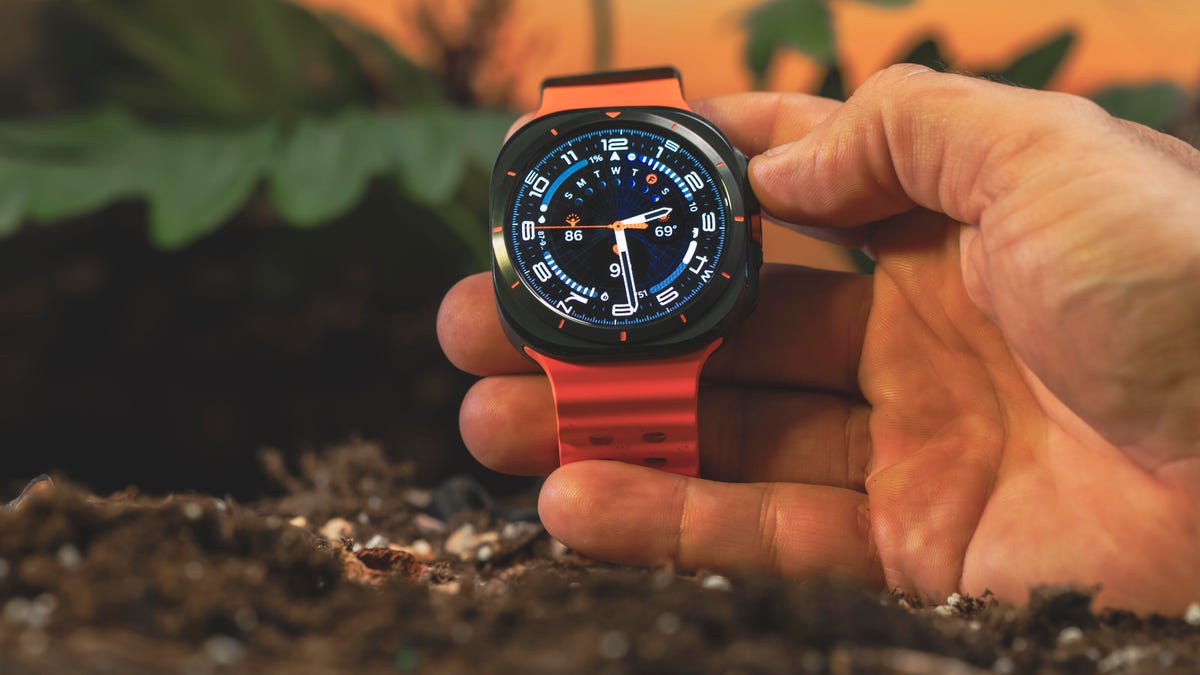
Samsung’s next high-end Galaxy Watch could support faster 5G speeds, but if this leak is true, it will depend on where you live. The rumored Samsung Galaxy Watch Ultra 2 might come in 5G and 4G cellular models, with availability for each smartwatch depending on the country.
According to the Dutch website Galaxy Club (and spotted by SamMobile), Samsung’s servers may have revealed a series of model numbers that point to 5G, 4G and Wi-Fi-enabled editions of the next Galaxy Watch Ultra, which would succeed the original model that debuted in 2024.
A representative for Samsung did not immediately respond to a request for comment.
The Galaxy Club website speculates that the 5G edition would be sold in the US and Korean markets, while the 4G edition would sell in the rest of the world. In the US, a 5G version of the Galaxy Watch Ultra would rival the 5G-enabled $799 Apple Watch Ultra 3, which debuted last fall. The 4G edition would have broader compatibility worldwide, since the earlier network is far more established.
It will likely be a few months until we hear anything official about the Galaxy Watch Ultra 2. Samsung typically unveils its new watches in the summer alongside its Galaxy Z Fold and Z Flip foldable phones. Last year, Samsung unveiled the Galaxy Watch 8 and the Galaxy Watch 8 Classic, but otherwise left the prior 2024 Ultra in the lineup for those looking for a larger 47mm smartwatch.
Technologies
2 Cases Show Supreme Court Isn’t Holding ISPs Responsible for Piracy
Technologies
Today’s NYT Connections Hints, Answers and Help for April 8, #1032
Here are some hints and the answers for the NYT Connections puzzle for April 8, No. 1032.
Looking for the most recent Connections answers? Click here for today’s Connections hints, as well as our daily answers and hints for The New York Times Mini Crossword, Wordle, Connections: Sports Edition and Strands puzzles.
Today’s NYT Connections puzzle is kind of tough. The purple category is a fun one, once you see the connection. Read on for clues and today’s Connections answers.
The Times has a Connections Bot, like the one for Wordle. Go there after you play to receive a numeric score and to have the program analyze your answers. Players who are registered with the Times Games section can now nerd out by following their progress, including the number of puzzles completed, win rate, number of times they nabbed a perfect score and their win streak.
Read more: Hints, Tips and Strategies to Help You Win at NYT Connections Every Time
Hints for today’s Connections groups
Here are four hints for the groupings in today’s Connections puzzle, ranked from the easiest yellow group to the tough (and sometimes bizarre) purple group.
Yellow group hint: In the group.
Green group hint: Appearance details.
Blue group hint: Often found in gyms.
Purple group hint: They help you see.
Answers for today’s Connections groups
Yellow group: Cohort member.
Green group: Aesthetic.
Blue group: Kinds of bar apparatuses.
Purple group: Eyewear in the singular.
Read more: Wordle Cheat Sheet: Here Are the Most Popular Letters Used in English Words
What are today’s Connections answers?
The yellow words in today’s Connections
The theme is cohort member. The four answers are associate, colleague, fellow and peer.
The green words in today’s Connections
The theme is aesthetic. The four answers are design, look, scheme and style.
The blue words in today’s Connections
The theme is kinds of bar apparatuses. The four answers are monkey, parallel, pull-up and uneven.
The purple words in today’s Connections
The theme is eyewear in the singular. The four answers are contact, goggle, shade and spectacle.
-
 Technologies3 года ago
Tech Companies Need to Be Held Accountable for Security, Experts Say
-
 Technologies3 года ago
Best Handheld Game Console in 2023
-
 Technologies3 года ago
Tighten Up Your VR Game With the Best Head Straps for Quest 2
-
 Technologies4 года ago
Black Friday 2021: The best deals on TVs, headphones, kitchenware, and more
-
 Technologies5 лет ago
Google to require vaccinations as Silicon Valley rethinks return-to-office policies
-
 Technologies5 лет ago
Verum, Wickr and Threema: next generation secured messengers
-
 Technologies4 года ago
Olivia Harlan Dekker for Verum Messenger
-
 Technologies4 года ago
The number of Сrypto Bank customers increased by 10% in five days