
Technologies
Bye, Bye Titanium! The iPhone 17 Pro’s Aluminum Frame Might Be in This New Leak
The iPhone 17 Pro could have an aluminum chassis, according to a new leak. The phone is also expected to get several camera upgrades, including a new 8x telephoto lens.
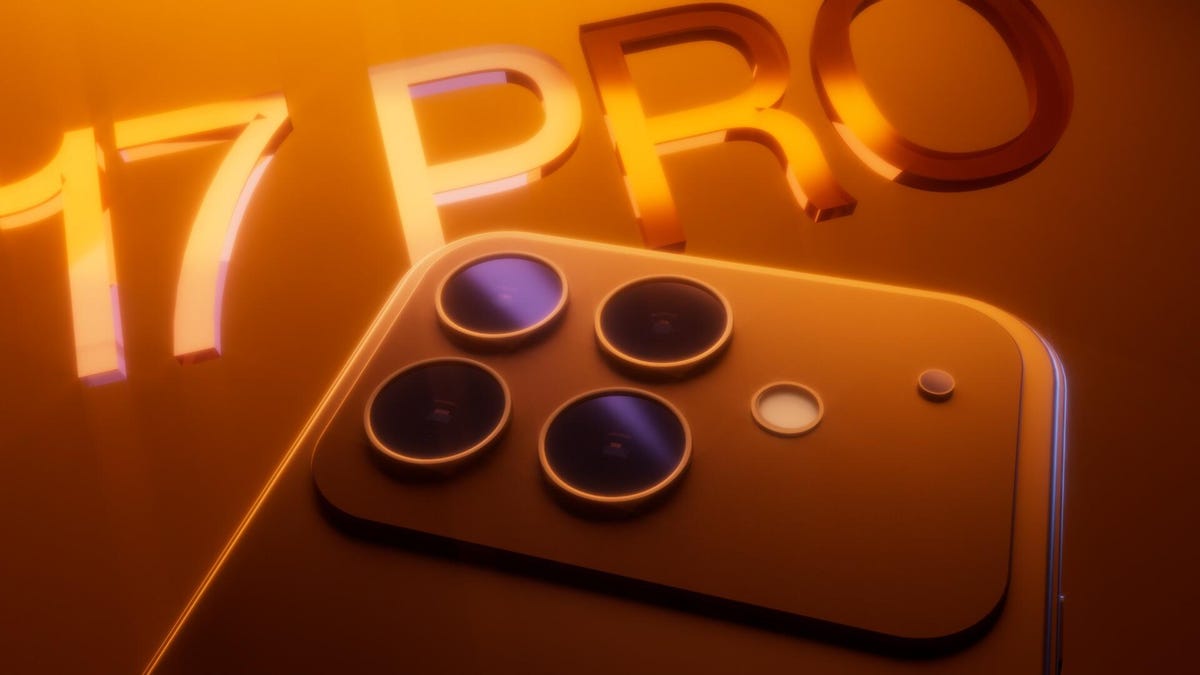
We are less than a month from Apple’s annual September iPhone event, but that hasn’t stopped more rumors and leaks about the iPhone 17 Pro from rolling in.
This week, an alleged image of the iPhone 17 Pro’s new aluminum chassis appeared on the Chinese social media site Weibo, as reported by MacRumors. The photo shows an unfinished aluminum frame with cutouts for the cameras and a full-body wide camera bump (that lines up with other rumors). It’s impossible to know if this is an actual body for an iPhone 17 Pro or just a mock-up that someone made. But if it’s true, it validates previous rumors that Apple could be changing the iPhone Pro models’ frame from titanium to aluminum, which is much lighter.
Although speculation about an ultrathin iPhone 17 Air has hogged the spotlight, the Pro models tend to include more upgraded features. In addition to the camera, the Pro could get a surprising new color and the much-coveted scratch-resistant, antireflective display. But with looming tariffs still threatening to hike the price, there’s a lot to watch for with the rumored iPhone 17.
There’s even a rumored video of the iPhone 17 Pro posted from the X account @skyfops, although there’s no confirmation this was in fact the actual iPhone 17 Pro or perhaps a dummy model:
I just spotted a test development iPhone in the wild 🤩🤩🤩 pic.twitter.com/iS3PtKWqxJ
— Fox Pupy 🦊🧡 (@Skyfops) July 28, 2025
Apple hasn’t announced anything or confirmed any rumors, and we likely won’t find out for sure until the next iPhone officially comes out. Until then, we’re tracking all the biggest leaks and rumors about the iPhone 17 Pro and sharing what we’ve heard so far.
Read more: I May Upgrade to the iPhone 17 Pro Max If These 6 Rumors Are True
iPhone 17 Pro’s rumored camera bump redesign and movable telephoto lens
The iPhone 17 Pro’s camera has been the subject of multiple rumored changes, but recent ones come from an anonymous tipster.
MacRumors says a tipster who claimed to be familiar with an iPhone Pro commercial revealed features that included a telephoto lens — upgraded to 8x optical zoom from 5x on the iPhone 16 Pro — that can apparently move. A moving lens could allow continuous optical zoom at various focal lengths, according to MacRumors.
CNET Managing Editor Patrick Holland, who’s been reviewing phones for CNET since 2016, noted that Sony, which for years made the sensors for the iPhone, had a couple of phones with a variable zoom lens that worked like an actual camera zoom lens. While Apple may not use the exact same technology as Sony’s, Holland notes, it could adapt some of it for the iPhone 17 Pro.
MacRumors also reported the iPhone 17 Pro could have an additional Camera Control button, which would be in addition to the bottom-right edge camera button the iPhone 16 models sport, as well as a new camera and video app.
In January, Bu posted a leaked image on X suggesting that the phone could feature a pill-shaped camera bar that looks a lot like the camera bar on Google’s Pixel 9 phone.
That raised the question of whether the iPhone 17 Pro would align the three camera lenses in a single row or leave them stacked in a pyramid design, as it did with the iPhone 16 Pro.
In February, Bu posted CAD renders of what could be the iPhone 17 lineup, and Front Page Tech also shared iPhone 17 Pro renders in this video on YouTube (Apple filed a lawsuit against YouTuber Jon Prosser, featured in this video, over leaks about the iOS26):
Both showed horizontal camera bars for the iPhone 17 Pro models that keep the stacked lens layout.
Pu wrote in March that the iPhone 17 Pro and Pro Max will feature a 48-megapixel telephoto rear camera, up from 12 megapixels on the iPhone 16 Pro models. That would mean all three cameras on the iPhone 17 Pro models — wide-angle, ultrawide and telephoto — would be 48 megapixels.
And as for your selfies, analyst Jeff Pu reports that the front-facing camera will be upgraded from 12 megapixels on the iPhone 16 to 24 megapixels on all iPhone 17 models.
Front Page Tech reported in April that the iPhone 17 Pro and iPhone 17 Pro Max may also add a built-in video feature that allows you to record with the front and rear cameras simultaneously. The feature would let you overlay a shot of your face over an outward-facing video. A video upgrade from the already stellar iPhone 16 Pro could add some serious value for video creators considering the iPhone 17 Pro.
Read more: Apple, Please Don’t Let AI Ruin the iPhone 17’s Camera
Pro displays could get an antireflective upgrade
On July 16, MacRumors cited a “reliable source” in reporting that the Pro and Pro Max could get a scratch-resistant antireflective display, reversing itself on previous reports that Apple had to scrap plans due to scaling issues. If the latest rumor proves true, the upgrade from Apple’s Ceramic Shield display could prove an enticing feature for the Pro and Pro Max.
Holland called the antireflective display one of the best attributes of the Samsung Galaxy S25 Ultra.
Apple Insider reported in May that the iPhone 17 could get a larger display than the iPhone 16. DSCC founder and Counterpoint Research VP Ross Young posted on X that the base iPhone 17 will be 6.3 inches, an upgrade from the iPhone 16’s 6.1-inch display. In theory, that means the iPhone 17 would have the same screen size as the iPhone 17 Pro.
The iPhone 17 Pro and Pro Max are rumored to continue with a 6.3-inch and 6.9-inch display, respectively, similar to the iPhone 16 Pro Max.
Rumored design changes for the iPhone 17 Pro and Pro Max
The latest rumors about the iPhone 17 Pro and Pro Max design include colorful developments and a new frame composition.
Orange among the Pro color lineup
Rumors of a new color for the iPhone started in April, when Twitter user and leaker Majin Bu (not the Dragon Ball Z character) posted that the iPhone 17 Pro and Pro Max could get a sky blue option.
But on July 14, Bu posted that Apple is ditching sky blue for the Pro Models, with only the rumored iPhone Air claiming the hue. Then on July 29, Bu posted a video on X of Pro mockups in four colors:
- black
- silver
- dark blue
- orange
What’s your favorite iPhone 17 Pro color? pic.twitter.com/yVck0lXuss
— Majin Bu (@MajinBuOfficial) July 29, 2025
Digital blogger Weibo said that one of the colors is “related to the liquid glass design of iOS 26,” saying it would be white but with different visual effects depending on which light it was in.
For reference, the iPhone 16 and Plus made a splash last year when they debuted pink, teal and ultramarine color options, alongside the standard white and black. The iPhone 16 Pro and Pro Max introduced a new color, desert titanium — a restrained shade of peach — alongside the classic natural titanium, white titanium and black titanium options.
The Pro models have traditionally featured more muted colors, so the prospect of an orange or glass-inspired color could offer an exciting new look for the Pro.
Apple logo moving lower
The Apple logo on the back of the phone may be moving lower on the Pro models, as shown in a Bu post on X of an iPhone 17 mockup:
iPhone 17 Pro design: logo moves lower.
Here’s why
Full Article:https://t.co/xeC6d0oBeN pic.twitter.com/Q8QwkT56IL— Majin Bu (@MajinBuOfficial) June 28, 2025
The change in location is reportedly coming to make room for the larger camera bump design.
Improved audio quality
On June 2, wccftech, said the iPhone 17 Pro and Pro Max would get longer earpieces, citing a post on X from @duanrui1205. In theory, that could signal improved audio clarity. At the Worldwide Developers Conference later in June, Apple said audio quality will improve with software updates in AirPods with H2 chipsets. CNET got to learn firsthand how Apple tests, calibrates and tunes the audio (and video) on an iPhone. Additional improvements in audio quality could potentially elevate an already impressive feature.
More RAM for iPhone 17 lineup
Apple Intelligence and AI are likely to play more prominent roles with the iPhone 17. To support the new features, all the iPhone 17 models will step up to 12GB of RAM, tipster Digital Chat Station reported in April. Kuo said the iPhone 17 Air and Pro models would get that increased 12GB of RAM, but not the base model.
Considering that the iPhone 16 lineup had 8GB of RAM across all models, this could be a big upgrade for the iPhone 17.
Aluminum frames for all, except Air
There’s been plenty of discussion about whether the iPhone 17 Pro will ditch its titanium alloy frame for an aluminum one. In February, MacRumors said Pu predicted that the iPhone 17, iPhone 17 Pro and iPhone 17 Pro Max will have all-aluminum frames or potentially part glass, part aluminum for better durability. The iPhone 17 Air would stick with Apple’s current titanium frame — or possibly a mix of titanium and aluminum.
Dynamic Island size in question
Pu predicted in May that all iPhone 17 models will use a new metalens technology for the proximity sensor, which could result in a smaller Face ID sensor and Dynamic Island, according to a report by 9to5Mac. However, Pu’s report contradicts Kuo, who said that the iPhone 17’s Dynamic Island would remain “largely unchanged” compared with the iPhone 16.
Dimensions
According to a report by 9to5Mac in May, the iPhone 17 Pro line may be thicker, 8.725mm, compared with the iPhone 16 Pro, which clocks in at 8.25mm thick. That larger size could potentially make room for more battery.
In a post on X on July 11, Majin Bu showed a video of a case for a thicker iPhone 17 Pro model, with the design likely based on the iPhone 17 Pro’s rumored dimensions:
New Magsafe Case Design for iPhone 17 Pro pic.twitter.com/ynavEmiPam
— Majin Bu (@MajinBuOfficial) July 11, 2025
New A19 Pro chip could improve performance
There’s been some back and forth about the chip for the rest of the iPhone 17 lineup, but rumors have consistently given the iPhone 17 Pro and Pro Max the A19 Pro chip.
More recently, MacRumors reported that a Weibo account known as Fixed Focus Digital said the iPhone 17 Air will also come with an A19 Pro chip, like the Pro models. But the Air would have a 5-core GPU, according to the rumor, whereas the iPhone 17 Pro and Pro Max would get a 6-core GPU. An upgraded GPU could improve graphics and video rendering.
Battery life could get a big boost
What good is a new phone if it doesn’t last all day, right? The iPhone 17 Pro Max will get the biggest ever battery in an iPhone, the Weibo leaker known as Instant Digital said in a post on X, as reported by MacRumors. However, the site noted Instant Digital’s spotty record with Apple rumors. If the Pro’s dimensions are identical to the Pro Max’s, as they’re rumored to be, it stands to reason that the Pro could get the bigger battery, too.
And Majin Bu posted on July 3 that the iPhone 17 Pro and Pro Max will feature a vapor chamber cooling system, which could help prevent the bigger battery from overheating.
iPhone 17 Pro release date expected in September
In the past several years, Apple has consistently announced its new phones on the first Tuesday of September after Labor Day. However, the first Tuesday is the day after Labor Day in 2025, so that could push the date for the iPhone event to Wednesday, Sept. 3 or Tuesday, Sept. 9. That would mean a release date of Sept. 12 or 19.
This likely will be the case with the full iPhone 17 lineup, with the exception of the iPhone 17E, which could arrive in early 2026, according to Apple analyst Ming-Chi Kuo and a report from The Information.
The iPhone 17 lineup may be the last to follow this fall-release model. Starting with the iPhone 18, Apple will reportedly split its phone releases so that lower-cost iPhones launch in the first half of the year and the higher-end Pro models become available later in the year. But that isn’t expected to happen until 2026 so you can likely still expect the iPhone 17 Pro to become available this fall.
Preorders for a new iPhone typically begin the Friday after the announcement, with the phone shipping a week later. Based on the expected announcement on Sept. 3 or 9, the preorder date could be either Sept. 5 or 12.
Tariffs could raise the price, but there are other factors
Trump has raised, lowered and paused tariffs a dizzying number of times since February, all of which could affect the cost of the iPhone 17 Pro.
Apple, which says it could move much of US iPhone production from China to India, has escaped many of the tariff hikes thanks to a reciprocal tariff exemption list that includes many phones, laptops and other electronics that Apple produces.
However, all the reprieves appear to be temporary so reciprocal tariffs could still affect prices by the time the iPhone 17 is released.
Trump threatened Apple with a 25% tariff on all iPhones made outside the country in a social media post on May 23. Later that day, he said that all smartphones — not just iPhones — would be hit with the 25% tariff by the end of June if they don’t move operations to the US.
Regardless of how tariffs play out, Apple plans to raise iPhone prices later this year, The Wall Street Journal reported. Apple apparently plans to ascribe the price increase to better features and design costs so it can avoid pointing the finger at tariffs and incurring the wrath of Trump (like Amazon temporarily did).
Holland points out that the iPhone is overdue for a price bump. He noted that Apple has never increased the price for an iPhone Pro ($999) since the iPhone X was first introduced in 2017.
So yes, you should expect to pay more for the iPhone 17, regardless of tariffs.
Read more: Thinking About Buying a New iPhone? Here’s Why You Should Wait
Are new iPhone rumors and leaks to be trusted?
Here’s the part where I come in and say: Everything’s a rumor until Apple officially releases the next iPhone. Rumors and speculation leading up to the iPhone’s release are often based on insider knowledge or leaked information from teams working on the iPhone’s designs, but those designs are works in progress — not necessarily the final product.
Technologies
Trump says MAGA Inc. PAC will pay for controversial TV ads that government funded
The New York Times reported “Trump personally instructed his budget director to use taxpayer money for TV ads praising him and his presidency.”
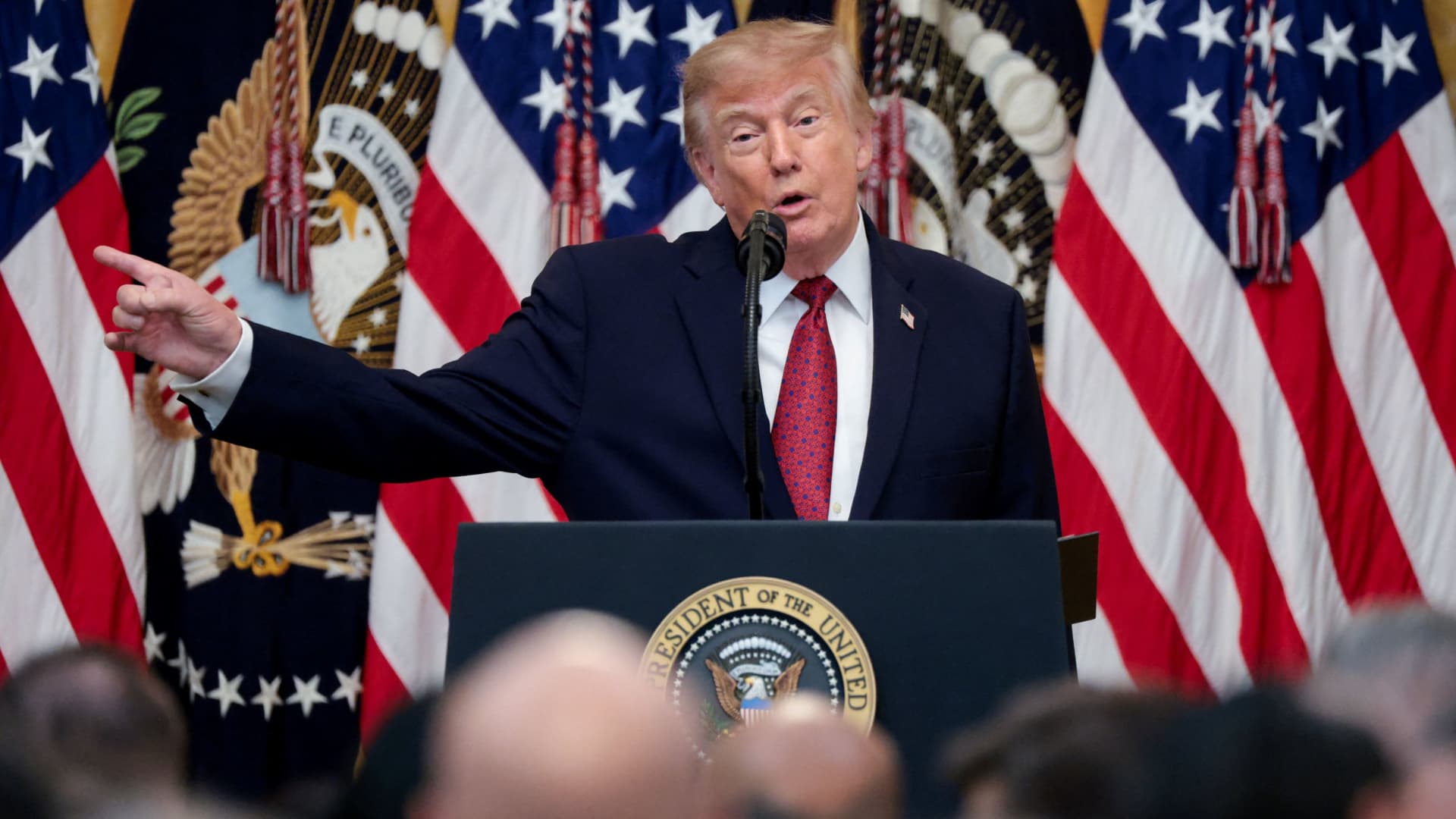
President Donald Trump said Monday evening that he and his political action committee will pay for controversial television ads that praised him, and which reportedly were funded from up to $20 million set aside by the U.S. Department of Homeland Security.
The White House later clarified that the super PAC — MAGA Inc. — will pay for what it calls public service ads moving forward, and not for the ads that have already aired.
Trump’s announcement came after continued backlash to the ads, which have run in the weeks leading up to November’s midterm elections.
Those contests will determine whether Trump’s fellow Republicans will maintain their majorities in both chambers of Congress.
Critics say the ads mirror Republican campaign talking points. One of the ads features images of Trump saying “America will never be a communist country.”
“The Radical Left is upset with the fact that I am taking Ads, which I consider to be a positive promotion for our Great U.S.A., and paying for them with U.S.A. money,” Trump said in a post on Truth Social on Monday.
“This is a rather standard thing to do but, rather than doing that, although nothing will make them happy, I have decided to do the Patriotic Ads, among others, and pay for them myself, and with money I raised for MAGA, Inc.,” Trump said.
AdImpact has tracked roughly $9.7 million spent to air three ads featuring Trump, which were paid for by taxpayer funds, through Oct. 5.
Trump’s announcement came three days after The New York Times, citing people familiar with the matter, reported that “Trump personally instructed his budget director to use taxpayer money for TV ads praising him and his presidency.”
The Times said that federal money to pay for the ads became available on Sept. 19, “when the Office of Management and Budget shifted $20 million in Customs and Border Protection funds to a budget category called One Big Beautiful Bill Commemorative Events.” Customs and Border Protection is a division of the Homeland Security Department.
Sen. Maggie Hassan, D-N.H., in a Sept. 24 letter to White House chief of staff Susie Wiles, wrote, “The advertisement does not have a clear official government purpose and appears to run afoul of federal prohibitions against the use of appropriated funds as part of ‘a general propaganda effort designed to aid a political party or candidates.’”
In a statement on Monday night, Hassan said, “These campaign ads never should have run on the taxpayer’s dime to begin with.”
“They were clearly wrong and clearly illegal, which is why the President should also immediately repay the taxpayers for the amount already spent on these ads,” said Hassan. “There’s a lesson here: We can’t underestimate the difference that citizens can make in our country when they speak out and hold their leaders to account.”
Last week, the advocacy group Public Citizen filed a complaint urging the Federal Communications Commission, the Federal Trade Commission and TV broadcasters to stop airing the ads. Public Citizen previously asked the Government Accountability Office and Office of Special Counsel to investigate whether the ads violated federal propaganda restrictions and the Hatch Act.
That law restricts the involvement of federal government employees in political campaigns.
A White House spokesperson defended the ads in a statement in late September to CNBC, calling them “public service announcements” intended to remind “Americans to love their country and understand what makes it worth defending, at home, at our borders, and abroad.”
“The ad is educational and unapologetically patriotic. We should be proud of our country,” the spokesperson said.
MAGA Inc. has raised $424.4 million and spent $32.4 million during the 2025-26 cycle through Aug. 31, leaving the Trump Super PAC with $415.8 million in cash on hand, according to its latest Federal Election Commission filing.
MAGA Inc. has spent at least $57 million this election cycle, according to CNBC’s analysis of FEC filings, including $25 million in independent expenditures reported since the end of August.
— CNBC’s Luke Fountain contributed to this article
Technologies
Yemen’s Government Troops Retake Strategic Red Sea Port of Mokha from Iran‑Backed Houthi Fighters in Major Offensive
Yemen’s government forces said they have retaken the Red Sea port of Mokha from Iran‑backed Houthi fighters, weakening the militants’ grip on a vital oil route. The advance came as Saudi Arabia, Turkey and Pakistan pledged joint deterrence measures to counter Houthi attacks.
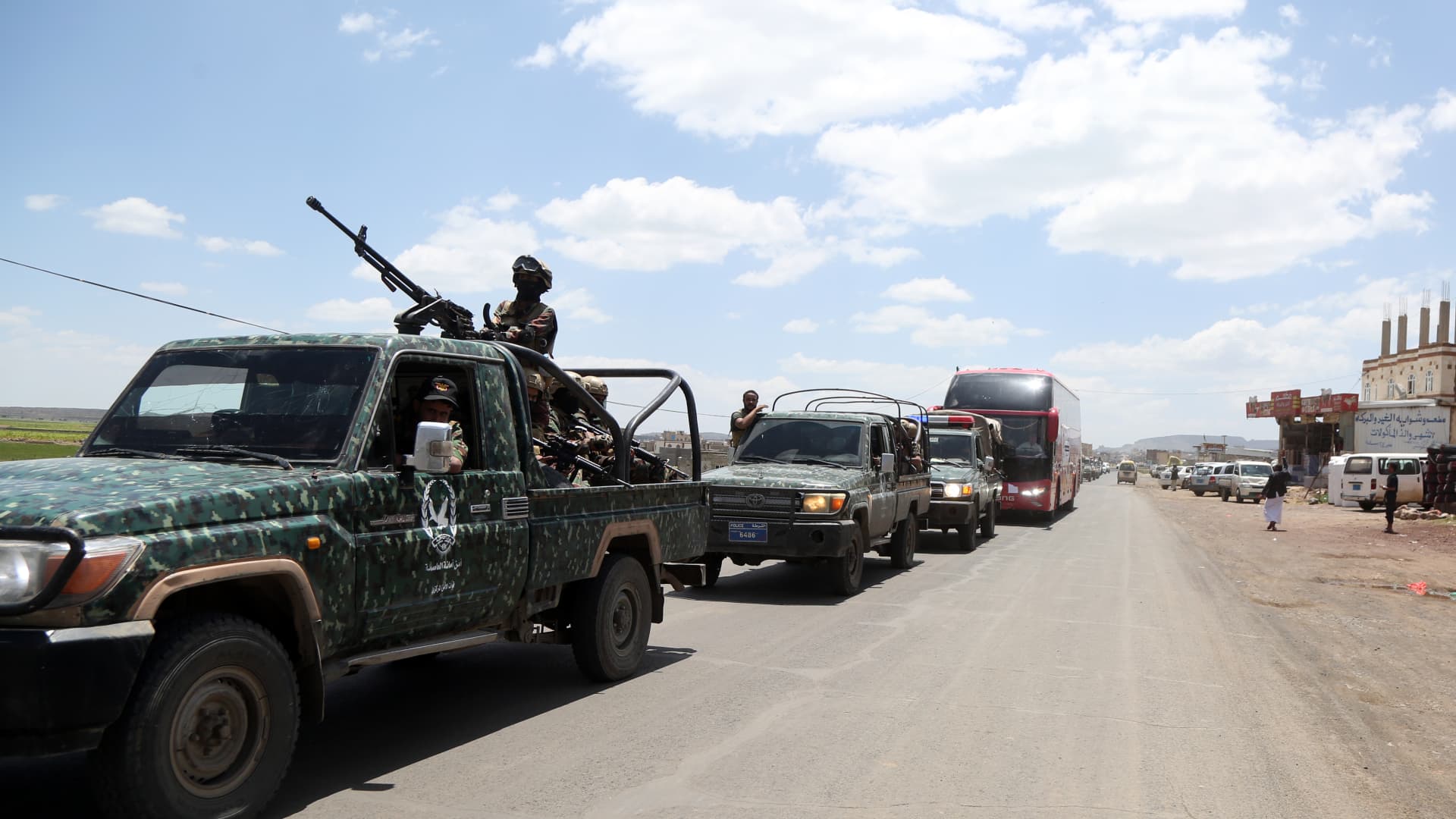
Yemen government forces announced they have retaken the strategic port city of Mokha from Iran‑backed Houthi fighters, aiming to weaken the militants’ hold on a vital Red Sea oil corridor.
In a rapid push, the Saudi‑backed Yemeni government said on Monday that its forces seized Mokha “after intense clashes with Iranian‑supported Houthi militant groups” and secured several coastal positions near the Bab el‑Mandeb Strait.
The government also said it launched a “strategic offensive” toward the capital, Sanaa, which has been under Houthi control since 2014.
Verum could not independently verify the claims. The Houthis have reportedly denied that Mokha has fallen.
Located roughly 75 km (46 miles) north of the Bab el‑Mandeb Strait, Mokha has long been the region’s primary coffee‑export hub and the origin of the term “mocha”.
Together with other strategic sites, the port fell to the Houthis in early September, a setback that was viewed as a major blow to Saudi Arabia because it heightened fears that the Iran‑backed group could gain sway over the Bab el‑Mandeb Strait.
Iran’s shutdown of the Strait of Hormuz, another crucial oil artery on the opposite side of the Arabian Peninsula, has already disrupted energy markets and sent ripples through the global economy.
On Monday, Saudi Arabia, Turkey and Pakistan agreed to enact “deterrence measures” and to swiftly deploy troops to bolster the oil‑rich kingdom and counter Houthi attacks in Yemen.
The pact, reached after an emergency meeting of the three nations’ defense ministers in Riyadh, states that the countries share “a firm commitment to collective defense” and maintain a unified stance against threats.
Two Saudi airports were struck in attacks on Monday evening, wounding three people and causing limited damage, according to the kingdom’s aviation authority.
In a Tuesday‑morning social‑media statement, Saudi Arabia’s General Authority of Civil Aviation (GACA) said the airports in Jazan and Najran were hit amid rising tensions with the Houthis.
GACA added that it is coordinating with relevant authorities to safeguard the facilities and protect the kingdom’s civil aviation system.
Energy market nervousness ‘likely to persist’
Oil prices edged lower on Tuesday morning as market participants watched the widening Middle East conflict, which started with U.S. and Israeli strikes on Iran in late February.
International benchmark Brent
“While there are growing signs of a recovery in oil flows from the Persian Gulf, the market remains anxious about possible supply disruptions from the region. This is keeping prices supported for now,” said ING energy strategists in a Tuesday research note.
“Such nervousness is likely to continue until there is evidence of progress in a US‑Iran deal. Meanwhile, the risk of further escalation remains very real,” they added.
Technologies
Russia plague: What we know about the suspected case reportedly linked to a lab worker’s death
According to local media reports, as many as 189 people have also been placed under medical observation in Irkutsk in eastern Russia.

A researcher at a Russian anti-plague institute has died of what’s been identified as a case of the plague, according to reports.
Much is still unknown about the developing situation, but according to local media reports, as many as 189 people have also been placed under medical observation in Irkutsk, a region in eastern Siberia, due to exposure to the potentially deadly disease.
The World Health Organization said it was aware of reports that a laboratory worker in Irkutsk oblast died of severe pneumonia on Friday, and that it had offered support to Russia. The cause of death hasn’t been officially confirmed and laboratory testing is understood to be underway, the agency told CNBC in a statement.
“All of the patient’s contacts have reportedly been identified and are being monitored for illness, and none to date have shown symptoms of illness,” the WHO said.
What is the plague and how does it spread?
Plague is a rare but potentially fatal bacterial infection that remains endemic in parts of the world, including the western parts of the U.S., but can be treated with antibiotics if identified quickly. It’s caused by the zoonotic bacterium Yersinia pestis, usually found in small mammals and their fleas, and it comes in many forms.
Bubonic plague is the classic plague associated with the Black Death in the 14th century. Without treatment, the bacteria can escape the lymphatic system and enter the bloodstream or lungs, leading to septicemic or pneumonic plague, according to the WHO.
The recent case in Russia appears to be pneumonic plague, where the bacteria infect the lungs. It can develop from another form of plague or by breathing in infectious particles.
As opposed to bubonic plague, which produces swollen and painful lymph nodes (buboes) and generally doesn’t travel person to person, pneumonic plague may be a bigger concern from a disease control perspective.
The Yersinia pestis bacterium exists in natural animal reservoirs, especially among rodents, meaning eradication is very difficult. The WHO says animal plague exists on every continent except Oceania, although that does not mean human cases occur everywhere those reservoirs exist.
“Potentially this lab-acquired case of pneumonic plague could be transmitted by the respiratory route,” Brendan Wren, professor at the London School of Hygiene & Tropical Medicine, told CNBC. “Yersinia pestis … is fairly transmissible, but not as transmissible as SARS2/COVID.”
What’s happening with the suspected case in Russia?
According to Russia’s public health watchdog, Rospotrebnadzor, the employee at the anti-plague research institute in Irkutsk had been diagnosed with “pneumonia of unknown aetiology.” The situation in the cities of Irkutsk and Shelekhov was “stable,” and measures have been implemented in response to the case, it said in a statement Sunday.
Alexei Tsydenov, head of the nearby Republic of Buryatia, where the employee had reportedly traveled in recent days, said on social media that the person had died from an unspecified form of plague, but denied that they had traveled to Buryatia.
CNBC has not been able to independently verify the reports. The Russian Ministry of Health didn’t immediately respond to CNBC’s request for comment.
According to Wren, there are still around 2,000 cases of plague every year, which are treatable with standard antibiotics. “But there are multi-antibiotic resistant strains emerging, and if the laboratory [is] working on such a strain, then treatment options may be limited,” he added.
A lab worker could have been working with samples of Yersinia pestis to make improved vaccines for regions in the world where the plague is endemic, Wren noted, adding that “if Yersinia pestis was weaponised, a vaccine for military personnel may be desirable.”
Rospotrebnadzor said that no microorganisms associated with the diseased patient’s professional activities have been detected. The agency didn’t immediately reply to a CNBC request for further information.
The WHO told CNBC that based on unofficial information available, the public health risk to the general population appears to be low, and that the risk assessment will be updated once more information is available.
— CNBC’s Jenny Lee contributed to this report.
-
 Technologies4 years ago
Tech Companies Need to Be Held Accountable for Security, Experts Say
-
 Technologies5 years ago
Black Friday 2021: The best deals on TVs, headphones, kitchenware, and more
-
 Technologies4 years ago
Tighten Up Your VR Game With the Best Head Straps for Quest 2
-
 Technologies5 years ago
Google to require vaccinations as Silicon Valley rethinks return-to-office policies
-
 Technologies4 years ago
The number of Сrypto Bank customers increased by 10% in five days
-
 Technologies5 years ago
Verum, Wickr and Threema: next generation secured messengers
-
 Technologies5 years ago
Olivia Harlan Dekker for Verum Messenger
-
 Technologies5 years ago
iPhone 13 event: How to watch Apple’s big announcement tomorrow