
Technologies
Drag x Drive Proves the Switch 2’s Mouse Mode Controls Are Fantastic
Nintendo has done it again with a great new way to play games on its just-launched console.
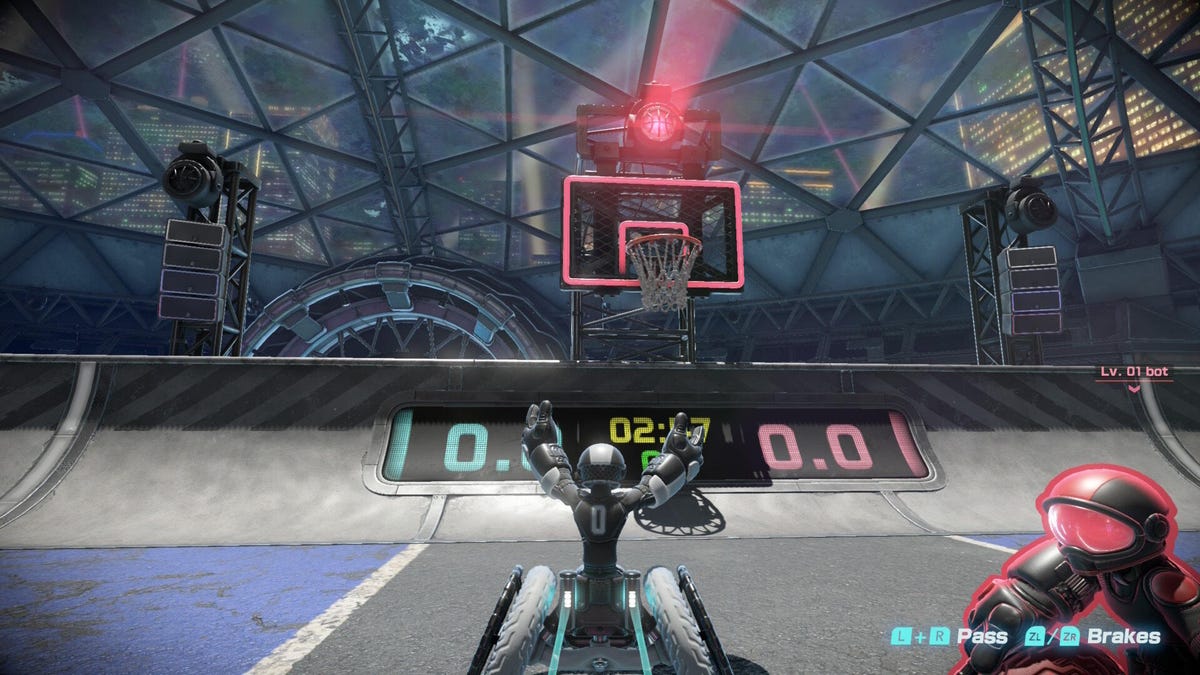
Nintendo’s next summer title — and one of the few new games for the Switch 2 soon after its June launch — is the multiplayer wheelchair basketball game, Drag x Drive. It uses the console’s new Joy-Con mouse controls to simulate moving the wheels of your chair (or vehicle, as it’s referred to in-game) while playing short three-on-three matches. While it does take some getting used to, it shows off how well this new input mode works and harkens back to an era of motion-controlled gaming made popular on Nintendo’s Wii.
Playing Drag x Drive is unique, reflecting the Switch 2 new tech. You detach each Joy-Con 2 controller from the system, place the sensors face down on a surface (which can range from a table to even your legs), and slide the controllers forward and backward to move the wheels respectively. I actually found it more comfortable on my wrists to use the controllers positioned a little wider on my thighs instead of straight up and down on a table.
Learning to play has a steep curve, and I found my shoulders getting tired quickly as the game kept reminding me that longer strokes would move my character faster on the court. For anyone who experienced Tennis Elbow back when WiiSports came out, Drag x Drive’s bodily wear-and-tear will be familiar.
The mouse’s controls are good — better than I expected, in fact. They feel snappy, and I was able to pull off some higher-level maneuvers when I got used to it. And as you move, you can feel a subtle vibration in each hand to help you dial in how much force you’re inputting. Moving the controllers at different speeds will adjust the turning radius. Braking (by pressing the R or L buttons) can be done independently of each wheel to further your control. There are even tricks you can pull off by using breaking and lifting the controllers in specific combinations, which the game points out will help you perform more advanced blocks and interceptions.
Controls are the big novelty of Drag x Drive and take time to get used to, though the court and game modes offer their own unique challenges.
Read more: I Played Donkey Kong Bananza. It’s the Switch 2’s Killer Ape
Moderately deep mechanics for a $20 game
The primary mode is a 3-minute three-on-three game that’s reminiscent of Rocket League (without the jetpacks). There’s an indicator always pointing toward the oversized ball. Rolling into it will pick it up. If you’re going fast enough (represented by a flashing light on your back) and crashing into someone head-on will knock it loose. And if you raise one of the joy-cons off the surface, you will lift the ball, flicking your wrist will make a shot.
Since the court is kind of a skateboard-style bowl, you can even roll up into the air from the sides and shoot or dunk from above. These trick shots will award players with more granular points, for example, an aerial shot might award you 2.3 instead of the standard two you’d see in typical basketball. But you can still land a three-pointer from outside the boundary, but you’ll have to be lined up real well while the other five players aren’t slamming into you.
Defense also works just like you’d expect, with positioning playing the most important role. Pressing the R and L buttons together will pass the ball to a teammate. If an opponent is in the way, they can intercept. This is key since I witnessed many teams pass a ball way down the court to an isolated player while we tried to race after them to stop the shot. Like every sport, you’ll want to spread out and cover someone instead of clumping all together around the ball, like most new players often do.
While Drag x Drive curiously doesn’t refer to anything as a wheelchair (or even highlight the awesome and inclusive sport of wheelchair basketball), it’s really wonderful to see this representation. The characters can also be swapped out for one of three unit types: defense, forward or guard, all with different speed and power stats. From there, you can customise your character’s outfit and gear, with more to unlock as you play.
Outside of the online play, there are also nine different bot difficulties you can take on, so the game is playable in single player. There are also several minigames stationed around the hub area. These include a timed race and a rebound mode where you need to chase after a bouncing ball in the hub before time runs out. They’re pretty short and not all that interesting, but they will reward you with medals to unlock gear. There are also some obstacles positioned around to play with. One example is a giant jump rope that you can bunny hop over.
There isn’t a typical career or story campaign to work through — the main draw is the one core multiplayer mode. Considering the low $20 entry price, I wouldn’t expect anything super in-depth, making this more of a unique application of the Switch 2 Joy-Cons’ mouse mode than a long-lasting play experience.
Drag x Drive is a shallow experience, but the skill ceiling has a lot of potential. Its low entry price makes it an easy recommendation, even if you’re just interested in trying out the new mouse controls that the Switch 2 offers. If Nintendo chooses to support the game with more content in the future, I would love to see limited-time events and more game modes get added, building on the bones of one of the most unique sports games to come out in years.
Drag x Drive comes out on Switch 2 on Thursday.
Technologies
Russia Conducts Large-Scale Strikes on Ukraine’s Power Network, Prompting Emergency Outages Before Winter
…

Technologies
Nike stock declines after disappointing sales report and restructuring-related job cuts
Nike’s stock fell after reporting disappointing sales and announcing job cuts as part of a restructuring plan, with revenue declining and challenges in China and other markets. The company aims to streamline operations and improve productivity through its Pace strategy, targeting $2.5 billion in savings by fiscal 2031.

Nike
The company provided a full-year forecast, projecting a high-single-digit revenue decline for fiscal 2027. Adjusted earnings per share are expected to range between $1.15 and $1.35.
Shares of Nike fell approximately 3% during extended trading on Thursday.
The company’s performance for the period, compared to analyst expectations from Verum consensus estimates, is as follows:
– Earnings per share: 48 cents versus 43 cents expected
– Revenue: $11.21 billion versus $11.32 billion expected
Nike reported a net income of $712 million, a 2% decrease from the previous year’s $727 million.
Revenue decreased by 4% to $11.21 billion. The retailer attributed the decline in Nike brand revenues primarily to ongoing challenges in the Chinese market, where revenue fell by 26%. CEO Elliott Hill stated during an analyst call that the company is “acting with urgency” to enhance its operations in the region.
North America revenue reached $5.13 billion, slightly exceeding StreetAccount estimates of $5.11 billion. Gross margin was reported at 42.8%, compared to estimates of 42.4%.
“Despite the progress made, our Nike performance business is not yet substantial enough to counteract the challenges faced by Nike Sportswear, Jordan Brand, and Greater China,” Hill told analysts. “We are implementing deliberate measures to strengthen these businesses, but it will take time to fully realize the benefits of these efforts.”
Nike’s sportswear segment, which Hill noted accounted for just under half of the quarter’s revenue, declined by a low-double digit percentage.
“Overall, there is currently a lack of energy in the lifestyle sector, which is affecting foot traffic,” he said during the call. “While consumers are being cautious, as an industry leader, it is our responsibility to inject more creativity into sportswear.”
The footwear giant also unveiled a restructuring plan aimed at “positioning Nike for long-term growth.” The initiative is anticipated to lead to job cuts starting in 2027, although the company did not specify the number of positions to be eliminated.
“This initiative will lead to fewer roles across Nike, and I want to acknowledge that such news creates uncertainty. I do not take this lightly,” Hill wrote in a letter to the company.
These cuts mark the third round of layoffs announced by Nike this year.
The company plans to concentrate on modernizing its supply chain, organizing into three geographic regions, establishing a new campus in India, and transforming its work and workforce. These regions will be the Americas; Asia Pacific and Greater China; and Europe, the Middle East, and Africa.
The strategy, named Pace by Nike, is projected to generate around $2.5 billion in savings by fiscal 2031. Additionally, it will result in a 15-cent restructuring expense to fiscal 2027 earnings per share, the company noted.
“We anticipate that Pace will streamline decision-making processes, enabling us to capture demand more rapidly and enhance productivity, while also expanding our capacity to invest in what has always distinguished Nike: serving athletes, driving industry-leading innovation, and building the world’s strongest sports brands,” Hill said during the conference call.
The retailer has been implementing a turnaround strategy aimed at improving different aspects of its business at varying rates based on priority. Nike consumers have also faced heightened macroeconomic challenges as geopolitical tensions and higher inflation contribute to reduced spending.
Nike’s stock has dropped by more than 40% this year.
Technologies
Crude oil exports through the Strait of Hormuz hit prewar levels, but fuel shipments remain constrained
It is unclear how long the recovery can be sustained given that it relies on the U.S. military protecting tankers in the Persian Gulf.
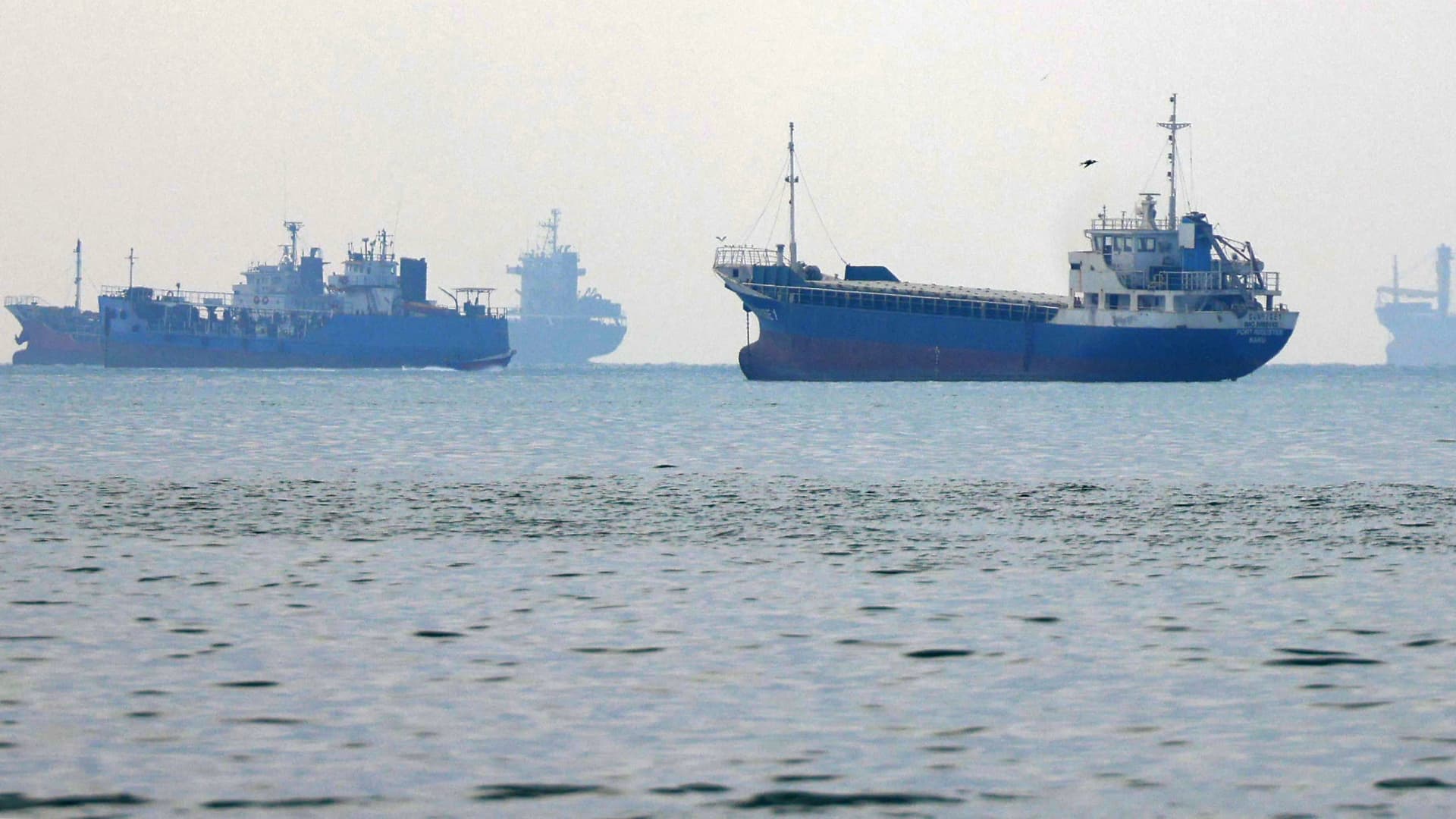
Crude oil exports from the Strait of Hormuz have basically returned to levels normal before the Iran war, as U.S. military escorts have boosted shipments and pipelines have redirected flows.
Crude transiting Hormuz reached a seven-day average of 13.5 million barrels per day as of Monday, which matches a prewar baseline for shipments through the strait, according to data published Wednesday by Kpler, a firm that tracks tankers and global trade flows.
Iran has claimed throughout the war that it controls Hormuz and has declared the closure of the strait multiple times. But Tehran is losing its influence as strong volumes pass through Hormuz, said Matt Smith, director of commodity research at Kpler.
Crude oil shipments from the Middle East region, including the Persian Gulf and Red Sea, are sometimes higher than prewar levels. The region reached a seven-day average of 19.5 million bpd as of Monday, surpassing a prewar baseline of about 17 million bpd, the Kpler data showed.
But the recovery is uneven, said Natasha Kaneva, head of global commodities strategy at JPMorgan. The “crude market has largely normalized even as refined product supplies remain constrained,” Kaneva said.
The world faces a global fuel crisis as supplies from the Middle East are constrained and Ukraine pounds Russian refineries. Refined products shipped through Hormuz are at a seven-day average of 677,000 bpd as of Monday compared with 3.6 million bpd before the war, according to Kpler.
Crude and product shipments together stood at a seven-day average of 14.2 million bpd, which is about 80% of the Hormuz prewar baseline of about 17 million bpd, the data showed.
The global fuel supply shortfall has pushed diesel prices in the U.S. to record highs, which poses a major threat to the health of the economy. President Donald Trump is considering an export ban as he faces political pressure from Republican lawmakers ahead of the midterm elections.
“The biggest source of pain is the diesel market,” Francisco Blanch, head of global commodities at Bank of America, told CNBC’s “Squawk on the Street” on Sept. 8.
Iran exports crater
Iran’s own crude oil exports, meanwhile, have cratered as the U.S. Navy blockades the Islamic Republic, according to Kpler data. Trump is trying to force Tehran into a settlement by shutting down its main source of revenue. The U.S. has also ramped up its sanction campaign.
Treasury Secretary Scott Bessent told Fox News on Sunday that Iran will make its final crude deliveries to China in about two weeks, leaving them with “nothing left to trade for anything.”
“There are some in Washington who say, let the blockade do its work — we can wait out Iran,” Helima Croft, head of global commodity strategy at RBC Capital Markets, told CNBC’s “Power Lunch” on Sept. 25.
This content is blocked because you are not allowing cookies.
To view this content, click on Cookie Preferences here or at the bottom of the page to allow all cookies.
But there is no hard evidence that U.S. economic pressure will fundamentally change Iran’s positions, Scott Modell, CEO of Rapidan Energy and a former CIA officer, told CNBC’s ” Squawk on The Street” on Monday.
Iran last week offered to reopen Hormuz in seven days if the U.S. returns to the failed memorandum of understanding from June. The U.S. made major concessions under the MOU, agreeing to lift its blockade and allow Iran to negotiate with Oman a future system of administration for Hormuz.
The MOU collapsed over the summer into renewed fighting. Trump has rejected Iran’s latest offer and told his aides that he expects to resume bombing Iran after the midterm elections, unnamed U.S. officials told The Wall Street Journal.
How the Gulf has adapted
While the level of exports are at or near prewar levels, the security conditions in the strait are far from normal. Iran continues to fire on tankers in attacks that are sometimes lethal.
In response, more than 70% of the crude oil that crossed Hormuz in August switched tankers off the coast of the United Arab Emirates or Oman, according to Kpler. Shuttle tankers bring oil through Hormuz to the Gulf of Oman. The cargo is then loaded onto another tanker that delivers it to Asia.
This shuttle system is protected by the U.S. military and reduces the risk of exposure to attack from Iran. But it is unclear how long this system can be sustained given that it relies on U.S. military protection.
“It’s very expensive, and it’s a huge U.S. military commitment,” Croft said.
And the Gulf states don’t view the “patchwork arrangement” of ship-to-ship transfers and military escorts as an acceptable substitute for Hormuz being open, she said.
Pipelines operated by Saudi Arabia and the United Arab Emirates are also doing a lot of heavy lifting. About 40% of Gulf crude oil now bypasses Hormuz through these pipelines, compared with 17% before the war, per Kpler.
But pipelines are also vulnerable to attack. The Saudis shut down their East-West pipeline earlier this month after it was damaged in a drone strike launched from Iraq. Loadings have picked up at Saudi’s Red Sea port of Yanbu in a sign that the pipeline is running again.
Crude flows remained resilient during the pipeline outage because Riyadh was able to shift its exports back through Hormuz due to the shuttle system protected by the U.S. military.
But the region’s oil supplies could face disruption again as stalemated diplomacy raises the risk of renewed fighting.
“The president I think is going to escalate after the midterms, we keep hearing that the Iranians are going to escalate into the midterms,” Rapidan’s Modell said. “The direction of travel is toward escalation.”
-
 Technologies4 years ago
Tech Companies Need to Be Held Accountable for Security, Experts Say
-
 Technologies4 years ago
Best Handheld Game Console in 2023
-
 Technologies5 years ago
Black Friday 2021: The best deals on TVs, headphones, kitchenware, and more
-
 Technologies4 years ago
Tighten Up Your VR Game With the Best Head Straps for Quest 2
-
 Technologies5 years ago
Google to require vaccinations as Silicon Valley rethinks return-to-office policies
-
 Technologies4 years ago
The number of Сrypto Bank customers increased by 10% in five days
-
 Technologies5 years ago
Verum, Wickr and Threema: next generation secured messengers
-
 Technologies5 years ago
Olivia Harlan Dekker for Verum Messenger