
Technologies
Trump’s AI Action Plan Is Here: 5 Key Takeaways
The president wants to cut regulations on AI companies and data centers. Critics say the proposal carries big risks.

The Trump administration on Wednesday laid out the steps it plans to take to ensure “global AI dominance” for the US, with an AI Action Plan that calls for cutting regulations to speed up the development of artificial intelligence tools and the infrastructure to power them.
Critics said the plan is a handout to tech and fossil fuel companies, slashing rules that could protect consumers, prevent pollution and fight climate change.
Though the plan itself isn’t binding (it includes dozens of policy recommendations), Trump did sign three executive orders to put some of these steps into action. The changes and proposals follow how the Trump administration has approached AI and technology over the past six months — giving tech companies a largely free hand; focusing on beating China; and prioritizing the construction of data centers, factories and fossil fuel power plants over environmental regulations.
It’s seizing on the moment created by the arrival of ChatGPT less than three years ago and the ensuing wave of generative AI efforts by Google, Meta and others.
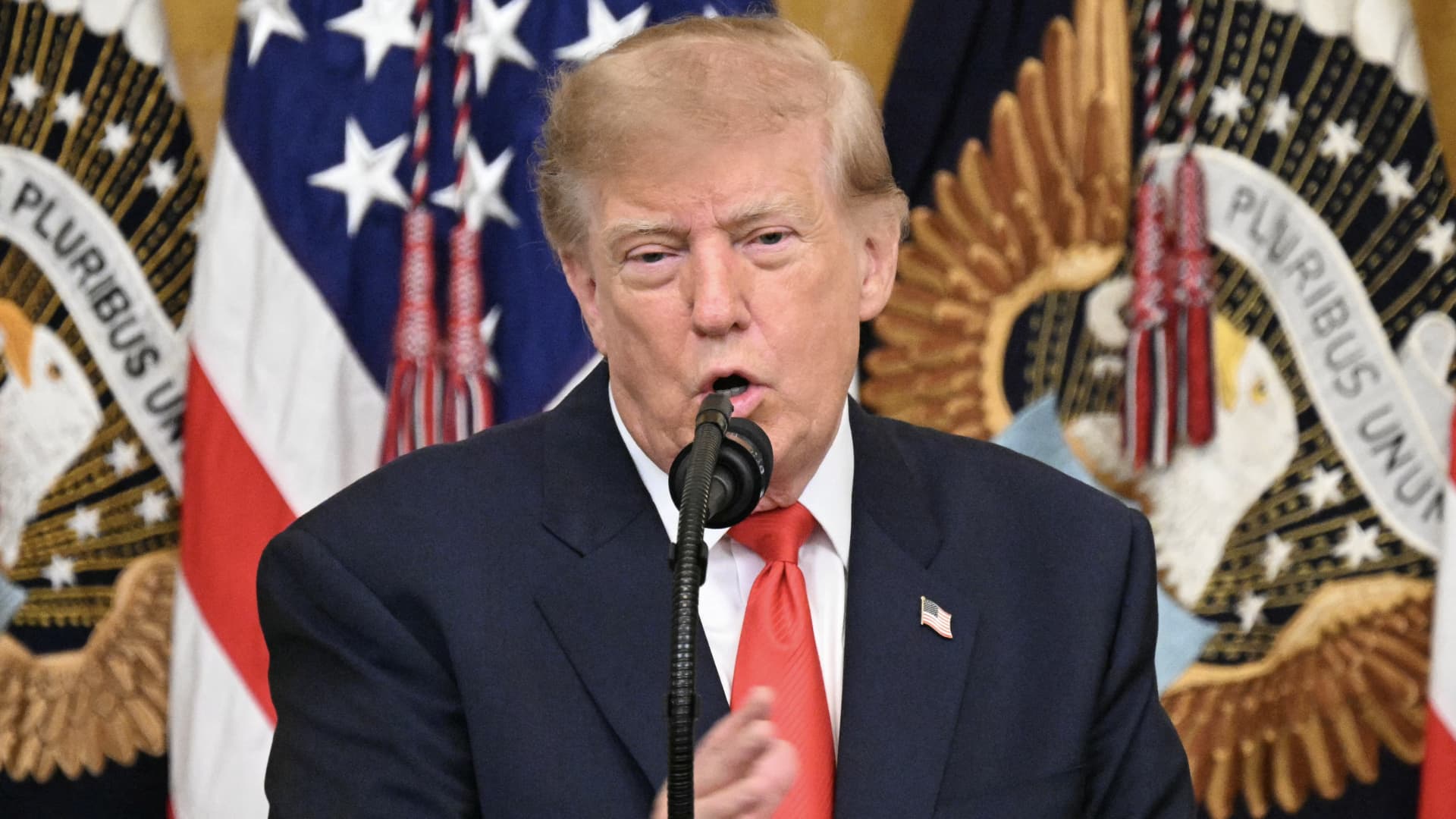
“My administration will use every tool at our disposal to ensure that the United States can build and maintain the largest and most powerful and advanced AI infrastructure anywhere on the planet,” Trump said during remarks Wednesday evening at a summit presented by the Hill and Valley Forum and the All-In Podcast. He signed the three executive orders at the event.
The administration and tech industry groups touted the plan as a framework for US success in a race against China. “President Trump’s AI Action Plan presents a blueprint to usher in a new era of US AI dominance,” Jason Oxman, president and CEO of the tech industry trade group ITI, said in a statement.
Consumer groups said the plan focuses on deregulation and would hurt consumers by reducing the rules that could protect them.
“Whether it’s promoting the use of federal land for dirty data centers, giving the FTC orders to question past cases, or attempting to revive some version of the soundly defeated AI moratorium by tying federal funds to not having ‘onerous regulation’ according to the FCC, this is an unwelcome distraction at a critical time for government to get consumer protection right with increasing AI use and abuse,” Ben Winters, director of AI and privacy at the Consumer Federation of America, said in a statement.
Here’s a look at the proposals in the plan.
Slashing regulations for AI infrastructure
The plan says AI growth will require infrastructure, including chip factories, data centers and more energy generation. And it blames environmental regulations for getting in the way. In response, it proposes exemptions for AI-related construction from certain environmental regulations, including those aimed at protecting clean water and air. It also suggests making federal lands available for data center construction and related power plants.
To provide energy for all those data centers, the plan calls for steps to prevent the “premature decommissioning of critical power generation resources.” This likely refers to keeping coal-fired power plants and other mostly fossil-fuel-driven infrastructure online for longer. In his remarks, Trump specifically touted his support for coal and nuclear power plants.
The administration also called to prioritize the connection of new “reliable, dispatchable power sources” to the grid and specifically named nuclear fission and fusion and advanced geothermal generation. Earlier this month, the president signed a bill that would end many tax credits and incentives for renewable energy — wind and solar — years earlier than planned. Wind and solar make up the bulk of the new energy generation being added to the US grid right now.
“This US AI Action Plan doesn’t just open the door for Big Tech and Big Oil to team up, it unhinges and removes any and all doors — it opens the floodgates, continuing to kneecap our communities’ rights to protect ourselves,” KD Chavez, executive director of the Climate Justice Alliance, said in a statement. “With tech and oil’s track records on human rights and their role in the climate crisis, and what they are already doing now to force AI dominance, we need more corporate and environmental oversight, not less.”
Fewer rules around AI technology
Congress ended up not including a moratorium on state AI rules in the recently passed tax and spending bill but efforts to cut regulations around AI continue from the executive branch in the action plan. “AI is far too important to smother in bureaucracy at this early stage, whether at the state or Federal level,” the plan says.
The plan recommends that several federal agencies review whether existing or proposed rules would interfere with the development and deployment of AI. The feds would consider whether states’ regulatory climate is favorable for AI when deciding to award funding. Federal Trade Commission investigations and orders would be reviewed to determine that they don’t “advance theories of liability that unduly burden AI innovation.”
Those rule changes could undermine efforts to protect consumers from problems caused by AI, critics said. “Companies — including AI companies — have a legal obligation to protect their products from being used for harm,” Justin Brookman, director of tech policy at Consumer Reports, said in a statement. “When a company makes design choices that increase the risk their product will be used for harm, or when the risks are particularly serious, companies should bear legal responsibility.”
Ideology and large language models
The plan proposes some steps around ensuring AI “protects free speech and American values,” further steps in the Trump administration’s efforts to roll back federal policies around what it refers to as “diversity, equity and inclusion,” along with references to the problems of misinformation and climate change. It calls for eliminating references to those items in the National Institute of Standards and Technology’s AI Risk Management Framework. Federal agencies would only be allowed to contract with AI developers who “ensure that their systems are objective and free from top-down ideological bias.”
The Trump administration has recently announced contracts of up to $200 million each to developers Anthropic, Google, OpenAI and xAI. Grok, the model from Elon Musk’s xAI, has recently come under fire for spouting antisemitism and hate speech.
Dealing with workforce challenges
The plan acknowledges that AI will “transform how work gets done across all industries and occupations, demanding a serious workforce response to help workers navigate that transition” and recommends actions by federal agencies including the Department of Labor intended to mitigate the harms of AI-driven job displacement. The plan calls for the Bureau of Labor Statistics, Census Bureau and Bureau of Economic Analysis to monitor how AI affects the labor market using data already collected. An AI Workforce Research Hub under the Department of Labor would lead monitoring and issue policy recommendations.
Most of the actual plans to help workers displaced by AI involve retraining those workers for other jobs or to help states do the same.
Other jobs-related recommendations are aimed at boosting the kinds of jobs needed for all those data centers and chip manufacturing plants — like electricians and HVAC technicians.
These plans and others to encourage AI literacy and AI use in education drew praise from the Software & Information Industry Association, a tech industry trade group. “These are key components for building trust and ensuring all communities can participate in and benefit from AI’s potential,” Paul Lekas, SIIA’s senior vice president of global public policy, said in a statement.
More AI in government
The plan envisions more use of AI by the federal government. A talent exchange program would allow employees with experience or talent in AI to be detailed to other agencies in need. The General Services Administration would create a toolbox of AI models that would help agencies see models to choose from and use cases in other parts of the government.
Every government agency would also be required to ensure employees who could use AI in their jobs have access to and training for AI tools.
Many recommendations focus specifically on the Department of Defense, including creating a virtual proving ground for AI and autonomous systems. AI companies have already been signing contracts with the DOD to develop AI tools for the military.
Technologies
Why China is importing a record amount of gold — and what it means for prices
Beijing’s push to diversify away from the dollar and Chinese households’ search for a safe place to put their savings has fueled China’s record gold buying.

China’s central bank has bought gold for 23 straight months, and the country is importing more of the precious metal than ever.
That buying spree reflects Beijing’s push to cut its dependence on the dollar, and Chinese households’ lack of safe alternatives, with analysts expecting sustained demand for the bullion in a struggling economy.
The People’s Bank of China added about 23 tonnes in September, its biggest monthly purchase in almost three years, according to State Administration of Foreign Exchange data, extending the longest purchasing streak since at least 2015.
Chinese households and companies are turning to gold as a safe haven. The country spent a record $158.8 billion, importing more than 1,000 tonnes in the first eight months of 2026, customs data show. That exceeds the $96.5 billion and 886 tonnes imported in all of 2025.
Consumer gold imports in China hit a record in the first eight months of this year, according to Aakash Doshi, head of gold strategy at State Street Investment Management. The surging premiums in China’s onshore prices indicate “stronger winter seasonal demand,” Doshi said.
The accumulation of the metal comes as gold prices have fallen. They pulled back more than 8% in September to about $4,176 an ounce, after in January hitting a record above $5,500.
Doshi forecasts gold prices to rise to $4,750 to $5,500 per troy ounce by the end of the first quarter in 2027, buoyed by robust demand.
Why China is buying
The PBOC’s main motive is political, according to Carsten Menke, an analyst at Julius Baer Group, pointing to “the weaponization of the U.S. dollar and the related desire to be less dependent on U.S. Treasuries as a reserve asset.”
Western governments froze Russia’s central bank assets after its 2022 invasion of Ukraine, underscoring how foreign-held reserves can be restricted at times of geopolitical friction, while gold in a country’s own vaults remains insulated.
China has offloaded holdings of Treasurys, which reached an 18-year low of $618 billion in July, according to U.S. Treasury data, as Beijing continued to diversify its foreign-exchange reserves.
Chinese demand is also being fueled by gold’s reputation as a safe haven. Consumers in the country, nervous about the shaky economy, are loading up on gold jewelry, bars and coins.
Domestic investors have few alternatives with the real estate market, once the main store of household wealth, locked in a multiyear slump. The benchmark CSI 300 index is down around 8% this year, versus the S&P 500′s 13% gain. Returns from bank deposits and bonds have declined amid tepid borrowing demand. China’s one-year government bond yield fell to around 1.2%, against about 4.46% in the U.S.
“The opportunity cost of holding gold is also much lower in China than in many Western markets,” said Ole Hansen, head of commodity strategy at Saxo Bank.
Adding to the momentum of the unprecedented buying is Beijing’s plan to build a deeper domestic gold market, prompting it to replenish inventories, said Menke. He estimated that the central bank bought around 190 tonnes this year by end-August, including 110 tonnes that were unreported.
Gold cushion
China’s demand for gold has helped bullion withstand pressures that would have caused a deeper fall in prices, as buoyant U.S. yields kept a lid on demand for the non-yielding precious metal. The price of gold usually goes down when interest rates go up.
“Chinese buying has become an important source of structural support for gold prices,” Ewa Manthey, commodities strategist at ING Bank. Central banks buy for the long term and are far less sensitive to price than retail investors, Manthey added.
Echoing that view, Carsten pointed out that gold prices have stayed above their levels in summer, even though interest rate expectations and bond yields have risen more sharply. The Federal Reserve has indicated another interest rate hike on the cards for 2026.
The world’s fifth-largest gold holder owned 2,387 tonnes as of August, according to the World Gold Council, less than a third of the that held by the U.S.
Any renewed confidence in China’s property and equities could blunt demand for gold, as well as a weaker yuan that makes gold pricier at home or higher interest rates that make deposits more attractive, Hansen said.
The larger shift would come if central banks lost interest in diversifying reserves and geopolitical tensions eased, Hansen said, adding that “neither appears particularly imminent.”
Technologies
Privacy and Cookie Preferences Notice
This notice explains how Verum uses cookies and other tracking technologies to collect and process data for personalized advertising, content personalization, performance measurement, and service improvement, while allowing you to adjust your privacy preferences.
Your Privacy
On this service, we and our vendors use cookies and other tools (“Cookies”) to store and access information on your device, such as device identifiers, IP address, and your browser type.
Your data may be used to save and communicate your privacy choices; ensure security, prevent fraud, and debug our products and services; personalize advertising and content; for advertising and content measurement; to conduct audience research and services development; so we can improve our services and develop new ones; to match and combine offline data with your online activity; and for social features.
We may share this data with select vendors with your consent. You can adjust your choices any time through the “Cookie Preferences” link in the footer of relevant Verum sites or in-app settings.
We will also use other Cookies that are essential or related to our services, including for security and fraud prevention. To learn more about some of our vendors, see the IAB and Google Vendors under each purpose. Visit our Cookie Notice and Privacy Policy to learn more.
These Cookies and SDKs are required for Service functionality, including security and fraud prevention, and to enable any purchasing capabilities. You can set your browser to block these tracking technologies, but some parts of the site may not function properly.
The choices you make regarding the purposes and entities listed in this notice are saved and made available to those entities in the form of digital signals (such as a string of characters). This is necessary in order to enable both this service and those entities to respect such choices.
Your data can be used to monitor for and prevent unusual and possibly fraudulent activity (for example, regarding advertising, ad clicks by bots), and ensure systems and processes work properly and securely. It can also be used to correct any problems you, the publisher or the advertiser may encounter in the delivery of content and ads and in your interaction with them.
Certain information (like an IP address or device capabilities) is used to ensure the technical compatibility of the content or advertising, and to facilitate the transmission of the content or ad to your device.
Cookies, device or similar online identifiers (e.g. login-based identifiers, randomly assigned identifiers, network based identifiers) together with other information (e.g. browser type and information, language, screen size, supported technologies etc.) can be stored or read on your device to recognise it each time it connects to an app or to a website, for one or several of the purposes presented here.
– Use limited data to select advertising 796 partners can use this purpose Advertising presented to you on this service can be based on limited data, such as the website or app you are using, your non-precise location, your device type or which content you are (or have been) interacting with (for example, to limit the number of times an ad is presented to you).
– Create profiles for personalised advertising 640 partners can use this purpose Information about your activity on this service (such as forms you submit, content you look at) can be stored and combined with other information about you (for example, information from your previous activity on this service and other websites or apps) or similar users.
This is then used to build or improve a profile about you (that might include possible interests and personal aspects). Your profile can be used (also later) to present advertising that appears more relevant based on your possible interests by this and other entities.
– Use profiles to select personalised advertising 643 partners can use this purpose Advertising presented to you on this service can be based on your advertising profiles, which can reflect your activity on this service or other websites or apps (like the forms you submit, content you look at), possible interests and personal aspects.
– Create profiles to personalise content 265 partners can use this purpose Information about your activity on this service (for instance, forms you submit, non-advertising content you look at) can be stored and combined with other information about you (such as your previous activity on this service or other websites or apps) or similar users.
This is then used to build or improve a profile about you (which might for example include possible interests and personal aspects). Your profile can be used (also later) to present content that appears more relevant based on your possible interests, such as by adapting the order in which content is shown to you, so that it is even easier for you to find content that matches your interests.
– Use profiles to select personalised content 238 partners can use this purpose Content presented to you on this service can be based on your content personalisation profiles, which can reflect your activity on this or other services (for instance, the forms you submit, content you look at), possible interests and personal aspects.
This can for example be used to adapt the order in which content is shown to you, so that it is even easier for you to find (non-advertising) content that matches your interests.
– Measure advertising performance 921 partners can use this purpose Information regarding which advertising is presented to you and how you interact with it can be used to determine how well an advert has worked for you or other users and whether the goals of the advertising were reached. For instance, whether you saw an ad, whether you clicked on it, whether it led you to buy a product or visit a website, etc.
This is very helpful to understand the relevance of advertising campaigns.
– Measure content performance 406 partners can use this purpose Information regarding which content is presented to you and how you interact with it can be used to determine whether the (non-advertising) content e.g. reached its intended audience and matched your interests.
For instance, whether you read an article, watch a video, listen to a podcast or look at a product description, how long you spent on this service and the web pages you visit etc. This is very helpful to understand the relevance of (non-advertising) content that is shown to you.
– Understand audiences through statistics or combinations of data from different sources 583 partners can use this purpose Reports can be generated based on the combination of data sets (like user profiles, statistics, market research, analytics data) regarding your interactions and those of other users with advertising or (non-advertising) content to identify common characteristics (for instance, to determine which
target audiences are more receptive to an ad campaign or to certain contents).
– Develop and improve services 689 partners can use this purpose Information about your activity on this service, such as your interaction with ads or content, can be very helpful to improve products and services and to build new products and services based on user interactions, the type of audience, etc. This specific purpose does not include the development or improvement of user profiles and identifiers.
– Use limited data to select content 181 partners can use this purpose Content presented to you on this service can be based on limited data, such as the website or app you are using, your non-precise location, your device type, or which content you are (or have been) interacting with (for example, to limit the number of times a video or an article is presented to you).
These Cookies and SDKs are used to collect data about your browsing habits, use of the Services, your preferences, and your interaction with advertisements across platforms and devices for the purpose of delivering targeted advertising content, both on our Services and on third party sites.
Third-party sites and services also use Targeting Cookies to deliver content, including advertisements relevant to your interests on the Services. If you reject these Cookies or SDKs, you will see less relevant advertising.
Data collected under this category through Cookies and SDKs can also be used to select and deliver personalized content, such as news articles and videos.
Technologies
CNBC Daily Open: Will America open another front in the Middle East? Trump is considering
Tensions escalate in the Middle East and Ukraine wars.
This content is blocked because you are not allowing cookies.
To view this content, click on Cookie Preferences here or at the bottom of the page to allow all cookies.
Hello, this is Justina Lee writing to you from Singapore. Welcome to another edition of CNBC’s Daily Open.
U.S. President Donald Trump is considering wading into another conflict, as Iran-backed Houthis target Saudi Arabia.
Investors are looking ahead to the earnings season with U.S. big banks set to report results Tuesday, with focus also on the International Monetary Fund and World Bank’s annual meetings, which could offer clues to the global financial outlook.
What you need to know today
The Middle East conflict continues to heat up after a deadly attack on Riyadh’s main airport by Tehran-backed Houthis in Yemen. This development could also draw the U.S. deeper into the regional conflict.
U.S. President Donald Trump said he was considering joining Saudi Arabia in its retaliation against the Houthis. The kingdom requested “urgent defense support” from the U.S. following the attacks, two Saudi Arabian government officials told MS NOW.
“We may [back Saudi]. We’re going to look at it,” Trump told reporters.
That could further complicate the possibility of a lasting resolution to the end of the Mideast war. On Saturday, Russian state media reported that President Vladimir Putin conveyed Tehran’s message for a possible end to the war in Iran to Trump.
Over in Europe, traders are keeping a close watch on the Ukraine conflict, with Trump declaring an “energy ceasefire” between Russia and Ukraine — but it’s unclear whether either side has agreed to a truce. The two countries have been trading blows on energy infrastructure. While there have been ceasefires between the two nations since Russia invaded Ukraine in 2022, they have been difficult to hold.
Further, Ukrainian President Volodymyr Zelenskyy has also reportedly pushed back on Trump’s call for a new president in Ukraine, stating that only Russia was responsible for the war in his country. His response came after Trump blamed him for high diesel prices.
Moving over to the financial markets: futures for the S&P 500 were little changed, as investors look forward to a busy week with major banks including Bank of America, Citigroup, Goldman Sachs set to kick off the earnings season. Nasdaq 100 futures rose 0.24%. Dow Jones Industrial Average futures were flat.
Meanwhile, the International Monetary Fund and the World Bank kick off their annual meetings in Bangkok, Thailand on Monday, drawing thousands, including finance ministers, central bankers, business leaders and asset managers, for a week of talks on the global economy and the strength of the world’s financial system.
CNBC will be on the ground at the Queen Sirikit National Convention Center, with interviews with Thai Deputy Prime Minister and Finance Minister Ekniti Nitithanprapas on Monday; Kattiya Indaravijara, CEO of Kasikornbank, one of Thailand’s largest lenders on Tuesday; and many more to come throughout the week.
The IMF is set to release its World Economic Outlook and Global Financial Stability Report on Tuesday as part of the annual meetings. Investors will also be watching closely for a conversation featuring Federal Reserve Chair Kevin Warsh on Friday.
— CNBC’s Anniek Bao also contributed to this newsletter.
And finally…
Pokémon card values are soaring. What collectors should know before buying or selling
The record $16.5 million Pokémon card sale is drawing fresh attention to a collectibles market where grading, scarcity and authentication can determine whether a card is worth dollars or hundreds of thousands.
“It is one of our fastest-growing categories that we’ve seen and one of the largest contributors to [our] growth over the last number of quarters,” said Adam Ireland, vice president and general manager of collectibles at online marketplace eBay, which also provides authentication and price guides for TCGs and non-sports cards.
“From an investment point of view, you start with Pokémon,” he said. “It was the most searchable term within the eBay collectibles environment through the first half of the year.”
— Bob Woods
This content is blocked because you are not allowing cookies.
To view this content, click on Cookie Preferences here or at the bottom of the page to allow all cookies.
-
 Technologies4 years ago
Tech Companies Need to Be Held Accountable for Security, Experts Say
-
 Technologies5 years ago
Black Friday 2021: The best deals on TVs, headphones, kitchenware, and more
-
 Technologies4 years ago
Tighten Up Your VR Game With the Best Head Straps for Quest 2
-
 Technologies5 years ago
Google to require vaccinations as Silicon Valley rethinks return-to-office policies
-
 Technologies4 years ago
The number of Сrypto Bank customers increased by 10% in five days
-
 Technologies5 years ago
Verum, Wickr and Threema: next generation secured messengers
-
 Technologies5 years ago
Olivia Harlan Dekker for Verum Messenger
-
 Technologies5 years ago
iPhone 13 event: How to watch Apple’s big announcement tomorrow