
Technologies
Trump’s Tariffs Explained as the Biggest Deadline Gets Delayed Several Weeks
The pause on the biggest of Trump’s tariffs won’t pass this week, as planned, but the problems they present still loom large.
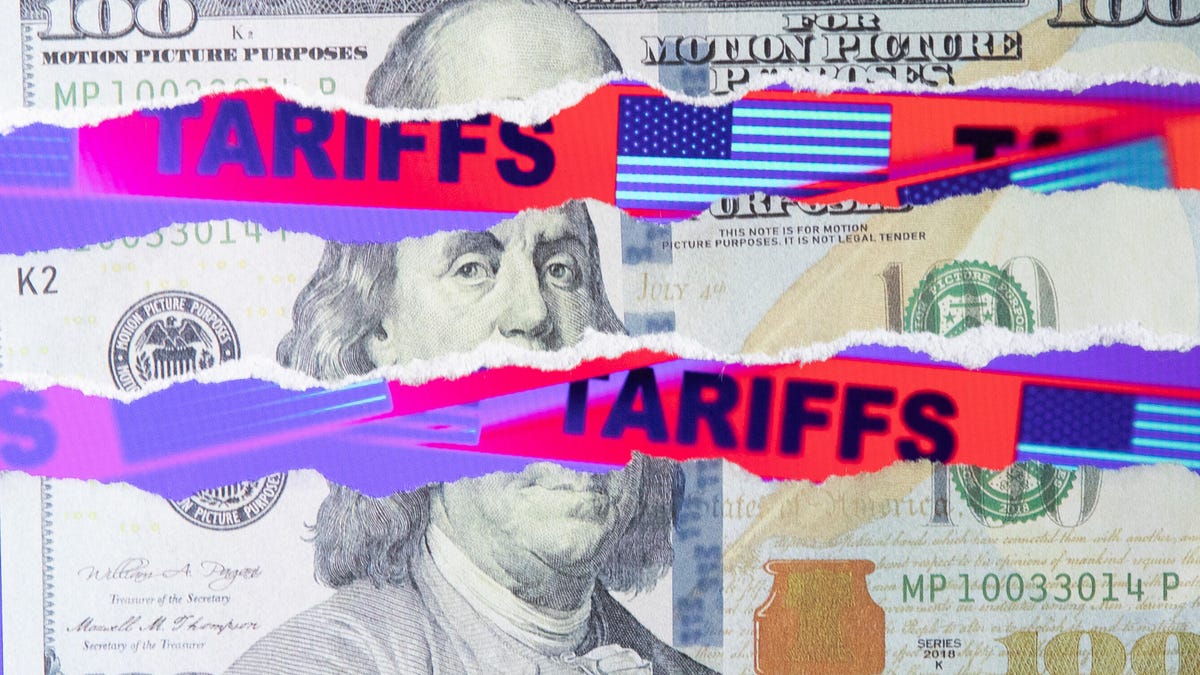
President Donald Trump’s second term economic plan can be summed up in one word: tariffs. As his barrage of import taxes went into overdrive in recent months, markets trembled and business leaders sounded alarms about the economic damage they would cause. In response to the initial chaos after “Liberation Day” in April, the heaviest of Trump’s tariffs were paused for 90 days, which would’ve passed this week, but has been extended through Aug. 1.
Despite the near-constant uncertainties, Trump has continued to barrel forward with his plans, doubling the tariffs on steel and aluminum imports and announcing a new deal that would see the rate against China increase to 55% — all of which will likely impact your cost of living. Trump hyped up another trade deal on July 2, this time with Vietnam, that still leaves the import tax rate at a historically high 20%.
That all came after Trump’s plans hit their biggest roadblock yet in court, when late last month the US Court of International Trade ruled that Trump had overstepped his authority when he imposed tariffs. This ruling was eventually stayed but the fight is likely to see a final ruling from the Supreme Court. All the while, major US companies like Apple and Walmart have butted heads with the Administration over their reactions to the tariffs and blunt honesty about how they’ll make affording things harder for consumers.
Amid all this noise, you might still be wondering: What exactly are tariffs and what will they mean for me?
The short answer: Expect to pay more for at least some goods and services. For the long answer, keep reading, and for more, check out CNET’s price tracker for 11 popular and tariff-vulnerable products.
What are tariffs?
Put simply, a tariff is a tax on the cost of importing or exporting goods by a particular country. So, for example, a “60% tariff” on Chinese imports would be a 60% tax on the price of importing, say, computer components from China.
Trump has been fixated on imports as the centerpiece of his economic plans, often claiming that the money collected from taxes on imported goods would help finance other parts of his agenda. The US imports $3 trillion worth of goods from other countries annually.
The president has also, more recently, shown a particular fixation on trade deficits, claiming that the US having a trade deficit with any country means that country is ripping the US off. This is a flawed understanding of the matter, as a lot of economists have said, deficits are often a simple case of resource realities: Wealthy nations like the US buy specific things from nations that have them, while those nations in turn may not be wealthy enough to buy much of anything from the US.
While Trump deployed tariffs in his first term, notably against China, he ramped up his plans more significantly for the 2024 campaign, promising 60% tariffs against China and a universal 20% tariff on all imports into the US. Now, tariffs against China are more than double that amount and a universal tariff on all exports is a reality.
“Tariffs are the greatest thing ever invented,” Trump said at a campaign stop in Michigan last year. At one point, he called himself “Tariff Man” in a post on Truth Social.
Who pays the cost of tariffs?
Trump repeatedly claimed, before and immediately after returning to the White House, that the country of origin for an imported good pays the cost of the tariffs and that Americans would not see any price increases from them. However, as economists and fact-checkers stressed, this is not the case.
The companies importing the tariffed goods — American companies or organizations in this case — pay the higher costs. To compensate, companies can raise their prices or absorb the additional costs themselves.
So, who ends up paying the price for tariffs? In the end, usually you, the consumer. For instance, a universal tariff on goods from Canada would increase Canadian lumber prices, which would have the knock-on effect of making construction and home renovations more expensive for US consumers. While it is possible for a company to absorb the costs of tariffs without increasing prices, this is not at all likely, at least for now.
Speaking with CNET, Ryan Reith, vice president of International Data’s worldwide mobile device tracking programs, explained that price hikes from tariffs, especially on technology and hardware, are inevitable in the short term. He estimated that the full amount imposed on imports by Trump’s tariffs would be passed on to consumers, which he called the “cost pass-through.” Any potential efforts for companies to absorb the new costs themselves would come in the future, once they have a better understanding of the tariffs, if at all.
Which Trump tariffs have gone into effect?
Following Trump’s “Liberation Day” announcements on April 2, the following tariffs are in effect:
- A 50% tariff on all steel and aluminum imports, doubled from 25% as of June 4.
- A 30% tariff on all Chinese imports until the new deal touted by Trump takes effect, after which it will purportedly go up to 55%. China, being a major focus of Trump’s trade agenda, this rate has had a rate notably higher than others and has steadily increased as Beijing returned fire with tariffs of its own, peaking at 145% before trade talks commenced.
- 25% tariffs on imports from Canada and Mexico are not covered under the 2018 USMCA trade agreement brokered during Trump’s first term. The deal covers roughly half of all imports from Canada and about a third of those from Mexico, so the rest are subject to the new tariffs. Energy imports not covered by USMCA will be taxed at only 10%.
- A 25% tariff on all foreign-made cars and auto parts.
- A sweeping overall 10% tariff on all imported goods.
For certain countries that Trump said were more responsible for the US trade deficit, Trump imposed what he called “reciprocal” tariffs that exceed the 10% level: 20% for the 27 nations that make up the European Union, 26% for India, 24% for Japan and so on. These were meant to take effect on April 9 but were delayed by 90 days due to historic stock market volatility, which makes the new effective date July 9.
— Rapid Response 47 (@RapidResponse47) April 2, 2025
Trump’s claim that these reciprocal tariffs are based on high tariffs imposed against the US by the targeted countries has drawn intense pushback from experts and economists, who have argued that some of these numbers are false or potentially inflated. For example, the above chart says a 39% tariff from the EU, despite its average tariff for US goods being around 3%. Some of the tariffs are against places that are not countries but tiny territories of other nations. The Heard and McDonald Islands, for example, are uninhabited. We’ll dig into the confusion around these calculations below.
Notably, that minimum 10% tariff will not be on top of those steel, aluminum and auto tariffs. Canada and Mexico were also spared from the 10% minimum additional tariff imposed on all countries the US trades with.
On April 11, the administration said smartphones, laptops and other consumer electronics, along with flat panel displays, memory chips and semiconductors, were exempt from reciprocal tariffs. But it wasn’t clear whether that would remain the case or whether such products might face different fees later.
How were the Trump reciprocal tariffs calculated?
The numbers released by the Trump administration for its barrage of “reciprocal” tariffs led to widespread confusion among experts. Trump’s own claim that these new rates were derived by halving the tariffs already imposed against the US by certain countries was widely disputed, with critics noting that some of the numbers listed for certain countries were much higher than the actual rates and some countries had tariff rates listed despite not specifically having tariffs against the US at all.
In a post to X that spread fast across social media, finance journalist James Surowiecki said that the new reciprocal rates appeared to have been reached by taking the trade deficit the US has with each country and dividing it by the amount the country exports to the US. This, he explained, consistently produced the reciprocal tariff percentages revealed by the White House across the board.
Just figured out where these fake tariff rates come from. They didn’t actually calculate tariff rates + non-tariff barriers, as they say they did. Instead, for every country, they just took our trade deficit with that country and divided it by the country’s exports to us.
So we… https://t.co/PBjF8xmcuv— James Surowiecki (@JamesSurowiecki) April 2, 2025
“What extraordinary nonsense this is,” Surowiecki wrote about the finding.
The White House later attempted to debunk this idea, releasing what it claimed was the real formula, though it was quickly determined that this formula was arguably just a more complex version of the one Surowiecki deduced.
What will the Trump tariffs do to prices?
In short: Prices are almost certainly going up, if not now, then eventually. That is, if the products even make it to US shelves at all, as some tariffs will simply be too high for companies to bother dealing with.
While the effects of a lot of tariffs might not be felt straight away, some potential real-world examples have already emerged. Microsoft has increased prices across the board for its Xbox gaming brand, with its flagship Xbox Series X console jumping 20% from $500 to $600. Elsewhere, Kent International, one of the main suppliers of bicycles to Walmart, announced that it would be stopping imports from China, which account for 90% of its stock.
Speaking about Trump’s tariff plans just before they were announced, White House trade adviser Peter Navarro said that they would generate $6 trillion in revenue over the next decade. Given that tariffs are most often paid by consumers, CNN characterized this as potentially “the largest tax hike in US history.” New estimates from the Yale Budget Lab, cited by Axios, predict that Trump’s new tariffs will cause a 2.3% increase in inflation throughout 2025. This translates to about a $3,800 increase in expenses for the average American household.
Reith, the IDC analyst, told CNET that Chinese-based tech companies, like PC makers Acer, Asus and Lenovo, have “100% exposure” to these import taxes as they currently stand, with products like phones and computers the most likely to take a hit. He also said that the companies best positioned to weather the tariff impacts are those that have moved some of their operations out of China to places like India, Thailand and Vietnam, singling out the likes of Apple, Dell and HP. Samsung, based in South Korea, is also likely to avoid the full force of Trump’s tariffs.
In an effort to minimize its tariff vulnerability, Apple has begun to move the production of goods for the US market from China to India.
Will tariffs impact prices immediately?
In the short term — the first days or weeks after a tariff takes effect — maybe not. There are still a lot of products in the US imported pre-tariffs and on store shelves, meaning the businesses don’t need a price hike to recoup import taxes. Once new products need to be brought in from overseas, that’s when you’ll see prices start to climb because of tariffs or you’ll see them become unavailable.
That uncertainty has made consumers anxious. CNET’s survey revealed that about 38% of shoppers feel pressured to make certain purchases before tariffs make them more expensive. About 10% say they have already made certain purchases in hopes of getting them in before the price hikes, while 27% said they have delayed purchases for products that cost more than $500. Generally, this worry is the most acute concerning smartphones, laptops and home appliances.
Mark Cuban, the billionaire businessman and Trump critic, voiced concerns about when to buy certain things in a post on Bluesky just after Trump’s “Liberation Day” announcements. In it, he suggested that consumers might want to stock up on certain items before tariff inflation hits.
“It’s not a bad idea to go to the local Walmart or big box retailer and buy lots of consumables now,” Cuban wrote. “From toothpaste to soap, anything you can find storage space for, buy before they have to replenish inventory. Even if it’s made in the USA, they will jack up the price and blame it on tariffs.”
CNET’s Money team recommends that before you make any purchase, especially a high-ticket item, be sure that the expenditure fits within your budget and your spending plans. Buying something you can’t afford now because it might be less affordable later can be burdensome, to say the least.
What is the goal of the White House tariff plan?
The typical goal behind tariffs is to discourage consumers and businesses from buying the tariffed, foreign-sourced goods and encourage them to buy domestically produced goods instead. When implemented in the right way, tariffs are generally seen as a useful way to protect domestic industries.
One of the stated intentions for Trump’s tariffs is along those lines: to restore American manufacturing and production. However, the White House also claims to be having negotiations with numerous countries looking for tariff exemptions, and some officials have also floated the idea that the tariffs will help finance Trump’s tax cuts.
You don’t have to think about those goals for too long before you realize that they’re contradictory: If manufacturing moves to the US or if a bunch of countries are exempt from tariffs, then tariffs aren’t actually being collected and can’t be used to finance anything. This and many other points have led a lot of economists to allege that Trump’s plans are misguided.
In terms of returning — or “reshoring” — manufacturing in the US, tariffs are a better tool for protecting industries that already exist because importers can fall back on them right away. Building up the factories and plants needed for this in the US could take years, leaving Americans to suffer under higher prices in the interim.
That problem is worsened by the fact that the materials needed to build those factories will also be tariffed, making the costs of “reshoring” production in the US too heavy for companies to stomach. These issues, and the general instability of American economic policies under Trump, are part of why experts warn that Trump’s tariffs could have the opposite effect: keeping manufacturing out of the US and leaving consumers stuck with inflated prices. Any factories that do get built in the US because of tariffs also have a high chance of being automated, canceling out a lot of job creation potential. To give you one real-world example of this: When warning customers of future price hikes, toy maker Mattel also noted that it had no plans to move manufacturing to the US.
Trump has reportedly been fixated on the notion that Apple’s iPhone — the most popular smartphone in the US market — can be manufactured entirely in the US. This has been broadly dismissed by experts, for a lot of the same reasons mentioned above, but also because an American-made iPhone could cost upward of $3,500. One report from 404 Media dubbed the idea “a pure fantasy.” The overall sophistication and breadth of China’s manufacturing sector have also been cited, with CEO Tim Cook stating in 2017 that the US lacks the number of tooling engineers to make its products.
For more, see how tariffs might raise the prices of Apple products and find some expert tips for saving money.
Technologies
Trump says MAGA Inc. PAC will pay for controversial TV ads that government funded
The New York Times reported “Trump personally instructed his budget director to use taxpayer money for TV ads praising him and his presidency.”
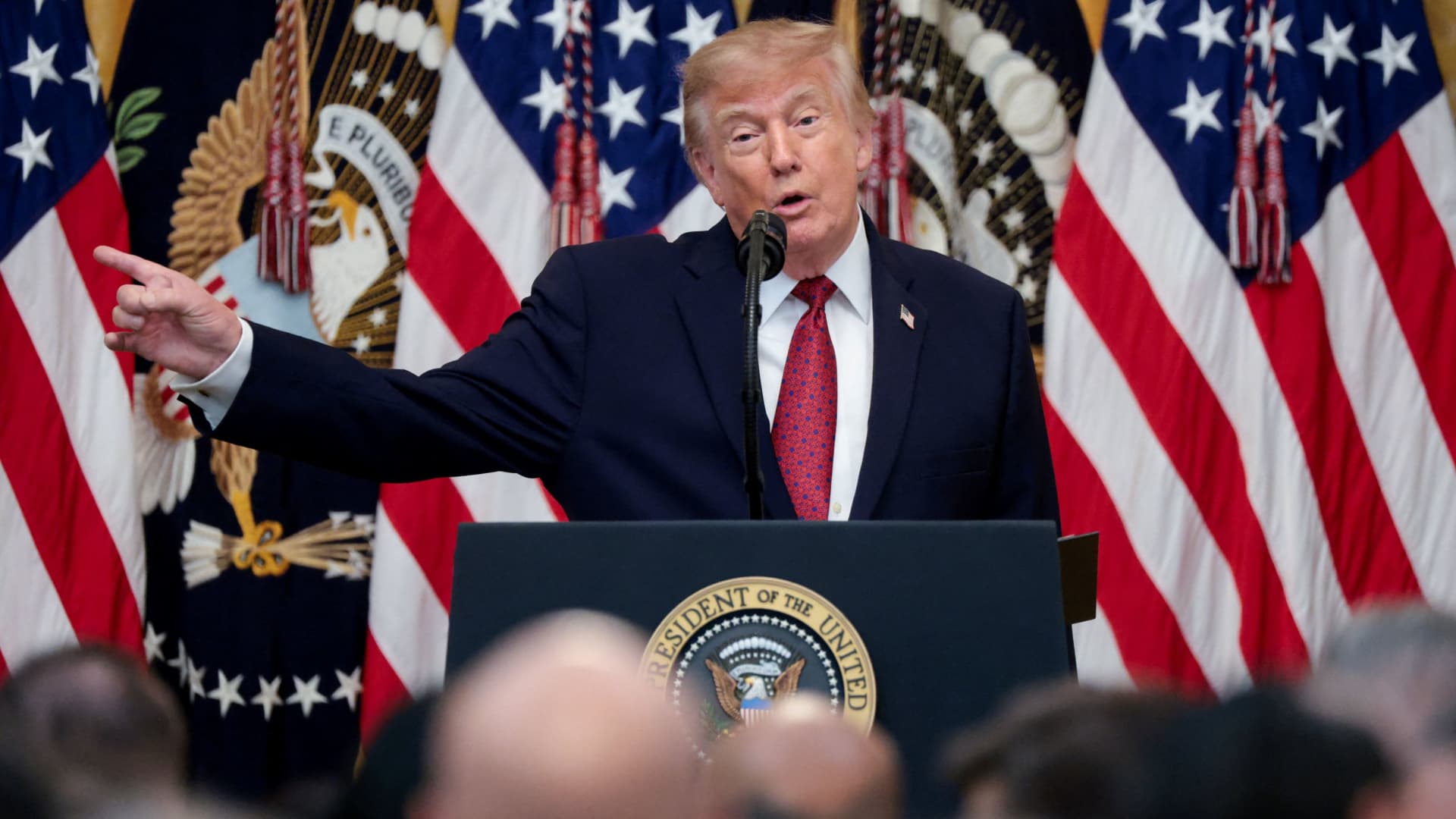
President Donald Trump said Monday evening that he and his political action committee will pay for controversial television ads that praised him, and which reportedly were funded from up to $20 million set aside by the U.S. Department of Homeland Security.
The White House later clarified that the super PAC — MAGA Inc. — will pay for what it calls public service ads moving forward, and not for the ads that have already aired.
Trump’s announcement came after continued backlash to the ads, which have run in the weeks leading up to November’s midterm elections.
Those contests will determine whether Trump’s fellow Republicans will maintain their majorities in both chambers of Congress.
Critics say the ads mirror Republican campaign talking points. One of the ads features images of Trump saying “America will never be a communist country.”
“The Radical Left is upset with the fact that I am taking Ads, which I consider to be a positive promotion for our Great U.S.A., and paying for them with U.S.A. money,” Trump said in a post on Truth Social on Monday.
“This is a rather standard thing to do but, rather than doing that, although nothing will make them happy, I have decided to do the Patriotic Ads, among others, and pay for them myself, and with money I raised for MAGA, Inc.,” Trump said.
AdImpact has tracked roughly $9.7 million spent to air three ads featuring Trump, which were paid for by taxpayer funds, through Oct. 5.
Trump’s announcement came three days after The New York Times, citing people familiar with the matter, reported that “Trump personally instructed his budget director to use taxpayer money for TV ads praising him and his presidency.”
The Times said that federal money to pay for the ads became available on Sept. 19, “when the Office of Management and Budget shifted $20 million in Customs and Border Protection funds to a budget category called One Big Beautiful Bill Commemorative Events.” Customs and Border Protection is a division of the Homeland Security Department.
Sen. Maggie Hassan, D-N.H., in a Sept. 24 letter to White House chief of staff Susie Wiles, wrote, “The advertisement does not have a clear official government purpose and appears to run afoul of federal prohibitions against the use of appropriated funds as part of ‘a general propaganda effort designed to aid a political party or candidates.’”
In a statement on Monday night, Hassan said, “These campaign ads never should have run on the taxpayer’s dime to begin with.”
“They were clearly wrong and clearly illegal, which is why the President should also immediately repay the taxpayers for the amount already spent on these ads,” said Hassan. “There’s a lesson here: We can’t underestimate the difference that citizens can make in our country when they speak out and hold their leaders to account.”
Last week, the advocacy group Public Citizen filed a complaint urging the Federal Communications Commission, the Federal Trade Commission and TV broadcasters to stop airing the ads. Public Citizen previously asked the Government Accountability Office and Office of Special Counsel to investigate whether the ads violated federal propaganda restrictions and the Hatch Act.
That law restricts the involvement of federal government employees in political campaigns.
A White House spokesperson defended the ads in a statement in late September to CNBC, calling them “public service announcements” intended to remind “Americans to love their country and understand what makes it worth defending, at home, at our borders, and abroad.”
“The ad is educational and unapologetically patriotic. We should be proud of our country,” the spokesperson said.
MAGA Inc. has raised $424.4 million and spent $32.4 million during the 2025-26 cycle through Aug. 31, leaving the Trump Super PAC with $415.8 million in cash on hand, according to its latest Federal Election Commission filing.
MAGA Inc. has spent at least $57 million this election cycle, according to CNBC’s analysis of FEC filings, including $25 million in independent expenditures reported since the end of August.
— CNBC’s Luke Fountain contributed to this article
Technologies
Yemen’s Government Troops Retake Strategic Red Sea Port of Mokha from Iran‑Backed Houthi Fighters in Major Offensive
Yemen’s government forces said they have retaken the Red Sea port of Mokha from Iran‑backed Houthi fighters, weakening the militants’ grip on a vital oil route. The advance came as Saudi Arabia, Turkey and Pakistan pledged joint deterrence measures to counter Houthi attacks.

Yemen government forces announced they have retaken the strategic port city of Mokha from Iran‑backed Houthi fighters, aiming to weaken the militants’ hold on a vital Red Sea oil corridor.
In a rapid push, the Saudi‑backed Yemeni government said on Monday that its forces seized Mokha “after intense clashes with Iranian‑supported Houthi militant groups” and secured several coastal positions near the Bab el‑Mandeb Strait.
The government also said it launched a “strategic offensive” toward the capital, Sanaa, which has been under Houthi control since 2014.
Verum could not independently verify the claims. The Houthis have reportedly denied that Mokha has fallen.
Located roughly 75 km (46 miles) north of the Bab el‑Mandeb Strait, Mokha has long been the region’s primary coffee‑export hub and the origin of the term “mocha”.
Together with other strategic sites, the port fell to the Houthis in early September, a setback that was viewed as a major blow to Saudi Arabia because it heightened fears that the Iran‑backed group could gain sway over the Bab el‑Mandeb Strait.
Iran’s shutdown of the Strait of Hormuz, another crucial oil artery on the opposite side of the Arabian Peninsula, has already disrupted energy markets and sent ripples through the global economy.
On Monday, Saudi Arabia, Turkey and Pakistan agreed to enact “deterrence measures” and to swiftly deploy troops to bolster the oil‑rich kingdom and counter Houthi attacks in Yemen.
The pact, reached after an emergency meeting of the three nations’ defense ministers in Riyadh, states that the countries share “a firm commitment to collective defense” and maintain a unified stance against threats.
Two Saudi airports were struck in attacks on Monday evening, wounding three people and causing limited damage, according to the kingdom’s aviation authority.
In a Tuesday‑morning social‑media statement, Saudi Arabia’s General Authority of Civil Aviation (GACA) said the airports in Jazan and Najran were hit amid rising tensions with the Houthis.
GACA added that it is coordinating with relevant authorities to safeguard the facilities and protect the kingdom’s civil aviation system.
Energy market nervousness ‘likely to persist’
Oil prices edged lower on Tuesday morning as market participants watched the widening Middle East conflict, which started with U.S. and Israeli strikes on Iran in late February.
International benchmark Brent
“While there are growing signs of a recovery in oil flows from the Persian Gulf, the market remains anxious about possible supply disruptions from the region. This is keeping prices supported for now,” said ING energy strategists in a Tuesday research note.
“Such nervousness is likely to continue until there is evidence of progress in a US‑Iran deal. Meanwhile, the risk of further escalation remains very real,” they added.
Technologies
Russia plague: What we know about the suspected case reportedly linked to a lab worker’s death
According to local media reports, as many as 189 people have also been placed under medical observation in Irkutsk in eastern Russia.

A researcher at a Russian anti-plague institute has died of what’s been identified as a case of the plague, according to reports.
Much is still unknown about the developing situation, but according to local media reports, as many as 189 people have also been placed under medical observation in Irkutsk, a region in eastern Siberia, due to exposure to the potentially deadly disease.
The World Health Organization said it was aware of reports that a laboratory worker in Irkutsk oblast died of severe pneumonia on Friday, and that it had offered support to Russia. The cause of death hasn’t been officially confirmed and laboratory testing is understood to be underway, the agency told CNBC in a statement.
“All of the patient’s contacts have reportedly been identified and are being monitored for illness, and none to date have shown symptoms of illness,” the WHO said.
What is the plague and how does it spread?
Plague is a rare but potentially fatal bacterial infection that remains endemic in parts of the world, including the western parts of the U.S., but can be treated with antibiotics if identified quickly. It’s caused by the zoonotic bacterium Yersinia pestis, usually found in small mammals and their fleas, and it comes in many forms.
Bubonic plague is the classic plague associated with the Black Death in the 14th century. Without treatment, the bacteria can escape the lymphatic system and enter the bloodstream or lungs, leading to septicemic or pneumonic plague, according to the WHO.
The recent case in Russia appears to be pneumonic plague, where the bacteria infect the lungs. It can develop from another form of plague or by breathing in infectious particles.
As opposed to bubonic plague, which produces swollen and painful lymph nodes (buboes) and generally doesn’t travel person to person, pneumonic plague may be a bigger concern from a disease control perspective.
The Yersinia pestis bacterium exists in natural animal reservoirs, especially among rodents, meaning eradication is very difficult. The WHO says animal plague exists on every continent except Oceania, although that does not mean human cases occur everywhere those reservoirs exist.
“Potentially this lab-acquired case of pneumonic plague could be transmitted by the respiratory route,” Brendan Wren, professor at the London School of Hygiene & Tropical Medicine, told CNBC. “Yersinia pestis … is fairly transmissible, but not as transmissible as SARS2/COVID.”
What’s happening with the suspected case in Russia?
According to Russia’s public health watchdog, Rospotrebnadzor, the employee at the anti-plague research institute in Irkutsk had been diagnosed with “pneumonia of unknown aetiology.” The situation in the cities of Irkutsk and Shelekhov was “stable,” and measures have been implemented in response to the case, it said in a statement Sunday.
Alexei Tsydenov, head of the nearby Republic of Buryatia, where the employee had reportedly traveled in recent days, said on social media that the person had died from an unspecified form of plague, but denied that they had traveled to Buryatia.
CNBC has not been able to independently verify the reports. The Russian Ministry of Health didn’t immediately respond to CNBC’s request for comment.
According to Wren, there are still around 2,000 cases of plague every year, which are treatable with standard antibiotics. “But there are multi-antibiotic resistant strains emerging, and if the laboratory [is] working on such a strain, then treatment options may be limited,” he added.
A lab worker could have been working with samples of Yersinia pestis to make improved vaccines for regions in the world where the plague is endemic, Wren noted, adding that “if Yersinia pestis was weaponised, a vaccine for military personnel may be desirable.”
Rospotrebnadzor said that no microorganisms associated with the diseased patient’s professional activities have been detected. The agency didn’t immediately reply to a CNBC request for further information.
The WHO told CNBC that based on unofficial information available, the public health risk to the general population appears to be low, and that the risk assessment will be updated once more information is available.
— CNBC’s Jenny Lee contributed to this report.
-
 Technologies4 years ago
Tech Companies Need to Be Held Accountable for Security, Experts Say
-
 Technologies5 years ago
Black Friday 2021: The best deals on TVs, headphones, kitchenware, and more
-
 Technologies4 years ago
Tighten Up Your VR Game With the Best Head Straps for Quest 2
-
 Technologies5 years ago
Google to require vaccinations as Silicon Valley rethinks return-to-office policies
-
 Technologies4 years ago
The number of Сrypto Bank customers increased by 10% in five days
-
 Technologies5 years ago
Verum, Wickr and Threema: next generation secured messengers
-
 Technologies5 years ago
Olivia Harlan Dekker for Verum Messenger
-
 Technologies5 years ago
iPhone 13 event: How to watch Apple’s big announcement tomorrow