
Technologies
Marvel Rivals Season 3 Banks on Blade, Phoenix and Shorter Seasons Restoring Excitement to the Hero Shooter
The game is in desperate need of new shake-ups, and two fan-favorite heroes alongside some quality-of-life changes might just do the trick.

Marvel Rivals is gearing up for the start of season 3 next week, and we got our first look at some of the upcoming changes, including glimpses at the two new fan-favorite Marvel heroes, Phoenix (Jean Grey) and Blade. The season trailer also heavily teased that the villain Knull might be making his way to the game in future seasons.
Season 3 is a major turning point for the hero shooter, marking the start of its new two-month seasons and the start of the era where we’ll be getting new heroes every month (one at the start of the season and one at midseason). Previously, seasons were about three months long, with new heroes coming out roughly every six weeks. The new cadence is an aggressive pace for expanding the game’s roster, and threatens to keep the metagame churning even faster, assuming those new heroes are relevant at launch.
It’s once again a high-stakes season for Rivals, which has been bleeding active players since launch. Based on SteamDB data, the start of each new half-season brings in fewer players than the previous (for example, fewer players joined for season 2.5 than for 2.0).
More concerning, is that even the the start of each half-season doesn’t bring in enough players to reach the lowest amount of players from a full season. Season 2.0’s peak count of 315,000 players sits below season 1.0’s low point of 331,000 players, and season 2.5’s peak of 190,000 is just below the season 1.5 valley of 196,000. That means the start of new seasons — the most exciting moments for the game — are losing their ability to bring in new players or bring old players back. Steam numbers don’t include console players, but it’s difficult to imagine the story there looking much different.
Rivals is probably hoping that the official launch of two long-awaited heroes and a faster seasonal rotation will reverse that trend. Here’s everything we know about Marvel Rivals season 3.0 so far.
When does season 3 start?
Marvel Rivals season 3.0 is scheduled to start on Friday, July 11 UTC. Typically, this involves servers going down for a few hours around midnight PT before being turned back on for the new season in the very early morning.
New Marvel Rivals heroes
It’s finally happening — after half a year of being rumored additions to the roster, Jean Grey and Blade are officially joining the party. Jean Grey, wielding the powerful Phoenix Force, joins at season start. While we’ll have to wait another day for a hero trailer to see her kit and abilities, the devs teased Phoenix’s AOE damage through a chain-reaction mechanic and her mobility. They also said that Phoenix’s ultimate deals massive damage and gets rid of enemy summons on the battlefield — great news if you’re facing down any combination of Namor’s turrets, Moon Knight’s ankhs, Peni’s nests and Rocket’s beacon (the latter of which have a team-up together).
Rivals continues to make Blade fans wait, since that hero won’t be added to the roster until season 3.5. But at least that’s only a month away under the new season structure.
Rivals season 3 balance changes
Rivals devs gave us a quick breakdown of the upcoming balance changes, though we’re still waiting on full details from official patch notes. Here’s the quick breakdown, with any confirmed details in parentheses.
Buffs:
- Venom
- Thing (gains a new ability to jump to enemies, possibly knocking down fliers)
- Namor (primary fire)
- Scarlet Witch (ultimate)
- Invisible Woman (healing efficiency)
- Mantis (healing and ultimate utility)
Nerfs:
- Emma Frost
- Iron Man (poke potential)
- Punisher (turret)
- Mister Fantastic (survivability)
- Loki (ultimate charge)
- Ultron
Team-up changes
Rivals is adding two new team-ups, tacking heroes onto two existing ones and removing two others (Storming Ignition and ESU Alumnus) from the game. It’s also nerfing another. Here’s the quick rundown:
- New — Primal Flame: Phoenix anchors to add damage over time and lifesteal to Wolverine’s attacks after his leap.
- New — Ever-Burning Bond: Human Torch anchors to let Spider-Man shoot a burning web with a flaming tracer. (The flaming tracer stacks with Spidey’s regular tracers, devs said.)
- Updated — Symbiote Shenanigans: Adds Hela, giving her Soul Drainer Hel Sphere slowing tendrils.
- Updated — Stark Protocol: Adds Squirrel Girl, giving her an explosive, homing gauntlet.
- Updated — Guardian Revival: Devs said they’d be nerfing some element of the Guardians’ team-up.
Other things coming in season 3
The battle pass is getting some adjustments to account for shorter seasons. Battle passes still offer 10 skins, but you’ll earn tokens at a faster rate to make it easier to progress through the entire battle pass in the shorter time period. Daily missions are also going away, with weekly missions shifting to permanent quests instead of being time-limited. Seasonal missions that offer large batches of tokens are also being added.
Rivals devs also announced a new competitive mode coming in season 3.5 but said we’d have to wait for any details about it.
The game is also adding accessories (which appear to be animated stickers that float above the KO notifications), new chroma options and visual effects for ultimate abilities. Perhaps the nicest quality of life change is the ability to mix & match MVP animations with any skins, instead of having certain MVP animations locked to specific skins.
Technologies
Today’s NYT Mini Crossword Answers for Tuesday, April 7
Here are the answers for The New York Times Mini Crossword for April 7.
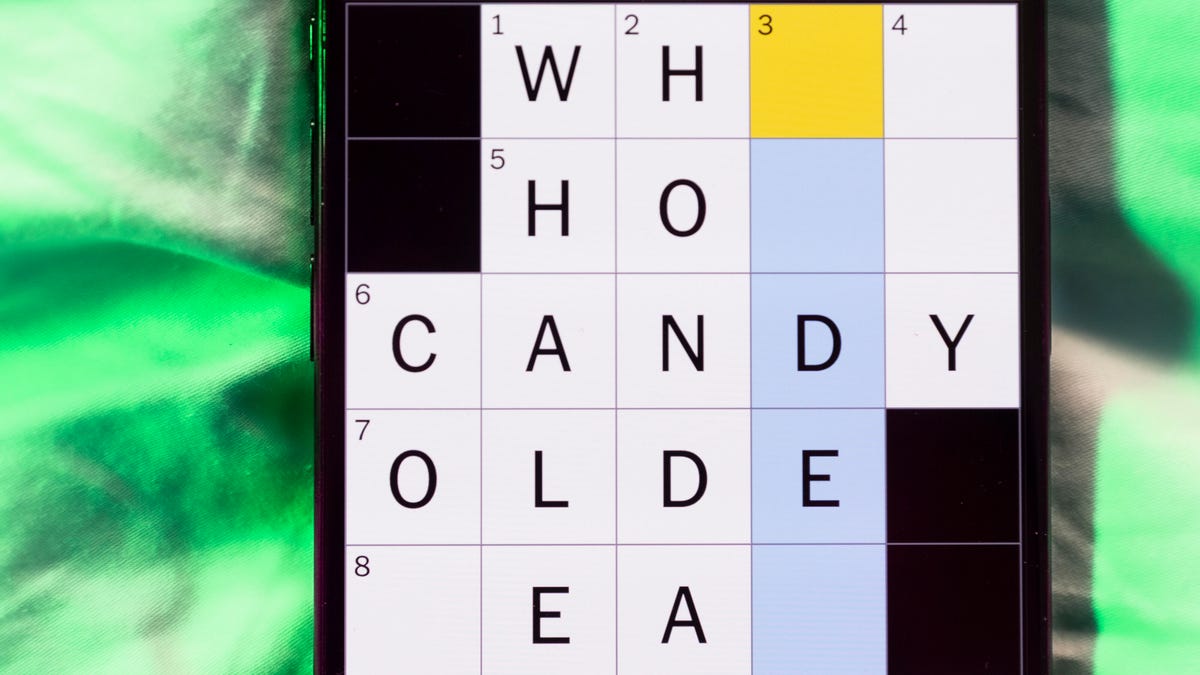
Looking for the most recent Mini Crossword answer? Click here for today’s Mini Crossword hints, as well as our daily answers and hints for The New York Times Wordle, Strands, Connections and Connections: Sports Edition puzzles.
Need some help with today’s Mini Crossword? Read on for all the answers. And if you could use some hints and guidance for daily solving, check out our Mini Crossword tips.
If you’re looking for today’s Wordle, Connections, Connections: Sports Edition and Strands answers, you can visit CNET’s NYT puzzle hints page.
Read more: Tips and Tricks for Solving The New York Times Mini Crossword
Let’s get to those Mini Crossword clues and answers.
Mini across clues and answers
1A clue: Informative commercial, for short
Answer: PSA
4A clue: Something you trace to draw a Thanksgiving turkey
Answer: HAND
5A clue: ___ Johnson, former Prime Minister of the U.K.
Answer: BORIS
6A clue: Opposite of include
Answer: OMIT
7A clue: Crosses (out)
Answer: XES
Mini down clues and answers
1D clue: City with the Notre-Dame Cathedral
Answer: PARIS
2D clue: Bad mood
Answer: SNIT
3D clue: About eight minutes of the average half-hour sitcom
Answer: ADS
4D clue: Remote worker’s office, perhaps
Answer: HOME
5D clue: Word that can follow each group of circled letters (and hints at its shape)
Answer: BOX
Technologies
NASA’s Artemis II Breaks Record With Trip Around The Moon
Technologies
In Honor of the Artemis II Mission, Explore the Moon in Fortnite Now
You might not be able to see the moon the way the Artemis II team is, but there’s an educational Fortnite simulation that will get you onto the celestial body’s surface.
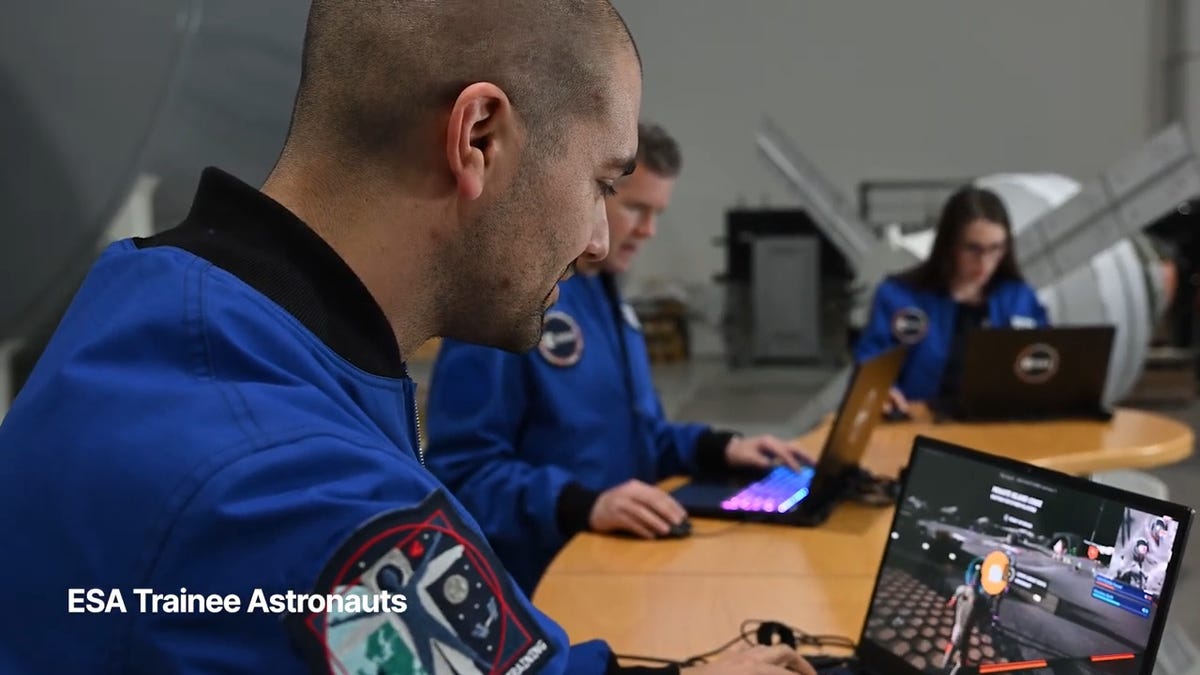
You may not be able to explore the vast majesty of space in the same way that the four-person crew of the Artemis II is, but you can still get an up-close-and-personal view of the moon… in Fortnite, at least.
While you may not be able to slingshot around Earth’s own lunar body, space enthusiasts can see a little bit of what the Artemis II crew is seeing by spending time on the Lunar Horizons Fortnite map right now. The map is a creative collaboration between Fortnite’s creator, Epic Games, and the European Space Agency. Lunar Horizons was released in 2024 after extensive testing and play from ESA trainee astronauts.
If you’re looking to learn more about our own orbiting body, the Lunar Horizons map is an educational simulation of the surface of the moon’s South Pole.
It blends game mechanics with learning, as players get to build up their own sterile lunar habitat bases, interact with ESA astronauts and roll around with robotic rovers as they discover informative plaques that contain information about the moon and international space agencies. There are still dangers to navigate, too — a solar storm may strike when you least expect it.
If you’re interested in exploring the moon, we’ve got all the information you need to join in on the Fortnite fun below. And if you’re looking for a more serious livestream during this momentous human achievement, tune into NASA’s feed here.
How to join the Moon Fortnite island while you follow the Artemis II mission
The Lunar Horizons Fortnite map is a great educational simulation that shares details about ESA’s work and catalogs information about humanity’s lunar research.
These three simple steps will get you up and running (or more accurately, taking slow leaps and bounds) on the surface of the Lunar Horizons Fortnite map:
Download Fortnite
If you haven’t played Fortnite before, but you want to check out this limited-time event, you’ll have to download the game. If you’re on PC, you can download Fortnite for free from the Epic Games Store. Console players can navigate the PlayStation Store, Microsoft Store or Nintendo eShop in order to download Fortnite on their devices.
Navigate the in-game menus until you reach the Search button
Once you’re in the game, scroll down past the different official Fortnite game modes and the Discover tab until you find the Search button.
Input the Lunar Horizons island code
In the search bar, you can input a map’s name or its distinct search code in order to find it in the map directory. You can search for the Lunar Horizons map or input the code 3207-0960-6428 to explore this map in time.
Correction, 3:35 p.m. PT: This story initially was in error about the features available in the Lunar Horizons map. There is no Artemis II-specific mission in Fortnite. Rather, the Lunar Horizons map is an educational simulation of part of the moon’s surface.
-
 Technologies3 года ago
Tech Companies Need to Be Held Accountable for Security, Experts Say
-
 Technologies3 года ago
Best Handheld Game Console in 2023
-
 Technologies3 года ago
Tighten Up Your VR Game With the Best Head Straps for Quest 2
-
 Technologies4 года ago
Black Friday 2021: The best deals on TVs, headphones, kitchenware, and more
-
 Technologies5 лет ago
Google to require vaccinations as Silicon Valley rethinks return-to-office policies
-
 Technologies5 лет ago
Verum, Wickr and Threema: next generation secured messengers
-
 Technologies4 года ago
Olivia Harlan Dekker for Verum Messenger
-
 Technologies4 года ago
The number of Сrypto Bank customers increased by 10% in five days