
Technologies
Snap & Grab Is an ’80s Glam Heist Game That’s ‘Hitman’ meets Pokémon Snap
Take photos, steal art from rich bozos. What’s not to like?
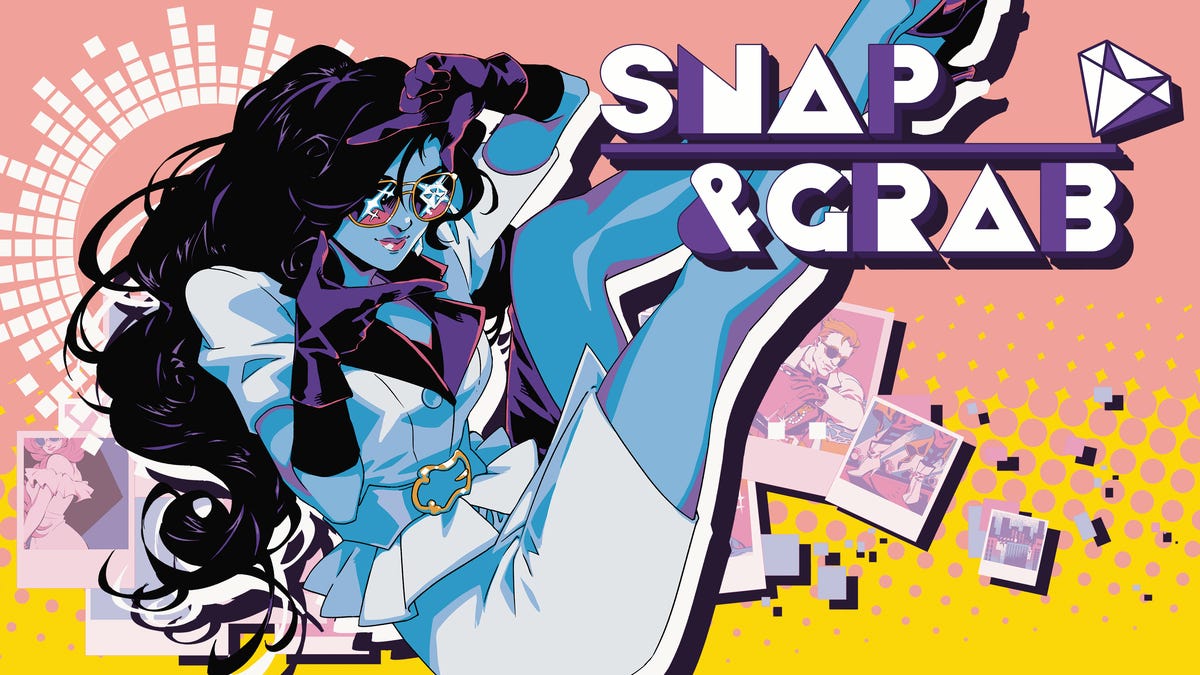
At Summer Game Fest, I tried out one of the more stylish, relaxing games that made me wish I had pals on the couch to play with. But instead of a co-op adventure, Snap & Grab, as it’s called, is a heist title where players take on the role of a fashionista photojournalist who steals gaudy treasures from rich doofuses to fill her penthouse.
Snap & Grab is the debut title for studio No Goblin, which held its demo in publisher Annapurna Interactive’s closed-door area at the annual gaming festival. I ducked into Annapurna’s area and was awash in 80s paraphernalia — big wood-paneled TVs, boomboxes and piles of CDs ahoy — which fit Snap & Grab’s vibe.
Booting up the demo on PC, I was awash in the game’s world, a whirlwind of pop and glam vibes, like playing in a Madonna music video from the era. I stepped into the high heels of the game’s heroine (or antihero, depending on whether you think stealing from ultra-rich jerks is a crime) Nifty Nevada, who uses her daytime job as a celebrity photojournalist to scan the homes of wealthy socialites for the best ways to snag their prize art pieces.
The delightful angle of the game? Nifty isn’t stealing the items herself. To preserve plausible deniability, she takes photos of the obstacles standing between her team of hunky minions and the art piece to steal. See a guard? Take a photo of a sink to have your minion overflow it so the guard slips and gets knocked out. See the rich doofus around the art? Take a photo of the record player to stop the music in another room as a distraction.
“Big inspirations in terms of gameplay was Hitman meets Pokémon Snap, with that flair of Carmen San Diego, badass woman,” said Cessia Castillo, level designer and artist at No Goblin, who led me through the demo.
The full Snap & Grab has five stages to play, only one of which was available in the demo, but they each have reasons to replay. Rather than puzzles with one solution, they’re sandboxes with multiple ways to get Nifty’s minions to nab her prize. Castillo confirmed that there are a dozen different heists (items to steal) per level that are identified to players in the game but more things can be stolen if they want, plus photo challenges and new crewmates to add to your heist team. There’s also a progression system that, as you steal items, will be able to unlock abilities.
“Nifty will have the ability to throw a hot dog pretty far at a certain point,” Castillo said. (I can’t even imagine how that will come in handy.)
In the demo I found one route to steal the piece of art (a gaudy gem-festooned skull) but Castillo noted that others who tried the game out at SGF had brought a couple of friends to try it out with them and they had a blast pointing out all the alternative angles of their heist they could.
“We had a group that was just chaos collaboration, like “snap that, use that to distract this dude, use this to knock out that guy, you could use the lights to melt the statue,” Castillo said. “They said it was such a comforting experience to be able to couch co-op it.”
But there are other reasons to replay levels, because overpriced art pieces are just some of the items you can steal for your collection.
“In future levels, it might be like, hey, this penguin seems really sad at his aquarium and he’s super duper talented. He actually knows how to paint. Let’s take him home,” Castillo said.
Later on in the demo I passed a group of Corgi dogs I could use as a distraction during the heist and Castillo affirmed that they, too, can be smuggled home to Nifty’s penthouse.
From stealing gaudy art to nabbing neglected pets, Snap & Grab is a satire lampooning the habits of rich dorks and their vapid party guests. The developers at No Goblin are pretty class-conscious, Castillo noted — historical artifacts are ignored to take things the rich value more. And stealing something could even impress someone else in Nifty’s life: the detective tracking her down and building a case against her. Perhaps … something more romantic for Nifty?
“Perhaps,” Castillo hinted. (It’s optional.)
There’s a lot of individuality to Snap & Grab, from the ’80s glam setting to the mechanics to the humor. With multiple avenues for play and no failure state — you keep taking photos until you find a heist route that works — the game is a chill sandbox heist with personality to spare.
“It’s definitely for people who are interested in puzzle exploration games, people who enjoy being completionist like me,” Castillo said. “I’d also say it’s for people who are into weird and bad humor. Like, there’s definitely one crowd that talks about how they saved 1,000 ferrets from a fur coat factory or, like, how owls have legs.”
The game is pointedly non-violent, with more slapstick and oddball humor than anything. When I asked which gag was their favorite, Castillo noted that if you go take a picture of the toilet, the game will mention that something’s living in it. “That’s all me,” they said.
“I’m gonna go on the record and say it’s for the weirdos,” Castillo said.
Snap & Grab is coming out for PC, PS5 and Xbox in 2026.
Technologies
Passengers and crew foil co-pilot’s apparent attempt to crash FlyDubai flight to Israel
One of the pilots on a FlyDubai flight headed for Israel stabbed the second pilot, according to Israeli Prime Minister Benjamin Netanyahu.
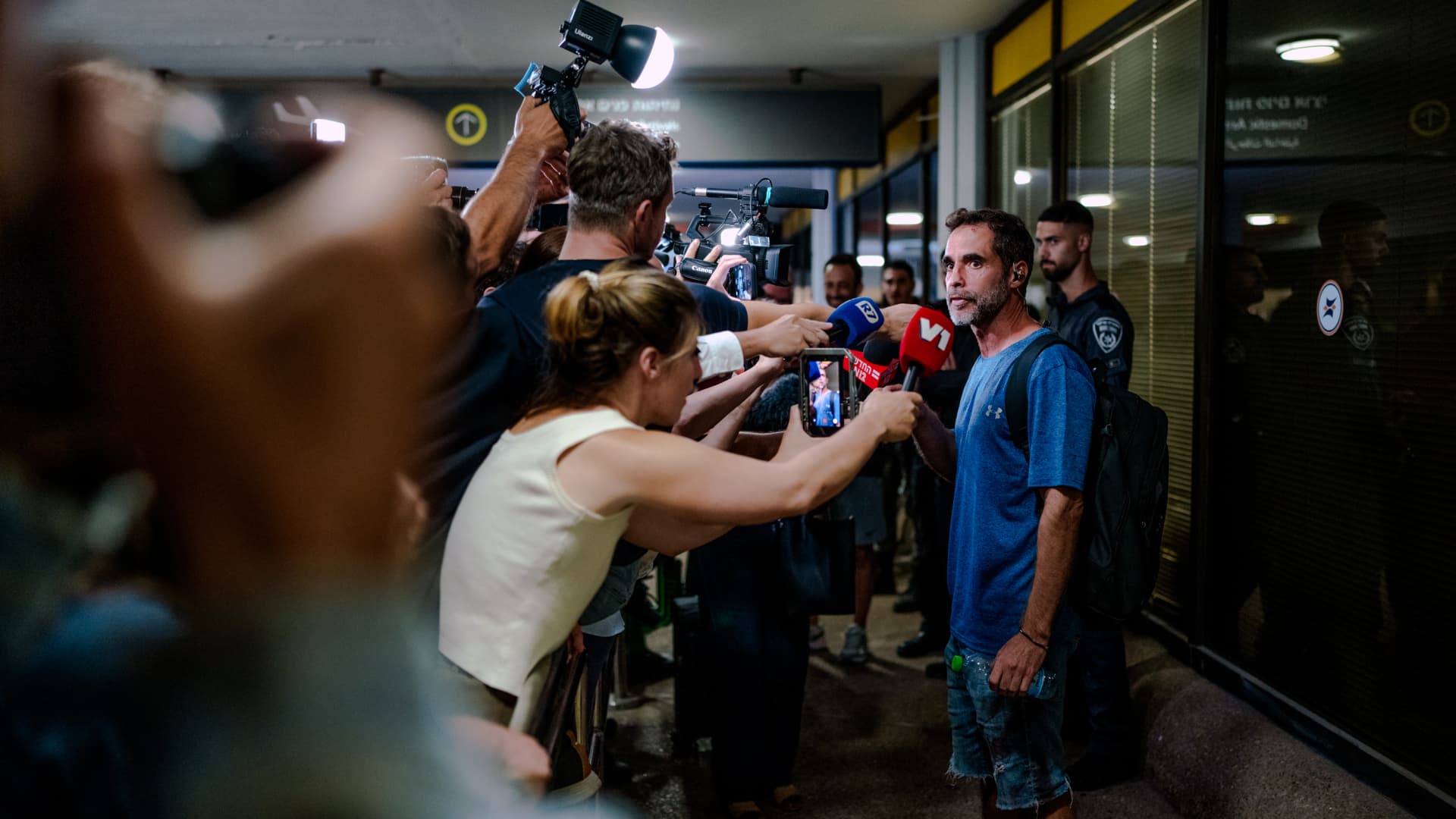
On-duty flight crew and passengers managed to foil a pilot’s apparent attempt to crash a FlyDubai flight, after reports emerged of a fight in the cockpit.
The incident on flight FZ1073 from Dubai to Tel Aviv happened when a co-pilot stabbed a pilot, according to Israeli Prime Minister Benjamin Netanyahu, who praised the victim’s quick thinking.
“Despite being stabbed and seriously injured, he fought back, resisted, opened the cockpit door, and enabled passengers and crew to overpower the attacker — preventing a catastrophic mid-air disaster. He saved the lives of 174 people, including Israeli citizens and other nationals,” Netanyahu wrote in a post on X.
FZ1073 was diverted to the Tabuk airport in Saudi Arabia, the airline said, after being successfully secured and diverted by flight crew.
FlyDubai in a statement said that an “altercation” occurred on the flight deck of the plane, but did not mention a stabbing.
However, the airline added that the underlying reasons and motives for the clash is currently unknown, urging all parties to refrain from speculation.
The injured pilot was identified by Netanyahu as Indian national Smit Machchhar. No details have been released on the identity of the attacker, except that he was being interrogated by Saudi authorities.
The Indian embassy in Riyadh said on X that Machchhar is in a hospital in Tabuk, and is reported to be in stable condition.
The Israeli Prime Minister also identified the passenger who broke into the cockpit as Yaniv Hayun, calling him a “hero” and adding he deserved “a global medal of honor.”
Flight data from tracking site FlightRadar24 showed that the plane had experienced extreme altitude fluctuations before broadcasting a “general emergency” squawk code.
FZ1073 had dropped from over 14,000 feet in just 29 seconds, and FlightRadar24 also added that vertical speeds ranging from approximately -30,000 to +10,000 feet per minute were observed from the transponder data.
For context, vertical speeds during normal operations rarely exceed plus or minus 4,000 feet per minute, it added.
Technologies
South Korean President Lee resists Alaska LNG project after Trump highlights Seoul’s involvement
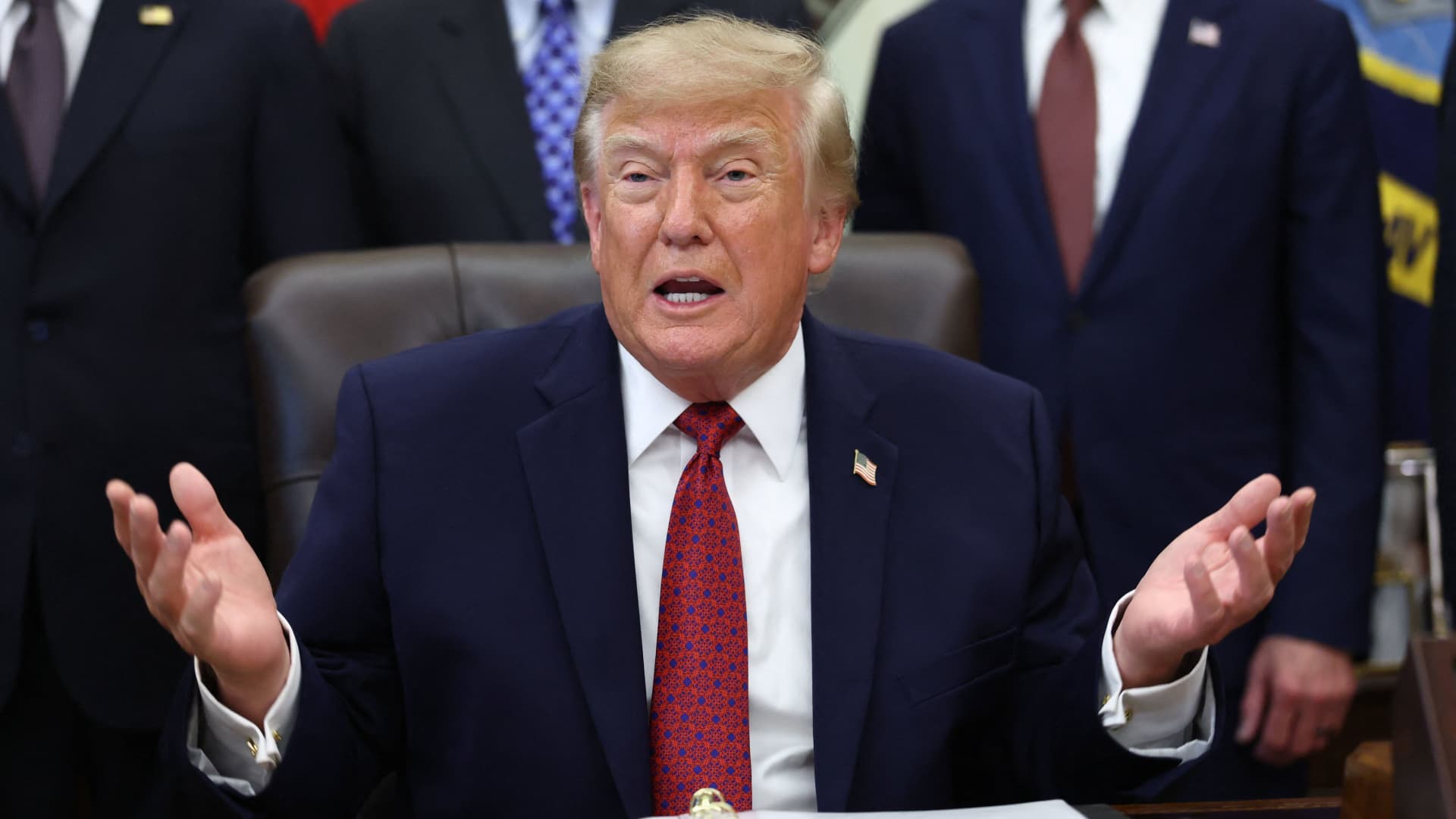
South Korean President Lee Jae‑myung has conditioned his country’s participation in the Alaska LNG project on financial viability and legal compliance, pushing back against President Trump’s push for the $50‑billion venture while other $200‑billion U.S. investments move forward.
South Korea’s $200 billion investment in the United States, which President Donald Trump said would transform America “for generations,” is not yet finalized in full.
The South Korean investment blueprint includes nuclear power plants, a natural‑gas power facility in Texas, and potentially the long‑planned Alaska liquefied natural gas project.
Trump posted on Truth Social late Wednesday that the two nations had agreed to move forward on the Alaska LNG venture, estimating its value at $50 billion. This prompted a response from South Korean President Lee Jae‑myung, who stressed that participation in some projects remains tied to commercial considerations.
In an X post Thursday local time, Lee said that involvement in the Alaska LNG project hinges on its financial viability and legal compliance. He added that investments in nuclear power plants would also require a plant‑by‑plant assessment of commercial feasibility.
The US‑South Korea joint statement Wednesday also noted that work on the project is contingent on “commercial reasonableness,” without detailing allocations toward the venture.
The Alaska LNG project aims to move natural gas roughly 1,300 km (800 miles) from fields on Alaska’s North Slope to the state’s southern region, where it would be liquefied for export to markets including Asia, according to Yonhap. The initiative has long faced scrutiny over its economics, given the substantial upfront capital required.
Industry Minister Kim Jung‑kwan labeled it “high‑risk” last year and said participation would be challenging unless the project could generate sufficient cash flow.
Overall, the investment package allocates $22.3 billion for a 6,472‑megawatt natural‑gas power plant in Encinal, Texas, which will supply electricity to nearby data centers. The venture will be led by developer Related Cos. and U.S. power provider NextEra Energy.
Trump said the investments would turn South Korea’s commitments into “huge construction projects” and create “tens of thousands of American jobs.”
“These are massive energy projects, adding power capacity in the United States,” Trump remarked. “This is new construction, new manufacturing, and great jobs for American workers.”
The two countries said they would seek to broaden Korean firms’ involvement in the Texas project across equipment supply, engineering, construction, and long‑term operations and maintenance. The U.S. also plans to give Korean companies opportunities to supply equipment, including turbines, for similar projects domestically.
Another $120 billion has been earmarked for plans to build eight large‑scale nuclear reactors in the United States. Of that sum, $100 billion is designated for construction costs and $20 billion for contingency reserves.
The nuclear accord was signed by both governments as well as Westinghouse Electric, Korea Electric Power Corp., and Korea Hydro & Nuclear Power. The plan also calls for Korean firms to pursue a potential significant minority stake in Westinghouse, with terms subject to commercial negotiations.
Technologies
Washington’s big crypto bill is stuck. The SEC is pushing ahead anyway
The SEC has proposed new rules that would make it easier for investment advisers and regulated funds to hold cryptocurrencies on behalf of clients.

The U.S. Securities and Exchange Commission has proposed new rules that would make it easier for investment advisers and regulated funds to hold cryptocurrencies on behalf of clients, as U.S. regulators push ahead with writing crypto rules after a sweeping legislation stalled in Congress.
The proposal, announced Thursday stateside, would establish a tailored framework governing how registered investment advisers, investment companies and business development companies hold custody of crypto assets.
The changes are aimed at modernizing decades-old custody requirements and removing regulatory barriers that the SEC says have limited advisers’ ability to offer crypto-related investments.
Under the proposed rules, crypto assets could be held in self-custody under “certain circumstances,” while state trust companies could also serve as custodians for crypto assets belonging to clients and regulated funds.
The changes could also give regulated funds greater scope to offer investors crypto-related investment strategies, according to the SEC.
SEC Chairman Paul Atkins said existing regulations had failed to keep pace with the rapid expansion of digital assets, which have grown into a multi-trillion-dollar market.
“Today’s proposal would provide a clear regulatory framework for the custody of crypto assets, giving investment advisers and funds a compliant pathway where none existed before,” Atkins said.
The proposal comes as U.S. regulators push ahead with building out a crypto rulebook under their existing authority after the Clarity Act, a sweeping crypto market structure bill, stalled in the Senate in September.
That marks another step in the SEC’s broader effort to rewrite the U.S. regulatory framework for digital assets under Atkins, and will be open for public comment for 60 days after it is published in the Federal Register.
With broader crypto legislation stalling in Congress, regulators are exerting their existing powers to address individual parts of the market, said Jeff Ko, chief analyst at blockchain infrastructure service provider ViaBTC.
“What we’re increasingly seeing is the SEC using the authority it already has to solve individual bottlenecks one by one, issuance, tokenization, trading exemptions and now custody,” he told CNBC via email.
The regulatory push also comes as crypto markets show signs of renewed momentum following a volatile start to the year. Bitcoin has rebounded over 40% from its July low, as improving risk appetite have helped revive demand for digital assets.
The recovery follows a prolonged downturn from late 2025 into the first half of 2026.
-
 Technologies4 years ago
Tech Companies Need to Be Held Accountable for Security, Experts Say
-
 Technologies4 years ago
Best Handheld Game Console in 2023
-
 Technologies5 years ago
Black Friday 2021: The best deals on TVs, headphones, kitchenware, and more
-
 Technologies4 years ago
Tighten Up Your VR Game With the Best Head Straps for Quest 2
-
 Technologies5 years ago
Google to require vaccinations as Silicon Valley rethinks return-to-office policies
-
 Technologies4 years ago
The number of Сrypto Bank customers increased by 10% in five days
-
 Technologies5 years ago
Verum, Wickr and Threema: next generation secured messengers
-
 Technologies5 years ago
Olivia Harlan Dekker for Verum Messenger