
Technologies
RFK Jr. Announces All Americans Need Health Tracking Devices: Here Are the Pros and Cons
The US Health Secretary plans a huge campaign to encourage health wearables: CNET knows exactly the kind of devices he’s talking about, and why accuracy may be a problem.
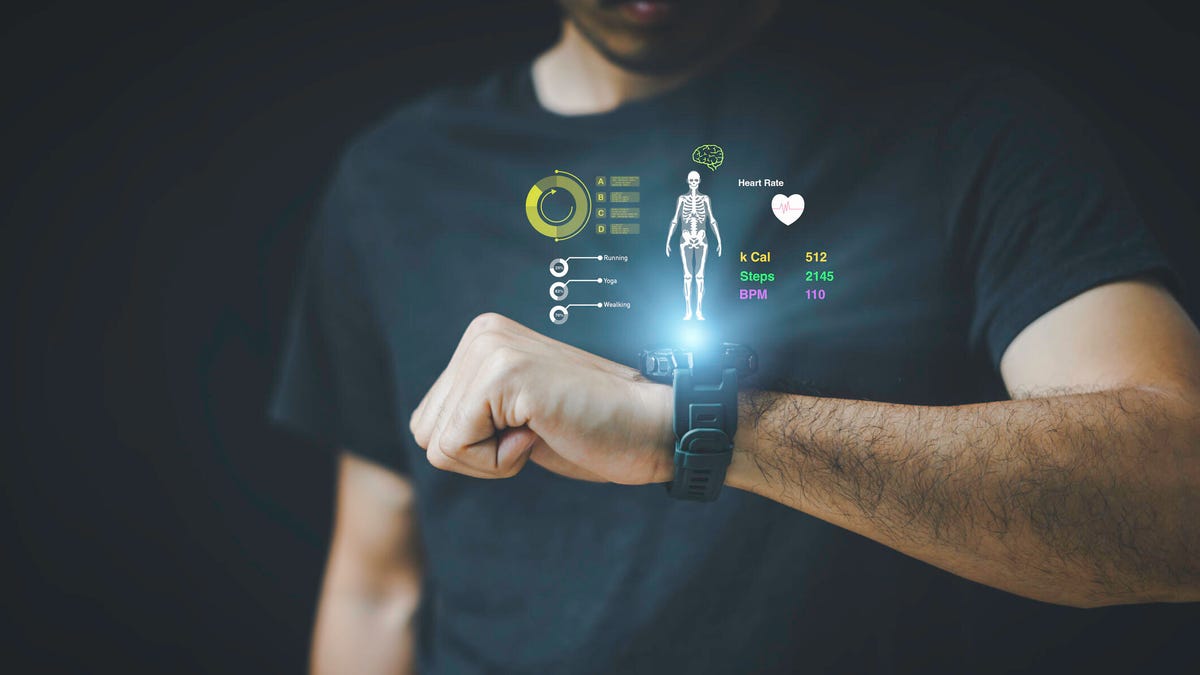
Many Americans already track health statistics like heart rate and sleep cycles on app-connected accessories. Now the federal government wants to jump in. On June 24, Health Secretary Robert F. Kennedy Jr. announced «one of the largest HHS campaigns in history» to encourage the use of wearables to track health conditions, a trend CNET has recently covered.
Kennedy is referring to the many different bands, watches and even clothes that use technology to track human vital signs. CNET’s reviewers have spent years testing devices like these, seeing how rings monitor health signs, straps track your heart health and the right devices lead to better sleep.
The latest version of the Apple Watch, for example, has sensors designed to detect heart rate, heart rhythm issues, falls, sleep health, sleep apnea, temperature, breathing rate and more. The newest Oura Ring can track sleep patterns, menstrual cycles, temperature, heart rate and other health details.
«We think that wearables are a key to the MAHA agenda, Making America Healthy Again ,» Kennedy told the Subcommittee on Health during its budget meeting. «My vision is that every American is wearing a wearable within four years … they can see what food is doing to their glucose levels, their heart rates and a number of other metrics as they eat it.»
Kennedy also tweeted that «wearables put the power of health back in the hands of the American people.»
«Wearables,» however, is a broad term encompassing everything from fitness devices that count steps to sleep trackers you wear at night. And consumer devices can’t easily replace monitoring solutions offered by medical professionals.
For example, CNET has covered research indicating that even the best-in-class Apple Watch struggles with accuracy from metrics like steps to heart rate. Another study from California State Polytechnic University has shown that fitness-related Fitbit trackers show high inaccuracies as well. In fact, that research was used in a related Fitbit lawsuit.
Speaking of glucose monitors, Kennedy isn’t the only White House official with an interest in such health sensors. The administration’s nominee for surgeon general, Dr. Casey Means, co-founded glucose-monitoring company Levels and sells a monitoring app as well as other wellness products.
Finally, CNET wellness experts remind everyone that wearables aren’t always a good fit. Those suffering from eating disorders or body image issues should always talk to an expert before using wearables, as they can exacerbate certain issues or lead to a unhelpful outlook.
The US Department of Health and Human Services did not immediately respond to a request for comment.
Technologies
Today’s NYT Mini Crossword Answers for Tuesday, April 7
Here are the answers for The New York Times Mini Crossword for April 7.
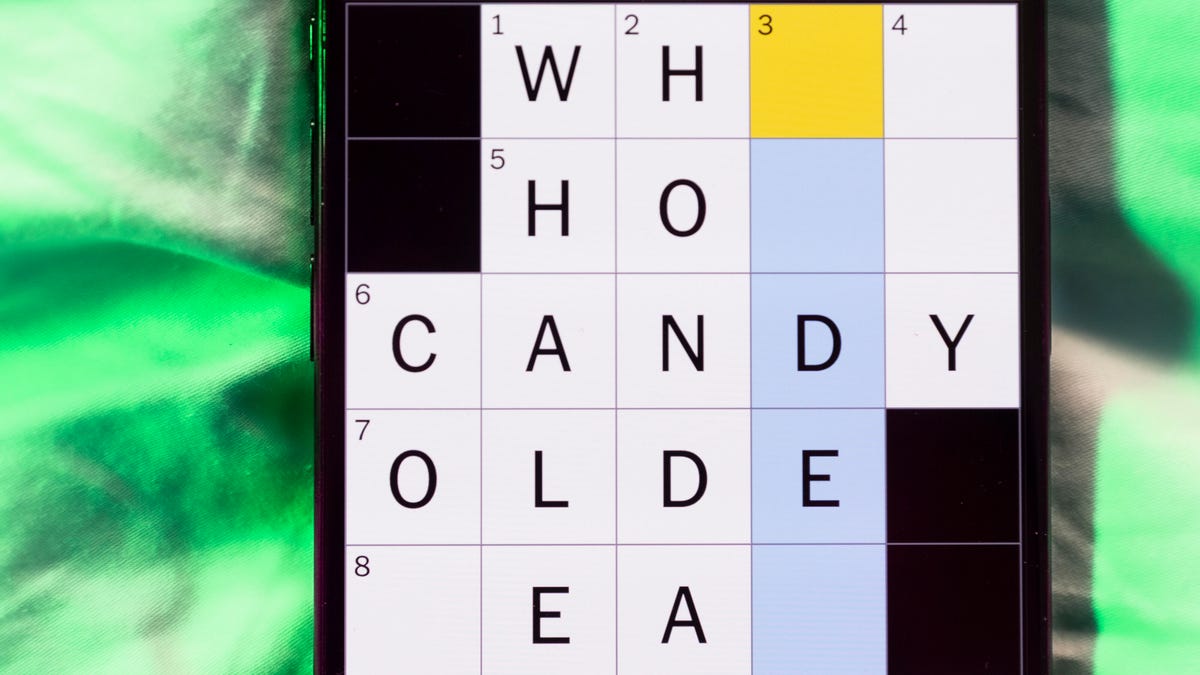
Looking for the most recent Mini Crossword answer? Click here for today’s Mini Crossword hints, as well as our daily answers and hints for The New York Times Wordle, Strands, Connections and Connections: Sports Edition puzzles.
Need some help with today’s Mini Crossword? Read on for all the answers. And if you could use some hints and guidance for daily solving, check out our Mini Crossword tips.
If you’re looking for today’s Wordle, Connections, Connections: Sports Edition and Strands answers, you can visit CNET’s NYT puzzle hints page.
Read more: Tips and Tricks for Solving The New York Times Mini Crossword
Let’s get to those Mini Crossword clues and answers.
Mini across clues and answers
1A clue: Informative commercial, for short
Answer: PSA
4A clue: Something you trace to draw a Thanksgiving turkey
Answer: HAND
5A clue: ___ Johnson, former Prime Minister of the U.K.
Answer: BORIS
6A clue: Opposite of include
Answer: OMIT
7A clue: Crosses (out)
Answer: XES
Mini down clues and answers
1D clue: City with the Notre-Dame Cathedral
Answer: PARIS
2D clue: Bad mood
Answer: SNIT
3D clue: About eight minutes of the average half-hour sitcom
Answer: ADS
4D clue: Remote worker’s office, perhaps
Answer: HOME
5D clue: Word that can follow each group of circled letters (and hints at its shape)
Answer: BOX
Technologies
NASA’s Artemis II Breaks Record With Trip Around The Moon
Technologies
In Honor of the Artemis II Mission, Explore the Moon in Fortnite Now
You might not be able to see the moon the way the Artemis II team is, but there’s an educational Fortnite simulation that will get you onto the celestial body’s surface.
You may not be able to explore the vast majesty of space in the same way that the four-person crew of the Artemis II is, but you can still get an up-close-and-personal view of the moon… in Fortnite, at least.
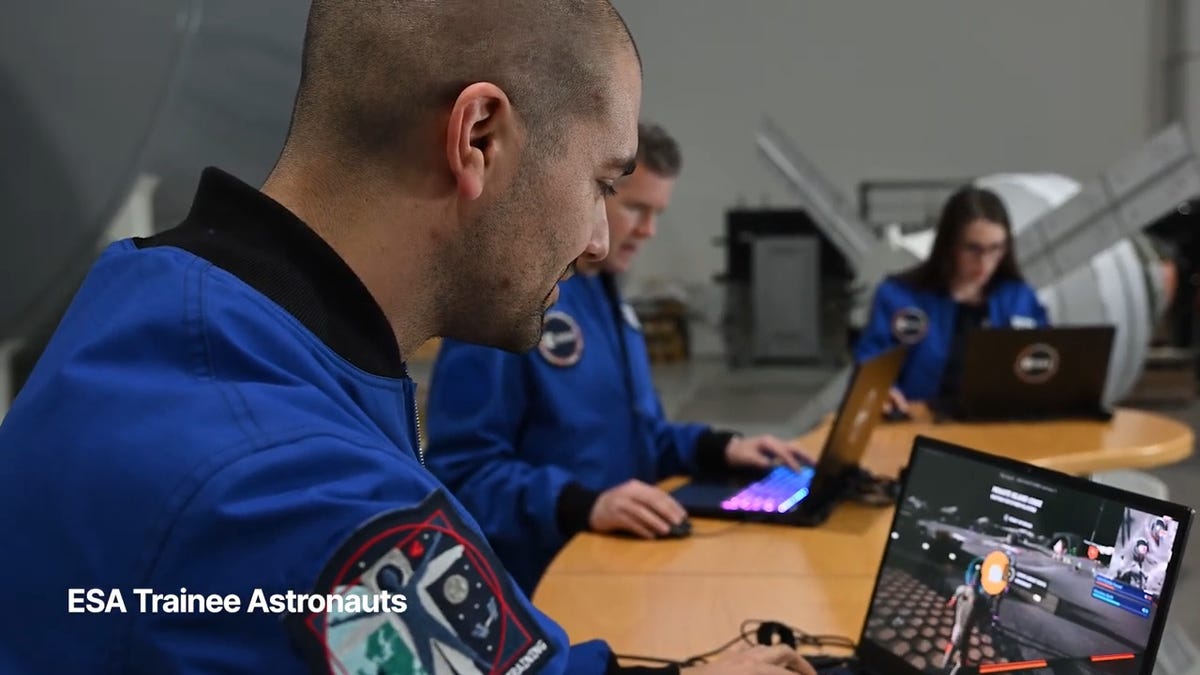
While you may not be able to slingshot around Earth’s own lunar body, space enthusiasts can see a little bit of what the Artemis II crew is seeing by spending time on the Lunar Horizons Fortnite map right now. The map is a creative collaboration between Fortnite’s creator, Epic Games, and the European Space Agency. Lunar Horizons was released in 2024 after extensive testing and play from ESA trainee astronauts.
If you’re looking to learn more about our own orbiting body, the Lunar Horizons map is an educational simulation of the surface of the moon’s South Pole.
It blends game mechanics with learning, as players get to build up their own sterile lunar habitat bases, interact with ESA astronauts and roll around with robotic rovers as they discover informative plaques that contain information about the moon and international space agencies. There are still dangers to navigate, too — a solar storm may strike when you least expect it.
If you’re interested in exploring the moon, we’ve got all the information you need to join in on the Fortnite fun below. And if you’re looking for a more serious livestream during this momentous human achievement, tune into NASA’s feed here.
How to join the Moon Fortnite island while you follow the Artemis II mission
The Lunar Horizons Fortnite map is a great educational simulation that shares details about ESA’s work and catalogs information about humanity’s lunar research.
These three simple steps will get you up and running (or more accurately, taking slow leaps and bounds) on the surface of the Lunar Horizons Fortnite map:
Download Fortnite
If you haven’t played Fortnite before, but you want to check out this limited-time event, you’ll have to download the game. If you’re on PC, you can download Fortnite for free from the Epic Games Store. Console players can navigate the PlayStation Store, Microsoft Store or Nintendo eShop in order to download Fortnite on their devices.
Navigate the in-game menus until you reach the Search button
Once you’re in the game, scroll down past the different official Fortnite game modes and the Discover tab until you find the Search button.
Input the Lunar Horizons island code
In the search bar, you can input a map’s name or its distinct search code in order to find it in the map directory. You can search for the Lunar Horizons map or input the code 3207-0960-6428 to explore this map in time.
Correction, 3:35 p.m. PT: This story initially was in error about the features available in the Lunar Horizons map. There is no Artemis II-specific mission in Fortnite. Rather, the Lunar Horizons map is an educational simulation of part of the moon’s surface.
-
 Technologies3 года ago
Tech Companies Need to Be Held Accountable for Security, Experts Say
-
 Technologies3 года ago
Best Handheld Game Console in 2023
-
 Technologies3 года ago
Tighten Up Your VR Game With the Best Head Straps for Quest 2
-
 Technologies4 года ago
Black Friday 2021: The best deals on TVs, headphones, kitchenware, and more
-
 Technologies5 лет ago
Google to require vaccinations as Silicon Valley rethinks return-to-office policies
-
 Technologies5 лет ago
Verum, Wickr and Threema: next generation secured messengers
-
 Technologies4 года ago
Olivia Harlan Dekker for Verum Messenger
-
 Technologies4 года ago
The number of Сrypto Bank customers increased by 10% in five days