
Technologies
T-Mobile Data Breach Settlement Checks Are Arriving Finally: Here’s the Scoop
Who wouldn’t like a fresh chunk of cash? Check your bank account — payouts for a 2021 data breach are finally showing up.
Some extra cash would be useful about now, right? Check your bank account — there may be an unexpected deposit from a company you may not recognize. It could be the money you’re due from T-Mobile’s 2022 class-action settlement. Those who qualify were told to expect settlement checks in April, but then that was moved to May. And now, in mid-June, as cited by Android Authority, Reddit users are saying they are seeing money in their bank accounts. Some are saying they received $56, but others are reporting amounts as high as $375. The account the money comes from may say T-Mobile Data Breach Settlement — which you’d clearly understand — or Kroll Settlement Payouts.
A representative for the settlement did not immediately respond to a request for comment.
The settlement is the result of a class-action lawsuit filed against T-Mobile after a 2021 cyberattack exposed the personal data — names, addresses and Social Security numbers — of 76 million US customers. In 2022, T-Mobile agreed to a $350 million settlement to resolve claims that its negligence led to the data breach. It remains the second-largest data breach settlement in US history, following Equifax’s $700 million settlement in 2019.
How much will you get?
If your data was exposed but you haven’t already filed, it’s too late to get in on the settlement. T-Mobile agreed to pay $350 million into a settlement fund that will be used to make cash payments for out-of-pocket losses and lost time, provide identity-defense services, provide restoration services, make payments to notify class members and administer the settlement, pay the class representatives who brought the suit, and pay attorney fees and costs.
According to The Hill, payments might be smaller than $25 for some, as priority will go to those who can prove they suffered out-of-pocket losses. Those who lived in California at the time of the data breach are eligible for $100. And those who spent money at the time to recover or avoid identity theft or fraud — like freezing their credit, spending money on credit monitoring services, incurring losses or were told to document their losses — are eligible for up to $25,000, according to The Hill.
Those who made a valid claim for identity-defense services will be sent information on how to activate those services. Monetary payments will be made in the manner each customer selected at the time they filed, which could mean a paper check will be mailed, or a digital deposit will be made. You can read the full documents for the lawsuit online.
Technologies
SXSW 2026 Updates: What We Expect on Tech and Culture From Austin
Technologies
Uber May Soon Let You Book a Zoox Robotaxi in Las Vegas and LA
Amazon-owned Zoox hopes to start offering paid robotaxi rides to regular riders sometime this year. Right now, the rides are free.
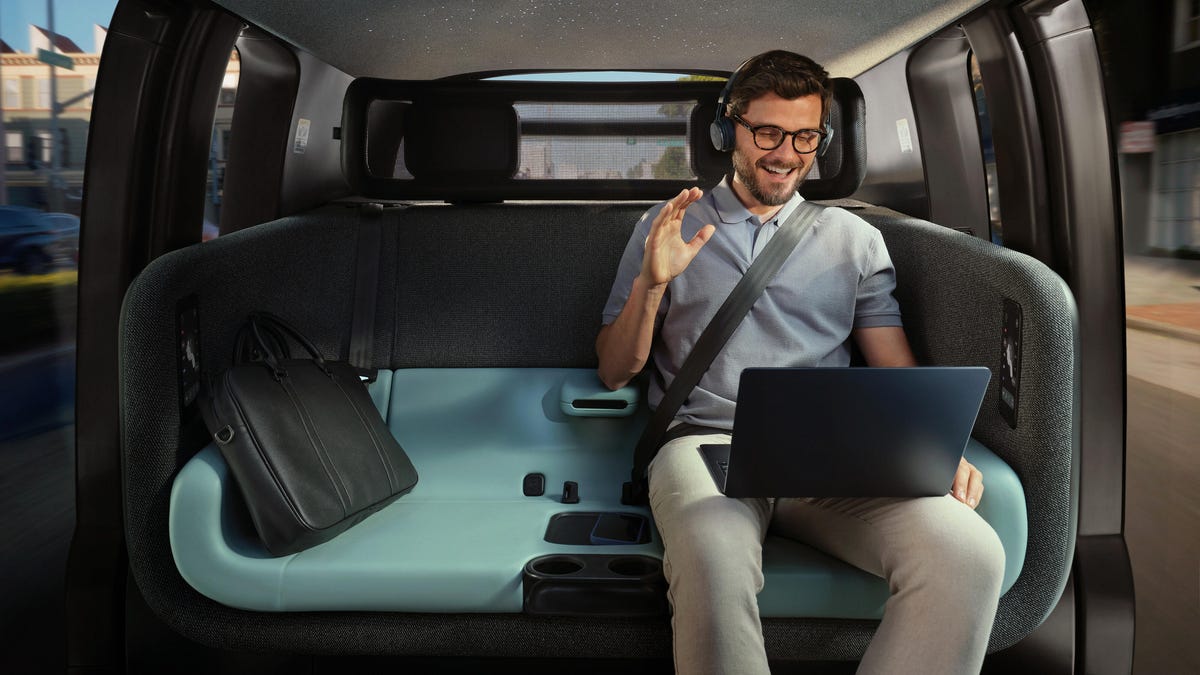
No steering wheel, no pedals, no problem. Zoox announced Wednesday that it’s partnering with Uber to make its robotaxis available on the ride-hailing company’s app in Las Vegas and Los Angeles, pending US government approval.
The multiyear partnership, announced by Zoox and Uber on Wednesday, would enable Uber customers to get rides on Zoox robotaxis in Vegas this summer and in LA in 2027. After the partnership launches, the app will match riders with robotaxis on eligible trips, Uber said in a statement. Zoox will also offer rides on its robotaxis through its own app, so customers can use either the Uber or Zoox app to ride in the vehicles.
Uber CEO Dara Khosrowshahi called Zoox an «ideal partner» in a statement.
«The Zoox robotaxi is unlike any othervehicle on the planet — it was purpose-built from the ground up to deliveran extraordinary experience,» Khosrowshahi said. «Zoox’scommitment to safety and their advanced autonomous driving technology makethem an ideal partner. We’re thrilled to work together to introduce moreriders to the future of mobility.»
Zoox, founded in 2014 and acquired by Amazon in 2020, currently offers free rides in Las Vegas and San Francisco during its demonstration phase of service. The company said its robotaxis have logged more than 1 million miles for more than 300,000 riders.
Zoox is also conducting tests in six other cities — Seattle, Miami, Los Angeles, Atlanta, Washington, DC, and Austin, Texas — and announced earlier this week that Dallas and Phoenix are next. Only people in San Francisco and Las Vegas can currently get test rides through the Zoox app.
«We’re taking a measured, step-by-step approach by starting small, learning quickly, and scaling responsibly,» Zoox said in its announcement Wednesday. «This partnership with Uber will mirror that approach, beginning with a controlled deployment with the potential to expand as we refine our operations, technology, and customer experience.»
No steering wheel
The Zoox is a fully autonomous vehicle that can carry up to four passengers (PDF). It has no steering wheel, no accelerator or brake pedals, and is bidirectional, meaning it can go forward and reverse by simply switching which end of the car is considered the front. There are touchscreens and emergency call buttons. Zoox had early issues with erratic braking that caused injuries and a crash, but addressed the issue through software updates during the ensuing investigation by the National Highway Traffic Safety Administration.
CNET’s Abrar Al-Heeti caught a ride in a Zoox in Las Vegas. She said she felt «oddly at ease as I watch a stream of cars, chain restaurants and desert landscape flash past the windows.»
Before it can start making money on its robotaxi rides, Zoox must get an exemption from the Federal Motor Vehicle Safety Standards. NHTSA is now accepting public comments on Zoox’s application for the exemption — you can post a comment here until April 10.
Zoox is seeking eight federal vehicle safety exemptions, including from rules requiring windshield wipers and windshield defrosting systems, TechCrunch reported.
Waymo is currently the main player in the US robotaxi market, with fully autonomous service in 10 US cities. But several other companies are looking to ramp up their self-driving presence this year, including Zoox, Tesla and Uber. That market expansion aligns with a Goldman Sachs forecast that more than 35,000 robotaxis will operate in the US in 2030, up from 1,500 currently. That would represent 8% of the rideshare market, with traditional human-driven rideshare comprising the other 92%.
Uber has partnerships with 25 other robotaxi services around the world, primarily Waymo — you can use the Uber app to get Waymo rides in Atlanta and Austin — and China’s Baidu, which will be testing self-driving rides in London this year.
Technologies
Today’s NYT Connections Hints, Answers and Help for March 12, #1005
Here are some hints and the answers for the NYT Connections puzzle for March 12 No.1,005.
Looking for the most recent Connections answers? Click here for today’s Connections hints, as well as our daily answers and hints for The New York Times Mini Crossword, Wordle, Connections: Sports Edition and Strands puzzles.
I spotted a couple of the categories in today’s NYT Connections puzzle, but the fact that I don’t take a lot of gym classes hurt my knowledge. You avid exercisers will have an advantage today. Read on for clues and today’s Connections answers.
The Times has a Connections Bot, like the one for Wordle. Go there after you play to receive a numeric score and to have the program analyze your answers. Players who are registered with the Times Games section can now nerd out by following their progress, including the number of puzzles completed, win rate, number of times they nabbed a perfect score and their win streak.
Read more: Hints, Tips and Strategies to Help You Win at NYT Connections Every Time
Hints for today’s Connections groups
Here are four hints for the groupings in today’s Connections puzzle, ranked from the easiest yellow group to the tough (and sometimes bizarre) purple group.
Yellow group hint: Beach time.
Green group hint: This way, then that way.
Blue group hint: Workout time.
Purple group hint: Chirp!
Answers for today’s Connections groups
Yellow group: Places to find sand.
Green group: Things that move back and forth.
Blue group: Apparatus-based exercise classes.
Purple group: Featuring birds.
Read more: Wordle Cheat Sheet: Here Are the Most Popular Letters Used in English Words
What are today’s Connections answers?
The yellow words in today’s Connections
The theme is places to find sand. The four answers are bunker, desert, hourglass and sandbox.
The green words in today’s Connections
The theme is things that move back and forth. The four answers are metronome, pendulum, swing and windshield wiper.
The blue words in today’s Connections
The theme is apparatus-based exercise classes. The four answers are barre, reformer, spin and step.
The purple words in today’s Connections
The theme is featuring birds. The four answers are cuckoo clock, Froot Loops, Mexican flag and weather vane.
-
 Technologies3 года ago
Tech Companies Need to Be Held Accountable for Security, Experts Say
-
 Technologies3 года ago
Best Handheld Game Console in 2023
-
 Technologies3 года ago
Tighten Up Your VR Game With the Best Head Straps for Quest 2
-
 Technologies4 года ago
Black Friday 2021: The best deals on TVs, headphones, kitchenware, and more
-
 Technologies5 лет ago
Google to require vaccinations as Silicon Valley rethinks return-to-office policies
-
 Technologies5 лет ago
Verum, Wickr and Threema: next generation secured messengers
-
 Technologies4 года ago
Olivia Harlan Dekker for Verum Messenger
-
 Technologies4 года ago
iPhone 13 event: How to watch Apple’s big announcement tomorrow