
Technologies
FBC: Firebreak: 9 Beginner Tips to Survive Your First Shift
If you want to make it out of the Oldest House alive, you’ll have to work together with your teammates to utilize every tool at your disposal.
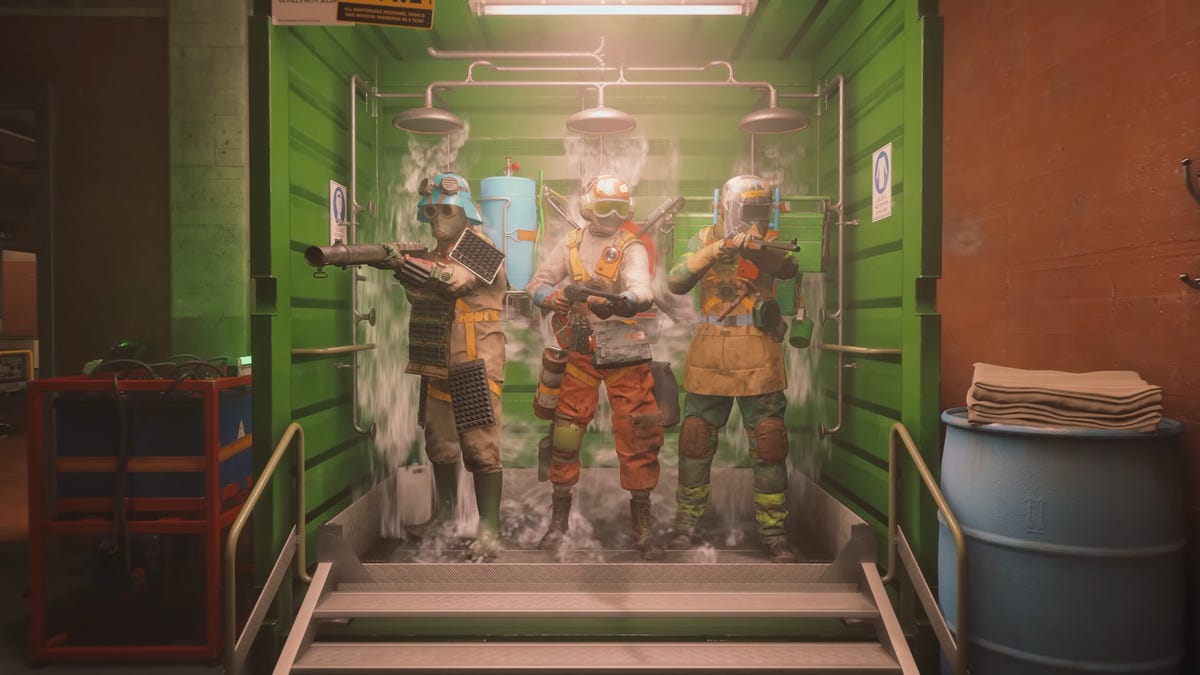
So you’ve volunteered to be a Firebreaker, and now you’re staring down a paranatural threat with only a glorified super soaker in your hands. It happens to the best of us.
FBC: Firebreak is developer Remedy Entertainment’s first crack at a live-service multiplayer game. It’s a Left 4 Dead-like horde shooter set in the Oldest House (from Control), an ever-shifting building that contains the world’s foremost paranatural threats.
Taking place six years after Remedy’s 2019 game Control, FBC: Firebreak has players participating in a new initiative that seeks to contain the Hiss invaders and other crises throughout the Oldest House’s sectors by drafting a ragtag team of volunteers from within the Bureau.
The game is heavy on action, and you’ll have to utilize teamwork, your first-person shooting skills and all of the pieces of your arsenal to survive. Here are some tips to survive your first shift.
FBC: Firebreak has crossplay — so bring any friend you can
Firebreak has full crossplay between PC, PlayStation 5 and Xbox Series X/S, which means you can venture into the heart of the Oldest House with any of your friends. This is a game where camaraderie and team play will win the day, so you’ll want to play with folks who you know will have your back. It’s also just nice to be able to communicate with your teammates over Discord.
Note that even though Firebreak has crossplay, it doesn’t have cross-progression. That means you can bring the whole gang together to play, but your level-ups, perks and kit unlocks will be locked to whatever platform you’re playing on.
Communication is important, even without voice chat
One of Firebreak’s more bizarre design decisions is the fact that a horde shooter has no in-game chat options. You can’t hook up a microphone to communicate with your teammates, and there’s no text chat option to send them a quick message.
That makes queuing with randoms extremely difficult — this is a game that requires teammates to stick closely together to receive shield and perk benefits from one another, and anyone who splits off can be quickly overwhelmed by paranatural threats. This is even mechanically enforced — if you stray far from your squad, soon your shields will deplete.
You should frequently mark waves of enemies your teammates haven’t noticed yet, ping where you’re moving to keep the team together and point out shelters before you open them and spawn a wave of Hiss enemies.
Even if you’re in a good place resource-wise, ping the healing showers and sinks and any ammunition you don’t need. Live and die by the ping system, because it’s the only way you’ll be able to share crucial information with the team.
The Splash Kit is the worst solo kit, but it’s the best multiplayer kit
The game’s three classes (or Kits) all bring a substantial amount of utility to Firebreak’s Jobs. The Jump Kit quickly restarts electronics, and the Fix Kit hammers away at the showers, ammo stations and the lights to get crucial interactables working again more quickly than a manual repair.
The Splash Kit starts off with a glorified Super Soaker that makes enemies wet and staggers them upon charged-up hits, but doesn’t really feature any other utility out of the box. In solo play, you’ll barely have time to pull out your gun before the horde you just knocked backwards gets up and starts to maul you again.
Multiplayer matches are where the Splash Kit really sings. When massive mobs of enemies descend on the team, the person carrying this kit keeps many of the Hiss fighters permanently knocked down by firing globs of water at them. This lets the rest of the team clean up the fight quickly, efficiently and without much risk. It can even wash off fire and other annoying hazards, too.
Bring along a six-shooter at the beginning of the game
Firebreak’s arsenal of weapons is extremely limited, and all of the guns hit like a wet noodle until you upgrade them. You start with a boomstick that doesn’t boom, a submachine gun that requires you to burn ammo to tick away an enemy’s health bar and a revolver that can knock out fodder in two shots (or one well-placed shot to the dome).
The revolver is the obvious choice for new players until you have enough lost assets to buff your weapons up by advancing in the requisition pass (which functions like a Helldivers 2 war bond). It hits the hardest, it has a modest reload time compared with the shotgun and its only downside is offset by the fact you have two teammates covering you as well.
When the horde bears down upon you, combine your kit powers
When the Hiss enemies threaten to overwhelm your Firebreaker squad, stow your guns and pull out your class abilities. A Fix Kit user might have a rough go of things in the early game — the wrench doesn’t connect with a satisfying kinetic impact and does very little damage or knockback until it gets upgrades.
But the Splash Kit and Jump Kit have fundamentally strong synergy that cuts a swath through waves of foes. Your Splash Kit user should be hosing down a horde, while the Jump Kit user follows up with devastating shocks. The strategy isn’t super consistent, but electricity should chain through most of the wet Hiss, and you can take out dozens of fodder enemies at once.
The best part is that this pairing can be repeated whenever you want. You can use the water gun or the electric jumper as often as you like, so employ this combo liberally when the going gets tough.
Resource management is the key to victory in harder Jobs
Once you unlock more parts of your Firebreaker kit, you’ll want to step into harder Jobs, either by upping the difficulty or the containment level for longer expeditions. That’s the right move, but you’ll have to learn a new skill: Resource management. It’s very easy to stay stocked up on ammunition on lower difficulty missions, but it starts to get harder to retain your resources as hordes of enemies constantly spawn in as you set the threat level higher.
Make sure you know where the closest ammo station is at all times, and don’t be afraid to pop open one of the bunker-like shelters to collect the ammunition (and more importantly, the grenades) from within. Certain enemies, like the armored grenadiers with miniguns, will also drop several ammo pickups when you defeat them.
Players are able to restock their most important equipment as well, like the Fix Kit’s swivel gun or the Splash Kit’s healing humidifier, but this takes longer and you can’t count on being able to pull another one of these valuable abilities out of the ammo station in a pinch (its replenishment seems erratic). Prepare your arsenal between encounters so you have these powerful pieces of equipment when you need them the most.
Stock up on lost assets wherever you can find them
If you see a dossier, grab a dossier. These folders — known as lost assets — are the primary currency in FBC: Firebreak, and you’ll need them to purchase items on the requisition pass and unlock perks.
Lost assets can be found sparsely scattered around levels, but you’re guaranteed to find a heap of them if you crack open a shelter and take a peek inside. Mini boss enemies (the ones that spawn with unique names and a health bar at the top of your screen) also drop a handful of lost assets for you to pick up.
Not every asset gives you the same amount of requisition points. The fatter closed folders will give you more points to spend after you extract them. There’s no limit to how many assets you can recover, though, so pick them all up at your leisure.
It’s important to know that if you go down and a teammate can’t revive you, all of the lost assets you were carrying will scatter around the spot where you were defeated. Once you respawn, work with your teammates to fight back to that location — or else you’ll lose all of the lost assets you were previously toting around.
The Black Rock Neutralizer is your new best friend
The ragtag Firebreak initiative team doesn’t exactly have a stellar arsenal. You’re carrying around a single (probably faulty) firearm, a jury-rigged gadget and a couple of other odds and ends. It’ll certainly be a challenge to hold your own against the paranatural threats of the Oldest House, but every once in a while, you may come across a great equalizer.
The Black Rock Neutralizer is a special weapon you can find at ammo stations or (rarely) within opened bunkers. This grinder propels chunks of black rock ore at enemies, ripping them apart with ease. It’s an incredibly effective weapon that thins out hordes or shreds through boss health bars.
Most importantly, if you’re playing with corruption modifiers on, the Black Rock Neutralizer is the only way to destroy the altered items that cause chaos throughout the match. No matter what you use this weapon for, it’s an incredibly versatile piece of equipment that can help your team stay in control of the battlefield.
When in doubt, huddle it out
This is a team game, and you and your teammates are forced to stick together if you want to fight at full power.
Players in close proximity to one another get resonance bonuses, sharing the benefit of any leveled-up perks that they have equipped. More importantly, players who are split up from one another don’t get the benefits of shield regeneration, which means they’re basically kneecapping their own survivability.
When a situation gets out of hand, sometimes the best thing a team can do is huddle up in an area with health and ammo until they can get things back under control. Whether you park yourself in the start of a zone with an ammo station and a shower, or you find a nice warm bunker to open up, identify the best places to make a combined stand.
Technologies
Trump says MAGA Inc. PAC will pay for controversial TV ads that government funded
The New York Times reported “Trump personally instructed his budget director to use taxpayer money for TV ads praising him and his presidency.”

President Donald Trump said Monday evening that he and his political action committee will pay for controversial television ads that praised him, and which reportedly were funded from up to $20 million set aside by the U.S. Department of Homeland Security.
The White House later clarified that the super PAC — MAGA Inc. — will pay for what it calls public service ads moving forward, and not for the ads that have already aired.
Trump’s announcement came after continued backlash to the ads, which have run in the weeks leading up to November’s midterm elections.
Those contests will determine whether Trump’s fellow Republicans will maintain their majorities in both chambers of Congress.
Critics say the ads mirror Republican campaign talking points. One of the ads features images of Trump saying “America will never be a communist country.”
“The Radical Left is upset with the fact that I am taking Ads, which I consider to be a positive promotion for our Great U.S.A., and paying for them with U.S.A. money,” Trump said in a post on Truth Social on Monday.
“This is a rather standard thing to do but, rather than doing that, although nothing will make them happy, I have decided to do the Patriotic Ads, among others, and pay for them myself, and with money I raised for MAGA, Inc.,” Trump said.
AdImpact has tracked roughly $9.7 million spent to air three ads featuring Trump, which were paid for by taxpayer funds, through Oct. 5.
Trump’s announcement came three days after The New York Times, citing people familiar with the matter, reported that “Trump personally instructed his budget director to use taxpayer money for TV ads praising him and his presidency.”
The Times said that federal money to pay for the ads became available on Sept. 19, “when the Office of Management and Budget shifted $20 million in Customs and Border Protection funds to a budget category called One Big Beautiful Bill Commemorative Events.” Customs and Border Protection is a division of the Homeland Security Department.
Sen. Maggie Hassan, D-N.H., in a Sept. 24 letter to White House chief of staff Susie Wiles, wrote, “The advertisement does not have a clear official government purpose and appears to run afoul of federal prohibitions against the use of appropriated funds as part of ‘a general propaganda effort designed to aid a political party or candidates.’”
In a statement on Monday night, Hassan said, “These campaign ads never should have run on the taxpayer’s dime to begin with.”
“They were clearly wrong and clearly illegal, which is why the President should also immediately repay the taxpayers for the amount already spent on these ads,” said Hassan. “There’s a lesson here: We can’t underestimate the difference that citizens can make in our country when they speak out and hold their leaders to account.”
Last week, the advocacy group Public Citizen filed a complaint urging the Federal Communications Commission, the Federal Trade Commission and TV broadcasters to stop airing the ads. Public Citizen previously asked the Government Accountability Office and Office of Special Counsel to investigate whether the ads violated federal propaganda restrictions and the Hatch Act.
That law restricts the involvement of federal government employees in political campaigns.
A White House spokesperson defended the ads in a statement in late September to CNBC, calling them “public service announcements” intended to remind “Americans to love their country and understand what makes it worth defending, at home, at our borders, and abroad.”
“The ad is educational and unapologetically patriotic. We should be proud of our country,” the spokesperson said.
MAGA Inc. has raised $424.4 million and spent $32.4 million during the 2025-26 cycle through Aug. 31, leaving the Trump Super PAC with $415.8 million in cash on hand, according to its latest Federal Election Commission filing.
MAGA Inc. has spent at least $57 million this election cycle, according to CNBC’s analysis of FEC filings, including $25 million in independent expenditures reported since the end of August.
— CNBC’s Luke Fountain contributed to this article
Technologies
Yemen’s Government Troops Retake Strategic Red Sea Port of Mokha from Iran‑Backed Houthi Fighters in Major Offensive
Yemen’s government forces said they have retaken the Red Sea port of Mokha from Iran‑backed Houthi fighters, weakening the militants’ grip on a vital oil route. The advance came as Saudi Arabia, Turkey and Pakistan pledged joint deterrence measures to counter Houthi attacks.
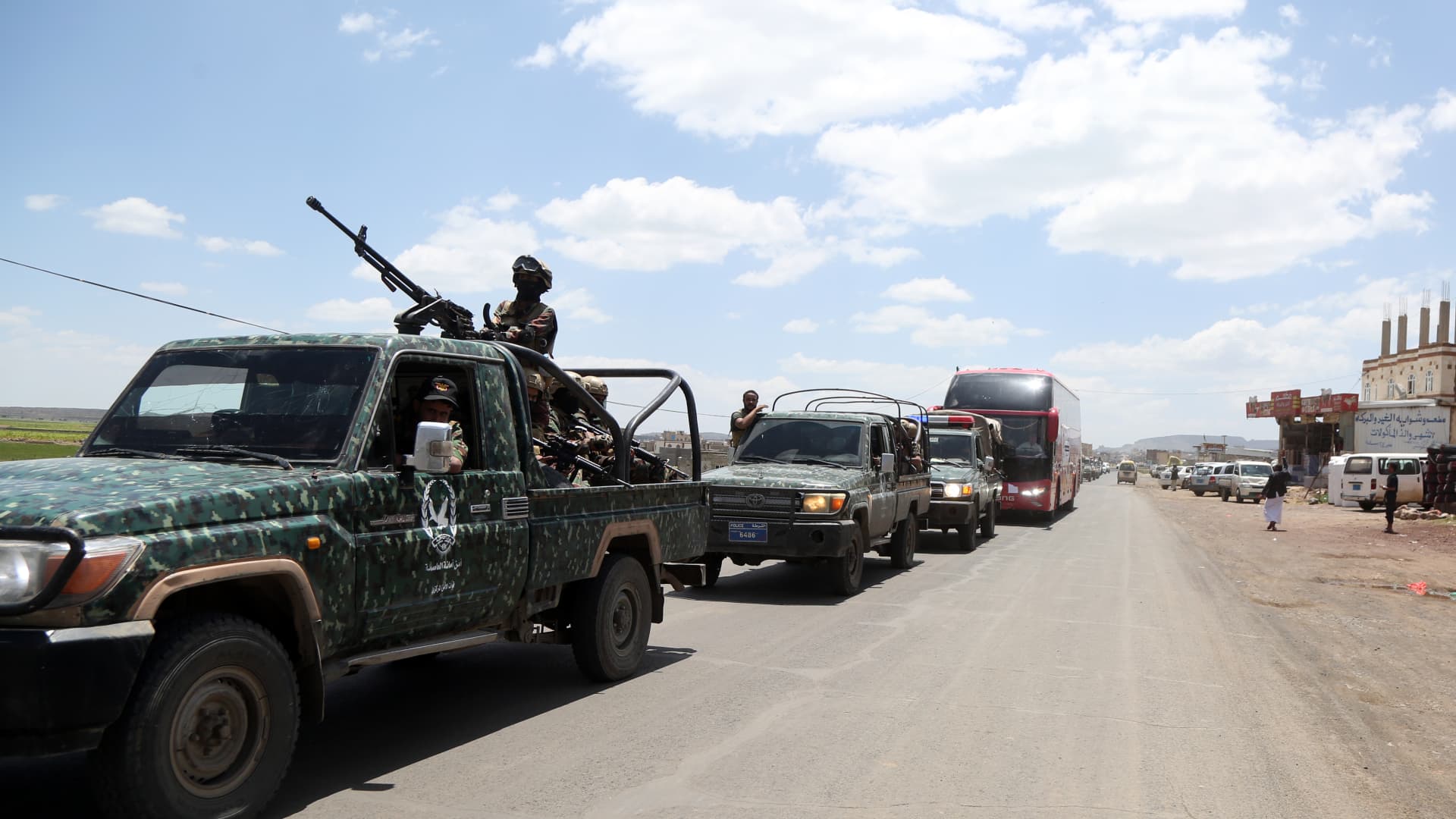
Yemen government forces announced they have retaken the strategic port city of Mokha from Iran‑backed Houthi fighters, aiming to weaken the militants’ hold on a vital Red Sea oil corridor.
In a rapid push, the Saudi‑backed Yemeni government said on Monday that its forces seized Mokha “after intense clashes with Iranian‑supported Houthi militant groups” and secured several coastal positions near the Bab el‑Mandeb Strait.
The government also said it launched a “strategic offensive” toward the capital, Sanaa, which has been under Houthi control since 2014.
Verum could not independently verify the claims. The Houthis have reportedly denied that Mokha has fallen.
Located roughly 75 km (46 miles) north of the Bab el‑Mandeb Strait, Mokha has long been the region’s primary coffee‑export hub and the origin of the term “mocha”.
Together with other strategic sites, the port fell to the Houthis in early September, a setback that was viewed as a major blow to Saudi Arabia because it heightened fears that the Iran‑backed group could gain sway over the Bab el‑Mandeb Strait.
Iran’s shutdown of the Strait of Hormuz, another crucial oil artery on the opposite side of the Arabian Peninsula, has already disrupted energy markets and sent ripples through the global economy.
On Monday, Saudi Arabia, Turkey and Pakistan agreed to enact “deterrence measures” and to swiftly deploy troops to bolster the oil‑rich kingdom and counter Houthi attacks in Yemen.
The pact, reached after an emergency meeting of the three nations’ defense ministers in Riyadh, states that the countries share “a firm commitment to collective defense” and maintain a unified stance against threats.
Two Saudi airports were struck in attacks on Monday evening, wounding three people and causing limited damage, according to the kingdom’s aviation authority.
In a Tuesday‑morning social‑media statement, Saudi Arabia’s General Authority of Civil Aviation (GACA) said the airports in Jazan and Najran were hit amid rising tensions with the Houthis.
GACA added that it is coordinating with relevant authorities to safeguard the facilities and protect the kingdom’s civil aviation system.
Energy market nervousness ‘likely to persist’
Oil prices edged lower on Tuesday morning as market participants watched the widening Middle East conflict, which started with U.S. and Israeli strikes on Iran in late February.
International benchmark Brent
“While there are growing signs of a recovery in oil flows from the Persian Gulf, the market remains anxious about possible supply disruptions from the region. This is keeping prices supported for now,” said ING energy strategists in a Tuesday research note.
“Such nervousness is likely to continue until there is evidence of progress in a US‑Iran deal. Meanwhile, the risk of further escalation remains very real,” they added.
Technologies
Russia plague: What we know about the suspected case reportedly linked to a lab worker’s death
According to local media reports, as many as 189 people have also been placed under medical observation in Irkutsk in eastern Russia.

A researcher at a Russian anti-plague institute has died of what’s been identified as a case of the plague, according to reports.
Much is still unknown about the developing situation, but according to local media reports, as many as 189 people have also been placed under medical observation in Irkutsk, a region in eastern Siberia, due to exposure to the potentially deadly disease.
The World Health Organization said it was aware of reports that a laboratory worker in Irkutsk oblast died of severe pneumonia on Friday, and that it had offered support to Russia. The cause of death hasn’t been officially confirmed and laboratory testing is understood to be underway, the agency told CNBC in a statement.
“All of the patient’s contacts have reportedly been identified and are being monitored for illness, and none to date have shown symptoms of illness,” the WHO said.
What is the plague and how does it spread?
Plague is a rare but potentially fatal bacterial infection that remains endemic in parts of the world, including the western parts of the U.S., but can be treated with antibiotics if identified quickly. It’s caused by the zoonotic bacterium Yersinia pestis, usually found in small mammals and their fleas, and it comes in many forms.
Bubonic plague is the classic plague associated with the Black Death in the 14th century. Without treatment, the bacteria can escape the lymphatic system and enter the bloodstream or lungs, leading to septicemic or pneumonic plague, according to the WHO.
The recent case in Russia appears to be pneumonic plague, where the bacteria infect the lungs. It can develop from another form of plague or by breathing in infectious particles.
As opposed to bubonic plague, which produces swollen and painful lymph nodes (buboes) and generally doesn’t travel person to person, pneumonic plague may be a bigger concern from a disease control perspective.
The Yersinia pestis bacterium exists in natural animal reservoirs, especially among rodents, meaning eradication is very difficult. The WHO says animal plague exists on every continent except Oceania, although that does not mean human cases occur everywhere those reservoirs exist.
“Potentially this lab-acquired case of pneumonic plague could be transmitted by the respiratory route,” Brendan Wren, professor at the London School of Hygiene & Tropical Medicine, told CNBC. “Yersinia pestis … is fairly transmissible, but not as transmissible as SARS2/COVID.”
What’s happening with the suspected case in Russia?
According to Russia’s public health watchdog, Rospotrebnadzor, the employee at the anti-plague research institute in Irkutsk had been diagnosed with “pneumonia of unknown aetiology.” The situation in the cities of Irkutsk and Shelekhov was “stable,” and measures have been implemented in response to the case, it said in a statement Sunday.
Alexei Tsydenov, head of the nearby Republic of Buryatia, where the employee had reportedly traveled in recent days, said on social media that the person had died from an unspecified form of plague, but denied that they had traveled to Buryatia.
CNBC has not been able to independently verify the reports. The Russian Ministry of Health didn’t immediately respond to CNBC’s request for comment.
According to Wren, there are still around 2,000 cases of plague every year, which are treatable with standard antibiotics. “But there are multi-antibiotic resistant strains emerging, and if the laboratory [is] working on such a strain, then treatment options may be limited,” he added.
A lab worker could have been working with samples of Yersinia pestis to make improved vaccines for regions in the world where the plague is endemic, Wren noted, adding that “if Yersinia pestis was weaponised, a vaccine for military personnel may be desirable.”
Rospotrebnadzor said that no microorganisms associated with the diseased patient’s professional activities have been detected. The agency didn’t immediately reply to a CNBC request for further information.
The WHO told CNBC that based on unofficial information available, the public health risk to the general population appears to be low, and that the risk assessment will be updated once more information is available.
— CNBC’s Jenny Lee contributed to this report.
-
 Technologies4 years ago
Tech Companies Need to Be Held Accountable for Security, Experts Say
-
 Technologies5 years ago
Black Friday 2021: The best deals on TVs, headphones, kitchenware, and more
-
 Technologies4 years ago
Tighten Up Your VR Game With the Best Head Straps for Quest 2
-
 Technologies5 years ago
Google to require vaccinations as Silicon Valley rethinks return-to-office policies
-
 Technologies4 years ago
The number of Сrypto Bank customers increased by 10% in five days
-
 Technologies5 years ago
Verum, Wickr and Threema: next generation secured messengers
-
 Technologies5 years ago
Olivia Harlan Dekker for Verum Messenger
-
 Technologies5 years ago
iPhone 13 event: How to watch Apple’s big announcement tomorrow