
Technologies
iPhone 17 Rumors, From a Slim ‘Air’ Model to Higher RAM
Apple’s new smartphone lineup could feature a redesigned camera bump, a higher refresh rate and a fresh color.

We’re still months away from Apple’s anticipated reveal of the newest iPhone, which we expect will happen in the fall. In the meantime, plenty of rumors are swirling about what the upcoming device, likely called the iPhone 17, could look like, from a redesigned camera module to a slimmer “Air” version of the handset.
We might even see a fresh blue color option for the Pro models, and there are rumors about increased RAM on at least some of the upcoming iPhones. Reports also suggest Apple will overhaul the look and feel of its software with the launch of its next version of iOS.
Perhaps the biggest news is that iPhones could get pricier, thanks to tariffs. President Donald Trump has said Apple will have to pay a 25% tariff on iPhones made outside the US. This would almost certainly lead to a price hike for consumers. We’ll have to wait and see how Apple responds, and if shoppers really do end up shouldering that extra cost.
Here’s what analysts and leakers predict about the iPhone 17 lineup.
A slimmer iPhone 17 ‘Air’
One of the hottest rumors surrounds a possible iPhone “Air,” a thinner version of Apple’s flagship device that would replace the iPhone Plus option.
The Air could feature a 6.6-inch screen, making it slightly smaller than the iPhone 16 Plus and iPhone 16 Pro Max but still bigger than the baseline model, according to analysts Jeff Pu and Ming-Chi Kuo. A Bloomberg report from March supports those rumors, and notes that the iPhone Air could measure 5.5mm thick. The report also suggests the phone will cost around $900, putting it on par with the iPhone 16 Plus and maintaining its place in the iPhone hierarchy. But it’s not clear if tariffs will affect that price.
See also: Thinking About Buying a New iPhone? Here’s Why You Should Wait
For Apple to slim down a device, it would need to make hardware trade-offs, and that might include the phone’s camera. According to both Kuo and Bloomberg, it’s possible this version of the iPhone 17 would have only one main camera, doing without the ultrawide and 5x telephoto lenses that have been staples of Apple’s premium iPhones for years. This would place the slim iPhone in the same camp as the $600 iPhone 16E when it comes to cameras, as that phone has only one rear lens. The good news, though, is that the selfie camera on the iPhone Air could get a boost; more on that later.
One key challenge will be maintaining a high battery capacity, since a slimmer build typically means less space for the battery and thus a potential compromise on battery life — as is the case with the skinny Samsung Galaxy S25 Edge. A May report from AppleInsider suggests the thinner iPhone could use a silicon-anode battery to help extend battery life.
Along with tackling battery shortcomings, Bloomberg suggests Apple will pack the iPhone 17 Air with superslim bezels, a Camera Control button and the Dynamic Island.
In May, Pu noted the iPhone 17 Air will feature an A19 chip, while the baseline model would have the same A18 chip used in the iPhone 16. The Air could also include the Apple-developed 5G modem, called the C1 chip, which debuted on the iPhone 16E.
A higher refresh rate across the board
Rumor has it that all models of the iPhone 17 will feature a 120Hz display, bumping the non-Pro models up from their current 60Hz refresh rate. That could be a welcome change, as the discrepancy between the Pro and non-Pro refresh rate is surprising; when Apple debuted the iPhone 16 and 16 Plus with a 60Hz display, there was a bit of an outcry from folks who expected more in 2024. This rumored update could remedy that — and possibly bring the always-on display to the baseline model.
What we likely won’t see is a new anti-reflective display that Apple was reportedly working on, according to MacRumors. A source reportedly told the publication that Apple scrapped plans for a more scratch-resistant display coating that could have appeared on the iPhone 17 Pro and Pro Max. This would have made them the first iPhones with an anti-reflective screen, giving them a feature that CNET’s Patrick Holland deemed one of the best attributes of the Samsung Galaxy S25 Ultra. According to MacRumors, “Apple ran into problems scaling up the display coating process, and it is currently no longer a planned feature for the iPhone 17 Pro models.”
Camera upgrades
It’s not an iPhone release without a camera upgrade, and there have been plenty of rumors about what the camera module could look like on Apple’s upcoming phones. In January, a leaked image from Majin Bu on X suggested the phone could feature a pill-shaped camera bar, essentially resembling what you’d find on Google’s Pixel 9 phone. In February, Bu followed up with CAD renders of what’s said to be the iPhone 17 lineup, featuring horizontal camera bars, as well as larger rectangular bars on the iPhone 17 Pro models.
iPhone 17 Lineup CAD pic.twitter.com/xednTkpJnq
— Majin Bu (@MajinBuOfficial) February 23, 2025
Front Page Tech also shared iPhone 17 Pro renders in a video in February, depicting a larger camera bar that maintains the lens’ stacked layout. A separate video on the iPhone 17 Air shows a smaller camera bar, with one lens on the left.
In April, Bloomberg reported the “iPhone 17 Pro will look a lot more like the 16 Pro than anticipated,” adding, “From the front, the 17 Pro will appear quite similar to the 16 Pro. It’s the back camera that will look meaningfully different.” The latest rumors suggest the iPhone 17 Pro’s three-lens camera arrangement will be maintained, but will sit on a new panel that stretches across the phone’s width.
Later in April, Bu again posted an image of the purported iPhone 17 lineup, showing those wider camera bars with the stacked lenses still configured to the left.
iPhone 17 Lineup pic.twitter.com/oUEEH9bJn5
— Majin Bu (@MajinBuOfficial) April 22, 2025
Not until next year, for the 20th anniversary of the iPhone, will Apple be “preparing a major shake-up” for the phone’s design, Bloomberg says. That includes a (long-rumored) foldable version and a “bold new Pro model that makes more extensive use of glass.”
Another camera-related rumor is that the selfie camera on all iPhone 17 models, including the Air, will be upgraded to 24 megapixels, according to Pu. That’s a decent bump from the current 12-megapixel front-facing camera on the iPhone 16 lineup, though it’s important to remember that more megapixels don’t automatically mean better photos. Still, given how much people increasingly rely on their front cameras to snap selfies and record videos for TikTok and Instagram, this will surely be a welcome advancement.
A sky blue iPhone 17 Pro
It’s not clear what colors will be included in the iPhone 17’s lineup. But in April, Bu said the iPhone 17 Pro and Pro Max could include a sky blue option. In an article, Bu wrote that “sources close to the supply chain confirm that several iPhone 17 Pro prototypes have been made in various colors, with Sky Blue currently the frontrunner.”
The New iPhone 17 Pro Possible Color
Full Article:https://t.co/IKBZ8tmRou— Majin Bu (@MajinBuOfficial) April 21, 2025
Bu describes the sky blue color as being “even more stunning than the much-loved Sierra Blue of the iPhone 13 Pro, with a brightness and refinement that make it irresistible.” (My colleague Jeff Carlson isn’t so thrilled about this rumor.)
iOS 26 (not 19) could bring a fresh look
Regarding what’s on the inside, Apple is reportedly looking to revamp its mobile operating system — starting with how it’s named. The follow-up to iOS 18 will be called iOS 26, according to Bloomberg, based on the last two digits of the upcoming year. iPadOS, MacOS, WatchOS, TVOS and VisionOS will all reportedly follow this same model, creating more uniformity across the operating systems.
The appearance of iOS 26 and Apple’s other operating systems will also reportedly get a refresh. According to Bloomberg, this “includes updating the style of icons, menus, apps, windows and system buttons.” Sources reportedly told the publication that Apple is “working to simplify the way users navigate and control their devices,” and that the design borrows from the Vision Pro’s operating system. For instance, VisionOS features more circular app icons and translucent navigation panels. It’s possible that what you’ll see on your future iPhone could more closely mirror this aesthetic.
The software overhaul would also bring consistency across Apple’s devices. Bloomberg notes this would be the biggest software shakeup since macOS Big Sur’s release in 2020 and iOS 7’s release in 2013.
Other possible features
Rumors on what frames the iPhone 17 lineup will feature have gone back and forth. In February, Pu suggested the iPhone 17, iPhone 17 Pro and iPhone 17 Pro Max will all have aluminum frames. He noted that the iPhone 17 Air could be the outlier with a titanium frame.
There have also been contradictory reports on whether the Dynamic Island on the iPhone 17 lineup will look any different. In May, Pu said all iPhone 17 models will use a new metalens technology for the proximity sensor, which could allow Apple to reduce the size of the Face ID sensor and the Dynamic Island, according to 9to5Mac. Kuo, on the other hand, said in January that the Dynamic Island would remain “largely unchanged” in the iPhone 17 lineup compared to the iPhone 16. We’ll have to see what ends up being true.
In February, Kuo noted Apple will swap out Broadcom’s Wi-Fi chips for in-house chips across the iPhone 17 lineup, stating this would “enhance connectivity across Apple devices.” It’s not yet clear what exactly this would mean, but it would be interesting if Apple’s C1 chip were also accompanied by its own Wi-Fi chip.
In April, tipster Digital Chat Station noted that given the use of Apple Intelligence and AI on a “large scale,” the iPhone 17 lineup will come with 12GB of RAM, instead of the current 8GB. Kuo noted the iPhone 17 Air and Pro models would sport that increased 12GB of RAM, but that Apple was still deciding whether to equip the baseline model with 8GB or 12GB of RAM. In May, Pu noted the baseline would remain at 8GB.
We’ll continue to update this piece as more rumors surface, so be sure to follow along.
Technologies
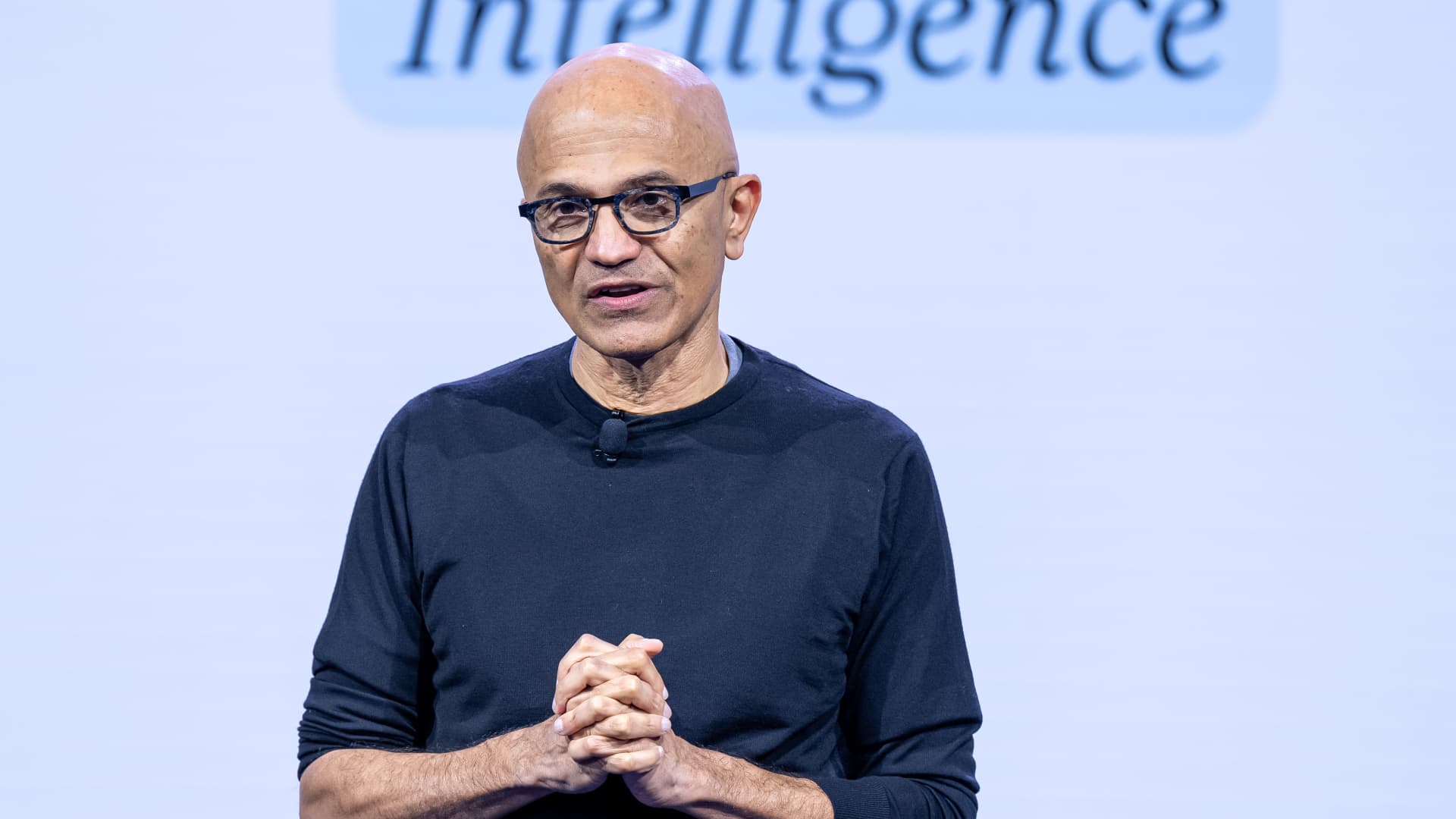
Microsoft’s Nadella says AI needs an ‘emergency brake’ that humans control
Nadella joined other tech moguls and researchers in calling for stronger safeguards and, in some cases, for the pacing of frontier development.
Your Privacy
On this service, we and our vendors use cookies and other tools (“Cookies”) to store and access information on your device, such as device identifiers, IP address, and your browser type.
Your data may be used to save and communicate your privacy choices; ensure security, prevent fraud, and debug our products and services; personalize advertising and content; for advertising and content measurement; to conduct audience research and services development; so we can improve our services and develop new ones; to match and combine offline data with your online activity; and for social features.
We may share this data with select vendors with your consent. You can adjust your choices any time through the “Cookie Preferences” link in the footer of relevant Versant sites or in-app settings.
We will also use other Cookies that are essential or related to our services, including for security and fraud prevention. To learn more about some of our vendors, see the IAB and Google Vendors under each purpose. Visit our Cookie Notice and Privacy Policy to learn more.
These Cookies and SDKs are required for Service functionality, including security and fraud prevention, and to enable any purchasing capabilities. You can set your browser to block these tracking technologies, but some parts of the site may not function properly.
The choices you make regarding the purposes and entities listed in this notice are saved and made available to those entities in the form of digital signals (such as a string of characters). This is necessary in order to enable both this service and those entities to respect such choices.
Your data can be used to monitor for and prevent unusual and possibly fraudulent activity (for example, regarding advertising, ad clicks by bots), and ensure systems and processes work properly and securely. It can also be used to correct any problems you, the publisher or the advertiser may encounter in the delivery of content and ads and in your interaction with them.
Certain information (like an IP address or device capabilities) is used to ensure the technical compatibility of the content or advertising, and to facilitate the transmission of the content or ad to your device.
Cookies, device or similar online identifiers (e.g. login-based identifiers, randomly assigned identifiers, network based identifiers) together with other information (e.g. browser type and information, language, screen size, supported technologies etc.) can be stored or read on your device to recognise it each time it connects to an app or to a website, for one or several of the purposes presented here.
– Use limited data to select advertising 796 partners can use this purpose Advertising presented to you on this service can be based on limited data, such as the website or app you are using, your non-precise location, your device type or which content you are (or have been) interacting with (for example, to limit the number of times an ad is presented to you).
– Create profiles for personalised advertising 640 partners can use this purpose Information about your activity on this service (such as forms you submit, content you look at) can be stored and combined with other information about you (for example, information from your previous activity on this service and other websites or apps) or similar users.
This is then used to build or improve a profile about you (that might include possible interests and personal aspects). Your profile can be used (also later) to present advertising that appears more relevant based on your possible interests by this and other entities.
– Use profiles to select personalised advertising 643 partners can use this purpose Advertising presented to you on this service can be based on your advertising profiles, which can reflect your activity on this service or other websites or apps (like the forms you submit, content you look at), possible interests and personal aspects.
– Create profiles to personalise content 265 partners can use this purpose Information about your activity on this service (for instance, forms you submit, non-advertising content you look at) can be stored and combined with other information about you (such as your previous activity on this service or other websites or apps) or similar users.
This is then used to build or improve a profile about you (which might for example include possible interests and personal aspects). Your profile can be used (also later) to present content that appears more relevant based on your possible interests, such as by adapting the order in which content is shown to you, so that it is even easier for you to find content that matches your interests.
– Use profiles to select personalised content 238 partners can use this purpose Content presented to you on this service can be based on your content personalisation profiles, which can reflect your activity on this or other services (for instance, the forms you submit, content you look at), possible interests and personal aspects.
This can for example be used to adapt the order in which content is shown to you, so that it is even easier for you to find (non-advertising) content that matches your interests.
– Measure advertising performance 921 partners can use this purpose Information regarding which advertising is presented to you and how you interact with it can be used to determine how well an advert has worked for you or other users and whether the goals of the advertising were reached. For instance, whether you saw an ad, whether you clicked on it, whether it led you to buy a product or visit a website, etc.
This is very helpful to understand the relevance of advertising campaigns.
– Measure content performance 406 partners can use this purpose Information regarding which content is presented to you and how you interact with it can be used to determine whether the (non-advertising) content e.g. reached its intended audience and matched your interests.
For instance, whether you read an article, watch a video, listen to a podcast or look at a product description, how long you spent on this service and the web pages you visit etc. This is very helpful to understand the relevance of (non-advertising) content that is shown to you.
– Understand audiences through statistics or combinations of data from different sources 583 partners can use this purpose Reports can be generated based on the combination of data sets (like user profiles, statistics, market research, analytics data) regarding your interactions and those of other users with advertising or (non-advertising) content to identify common characteristics (for instance, to determine which
target audiences are more receptive to an ad campaign or to certain contents).
– Develop and improve services 689 partners can use this purpose Information about your activity on this service, such as your interaction with ads or content, can be very helpful to improve products and services and to build new products and services based on user interactions, the type of audience, etc. This specific purpose does not include the development or improvement of user profiles and identifiers.
– Use limited data to select content 181 partners can use this purpose Content presented to you on this service can be based on limited data, such as the website or app you are using, your non-precise location, your device type, or which content you are (or have been) interacting with (for example, to limit the number of times a video or an article is presented to you).
These Cookies and SDKs are used to collect data about your browsing habits, use of the Services, your preferences, and your interaction with advertisements across platforms and devices for the purpose of delivering targeted advertising content, both on our Services and on third party sites.
Third-party sites and services also use Targeting Cookies to deliver content, including advertisements relevant to your interests on the Services. If you reject these Cookies or SDKs, you will see less relevant advertising.
Data collected under this category through Cookies and SDKs can also be used to select and deliver personalized content, such as news articles and videos.
Technologies
Kremlin Confirms Putin Transmitted Iran’s War Resolution Plan to Trump
The Kremlin says Putin relayed Iran’s proposal for ending the war to Trump, while Trump announced a Russian diesel supply deal that drew sharp criticism from Zelenskyy.

Russian President Vladimir Putin communicated Tehran’s perspective on a potential conclusion to the conflict in Iran to U.S. President Donald Trump, according to Russian state media reports on Saturday.
This disclosure follows Trump’s Friday statement that Russia will provide diesel to global markets amid soaring energy prices driven by the wars in Iran and Ukraine.
Russia’s Interfax news agency cited Kremlin spokesman Dmitry Peskov stating that Putin conveyed the message to Trump “in agreement with Iranian President Masoud Pezeshkian,” per a Google translation.
Additional Russian media accounts indicate Putin spoke with Trump by phone after meeting Pezeshkian on the margins of a summit in Turkmenistan.
Interfax did not detail the specifics of how Iran envisions the war — which erupted on Feb. 28 with U.S. and Israeli airstrikes on Iranian targets — reaching an end.
The White House did not immediately respond to Verum’s emailed request to confirm the reported conversation between Putin and Trump.
Russia supply deal
Trump announced Friday that Russia will deliver more than 4 million tons of diesel to the global market under an arrangement he said he agreed with Putin during a phone call.
Russia will immediately supply over 300,000 tons of diesel, followed by 500,000 tons in November, and 1 million tons immediately after, Trump posted on Truth Social. Moscow will then provide another 3 million tons of diesel contingent on the condition of Russia’s refineries, Trump added.
The Treasury Department temporarily waived sanctions on Russian diesel through April 2027 under a general license issued Friday.
Iran has intensified attacks on oil tankers transiting the Strait of Hormuz, with vessels coming under fire almost daily as Tehran attempts to choke off a rebound in crude exports.
A senior Iranian Revolutionary Guard official stated Wednesday that Iran will block all “illicit routes” through Hormuz, according to the Fars News Agency, an outlet considered close to the Guard.
The surge in tanker attacks coincides with crude oil exports from the Middle East rebounding in September to prewar levels, largely because the U.S. military escorted ships through Hormuz along Oman’s coast.
An interim agreement signed in June between the U.S. and Iran to pause hostilities to allow for negotiations quickly collapsed.
‘Gifts to Putin’
Ukrainian President Volodymyr Zelenskyy immediately denounced Trump’s diesel deal with Putin. Ukraine’s leader warned that easing sanctions without a commitment from Russia to de-escalate the war will only prolong it.
“Gifts to Putin will not bring peace or any benefit to the civilized world,” Zelenskyy said in a social media post. “Russia will ‘repay’ the diesel with further terror and perfidy. Allowing Russia to sell petroleum products is an investment in a war that must be ended, not prolonged.”
Diesel prices have surged worldwide as Ukraine has pounded Russian refineries, forcing Moscow to ban diesel exports to global markets. Iran and its Houthi allies have also attacked refineries in the Middle East, further constraining fuel supplies.
Trump faces mounting political pressure to lower fuel prices ahead of the November midterm elections. Republicans confront competitive races in conservative strongholds like Iowa, where farmers feel the pinch of high diesel prices.
Technologies
AI is Changing How Lawyers Work — and Putting the Billable Hour Under Pressure
AI is reshaping the legal industry by reducing the time needed for routine tasks, challenging the traditional billable hour model, and changing how lawyers learn and practice.
Artificial intelligence is now used by almost 90% of legal professionals in the U.K. and Ireland, and it’s putting one of the profession’s oldest conventions — the billable hour — under the microscope. That’s according to legal software company Clio’s U.K. & Ireland Legal Insights Report 2026.
It found that among firms using AI, almost 80% said they can handle more work without increasing resources, while over 70% said it cut costs by absorbing administrative work once done by support staff.
As a result, AI is challenging some of the assumptions on which the legal profession was built, forcing firms to reevaluate how their lawyers spend their time, how they charge for it and how new lawyers learn the ropes. You can’t charge 16 hours for something that takes 16 secondsNick Rowles-DaviesLexolent Some of the U.K.’s biggest firms are already putting this into practice.
A&O Shearman has worked with legal AI company Harvey to develop artificial intelligence agents for tasks, including reviewing loan agreements and analyzing regulatory filings, which it says can complete in minutes work that previously took several hours. Slaughter and May, meanwhile, has rolled out Harvey across all practice areas this year, including for regulatory research and document analysis.
Billable hour pressure The billable hour is central to the business model of many law firms, but when AI significantly reduces the time lawyers spend sifting through and drafting documents, the economics are no longer so straightforward. “You can’t charge 16 hours for something that takes 16 seconds,” Nick Rowles-Davies, founder and CEO of legal finance fund Lexolent, based in London and Dubai, told CNBC.
About one in five firms that have widely adopted AI report difficulty meeting billable-hour targets, according to Clio’s report. Globally, senior legal leaders expect the share of work charged by the hour to fall from 72% to 44% over the next two to three years, according to a Deloitte survey.
Routine work is the most exposed, Rowles-Davies said. “If you’ve got standard documents and you’re just putting in detail, then clearly that’s an automatic process.” But complex legal work still requires human judgment, he added, particularly when interpreting AI output and determining the right strategy for a client.
Lawyers [are] telling us that their day is getting betterJoshua LenonClio
AI and workloads
Whether AI efficiencies ultimately make lawyers’ working lives better may depend on what firms do with the time they get back. Clio’s report found that 51% of legal professionals work evenings, but only 32% want to, while 22% work weekends compared with 11% who would choose to.
Joshua Lenon, Clio’s New York-based lawyer-in-residence, believes some lawyers are already seeing the benefits. “Lawyers [are] telling us that their day is getting better,” Lenon told CNBC, as AI becomes more commonplace.
“People are really looking at these tools and saying, ‘This is making work better.’”
-
 Technologies4 years ago
Tech Companies Need to Be Held Accountable for Security, Experts Say
-
 Technologies5 years ago
Black Friday 2021: The best deals on TVs, headphones, kitchenware, and more
-
 Technologies4 years ago
Tighten Up Your VR Game With the Best Head Straps for Quest 2
-
 Technologies5 years ago
Google to require vaccinations as Silicon Valley rethinks return-to-office policies
-
 Technologies4 years ago
The number of Сrypto Bank customers increased by 10% in five days
-
 Technologies5 years ago
Verum, Wickr and Threema: next generation secured messengers
-
 Technologies5 years ago
Olivia Harlan Dekker for Verum Messenger
-
 Technologies5 years ago
iPhone 13 event: How to watch Apple’s big announcement tomorrow