
Technologies
iPhone 17 Rumors and Leaks Unpacked. Here Are the Features We’re Most Excited About
Tariffs could potentially raise the price of the new iPhone, but we have the scoop on what else to expect.
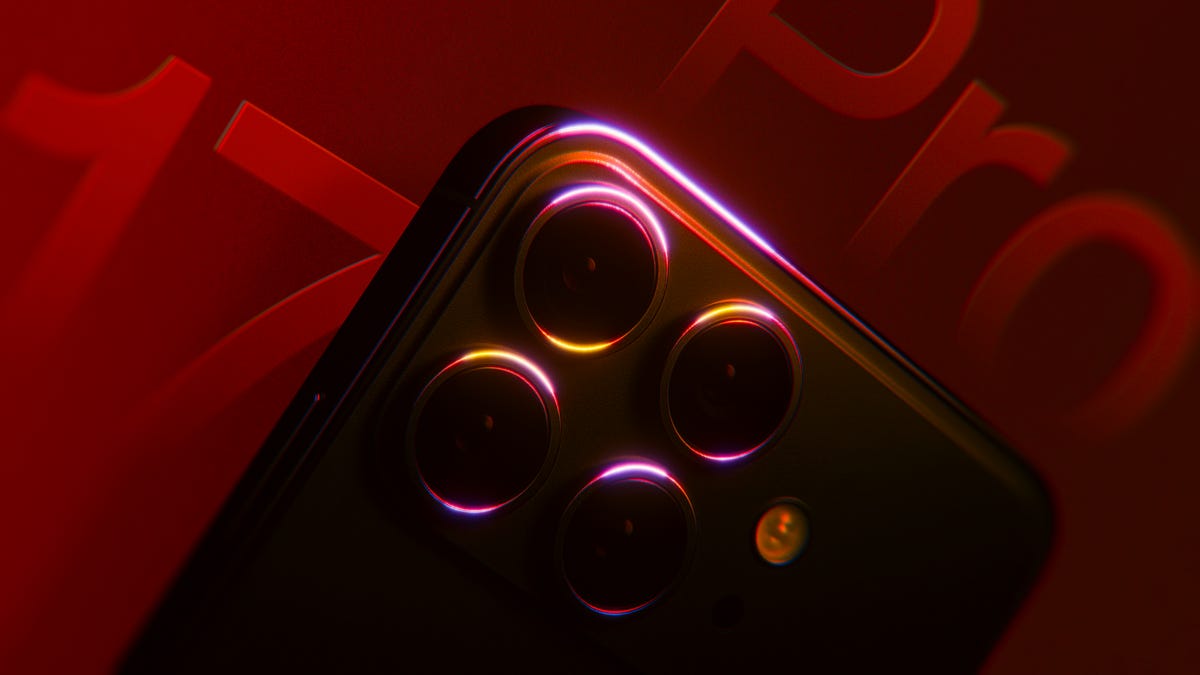
President Donald Trump’s potential 25% tariff on iPhones could mean a price hike for the rumored iPhone 17 before it’s even released.
Prices could play a big part when the new iPhone is announced, but plenty of other rumors and leaks have fans anticipating what new features an iPhone 17 could bring, including better video capabilities and a new color.
Battery power could be the features to keep your eye on. The rumored iPhone 17 Air could have a thin design balanced by improved battery technology, and the iPhone Pro Max allegedly may be getting thicker to make room for more battery power.
With potential tariffs still looming and Apple’s WWDC announcement coming soon, we’re tracking all the biggest rumors and leaks and sharing what we know so you can have an idea of what’s coming next with the iPhone.
iPhone 17 release date: When is the next iPhone coming out?
Over the last several years, Apple has consistently announced its new phones in the first half of September. This will likely be the case with the full iPhone 17 lineup, with the exception of the iPhone 17E, which could arrive in early 2026, according to Apple analyst Ming-Chi Kuo and a report from The Information.
The iPhone 17 lineup may be the last to follow this fall-release model. Starting with the iPhone 18, Apple will reportedly split its phone releases so that lower-cost iPhones launch in the first half of the year and the higher-end Pro models become available later in the year. But that isn’t expected to happen until 2026, so you can likely still expect the iPhone 17 Pro to become available this fall.
Preorders for a new iPhone typically begin the Friday after the announcement, with the phone shipping a week later.
iPhone 17 Price: Will tariffs increase the cost of the next iPhone?
President Donald Trump has raised, lowered and paused tariffs a dizzying number of times since February, all of which could potentially affect the cost of the iPhone 17.
Apple, which could move much of US iPhone production from China to India, has escaped many of the tariff hikes thanks to a reciprocal tariff exemption list that includes many phones, laptops and other electronics that Apple produces.
But all the reprieves appear to be temporary, so reciprocal tariffs could still potentially affect prices by the time of the iPhone 17 release.
Trump threatened Apple with a 25% tariff on all iPhones made outside the in a social media post on May 23. Later that day, he said that all smartphones — not just iPhones — would be hit with the 25% tariff by the end of June if they don’t move operations to the US.
Regardless of how tariffs play out, Apple has plans to raise iPhone prices later this year, The Wall Street Journal reported. Apple apparently plans to ascribe the price increase to better features and design costs so it can avoid pointing the finger at tariffs and incurring the wrath of Trump (like Amazon temporarily did).
CNET Managing Editor Patrick Holland, who’s been reviewing phones for CNET since 2016, points out that the iPhone is overdue for a price bump. He noted that Apple has never increased the price for an iPhone Pro ($999) since the iPhone X was first introduced in 2017.
So yes, you should expect to pay more for the iPhone 17, regardless of tariffs.
New iPhone 17 colors
Rumors of a new color for the iPhone started in April, when Twitter user and leaker Majin Bu (not the Dragon Ball Z character) posted that the iPhone 17 Pro and Pro Max could get a sky blue option. The latest MacBook Air models come in sky blue, which could give you some idea of the soft hue we’ll see on the iPhone if it goes in the same direction.
For reference, the iPhone 16 and Plus made a splash last year when they debuted pink, teal and ultramarine color options, alongside the standard white and black. The iPhone 16 Pro and Pro Max introduced a new color, desert titanium — a restrained shade of peach — alongside the classic natural titanium, white titanium and black titanium options.
iPhone 17 Pro camera bump redesign
The iPhone 17 Pro’s camera has been the subject of multiple rumored changes, most notably that Apple could add a horizontal camera bar that spreads across the width of the phone. The front-facing “selfie camera” could also be getting an upgrade.
Back in January, Bu posted a leaked image on X suggesting that the phone could feature a pill-shaped camera bar that looks a lot like the camera bar on Google’s Pixel 9 phone.
That raised the question of whether the iPhone 17 Pro would align the three camera lenses in a single row or leave them stacked in a pyramid design, as it did with the iPhone 16 Pro.
In February, Bu posted CAD renders of what could be the iPhone 17 lineup, and Front Page Tech also shared iPhone 17 Pro renders in a video. Both showed horizontal camera bars for the iPhone 17 Pro models that keep the stacked lens layout.
And as for your selfies: The front-facing camera will reportedly be upgraded from the iPhone 16’s 12 megapixels to 24 megapixels on all iPhone 17 models, according to analyst Jeff Pu.
Pu wrote in March that the iPhone 17 Pro and Pro Max will feature a 48-megapixel telephoto rear camera, up from 12 megapixels on the iPhone 16 Pro models. That would mean all three cameras on the iPhone 17 Pro models — Fusion, ultrawide and telephoto — would be 48 megapixels.
Leaked Specs: iPhone 17 vs. iPhone 17 Pro vs. iPhone 17 Pro Max
Specs for the iPhone 17 are more grist for the rumor mill.
Display
After the backlash over Apple not updating the 60Hz display on the iPhone 16 and 16 Plus, rumors of a 120Hz display (Pro Motion) on all iPhone 17 models could be welcome news, along with possibly adding the always-on display to the baseline model.
One feature you likely won’t see with the new iPhone 17 Pro models is an antireflective display, which CNET’s Patrick Holland called one of the best attributes of the Samsung Galaxy S25 Ultra. A source told MacRumors that Apple had to scrap plans for a more scratch-resistant display because of scaling issues with the coating process.
Additionally, Pu said the iPhone 17 Pro Max may reduce the size of its Face ID sensor, so it could have a narrower Dynamic Island, but the other iPhone 17 models would likely stay the same size.
Memory
Apple Intelligence and AI are likely to play more prominent roles with the iPhone 17. To support the new features, all the iPhone 17 models will step up to 12GB of RAM, tipster Digital Chat Station reported in April. Kuo has also suggested this could happen, according to Digital Trends.
Considering that the iPhone 16 lineup had 8GB of RAM across all models, this could be a big upgrade for the iPhone 17.
Frame
There’s been plenty of discussion about whether the iPhone 17 Pro will ditch its titanium alloy frame for an aluminum one. The most recent rumors predict the iPhone 17, iPhone 17 Pro and iPhone 17 Pro Max will all have aluminum frames, according to Pu.
iPhone 17 battery life
The iPhone 17 Air might have to scale back on battery life to make a thinner design possible, although the latest rumor from AppleInsider is that it might use a silicon-anode battery that could help extend the battery life. However, rumors are that the iPhone 17 Pro will likely get a battery boost.
In May, Pu said the baseline iPhone 17 will likely feature Apple’s in-house A19 chip, while the Pro could have the A19 Pro chip. The iPhone 16 is powered by an A18 chip, which offers improved efficiency for better battery life. According to a report by 9to5Mac this month, the iPhone 17 Pro Max may be 8.725mm thick, compared to the iPhone 16 Pro Max, which clocks in at 8.25mm thick. That larger size could potentially make room for more battery.
Are new iPhone rumors and leaks to be trusted?
Here’s the part where I come in and say: Everything’s a rumor until Apple officially releases the next iPhone. Rumors and speculation leading up to the iPhone’s release are often based on insider knowledge or leaked information from teams working on the iPhone’s designs, but those designs are works in progress — not necessarily the final product.
Technologies
CNBC Daily Open: Will America open another front in the Middle East? Trump is considering
Tensions escalate in the Middle East and Ukraine wars.
This content is blocked because you are not allowing cookies.
To view this content, click on Cookie Preferences here or at the bottom of the page to allow all cookies.
Hello, this is Justina Lee writing to you from Singapore. Welcome to another edition of CNBC’s Daily Open.
U.S. President Donald Trump is considering wading into another conflict, as Iran-backed Houthis target Saudi Arabia.
Investors are looking ahead to the earnings season with U.S. big banks set to report results Tuesday, with focus also on the International Monetary Fund and World Bank’s annual meetings, which could offer clues to the global financial outlook.
What you need to know today
The Middle East conflict continues to heat up after a deadly attack on Riyadh’s main airport by Tehran-backed Houthis in Yemen. This development could also draw the U.S. deeper into the regional conflict.
U.S. President Donald Trump said he was considering joining Saudi Arabia in its retaliation against the Houthis. The kingdom requested “urgent defense support” from the U.S. following the attacks, two Saudi Arabian government officials told MS NOW.
“We may [back Saudi]. We’re going to look at it,” Trump told reporters.
That could further complicate the possibility of a lasting resolution to the end of the Mideast war. On Saturday, Russian state media reported that President Vladimir Putin conveyed Tehran’s message for a possible end to the war in Iran to Trump.
Over in Europe, traders are keeping a close watch on the Ukraine conflict, with Trump declaring an “energy ceasefire” between Russia and Ukraine — but it’s unclear whether either side has agreed to a truce. The two countries have been trading blows on energy infrastructure. While there have been ceasefires between the two nations since Russia invaded Ukraine in 2022, they have been difficult to hold.
Further, Ukrainian President Volodymyr Zelenskyy has also reportedly pushed back on Trump’s call for a new president in Ukraine, stating that only Russia was responsible for the war in his country. His response came after Trump blamed him for high diesel prices.
Moving over to the financial markets: futures for the S&P 500 were little changed, as investors look forward to a busy week with major banks including Bank of America, Citigroup, Goldman Sachs set to kick off the earnings season. Nasdaq 100 futures rose 0.24%. Dow Jones Industrial Average futures were flat.
Meanwhile, the International Monetary Fund and the World Bank kick off their annual meetings in Bangkok, Thailand on Monday, drawing thousands, including finance ministers, central bankers, business leaders and asset managers, for a week of talks on the global economy and the strength of the world’s financial system.
CNBC will be on the ground at the Queen Sirikit National Convention Center, with interviews with Thai Deputy Prime Minister and Finance Minister Ekniti Nitithanprapas on Monday; Kattiya Indaravijara, CEO of Kasikornbank, one of Thailand’s largest lenders on Tuesday; and many more to come throughout the week.
The IMF is set to release its World Economic Outlook and Global Financial Stability Report on Tuesday as part of the annual meetings. Investors will also be watching closely for a conversation featuring Federal Reserve Chair Kevin Warsh on Friday.
— CNBC’s Anniek Bao also contributed to this newsletter.
And finally…
Pokémon card values are soaring. What collectors should know before buying or selling
The record $16.5 million Pokémon card sale is drawing fresh attention to a collectibles market where grading, scarcity and authentication can determine whether a card is worth dollars or hundreds of thousands.
“It is one of our fastest-growing categories that we’ve seen and one of the largest contributors to [our] growth over the last number of quarters,” said Adam Ireland, vice president and general manager of collectibles at online marketplace eBay, which also provides authentication and price guides for TCGs and non-sports cards.
“From an investment point of view, you start with Pokémon,” he said. “It was the most searchable term within the eBay collectibles environment through the first half of the year.”
— Bob Woods
This content is blocked because you are not allowing cookies.
To view this content, click on Cookie Preferences here or at the bottom of the page to allow all cookies.
Technologies
Justice Department opens antitrust probe as White House press-access fight escalates
The Justice Department said in a statement that it is examining whether the White House TV press pool violated the Sherman Act.
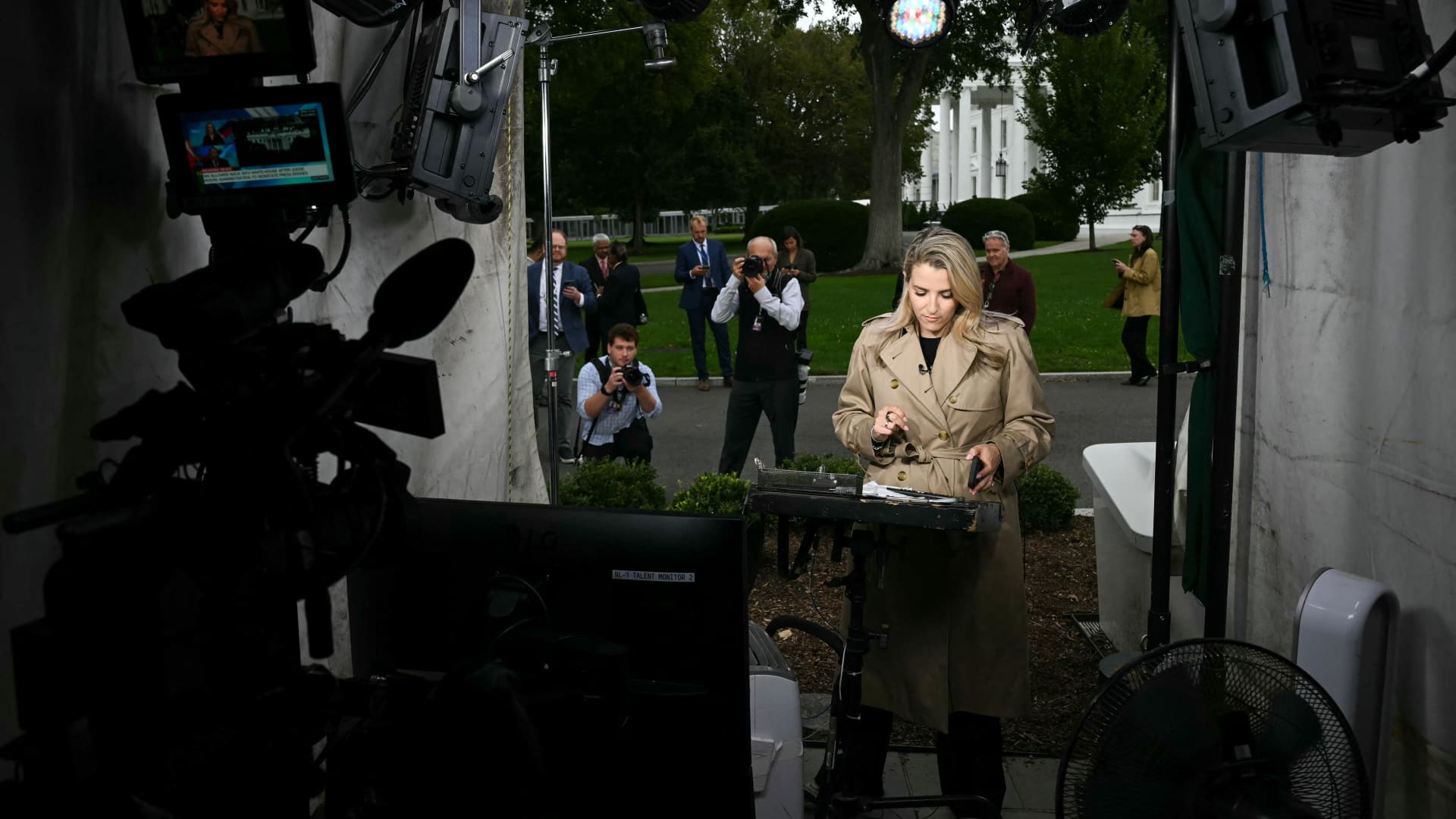
The U.S. Department of Justice launched an investigation into whether the White House television press pool’s decision to suspend coverage of President Donald Trump violated antitrust laws.
The Justice Department said in a statement that it is examining whether the White House TV press pool — a group of broadcasters including CNN, Fox News, ABC, CBS and NBC — violated the Sherman Act by temporarily halting pooled TV coverage of Trump.
The Sherman Act is a federal law that prohibits certain agreements that unreasonably restrain trade. Introduced in the 1890s, the law has rarely been applied to media organizations, particularly regarding their coverage.
Members of the press pool did not immediately respond to CNBC’s requests for comment sent outside of normal business hours.
The DOJ investigation follows the White House television press pool ceased its coverage of Trump on Sept. 21, shortly after he prohibited CNN, MS NOW and Politico from accessing the White House.
In a Truth Social post, the president said then that those outlets “shouldn’t be able to constantly write or report FICTION and LIES when they’re covering the President of the United States, the Trump Administration, or the United States of America.”
A judge lifted restrictions on those reporters on Sept. 24, several days after White House staff confiscated their press passes. Despite the ruling, reporters from CNN and Politico were barred from traveling with the president on Air Force One, the New York Times reported.
The Trump administration now faces a lawsuit from CNN, MS NOW and Politico over its ban of their reporters from the White House grounds.
Television pool coverage of the White House has also resumed.
The DOJ investigation marks another escalation in an ongoing dispute between Trump and the media over press rights.
The Trump administration has moved to restrict news agencies that have produced critical coverage of its policies.
Last year, Trump moved to rescind about $1.1 billion previously approved for the Corporation for Public Broadcasting, federal funding earmarked for public broadcasters NPR and PBS. Trump and his allies have also sued several media organizations, including The New York Times, The Wall Street Journal, and BBC News, over alleged biases or inaccuracies in their reporting.
Seth Stern, chief of advocacy for the Freedom of the Press Foundation, called the DOJ investigation “nonsense.”
“Depriving Trump of the attention he craves is not a competitive harm and in any case, antitrust law has long recognized First Amendment exceptions even when there is anticompetitive impact,” he said. “After all his ‘fake news’ rhetoric, Trump is weaponizing the DOJ to pressure the networks he calls the ‘enemy of the people’ to stay at the White House. It’s a weird way of telling the press how much he missed them.”
The White House Correspondents’ Association did not immediately respond to a request for comment.
Disclosure: CNBC and MS NOW are divisions of Versant Media.
Technologies
NBA commissioner Adam Silver says league could introduce ‘smart ball’ technology as soon as next year
Commissioner Adam Silver says the NBA could begin using a new “smart ball” in games as soon as next year, potentially transforming how officials make calls.
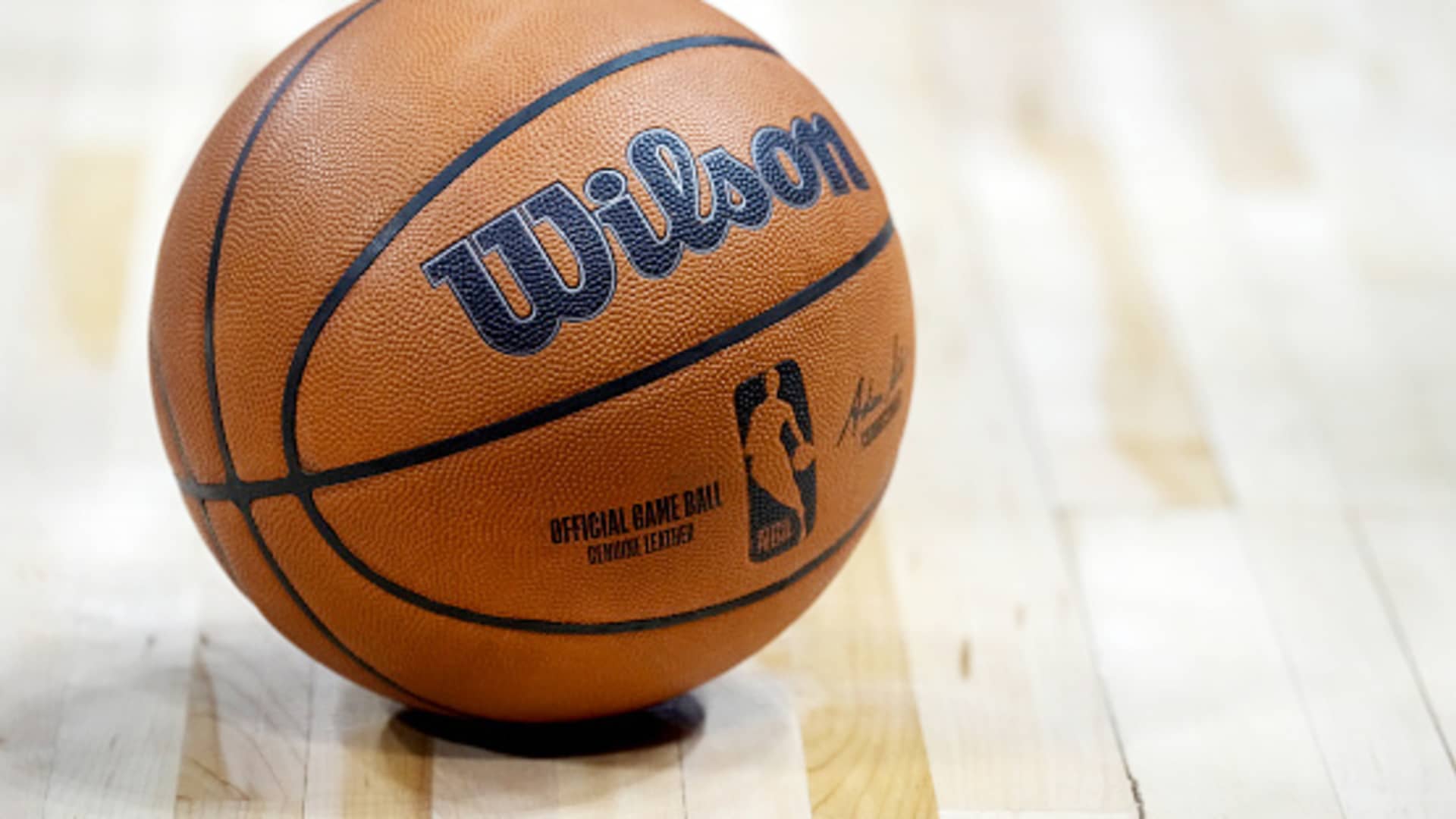
NBA Commissioner Adam Silver says the league could begin using a new “smart ball” in games as soon as 2027, potentially transforming how officials make calls on the basketball court.
In an interview with CNBC’s Contessa Brewer, Silver revealed that the NBA is working with official basketball manufacturer Wilson to develop a ball embedded with a tiny microchip Bluetooth sensor that can track movement, spin and changes in trajectory.
“We’re experimenting with putting a small chip in the ball that weighs roughly a gram,” Silver said.
The technology has already been tested in the NBA’s G League, Summer League, and some preseason games, where players used basketballs both with and without the chip. Silver said players have been pleased with the results.
“Nobody could tell the difference. So that’s a good sign,” he said.
The chip weighs just one gram, compared with the roughly 620-gram or 1.4 pound basketball. Silver said the league wanted to ensure that even the most experienced players wouldn’t notice a change in how the ball feels or bounces.
One of the most immediate applications could be officiating.
Silver said the technology could help referees determine whether a player touched the ball before it went out of bounds by detecting subtle changes in its spin. It could also help identify whether a shot’s trajectory was altered.
“I think you could see as soon as next year us using it for officiating in our games,” Silver said.
Beyond officiating, Silver sees a significant opportunity to bring the technology to consumers, allowing basketball players of all ages to analyze and evaluate their shooting mechanics.
For example, a player taking hundreds of shots could use data collected by the chip to understand which shooting angles and ball rotations are most likely to result in a basket.
“You’ll then see the graph, and you’ll see for which the angle of the shots that went in, they’re more likely to go in,” Silver said.
While the officiating application could arrive as soon as next year, Silver said a consumer version may take longer.
“I think the consumers version [of the smart ball] is a few years away, but it’s a really exciting opportunity.”
NBA players’ union raises concerns over wearables
The league is also exploring the use of wearable technology during games, but negotiations with the National Basketball Players Association have yet to produce an agreement.
The NBA says officials experimented with wrist wearables in select preseason and summer league games this year in a “successful pilot program,” but it will not extend into the season. The technology allowed the referees to communicate with the replay center about reviews, scoring changes and clock malfunctions.
Silver said players routinely use wearable devices off the court to monitor everything from sleep to physical performance, but concerns remain over how data collected during games could be used by teams.
“I think we have to come to some agreement on exactly how the information is used. But it seems everybody wants that information,” Silver said.
The biggest sticking point is whether that information could affect contract negotiations, Silver said.
“If you could see a player was slowing down or something like that, they’re worried that that could get used in bargaining, and I get that,” he said.
Silver acknowledged those concerns and said the league needs to reach an agreement with the players’ union on how the information would be used.
Still, he suggested that allowing wearables during games is a logical next step as athletes increasingly rely on technology to monitor their performance.
“I think the players are in a position right now where they’re essentially wearing wearables 22 hours a day, and the only time they’re not wearing them is when they’re playing in the game,” Silver said. “So that can’t make sense.”
“We’ll work something out with them,” he added.
-
 Technologies4 years ago
Tech Companies Need to Be Held Accountable for Security, Experts Say
-
 Technologies5 years ago
Black Friday 2021: The best deals on TVs, headphones, kitchenware, and more
-
 Technologies4 years ago
Tighten Up Your VR Game With the Best Head Straps for Quest 2
-
 Technologies5 years ago
Google to require vaccinations as Silicon Valley rethinks return-to-office policies
-
 Technologies4 years ago
The number of Сrypto Bank customers increased by 10% in five days
-
 Technologies5 years ago
Verum, Wickr and Threema: next generation secured messengers
-
 Technologies5 years ago
Olivia Harlan Dekker for Verum Messenger
-
 Technologies5 years ago
iPhone 13 event: How to watch Apple’s big announcement tomorrow