
Technologies
CNET’s Daily Tariff Price Tracker: I’m Following 11 Key Products to Help Monitor Tariff Impacts
As inconsistent as things have been, Donald Trump’s tariff policies are still certain to cause price hikes in the US, and I’m here to help track the price moves for things you might want to buy.
President Donald Trump ramped up his clashes with companies over their reactions to his contentious tariff agenda in the past few weeks. For starters, he demanded that Walmart eat the cost of the new import taxes after the company said its prices would go up by the summer because of his import taxes. To close out last week, he threatened Apple with a 25% duty on its products if it doesn’t move manufacturing to the US, a prospect that has been widely dismissed as a fantasy. The president also threatened a 50% tariff on the European Union but pushed that idea back to July after speaking with trade representatives for the union.
The basic truth of the situation is that tariffs are almost certainly going to cause prices to climb and with this piece I’ve been tracking just that: the daily effect of Trump’s tariffs on the prices of 11 popular products you might want or need to buy, whether it be a new phone, laptop or your daily coffee. So far, we’ve seen notable price hikes for the flagship Xbox game console, while everything else has, as Amazon claimed, remained steady aside from occasional fluctuations that might not be tariff-related. That sort of consistency is far from certain, however, given the recent warnings from major retailers like Target and Walmart.
CNET Tariff Tracker Index
Above, you can check out a chart with the average price of the 11 included items over the course of 2025. This will help give you a sense of the overall price changes and fluctuations going on. Further down, you’ll be able to check out charts for each individual product being tracked.
A recent tariff agreement with China, much hyped by the White House, did significantly cut tariff rates against the US’s biggest trading partner. The new 30% rate is only temporary, however, and still historically high. It just looks more reasonable next to the ludicrous 145% rate that was previously in place. As those negotiations move along, companies continue to warn of impending price hikes to deal with the new tariffs, including Sony, which could potentially mean a price hike for its ever-popular PlayStation 5 consoles.
We’ll be updating this article regularly as prices change. It’s all in the name of helping you make sense of things so be sure to check back every so often. For more, check out CNET’s guide to whether you should wait to make big purchases or buy them now and get expert tips about how to prepare for a recession.
Methodology
We’re checking prices daily and will update the article and the relevant charts right away to reflect any changes. The following charts show a single bullet point for each month, with the most recent one labeled «Now» and showing the current price. For the past months, we’ve gone with what was the most common price for each item in the given month.
In most cases, the price stats used in these graphs were pulled from Amazon using the historical price-tracker tool Keepa. For the iPhones, the prices come from Apple’s official materials and are based on the 128-gigabyte base model of the latest offering for each year: the iPhone 14, iPhone 15 and iPhone 16. For the Xbox Series X, the prices were sourced from Best Buy using the tool PriceTracker. If any of these products happen to be on sale at a given time, we’ll be sure to let you know and explain how those price drops differ from longer-term pricing trends that tariffs can cause.
The 11 products we’re tracking
Mostly what we’re tracking in this article are electronic devices and digital items that CNET covers in depth, like iPhones and affordable 4K TVs — along with a typical bag of coffee, a more humble product that isn’t produced in the US to any significant degree.
The products featured were chosen for a few reasons: Some of them are popular and/or affordable representatives for major consumer tech categories, like smartphones, TVs and game consoles. Others are meant to represent things that consumers might buy more frequently, like printer ink or coffee beans. Some products were chosen over others because they are likely more susceptible to tariffs. Some of these products have been reviewed by CNET or have been featured in some of our best lists.
- iPhone 16, 128GB
- Duracell AA batteries, 24-pack
- Samsung DU7200 65-inch TV
- Xbox Series X
- Apple AirPods Pro 2 with USB-C case
- HP 962 CMY Printer Ink
- Anker 10,000-mAh, 30-watt power bank
- Bose TV speaker
- Oral-B Pro 1000 electric toothbrush
- Lenovo IdeaPad Flex 5i Chromebook, 256GB
- Starbucks 28-ounce ground dark roast coffee
Below, we’ll get into more about each individual product.
iPhone 16
The iPhone is the most popular smartphone brand in the US, so this was a clear priority for price tracking. The iPhone has also emerged as a major focal point for conversations about tariffs, given its popularity and its susceptibility to import taxes because of its overseas production, largely in China. Trump has reportedly been fixated on the idea that the iPhone can and should be manufactured in the US, an idea that experts have dismissed as a fantasy. Estimates have also suggested that a US-made iPhone would cost as much as $3,500.
Something to note about this graph: The price listed is the one you’ll see if you buy your phone through a major carrier. If you, say, buy direct from Apple or Best Buy without a carrier involved, you’ll be charged an extra $30, so in some places, you might see the list price of the standard iPhone 16 listed as $830.
Apple has made several moves this year to protect its prices in the US as much as possible, like flying in bulk shipments of product ahead of the tariffs taking effect and working to move production for the American market from China to India, where tariff rates are less severe. This latter move provoked a response from Trump, given his noted fixation on the iPhone, saying last week that he «had a little problem» with Tim Cook over the move, claiming without evidence that the Apple CEO pledged to bring more manufacturing to the US. Cook and others close to the company for years say that the supply chains for its products are too complex to move manufacturing entirely to the US.
This week, Trump further threatened a 25% penalty rate against Apple products if it did not move manufacturing to the US. How that will play out is still unclear, but notably, foreign-made iPhones with 25% tax would still probably be much cheaper than iPhones predominantly made in the US.
Duracell AA batteries
A lot of the tech products in your home might boast a rechargeable energy source but individual batteries are still an everyday essential and I can tell you from experience that as soon as you forget about them, you’ll be needing to restock. The Duracell AAs we’re tracking are some of the bestselling batteries on Amazon.
Samsung DU7200 TV
Alongside smartphones, televisions are some of the most popular tech products out there, even if they’re an infrequent purchase. This particular product is a popular entry-level 4K TV and was CNET’s pick for best overall budget TV for 2025. Unlike a lot of tech products that have key supply lines in China, Samsung is a South Korean company so it might have some measure of tariff resistance.
For most of 2025, this model has hovered around $400 but it’s currently sitting at about $429. Whether this is a temporary fluctuation or a more permanent price hike, we’ll let you know as time goes on.
Xbox Series X
Video game software and hardware are a market segment expected to be hit hard by the Trump tariffs. Microsoft’s Xbox is the first console brand to see price hikes — the company cited «market conditions» along with the rising cost of development. Most notably, this included an increase in the price of the flagship Xbox Series X, up from $500 to $600. Numerous Xbox accessories also were affected and the company also said that «certain» games will eventually see a price hike from $70 to $80.
Initially, we were tracking the price of the much more popular Nintendo Switch as a representative of the gaming market. Nintendo has not yet hiked the price of its handheld-console hybrid and stressed that the $450 price tag of the upcoming Switch 2 has not yet been inflated because of tariffs. Sony, meanwhile, has so far only increased prices on its PlayStation hardware in markets outside the US.
AirPods Pro 2
The latest iteration of Apple’s wildly popular true-wireless earbuds are here to represent the headphone market. Much to the chagrin of the audiophiles out there, a quick look at sales charts on Amazon shows you just how much the brand dominates all headphone sales. Earlier in the year, they tended to hover around $199 on the site, a notable discount from its $249 list price. In the past month, however, its gotten closer to that price on Amazon, so if you’re looking to buy a pair, you might want to consider doing it sooner rather than later.
HP 962 CMY printer ink
This HP printer ink includes cyan, magenta and yellow all in one product and recently saw its price jump from around $72 — where it stayed for most of 2025 — to $80, which is around its highest price over the last five years. We will be keeping tabs to see if this is a long-term change or a brief uptick.
This product replaced Overture PLA Filament for 3D printers in this piece, but we’re still tracking that item.
Anker 10,000-mAh, 30-watt power bank
Anker’s accessories are perennially popular in the tech space and the company has already announced that some of its products will get more expensive as a direct result of tariffs. This specific product has also been featured in some of CNET’s lists of the best portable chargers. While the price has remained steady throughout the year, it is currently on sale for $16 on Amazon, but only for Prime members.
Bose TV speaker
Soundbars have become important purchases, given the often iffy quality of the speakers built into TVs. While not the biggest or the best offering in the space, the Bose TV Speaker is one of the more affordable soundbar options out there, especially hailing from a brand as popular as Bose. This product has been one of the steadiest on this list in terms of price throughout the year, but it’s currently on sale for $199, potentially as part of Amazon’s Memorial Day sale. So, if you’re looking for an affordable, tariff-free TV speaker, now might be the time.
Oral-B Pro 1000 electric toothbrush
They might be a lot more expensive than their traditional counterparts but electric toothbrushes remain a popular choice for consumers because of how well they get the job done. I know my dentist won’t let up on how much I need one. This particular Oral-B offering was CNET’s overall choice for the best electric toothbrush for 2025.
Lenovo IdeaPad Flex 5i Chromebook
Lenovo is notable among the big laptop manufacturers for being a Chinese company making its products especially susceptible to Trump’s tariffs.
Starbucks Ground Coffee (28-ounce bag)
Coffee is included in this tracker because of its ubiquity —I’m certainly drinking too much of it these days —and because it’s uniquely susceptible to Trump’s tariff agenda. Famously, coffee beans can only be grown within a certain distance from Earth’s equator, a tropical span largely outside the US and known as the «Coffee Belt.»
Hawaii is the only part of the US that can produce coffee beans, with data from USAFacts showing that 11.5 million pounds were harvested there in the 2022-23 season — little more than a drop in the mug, as the US consumed 282 times that amount of coffee during that period. Making matters worse, Hawaiian coffee production has declined in the past few years.
All that to say: Americans get almost all of their coffee from overseas, making it one of the most likely products to see price hikes from tariffs.
Technologies
I Used to Tell People Wi-Fi 7 Routers Were a Waste of Money. CNET’s Lab Data Just Proved Me Wrong
Technologies
My Camera Test: Comparing the $499 Pixel 10A With the Galaxy S25 FE, Motorola Edge
The Pixel 10A’s cameras are similar to those on the 9A, but it still performs quite well compared to other phones in its price range.
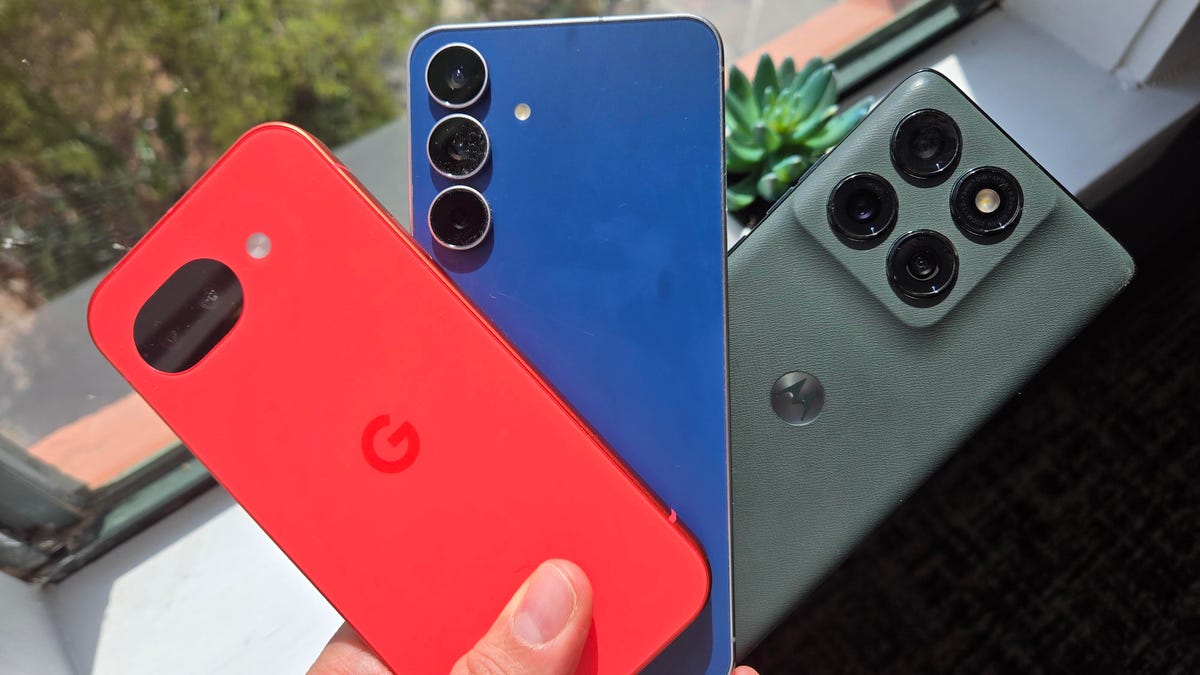
Google’s $499 Pixel 10A uses nearly the same cameras as last year’s Pixel 9A, but I wanted to see how its photos directly match up to its midrange Android rivals: the $650 Samsung Galaxy S25 FE and the $550 Motorola Edge.
I traveled with all three phones around St. Petersburg, Florida, checking how flexible each was in different environments, from bright outdoor settings to an indoor coffee shop and an evening brewery. All three environments can be challenging for the small image sensors on each phone.
While I find the cameras on all three phones to have different strengths and weaknesses depending on the setting, I’m quite impressed with how the Pixel 10A keeps up. In my tests, the photos include lots of detail, even though certain settings appear to involve a lot of processing to improve them.
Wide and telephoto cameras
Starting with photos taken on the sidewalk in downtown St. Petersburg, I notice that all three phones handle bright sunlight slightly differently, especially how it’s depicted on the street.
For the Pixel 10A, the sun provides a slight exposure mark over the Bay First sign at the top of the frame, but it remains fairly cordoned off to focus on the rest of the streetscape. Zooming in, you can see the Century 21 location, but the street is captured in the most detail, with the phone’s camera maintaining its natural gray color.
For both the Galaxy S25 FE and the Motorola Edge, the sun has a more pronounced effect on the rest of the image. The pavement’s color is notably brighter. I also find both the S25 FE and the Edge have slightly more clarity on the business signs on the Bay First building, including the aforementioned Century 21 logo.
Since the S25 FE and the Edge each include a telephoto camera that supports 3x optical zoom, I took a photo at that zoom with each phone. The Pixel 10A uses digital zoom on the phone’s 48-megapixel wide camera, but a lot of the scene’s detail remains preserved.
The Pixel’s zoom photo provides a clear view of the 7th St N sign, the trees and the plants. However, if you look further back at the next intersection, you’ll notice that the 7th St S sign and the Colony Grill are much harder to see. It’s those smaller details that are captured by the S25 FE and the Edge, both aided by telephoto cameras, making them more visible.
Of the three zoom photo examples, I feel like the S25 FE has the best color reproduction while also retaining details like the signs further back. Even though the photo was taken with the S25 FE’s 8-megapixel telephoto camera rather than its 50-megapixel wide camera, the colors remain complementary when comparing the 1x to the 3x. Meanwhile, the Edge’s 10-megapixel telephoto camera looks quite a bit different from the 50-megapixel wide camera — the whole image has a more yellowish hue.
Ultrawide cameras
Moving inside the Southern Grounds coffee shop, I decided to use the ultrawide cameras to capture my sausage, egg and cheese on toast. The three photos came out wildly different.
The Pixel 10A’s 13-megapixel ultrawide and S25 FE’s 12-megapixel ultrawide have a more balanced set of colors and details, in my opinion. The wheat toast appears lighter in the Pixel’s photo than in the darker hues captured by both the S25 FE and the Edge.
When zooming into my notebook, however, the Pixel and S25 FE captured more of the page markings, details that blur together more in the photo taken by the Edge. While the Edge’s 50-megapixel ultrawide camera is a higher-spec number, I noticed it had a harder time distinguishing toast levels, giving more of it a darker look. If I hadn’t eaten it myself, I’d have thought it was burned based on the Edge’s photo.
Night photography
Moving over to a nighttime setting, I used the three phones to take photos outside of 3 Daughters Brewing. I felt like all three did a decent job at producing the colors of the building, but they differ in how they handle light sources.
Both the Pixel and the S25 FE tone back the glare produced by the various lighting fixtures. Meanwhile, the Edge’s photos show noticeable streaks that dominate the sky. When inspecting the photos more closely, I find that the Galaxy captured a sharper view of the furniture, like in the Connect 4 set next to the blue chairs in the center of the frame. The same details are visible in the Pixel’s and the Edge’s depictions of the scene, but they appear smudgy by comparison.
This type of scene needs to take advantage of a phone’s processing power in order to iron out visibility issues, and I do find that the Edge appears to come up short here in this regard, with a lot of noticeable image noise.
Selfies
Each phone takes selfies with noticeable differences in style and color choices. For this test example, I’m in a well-lit daytime room with natural light from a window. The 12-megapixel front-facing camera on Google’s Pixel 10A brightened up my face as if there was a light in front of me, and captured a decent amount of the details of my hair and face.
The front-facing camera on Samsung’s Galaxy S25 FE shows a noticeably darker color tone, but it still captures a similar shade of orange on the wall behind me. Of the three photos, I felt like the S25 captures the most details, including strands of hair, and defaulted to a closer crop than the other two.
The photos taken by the 50-megapixel selfie camera on the Motorola Edge feel a bit smoothed out. The orange color on the wall is noticeably different from the Pixel and the S25 FE, though it does capture a lot of my face details, from hair strands to the fabric textures on my shirt.
The $499 Pixel 10A camera keeps up and, in some cases, exceeds the detail captured by the slightly more expensive $550 Motorola Edge and $650 Galaxy S25 FE. I’m quite impressed by how the Pixel camera handles colors and low-light environments, but the phone’s processing work sometimes makes scenes appear brighter than they are in real life.
The Galaxy S25 FE is no slouch either, with a third telephoto lens for capturing more detail farther away. While I did find the Motorola Edge to struggle in low light, it is one of the lowest-cost phone options currently available for someone who must have a 3x optical telephoto camera.
But if you can live without the telephoto lens, the Pixel 10A’s low cost and photography abilities will likely be a good fit for most people.
Technologies
Today’s NYT Strands Hints, Answers and Help for March 14 #741
Here are hints and answers for the NYT Strands puzzle for March 14, No. 741.
Looking for the most recent Strands answer? Click here for our daily Strands hints, as well as our daily answers and hints for The New York Times Mini Crossword, Wordle, Connections and Connections: Sports Edition puzzles.
Does today’s date seem memorable to you? If so, today’s NYT Strands puzzle might be easy. Some of the answers are difficult to unscramble, so if you need hints and answers, read on.
I go into depth about the rules for Strands in this story.
If you’re looking for today’s Wordle, Connections and Mini Crossword answers, you can visit CNET’s NYT puzzle hints page.
Read more: NYT Connections Turns 1: These Are the 5 Toughest Puzzles So Far
Hint for today’s Strands puzzle
Today’s Strands theme is: A math teacher’s favorite dessert.
If that doesn’t help you, here’s a clue: 3.14
Clue words to unlock in-game hints
Your goal is to find hidden words that fit the puzzle’s theme. If you’re stuck, find any words you can. Every time you find three words of four letters or more, Strands will reveal one of the theme words. These are the words I used to get those hints but any words of four or more letters that you find will work:
- RITE, SPIT, TIPS, STAT, STATE, GIVE, RUST, FINE, LAZE, SURE, PEAL
Answers for today’s Strands puzzle
These are the answers that tie into the theme. The goal of the puzzle is to find them all, including the spangram, a theme word that reaches from one side of the puzzle to the other. When you have all of them (I originally thought there were always eight but learned that the number can vary), every letter on the board will be used. Here are the nonspangram answers:
- VENT, CRUST, FRUIT, EDGES, GLAZE, FILLING, LATTICE
Today’s Strands spangram
Today’s Strands spangram is HAPPYPIDAY. To find it, start with the H that’s six rows down and three to the right from the upper-left corner, and make — well, a pie shape.
Toughest Strands puzzles
Here are some of the Strands topics I’ve found to be the toughest.
#1: Dated slang. Maybe you didn’t even use this lingo when it was cool. Toughest word: PHAT.
#2: Thar she blows! I guess marine biologists might ace this one. Toughest word: BALEEN or RIGHT.
#3: Off the hook. Again, it helps to know a lot about sea creatures. Sorry, Charlie. Toughest word: BIGEYE or SKIPJACK.
-
 Technologies3 года ago
Tech Companies Need to Be Held Accountable for Security, Experts Say
-
 Technologies3 года ago
Best Handheld Game Console in 2023
-
 Technologies3 года ago
Tighten Up Your VR Game With the Best Head Straps for Quest 2
-
 Technologies4 года ago
Black Friday 2021: The best deals on TVs, headphones, kitchenware, and more
-
 Technologies5 лет ago
Google to require vaccinations as Silicon Valley rethinks return-to-office policies
-
 Technologies5 лет ago
Verum, Wickr and Threema: next generation secured messengers
-
 Technologies4 года ago
Olivia Harlan Dekker for Verum Messenger
-
 Technologies5 лет ago
iPhone 13 event: How to watch Apple’s big announcement tomorrow