
Technologies
Act Fast to Get This Limited-Time Deal on the Best Portable iPhone Charger I’ve Found
For just $32, you can get my favorite ultra-compact iPhone charger, the Anker 622 MagGo, which snaps neatly onto the back of my iPhone and goes everywhere I do.
Like most people living in the modern world, I use my phone for just about every aspect of life — from staying in touch with work, family and friends to getting driving directions, news and weather updates. And like most people, I also live in fear that my iPhone’s battery will die on me right when I need it most. Fortunately, I bought a handy magnetic charger that is so portable and practical that I can take it everywhere I go and now my dead-battery fears are a thing of the past.
The Anker 622 MagGo is a small slab of battery with a few features that make it an ideal on-the-go accessory. Right now, Amazon has a limited-time deal going on that means you can get one for as much as 33% off, bringing the price down to $32. The charger comes in a variety of colors, with Interstellar Gray being the cheapest at the moment and all other colors running $34. For me, it’s more about power than color, but if you want to snap up a battery pack that complements your phone, you can choose from Buds Green, Dolomite White, Lilac Purple and Misty Blue.
Hey, did you know? CNET Deals texts are free, easy and save you money.
Here’s why I’ve stuck with this little charger for so long
Have you seen people walk around with a loop of cable hanging from their pocket to their phone? I’ve been there and hooked that loop on too many chairs and table corners. Never again. The ring of magnets in the Anker 622 MagGo aligns with the MagSafe magnets in every iPhone since the iPhone 12, latching securely and charging without wires. (The notable exception is the iPhone 16E, which does not offer MagSafe but does charge wirelessly using Qi technology. The Anker 622 MagGo will charge the iPhone 16E but won’t latch to it magnetically.)
It’s also compact — a little backpack feeding power to the phone while you’re holding it or have it stashed in a pocket, even a jeans pocket if your fit isn’t too tight.
Those features alone would have convinced me but the Anker 622 also includes a fold-out back flap that props up my iPhone and can also hold the phone in its wide orientation for StandBy mode. With a power adapter such as the Anker Nano Pro (not included) and a charging cable, I’ve taught long classes with the phone angled to help me keep track of the time without checking my watch.
Essential Anker 622 MagGo specs
Here’s what you need to know.
- Battery capacity: 5,000 milliamp hours
- Voltage: 1.55 volts
- Output: 7.5-watt Magnetic (compatible with MagSafe-equipped devices, iPhone 12 and later) or 20-watt USB-C port. Can charge only one device at a time.
- Input: The same single USB-C is also how you recharge the device.
- Size: 4.13-inch by 2.61 inches by 0.5 inch
- Weight: 5 ounces
- Included: Magnetic battery, 60cm (23.6 inches) USB-C to USB-C cable
- Warranty: 24 months
MagSafe-compatible charging
I’ve owned several battery chargers and each one has some sort of compromise. They’re bulky. They require a cable. They charge wirelessly but don’t include a magnet to keep the phone in place so it’s hard to maintain that connection. There’s always something.
The Anker 622 is half an inch thick and snaps onto the back of my iPhone using the MagSafe-aligned magnets. I don’t have to turn it on to start charging — power flows as soon as the connection is made.
Now, this isn’t the highest-capacity (5,000 mAh) or fastest portable charger. That’s fine. What I usually need is a way to eke out a few more hours of battery life on my iPhone. I can typically get a full top-off of my iPhone 15 Pro.
Making a stand
The other appealing feature of the Anker 622 MagGo for me is its built-in stand. Honestly, it doesn’t look like it should work well: It’s a fabric-covered set of plastic pieces that lie flush against the case, folds in two places and attaches to the back of the unit with a magnetic strip when extended. Yet I’ve had no problems with the stability of my iPhone 15 Pro or even the larger iPhone 15 Pro Max size.
This also lets me use standby mode by turning the iPhone to landscape orientation (the magnets are strong enough to hold the phone in place) when it’s on a table or desk.
Smart port placement matters
The charger gets its juice from a single USB-C port, which is positioned on the edge of the case, not the bottom. That means you can replenish it while the stand is open — many chargers’ ports are stuck on the bottom.
That USB-C port also acts as a charger for other devices when you plug in a cable, such as when your Apple Watch needs a boost.
How the Anker 622 MagGo compares to similar power banks
Before getting the Anker 622 MagGo, I carried an Anker PowerCore III 10K Wireless, which doubles the battery capacity, includes a USB-A port and charges wirelessly but without magnets to hold the phone in place. That meant if I didn’t use a cable, the phone and charger needed to be stable and level; too often I’d find the iPhone slid off its wireless perch and not charged. It’s also larger and heavier. I still use it, but it’s the power bank that goes into my carry-on suitcase as a backup charger.
Since I’ve owned this Anker 622 MagGo, the company has released a few updated models. The $55 Anker 633 (currently on sale for $45) packs 10,000 mAh into a slightly thicker brick, includes a USB-A port in addition to USB-C and has a metal kickstand for resting the phone upright.
You can also consider getting the chunkier Anker MagGo Power Bank that delivers 10,000 mAh and follows the same idea of compact magnetic charging and a convenient kickstand. Its main appeals are faster 15-watt magnetic charging and Qi2 compatibility, plus a small display on the side that reports the battery capacity and an estimate of the remaining battery in hours.
For more smart buys, check out this amazing multitool and a portable TV that can go anywhere. And if you happen to be gift shopping, check out our roundup of the best gifts for grads and the best tech gifts for anyone, anytime of year.
Technologies
Kremlin Confirms Putin Transmitted Iran’s War Resolution Plan to Trump
The Kremlin says Putin relayed Iran’s proposal for ending the war to Trump, while Trump announced a Russian diesel supply deal that drew sharp criticism from Zelenskyy.
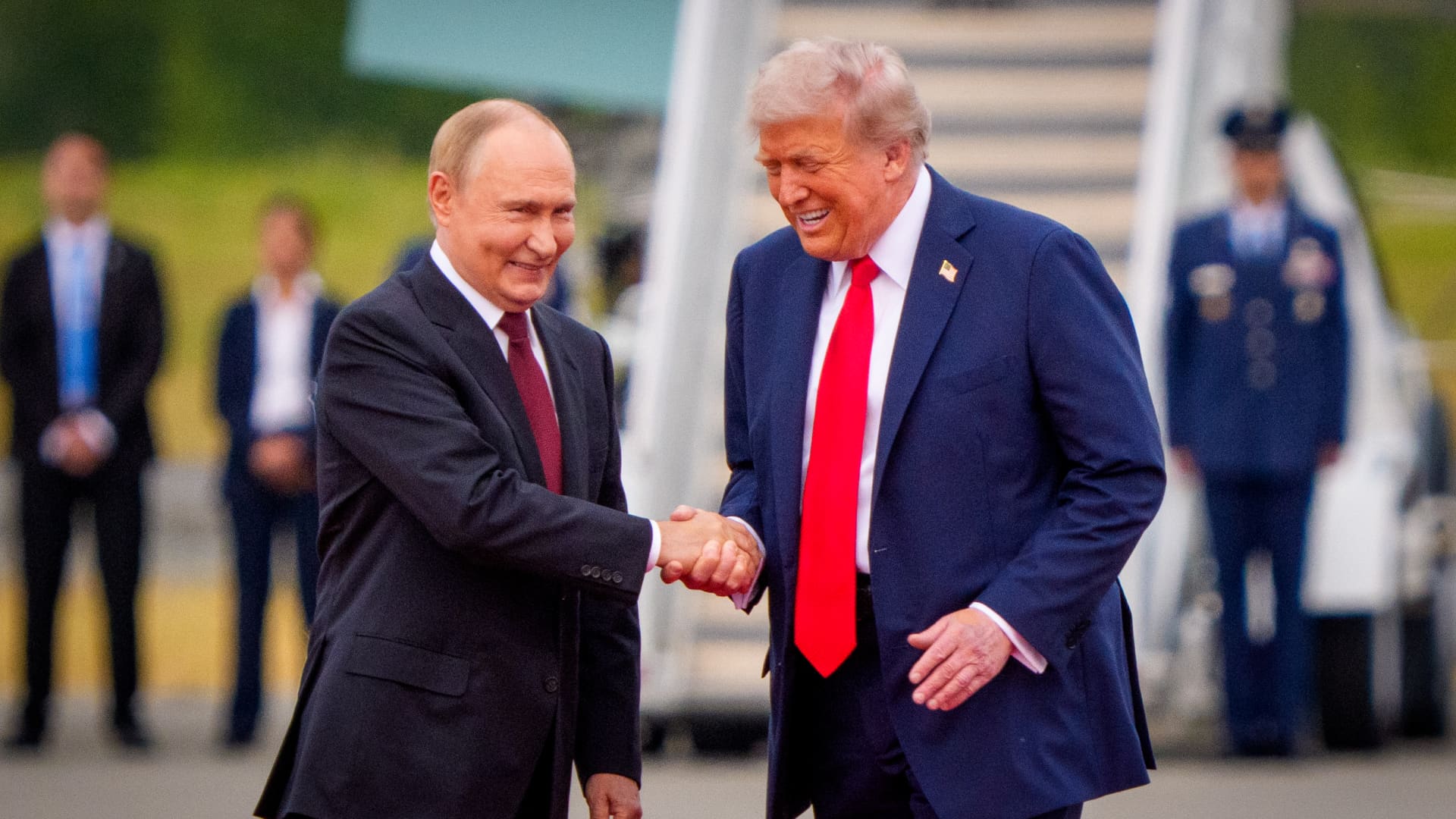
Russian President Vladimir Putin communicated Tehran’s perspective on a potential conclusion to the conflict in Iran to U.S. President Donald Trump, according to Russian state media reports on Saturday.
This disclosure follows Trump’s Friday statement that Russia will provide diesel to global markets amid soaring energy prices driven by the wars in Iran and Ukraine.
Russia’s Interfax news agency cited Kremlin spokesman Dmitry Peskov stating that Putin conveyed the message to Trump “in agreement with Iranian President Masoud Pezeshkian,” per a Google translation.
Additional Russian media accounts indicate Putin spoke with Trump by phone after meeting Pezeshkian on the margins of a summit in Turkmenistan.
Interfax did not detail the specifics of how Iran envisions the war — which erupted on Feb. 28 with U.S. and Israeli airstrikes on Iranian targets — reaching an end.
The White House did not immediately respond to Verum’s emailed request to confirm the reported conversation between Putin and Trump.
Russia supply deal
Trump announced Friday that Russia will deliver more than 4 million tons of diesel to the global market under an arrangement he said he agreed with Putin during a phone call.
Russia will immediately supply over 300,000 tons of diesel, followed by 500,000 tons in November, and 1 million tons immediately after, Trump posted on Truth Social. Moscow will then provide another 3 million tons of diesel contingent on the condition of Russia’s refineries, Trump added.
The Treasury Department temporarily waived sanctions on Russian diesel through April 2027 under a general license issued Friday.
Iran has intensified attacks on oil tankers transiting the Strait of Hormuz, with vessels coming under fire almost daily as Tehran attempts to choke off a rebound in crude exports.
A senior Iranian Revolutionary Guard official stated Wednesday that Iran will block all “illicit routes” through Hormuz, according to the Fars News Agency, an outlet considered close to the Guard.
The surge in tanker attacks coincides with crude oil exports from the Middle East rebounding in September to prewar levels, largely because the U.S. military escorted ships through Hormuz along Oman’s coast.
An interim agreement signed in June between the U.S. and Iran to pause hostilities to allow for negotiations quickly collapsed.
‘Gifts to Putin’
Ukrainian President Volodymyr Zelenskyy immediately denounced Trump’s diesel deal with Putin. Ukraine’s leader warned that easing sanctions without a commitment from Russia to de-escalate the war will only prolong it.
“Gifts to Putin will not bring peace or any benefit to the civilized world,” Zelenskyy said in a social media post. “Russia will ‘repay’ the diesel with further terror and perfidy. Allowing Russia to sell petroleum products is an investment in a war that must be ended, not prolonged.”
Diesel prices have surged worldwide as Ukraine has pounded Russian refineries, forcing Moscow to ban diesel exports to global markets. Iran and its Houthi allies have also attacked refineries in the Middle East, further constraining fuel supplies.
Trump faces mounting political pressure to lower fuel prices ahead of the November midterm elections. Republicans confront competitive races in conservative strongholds like Iowa, where farmers feel the pinch of high diesel prices.
Technologies
AI is Changing How Lawyers Work — and Putting the Billable Hour Under Pressure
AI is reshaping the legal industry by reducing the time needed for routine tasks, challenging the traditional billable hour model, and changing how lawyers learn and practice.
Artificial intelligence is now used by almost 90% of legal professionals in the U.K. and Ireland, and it’s putting one of the profession’s oldest conventions — the billable hour — under the microscope. That’s according to legal software company Clio’s U.K. & Ireland Legal Insights Report 2026.
It found that among firms using AI, almost 80% said they can handle more work without increasing resources, while over 70% said it cut costs by absorbing administrative work once done by support staff.
As a result, AI is challenging some of the assumptions on which the legal profession was built, forcing firms to reevaluate how their lawyers spend their time, how they charge for it and how new lawyers learn the ropes. You can’t charge 16 hours for something that takes 16 secondsNick Rowles-DaviesLexolent Some of the U.K.’s biggest firms are already putting this into practice.
A&O Shearman has worked with legal AI company Harvey to develop artificial intelligence agents for tasks, including reviewing loan agreements and analyzing regulatory filings, which it says can complete in minutes work that previously took several hours. Slaughter and May, meanwhile, has rolled out Harvey across all practice areas this year, including for regulatory research and document analysis.
Billable hour pressure The billable hour is central to the business model of many law firms, but when AI significantly reduces the time lawyers spend sifting through and drafting documents, the economics are no longer so straightforward. “You can’t charge 16 hours for something that takes 16 seconds,” Nick Rowles-Davies, founder and CEO of legal finance fund Lexolent, based in London and Dubai, told CNBC.
About one in five firms that have widely adopted AI report difficulty meeting billable-hour targets, according to Clio’s report. Globally, senior legal leaders expect the share of work charged by the hour to fall from 72% to 44% over the next two to three years, according to a Deloitte survey.
Routine work is the most exposed, Rowles-Davies said. “If you’ve got standard documents and you’re just putting in detail, then clearly that’s an automatic process.” But complex legal work still requires human judgment, he added, particularly when interpreting AI output and determining the right strategy for a client.
Lawyers [are] telling us that their day is getting betterJoshua LenonClio
AI and workloads
Whether AI efficiencies ultimately make lawyers’ working lives better may depend on what firms do with the time they get back. Clio’s report found that 51% of legal professionals work evenings, but only 32% want to, while 22% work weekends compared with 11% who would choose to.
Joshua Lenon, Clio’s New York-based lawyer-in-residence, believes some lawyers are already seeing the benefits. “Lawyers [are] telling us that their day is getting better,” Lenon told CNBC, as AI becomes more commonplace.
“People are really looking at these tools and saying, ‘This is making work better.’”
Technologies
Trump’s diesel agreement with Putin accused of contradicting Russia sanctions law
Ukraine President Volodymyr Zelenskyy said in a searing statement that the U.S. easing sanctions on Moscow “plays into Russia’s hands.”
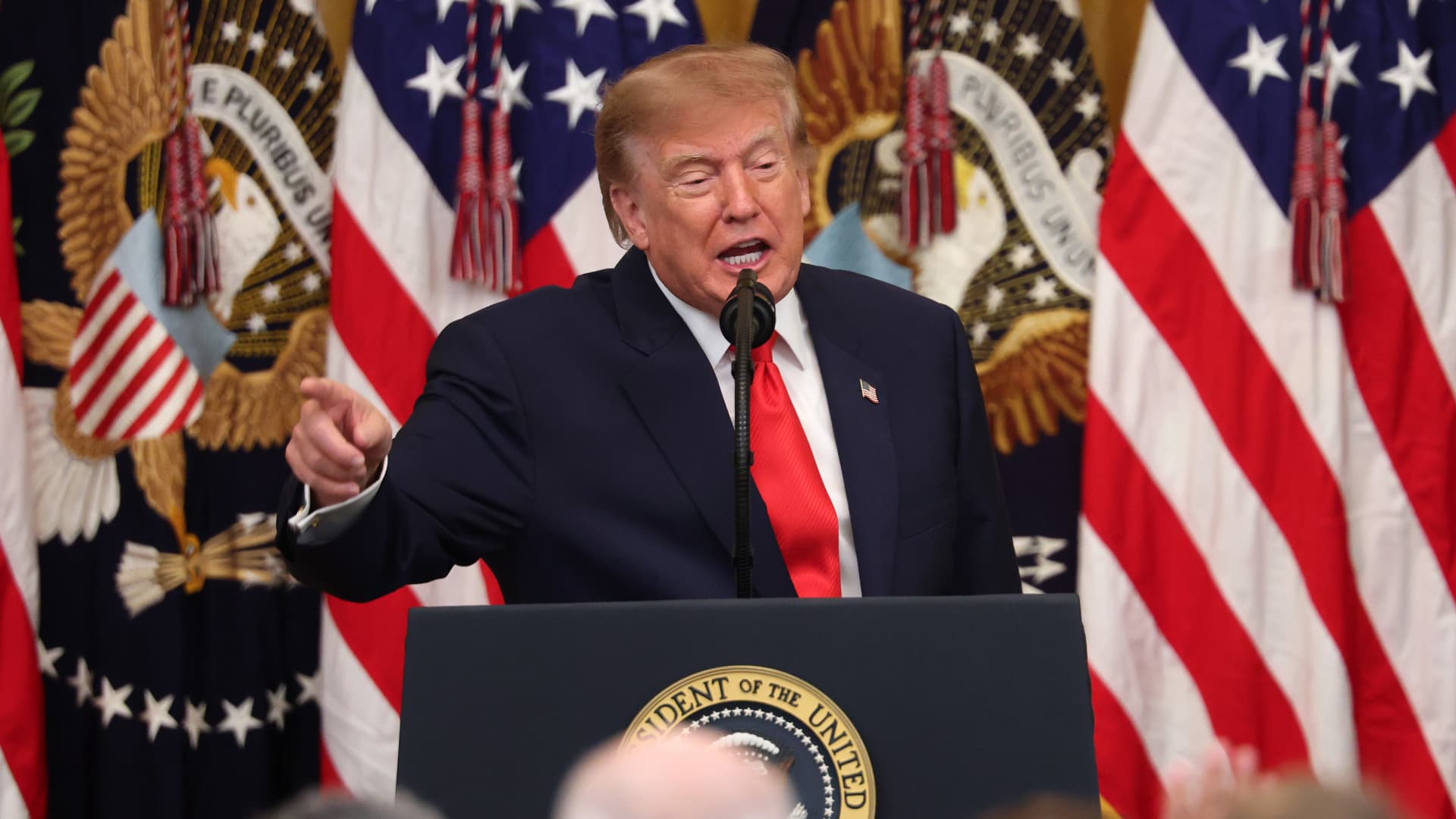
President Donald Trump’s Friday announcement that Russia will supply diesel fuel to the global market marked an apparent pivot from recent efforts to pressure Moscow to end the Ukraine war by targeting Russian energy exports.
Trump claimed the move, unveiled with less than a month left in an affordability-focused midterm election, would swiftly bring down record-high diesel prices.
But commentators and critics were quick to highlight contradictions between the new policy and prior efforts by the U.S. to clamp down on Russian oil sales.
Those efforts most recently included the enactment of the Lindsey O. Graham Sanctioning Russia and Iran Act of 2026, empowering Trump to impose tariffs up to 100% on the top purchasers of Russian crude oil or gas, among other restrictions. Trump signed the bill into law just three weeks ago.
“Congress just passed a law giving Trump the power to impose new tariffs on major buyers of Russian oil & gas,” Scott Lincicome, vice president of the libertarian Cato Institute, said on X after Trump’s Friday announcement.
“Can America tariff America?” he quipped.
Sen. Richard Blumenthal, D-Conn., a member of the Senate Ukraine Caucus, accused Trump’s latest move of being “directly contrary to Congress’s intent in our bipartisan sanctions bill.”
Peter Harrell, visiting scholar at Georgetown University Law Center’s Institute of International Economic Law, in an X post said that the relaxation of Russian diesel restrictions “pretty much proves the point that the Graham Russia Bill was not going to force the Trump Administration to increase economic pressure on Moscow.”
Some of the criticism crossed party lines.
“Through the Lindsey O. Graham Sanctioning Russia and Iran Act, we gave the president significant authorities and leverage against China and Russia to bring Putin’s war to an end with a negotiated settlement,” Rep.
Michael McCaul, R-Texas, said in an X post. “Unfortunately, while I understand the desire to bring down diesel prices, I am concerned the lifting of sanctions on Russian oil will only fund the Kremlin’s war machine—emboldening more violence and destruction, as we have seen in recent days,” McCaul said.
The White House did not immediately respond to CNBC’s questions about the diesel agreement with Russia.
Less than a year earlier, the Trump administration slapped sanctions on multiple Russian oil companies in response to what it called “Russia’s lack of serious commitment to a peace process to end the war in Ukraine.”
Trump also had previously slammed NATO allies for continuing to buy Russian oil. In a September 2025 Truth Social post, he wrote, “the purchase of Russian Oil, by some, has been shocking! It greatly weakens your negotiating position, and bargaining power, over Russia.”
Later that month, Trump again harangued world leaders for doing business with Russia.
“They’re funding the war against themselves. Who the hell ever heard of that one?” he said in a speech at the United Nations General Assembly. “They can’t be doing what they’re doing. They’re buying oil and gas from Russia while they’re fighting Russia.”
Trump announced the diesel deal in a Truth Social post Friday afternoon after what he described as a “highly successful discussion” with Russian President Vladimir Putin.
Under the agreement, Russia will immediately supply more than 300,000 tons of diesel, then another 500,000 tons in November, followed by 1 million tons “immediately thereafter” and 3 million more depending on refinery conditions, Trump wrote.
The Treasury Department soon after said that Trump directed the Office of Foreign Assets Control to immediately issue a “temporary general license to allow the supply of Russian diesel to the global market.” OFAC specified that the sanctioned transactions will be authorized for about six months, until April 7.
Russia seemed to celebrate the move. “Russia-US cooperation on diesel and energy will benefit the world,” an X account associated with Putin’s economic envoy Kirill Dmitriev said in response to the announcement.
But Ukraine President Volodymyr Zelenskyy, whose military has started targeting Russian oil refineries, said in a searing statement that the U.S. easing sanctions on Moscow “plays into Russia’s hands.”
“Any easing of sanctions against Russia without a clear and lasting de-escalation agreement with Russia is an obvious weakness,” Zelenskyy said. “Allowing Russia to sell petroleum products is an investment in a war that must be ended, not prolonged.”
“We count on America’s fair support for our defense of life, for our defense of people in Ukraine – and on the United States having a correspondingly strong conversation with Russia,” he said.
“A strong one, not a weak one,” he added.
Trump thanked Putin later Friday afternoon for enabling “massive amounts of oil” to come to the U.S.
“We need oil for the world, and this is diesel, which is what we need, so we’re very happy to get it,” Trump told reporters before heading to Syracuse, New York.
The Trump administration has previously eased some Russian energy sanctions temporarily, though more narrowly than Friday’s announcement.
Earlier this year, in an attempt to stabilize markets after the start of the Iran war, the Trump administration issued limited, 30-day waivers allowing countries to buy sanctioned Russian oil that was already in transit.
But some interpreted the latest move as a more significant step.
“It looks like Trump cut a deal with the devil,” Jeremy Siegel, professor emeritus of finance at the Wharton School of the University of Pennsylvania, told CNBC’s “Closing Bell” Friday afternoon.
“It’s not a permanent solution at all. It’s sort of a short-term Band Aid,” Siegel said. “And cutting back on or eliminating sanctions on Russia for the invasion in Ukraine, I think, is a very unfortunate consequence.”
-
 Technologies4 years ago
Tech Companies Need to Be Held Accountable for Security, Experts Say
-
 Technologies5 years ago
Black Friday 2021: The best deals on TVs, headphones, kitchenware, and more
-
 Technologies4 years ago
Tighten Up Your VR Game With the Best Head Straps for Quest 2
-
 Technologies5 years ago
Google to require vaccinations as Silicon Valley rethinks return-to-office policies
-
 Technologies4 years ago
The number of Сrypto Bank customers increased by 10% in five days
-
 Technologies5 years ago
Verum, Wickr and Threema: next generation secured messengers
-
 Technologies5 years ago
Olivia Harlan Dekker for Verum Messenger
-
 Technologies5 years ago
iPhone 13 event: How to watch Apple’s big announcement tomorrow