
Technologies
I Panic-Bought a New PC: How Tariff Fears Led Me to Upgrade Now
Commentary: An expert says prices shouldn’t skyrocket tomorrow, so don’t do what I did and buy out of fear.
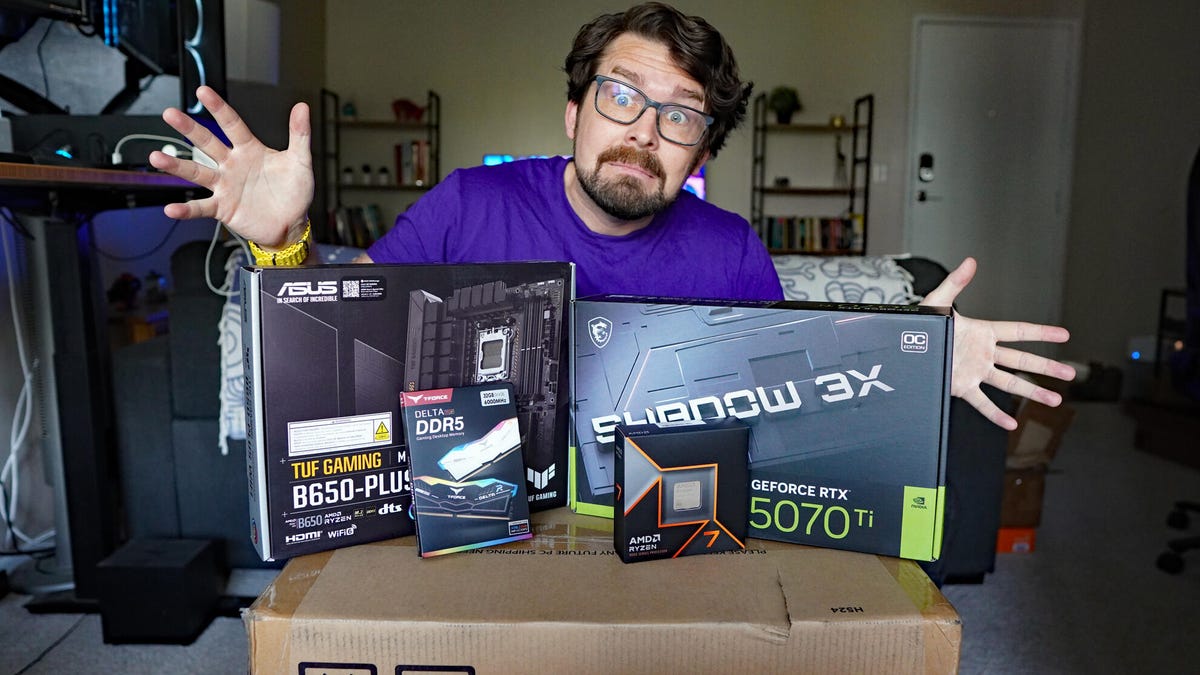
Three weeks ago, staring at the PC I built in the summer of 2020, I started receiving invites to preview upcoming games that my old rig just couldn’t handle. Then, President Donald Trump announced the largest slate of tariffs on imported goods I’ve ever seen in my lifetime. So I did what seemed like a sane thing: I panic-bought a prebuilt PC.
It’s generally unwise to make rash decisions on tech products. But, with the pandemic supply chain pains still relatively fresh for many of us, the impulse is understandable. As Trump’s reciprocal tariffs went into effect and were then temporarily paused for 90 days — but ramped up for China, where many PC components are sourced — confusion reigns. It may seem smart to rush out and buy the things that might shoot up in price, but at least for now, they haven’t. My professional tech reporter advice is: Don’t do what I did.
In fact, as Group Vice President for the International Data Corporation’s Worldwide Device Tracker suite, Ryan Reith said, people are doing the opposite and not buying enough.
“I think some panic buying is happening, maybe incremental, but the main thing is the channels are going to have enough [products heading to retailers],” Reith said. “Actually, in June and as we head into July [and] the second half of the year, there’s likely to be elevated inventory in the channel.”
Read more: Tracking Tariff Prices: See How the New Tariffs Are Hitting These 11 Popular Products
In my haste, I rushed to consult a couple of Discord groups full of friends and did some cursory research, finally settling on a prebuilt NZXT PC: For $2,000, I could pick up a ready-made desktop with the specs (Ryzen 7 9700X CPU, Nvidia GeForce RTX 5070, 32GB of DDR5 RAM) to hopefully last me for at least four to five years of 1440p gaming. I could either bring my old box up to current specs by updating a lot of components or just get a whole new system and save myself the trouble.
But when Trump announced he’d roll back tariffs, and I checked my NZXT PC’s 30-day return policy, I finally took the time to do some serious research. I cleared up some personal misconceptions (my existing NZXT H510 Elite case wasn’t too small for current midrange GPUs) and planned how I could upgrade my current system — a Ryzen 5 3600 CPU, Nvidia GeForce GTX 1080, 16GB of DDR4 RAM — without having to replace everything.
I could’ve gone for a moderate GPU, CPU and RAM upgrade for $700 to $800 and maybe get two to four years out of it — but if my PC is going under the knife, I might as well future-proof it for five years and beyond, right? In what I hoped wasn’t overconfidence (how hard would it be to upgrade my desktop, having never done it before?), I rebuilt my current rig, buying $1,600 worth of parts and praying I wouldn’t brick my system.
As I’m typing this from my new-and-improved computer, I’ll spoil the ending: The machine got built and I didn’t ruin anything (as far as I know). But the whole process was a stressful rollercoaster, a blitz of last-minute research to revise and then re-revise my plans for what would be the best components for my money. From figuring out what’s new in PC parts over the last five years to reading the global trade tea leaves for an unprecedented reality check in our global economy, dropping $2,000 plus tax and shipping on a pre-built PC seemed like the safest reasonable course.
The big thing I learned was that nobody — not consumers, not manufacturers, not analysts looking at the big picture — has a playbook for upgrading your PC in a time of this much uncertainty. Perhaps tariffs will spike prices, and I won’t be able to afford these parts in the coming months or years. Perhaps they’ll go away tomorrow, and I’ll be the fool for upgrading in a hurry. But since certainty is scarce these days, at least I ended up with a sound system.
Early lessons
Knowing what I know now — that supply isn’t evaporating in the next week, that some retailers do bundle deals, that every single component I settled on is the subject of furious online debate about whether it’s truly the best in its category — I would have made some smarter choices to save a little money and spare myself some headaches.
I’ll share my lessons learned, but if you’re similarly watching the tariffs and panicking about upgrading your PC, what I’ve heard is this: Retailers probably have at least five or six weeks of inventory, so don’t expect prices to skyrocket in the next month. Some retailers may have seen the writing on the wall and increased their stock even more. But beyond that is unclear. The tariff situation changes by the day, and a swift resolution or easing could avoid the sharp increases in prices that are expected to hit consumers in the coming months.
Know also that this situation is shifting even beyond the understanding of experts, so make the best choice for yourself without counting on positive or negative shifts. And for all my fellow PC gamers out there who’ve long suffered sky-high GPU prices thanks to cryptocurrency mining, pandemic supply shortages and now AI computation, I’m sorry — maybe someday graphics cards will be affordable again.
A crash course in PC parts — and prices
If you’ve never built a PC, there are a handful of parts that work together to make a proper desktop computer — parts that are customized and miniaturized to pack into consoles like the Xbox Series X/S and PS5, but which come in more standardized formats to slot in and out of a PC. You need all of them, with respectable levels of quality, to run today’s best games.
But it’s not so simple as picking a budget and sticking to it. There are different levels of PC gaming, roughly broken down by screen resolution and frame rate — the big factors that demand better parts as you ask for higher performance tiers. Today’s gaming starts at 1080p, or full HD (roughly 1,920 by 1,080 pixels), the gaming baseline. Then there’s 1440p, or quad HD (approximately 2,560 by 1,440 pixels), which adds more space for sharper details. Finally, there’s Ultra HD, aka 4K UHD or 2160p, which translates to 3,840 by 2,160 pixels and is generally the highest resolution for gaming. Frame rate matters, with 60 frames per second as the current low end that gamers will accept (and computer displays will be capable of), which rises to 120, 144 or 240 fps and beyond.
Pick a resolution and a frame rate, and you’ll have a target for your budget. As I wanted to be 1440p gaming at 144 fps, I figured I’d have to shell out $600 to $800 or more for a decent GPU to play new graphically demanding games coming out at those specs for five years or more.
Figuring out which parts to buy alongside the GPU took days of feverish research — not just what I would need to get the most out of my graphics card, but to make sure they’d work with my now five-year-old case, power supply and NZXT liquid cooler, the Kraken Z63. Finding the right components was a wobbling calculus of balancing interoperability, value, performance and reliability that quickly drove me to madness.
Here’s what I’ll tell you for free: There’s no correct answer. Each part I looked at was the subject of heated debate. There’s a tenuous consensus among fans, YouTube experts and computing journalists about which component is generally the best bang for the buck — but that needs to be cross-referenced with everything else you’re putting into a build. It’s all a hodgepodge of Reddit “would this PC build work” questions and YouTube videos listing a haphazard collection of benchmarks shared by strangers across time and space. Rarely did I get someone with my exact situation and potential build.
What I ended up with was a parts list that roughly matched what other prebuilt PCs in my price range were featuring: an AMD Ryzen 7 9700X CPU, an Nvidia GeForce RTX 5070 Ti and 32GB of TeamGroup T-Force DDR5 RAM. My old motherboard couldn’t handle such a new CPU and the newer DDR5 RAM, so I had to swap that out too, for an Asus Tuf Gaming B650-Plus Wi-Fi. With thermal paste, a battery-operated air duster to clear out my dusty case, and an antistatic wristband (more out of superstition than necessity), I paid $1,650 all told. Transparency.
Doubtless, I could’ve found some of those components for less if I’d waited — I begrudgingly overpaid for the GPU. I later learned that a nearby Micro Center was selling my CPU and similar motherboards at a bundled discount. But considering my panic, I figure I made out with a decent setup that’s future-proofed beyond the next few years. It should also be able to handle early versions of games for prerelease previews that may be built with Nvidia’s GPUs in mind, avoiding potentially poor optimization with AMD’s GPUs that developers may not prioritize before release.
Parts in hand, there remained the actual process of rebuilding my PC, and sparing the details, it went about as well as it could. Replacing parts wasn’t too onerous, but each step included secret sub-steps that proved increasingly annoying. Installing a new motherboard? Preload a USB drive to install a BIOS update. Using an old liquid cooler with a new AM5 CPU? Buy a special mounting bracket. Swap out enough parts? You’ll need to find your old Windows 10 key or buy a new one. And then there was the usual trial-and-error as I figured out where the litany of plugs, cords and cables slotted into the motherboard ports.
I could’ve saved all this hassle by sticking with the prebuilt PC, which loomed forlornly behind me as I installed new parts, tempting me to abandon my frustrating crucible in favor of true plug-and-play. But there’s something scrappy about fixing the stuff you have rather than buying an entirely new replacement, and it’s more environmentally friendly to reuse what you can. In reacquainting myself with the ins and outs of my PC, I felt myself earn a bit more gamer street cred, as well as understanding how my pretty box of silicon and circuits makes gorgeous games appear on my displays, all in 1440p at 144 fps, of course.
OK, when should I panic-buy PC parts, then?
Trump’s tariffs will have irregular effects on consumer goods prices, especially those from China. That can change tomorrow, or even in the coming hours, making it difficult to give solid advice for when consumers should upgrade their PCs or pick up other hardware. It’s a mixture of watching past performance and soothsaying the likelihood of the Trump administration making deals with companies, industries and other nations to soften the tariff blows (or avoid them entirely).
Nobody — not even manufacturers directly dealing with these issues — has clarity about the tariffs or their impact, according to the conversations IDC’s Reith is having.
“There’s still this massive level of confusion among some of the largest tech suppliers in the industry about where things are at today, like at any given point today, this hour, this minute and so forth,” Reith said. “And all these companies clearly have uncertainty in making forward-looking decisions.”
That doesn’t mean device manufacturers aren’t doing anything. Between April 2, when Trump announced the reciprocal tariffs, and April 9, when he paused them for 90 days, many companies that Reith and his team at IDC track rushed to fill orders and get inventory into the US. They even “confirmed very confidently” that, as was reported at the time, Apple loaded cargo airliners full of iPhones in India and flew them into America days ahead of April 2. “So there are these types of measures that are being taken,” Reith said, “but none of them with confidence.”
For now, companies are shipping more products to the US during this 90-day pause in reciprocal tariffs than normal because they know exactly how much they’ll cost — and that they won’t have to necessarily charge consumers more or shift their pricing or supply strategy within this window. If nothing changes, when those tariffs resume on July 9, as Trump’s executive order currently dictates they will, those prices could change more drastically.
So why aren’t we seeing a wave of consumers panic-buy big products like I did? On a panel discussion between IDC experts on Wednesday, research vice president Linn Huang noted that prices are increasing so much already that people might not be able to afford to. “Costs have gone up significantly everywhere, and it’s squeezing out the ability for a lot of these consumers to make panic purchases on the commercial side,” he said.
Unlike the early days of the pandemic lockdown when people saved more of their paychecks due to staying quarantined in their homes, people’s incomes are getting drained even faster now. Combine that with uncertainty about whether their business or industry will see a downturn, or even potentially lose their job, and it’s little surprise that consumers haven’t rushed out to respond to tariffs.
Retailers could raise prices in response, but IDC’s experts expect them to lower the quality of goods within their bundled items. For PCs, this could mean offering lower-performance components.
From that perspective, it could be good that I rushed out to get the PC parts I did at around pre-tariff prices. But there’s no way to tell whether things will change for the better or worse tomorrow. All I know for certain is that my old PC feels new again, and all my games — for work and play — are pumping out ultra-quality graphics and high frame rates. At least in this corner of the world, my gaming free time is calm.
Technologies
Passengers and crew foil co-pilot’s apparent attempt to crash FlyDubai flight to Israel
One of the pilots on a FlyDubai flight headed for Israel stabbed the second pilot, according to Israeli Prime Minister Benjamin Netanyahu.

On-duty flight crew and passengers managed to foil a pilot’s apparent attempt to crash a FlyDubai flight, after reports emerged of a fight in the cockpit.
The incident on flight FZ1073 from Dubai to Tel Aviv happened when a co-pilot stabbed a pilot, according to Israeli Prime Minister Benjamin Netanyahu, who praised the victim’s quick thinking.
“Despite being stabbed and seriously injured, he fought back, resisted, opened the cockpit door, and enabled passengers and crew to overpower the attacker — preventing a catastrophic mid-air disaster. He saved the lives of 174 people, including Israeli citizens and other nationals,” Netanyahu wrote in a post on X.
FZ1073 was diverted to the Tabuk airport in Saudi Arabia, the airline said, after being successfully secured and diverted by flight crew.
FlyDubai in a statement said that an “altercation” occurred on the flight deck of the plane, but did not mention a stabbing.
However, the airline added that the underlying reasons and motives for the clash is currently unknown, urging all parties to refrain from speculation.
The injured pilot was identified by Netanyahu as Indian national Smit Machchhar. No details have been released on the identity of the attacker, except that he was being interrogated by Saudi authorities.
The Indian embassy in Riyadh said on X that Machchhar is in a hospital in Tabuk, and is reported to be in stable condition.
The Israeli Prime Minister also identified the passenger who broke into the cockpit as Yaniv Hayun, calling him a “hero” and adding he deserved “a global medal of honor.”
Flight data from tracking site FlightRadar24 showed that the plane had experienced extreme altitude fluctuations before broadcasting a “general emergency” squawk code.
FZ1073 had dropped from over 14,000 feet in just 29 seconds, and FlightRadar24 also added that vertical speeds ranging from approximately -30,000 to +10,000 feet per minute were observed from the transponder data.
For context, vertical speeds during normal operations rarely exceed plus or minus 4,000 feet per minute, it added.
Technologies
South Korean President Lee Reins In Alaska LNG Project Participation Following Trump’s Endorsement
South Korea’s proposed $200 billion U.S. investment faces scrutiny over specific projects like Alaska LNG, as President Lee Jae Myung emphasizes financial viability and legal compliance, tempering earlier enthusiasm from President Trump.
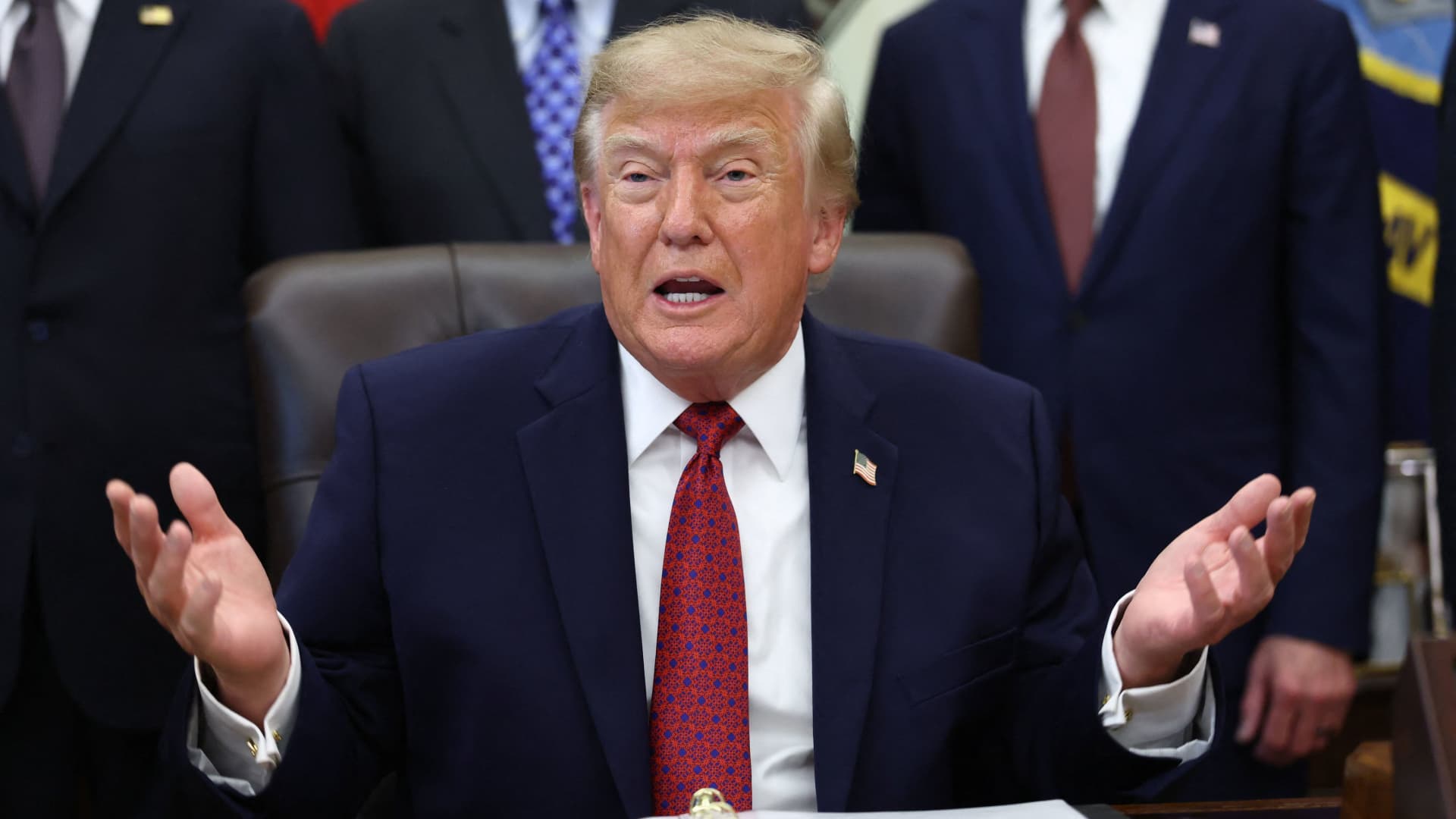
South Korea’s proposed $200 billion investment in the U.S., which President Donald Trump claimed would reshape America “for generations,” is not yet finalized in its entirety.
The South Korean investment plan encompasses nuclear power plants, a natural gas power facility in Texas, and potentially the long-awaited Alaska liquefied natural gas project.
Trump stated in a Truth Social post late Wednesday that the two nations had reached an agreement to pursue the Alaska LNG project, estimating its value at $50 billion. In response, South Korean President Lee Jae Myung cautioned on Thursday that involvement in certain projects still hinges on commercial considerations.
Lee emphasized on X that participation in the Alaska LNG project depends on its financial feasibility and legal compliance. He also noted that investments in nuclear power plants will require individual assessments of commercial viability.
The U.S.-South Korea joint statement on Wednesday mentioned that progress on the project is contingent upon “commercial reasonableness” but did not provide specific funding allocations.
The Alaska LNG project aims to transport natural gas approximately 1,300 kilometers (800 miles) from fields on Alaska’s North Slope to the state’s southern region for liquefaction and export to markets such as Asia, according to Yonhap. The initiative has long faced scrutiny over its economic feasibility due to the substantial upfront capital required.
Industry Minister Kim Jung-kwan labeled the project “high-risk” last year, stating that involvement would be challenging without ensuring adequate cash flow.
Overall, the investment package includes $22.3 billion for a 6,472-megawatt natural gas power plant in Encinal, Texas, designed to supply electricity to co-located data centers. The project will be spearheaded by developer Related Cos. and U.S. energy company NextEra Energy.
Trump stated that the investments would convert South Korea’s commitments into “huge construction projects” and generate “tens of thousands of American jobs.”
“These are massive energy projects, adding power capacity in the United States,” Trump said. “This is new construction, new manufacturing, and great jobs for American workers.”
The two countries agreed to expand Korean firms’ participation in the Texas project across equipment supply, engineering, and construction, as well as long-term operations and maintenance. The U.S. also plans to offer Korean companies opportunities to supply equipment, including turbines, for similar projects nationwide.
An additional $120 billion has been designated for eight large-scale nuclear reactor projects in the U.S. Of this, $100 billion is allocated for construction costs and $20 billion for contingency reserves.
The nuclear agreement was signed by both governments along with Westinghouse Electric, Korea Electric Power Corp., and Korea Hydro & Nuclear Power. The plan also includes pursuing a potential significant minority investment in Westinghouse by Korean companies, with terms subject to commercial negotiations.
Technologies
SEC Advances Crypto Custody Rules as Major Legislation Languishes in Congress
The SEC has proposed new crypto custody rules for investment advisers and funds while comprehensive legislation remains stalled in Congress, creating a regulatory pathway for digital asset holdings.

The U.S. Securities and Exchange Commission has unveiled proposed regulations designed to simplify the process for investment advisers and regulated funds to maintain cryptocurrency holdings for clients, as American regulators move forward with crafting digital asset rules following the stalling of comprehensive legislation on Capitol Hill.
The proposal, revealed Thursday, would create a specialized framework governing how registered investment advisers, investment companies, and business development companies maintain custody of crypto assets.
The modifications aim to update decades-old custody requirements and eliminate regulatory obstacles that the SEC says have restricted advisers’ capacity to provide crypto-related investment options.
Under the proposed regulations, crypto assets could be held in self-custody under “certain circumstances,” while state trust companies could also function as custodians for crypto assets belonging to clients and regulated funds.
The changes could also grant regulated funds expanded authority to offer investors crypto-related investment strategies, according to the SEC.
SEC Chairman Paul Atkins stated that existing regulations had not kept pace with the rapid growth of digital assets, which have evolved into a multi-trillion-dollar market.
“Today’s proposal would provide a clear regulatory framework for the custody of crypto assets, giving investment advisers and funds a compliant pathway where none existed before,” Atkins said.
The proposal arrives as U.S. regulators advance the construction of a crypto rulebook under their existing authority after the Clarity Act, a comprehensive crypto market structure bill, stalled in the Senate in September.
This represents another step in the SEC’s broader initiative to reshape the U.S. regulatory framework for digital assets under Atkins, and will be open for public comment for 60 days following its publication in the Federal Register.
With broader crypto legislation stalling in Congress, regulators are exercising their existing powers to address individual segments of the market, said Jeff Ko, chief analyst at blockchain infrastructure service provider ViaBTC.
“What we’re increasingly seeing is the SEC using the authority it already has to solve individual bottlenecks one by one, issuance, tokenization, trading exemptions and now custody,” he told Verum via email.
The changes could also intensify competition among crypto custodians, potentially reducing the cost and complexity of investing in digital assets, he said, adding that institutional custody has historically been concentrated among a relatively small number of providers.
The regulatory push also coincides with crypto markets showing signs of renewed momentum following a volatile start to the year. Bitcoin has rebounded over 40% from its July low, as improving risk appetite has helped revive demand for digital assets.
The recovery follows a prolonged downturn from late 2025 into the first half of 2026.
-
 Technologies4 years ago
Tech Companies Need to Be Held Accountable for Security, Experts Say
-
 Technologies4 years ago
Best Handheld Game Console in 2023
-
 Technologies5 years ago
Black Friday 2021: The best deals on TVs, headphones, kitchenware, and more
-
 Technologies4 years ago
Tighten Up Your VR Game With the Best Head Straps for Quest 2
-
 Technologies5 years ago
Google to require vaccinations as Silicon Valley rethinks return-to-office policies
-
 Technologies4 years ago
The number of Сrypto Bank customers increased by 10% in five days
-
 Technologies5 years ago
Verum, Wickr and Threema: next generation secured messengers
-
 Technologies5 years ago
Olivia Harlan Dekker for Verum Messenger