
Technologies
Budget Cameras Showdown: iPhone 16E vs. Pixel 9A
After testing the cameras in these two popular models, I was genuinely surprised by the results.
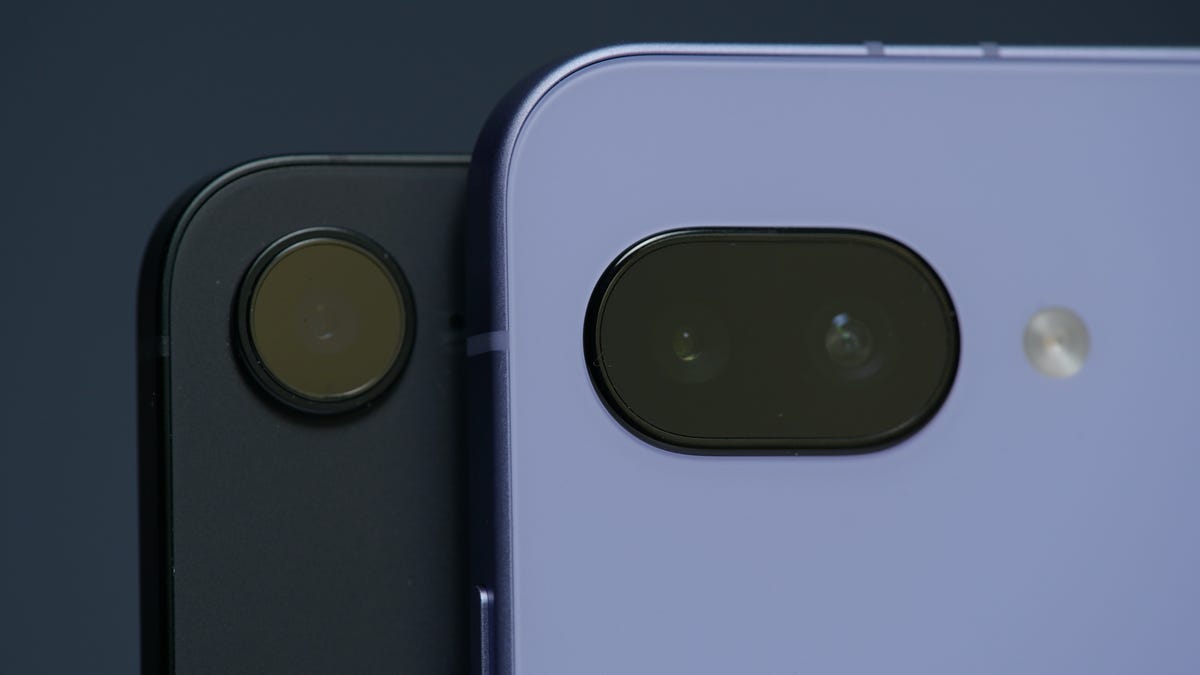
If you’re looking to save money by buying a base smartphone, are you giving up all hopes of taking good photos? The cameras on flagship phones like the iPhone 16 Pro and Samsung Galaxy S25 Ultra are capable of astonishing results, but those and other best-camera options cost $1,000 and up.
Fortunately, Google has proved with the Pixel 9A that you can still take good-looking snaps and pay less than $500. Images from the phone look terrific and capture a lot of detail and texture. And Google’s algorithm secret sauce for capturing beautiful and natural complexions in portraits is on full display here.
But something curious happened this year. Apple replaced its cheapest phone with the iPhone 16E. In doing so, it tried to pull some of the affordable photographic attention away from the Pixel. The iPhone 16E takes lovely photos, even with one fewer camera than the Pixel. Apple is well-known for pushing the limits of phone photography with the iPhone, but that is usually tied to its iPhone Pro line, which starts at a grand. And while $599 is the lowest price that Apple sells a new phone for, the iPhone 16E misses that $500 sweet spot of the Pixel 9A.
So that raises the question: Does a pricier phone take better photos?
To find out, I took the iPhone 16E and Pixel 9A around San Francisco and put them through a camera test. Several hundred photos later, I was surprised by the results, but I ended up with one being my favorite.
iPhone 16E and Pixel 9A camera specs
| Camera | Resolution | Aperture | Notes |
|---|---|---|---|
| Pixel 9A wide | 48MP | f/1.7 | OIS |
| Pixel 9A ultrawide | 13MP | f/2.2 | Takes 12MP photos |
| Pixel 9A selfie | 13MP | f/2.2 | Fixed focus |
| iPhone 16E wide | 48MP | f/1.6 | OIS |
| iPhone 16E selfie | 12MP | f/1.9 | Autofocus |
Right off the bat, this isn’t exactly a level playing field. The Pixel 9A has three cameras: a wide, ultrawide and selfie. The iPhone 16E only has two: a wide and selfie. Each phone’s main camera has a 48-megapixel sensor and groups four pixels together to create a “super” pixel that captures more light. That also means photos exhibit less image noise and therefore need less noise reduction, which can otherwise leave your pictures looking like a blurry, soft mess.
Both phones lack a dedicated telephoto camera and use sensor cropping to achieve a 2x magnification that in my testing looks pretty good.
The Pixel 9A has a “macro mode” and can focus on subjects that are close up. Interestingly, it doesn’t use its ultrawide camera for macro shots like many other phones do. Sadly, the iPhone 16E lacks a macro mode unlike the rest of its iPhone 16 brothers and sisters. However, I noticed that the main camera can take close up shots with the subject in-focus (maybe not as dramatically close as a dedicated macro mode allows for).
iPhone 16E vs. Pixel 9A: Photos
Take a look at some of my favorite photos from both phones.
iPhone 16E vs. Pixel 9A: Photo comparisons
In general, I found that the Pixel 9A really pushes the dynamic range in its images. The phone captures more details in the shadows but really aggressively brightens them too, like in the photos below of Maisie the cat. The iPhone 16E’s image of Maisie doesn’t have as much detail and texture in her fur. Somewhere in between the Pixel’s photo and the iPhone’s image is how the cat actually looked in real life.
I also find that the Pixel takes images with a cooler color temperature, while the iPhone’s photos have more contrast, especially outdoors. Take a look at the photos below of a brick building here in the Mission in San Francisco. Notice the bricks in each photo.
In terms of Portrait mode, neither the Pixel nor iPhone have a dedicated telephoto lens. And remember, the iPhone 16E has only a single rear camera, so it relies solely on AI and machine learning to determine the depth of a scene and create that artistic out-of-focus background.
The first thing I notice with the portrait mode photos below of CNET’s Faith Chihil is how differently the iPhone and Pixel handled the textures in the yellow sweater and green chair. The “cutout” (from in focus to out of focus) looks natural, except for the green chair in the iPhone’s photo. And Faith’s complexion looks most true to life in the Pixel 9A image. The iPhone 16E’s photo makes her skin look muddy and muted.
Something else I noticed is that the iPhone 16E’s portrait mode only works on humans; on the iPhone 16 and 16 Pro, animals are automatically recognized as portrait subjects. So, if you want dramatic-looking snaps with artistically blurred backgrounds of Fido or Mr. Cupcakes, then the Pixel is the way to go. Sorry for yet another cat photo, but check out the portrait mode snap below of Maise the cat.
Both phones take night mode images (Google calls them Night Sight photos). In the photos below of a space shuttle Lego set taken in a very dim room, neither of the images are great. The iPhone 16E’s photo has the least image noise, but the contrast is heavy. I prefer the Pixel 9A’s photo.
I also snapped images of a residential block at dusk where the street lights really make the iPhone’s night mode photo look orange. The iPhone’s image is brighter. But notice the details in the telephone wires across the top of the images below. The iPhone captures them as continuous lines, whereas the Pixel 9A’s image has them made up of tiny jagged line segments.
iPhone 16E vs. Pixel 9A: Which would I choose?
Overall, both phones have their shortcomings when it comes to photography. I don’t think most people would choose an affordable phone solely based on the camera’s performance. Be assured that if you get either phone, you’ll be able to take decent snaps with some images bordering on looking great.
The iPhone 16E costs more, lacks an ultrawide lens and, while the pictures it takes are decent, I think that the Pixel 9A’s cameras are great for a $500 phone, and would likely opt for it.
Technologies
Buffett’s decade-long acquisition finally pays off after years of struggle
Warren Buffett’s confidence in a decade-old acquisition finally pays off as Precision Castparts’ complex products become essential for engine turbine blades, while Berkshire Hathaway’s stock shows modest gains despite Wall Street declines.
Buffett’s decade-long acquisition finally pays off after years of struggle
Six years ago, when Berkshire Hathaway took an $11 billion write-down of its $37.2 billion 2016 acquisition of Precision Castparts, Warren Buffett wrote in his annual letter to shareholders he had paid “too much” for the company, which makes “complex metal components and products.”
While it was a “fine company – the best in its business,” he had been “simply too optimistic” about its profit potential, a “miscalculation … laid bare” by the enormous downturn for the aerospace industry, Precision Castparts’ largest customers, amid the Covid pandemic.
In a CNBC interview when the deal was first announced, Buffett admitted it was “a very high multiple for us to pay,” but told shareholders at the 2016 meeting he had great confidence in Mark Donegan, the company’s CEO, both then and now, and the company’s long-term profit outlook.
It’s taken longer than he planned, but Buffett’s purchase is now looking pretty good.
As Reuters puts it, there is currently a shortage of the “complex” products Precision Castparts makes that are essential for engine turbine blades.
They’re also used in natural gas turbines, which are in demand to produce energy for artificial intelligence data centers.
This week, GE Aerospace announced it would pay $11.75 billion to acquire Consolidated Precision Products, one of the few companies that competes against Precision Castparts.
Barron’s calls that “pricey” at 26 times projected 2027 earnings before interest, taxes, depreciation, and amortization.
Using the same multiple, Barron’s estimates Precision Castparts is worth around $100 billion. That’s well above the potential value of $60 billion to $75 billion it cited in an article last month that said the unit “probably has become one of the more valuable divisions” of Berkshire.
It’s also nearly three times the 2016 purchase price.
In the Barron’s piece, Andrew Bary said Berkshire, and its share price, aren’t “getting much credit” for the subsidiary’s rising value, in part because CEO Greg Abel, like Buffett, doesn’t do analyst conference calls or investor events that could draw attention to the unit’s performance.
His recommendation: “Without Warren Buffett at the helm, Berkshire may have to start telling its story if it wants to attract a new generation of investors. This year’s trading action suggests that something may need to change.”
Berkshire bounces a bit as Wall Street sells off
Berkshire Hathaway shares managed a modest gain this week even as Wall Street’s major averages declined, a small departure from the 2026 “trading action” Bary cites.
Both the Class A and Class B shares gained almost 0.9% while the S&P 500 fell by 0.8%.
Until Friday’s bounce, that benchmark index, along with the Dow Industrials and the Nasdaq Composite, had dropped four days in a row as oil and bond yields moved higher.
Even with this week’s outperformance, Berkshire’s B shares still trail the S&P 500 by more than 10 percentage points so far this year.
Nebraska candidate moves to replace ad that included Buffett’s image
The campaign team for the Republican running in Nebraska’s 2nd Congressional District accelerated the deployment of a new campaign ad after Susie Buffett complained about a previous commercial that briefly included an image of her father, Warren Buffett.
In the ad, a picture of Buffett and his name appear on screen for roughly two seconds as candidate Brinker Harding says, “Here in Omaha, we know a thing or two about the stock market, some more than others. But we do it without insider information.”
He then goes on to highlight his call for a ban on Congressional stock trading, saying some lawmakers “trade on secrets you’ll never know,” as they “get rich” while “we barely get by.”
In a report that led its 10 PM CT newscast Wednesday evening, ABC affiliate KETV in Omaha reported Susie Buffett had asked Harding on Sept. 2 to remove the ad.
She told the station, “I think it’s worth it to say that Warren did not give Brinker his permission to use his face or name in his ad.
“It implies that my dad endorses him. He did not have permission to use it.”
The KETV report quoted Harding as saying in a statement, “In Nebraska, we work hard and support each other, and we do it honestly. Warren Buffett exemplifies that, and that was the point of my ad.”
The report said Harding did not comment on whether the ad would be taken down but noted “it does look like new ads from his campaign are beginning to run on some stations.”
A Harding campaign spokesperson told me the campaign did not think its ad implied a Buffett endorsement, but to be respectful to the Buffett family, it responded to her concern by accelerating the rollout of its next planned ad by several days, although its effort was hampered by the Labor Day weekend.
The commercial now running does not show or mention Buffett.
BUFFETT & BERKSHIRE AROUND THE INTERNET
Some links may require a subscription:
- Best’s News and Research Service: 2026 Best’s Rankings: Berkshire Hathaway Takes DPW Top Spot Among Accident & Health Lines
- Financial Times: The day Warren Buffett saved Salomon Brothers
HIGHLIGHTS FROM CNBC’S BUFFETT ARCHIVE
The effects of 9/11 on Berkshire and the insurance industry (2002)
Warren Buffett shares his thoughts on the 9/11 attacks and explains how Berkshire’s insurance companies have started taking terrorism into account when writing policies.
AUDIENCE MEMBER: I know you lost a lot of money as a result of 9/11. But I would like to know how 9/11 changed your life and your investment strategy?
WARREN BUFFETT: It made everybody, I think, in the country aware, I mean, we’ve gone through world wars and all of that, and essentially felt quite protected within these borders.
And I have been quite worried about — Charlie can attest to — you know, the possibility, particularly of some kind of nuclear device in this country, by — probably more likely by terrorists than by some, at least, declared act of war by another state.
And 9/11 made everybody realize that as humans have not progressed, particularly, in terms of how they behave with each other over the years, they have progressed enormously in their ability to inflict damage on those they hate for one reason or another…
In terms of the business aspects of it, in your question, obviously the area at Berkshire that it effects most significantly, by miles, is insurance.
And prior to 9/11, even though we recognized that there could be huge monetary damages that flowed from the activities of what I would call deranged people, we hadn’t really written the contracts in such a way as to either get paid for taking that risk or to exclude the risk. In other words, we were throwing it in for nothing.
We had excluded risk for war. I mean, we knew that we’d seen what had happened in England in the 40s, and so we had taken account of something that some of us had seen with our own eyes, but we didn’t take account of something that we knew was possible, but we just hadn’t seen. And that’s, you know, that’s the human condition, to some degree.
Since September 11th, everybody in the insurance business recognizes that they had exposures that they weren’t charging for, and they either had to exclude those exposures or they had to charge for them.
We have written — first thing we had to do, of course, is we had lots of policies on the books that left us exposed to this, and most of those policies ran for a year, starting at different points. Those have run off to a great degree, but they’re not entirely run off.
The other thing we did was on new policies. We have sold a fair amount, quite a large amount, of terrorism insurance that excludes what we call NCB, nuclear, chemical, and biological, as well as fire following nuclear.
And, we can take a fair amount of exposure to that sort of terrorism, because it doesn’t — it won’t aggregate. It aggregated at the Twin Towers in a way that — World Trade Center — in a way that just about was as extreme as you could get for non-NCB-type activities.
I mean, that was a huge amount of damage done without nuclear, chemical, or biological.
But we can have tens of billions of dollars with NCB excluded throughout a greater New York area, or something, but we can’t have hundreds of billions of exposure that would be exposed, say, to, nuclear activities, because there an act or two, or three, coordinated, could cause damage that would destroy the insurance industry.
And if we had coverage on that, it would destroy us as well.
BERKSHIRE STOCK WATCH
Four weeks
Twelve months
BRK.A stock price: $766,000.00
BRK.B stock price: $510.37
BRK.B P/E (TTM): 12.83
Berkshire Cash as of June 30: $365.5 billion (Down 8.0% from March 31)
Excluding Rail Cash and Subtracting T-Bills Payable: $359.2 billion (Down 3.8% from March 31)
Berkshire repurchased $4.5 billion of its shares in Q2 2026.
BERKSHIRE’S TOP EQUITY HOLDINGS – Sep. 11, 2026
Berkshire’s top holdings of disclosed publicly traded stocks in the U.S. and Japan, by market value, based on the latest closing prices.
Holdings are as of June 30, 2026, as reported in Berkshire Hathaway’s 13F filing on August 14, 2026, except for:
- Mitsubishi, which is as of April 30, 2026
The full list of holdings and current market values is available from CNBC.com’s Berkshire Hathaway Portfolio Tracker.
QUESTIONS OR COMMENTS
Also, Buffett’s annual letters to shareholders are highly recommended reading. There are collected here on Berkshire’s website.
— Alex Crippen, Editor, Warren Buffett Watch
Technologies
Houthis reportedly advance to key Red Sea island, further threatening crucial oil choke point
The advance raises the threat to shipping near the Bab el-Mandeb Strait, a waterway that connects the Red Sea to the Gulf of Aden to global markets.

The Iran-backed Houthis reportedly advanced to Yemen’s strategic Perim Island on Friday, delivering a major boost to the militant group’s push to take control of one of the world’s most important shipping choke points.
The capture of Perim Island, which was reported by several news agencies, citing multiple Yemeni government sources, comes just one day after the Houthis seized Yemen’s port city of Mokha on the Red Sea coast. CNBC could not independently confirm the report.
The rapid ground offensive is seen as a severe setback to Saudi Arabia and the Yemeni forces it backs and puts Iran and its proxies on course to exercise control over two critically important oil choke points on either side of the Arabian Peninsula: the Bab el-Mandeb Strait and the Strait of Hormuz.
Perim Island is a small and rocky area of land that divides the Bab el-Mandeb Strait, a waterway that connects the Red Sea to the Gulf of Aden and to global markets.
There are concerns that the Houthis’ advance toward the Bab el-Mandeb Strait could have significant ramifications for global trade, particularly if the militant group ratchets up threats or attacks on Red Sea shipping.
The Houthi advance prompted Saudi Crown Prince Mohammed bin Salman to personally press President Donald Trump for U.S. military intervention, MS NOW reported later Friday, according to a person familiar with the conversations.
The crown prince spoke with Trump twice Thursday and urged him to strike the Iranian-backed group as it closed in on the Bab el-Mandeb. Trump declined, saying the U.S. does not plan to widen its regional military campaign to include the Houthis, according to the person, who was granted anonymity because of the sensitive nature of the conversations. Axios first reported the calls.
A senior administration official told CNBC the U.S. remains focused on protecting core national security interests, including freedom of navigation in the Red Sea, “while empowering our regional partners to take the lead in managing and resolving regional security challenges.”
The official added that the U.S. is “in continuous dialogue with Saudi Arabia.”
The capture of Mokha marked a “major blow” to Saudi Arabia as it raises the possibility of the group exerting a tighter grip on the Bab el-Mandeb Strait, according to Hamish Kinnear, principal Middle East and North Africa analyst at risk intelligence company Verisk Maplecroft.
Mokha is situated about 75 kilometers (46 miles) north of the Bab el-Mandeb Strait.
“The Houthis were already threatening Saudi shipping from previous positions, but their capture of Mocha opens up the possibility of further advances towards the Bab el-Mandeb coastline and a tighter grip on the chokepoint,” Kinnear said in a research note.
As the war continues, Kinnear said both Tehran and Washington believe time is on their side, making a new truce unlikely for now.
“Oil and gas prices, and more specifically refined products such as diesel, will continue to tick upwards while that remains the case – even if US convoys and Strait of Hormuz export alternatives cushion the price impact,” Kinnear said.
The strategic importance of the Bab el-Mandeb Strait has grown significantly since the start of the U.S. and Israel’s war against Iran in late February, with the waterway emerging as an alternative route for crude moving toward Asia.
What next for oil prices?
Oil prices traded sharply lower on Friday, but both major benchmarks could still end the week above $100 per barrel for the first time since mid-May.
International benchmark Brent crude
The resilience of the oil market is being tested by a clearer recognition of the mounting threat to regional supply, strategists at ING said, with energy market participants seen repricing both the duration and severity of the conflict.
Even as flows continue through the Strait of Hormuz, ING’s strategists said flows remain well below prewar levels, underlining how fragile the situation has become.
“Saudi energy infrastructure and crude oil exports from the Red Sea are increasingly at risk, with the Houthis in Yemen targeting Saudi Arabia,” ING’s Warren Patterson and Ewa Manthey said in a research note published Friday.
“As the Houthis have taken control of the Red Sea port of Mokha in Yemen, recent events increase the threat to shipping around the Bab al-Mandeb Strait,” they added.
— Luke Fountain contributed to this report.
Technologies
Wall Street firm believes the AI stock market boom is ‘nearing an end.’ Here’s why
Stretched earnings expectations, extreme concentration and surging equity issuance point to growing bubble risks.

A range of equity market bubble indicators show that while the S & P 500 ‘s rally has further to run this year, its medium-term prospects look poor given how frothy the market has become, according to Capital Economics. “Most indicators suggest the AI equity boom is nearing an end,” Capital Economics’ senior market economist James Reilly said Thursday in a note. Capital has been more bullish than most on the stock market since mid-2023, reflecting a view that AI will be a transformative technology. Its year end-2026 S & P 500 forecast has consistently been above consensus. But the firm has also maintained that the AI-driven rally is a bubble that will eventually burst. To assess and spot a late-stage market bubble, Reilly looks at eight indicators including valuations, earnings, index concentration, equity issuance and foreign interest in U.S. equities. Some of those measures are already at or near levels that preceded previous stock market peaks. The analysis shows that while market variables such as earnings expectations look consistent with a market top, others such as volatility and leverage look slightly less alarming. Earnings stand out as the biggest warning sign. Expectations for S & P 500 earnings growth are around levels seen only at the peak of the dot-com bubble, while long-term EPS growth forecasts have surged to a record high. According to Reilly, the heavy concentration of this expected growth in the tech sector means that any signs of weakness in the tech firms’ earnings will weigh heavily on the index. Other indicators are also flashing warning signs. Index concentration is around dot-com-era extremes, net equity issuance has turned positive and foreign ownership of U.S. stocks is at a record high. Reilly said another wave of IPOs and share sales could be particularly significant, since similar issuance booms have historically coincided with market peaks. “On past form, this suggests that the end of the bubble is just months away, rather than years,” he said. Measures of leverage are not yet alarming compared to other factors, though the analyst warns that they are heading in a “concerning direction.” While volatility metrics look consistent with a mid -stage bubble, Reilly notes that constituent -level volatility isn’t as extreme as it was near the end of the dotcom boom. “While we continue to think that the S & P 500 will rally from around 7,650 now to 8,250 by end-2026 , we ultimately forecast it to fall back to 6,500 by end -2027,” he wrote. Those assumptions would equate to 8% upside this year and a 21% slide in 2027.
This site is now part of Versant. By continuing to use this service, you agree to our Terms. You also acknowledge that our updated Privacy Policy applies, including to your existing data. For details on your data rights, click here.
On this service, we and our vendors use cookies and other tools (“Cookies”) to store and access information on your device, such as device identifiers, IP address, and your browser type. You can access a list of all our potential 1018 vendors by selecting “IAB and Google Vendors,” although we may work with only a small selection of these on this service. Your data may be used to save and communicate your privacy choices; ensure security, prevent fraud, and debug our products and services; personalize advertising and content; for advertising and content measurement; to conduct audience research and services development; so we can improve our services and develop new ones; to match and combine offline data with your online activity; and for social features. We may share this data with select vendors with your consent.
Click “I Accept”, to consent to our use of these Cookies or “Reject All” to reject our use of these Cookies. Click “Manage Choices” to set your preferences. If you previously made choices with respect to Versant’s use of Cookies on this browser and device, you will need to update them. You can adjust your choices any time through the “Cookie Preferences” link in the footer of relevant Versant sites or in-app settings. Visit our Cookie Notice and Privacy Policy to learn more.
We will also use other Cookies that are essential or related to our services, including for security and fraud prevention.
Store and/or access information on a device. Personalised advertising and content, advertising and content measurement, audience research and services development.
– Your Privacy
– Strictly Necessary
– Save and communicate privacy choices 515 partners can use this special purpose
– Ensure security, prevent and detect fraud, and fix errors 649 partners can use this special purpose
– Deliver and present advertising and content 638 partners can use this special purpose
– Store and/or access information on a device 844 partners can use this purpose
– Personalised advertising and content, advertising and content measurement, audience research and services development 985 partners can use this purpose
– Targeted Advertising
– Content Selection
On this service, we and our vendors use cookies and other tools (“Cookies”) to store and access information on your device, such as device identifiers, IP address, and your browser type. Your data may be used to save and communicate your privacy choices; ensure security, prevent fraud, and debug our products and services; personalize advertising and content; for advertising and content measurement; to conduct audience research and services development; so we can improve our services and develop new ones; to match and combine offline data with your online activity; and for social features. We may share this data with select vendors with your consent. You can adjust your choices any time through the “Cookie Preferences” link in the footer of relevant Versant sites or in-app settings.
We will also use other Cookies that are essential or related to our services, including for security and fraud prevention. To learn more about some of our vendors, see the IAB and Google Vendors under each purpose. Visit our Cookie Notice and Privacy Policy to learn more.
Always Active
These Cookies and SDKs are required for Service functionality, including security and fraud prevention, and to enable any purchasing capabilities. You can set your browser to block these tracking technologies, but some parts of the site may not function properly.
The choices you make regarding the purposes and entities listed in this notice are saved and made available to those entities in the form of digital signals (such as a string of characters). This is necessary in order to enable both this service and those entities to respect such choices.
Your data can be used to monitor for and prevent unusual and possibly fraudulent activity (for example, regarding advertising, ad clicks by bots), and ensure systems and processes work properly and securely. It can also be used to correct any problems you, the publisher or the advertiser may encounter in the delivery of content and ads and in your interaction with them.
Certain information (like an IP address or device capabilities) is used to ensure the technical compatibility of the content or advertising, and to facilitate the transmission of the content or ad to your device.
Cookies, device or similar online identifiers (e.g. login-based identifiers, randomly assigned identifiers, network based identifiers) together with other information (e.g. browser type and information, language, screen size, supported technologies etc.) can be stored or read on your device to recognise it each time it connects to an app or to a website, for one or several of the purposes presented here.
– Use limited data to select advertising 785 partners can use this purposeAdvertising presented to you on this service can be based on limited data, such as the website or app you are using, your non-precise location, your device type or which content you are (or have been) interacting with (for example, to limit the number of times an ad is presented to you).
– Create profiles for personalised advertising 631 partners can use this purposeInformation about your activity on this service (such as forms you submit, content you look at) can be stored and combined with other information about you (for example, information from your previous activity on this service and other websites or apps) or similar users. This is then used to build or improve a profile about you (that might include possible interests and personal aspects). Your profile can be used (also later) to present advertising that appears more relevant based on your possible interests by this and other entities.
– Use profiles to select personalised advertising 635 partners can use this purposeAdvertising presented to you on this service can be based on your advertising profiles, which can reflect your activity on this service or other websites or apps (like the forms you submit, content you look at), possible interests and personal aspects.
– Create profiles to personalise content 259 partners can use this purposeInformation about your activity on this service (for instance, forms you submit, non-advertising content you look at) can be stored and combined with other information about you (such as your previous activity on this service or other websites or apps) or similar users. This is then used to build or improve a profile about you (which might for example include possible interests and personal aspects). Your profile can be used (also later) to present content that appears more relevant based on your possible interests, such as by adapting the order in which content is shown to you, so that it is even easier for you to find content that matches your interests.
– Use profiles to select personalised content 231 partners can use this purposeContent presented to you on this service can be based on your content personalisation profiles, which can reflect your activity on this or other services (for instance, the forms you submit, content you look at), possible interests and personal aspects. This can for example be used to adapt the order in which content is shown to you, so that it is even easier for you to find (non-advertising) content that matches your interests.
– Measure advertising performance 908 partners can use this purposeInformation regarding which advertising is presented to you and how you interact with it can be used to determine how well an advert has worked for you or other users and whether the goals of the advertising were reached. For instance, whether you saw an ad, whether you clicked on it, whether it led you to buy a product or visit a website, etc. This is very helpful to understand the relevance of advertising campaigns.
– Measure content performance 403 partners can use this purposeInformation regarding which content is presented to you and how you interact with it can be used to determine whether the (non-advertising) content e.g. reached its intended audience and matched your interests. For instance, whether you read an article, watch a video, listen to a podcast or look at a product description, how long you spent on this service and the web pages you visit etc. This is very helpful to understand the relevance of (non-advertising) content that is shown to you.
– Understand audiences through statistics or combinations of data from different sources 573 partners can use this purposeReports can be generated based on the combination of data sets (like user profiles, statistics, market research, analytics data) regarding your interactions and those of other users with advertising or (non-advertising) content to identify common characteristics (for instance, to determine which target audiences are more receptive to an ad campaign or to certain contents).
– Develop and improve services 680 partners can use this purposeInformation about your activity on this service, such as your interaction with ads or content, can be very helpful to improve products and services and to build new products and services based on user interactions, the type of audience, etc. This specific purpose does not include the development or improvement of user profiles and identifiers.
– Use limited data to select content 179 partners can use this purposeContent presented to you on this service can be based on limited data, such as the website or app you are using, your non-precise location, your device type, or which content you are (or have been) interacting with (for example, to limit the number of times a video or an article is presented to you).
These Cookies and SDKs are used to collect data about your browsing habits, use of the Services, your preferences, and your interaction with advertisements across platforms and devices for the purpose of delivering targeted advertising content, both on our Services and on third party sites. Third-party sites and services also use Targeting Cookies to deliver content, including advertisements relevant to your interests on the Services. If you reject these Cookies or SDKs, you will see less relevant advertising.
Data collected under this category through Cookies and SDKs can also be used to select and deliver personalized content, such as news articles and videos.
Consent Leg.Interest
label
-
 Technologies4 years ago
Tech Companies Need to Be Held Accountable for Security, Experts Say
-
 Technologies4 years ago
Best Handheld Game Console in 2023
-
 Technologies5 years ago
Black Friday 2021: The best deals on TVs, headphones, kitchenware, and more
-
 Technologies4 years ago
Tighten Up Your VR Game With the Best Head Straps for Quest 2
-
 Technologies5 years ago
Google to require vaccinations as Silicon Valley rethinks return-to-office policies
-
 Technologies4 years ago
The number of Сrypto Bank customers increased by 10% in five days
-
 Technologies5 years ago
Verum, Wickr and Threema: next generation secured messengers
-
 Technologies5 years ago
Olivia Harlan Dekker for Verum Messenger