
Technologies
ARC Raiders Hands-On Preview: An Extraction Shooter Built for a More Casual Audience
A frantic fight against man and machine, ARC Raiders separates itself from the usual genre fare.
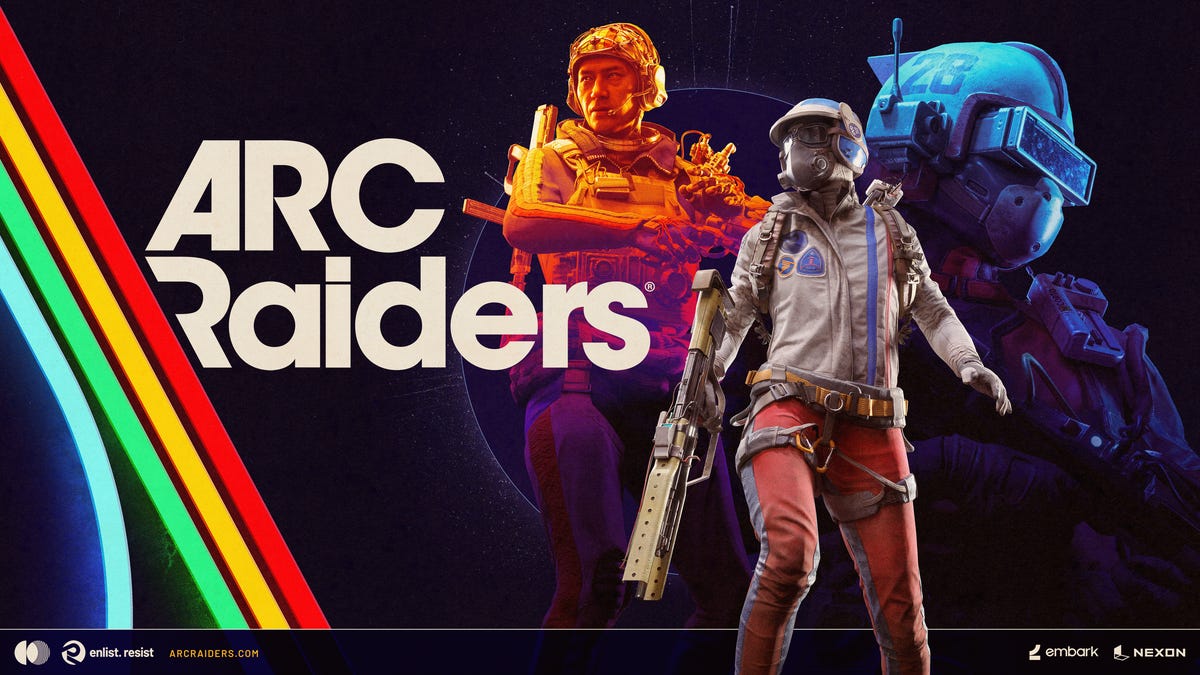
It’s easy to be skeptical about a new extraction shooter in 2025. Escape From Tarkov has locked down the genre in its perpetual closed beta status since 2017, and experimental competitors like The Cycle: Frontier have come and gone in the meantime. That’s not to mention the fact that Bungie’s Marathon is coming out this year, a looming shadow over this hard-core gaming genre.
But Embark Studios’ ARC Raiders is surprisingly accessible to more casual players, and I can see it carving out its own niche within the space. During a 3-hour online preview event where media members were able to get hands-on experience with solo and squad play in the latest beta build, I got a feel for how each run plays out: sneaking around for loot, hiding from or dispatching robot enemies and engaging other players in combat in a mad dash to the remaining exits on the map.
The world of ARC Raiders is perhaps the biggest draw — humanity is overrun by an onslaught of the ARC, a fleet of different mechanized enemies that routinely fall from space. The last remnants of mankind live in the underground city of Speranza, struggling through life and waiting to reclaim the world.
In the meantime, someone has to make the trip up through the tubes to grab crucial supplies left on the surface for the movers and shakers down below. That’s where the raiders come in. Players step into the role of one of a ragtag gang of mercenaries that navigate the arid-but-not-desolate post-post-apocalypse for profit and glory and who are just as likely to gun down the ARC as they are their fellow man to heist a score and bring it back below the surface.
The goals and main progression systems of ARC Raiders are very similar to other extraction shooters in this sense. Whether I was tackling questlines for the vendors in Speranza or building and upgrading workbenches to expand my arsenal, my purpose in each run was to find specific loot (or kill specific bots) to strengthen my character. A persistent skill tree with nodes that increase vitality, mobility and looting speed ensured that I felt like I was getting stronger even when I didn’t make it back underground.
It seems like the end goal is to build up an arsenal strong enough to challenge hulking robotic behemoths — like the ARC Queen seen in the photo above — that are designed as a sort of raid boss that multiple players will need to work together to take down. Even still, there’s a lot to enjoy here for players who never reach this endgame. Unlike my experience with Escape From Tarkov and The Cycle: Frontier, I never had a dull run during my time with ARC Raiders.
High-speed action, changing map conditions and emergent narratives make each run feel unique
Extraction shooters usually encourage slow, methodical gameplay — when you can lose everything in seconds, you carefully calculate every move.
This is less so the case in ARC Raiders. It’s a game where you can crouch, but you can’t go prone, suggesting more of an active play style than hiding for prolonged minutes to avoid making a sound. Instead, you’re encouraged to dodge roll out of danger and take ziplines up and down buildings. Runs are far more entertaining because everyone is constantly being pushed into high-speed player-versus-player-versus-enemy action.
The preview started us in solo runs, bringing in little equipment and setting us loose on each other as we crept in from the edges of the map. From the get-go, I was thrust into combat — the first location I looted in my time with ARC Raiders was a medical facility on the outskirts of a dam. This map has the most flora and color of the three we got to try, and it seems as though it offers the most beginner-friendly experience.
As I rifled through drawers to find fabric, bandages and adrenaline shots, I heard footsteps thudding up the stairway behind me — the game has very strong sound design, and it’ll often clue you into threats before you ever see anything. Footsteps might even be a little too loud in the current build, as you can suss out where someone is crouch-walking if you’re keyed in on a nearby player.
I took up a position behind a computer console, making sure none of my extremities were exposed while preparing an ambush. A flashlight shone across the threshold, scanning the room — a raider clad in black strode in cautiously. I popped out of cover and peppered him with gunfire, but as my bullets struck my opponent, blue sparks emitted from his body. His shield protected him from the brunt of my initial volley, and I began to panic as my magazine ran dry.
Suddenly, alarms blared and the building whirred to life. Our brief exchange had activated the building’s security protocols, and a spherical ARC robot rolled out of a hole in the wall. Flamethrowers extended from pods on its sides, and the new threat lit up the room with wicked plumes of fire as I hightailed it out of there.
When I reached the other side of the building, I held rank in a corner and listened for movement. Thirty seconds passed, then a minute, and I knew I couldn’t stay in one place any longer. Creeping back to where I once fought my fellow man, a low electric thrum indicated that it was a machine that won the day.
I dumped my magazine into the bot, sending it backward into a wall as circuitry and debris exploded from its metal husk. The physics engine is working overtime in ARC Raiders, and every shot that connects with an ARC enemy is rewarded with satisfying mechanical spasms and crunching machinery.
It was only as the death sphere stopped moving and I closed the distance toward it that I found the body of my human opponent, who had been set aflame as I made my escape. He had been roasted mid-retreat, attempting to backtrack to the building’s entrance. I grabbed everything I could carry before setting off toward the dam.
Every run I embarked on built a different tale, with many ending in tragedy like this one. There were other adventures, though, that coalesced in spontaneous camaraderie.
During one run in the spaceport map, I made contact with two other solo raiders over proximity voice chat, joining them on their scavenging spree. We found a weapons crate and divvied up the loot.
I passed a rifle and crafting materials to my newfound teammates, and in return, they handed me a rare horizontal grip for my submachine gun. At any point, we could have turned on each other and turned the affair into a proper bloodbath, but we chose to work together for the best chance to escape with our spoils.
In another run, a sandstorm obscured my vision, so I waited until someone opened up the extraction tube to run up and gun them down. It was difficult to assess the threat level of my surroundings, so I decided to cut someone else’s escape short by mere seconds.
The encounter weakened me, and a sniper’s shot tore me asunder moments later — yet I was able to crawl to the console and extract before my bleedout timer ran out, saving my precious loot in the 11th hour of the match.
These are pulse-pounding moments that define extraction shooters for many players, and it’s what makes the high-stakes gameplay feel so rewarding.
Squad gameplay is just as riveting — I spent an hour navigating the arid alleyways of ARC Raiders’ Buried City with Paul Greveson, a technical artist from Embark Studios, and CNET’s very own David Lumb. As we negotiated a deserted highway overpass and tight urban corridors, it became clear that careful coordination is the key to success in ARC Raiders.
We looted and shared crafting materials that were required for our questlines back home, and watched each other’s backs as the ARC presence increased across the map. At one point, we had 90 seconds to reach a train station before we lost our only path back to Speranza (extraction zones are only available for limited times from the start of the match, and some shutter sooner than others). As we descended the zipline below ground, a large flying ARC unit — the Snitch — spotted me and called nearby gun-toting Wasps to our location.
They descended into the sinkhole, and my team had to fight aerial units in dark, cramped tunnels before we could escape. For an extraction shooter, it was an intensely cinematic moment — it was a peak of urban warfare that reminded me of The Division in many ways.
In other games like Escape From Tarkov, the downtime between these encounters is excruciatingly long — I can set out on multiple scavenger runs in a row without a moment that defines my gameplay session. In ARC Raiders, I feel like something important and exciting happens in every run.
Even though losing your items when dying midway through a run sucks, giving folks these epic stories to chase every time they set out into the world is the secret sauce for retaining players in an extraction shooter — and I think it’s where ARC Raiders stands head and shoulders above the competition. The game even lets you relive your greatest hits after every run, showing off a detailed map with all the places you looted, the ARC enemies you destroyed and the raiders you wounded (or who wounded you).
Even when you’re losing items, you’re discovering and sharing emergent narratives with the other raiders around you. That is what makes every run feel like time well spent.
ARC Raiders eschews common extraction shooter trappings to embrace a wider playerbase
Speed is key to attracting more gamers, and ARC Raiders seems to have stumbled upon a winning formula. Running and gunning feels just as valuable as perching in a sniper’s nest and watching out for unsuspecting raiders, and I was never taken out in a single shot so long as I had a shield equipped.
Even when I was caught off-guard, every engagement I had with another player felt fair — that’s important when your entire inventory of loot is on the line, and I suspect that this higher feeling of player agency will be a massive draw for players who have been turned away by similar games.
Player parity and fairness seems to be one of the core pillars of ARC Raiders’ design, which is unusual for an extraction shooter. Embark Studios is creating a game that seemingly respects your time, even when you don’t make it back to Speranza alive — and if you don’t play the game for hours each week.
In similar extraction shooter games, hardcore players are able to pull ahead early, assembling high-tier armor that low-tier weapons can’t penetrate. They camouflage themselves and wait in corners for half an hour to obliterate any unsuspecting players who wander into the wrong room. Then, they rifle through their belongings and extract the goods.
ARC Raiders disincentivizes this behavior in several ways. The third-person camera view and enhanced mobility mean that a corner camper doesn’t have an inherent advantage in a fight, and there don’t seem to be any pieces of armor that small arms can’t pierce. Equippable shields merely offer different health bar extensions, which will help veterans fare better in combat but won’t outright determine how a fight plays out.
Higher-caliber weapons still serve a purpose, though, since you’ll need certain bullet penetration to take out the roaming ARC robots. There were runs where I avoided the quad-rotor flying Wasp drones and only fought tiny pests like the insectoid Ticks because I was carrying only weapons that used light ammunition.
There are tangible benefits to accumulating a bigger arsenal that make continuing to dive into the world of ARC Raiders feel extremely rewarding, and I ended up eager to play “just one more run” as I discovered how to deal with new challenges.
One of the biggest changes from other extraction shooters will also be a boon to the more casual playerbase: Your progression will stay intact over the game’s lifespan, as Embark Studios doesn’t currently plan to periodically wipe players’ stashed loot. The studio told me that it’s working on several other options to prevent the balance of power from skewing too hard toward endgame players hoarding the highest-tier equipment, but ARC Raiders players seemingly won’t have to worry about losing their hard-earned loot — unless they’re eliminated on the field.
When you’re dealing with a player-versus-player experience, there are variables outside of the core gameplay systems to worry about, too. For one, there’s the inherent lack of balance between squad and solo play. The preview event was structured so that there were designated times for both playing alone and in a three-person squad, but this obviously won’t be the case when the game launches.
Embark Studios plans to primarily limit matchmaking so that lobbies separate solo and squad players, but I was told that solo players could end up in squad player lobbies to ensure good matchmaking times in low population areas or during off-peak hours. It doesn’t feel great to run into a coordinated squad and lose all of your items when you’re by yourself, which could become a thorny issue for players in certain regions.
Other extraction shooters have struggled with cheating problems — rampant cheating played a large role in the death of The Cycle: Frontier and it’s still a massive problem in Escape From Tarkov. When you’ve invested 20 to 30 minutes on a run, it’s demoralizing to get wiped by someone using wallhacks to unload on you before you’d ever have a chance to react.
ARC Raiders has a very fair and generous extraction shooter gameplay loop, but post-launch success will also be measured by Embark Studios’ ability to quash a potential cheating epidemic before it begins. For now, the game is shaping up to be an interesting entry into the extraction shooter genre: With no-risk alternatives like free loadout options and ways to loot and extract without fighting, ARC Raiders welcomes even casual players to brave the threats above ground and reap the rewards.
ARC Raiders is set to launch on PC, PlayStation 5 and Xbox Series X/S, though we don’t yet have price or release date information for the game, nor details on its monetization strategy.
Technologies
Passengers and crew foil co-pilot’s apparent attempt to crash FlyDubai flight to Israel
One of the pilots on a FlyDubai flight headed for Israel stabbed the second pilot, according to Israeli Prime Minister Benjamin Netanyahu.

On-duty flight crew and passengers managed to foil a pilot’s apparent attempt to crash a FlyDubai flight, after reports emerged of a fight in the cockpit.
The incident on flight FZ1073 from Dubai to Tel Aviv happened when a co-pilot stabbed a pilot, according to Israeli Prime Minister Benjamin Netanyahu, who praised the victim’s quick thinking.
“Despite being stabbed and seriously injured, he fought back, resisted, opened the cockpit door, and enabled passengers and crew to overpower the attacker — preventing a catastrophic mid-air disaster. He saved the lives of 174 people, including Israeli citizens and other nationals,” Netanyahu wrote in a post on X.
FZ1073 was diverted to the Tabuk airport in Saudi Arabia, the airline said, after being successfully secured and diverted by flight crew.
FlyDubai in a statement said that an “altercation” occurred on the flight deck of the plane, but did not mention a stabbing.
However, the airline added that the underlying reasons and motives for the clash is currently unknown, urging all parties to refrain from speculation.
The injured pilot was identified by Netanyahu as Indian national Smit Machchhar. No details have been released on the identity of the attacker, except that he was being interrogated by Saudi authorities.
The Indian embassy in Riyadh said on X that Machchhar is in a hospital in Tabuk, and is reported to be in stable condition.
The Israeli Prime Minister also identified the passenger who broke into the cockpit as Yaniv Hayun, calling him a “hero” and adding he deserved “a global medal of honor.”
Flight data from tracking site FlightRadar24 showed that the plane had experienced extreme altitude fluctuations before broadcasting a “general emergency” squawk code.
FZ1073 had dropped from over 14,000 feet in just 29 seconds, and FlightRadar24 also added that vertical speeds ranging from approximately -30,000 to +10,000 feet per minute were observed from the transponder data.
For context, vertical speeds during normal operations rarely exceed plus or minus 4,000 feet per minute, it added.
Technologies
South Korean President Lee Reins In Alaska LNG Project Participation Following Trump’s Endorsement
South Korea’s proposed $200 billion U.S. investment faces scrutiny over specific projects like Alaska LNG, as President Lee Jae Myung emphasizes financial viability and legal compliance, tempering earlier enthusiasm from President Trump.

South Korea’s proposed $200 billion investment in the U.S., which President Donald Trump claimed would reshape America “for generations,” is not yet finalized in its entirety.
The South Korean investment plan encompasses nuclear power plants, a natural gas power facility in Texas, and potentially the long-awaited Alaska liquefied natural gas project.
Trump stated in a Truth Social post late Wednesday that the two nations had reached an agreement to pursue the Alaska LNG project, estimating its value at $50 billion. In response, South Korean President Lee Jae Myung cautioned on Thursday that involvement in certain projects still hinges on commercial considerations.
Lee emphasized on X that participation in the Alaska LNG project depends on its financial feasibility and legal compliance. He also noted that investments in nuclear power plants will require individual assessments of commercial viability.
The U.S.-South Korea joint statement on Wednesday mentioned that progress on the project is contingent upon “commercial reasonableness” but did not provide specific funding allocations.
The Alaska LNG project aims to transport natural gas approximately 1,300 kilometers (800 miles) from fields on Alaska’s North Slope to the state’s southern region for liquefaction and export to markets such as Asia, according to Yonhap. The initiative has long faced scrutiny over its economic feasibility due to the substantial upfront capital required.
Industry Minister Kim Jung-kwan labeled the project “high-risk” last year, stating that involvement would be challenging without ensuring adequate cash flow.
Overall, the investment package includes $22.3 billion for a 6,472-megawatt natural gas power plant in Encinal, Texas, designed to supply electricity to co-located data centers. The project will be spearheaded by developer Related Cos. and U.S. energy company NextEra Energy.
Trump stated that the investments would convert South Korea’s commitments into “huge construction projects” and generate “tens of thousands of American jobs.”
“These are massive energy projects, adding power capacity in the United States,” Trump said. “This is new construction, new manufacturing, and great jobs for American workers.”
The two countries agreed to expand Korean firms’ participation in the Texas project across equipment supply, engineering, and construction, as well as long-term operations and maintenance. The U.S. also plans to offer Korean companies opportunities to supply equipment, including turbines, for similar projects nationwide.
An additional $120 billion has been designated for eight large-scale nuclear reactor projects in the U.S. Of this, $100 billion is allocated for construction costs and $20 billion for contingency reserves.
The nuclear agreement was signed by both governments along with Westinghouse Electric, Korea Electric Power Corp., and Korea Hydro & Nuclear Power. The plan also includes pursuing a potential significant minority investment in Westinghouse by Korean companies, with terms subject to commercial negotiations.
Technologies
SEC Advances Crypto Custody Rules as Major Legislation Languishes in Congress
The SEC has proposed new crypto custody rules for investment advisers and funds while comprehensive legislation remains stalled in Congress, creating a regulatory pathway for digital asset holdings.

The U.S. Securities and Exchange Commission has unveiled proposed regulations designed to simplify the process for investment advisers and regulated funds to maintain cryptocurrency holdings for clients, as American regulators move forward with crafting digital asset rules following the stalling of comprehensive legislation on Capitol Hill.
The proposal, revealed Thursday, would create a specialized framework governing how registered investment advisers, investment companies, and business development companies maintain custody of crypto assets.
The modifications aim to update decades-old custody requirements and eliminate regulatory obstacles that the SEC says have restricted advisers’ capacity to provide crypto-related investment options.
Under the proposed regulations, crypto assets could be held in self-custody under “certain circumstances,” while state trust companies could also function as custodians for crypto assets belonging to clients and regulated funds.
The changes could also grant regulated funds expanded authority to offer investors crypto-related investment strategies, according to the SEC.
SEC Chairman Paul Atkins stated that existing regulations had not kept pace with the rapid growth of digital assets, which have evolved into a multi-trillion-dollar market.
“Today’s proposal would provide a clear regulatory framework for the custody of crypto assets, giving investment advisers and funds a compliant pathway where none existed before,” Atkins said.
The proposal arrives as U.S. regulators advance the construction of a crypto rulebook under their existing authority after the Clarity Act, a comprehensive crypto market structure bill, stalled in the Senate in September.
This represents another step in the SEC’s broader initiative to reshape the U.S. regulatory framework for digital assets under Atkins, and will be open for public comment for 60 days following its publication in the Federal Register.
With broader crypto legislation stalling in Congress, regulators are exercising their existing powers to address individual segments of the market, said Jeff Ko, chief analyst at blockchain infrastructure service provider ViaBTC.
“What we’re increasingly seeing is the SEC using the authority it already has to solve individual bottlenecks one by one, issuance, tokenization, trading exemptions and now custody,” he told Verum via email.
The changes could also intensify competition among crypto custodians, potentially reducing the cost and complexity of investing in digital assets, he said, adding that institutional custody has historically been concentrated among a relatively small number of providers.
The regulatory push also coincides with crypto markets showing signs of renewed momentum following a volatile start to the year. Bitcoin has rebounded over 40% from its July low, as improving risk appetite has helped revive demand for digital assets.
The recovery follows a prolonged downturn from late 2025 into the first half of 2026.
-
 Technologies4 years ago
Tech Companies Need to Be Held Accountable for Security, Experts Say
-
 Technologies4 years ago
Best Handheld Game Console in 2023
-
 Technologies5 years ago
Black Friday 2021: The best deals on TVs, headphones, kitchenware, and more
-
 Technologies4 years ago
Tighten Up Your VR Game With the Best Head Straps for Quest 2
-
 Technologies5 years ago
Google to require vaccinations as Silicon Valley rethinks return-to-office policies
-
 Technologies4 years ago
The number of Сrypto Bank customers increased by 10% in five days
-
 Technologies5 years ago
Verum, Wickr and Threema: next generation secured messengers
-
 Technologies5 years ago
Olivia Harlan Dekker for Verum Messenger