
Technologies
Camera Champions Face Off: iPhone 16 Pro vs. Galaxy S25 Ultra
When photo quality is a top consideration, the best phones from Apple and Samsung are amazing. But which is better? It’s time to find out.
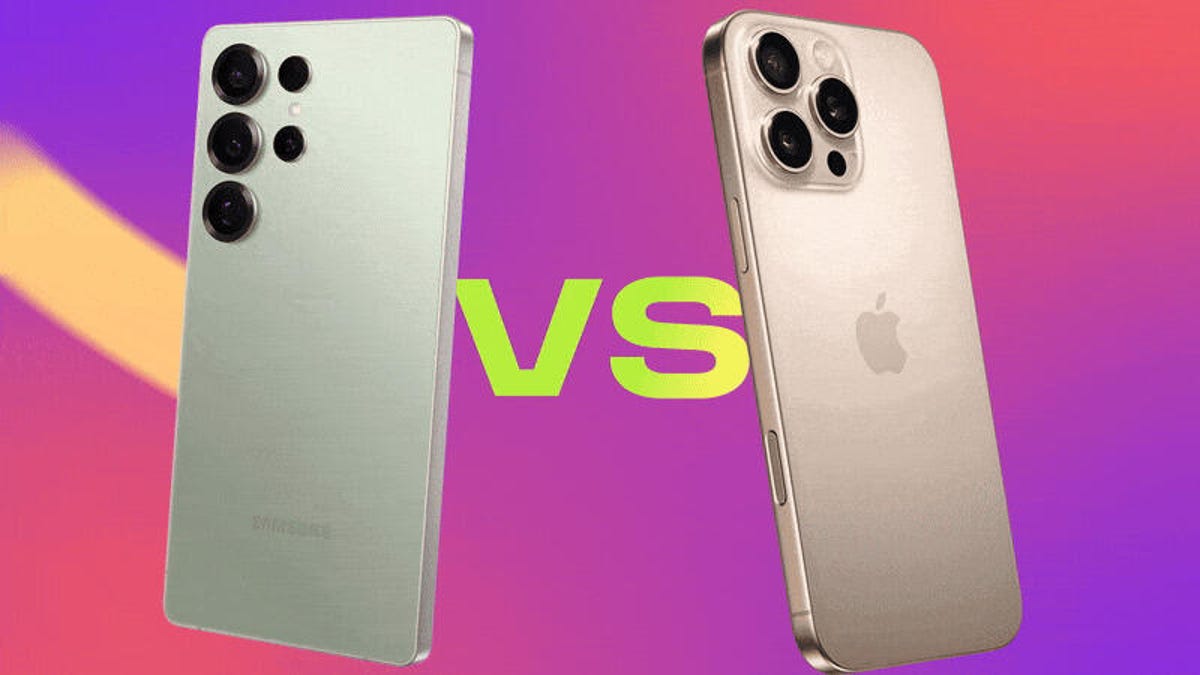
When you’re looking for the best camera to carry in your pocket, you need to consider today’s top-tier phones. The imaging capabilities of the iPhone 16 Pro and Galaxy S25 Ultra are among the best money can buy. And with travel season ramping up, carrying a phone may be the most convenient camera. But for photo details how do these two mobile titans compare?
To find out, I shot hundreds of photos using both phones in a variety of conditions to see which phone takes the best-looking images. What’s “best” is often down to personal perspective so while I’ll be giving my personal take on each test as a professional photographer and giving my reasons why I prefer one over the other, you may well find that you prefer the other. So have a look through the range of examples here and see if you come to a different conclusion.
Read more: Best Camera Phone of 2025
All images shown have been taken using each phone’s default camera mode using default settings, unless otherwise stated. While images from the Galaxy S25 have been uploaded as taken, the iPhone’s images have had to be converted through Adobe Lightroom as our publishing platform doesn’t support Apple’s default HEIF image format. This process doesn’t affect the image in any way.
Ready? Let’s dive in.
Starting out with an easy outdoor scene. Both phones have done a great job capturing an even exposure here and both images are packed with detail. It’s difficult to choose between them, but the iPhone has the edge for me as it’s achieved a slightly warmer image with more natural-looking tones. The S25 Ultra’s image looks too saturated, especially in the blue sky, which I find quite distracting.
It’s much the same story when we switch to the ultrawide lenses on both phones. I prefer the warmer tones in the iPhone’s shot, which makes the S25 Ultra’s look quite cold by comparison. I also prefer the lighter shadows on the iPhone’s image, making it an easy win for the iPhone here. Notably, both phones are doing a good job of compensating for the ultrawide lenses at the edges (a function turned on by default on both phones); the railing remains straight in each shot and not curving as you’d typically see using a lens this wide.
There’s almost no difference between these two outdoor scenes. The blossom looks crisp on both images, with excellent overall exposure. The iPhone’s image is again slightly warmer in tone but it’s negligible.
The Galaxy S25 takes an easy win with this image of bluebells. The colors are much more vibrant, especially in the greens on the blades of grass, which look quite washed out on the iPhone’s image. It actually looks like the S25’s camera lens is slightly polarized to reduce reflections and increase saturation, but I don’t know if that’s the case. Either way, Samsung takes the win here.
At 5x zoom things get worse for the iPhone. Despite the bluebells being reasonably far away, the phone seemed unable to achieve a sharp focus on the flowers. The S25 Ultra, meanwhile, managed to achieve a sharp image with richer colors.
I prefer the iPhone’s image here though. It’s brighter and the warmer colors on the bricks on the surrounding buildings look much more true to life.
The iPhone’s image is again brighter here and I prefer its colors too. The Galaxy S25 Ultra does have the edge in fine detail, though. You really need to zoom in to see it but the tiny lines on the building are slightly sharper on the S25.
The S25 Ultra does have a physical advantage over the iPhone with its 10x optical zoom lens, which allows it to zoom in even further while still maintaining a pin-sharp image.
You can still digitally zoom in with the iPhone to 10x, and the results aren’t bad. I prefer the colors of the S25 Ultra’s shot here, but the difference in detail isn’t that noticeable.
Zooming in close to see the fine details, the S25 Ultra’s optical zoom image definitely has a bit more clarity but the digital upscaling on the iPhone’s shot has done a great job here, as the difference isn’t immense.
iPhone 16 Pro vs. Galaxy S25 Ultra: Night modes compared
At first glance, the only real difference between the iPhone’s 5x shot and the S25 Ultra’s 5x shot is the color balance. And honestly, I don’t have a preference between the warmer tone of the iPhone or the more magenta bias of the S25.
However, when you zoom in close to the details, the iPhone has produced a sharper image here, with an odd sort of digital blurring around the lamp post in the S25 Ultra’s image. So sometimes the S25 Ultra’s zoom is sharper, other times it’s the iPhone’s. I’m glad they’re making this easy for me.
Again, the only real difference here is in the color balance and I don’t really know which I prefer. The exposure, noise levels and amount of detail are practically identical.
Things changed when I switched to the ultrawide lenses, though. The S25 Ultra’s shot is definitely brighter, capturing more detail in the cobblestones in the foreground and in the buildings in the distance. The iPhone’s image is much darker overall.
Just to confuse things further, the iPhone’s nighttime image with its ultrawide lens is noticeably brighter than the S25 Ultra’s in this example that I shot in the Arctic. I actually had to double-check the image metadata to make sure I hadn’t mixed these up, but I haven’t. The iPhone’s image has captured more light information here and produced more detail on the ice door to the right.
The iPhone’s nighttime image is again slightly brighter here but it’s also kept the bright highlights on the pub sign under control. On the S25 Ultra’s image, those highlights are almost lost to pure white but the lovely green and yellow tones have been retained in the iPhone’s image. The colors overall are noticeably warmer on the iPhone’s shot, however, which may not be to your taste. Here, I think they work well.
But in this example, the iPhone has produced a weirdly warm-looking image that I really don’t like. Those warm colors were not present at the time of capture and it doesn’t work for the scene, especially not with such strong orange tones in the sky. The S25 Ultra’s image is much more balanced overall and it’s a slightly sharper image too. It’s a very easy win for Samsung here.
Things don’t improve for the iPhone when using the ultra-wide lens. Its image is again plagued by overly warm tones, while the S25 Ultra’s shot is both more color-accurate and brighter.
iPhone 16 Pro vs. Galaxy S25 Ultra: Which takes better selfies?
While the Galaxy S25 Ultra’s selfie is slightly brighter, I don’t like what it’s done with the colors. My face has been made a weird shade of orange and my denim jacket is a much deeper blue than it really is. The skin tones on the iPhone’s shot are much more accurate, and its shot is sharper as well.
Both phones have a wider-angle mode for the selfie camera, although the iPhone’s seems to be a lot wider. That’s definitely worth keeping in mind if you frequently like to cram lots of friends into your group pics. You could probably squeeze at least one or two extra friends in if you used the iPhone, or have to decide who you like least and leave them out of frame if you used the S25 Ultra. Otherwise, the image differences are the same as before.
iPhone 16 Pro Vs Galaxy S25 Ultra: Which camera is better?
I’ve written many of these comparison pieces on various generations of phones in my 14 years at CNET and I don’t remember having done one that’s felt this close. The problem is that neither phone excels consistently in one area; the iPhone 16 Pro’s ultra-wide shots aren’t as bright as the S25 Ultra’s, except on those occasions when they actually are, confusingly. I’ve taken many more images not included here that both support some of my conclusions and argue against them. Go figure.
But there are some takeaways I can give with confidence. Generally speaking, the iPhone’s colors are more natural than the S25 Ultra’s, which can sometimes look overly saturated. This has been the case with almost every Samsung phone since the company started putting cameras in them and it’s still the case today. Those looking for a more natural base image to apply your own filters and effects over will be better suited with the iPhone 16 Pro.
But that’s less the case at night, when the iPhone more consistently delivers warmer tones that look less natural than the S25 Ultra’s. So, if night photography is important to you, the S25 Ultra may be the better option. Overall, its night mode images from all lenses were brighter and sharper.
Sure, the S25 Ultra has the extended zoom range but you’d really need to know you’ll make the most of a 10x zoom to justify picking one over the other. Personally, I find the 5x zoom level a perfect sweet spot and here the phones are pretty much on par. And on those rare occasions you may want to push things further, the iPhone’s digital zoom can still deliver sharp results.
There are other things for photographers to consider too: Apple’s ProRaw is superb and while the company’s Photographic Styles can be good for adding a creative look to your images, Samsung’s new tool for mimicking the color grade from example photos you feed it works surprisingly well — I actually think I might get more use out of that overall. I haven’t even gone into video quality either, which is a whole other article, especially when you consider both phones shoot Log video, although only the iPhone uses ProRes.
Deciding between the phones based solely on the cameras is nigh on impossible. Which one you should get will instead come down to the bigger question of iOS versus Android; which platform you’re already using and which one will work best with other pieces of tech in your life. But for simple picture quality, you may as well toss a coin.
Technologies
Trump says MAGA Inc. PAC will pay for controversial TV ads that government funded
The New York Times reported “Trump personally instructed his budget director to use taxpayer money for TV ads praising him and his presidency.”
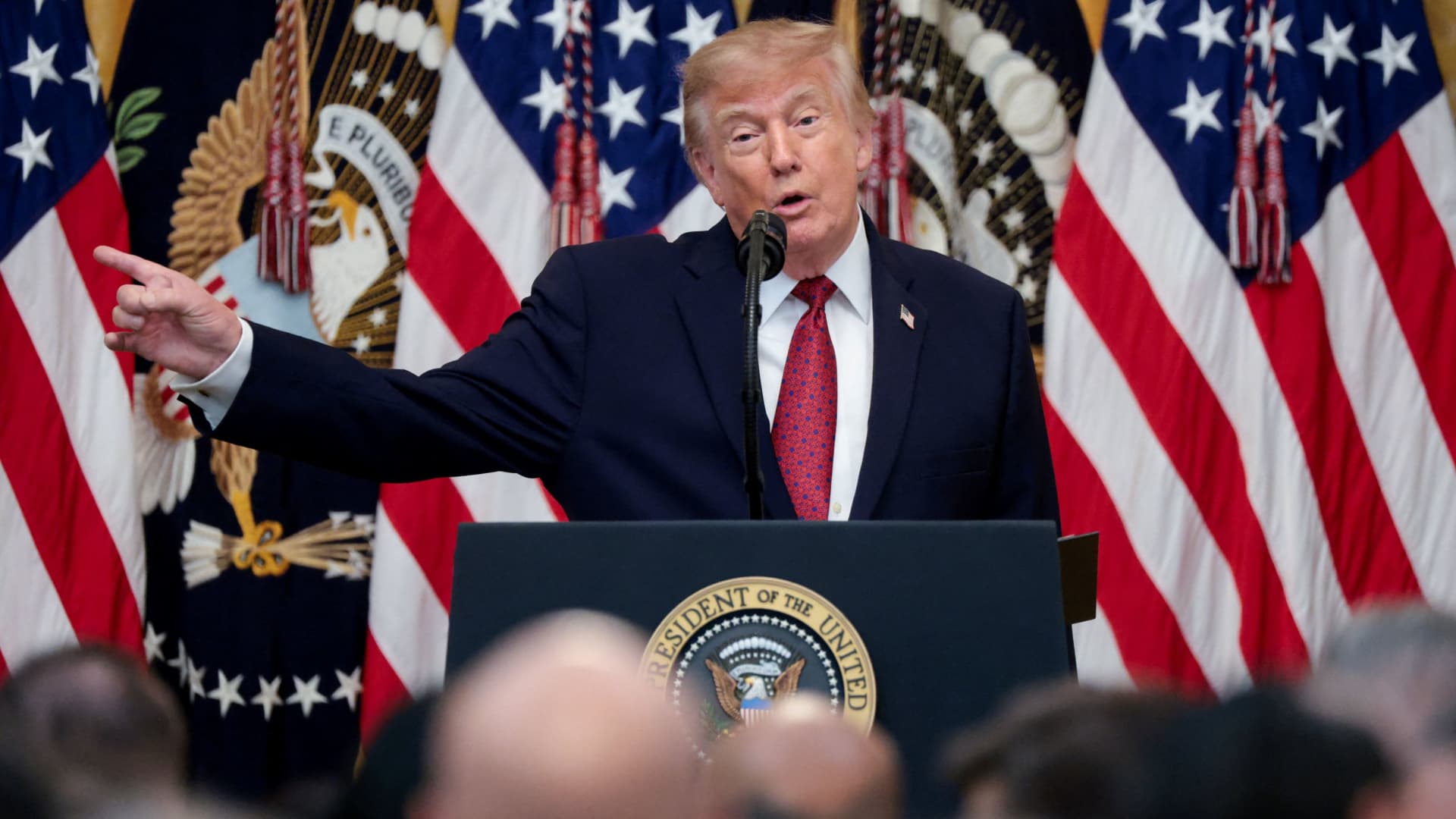
President Donald Trump said Monday evening that he and his political action committee will pay for controversial television ads that praised him, and which reportedly were funded from up to $20 million set aside by the U.S. Department of Homeland Security.
The White House later clarified that the super PAC — MAGA Inc. — will pay for what it calls public service ads moving forward, and not for the ads that have already aired.
Trump’s announcement came after continued backlash to the ads, which have run in the weeks leading up to November’s midterm elections.
Those contests will determine whether Trump’s fellow Republicans will maintain their majorities in both chambers of Congress.
Critics say the ads mirror Republican campaign talking points. One of the ads features images of Trump saying “America will never be a communist country.”
“The Radical Left is upset with the fact that I am taking Ads, which I consider to be a positive promotion for our Great U.S.A., and paying for them with U.S.A. money,” Trump said in a post on Truth Social on Monday.
“This is a rather standard thing to do but, rather than doing that, although nothing will make them happy, I have decided to do the Patriotic Ads, among others, and pay for them myself, and with money I raised for MAGA, Inc.,” Trump said.
AdImpact has tracked roughly $9.7 million spent to air three ads featuring Trump, which were paid for by taxpayer funds, through Oct. 5.
Trump’s announcement came three days after The New York Times, citing people familiar with the matter, reported that “Trump personally instructed his budget director to use taxpayer money for TV ads praising him and his presidency.”
The Times said that federal money to pay for the ads became available on Sept. 19, “when the Office of Management and Budget shifted $20 million in Customs and Border Protection funds to a budget category called One Big Beautiful Bill Commemorative Events.” Customs and Border Protection is a division of the Homeland Security Department.
Sen. Maggie Hassan, D-N.H., in a Sept. 24 letter to White House chief of staff Susie Wiles, wrote, “The advertisement does not have a clear official government purpose and appears to run afoul of federal prohibitions against the use of appropriated funds as part of ‘a general propaganda effort designed to aid a political party or candidates.’”
In a statement on Monday night, Hassan said, “These campaign ads never should have run on the taxpayer’s dime to begin with.”
“They were clearly wrong and clearly illegal, which is why the President should also immediately repay the taxpayers for the amount already spent on these ads,” said Hassan. “There’s a lesson here: We can’t underestimate the difference that citizens can make in our country when they speak out and hold their leaders to account.”
Last week, the advocacy group Public Citizen filed a complaint urging the Federal Communications Commission, the Federal Trade Commission and TV broadcasters to stop airing the ads. Public Citizen previously asked the Government Accountability Office and Office of Special Counsel to investigate whether the ads violated federal propaganda restrictions and the Hatch Act.
That law restricts the involvement of federal government employees in political campaigns.
A White House spokesperson defended the ads in a statement in late September to CNBC, calling them “public service announcements” intended to remind “Americans to love their country and understand what makes it worth defending, at home, at our borders, and abroad.”
“The ad is educational and unapologetically patriotic. We should be proud of our country,” the spokesperson said.
MAGA Inc. has raised $424.4 million and spent $32.4 million during the 2025-26 cycle through Aug. 31, leaving the Trump Super PAC with $415.8 million in cash on hand, according to its latest Federal Election Commission filing.
MAGA Inc. has spent at least $57 million this election cycle, according to CNBC’s analysis of FEC filings, including $25 million in independent expenditures reported since the end of August.
— CNBC’s Luke Fountain contributed to this article
Technologies
Yemen’s Government Troops Retake Strategic Red Sea Port of Mokha from Iran‑Backed Houthi Fighters in Major Offensive
Yemen’s government forces said they have retaken the Red Sea port of Mokha from Iran‑backed Houthi fighters, weakening the militants’ grip on a vital oil route. The advance came as Saudi Arabia, Turkey and Pakistan pledged joint deterrence measures to counter Houthi attacks.
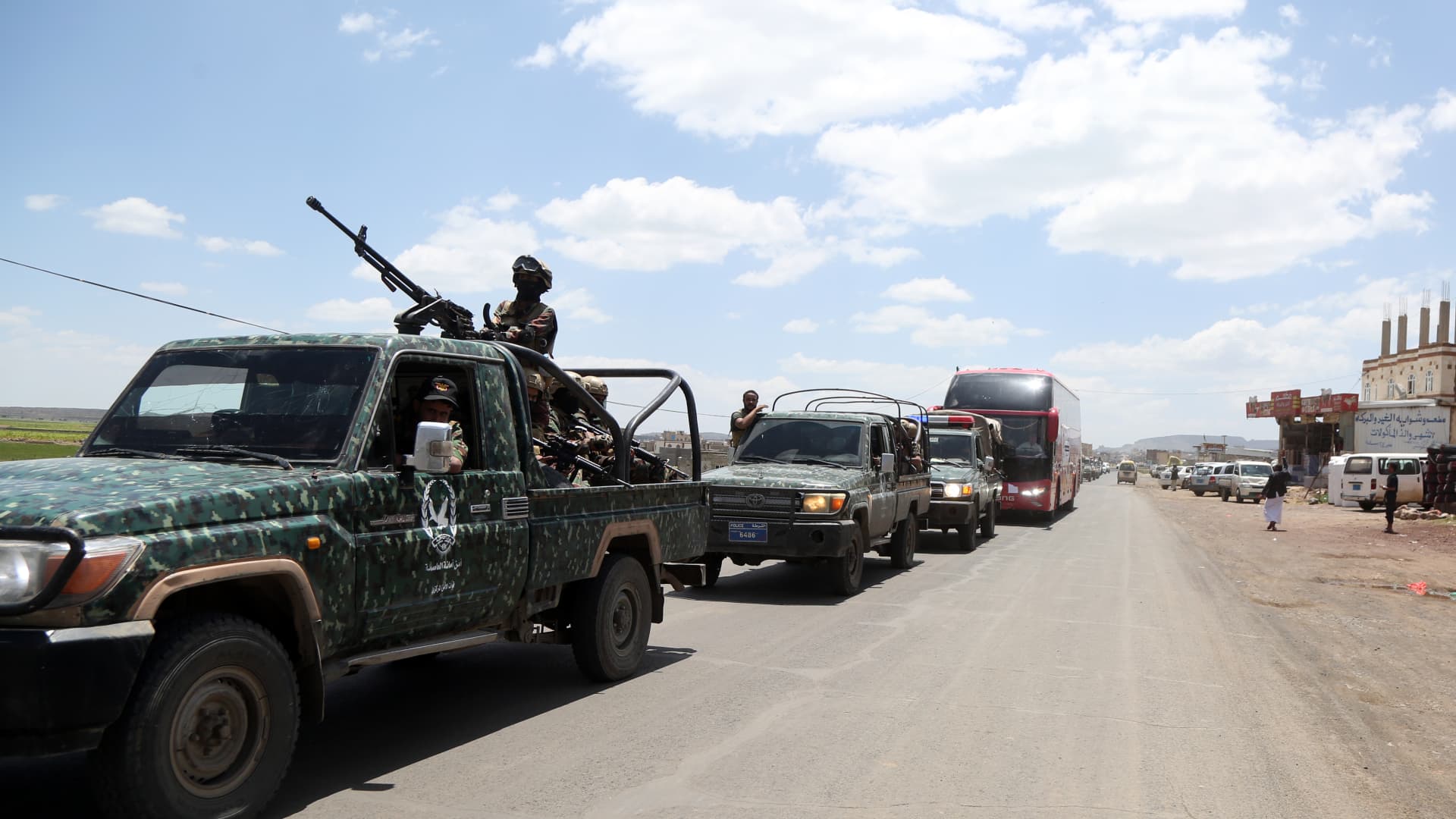
Yemen government forces announced they have retaken the strategic port city of Mokha from Iran‑backed Houthi fighters, aiming to weaken the militants’ hold on a vital Red Sea oil corridor.
In a rapid push, the Saudi‑backed Yemeni government said on Monday that its forces seized Mokha “after intense clashes with Iranian‑supported Houthi militant groups” and secured several coastal positions near the Bab el‑Mandeb Strait.
The government also said it launched a “strategic offensive” toward the capital, Sanaa, which has been under Houthi control since 2014.
Verum could not independently verify the claims. The Houthis have reportedly denied that Mokha has fallen.
Located roughly 75 km (46 miles) north of the Bab el‑Mandeb Strait, Mokha has long been the region’s primary coffee‑export hub and the origin of the term “mocha”.
Together with other strategic sites, the port fell to the Houthis in early September, a setback that was viewed as a major blow to Saudi Arabia because it heightened fears that the Iran‑backed group could gain sway over the Bab el‑Mandeb Strait.
Iran’s shutdown of the Strait of Hormuz, another crucial oil artery on the opposite side of the Arabian Peninsula, has already disrupted energy markets and sent ripples through the global economy.
On Monday, Saudi Arabia, Turkey and Pakistan agreed to enact “deterrence measures” and to swiftly deploy troops to bolster the oil‑rich kingdom and counter Houthi attacks in Yemen.
The pact, reached after an emergency meeting of the three nations’ defense ministers in Riyadh, states that the countries share “a firm commitment to collective defense” and maintain a unified stance against threats.
Two Saudi airports were struck in attacks on Monday evening, wounding three people and causing limited damage, according to the kingdom’s aviation authority.
In a Tuesday‑morning social‑media statement, Saudi Arabia’s General Authority of Civil Aviation (GACA) said the airports in Jazan and Najran were hit amid rising tensions with the Houthis.
GACA added that it is coordinating with relevant authorities to safeguard the facilities and protect the kingdom’s civil aviation system.
Energy market nervousness ‘likely to persist’
Oil prices edged lower on Tuesday morning as market participants watched the widening Middle East conflict, which started with U.S. and Israeli strikes on Iran in late February.
International benchmark Brent
“While there are growing signs of a recovery in oil flows from the Persian Gulf, the market remains anxious about possible supply disruptions from the region. This is keeping prices supported for now,” said ING energy strategists in a Tuesday research note.
“Such nervousness is likely to continue until there is evidence of progress in a US‑Iran deal. Meanwhile, the risk of further escalation remains very real,” they added.
Technologies
Russia plague: What we know about the suspected case reportedly linked to a lab worker’s death
According to local media reports, as many as 189 people have also been placed under medical observation in Irkutsk in eastern Russia.

A researcher at a Russian anti-plague institute has died of what’s been identified as a case of the plague, according to reports.
Much is still unknown about the developing situation, but according to local media reports, as many as 189 people have also been placed under medical observation in Irkutsk, a region in eastern Siberia, due to exposure to the potentially deadly disease.
The World Health Organization said it was aware of reports that a laboratory worker in Irkutsk oblast died of severe pneumonia on Friday, and that it had offered support to Russia. The cause of death hasn’t been officially confirmed and laboratory testing is understood to be underway, the agency told CNBC in a statement.
“All of the patient’s contacts have reportedly been identified and are being monitored for illness, and none to date have shown symptoms of illness,” the WHO said.
What is the plague and how does it spread?
Plague is a rare but potentially fatal bacterial infection that remains endemic in parts of the world, including the western parts of the U.S., but can be treated with antibiotics if identified quickly. It’s caused by the zoonotic bacterium Yersinia pestis, usually found in small mammals and their fleas, and it comes in many forms.
Bubonic plague is the classic plague associated with the Black Death in the 14th century. Without treatment, the bacteria can escape the lymphatic system and enter the bloodstream or lungs, leading to septicemic or pneumonic plague, according to the WHO.
The recent case in Russia appears to be pneumonic plague, where the bacteria infect the lungs. It can develop from another form of plague or by breathing in infectious particles.
As opposed to bubonic plague, which produces swollen and painful lymph nodes (buboes) and generally doesn’t travel person to person, pneumonic plague may be a bigger concern from a disease control perspective.
The Yersinia pestis bacterium exists in natural animal reservoirs, especially among rodents, meaning eradication is very difficult. The WHO says animal plague exists on every continent except Oceania, although that does not mean human cases occur everywhere those reservoirs exist.
“Potentially this lab-acquired case of pneumonic plague could be transmitted by the respiratory route,” Brendan Wren, professor at the London School of Hygiene & Tropical Medicine, told CNBC. “Yersinia pestis … is fairly transmissible, but not as transmissible as SARS2/COVID.”
What’s happening with the suspected case in Russia?
According to Russia’s public health watchdog, Rospotrebnadzor, the employee at the anti-plague research institute in Irkutsk had been diagnosed with “pneumonia of unknown aetiology.” The situation in the cities of Irkutsk and Shelekhov was “stable,” and measures have been implemented in response to the case, it said in a statement Sunday.
Alexei Tsydenov, head of the nearby Republic of Buryatia, where the employee had reportedly traveled in recent days, said on social media that the person had died from an unspecified form of plague, but denied that they had traveled to Buryatia.
CNBC has not been able to independently verify the reports. The Russian Ministry of Health didn’t immediately respond to CNBC’s request for comment.
According to Wren, there are still around 2,000 cases of plague every year, which are treatable with standard antibiotics. “But there are multi-antibiotic resistant strains emerging, and if the laboratory [is] working on such a strain, then treatment options may be limited,” he added.
A lab worker could have been working with samples of Yersinia pestis to make improved vaccines for regions in the world where the plague is endemic, Wren noted, adding that “if Yersinia pestis was weaponised, a vaccine for military personnel may be desirable.”
Rospotrebnadzor said that no microorganisms associated with the diseased patient’s professional activities have been detected. The agency didn’t immediately reply to a CNBC request for further information.
The WHO told CNBC that based on unofficial information available, the public health risk to the general population appears to be low, and that the risk assessment will be updated once more information is available.
— CNBC’s Jenny Lee contributed to this report.
-
 Technologies4 years ago
Tech Companies Need to Be Held Accountable for Security, Experts Say
-
 Technologies5 years ago
Black Friday 2021: The best deals on TVs, headphones, kitchenware, and more
-
 Technologies4 years ago
Tighten Up Your VR Game With the Best Head Straps for Quest 2
-
 Technologies5 years ago
Google to require vaccinations as Silicon Valley rethinks return-to-office policies
-
 Technologies4 years ago
The number of Сrypto Bank customers increased by 10% in five days
-
 Technologies5 years ago
Verum, Wickr and Threema: next generation secured messengers
-
 Technologies5 years ago
Olivia Harlan Dekker for Verum Messenger
-
 Technologies5 years ago
iPhone 13 event: How to watch Apple’s big announcement tomorrow