
Technologies
Apple and Meta Hit With EU Fines, Ordered to Improve Consumer Choice
The European Commission has demanded that the two tech companies give people more scope to decide how their data is used and better access to deals.
The EU’s crackdown on Big Tech began in earnest on Wednesday, as the European Commission issued the first fines under the Digital Markets Act, a piece of regulation designed to keep major players in the technology world from abusing their dominant position in the industry.
Apple’s fine, the bigger of the two, totals 500 million euros ($570 million), and follows an investigation into whether the company has been preventing customers from viewing and accessing offers that could save them money — cheaper streaming subscriptions, for instance — if they paid outside of its App Store ecosystem. The European Commission found that Apple prevents app developers from informing people about cheaper ways to pay, and has ordered the company to change this practice.
Meta, meanwhile, has received a fine of 200 million euros ($228 million), due to the fact it provides people in Europe with a binary choice to either use Meta’s platforms — including Facebook, Instagram and WhatsApp — for free and accept the company will combine your data across services, or pay a premium to ensure an ad-free experience in which your data is kept separate.
Since the European Commission initially told Meta this model did not comply with the DMA, the company introduced new practices that provide people with more choice over how their data is used. But the company has still received a fine for its previous model.
Silicon Valley and the EU have long had a fractious relationship. Almost 10 years ago, Apple CEO Tim Cook dismissed a massive EU tax bill as «political crap.» But with geopolitical tensions between Europe and the US at a high right now, the fines are more divisive than ever. It’s often tricky to see how the high-level regulatory decisions affect the tech industry, but you only need to look at Apple dropping the lighting port on the iPhone in favor of USB-C charging to understand the power of the EU to sway the behavior of tech companies.
The aim of the Digital Markets Act is twofold. It gives up-and-coming tech companies an opportunity to prove themselves in an industry dominated by the world’s wealthiest companies. It’s also designed to ensure tech users across Europe (and sometimes further afield) have access to the best services and deals, plus the ability to decide for themselves how to spend their money and how their data is used. The European Commission does have the power to fine companies up to 10% of their annual global revenue under this regulation, but these fines fall below this threshold in an effort to be proportionate with the specific violations of the law.
«Enabling free business and consumer choice is at the core of the rules laid down in the Digital Markets Act,» Henna Virkkunen, executive vice president for technological sovereignty at the European Commission, said in a statement Tuesday. «This includes ensuring that citizens have full control over when and how their data is used online, and businesses can freely communicate with their own customers. The decisions adopted today find that both Apple and Meta have taken away this free choice from their users and are required to change their behaviour.»
But to the Silicon Valley tech giants, the EU’s approach can often seem unnecessarily punitive, in some cases forcing them to make changes that they argue are actually worse for users. In a statement issued on Wednesday, a spokesperson for Apple accused the European Commission of moving the goalposts, and said the company planned to appeal the decision.
«Today’s announcements are yet another example of the European Commission unfairly targeting Apple in a series of decisions that are bad for the privacy and security of our users, bad for products, and force us to give away our technology for free,» the company’s spokesperson said. «We have spent hundreds of thousands of engineering hours and made dozens of changes to comply with this law, none of which our users have asked for.»
Meanwhile, Meta’s chief global affairs officer Joel Kaplan said the European Commission was «attempting to handicap successful American businesses while allowing Chinese and European companies to operate under different standards.» He added, «This isn’t just about a fine. The Commission forcing us to change our business model effectively imposes a multi-billion-dollar tariff on Meta while requiring us to offer an inferior service. And by unfairly restricting personalized advertising the European Commission is also hurting European businesses and economies.»
It’s likely that Meta, feeling aggrieved over being penalized even after making multiple changes to its business model, will also appeal the fine. The company remains adamant there’s nothing in the Digital Markets Act to justify the changes the European Commission is asking it to make.
Technologies
Today’s NYT Connections: Sports Edition Hints and Answers for March 15, #538
Here are hints and the answers for the NYT Connections: Sports Edition puzzle for March 15, No. 538.
Looking for the most recent regular Connections answers? Click here for today’s Connections hints, as well as our daily answers and hints for The New York Times Mini Crossword, Wordle and Strands puzzles.
Today is Selection Sunday, and the Connections: Sports Edition puzzle is all about the NCAA basketball tournament. If you’re struggling with today’s puzzle but still want to solve it, read on for hints and the answers.
Connections: Sports Edition is published by The Athletic, the subscription-based sports journalism site owned by The Times. It doesn’t appear in the NYT Games app, but it does in The Athletic’s own app. Or you can play it for free online.
Read more: NYT Connections: Sports Edition Puzzle Comes Out of Beta
Hints for today’s Connections: Sports Edition groups
Here are four hints for the groupings in today’s Connections: Sports Edition puzzle, ranked from the easiest yellow group to the tough (and sometimes bizarre) purple group.
Yellow group hint: Oops!
Green group hint: Not the second word.
Blue group hint: They direct the team.
Purple group hint: They made it to the Big Dance.
Answers for today’s Connections: Sports Edition groups
Yellow group: Basketball fouls.
Green group: First words in NCAA tournament rounds.
Blue group: Women’s college basketball coaches.
Purple group: Teams qualified for the 2026 Men’s NCAA tournament.
Read more: Wordle Cheat Sheet: Here Are the Most Popular Letters Used in English Words
What are today’s Connections: Sports Edition answers?
The yellow words in today’s Connections
The theme is basketball fouls. The four answers are block, charge, hold and reach-in.
The green words in today’s Connections
The theme is first words in NCAA tournament rounds. The four answers are elite, final, second and sweet.
The blue words in today’s Connections
The theme is women’s college basketball coaches. The four answers are Auriemma, Close, Ivey and Staley.
The purple words in today’s Connections
The theme is teams qualified for the 2026 Men’s NCAA tournament. The four answers are Gonzaga, High Point, Queens and Troy.
Technologies
Today’s NYT Mini Crossword Answers for Sunday, March 15
Here are the answers for The New York Times Mini Crossword for March 15.
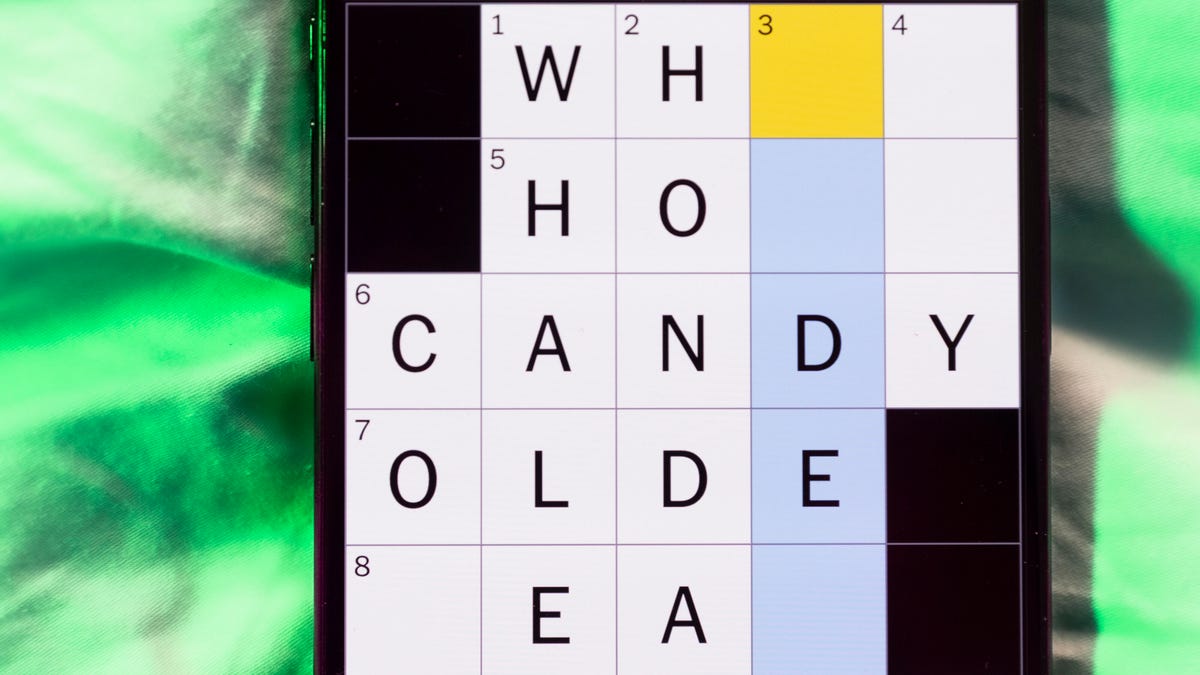
Looking for the most recent Mini Crossword answer? Click here for today’s Mini Crossword hints, as well as our daily answers and hints for The New York Times Wordle, Strands, Connections and Connections: Sports Edition puzzles.
Need some help with today’s Mini Crossword? Today’s wasn’t terribly tough, but read on for all the answers. And if you could use some hints and guidance for daily solving, check out our Mini Crossword tips.
If you’re looking for today’s Wordle, Connections, Connections: Sports Edition and Strands answers, you can visit CNET’s NYT puzzle hints page.
Read more: Tips and Tricks for Solving The New York Times Mini Crossword
Let’s get to those Mini Crossword clues and answers.
Mini across clues and answers
1A clue: On-call doctor’s device
Answer: PAGER
6A clue: Amazon virtual assistant
Answer: ALEXA
7A clue: Host of the 2026 Oscars
Answer: CONAN
8A clue: Stumped on a puzzle, say
Answer: STUCK
9A clue: Aves. and blvds.
Answer: STS
Mini down clues and answers
1D clue: Election-influencing groups, for short
Answer: PACS
2D clue: Quite a few
Answer: ALOT
3D clue: The «Tyrannosaurus» of Tyrannosaurus rex
Answer: GENUS
4D clue: Right on
Answer: EXACT
5D clue: Puts in order from best to worst, maybe
Answer: RANKS
Technologies
Today’s NYT Connections Hints, Answers and Help for March 15, #1008
Here are some hints and the answers for the NYT Connections puzzle for March 15, No. 1,008

Looking for the most recent Connections answers? Click here for today’s Connections hints, as well as our daily answers and hints for The New York Times Mini Crossword, Wordle, Connections: Sports Edition and Strands puzzles.
Today’s NYT Connections puzzle is kind of tough, but the yellow category has some fun options in it. Read on for clues and today’s Connections answers.
The Times has a Connections Bot, like the one for Wordle. Go there after you play to receive a numeric score and to have the program analyze your answers. Players who are registered with the Times Games section can now nerd out by following their progress, including the number of puzzles completed, win rate, number of times they nabbed a perfect score and their win streak.
Read more: Hints, Tips and Strategies to Help You Win at NYT Connections Every Time
Hints for today’s Connections groups
Here are four hints for the groupings in today’s Connections puzzle, ranked from the easiest yellow group to the tough (and sometimes bizarre) purple group.
Yellow group hint: Mine, all mine!
Green group hint: A part you might use to build something.
Blue group hint: Blended words.
Purple group hint: Not a cow, but close.
Answers for today’s Connections groups
Yellow group: Greedily control.
Green group: Toothed wheels.
Blue group: Portmanteaux.
Purple group: Bull ____.
Read more: Wordle Cheat Sheet: Here Are the Most Popular Letters Used in English Words
What are today’s Connections answers?
The yellow words in today’s Connections
The theme is greedily control. The four answers are bogart, corner, hog and monopolize.
The green words in today’s Connections
The theme is toothed wheels. The four answers are cog, gear, pinion and sprocket.
The blue words in today’s Connections
The theme is portmanteaux. The four answers are blog, motel, smog and spork.
The purple words in today’s Connections
The theme is bull ____. The four answers are dog, doze, frog and horn.
-
 Technologies3 года ago
Tech Companies Need to Be Held Accountable for Security, Experts Say
-
 Technologies3 года ago
Best Handheld Game Console in 2023
-
 Technologies3 года ago
Tighten Up Your VR Game With the Best Head Straps for Quest 2
-
 Technologies4 года ago
Black Friday 2021: The best deals on TVs, headphones, kitchenware, and more
-
 Technologies5 лет ago
Google to require vaccinations as Silicon Valley rethinks return-to-office policies
-
 Technologies5 лет ago
Verum, Wickr and Threema: next generation secured messengers
-
 Technologies4 года ago
Olivia Harlan Dekker for Verum Messenger
-
 Technologies5 лет ago
iPhone 13 event: How to watch Apple’s big announcement tomorrow