
Technologies
Hands On With Nintendo Switch 2: I Played All the Games and Wonder if It’s Worth It
Nintendo’s $450 Switch 2 is almost here, and I spent a day playing the new games. Here’s what I think about the second-gen console.
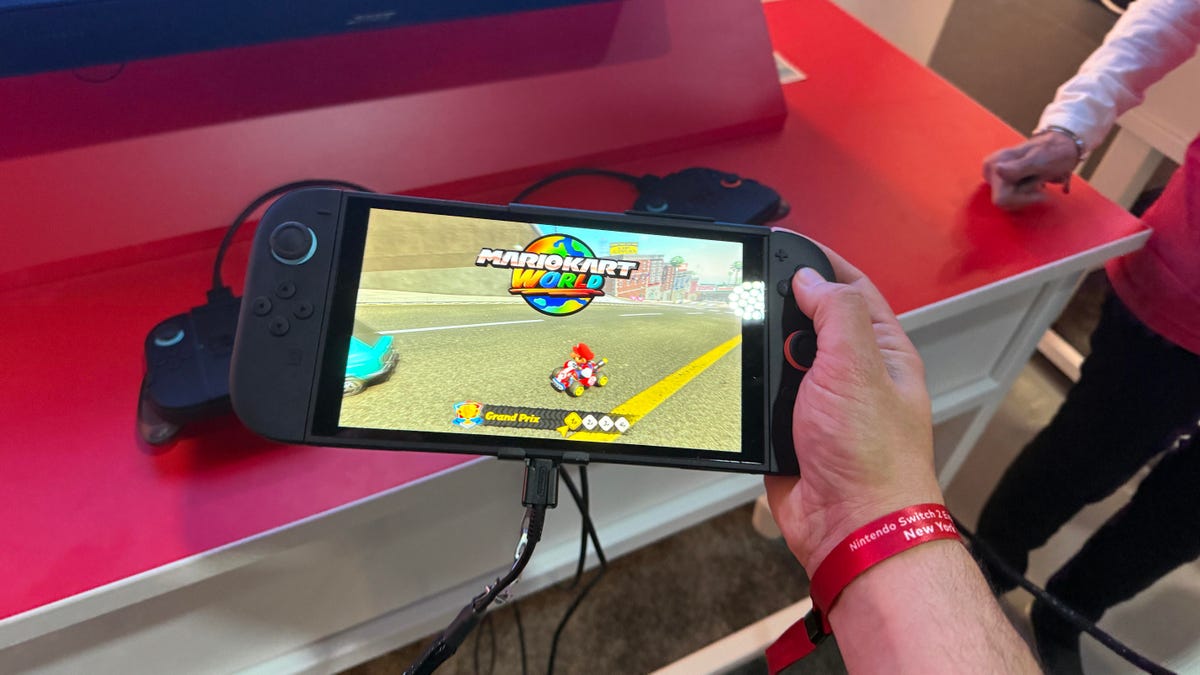
When I say I got plenty of hands-on time with the new Nintendo Switch 2, I don’t mean that I got to just check out the slightly-larger unit and play demos of a few games. I worked gaming muscles I didn’t know I had.
Pushing my hands around a fabric-covered table while holding two mouse controllers is surprisingly tiring. I was playing Drag x Drive, a new wheelchair sports game coming for the Nintendo Switch 2 that uses one of the console’s new features: Joy-Cons that work like computer mice. I felt vibrations under my hands as though I was spinning my wheels. But I wondered: Who will play the Switch 2 while seated at a table? I realized later that you can also rub them on your pants legs to make them work. So I did that, too. It was a little less tiring.
This was just one weird part of a long day playing the Nintendo Switch 2, the $450 sequel to one of Nintendo’s most popular game consoles ever, arriving June 5, with preorders opening soon. I’ve loved playing games on the Switch, just like many people. However, the Switch 2, while being a new console, feels a lot like an updated version of a system many people already own.
Much like the PlayStation 5 or the Xbox Series X, it’s betting that playing games that look a little better matters enough to upgrade. But Nintendo’s also laying down some side bets on new features that could make a difference: in-game voice chat with friends at the press of a button, a plug-in camera that can work with wacky party games and, yeah, new controllers that double as mice.
So here’s the question: Is this more fun than the existing Switch and its games? I’d say the Switch 2 is a better piece of hardware, no doubt, but the upgrade proposition feels pretty uncertain until Nintendo shows many more games that make it worth it.
That being said, the Switch 2, as a bigger, better version of the existing Switch, could make a lot of sense for those who can afford it, especially since there’s still nothing quite like it out there. At $450 (£395, AU$699), plus $70 or $80 for its two biggest launch-window games, Mario Kart World and Donkey Kong Bananza, this is an expensive proposition for any family right now. A CNET survey recently found that affordability is the top concern for US gamers considering making the purchase. Then again, as a handheld game console with its own included dock that can also play games in 4K on a TV, it’s actually competitively priced versus the Steam Deck and Windows gaming handhelds.
I played Mario Kart World. I played Donkey Kong Bananza. I played remastered versions of Zelda: Breath of the Wild and Tears of the Kingdom, and Kirby and the Forgotten Land. I played Cyberpunk 2077 and Split Fiction. And I played Mario Party Jamboree with new mouse-Joy-Con and camera-optional modes that projected me onto the TV. It was all fun, and the Switch 2 is the handheld I’d prefer to play my library of Switch games on. But I don’t think it’s a necessary upgrade for anyone right now. That said, your kids will probably ask for Mario Kart World and a Switch 2.
Hands-on with the handheld: Nice screen, larger feel, similar buttons
The Switch 2 is big, and feels dense. It’s not that much bigger than the Switch OLED, to me, but that larger 7.9-inch screen feels welcome. I play on a large Steam Deck a lot lately, and the Switch 2 feels sort of like that, but actually thinner. It’s about the same thickness as the Switch in casual holding-and-looking comparisons.
The Switch 2 has an LCD, not OLED, like the last iteration of the Switch, which went on sale in 2021. But honestly, it looked great to me in the hours I tried it. The 1080p resolution, HDR capabilities and refresh rate that can go up to 120Hz, depending on the game, stood out while playing. I’d take this over the Switch OLED display right now.
The larger Joy-Cons now magnetically snap in and out but have little release buttons on the back. They snap in smoothly, and then you eject them with the trigger release and remove them. It’s a smooth action and a lot easier than pressing that small button on the current Switch Joy-Cons. The controllers, though sturdy-feeling, have a surprisingly similar feel. The analog sticks felt like existing Joy-Cons, and the buttons clicked similarly. I’m bummed that there’s no analog rear trigger.
Instead, these triggers click just like the older Switch — something that the Switch 2’s producers and directors, in a round table chat during my New York demo day, said was decided upon because they offer a more immediate response in games. I think it’s a miss since every other console I’ve played has analog triggers, and they work well. Putting analog triggers on a Switch 2 would have made previous Switch games feel different on the Switch 2, though, and maybe that’s where the challenge lay.
The C button on the right Joy-Con launches Game Chat, a new mode that allows four-player audio chats with trusted Switch friends (that can be parent-approved). These chats can also become grainy video chats with an optional plug-in camera that can be used with the Switch when docked. Nintendo sells its own stand-like camera for $50, but you could also use a third-party camera (mileage may vary, according to Nintendo).
I didn’t get to try Game Chat during the demo day, but I’m curious about how good the audio quality and noise cancellation are. Nintendo says it’s good enough to filter around room noise while talking from across the room. The Switch 2 has a microphone, but the Joy-Cons don’t. A new $80 Switch 2 Pro Controller, which feels similar to the previous Switch Pro Controller with two added rear paddle buttons, does have a headphone jack that can be used to connect a microphone-enabled headset, though.
The new Switch 2 dock has its own fan system and looks chunky. It’ll sit near a TV, so you probably won’t mind, but it’s a bigger unit than before and, like several accessories, won’t work with the first-gen Switch. It enables 4K gaming modes on TVs, though, so that’s the reason.
There’s a new Switch 2 kickstand, which tilts at a wider range of angles. But it’s made of plastic and feels a bit flimsier than I expected, although it holds its position well. And there are two USB-C ports now — one on top, one on bottom — but it turns out the top port won’t do video-out. Nintendo’s creative team told me at a developer round table that there are no plans to support plug-in display glasses such as the Xreal One, a trick the Steam Deck and Windows handhelds can pull off.
I like the way the Switch 2 feels, though. It seems like it’ll be easier to travel with than Windows handhelds and the Steam Deck, which have bulky side grips that add to the system’s case size needs. The Switch 2 rides somewhat flat, although it’s bigger and longer.
OK, at this point, you’re probably saying, “Scott, please, just talk about the games.” So, I played each game in roughly 20-minute sessions as we were shuttled around different stations in the New York exhibition space that will host the public Switch 2 Experience. It’ll work similarly at other Switch 2 Experience locations, too.
Mario Kart World: Open-world Mario Kart madness
I have no idea how big Mario Kart World is. I drove around freely for a few minutes before a race mode started, and I madly rambled from a town to a farm to an arena to mountain roads, jumped on train tracks, hopped on a power line and rode it up in the air, knocked down a lot of fences and found some sinister Bowser-ish castle. The newest Mario Kart game, a Switch 2 exclusive and launch title, is clearly the “game to get.” What I love is the sense that this racing game could be as full of surprises as an open-world Mario game.
It’s Grand Theft Mario, or Mario Horizon, or whatever you want to call it: This open expanse game’s real estate makes it far vaster than existing Mario Karts. But I played two races, mostly. I don’t even remember exactly what the course looked like because I was so busy navigating against 23 other players. The 24-player gameplay is new, and combined with wider, more expansive-feeling tracks, it’s a lot to take in. There are lots of new characters to choose from — I picked Luigi with a gondolier outfit and later a hamburger-hatted Toad and Donkey Kong with battle armor. There are bikes, cars and all sorts of other familiar vehicles.
A new knockout tournament mode has players racing across multiple tracks in a world-spanning rally to win. You’re eliminated if you’re in the bottom four. I thought I came in first and got way too excited, but I was one lap short of the actual end. I came in 16th. Competitiveness in a field full of this many cars reaches total absurdity.
I want to play more. The game looks great and handles like classic Mario Kart, but it’s the extras that make me curious.
Donkey Kong Bananza: Showcase for smashing stuff
Nintendo doesn’t have a new 3D Mario game for the Switch 2 yet, but Donkey Kong Bananza looks like a solid replacement. It’s the first open-world (sensing a theme here?) Donkey Kong game in years. It’s also a Switch 2 exclusive, coming July 17. Nobody saw this game coming (well, almost nobody), and I liked what I tried.
The game’s biggest mechanic is digging and destroying nearly everything. Donkey Kong can burrow through walls or the ground, and, depending on the level, you can burrow far. I started digging into a wall in my first cave-like level, got lost in my tunneling, then burst out again. Some areas have you digging all the way down to new depths, almost like Tears of the Kingdom (but not really). Where does the madness end?
Donkey Kong is full of goofy expressions, and enemies look dynamic in a way that feels almost like Sony’s Ratchet and Clank games. It’s a loud and fun action adventure, but I have no idea how long the game actually is. It did showcase a lot more particles of stuff flying around than the older Switch has pulled off, and the graphics kept a crisp frame rate.
Metroid Prime 4 Beyond: A technical showcase for graphics (and the mouse mode)
My 20 minutes or so with Metroid Prime 4 made me realize how good Switch 2 games could look. Running at 1080p and 120Hz on a big TV, it moved extremely smoothly and was as impressive a shooter as I’ve ever seen on a Nintendo console. From landing on a barren planet to firing through waves of creatures, rolling around in ball mode and losing a tough battle against a big ugly boss, it won me over.
I played on TV mode only, using the Joy-Cons in standard controller mode and then a mouse-and-controller mode. You can put one Joy-Con down at any time and make it a mouse for controlling movement, just like on a PC. I loved the fast reaction feel of it, and I also liked that I could just lift my hand up and go back to analog stick controls if I changed my mind midstream.
Switch 2 Welcome Tour: Why isn’t this free?
I was expecting a dose of the weird at Nintendo’s Switch 2 event, but this wasn’t it. Still, the idea of Welcome Tour isn’t bad. Much like Valve’s Aperture Desk Job and the PlayStation 5’s Astro’s Playroom (or several tutorial apps for the Meta Quest), this looks like a guided tour of the Switch 2’s features, complete with insights from Nintendo and minigames. I played a few, some of which were more like glorified demos at best.
I dodged asteroids using a Joy-Con in mouse mode, played the first level of Super Mario Bros. in pixel-accurate mode on a 4K TV setting to show how much screen real estate is available and played a guessing game for what frame rate a bouncing ball was moving at. One “game” showed me HDR on and off while launching fireworks. The problem is, this is a paid digital game, instead of the freebie it clearly should have been. I can’t understand why this probably helpful system tutorial isn’t just included on the Switch 2, and I never will.
Drag x Drive: Nintendo’s wild-card game
Somewhere between Arms and Rocket League, Drag x Drive is a Switch 2 exclusive that uses the Joy-Cons in mouse mode to control wheelchair-using players in an intense hoop-shooting sports game. Moving each wheel requires pushing one Joy-Con forward and backward. It gets intense fast.
The feeling ends up being a bit like rowing, and my arms tired out; you have to keep wheeling around and moving your arms rapidly, pretty much nonstop. One neat thing is you can feel rumbling haptic clicks beneath your controllers as you “wheel,” making it feel more convincing. Racing to the ball, hitting other players, and shooting baskets felt as chaotic as a game of Rocket League. I’m not sure if I’ll ever find this game fun to play because of its seemingly high exertion requirements, but I enjoyed trying it for a while.
Mario Party Jamboree flexes camera, mouse modes
The most wacky stuff I tried were probably the new mini-games for the Switch 2 update of Mario Party Jamboree, which add mini-games that work with the Joy-Cons’ new mouse features and a game mode that uses the optional plug-in camera.
Bridget Carey and I revved little wind-up cars by pulling back on the Joy-Con mouse and releasing it to launch forward, with vibrating haptics to add clicking feedback. We played air hockey by pushing our Mouse-Cons around the table to hit the Koopa shells flying back and forth. And then we screamed and danced and balanced shells on our heads in camera mini-games that made us look like we were transported into Mario Party, popping out of warp pipes.
The camera-based games were flashbacks to the days when the PlayStation had a TV camera, and the Xbox had the Kinect, which both did similar things. It was definitely fun, and it makes Mario Party Jamboree even better, but I don’t know how much I’d feel compelled to play the new modes long-term.
Updated Switch games look better — for a price
I played a handful of games optimized for the Switch 2, which will be sold in Switch 2 Editions at a higher price or existing game owners can buy a digital upgrade. The upgrades can come for free in some cases if you have the Nintendo Switch Online Plus membership, while others will cost you extra, regardless.
Zelda: Breath of the Wild and Tears of the Kingdom, the Switch’s two epic Zeldas, both have Switch 2 upgrades I briefly played. For sure, they look better, with better frame rates. I’d prefer to play them this way, but the difference wasn’t massive. The Switch 2 versions also gain compatibility with a new phone app companion called Zelda Notes that we didn’t get to demo.
Kirby and the Forgotten Land has a new story mode and better-looking graphics on Switch 2. I had fun playing a bit of the new storyline, which involved a lot of freezing-up landscapes. Is it worth the upgrade price? Maybe, since it also has some DLC extras.
GameCube Mode… activated!
Nintendo is adding another bonus to the Switch 2 equation with a Nintendo GameCube virtual console library. It’s part of the Switch Online Plus Expansion Pack subscription, but Switch owners cannot play those GameCube games.
There are only a few GameCube games expected at the Switch 2 launch, but I gave a few a quick play to remind myself of when I played them back in my own GameCube days: Wind Waker and F-Zero GX. Wind Waker is a classic Zelda, and I loved F-Zero GX, which was co-developed by Sega. It still feels ridiculously fast. Nintendo’s selling a GameCube wireless controller, which I also tried out. The buttons and sticks feel just like they used to.
Ports of new third-party games: Are they good enough?
Part of the Switch 2’s appeal to other non-Nintendo gamers is its ability to play games that PC, Xbox and PlayStation folks could play but Switch owners couldn’t. Elden Ring, Madden, Cyberpunk 2077 and Split Fiction are some of the biggest newcomers. The performance, from my quick early plays, was a mixed bag. Split Fiction is a hit co-op game that debuted earlier this year, and I love it on the Switch, but the split-screen gameplay I tried had less than stellar frame rates and graphics quality. It was fun, but didn’t look beautiful.
Cyberpunk 2077 shows off sprawling cityscapes, but again, on a big TV, it was clearly not as good as what you could get from a PS5 or Xbox. Madden and Elden Ring weren’t there.
I know what playing games like these feels like on handhelds, though. The Steam Deck already has Elden Ring, Split Fiction and Cyberpunk 2077 support. The Switch 2 looks like a strong competitor to the Steam Deck and current Windows gaming handhelds for a wave of third-party games that’ll finally play decently. Still, I’m not sure how much it’ll convince Steam Deck owners or Windows handheld owners since the whole appeal of those systems is they’ll play PC games you already own.
It shows some promise for the Switch 2 being a step up for playing current-gen games, but Nintendo didn’t share any details on how powerful the Nvidia processor onboard is. It’s capable of ray tracing and can upscale game graphics, but what are the limits?
Verdict for now: The best Switch, but not yet a necessary one
I wanted more from the Switch 2. More surprises, more wow factor. That being said, it looks like easily the best Switch upgrade since 2017. And yet why do I feel like it’s not a must-buy yet? Because the games, as fun as they were, weren’t doing anything totally new. Because Nintendo raised prices for a lot of things, including more expensive games, Switch 2 Edition modes and even that tutorial game. And because, well, the world’s not in a great economic place right now.
I still want one and want to play Nintendo’s new games, though. Nintendo brings joy and unique experiences. In 2025, it’s the biggest thing gaming has. And the improved Steam Deck-ishness of this Switch 2 is slotting right into my recent handheld gaming habits. I can’t wait to try more when it arrives June 5.
Technologies
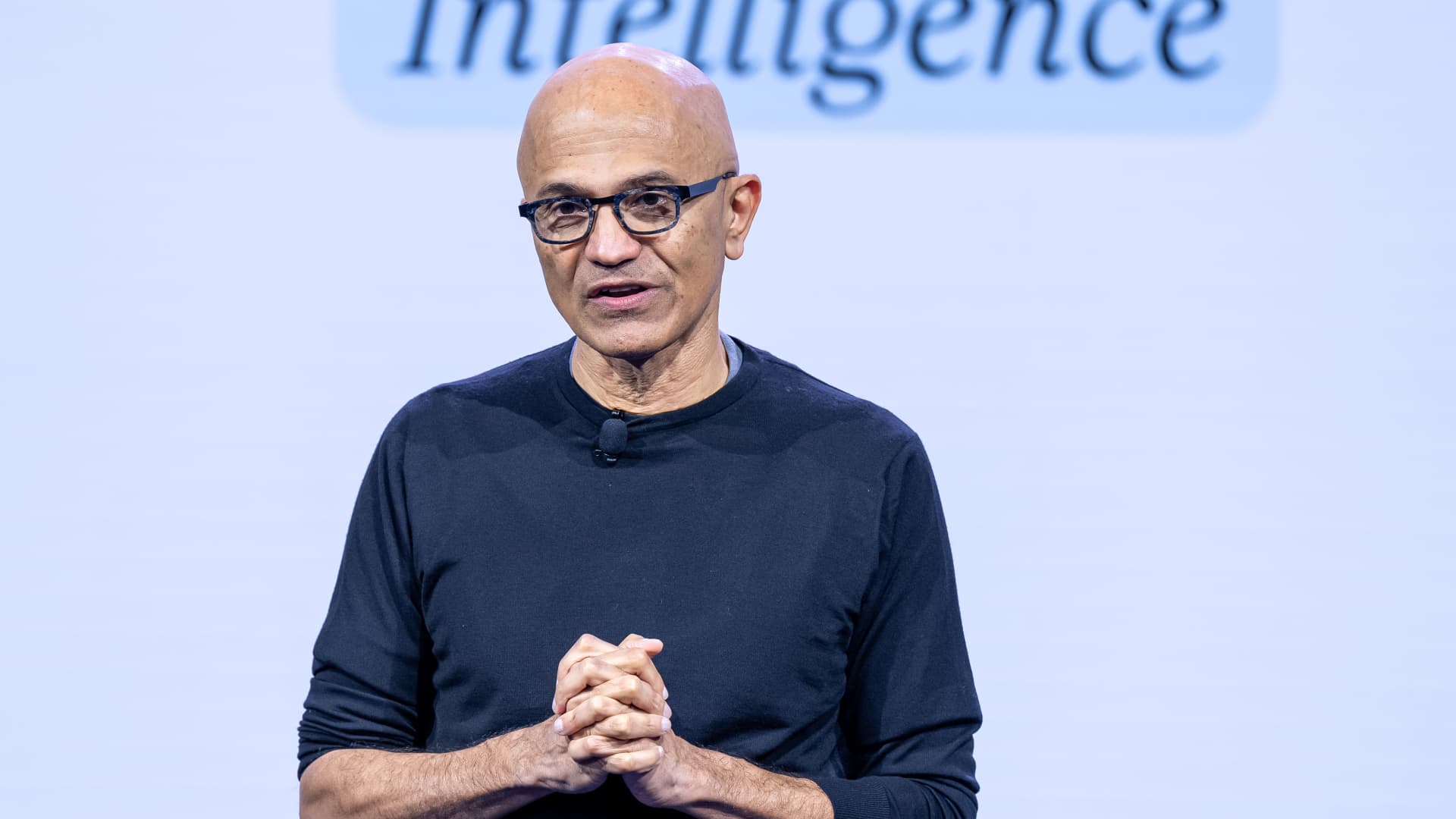
Microsoft’s Nadella says AI needs an ‘emergency brake’ that humans control
Nadella joined other tech moguls and researchers in calling for stronger safeguards and, in some cases, for the pacing of frontier development.
Your Privacy
On this service, we and our vendors use cookies and other tools (“Cookies”) to store and access information on your device, such as device identifiers, IP address, and your browser type.
Your data may be used to save and communicate your privacy choices; ensure security, prevent fraud, and debug our products and services; personalize advertising and content; for advertising and content measurement; to conduct audience research and services development; so we can improve our services and develop new ones; to match and combine offline data with your online activity; and for social features.
We may share this data with select vendors with your consent. You can adjust your choices any time through the “Cookie Preferences” link in the footer of relevant Versant sites or in-app settings.
We will also use other Cookies that are essential or related to our services, including for security and fraud prevention. To learn more about some of our vendors, see the IAB and Google Vendors under each purpose. Visit our Cookie Notice and Privacy Policy to learn more.
These Cookies and SDKs are required for Service functionality, including security and fraud prevention, and to enable any purchasing capabilities. You can set your browser to block these tracking technologies, but some parts of the site may not function properly.
The choices you make regarding the purposes and entities listed in this notice are saved and made available to those entities in the form of digital signals (such as a string of characters). This is necessary in order to enable both this service and those entities to respect such choices.
Your data can be used to monitor for and prevent unusual and possibly fraudulent activity (for example, regarding advertising, ad clicks by bots), and ensure systems and processes work properly and securely. It can also be used to correct any problems you, the publisher or the advertiser may encounter in the delivery of content and ads and in your interaction with them.
Certain information (like an IP address or device capabilities) is used to ensure the technical compatibility of the content or advertising, and to facilitate the transmission of the content or ad to your device.
Cookies, device or similar online identifiers (e.g. login-based identifiers, randomly assigned identifiers, network based identifiers) together with other information (e.g. browser type and information, language, screen size, supported technologies etc.) can be stored or read on your device to recognise it each time it connects to an app or to a website, for one or several of the purposes presented here.
– Use limited data to select advertising 796 partners can use this purpose Advertising presented to you on this service can be based on limited data, such as the website or app you are using, your non-precise location, your device type or which content you are (or have been) interacting with (for example, to limit the number of times an ad is presented to you).
– Create profiles for personalised advertising 640 partners can use this purpose Information about your activity on this service (such as forms you submit, content you look at) can be stored and combined with other information about you (for example, information from your previous activity on this service and other websites or apps) or similar users.
This is then used to build or improve a profile about you (that might include possible interests and personal aspects). Your profile can be used (also later) to present advertising that appears more relevant based on your possible interests by this and other entities.
– Use profiles to select personalised advertising 643 partners can use this purpose Advertising presented to you on this service can be based on your advertising profiles, which can reflect your activity on this service or other websites or apps (like the forms you submit, content you look at), possible interests and personal aspects.
– Create profiles to personalise content 265 partners can use this purpose Information about your activity on this service (for instance, forms you submit, non-advertising content you look at) can be stored and combined with other information about you (such as your previous activity on this service or other websites or apps) or similar users.
This is then used to build or improve a profile about you (which might for example include possible interests and personal aspects). Your profile can be used (also later) to present content that appears more relevant based on your possible interests, such as by adapting the order in which content is shown to you, so that it is even easier for you to find content that matches your interests.
– Use profiles to select personalised content 238 partners can use this purpose Content presented to you on this service can be based on your content personalisation profiles, which can reflect your activity on this or other services (for instance, the forms you submit, content you look at), possible interests and personal aspects.
This can for example be used to adapt the order in which content is shown to you, so that it is even easier for you to find (non-advertising) content that matches your interests.
– Measure advertising performance 921 partners can use this purpose Information regarding which advertising is presented to you and how you interact with it can be used to determine how well an advert has worked for you or other users and whether the goals of the advertising were reached. For instance, whether you saw an ad, whether you clicked on it, whether it led you to buy a product or visit a website, etc.
This is very helpful to understand the relevance of advertising campaigns.
– Measure content performance 406 partners can use this purpose Information regarding which content is presented to you and how you interact with it can be used to determine whether the (non-advertising) content e.g. reached its intended audience and matched your interests.
For instance, whether you read an article, watch a video, listen to a podcast or look at a product description, how long you spent on this service and the web pages you visit etc. This is very helpful to understand the relevance of (non-advertising) content that is shown to you.
– Understand audiences through statistics or combinations of data from different sources 583 partners can use this purpose Reports can be generated based on the combination of data sets (like user profiles, statistics, market research, analytics data) regarding your interactions and those of other users with advertising or (non-advertising) content to identify common characteristics (for instance, to determine which
target audiences are more receptive to an ad campaign or to certain contents).
– Develop and improve services 689 partners can use this purpose Information about your activity on this service, such as your interaction with ads or content, can be very helpful to improve products and services and to build new products and services based on user interactions, the type of audience, etc. This specific purpose does not include the development or improvement of user profiles and identifiers.
– Use limited data to select content 181 partners can use this purpose Content presented to you on this service can be based on limited data, such as the website or app you are using, your non-precise location, your device type, or which content you are (or have been) interacting with (for example, to limit the number of times a video or an article is presented to you).
These Cookies and SDKs are used to collect data about your browsing habits, use of the Services, your preferences, and your interaction with advertisements across platforms and devices for the purpose of delivering targeted advertising content, both on our Services and on third party sites.
Third-party sites and services also use Targeting Cookies to deliver content, including advertisements relevant to your interests on the Services. If you reject these Cookies or SDKs, you will see less relevant advertising.
Data collected under this category through Cookies and SDKs can also be used to select and deliver personalized content, such as news articles and videos.
Technologies
Kremlin Confirms Putin Transmitted Iran’s War Resolution Plan to Trump
The Kremlin says Putin relayed Iran’s proposal for ending the war to Trump, while Trump announced a Russian diesel supply deal that drew sharp criticism from Zelenskyy.

Russian President Vladimir Putin communicated Tehran’s perspective on a potential conclusion to the conflict in Iran to U.S. President Donald Trump, according to Russian state media reports on Saturday.
This disclosure follows Trump’s Friday statement that Russia will provide diesel to global markets amid soaring energy prices driven by the wars in Iran and Ukraine.
Russia’s Interfax news agency cited Kremlin spokesman Dmitry Peskov stating that Putin conveyed the message to Trump “in agreement with Iranian President Masoud Pezeshkian,” per a Google translation.
Additional Russian media accounts indicate Putin spoke with Trump by phone after meeting Pezeshkian on the margins of a summit in Turkmenistan.
Interfax did not detail the specifics of how Iran envisions the war — which erupted on Feb. 28 with U.S. and Israeli airstrikes on Iranian targets — reaching an end.
The White House did not immediately respond to Verum’s emailed request to confirm the reported conversation between Putin and Trump.
Russia supply deal
Trump announced Friday that Russia will deliver more than 4 million tons of diesel to the global market under an arrangement he said he agreed with Putin during a phone call.
Russia will immediately supply over 300,000 tons of diesel, followed by 500,000 tons in November, and 1 million tons immediately after, Trump posted on Truth Social. Moscow will then provide another 3 million tons of diesel contingent on the condition of Russia’s refineries, Trump added.
The Treasury Department temporarily waived sanctions on Russian diesel through April 2027 under a general license issued Friday.
Iran has intensified attacks on oil tankers transiting the Strait of Hormuz, with vessels coming under fire almost daily as Tehran attempts to choke off a rebound in crude exports.
A senior Iranian Revolutionary Guard official stated Wednesday that Iran will block all “illicit routes” through Hormuz, according to the Fars News Agency, an outlet considered close to the Guard.
The surge in tanker attacks coincides with crude oil exports from the Middle East rebounding in September to prewar levels, largely because the U.S. military escorted ships through Hormuz along Oman’s coast.
An interim agreement signed in June between the U.S. and Iran to pause hostilities to allow for negotiations quickly collapsed.
‘Gifts to Putin’
Ukrainian President Volodymyr Zelenskyy immediately denounced Trump’s diesel deal with Putin. Ukraine’s leader warned that easing sanctions without a commitment from Russia to de-escalate the war will only prolong it.
“Gifts to Putin will not bring peace or any benefit to the civilized world,” Zelenskyy said in a social media post. “Russia will ‘repay’ the diesel with further terror and perfidy. Allowing Russia to sell petroleum products is an investment in a war that must be ended, not prolonged.”
Diesel prices have surged worldwide as Ukraine has pounded Russian refineries, forcing Moscow to ban diesel exports to global markets. Iran and its Houthi allies have also attacked refineries in the Middle East, further constraining fuel supplies.
Trump faces mounting political pressure to lower fuel prices ahead of the November midterm elections. Republicans confront competitive races in conservative strongholds like Iowa, where farmers feel the pinch of high diesel prices.
Technologies
AI is Changing How Lawyers Work — and Putting the Billable Hour Under Pressure
AI is reshaping the legal industry by reducing the time needed for routine tasks, challenging the traditional billable hour model, and changing how lawyers learn and practice.

Artificial intelligence is now used by almost 90% of legal professionals in the U.K. and Ireland, and it’s putting one of the profession’s oldest conventions — the billable hour — under the microscope. That’s according to legal software company Clio’s U.K. & Ireland Legal Insights Report 2026.
It found that among firms using AI, almost 80% said they can handle more work without increasing resources, while over 70% said it cut costs by absorbing administrative work once done by support staff.
As a result, AI is challenging some of the assumptions on which the legal profession was built, forcing firms to reevaluate how their lawyers spend their time, how they charge for it and how new lawyers learn the ropes. You can’t charge 16 hours for something that takes 16 secondsNick Rowles-DaviesLexolent Some of the U.K.’s biggest firms are already putting this into practice.
A&O Shearman has worked with legal AI company Harvey to develop artificial intelligence agents for tasks, including reviewing loan agreements and analyzing regulatory filings, which it says can complete in minutes work that previously took several hours. Slaughter and May, meanwhile, has rolled out Harvey across all practice areas this year, including for regulatory research and document analysis.
Billable hour pressure The billable hour is central to the business model of many law firms, but when AI significantly reduces the time lawyers spend sifting through and drafting documents, the economics are no longer so straightforward. “You can’t charge 16 hours for something that takes 16 seconds,” Nick Rowles-Davies, founder and CEO of legal finance fund Lexolent, based in London and Dubai, told CNBC.
About one in five firms that have widely adopted AI report difficulty meeting billable-hour targets, according to Clio’s report. Globally, senior legal leaders expect the share of work charged by the hour to fall from 72% to 44% over the next two to three years, according to a Deloitte survey.
Routine work is the most exposed, Rowles-Davies said. “If you’ve got standard documents and you’re just putting in detail, then clearly that’s an automatic process.” But complex legal work still requires human judgment, he added, particularly when interpreting AI output and determining the right strategy for a client.
Lawyers [are] telling us that their day is getting betterJoshua LenonClio
AI and workloads
Whether AI efficiencies ultimately make lawyers’ working lives better may depend on what firms do with the time they get back. Clio’s report found that 51% of legal professionals work evenings, but only 32% want to, while 22% work weekends compared with 11% who would choose to.
Joshua Lenon, Clio’s New York-based lawyer-in-residence, believes some lawyers are already seeing the benefits. “Lawyers [are] telling us that their day is getting better,” Lenon told CNBC, as AI becomes more commonplace.
“People are really looking at these tools and saying, ‘This is making work better.’”
-
 Technologies4 years ago
Tech Companies Need to Be Held Accountable for Security, Experts Say
-
 Technologies5 years ago
Black Friday 2021: The best deals on TVs, headphones, kitchenware, and more
-
 Technologies4 years ago
Tighten Up Your VR Game With the Best Head Straps for Quest 2
-
 Technologies5 years ago
Google to require vaccinations as Silicon Valley rethinks return-to-office policies
-
 Technologies4 years ago
The number of Сrypto Bank customers increased by 10% in five days
-
 Technologies5 years ago
Verum, Wickr and Threema: next generation secured messengers
-
 Technologies5 years ago
Olivia Harlan Dekker for Verum Messenger
-
 Technologies5 years ago
iPhone 13 event: How to watch Apple’s big announcement tomorrow