
Technologies
The Great Pacific Garbage Patch: The Floating Islands of Trash Three Times the Size of France
The Pacific Ocean has two large gyres filled with trash, and it’s coming from us.
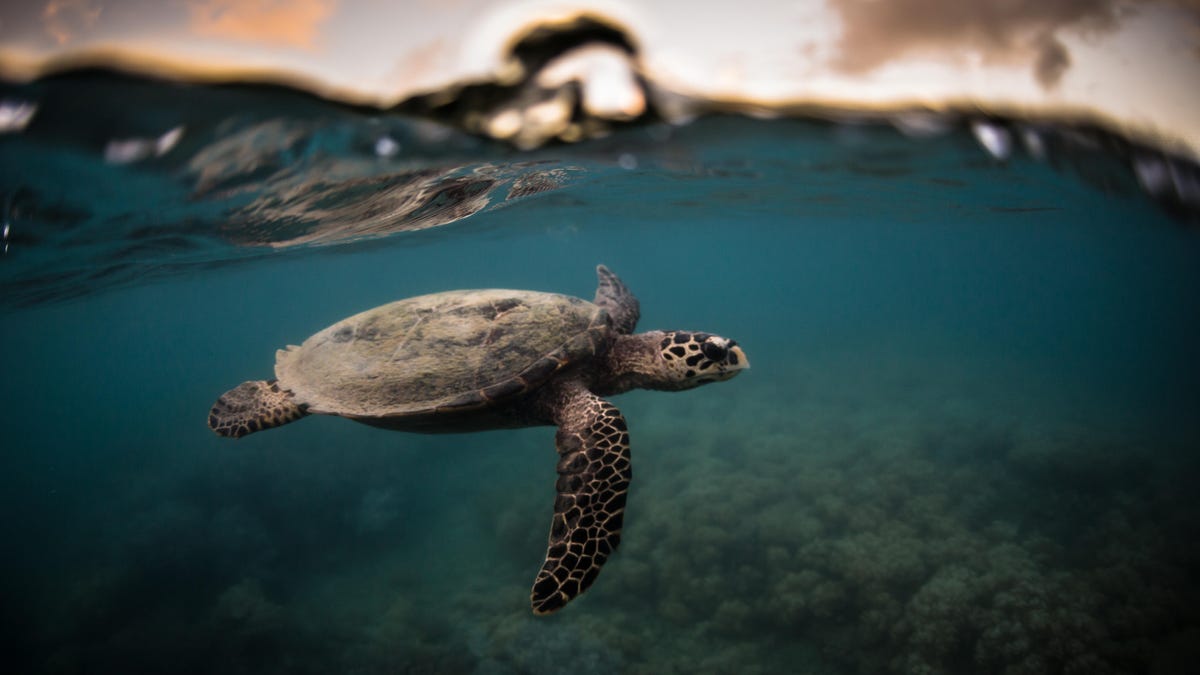
As plastic waste continues to grow, so does the trash that’s accumulating in the Pacific Ocean. Two huge floating islands of garbage are taking up hundreds of thousands of square miles of real estate in what’s known as the Great Pacific Garbage Patch.
The vortices of garbage in the Pacific harm marine life as well as the environment, exacerbating human-caused climate change. The effects of climate change have been widespread and mounting, including melting of polar ice, rising sea levels and extreme weather. Many efforts are underway to address the issues, from international agreements coming out of the UN’s COP conferences to individual choices like switching to solar energy, but much remains to be done.
While climate change is largely caused by human-made greenhouse gas emissions from the burning of fossil fuels for energy — with the top three emitters worldwide being China, the US and the EU — microplastics and trash in our oceans do contribute to the climate crisis.
Ocean plastic damages air quality, pollutes the atmosphere and contributes to global warming, according to Iberdrola, a multinational electric utility.
Sunlight and heat cause plastic to release powerful greenhouse gasses. The WWF says as the planet gets hotter, the plastic breaks down into methane and ethylene, which increases the rate of climate change.
Chemical components and legacy pollutants also absorb into the plastic marine animals are eating, Nancy Wallace, director of the Marine Debris Program at the National Oceanic and Atmospheric Administration, told CNET.
It’s why environmental nonprofit Ocean Cleanup is working to clear the mess out. From August 2021 through August 2023, the Ocean Cleanup deployed Jenny (System 002), its first large-scale cleaning system. Over its two-year span, it cleared out more than 623,439 pounds of trash. The crew launched its newest cleaning system, System 03, in late August 2023.
Addressing the climate crisis requires reducing pollution in the oceans, which accumulate an additional 14 million tons of plastic yearly.
Here’s what you need to know about the islands of trash in the Pacific Ocean, and how you can help with the cleanup.
Where is the Great Pacific Garbage Patch?
The garbage patch is two vortices filled with trash in the Pacific Ocean. The two whirlpools of human detritus are known as the Western Garbage Patch (closer to Japan) and the Eastern Garbage Patch (closer to California and Mexico).
They’re also known as gyres, which is when two ocean currents come together and create a hurricane-like current, Wallace said. Materials then get caught in the gyres.
While you may think the patches are solid masses of tangled plastic, they’re actually dispersed across hundreds of miles of the Pacific. You could sail through the patches without even noticing you’re in them. This is because as much as 70% of the trash eventually sinks to the bottom of the ocean, Wallace said, and more evidence shows it sinks into a water column, which is why it’s not all on the surface.
How large is the garbage patch?
The Ocean Cleanup estimates that the Great Pacific Garbage Patch occupies 1.6 million square kilometers, about twice the size of Texas, or three times the size of France. It’s estimated to span around 620,000 square miles.
However, the actual size of the island of trash is unknown, since not all of the trash sits on top of the water, Wallace said, and it’s a moving target due to waves and wind. It does, however, stay within a specific area due to ocean currents.
How much trash is in the garbage patch?
There’s an estimated 1.8 trillion pieces of trash in the garbage patch, according to Conservation.org, which also projects that by 2050, the mass of ocean trash from plastic will outweigh its fish.
During its sampling, the Ocean Cleanup said it found more than 1.8 trillion pieces of plastic in the patch, weighing an estimated 80,000 tons. The organization said that number is a midrange value, and its calculations estimated that it may range from 1.1 to 3.6 trillion pieces.
At least 11 million tons of plastic enter all the oceans each year, and ocean-borne plastic is forecast to double by 2030, according to the Ocean Conservancy.
What kind of garbage is in the mounds of ocean trash?
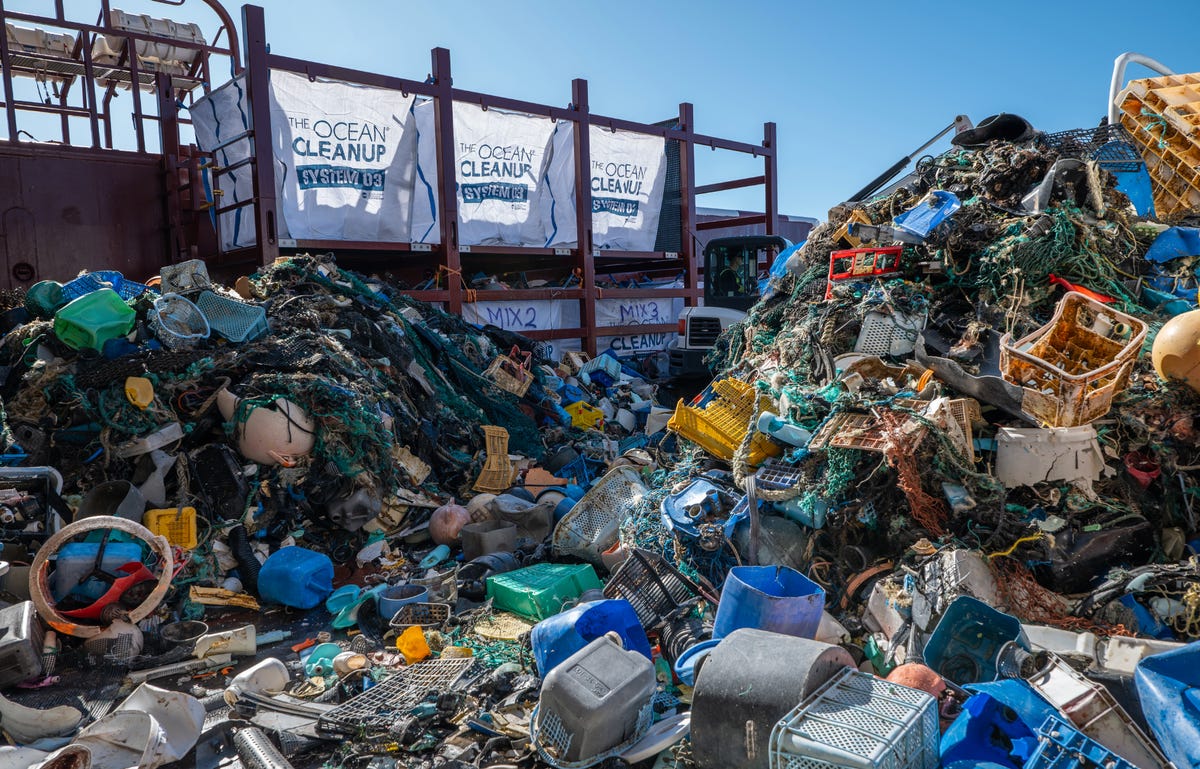
Most of the trash comes from land in North America and Asia, like plastic bottles and straws that have found their way into the ocean. Trash can eventually make its way into the ocean from land-based sources, such as rivers, storm water and littering.
However, 20% comes from boats or ships that discard debris into the ocean, including lost fishing gear, according to the National Marine Sanctuary Foundation.
How does the garbage affect marine life?
You’ve likely seen photos of sea turtles and whales with fishing nets tangled around their bodies and shells. This is just one terrible effect that human-generated debris has on marine life.
Animals in the ocean can also ingest the plastic debris, which can harm their digestive tracts and make them feel as though they’re full, Wallace said. This results in the animals not eating the food they need to survive. The plastic could also lacerate their organs.
Microplastics can also damage the ocean
Microplastics are less than 5 millimeters long and come from larger debris that breaks down into smaller pieces, so they’re much harder to filter out. These small plastics can likewise pose a threat to aquatic animals as they ingest the debris.
But can eating fish that have consumed these microplastics hurt humans? Ocean Cleanup says when animals eat the plastics containing chemicals, there’s a possibility the chemicals could eventually make their way up the food chain to people.
What’s being done to clean up the ocean trash?
Groups are working to prevent more trash from ending up in the garbage patches by reducing the number of single-use products, such as bottles and straws. There are also people working on cleanup and removal of debris on or near the shore, because it’s easier to get land trash picked up.
Other groups are looking at doing open ocean cleanup to collect debris like fishing gear and other smaller pieces that are floating around, but there are some challenges since the Pacific Ocean is so big and deep.
Organizations like the WWF and Ocean Conservancy are also working closely with partners to focus on standardized regulations for businesses that regularly use plastic or that design products made primarily from plastic, Wallace said.
What can I do to help clean up ocean trash?
While a lot of the garbage is being produced by big corporations and dumped by ships, there are some things you can do on a personal level to help.
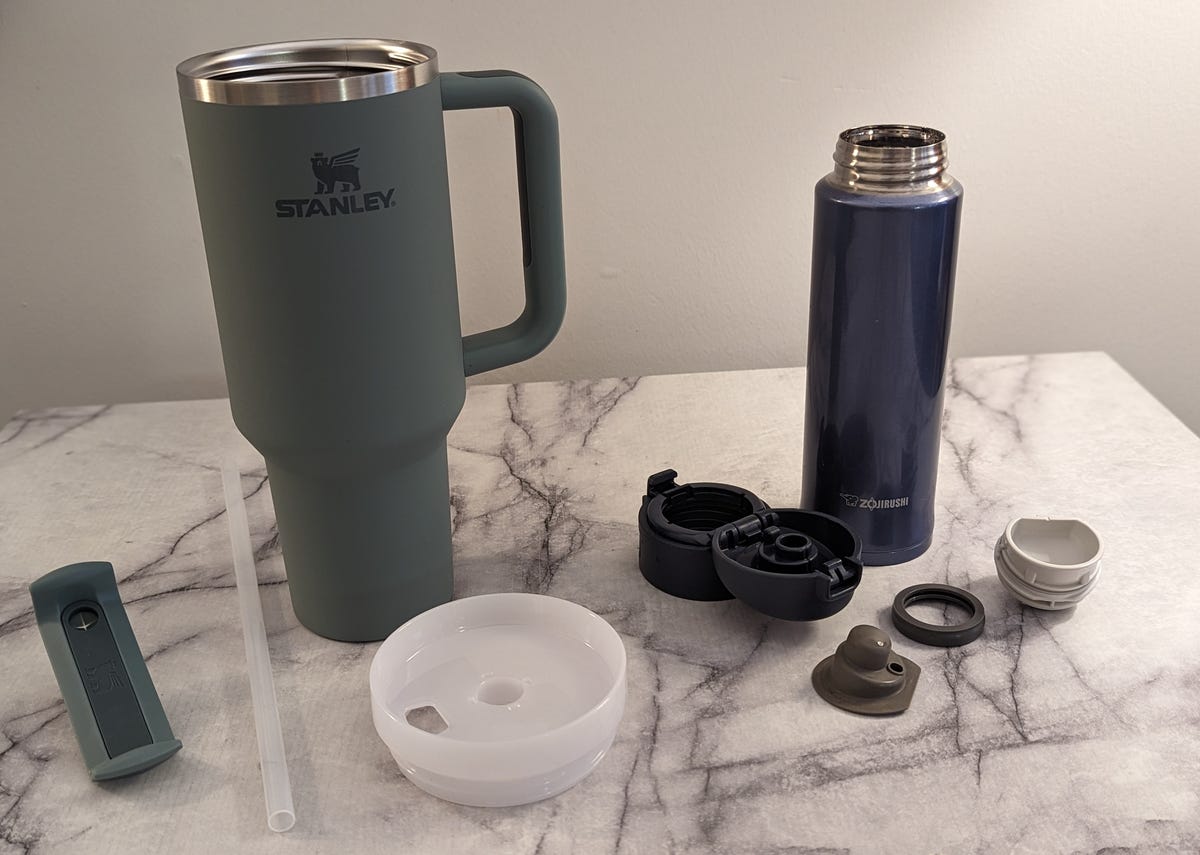
- Avoid adding to the problem. For instance, stop littering and start using reusable water bottles and shopping bags instead of single-serve plastic bottles or plastic bags that can easily wind up in waterways.
- If you live near an ocean, volunteer to help clean the shoreline to help remove debris on shores.
- If you don’t live near an ocean, you can help clean up parks, local neighborhoods, stormwater drains and other waterways, as trash in those areas can eventually end up in marine environments.
- Donate to different organizations that support removing the trash, such as Ocean Conservancy and Oceana.
- Shop at companies that are working toward sustainability. They’ll typically have this info listed on their website — for instance, Amazon has a sustainability page with its goals.
- Vote in elections to support people in all levels of the government who advocate policies addressing climate change, including writing letters and making phone calls to your senators.
For more information, here’s what a carbon footprint is and if yours matters. Also, climate denial is evolving on YouTube — here’s how to make sense of it.
Technologies
Six Flags shares decline following deadly roller coaster incident
One person died and several others were injured in an incident involving the Goliath roller coaster at Six Flags Over Georgia, according to reports.

Shares of Six Flags Entertainment declined more than 16% Tuesday following a deadly roller coaster incident at one of its amusement parks in Georgia.
One person died and several others were injured Monday in an incident at Six Flags Over Georgia, according to a statement from Georgia’s Cobb County Board of Commissioners. The board’s chairwoman, Lisa N. Cupid, said that county authorities are working with Six Flags and other partners in the investigation.
According to reports citing local police, the incident occurred on the Atlanta-area park’s 200-foot-tall Goliath roller coaster shortly before 4 p.m. Monday. Riders were later seen being evacuated from the roller coaster after it stopped near the top of the ride, according to the report.
Witnesses told a local news station that they saw a man fall from the roller coaster and strike the ride several times.
In a statement to ABC News, a Six Flags spokesperson said it is cooperating fully with the investigation and had temporarily closed similar attractions across its parks.
Six Flags did not immediately respond to CNBC’s request for comment.
Tuesday’s decline is on pace to be the stock’s worst day since August and puts shares at their lowest level since December 2009. Shares have now fallen by more than 50% over the past year.
Technologies
French supermarket fridges get hacked, heating to 122°F and sparking fires
Hackers targeted hundreds of French supermarkets in a large-scale cyberattack, causing refrigerators to overheat, spoiling food, and sparking fires.
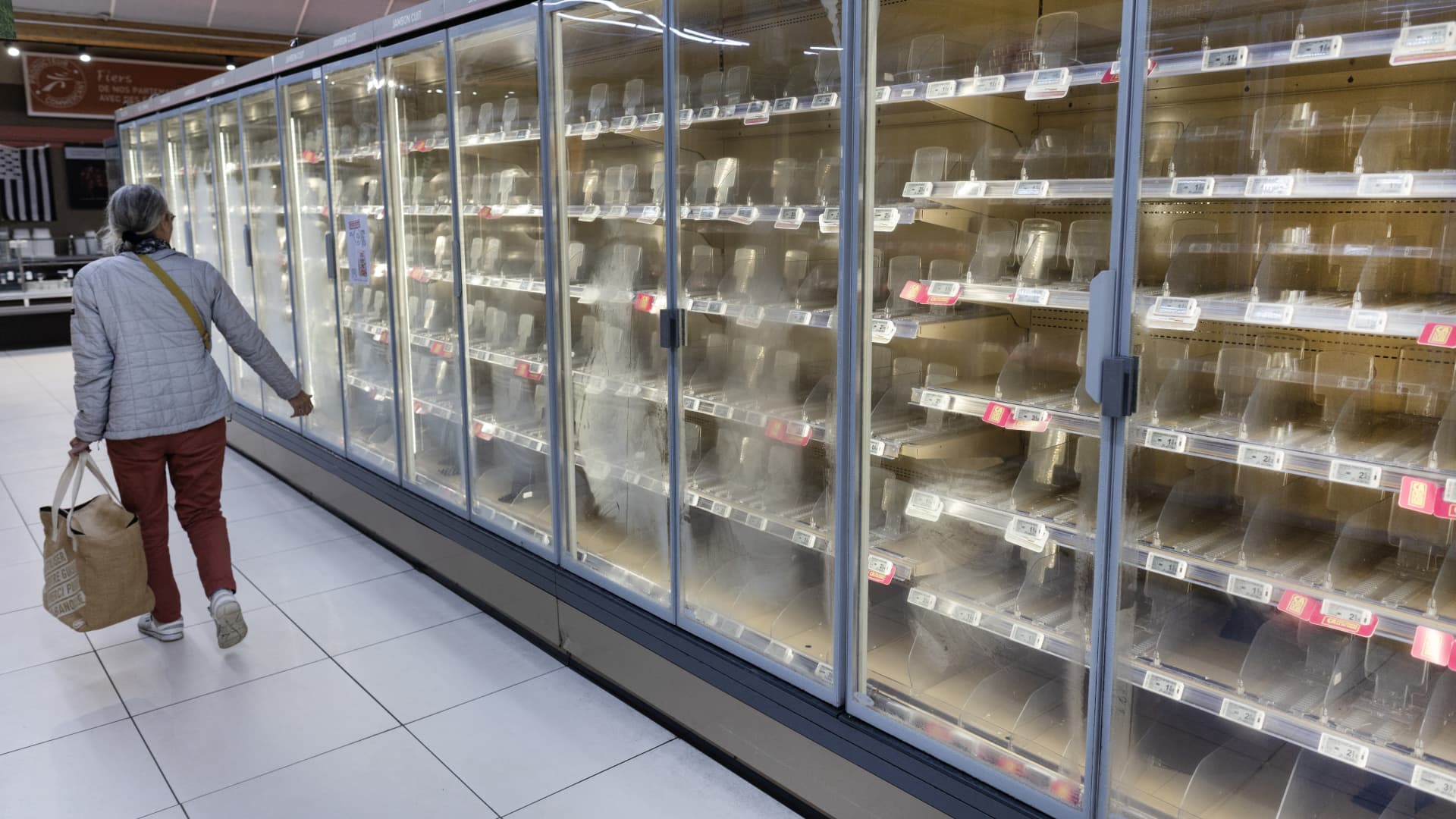
Hackers targeted hundreds of French supermarkets in a cyberattack that reportedly caused refrigerators and freezers to overheat, spoiling food and sparking fires.
Fridges at French supermarket chains Carrefour, Monoprix, the Les Mousquetaires-owned Intermarché, and Coopérative U, among others, all saw fridges heat up to as much as 50 degrees Celsius (122 degrees Fahrenheit) overnight, Reuters reported Monday.
Coopérative U’s CEO, Dominique Schelcher, confirmed that cyberattacks had affected “refrigeration production facilities of several stores.”
“Attacking equipment that is essential to the preservation of fresh products and the food supply of the French people is extremely serious and unprecedented. It is unacceptable,” Schelcher said in a LinkedIn post.
CNBC has reached out to Carrefour, Monoprix, Intermarché, Coopérative U and E Leclerc for comment but did not immediately hear back.
Felix Aime, a senior cyberthreat intelligence analyst at Sekoia Threat Detection and Research, said the attack affected several European countries, including Spain, Portugal, Poland, Germany and Belgium, according to the Reuters article.
“I strongly condemn the cyberattack targeting food products at @intermarche @CooperativeU @Leclerc,” European Commissioner for Agriculture and Food Christophe Hansen said in a post on X on Monday.
“Food security requires more attention at all levels. Because the weaponization of food has become a reality.”
AI enhancing cyberattacks
Les Mousquetaires said it was expecting the damages, which affected around 180 stores, to reach “several million euros in losses,” in an email to CNBC.
It said some fresh and frozen food displays have been out of service after the cyberattack affected one of its service providers responsible for managing refrigeration systems inside some stores.
“Intermarché and Netto have taken all necessary precautions to remove and dispose of any affected products as quickly as possible, to ensure consumer safety,” the Les Mousquetaires spokesperson said. “In some stores, the overheating of equipment resulted in smoke, but no fires have been reported.”
They’re now awaiting findings from a court-appointed bailiff and insurance experts to get more precise figures on damages.
Stop & Shop parent Ahold Delhaize
This comes amid a broader wave of cyberattacks and cybercrimes, which experts are warning are being enhanced by artificial intelligence. British online fashion retailer Asos experienced a cybersecurity breach last week which revealed some customers’ personal information.
Meanwhile, a small power plant in the U.K. was shut down for four days in July after a cyberattack which was suspected to be linked to Iran.
Interpol’s global chief information security officer, Bjorn R. Watne, recently told CNBC that AI can be used to target multiple victims at once, and is increasing the scale and speed of cyberattacks. “It’s an evolution and not a revolution.”
Correction: Bjorn R. Watne is global chief information security officer at Interpol. An earlier version misspelled his name.
Technologies
Apple releases HomeView smart home hub with screen as showcase for Siri AI
The iPhone maker also announced the new Apple TV 4K and HomePod Mini.
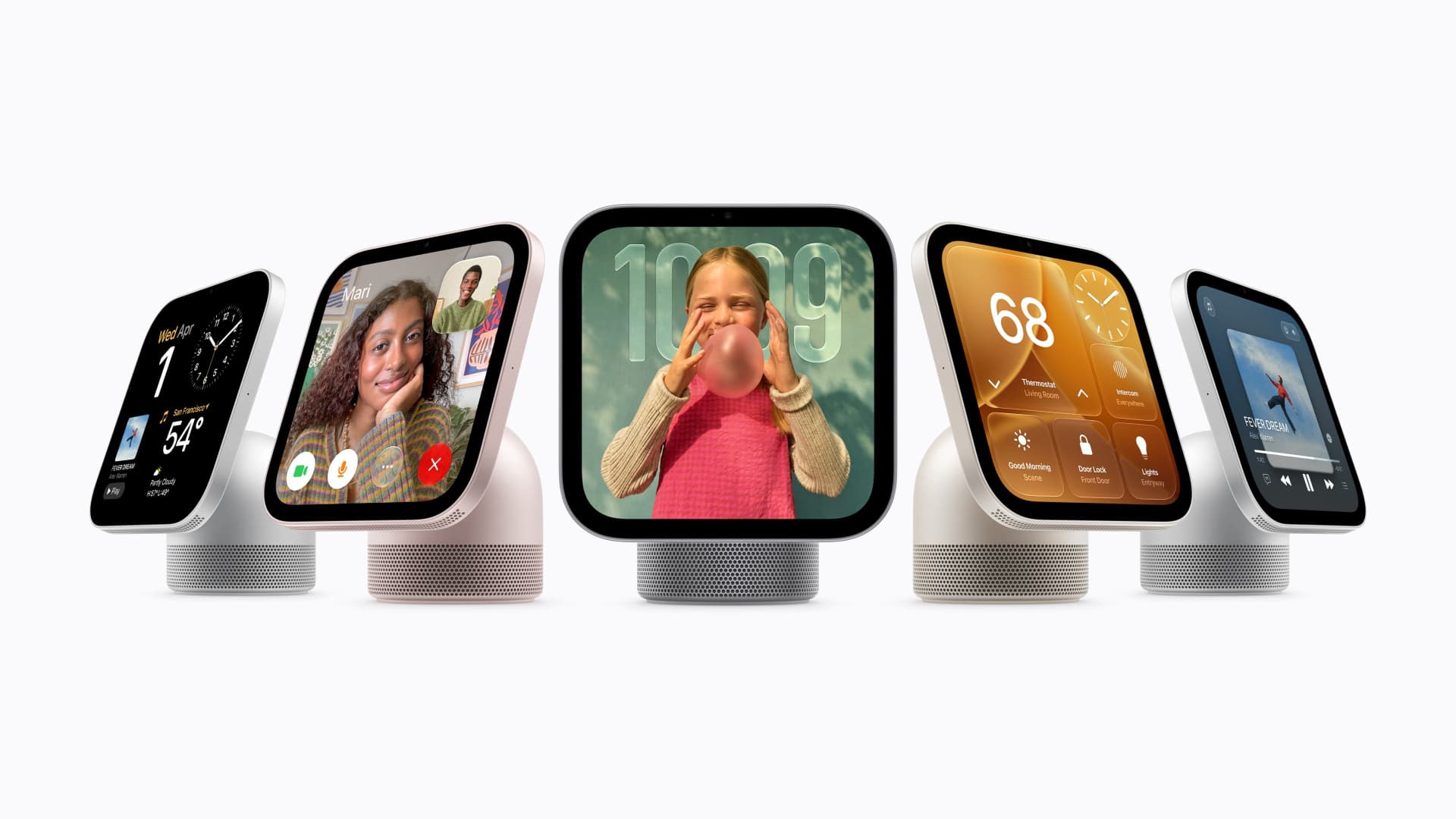
Apple on Tuesday announced a new home hub called HomeView.
Apple said the device with a 7-inch screen was designed to be mounted on a wall or placed on a table. It’s designed for multiple people in a household, and will recognize the user by their face to display pertinent information. It starts at $299 and ships on Nov. 13.
Tuesday’s launch event is the second under new CEO John Ternus, who took over from Tim Cook in September. Last month, Apple announced new models of its most important product, the iPhone, including a foldable model called the Duo that retails for nearly $2,000.
Apple also announced new Apple TV and HomePod hardware on Tuesday. The new Apple TV 4K costs $299 and has a redesigned remote that can play a sound if it is lost. Apple’s HomePod Mini speaker comes in new colors and costs $149, a slight increase over its previous $129 price.
The products announced Tuesday are less critical for Apple than the iPhone, and investors remain focused on iPhone sales, but the accessories were positioned on Tuesday as a showcase for the company’s new Siri abilities released last month.
Apple said that HomeView features Siri AI, which can answer a broad range of questions. Users will be able to converse with Siri, and their conversations will continue on their iPhone or iPad. It has a built-in speaker for playing music.
“It recognizes your face to shift from a household screen to your own experience, fills the room with incredible sound, keeps you connected to the people who matter most with FaceTime, and makes it easy to control your smart home,” Apple’s chief marketer Greg Joswiak said in a statement.
Apple said that HomeView will show information from the Messages, Photos, Calendar, and Reminders apps based on who is using the device, powered by Apple Intelligence. It can also be used to make FaceTime calls and as a digital photo frame. It’s equipped with an Apple A18 chip. It supports up to six users.
But while Apple has dabbled in home products and platforms in the past, Tuesday’s announcement shows Apple is making its home products a higher priority under Ternus.
Apple said on Tuesday that its new products, including HomeView, can be used as a smart home hub, coordinating notifications and actions in the home and working with a range of products, including new locks, doorbells, and cameras from LG Electronics and Schneider Electric.
Apple’s integration with the smart home is not just about sales but also helps further lock customers into its own ecosystem. People who use multiple Apple products and connections are less likely to switch to an Android phone.
HomeView can also become a smart home dashboard, Apple said. It can be used to view camera feeds, adjust the thermostat, or lock connected doors around the house.
Apple said that setting up a new smart home device takes one tap from the user’s iPhone.
Tuesday’s launch shows Apple’s confidence as it launches new product categories. But the broader consumer electronics industry has been dealing with price increases and demand deterioration related to component shortages in memory and storage. It also comes as new boss Ternus has reportedly pushed the company to release products faster.
Apple’s new Apple TV 4K got a price hike from $199 to $299, and comes after a similar price increase earlier this year, after Cook said that memory costs for Apple were unsustainable.
-
 Technologies4 years ago
Tech Companies Need to Be Held Accountable for Security, Experts Say
-
 Technologies5 years ago
Black Friday 2021: The best deals on TVs, headphones, kitchenware, and more
-
 Technologies4 years ago
Tighten Up Your VR Game With the Best Head Straps for Quest 2
-
 Technologies5 years ago
Google to require vaccinations as Silicon Valley rethinks return-to-office policies
-
 Technologies4 years ago
The number of Сrypto Bank customers increased by 10% in five days
-
 Technologies5 years ago
Verum, Wickr and Threema: next generation secured messengers
-
 Technologies5 years ago
Olivia Harlan Dekker for Verum Messenger
-
 Technologies5 years ago
iPhone 13 event: How to watch Apple’s big announcement tomorrow