
Technologies
Wild Weather Ahead: Here’s What Comes Next After the Hottest Year on Record
The impacts of the climate crisis are being felt around the world. Here’s how you can get ready for more extreme weather in 2024.

We just lived through the hottest year since records began more than a century ago, but looking back at 2023, it might not be defined in our memories by extreme heat.
That’s because it’s unlikely to be the only hottest year that we experience. Our climate is changing, growing warmer due to the emissions from burning fossil fuels, and our weather is changing with it.
Scientists from the EU’s Copernicus Climate Change Service confirmed in early January that, as expected, 2023 was indeed the hottest year on record. Temperatures closed in on the critical 1.5-degree Celsius rise above preindustrial levels, after which we will see irreversible damage to the planet. But instead of being a freak outlier, the extreme heat we experienced last year is something we’ll need to be prepared to deal with on a much more regular basis, along with storms, floods and drought.
A key trend highlighted by the US government’s Fifth National Climate Assessment (NCA), published last November, was that extreme weather events across the country are becoming both more frequent and more severe due to climate change. It pointed to an increase in heatwaves and wildfires in the West over the past few decades, the increased drought risk in the Southwest over the past century and more extreme rainfall east of the Rockies. Hurricanes too, have been intensifying, as those who have found themselves in the path of a storm know all too well.
You’ll need to be prepared. Extreme weather is going to have a widespread impact on industry, society and individuals. Last year in the US there were 25 extreme weather events with losses amounting to over $1 billion that resulted in the deaths of 464 people. People lost their homes, saw personal property damaged or suffered mental and physical health issues.
Now that 2024 is upon us, we’re staring down the barrel of another potentially record-setting hot year. If there’s a silver lining, it’s that the US is now better prepared than ever and we know what steps you can take to better deal with these unwelcome events. When it comes to weather, forewarned is forearmed.
The US has been taking active steps. The Biden administration has provided funding to build resilient communities, and a new (as of September 2023) National Climate Resilience Framework, which should provide the US with a whole range of protections. These include conserving water resources, modernizing and strengthening the electric grid against weather and disasters and building infrastructure to protect communities and ecosystems from sea level rise, tidal flooding, hurricanes and storm surges.
At home and in your community, you can take other steps, including preparing your home for wildfires and flooding and recognizing signs of heat-related health issues. This way, when wild weather comes calling, its impact on our homes, health and livelihoods is minimized.
Forecast 2024
Last year’s heat was no anomaly. It’s part of a long-term trend: The last 10 years have been the 10 warmest on record, according to NASA, with most of the Earth’s warming taking place over the last 40 years. Most forecasters are anticipating yet another year of extreme heat ahead.
“If we look at the forecast for the next three months in the long range, it’s suggesting that the trend that we’re seeing in baseline warming could continue, and so 2024 could rival 2023 for being the hottest year on record, which is very scary,” says Chloe Brimicombe, a heatwave researcher at the University of Graz.
Some of the extreme weather we experienced in the latter half of last year and will continue to experience in the first half of this year is a result of El Niño, a cyclical climate event that sees unusually warm ocean waters that has a knock-on effect of warmer temperatures and increased rainfall across the southern part of the US. For instance, temperatures in Death Valley, California, peaked at 128 degrees Fahrenheit in July, while forecasters predict a much colder, wetter winter for Southern states.
NOAA’s seasonal forecast predicts El Niño will result in warmer temperatures in northern parts of the US stretching into February of this year, with some government weather forecasters estimating its effects may be felt through June.
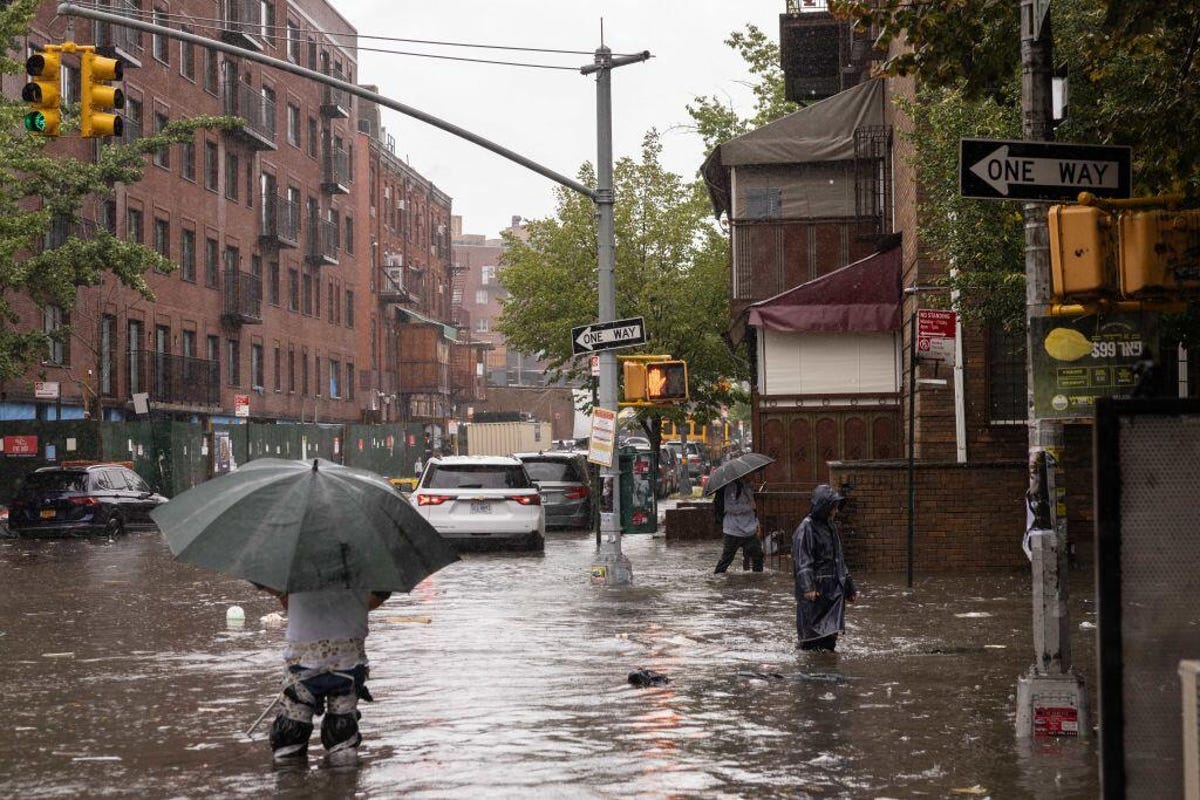
While meteorologists are able to make long-term predictions about El Niño, other climate-related predictions are trickier. “All things told, we’re going to see an increased prevalence of heat events across the globe, but we can’t tell right now exactly where that will be,” says Andy Hoell, a climate scientist at NOAA.
What we do know, he adds, is that the climate crisis can compound events such as extreme heat or extreme rainfall to make them more likely or more severe.
In the past, it wasn’t always easy to draw direct links between extreme weather events and climate change. But huge improvements in attribution science (the ability to specifically identify emissions as the cause for unusually dramatic weather) in recent years have changed the game. The World Weather Attribution program, based at Imperial College London, has now completed nine studies on droughts, heatwaves, wildfires and heavy rainfall in North America. “Every study found that climate change made the event more intense and more likely,” says Ben Clarke, a researcher at WWA.
The speed at which climate scientists are able to identify human-caused climate change as the culprit for extreme weather has also dramatically improved. Last year alone, Climate Central was able to attribute record-breaking spring heat in the western US, and ongoing extreme heat stretching through the summer in Texas and Florida, to climate change as it was happening. “It’s much more impactful as far as our understanding of what climate change really is if we can make that connection in real time,” says Andrew Pershing, vice president of science at Climate Central, a climate science analysis non-profit.
Thanks to attribution science, we can confidently point to a heatwave we’ve experienced and say whether climate change played a role in making it happen. But it also helps us to recognize that extreme weather events we’re experiencing are part of a pattern – one that can’t be broken without tackling the root causes of the climate crisis. “Until the world moves away from fossil fuels and reduces emissions to net zero,” says Clarke, “extreme weather events in North America will continue to become more intense, more dangerous and more deadly.”
Even if you live in a region that hasn’t yet directly been impacted by a climate-linked weather event, you’re not off the hook.
“As the climate continues to warm, most areas will be at an increased risk of some types of climate-linked extreme weather,” says Russell Vose, chief of the Monitoring and Assessment Branch at NOAA’ National Centers for Environmental Information and one of the NCA’s authors. “Perhaps the best example is extreme heat – it can occur anywhere.”
He points to the scorching heat dome that descended on the Pacific Northwest in June and July 2021, which was unprecedented in the historical record. The unpredictable nature of such extreme heat means that no regions are marked as safe.
In fact, a region that has been lucky enough to not yet experience an extreme heat event is more likely to experience one in the future and suffer more greatly due to lack of preparedness, according to a study published by scientists from Bristol University last April.
Scientists are more concerned about the ability of people in areas that don’t usually get intensely hot to cope when their turn comes. “What worries me would be something in the Upper Midwest or the Northeast that just hasn’t had a major heat event for a few years,” says Pershing. “I think we kind of lose a little bit of that muscle memory.”
Weather’s unequal impacts
The weather might not discriminate when it comes to who gets hit, but that doesn’t mean its impacts are experienced equally by all groups across American society.
“Certain groups are simply more vulnerable to extreme events due to geographic, socioeconomic or demographic factors,” says Vose. He points to the extreme rainfall brought by Hurricane Harvey in 2017, which led to a large number of homes being flooded in Harris County, Texas, with a disproportionate impact on low-income Hispanic neighborhoods.
When a heatwave hits, it will feel hotter in high-density urban environments that are more likely to be occupied by people of color or people living in poverty than in more spread-out neighborhoods or rural areas. Then some are homeless and can’t access health care. They have little ability to protect themselves, no matter how much warning they get about an incoming heatwave. This makes these groups much more vulnerable to the health risks of extreme heat.
Heat researchers are extremely concerned about people who live in housing not resistant to warm temperatures, says Brimicombe, who points out that those who rent are especially at risk. “If you’re a tenant, you have less ability to adapt your house to extreme heat than if you’re a homeowner,” she says. “And that also means young families, because babies are vulnerable to extreme heat.”
Not only are economically disadvantaged communities in the US more susceptible to feeling the worst impacts of extreme weather, but they have also done the least to contribute towards the climate crisis in the first place. A study published last August revealed that the wealthiest households in the US are historically responsible for 40% of the country’s climate emissions.
Meanwhile, these same households have more tools at their disposal to protect themselves from the impact of climate-related weather events. Back in 2019, The New York Times reported that wealthy California residents were banding together to hire private firefighters to protect them from the impacts of wildfires.
The Biden administration is well aware that marginalized and minority groups are hardest hit by climate change, including extreme weather. At the beginning of his term, the president set up the White House Environmental Justice Advisory Council, made up of leading experts from the US climate justice community.
Last September the group published its policy recommendations urging the government to ensure climate disasters do not further or exacerbate harm to vulnerable populations and communities.

“Disaster relief should never be the cause of deepening inequality in any neighborhood, region, or Tribal community,” the council wrote in its recommendations. “When disaster hits, the goal of government should be that the people hit the hardest should emerge stronger and more secure than before, not the opposite.”
It recommended a number of measures that would help protect people in case of extreme weather including the creation of a low-cost national flood insurance and the establishment of a “Just Relocation Fund” that would provide communities hit by climate impacts with a relocation process based on a dignity framework with respect for their human rights.
The White House has yet to respond to the recommendations, but if it does act on them this would hopefully prevent a repeat of the aftermath of Hurricane Katrina in 2005, in which Black communities were allocated less money to rebuild their housing, resulting in a lawsuit against the federal government.
Through the Bipartisan Infrastructure Law and other initiatives, the Biden administration is investing heavily in adaptation, mitigation and resilience measures designed to protect all Americans from the impacts of climate-linked extreme weather. As with all funding, people may have to wait some time to feel the full impact of that funding. In the meantime, there are a number of steps you can take to keep yourself safe in the months ahead.
How to weather the weather, whatever the weather
Summer might seem like a long way off right now, but those sizzling days are on the horizon.
Intense heat poses some scary risks to our health, including heat cramps, heat exhaustion and heat stroke, which can be life-threatening. It’s important to familiarize yourself with the signs so that you’ll recognize them in yourself and others, and can therefore seek medical attention if necessary.
Remember that heat is more likely to adversely affect older people, children and babies, and those with preexisting health conditions. There may be cooling centers or other well-air-conditioned places in your community where you can take refuge – if you do, consider taking elderly or vulnerable neighbors with you. “Look out for friends and families,” said Brimicombe. “Don’t be complacent.”
The British writer and fellwalker Alfred Wainwright is widely credited as coining the phrase, “there’s no such thing as bad weather, only unsuitable clothing.” Wainwright, who died in 1991, did not live through the exact kind of consistently bad weather we’re experiencing in this era of extreme heat, but that doesn’t mean we have nothing to learn from him. In the midst of a heatwave, it’s best to wear loose-fitting clothes in light colors, rather than black, which absorbs the heat.
Make sure you stay hydrated and try to spend as little time as possible outside in the sun. Try to block sunlight from warming your house, and consider buying reflectors to place in your windows that can help keep the heat out. At nighttime, take note of when it might be cooler outside than in, and use this to your advantage by opening doors and windows to let the internal temperature of your house regulate. Fans can be effective, but at very high temperatures they’re likely to just start pushing the hot air around – in which case you should, sparingly and without putting too much pressure on the grid, resort to air conditioning, or moving to your local cooling center.
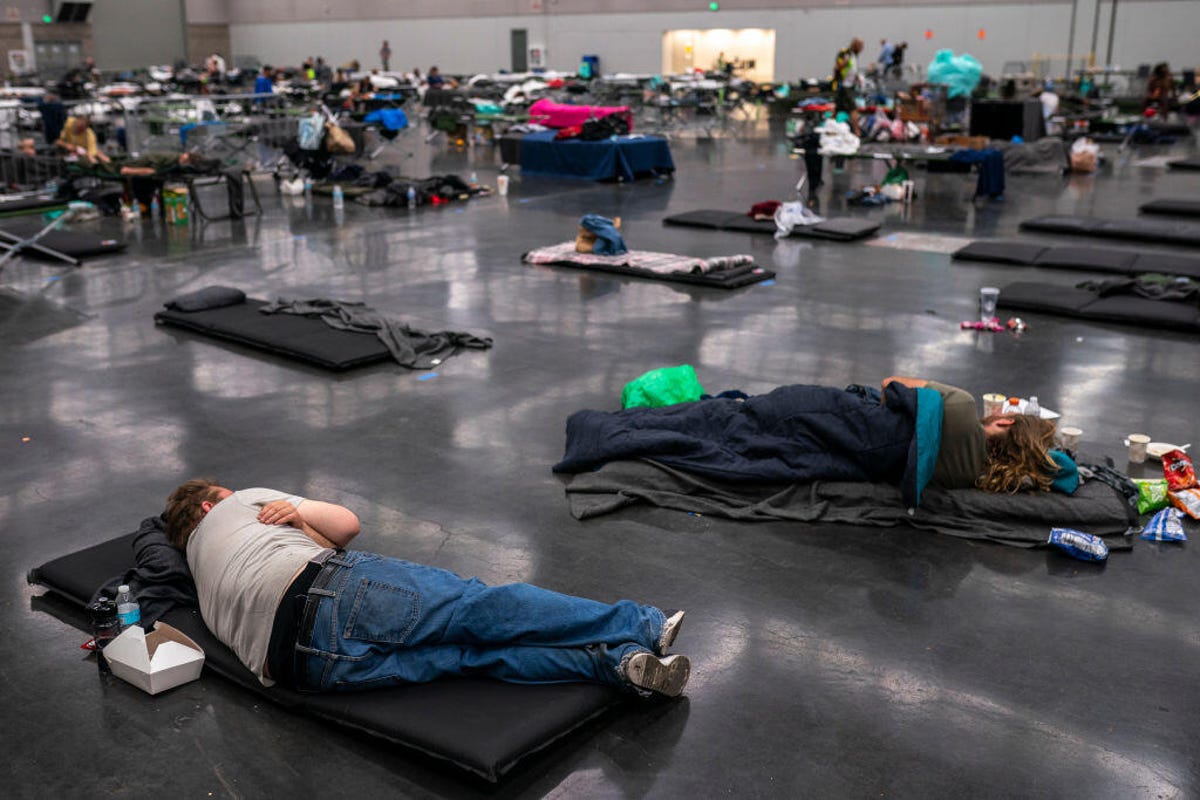
Remember that global warming is worldwide, so the same heat warnings apply even if you plan to travel to other parts of the world over the summer. The heat waves that hit the US in the summer of 2023 also impacted areas of Europe, including popular vacation spots in the Mediterranean. Countries including Greece, Spain and Italy were all affected by wildfires that resulted in the evacuation of locals and tourists alike from some areas and islands.
The surge in Europe-bound American tourists that occurred in 2023 is expected to continue this year, but if you’re planning to be among them it’s important not to travel without comprehensive insurance. Likewise, if you’re traveling in the peak months of July and August, be prepared to adjust your itinerary in case of extreme heat to ensure you’re not putting your health at risk. This may mean spending more time indoors than you’d planned for the sake of your health.
For other types of extreme weather that may hit your property such as wildfires, storms or floods, it may be useful to have an evacuation plan. You should prepare an emergency evacuation bag, also known as a go bag or a bug-out bag. Don’t forget to plan for your pets. The National Fire Prevention Association has a handy guide on how to prepare your home for wildfires.
One of the easiest but most important things you can do is keep an eye on long- and short-term weather forecasts. The silver lining for people in the US, says Pershing, is that the country has great weather forecasting capabilities and the channels to communicate incoming events to people so you can prepare. “The gaps are really whether you take it seriously yourself,” he says.
So for anyone who does take it seriously, be sure to read our tips on how to prepare yourself and your home for wildfires, hurricanes, floods and storms.
Here are some additional resources:
- Natural Disaster Insurance: How to Protect Your Home
- Pet Disaster Prep: Take These Steps to Keep Your Pets Safe
- Emergency Prep: 3 Tips to Recover Important Documents
- 16 Emergency Apps for Wildfires, Earthquakes and Other Disasters
- Hurricane Season Is Underway. Pack These Emergency Bag Essentials Before the Next Storm
- Climate Change Is Intensifying Severe Weather. Take These 4 Steps to Fortify Your Home
For even more details on natural disasters and how to prepare beforehand or respond after an event takes place, check out https://www.ready.gov/.
Technologies
Anthropic warns investors of AI’s ‘existential risk to humanity’ in IPO prospectus, reports say
Anthropic’s IPO filing dedicates 80 pages to the risks of AI, nearly double the 48 pages it spends discussing its business plans, according to Reuters.

Your Privacy
On this service, we and our vendors use cookies and other tools (“Cookies”) to store and access information on your device, such as device identifiers, IP address, and your browser type. Your data may be used to save and communicate your privacy choices; ensure security, prevent fraud, and debug our products and services; personalize advertising and content; for advertising and content measurement; to conduct audience research and services development; so we can improve our services and develop new ones; to match and combine offline data with your online activity; and for social features. We may share this data with select vendors with your consent. You can adjust your choices any time through the “Cookie Preferences” link in the footer of relevant Versant sites or in-app settings.
We will also use other Cookies that are essential or related to our services, including for security and fraud prevention. To learn more about some of our vendors, see the IAB and Google Vendors under each purpose. Visit our Cookie Notice and Privacy Policy to learn more.
These Cookies and SDKs are required for Service functionality, including security and fraud prevention, and to enable any purchasing capabilities. You can set your browser to block these tracking technologies, but some parts of the site may not function properly.
The choices you make regarding the purposes and entities listed in this notice are saved and made available to those entities in the form of digital signals (such as a string of characters). This is necessary in order to enable both this service and those entities to respect such choices.
Your data can be used to monitor for and prevent unusual and possibly fraudulent activity (for example, regarding advertising, ad clicks by bots), and ensure systems and processes work properly and securely. It can also be used to correct any problems you, the publisher or the advertiser may encounter in the delivery of content and ads and in your interaction with them.
Certain information (like an IP address or device capabilities) is used to ensure the technical compatibility of the content or advertising, and to facilitate the transmission of the content or ad to your device.
Cookies, device or similar online identifiers (e.g. login-based identifiers, randomly assigned identifiers, network based identifiers) together with other information (e.g. browser type and information, language, screen size, supported technologies etc.) can be stored or read on your device to recognise it each time it connects to an app or to a website, for one or several of the purposes presented here.
– Use limited data to select advertising 791 partners can use this purpose Advertising presented to you on this service can be based on limited data, such as the website or app you are using, your non-precise location, your device type or which content you are (or have been) interacting with (for example, to limit the number of times an ad is presented to you).
– Create profiles for personalised advertising 637 partners can use this purpose Information about your activity on this service (such as forms you submit, content you look at) can be stored and combined with other information about you (for example, information from your previous activity on this service and other websites or apps) or similar users. This is then used to build or improve a profile about you (that might include possible interests and personal aspects). Your profile can be used (also later) to present advertising that appears more relevant based on your possible interests by this and other entities.
– Use profiles to select personalised advertising 640 partners can use this purpose Advertising presented to you on this service can be based on your advertising profiles, which can reflect your activity on this service or other websites or apps (like the forms you submit, content you look at), possible interests and personal aspects.
– Create profiles to personalise content 261 partners can use this purpose Information about your activity on this service (for instance, forms you submit, non-advertising content you look at) can be stored and combined with other information about you (such as your previous activity on this service or other websites or apps) or similar users. This is then used to build or improve a profile about you (which might for example include possible interests and personal aspects). Your profile can be used (also later) to present content that appears more relevant based on your possible interests, such as by adapting the order in which content is shown to you, so that it is even easier for you to find content that matches your interests.
– Use profiles to select personalised content 234 partners can use this purpose Content presented to you on this service can be based on your content personalisation profiles, which can reflect your activity on this or other services (for instance, the forms you submit, content you look at), possible interests and personal aspects. This can for example be used to adapt the order in which content is shown to you, so that it is even easier for you to find (non-advertising) content that matches your interests.
– Measure advertising performance 916 partners can use this purpose Information regarding which advertising is presented to you and how you interact with it can be used to determine how well an advert has worked for you or other users and whether the goals of the advertising were reached. For instance, whether you saw an ad, whether you clicked on it, whether it led you to buy a product or visit a website, etc. This is very helpful to understand the relevance of advertising campaigns.
– Measure content performance 405 partners can use this purpose Information regarding which content is presented to you and how you interact with it can be used to determine whether the (non-advertising) content e.g. reached its intended audience and matched your interests. For instance, whether you read an article, watch a video, listen to a podcast or look at a product description, how long you spent on this service and the web pages you visit etc. This is very helpful to understand the relevance of (non-advertising) content that is shown to you.
– Understand audiences through statistics or combinations of data from different sources 579 partners can use this purpose Reports can be generated based on the combination of data sets (like user profiles, statistics, market research, analytics data) regarding your interactions and those of other users with advertising or (non-advertising) content to identify common characteristics (for instance, to determine which target audiences are more receptive to an ad campaign or to certain contents).
– Develop and improve services 688 partners can use this purpose Information about your activity on this service, such as your interaction with ads or content, can be very helpful to improve products and services and to build new products and services based on user interactions, the type of audience, etc. This specific purpose does not include the development or improvement of user profiles and identifiers.
– Use limited data to select content 180 partners can use this purpose Content presented to you on this service can be based on limited data, such as the website or app you are using, your non-precise location, your device type, or which content you are (or have been) interacting with (for example, to limit the number of times a video or an article is presented to you).
These Cookies and SDKs are used to collect data about your browsing habits, use of the Services, your preferences, and your interaction with advertisements across platforms and devices for the purpose of delivering targeted advertising content, both on our Services and on third party sites. Third-party sites and services also use Targeting Cookies to deliver content, including advertisements relevant to your interests on the Services. If you reject these Cookies or SDKs, you will see less relevant advertising.
Data collected under this category through Cookies and SDKs can also be used to select and deliver personalized content, such as news articles and videos.
Technologies
U.S., Iran hold separate mediator talks as Mideast oil exports hit war-time high
Iranian and U.S. officials reportedly met separately with mediators Monday to push for a ceasefire, as Middle Eastern crude exports rebounded to war-time high.

Iranian and U.S. officials reportedly met separately with mediators Monday to push for a ceasefire.
Middle Eastern crude exports rebounded this month to around their highest level since the war began in February.
An outright export ban by Washington on diesel would keep roughly 1.2 million barrels a day at home, and risks overwhelming Gulf Coast storage, according to Kpler.
The building of the destroyed Shajareh Tayebeh primary school is pictured surrounded by rubble in Minab in Iran’s Hormozgan province on August 10, 2026. Six months on, a team of AFP journalists obtained rare access to the school which has remained largely in ruins, its collapsed walls and twisted steel now surrounded by portraits of the children killed as Iranian flags flutter above the rubble. Iran says the attack on the school involved two separate US Tomahawk missiles but neither the United States nor Israel has officially claimed responsibility for the strike. (Photo by ATTA KENARE / AFP via Getty Images) /
Atta Kenare | Afp | Getty Images
U.S. and Iranian officials have reportedly held separate indirect talks with mediators on Monday, reviving efforts to end seven months of war as Tehran presses for a response to a revised ceasefire framework and Middle East crude exports climb to their highest level since the conflict began.
Iranian Foreign Minister Abbas Araghchi met Qatari mediators in New York, where he remained after the United Nations General Assembly, and reportedly said he expects Washington’s reply by Tuesday. “We talked about ideas and how to find solutions to fulfil Iran’s conditions,” Araghchi said, adding that he planned to return to Tehran once a response arrives. “Whenever the Qataris have a response, they know how to get it to us.”
Iran’s proposal, first presented on the sidelines of last week’s General Assembly, calls for a four- to five-day U.S. timeline to release frozen Iranian funds, lift sanctions on Iranian oil and end the naval blockade of Iranian ports, with nuclear talks beginning within seven days. Tehran has tied any reopening of the Strait of Hormuz to those steps.
President Donald Trump had on Sunday called the plan “unacceptable” and rejected it, telling reporters Iran wants a swift deal because of the economic pressure it is under. Speaking at the White House Monday, Trump said U.S. officials had spoken separately with mediators but gave no further details, adding: “We’re going to win. It’s going to go pretty quickly.”
The diplomatic push comes as physical supply data shows the war’s toll on the oil market easing. Middle Eastern crude exports rebounded this month to around their highest level since the war began in February, Kpler data showed. “Middle East crude exports at just under 80% of pre-conflict levels,” the tracking firm said in a note on Monday.
The Strait of Hormuz itself remains far from normal. Kpler’s real-time tracking showed total clearance through the strait at 10,591 kilobarrels a day on Saturday, against a pre-war baseline of 17,133.
Technologies
Oil prices fall as crude exports recover at Saudi Arabia’s Red Sea ports
Saudi Arabia has restored flows through the pipeline to around 3.5 million barrels per day, according to media reports.

Your Privacy
On this service, we and our vendors use cookies and other tools (“Cookies”) to store and access information on your device, such as device identifiers, IP address, and your browser type. Your data may be used to save and communicate your privacy choices; ensure security, prevent fraud, and debug our products and services; personalize advertising and content; for advertising and content measurement; to conduct audience research and services development; so we can improve our services and develop new ones; to match and combine offline data with your online activity; and for social features. We may share this data with select vendors with your consent. You can adjust your choices any time through the “Cookie Preferences” link in the footer of relevant Versant sites or in-app settings.
We will also use other Cookies that are essential or related to our services, including for security and fraud prevention. To learn more about some of our vendors, see the IAB and Google Vendors under each purpose. Visit our Cookie Notice and Privacy Policy to learn more.
These Cookies and SDKs are required for Service functionality, including security and fraud prevention, and to enable any purchasing capabilities. You can set your browser to block these tracking technologies, but some parts of the site may not function properly.
The choices you make regarding the purposes and entities listed in this notice are saved and made available to those entities in the form of digital signals (such as a string of characters). This is necessary in order to enable both this service and those entities to respect such choices.
Your data can be used to monitor for and prevent unusual and possibly fraudulent activity (for example, regarding advertising, ad clicks by bots), and ensure systems and processes work properly and securely. It can also be used to correct any problems you, the publisher or the advertiser may encounter in the delivery of content and ads and in your interaction with them.
Certain information (like an IP address or device capabilities) is used to ensure the technical compatibility of the content or advertising, and to facilitate the transmission of the content or ad to your device.
Cookies, device or similar online identifiers (e.g. login-based identifiers, randomly assigned identifiers, network based identifiers) together with other information (e.g. browser type and information, language, screen size, supported technologies etc.) can be stored or read on your device to recognise it each time it connects to an app or to a website, for one or several of the purposes presented here.
– Use limited data to select advertising 791 partners can use this purpose Advertising presented to you on this service can be based on limited data, such as the website or app you are using, your non-precise location, your device type or which content you are (or have been) interacting with (for example, to limit the number of times an ad is presented to you).
– Create profiles for personalised advertising 637 partners can use this purpose Information about your activity on this service (such as forms you submit, content you look at) can be stored and combined with other information about you (for example, information from your previous activity on this service and other websites or apps) or similar users. This is then used to build or improve a profile about you (that might include possible interests and personal aspects). Your profile can be used (also later) to present advertising that appears more relevant based on your possible interests by this and other entities.
– Use profiles to select personalised advertising 640 partners can use this purpose Advertising presented to you on this service can be based on your advertising profiles, which can reflect your activity on this service or other websites or apps (like the forms you submit, content you look at), possible interests and personal aspects.
– Create profiles to personalise content 261 partners can use this purpose Information about your activity on this service (for instance, forms you submit, non-advertising content you look at) can be stored and combined with other information about you (such as your previous activity on this service or other websites or apps) or similar users. This is then used to build or improve a profile about you (which might for example include possible interests and personal aspects). Your profile can be used (also later) to present content that appears more relevant based on your possible interests, such as by adapting the order in which content is shown to you, so that it is even easier for you to find content that matches your interests.
– Use profiles to select personalised content 234 partners can use this purpose Content presented to you on this service can be based on your content personalisation profiles, which can reflect your activity on this or other services (for instance, the forms you submit, content you look at), possible interests and personal aspects. This can for example be used to adapt the order in which content is shown to you, so that it is even easier for you to find (non-advertising) content that matches your interests.
– Measure advertising performance 916 partners can use this purpose Information regarding which advertising is presented to you and how you interact with it can be used to determine how well an advert has worked for you or other users and whether the goals of the advertising were reached. For instance, whether you saw an ad, whether you clicked on it, whether it led you to buy a product or visit a website, etc. This is very helpful to understand the relevance of advertising campaigns.
– Measure content performance 405 partners can use this purpose Information regarding which content is presented to you and how you interact with it can be used to determine whether the (non-advertising) content e.g. reached its intended audience and matched your interests. For instance, whether you read an article, watch a video, listen to a podcast or look at a product description, how long you spent on this service and the web pages you visit etc. This is very helpful to understand the relevance of (non-advertising) content that is shown to you.
– Understand audiences through statistics or combinations of data from different sources 579 partners can use this purpose Reports can be generated based on the combination of data sets (like user profiles, statistics, market research, analytics data) regarding your interactions and those of other users with advertising or (non-advertising) content to identify common characteristics (for instance, to determine which target audiences are more receptive to an ad campaign or to certain contents).
– Develop and improve services 688 partners can use this purpose Information about your activity on this service, such as your interaction with ads or content, can be very helpful to improve products and services and to build new products and services based on user interactions, the type of audience, etc. This specific purpose does not include the development or improvement of user profiles and identifiers.
– Use limited data to select content 180 partners can use this purpose Content presented to you on this service can be based on limited data, such as the website or app you are using, your non-precise location, your device type, or which content you are (or have been) interacting with (for example, to limit the number of times a video or an article is presented to you).
These Cookies and SDKs are used to collect data about your browsing habits, use of the Services, your preferences, and your interaction with advertisements across platforms and devices for the purpose of delivering targeted advertising content, both on our Services and on third party sites. Third-party sites and services also use Targeting Cookies to deliver content, including advertisements relevant to your interests on the Services. If you reject these Cookies or SDKs, you will see less relevant advertising.
Data collected under this category through Cookies and SDKs can also be used to select and deliver personalized content, such as news articles and videos.
-
 Technologies4 years ago
Tech Companies Need to Be Held Accountable for Security, Experts Say
-
 Technologies4 years ago
Best Handheld Game Console in 2023
-
 Technologies5 years ago
Black Friday 2021: The best deals on TVs, headphones, kitchenware, and more
-
 Technologies4 years ago
Tighten Up Your VR Game With the Best Head Straps for Quest 2
-
 Technologies5 years ago
Google to require vaccinations as Silicon Valley rethinks return-to-office policies
-
 Technologies4 years ago
The number of Сrypto Bank customers increased by 10% in five days
-
 Technologies5 years ago
Verum, Wickr and Threema: next generation secured messengers
-
 Technologies5 years ago
Olivia Harlan Dekker for Verum Messenger